Whooping Cough Is Surging in the U.S.: What You Need to Know

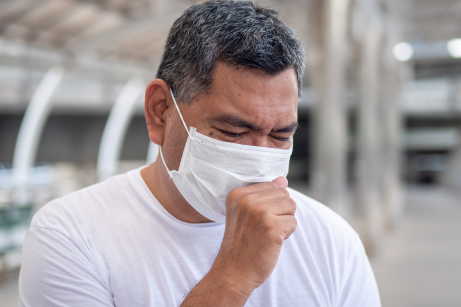
A man with a facemask coughs.

The United States is facing a sharp and deeply concerning resurgence of pertussis, better known as whooping cough, a vaccine-preventable illness that was once nearly eliminated thanks to robust public health efforts.

Published May 5, 2025

Image courtesy of 9nong via stock.adobe.com.

By Syra Madad, DHSc, MSc, MCP, CHEP, and Boghuma K. Titanji, MD PhD

To date in 2025, the Centers for Disease Control and Prevention (CDC) has reported over 8,000 cases of whooping cough, a more than two-fold increase from the same time last year. At the current rate, the nation could see up to 70,000 cases by year’s end, more than doubling last year’s total. If this trajectory continues, the United States may experience the highest number of infections since the introduction of the pertussis vaccine in 1948.

What Is Whooping Cough?

Whooping cough is a highly contagious respiratory illness caused by Bordetella pertussis. It spreads through respiratory droplets when an infected person coughs, sneezes, or breathes near others. Symptoms begin like a common cold, runny nose, low-grade fever, and mild cough but progress to violent coughing fits that can last for weeks. The characteristic “whoop” occurs as the patient gasps for air between spasms. In severe cases, the force of repeated coughing can lead to rib fractures, which may then result in lung collapse, or pneumothorax, a potentially life-threatening complication.

For infants and young children, pertussis can be life-threatening. Complications include pneumonia, seizures, encephalopathy, and even death. Health officials have reported three recent pediatric deaths linked to whooping cough, two infants in Louisiana and a child under 5 in Washington state who died in late 2024. Infants under one year of age face the highest risk of severe illness and death, as their immune systems are not yet fully developed, and this group consistently accounts for the highest rates of reported pertussis cases.

Why Are Cases Rising?

Several converging factors are driving this resurgence:

  • Declining Vaccination Rates: In 2024, the CDC reported that less than 93% of kindergarteners were vaccinated against pertussis, falling from 95% in 2019.
  • Vaccine Hesitancy and Misinformation: The rise in anti-vaccine sentiment has had a measurable impact on immunization rates. This includes increasing vaccine exemptions and a decline in timely childhood vaccinations. Social media disinformation, politicization of vaccines, and public figures promoting skepticism have all contributed to declining coverage, fueling the resurgence of pertussis.
  • Waning Immunity: The acellular pertussis vaccine introduced in the 1990s was designed to reduce side effects like fever and injection site reactions. However, it is less durable than the older whole-cell vaccine, with immunity diminishing over time.
  • Genetic Mutation of the Pathogen: Emerging evidence indicates that Bordetella pertussis is evolving in ways that may affect vaccine effectiveness. Studies from CDC surveillance and genetic sequencing are ongoing to understand the implications of these changes.

Treatment and Prevention

There is no treatment that effectively halts the hallmark coughing fits once they begin. The clinical manifestations of the disease are mediated by bacterial toxins which damage the delicate hairlike structures (cilia) on the cells that line our airways. The main function of cilia on respiratory tract cells, is to help with clearing mucus. Once the damage is done, administering antibiotics for treatment does not reverse it, nor does it speed up the recovery and repair of these cells. Antibiotics such as azithromycin are instead used to reduce transmission by eradicating the bacteria from the nasopharynx–prevention through timely vaccination remains the most effective tool.

The Vaccine: Safe, Effective, and Critically Underused

Pertussis vaccines have been in use for decades, are well studied, and significantly reduce the severity of illness and prevent hospitalizations and deaths. CDC-recommended vaccination and booster timing includes:  

VaccineTarget GroupDosesBooster Needed
DTaPInfants and children2, 4, 6 monthsBoosters at 15-18 months and 4-6 years
TdapPreteens and teensAge 11 or 12Every 10 years
TdapPregnant individualsEach pregnancy (27–36 weeks)Protects infant via maternal antibodies
TdapAdultsIf not previously vaccinatedEvery 10 years thereafter
TdapAdults in close contact with infants under 1 yearOne doseTo reduce risk of transmission to vulnerable infants

While no vaccine is perfect, vaccinated individuals are far less likely to experience life-threatening complications. 


Stay Connected with Dr. Madad:

Instagram
Twitter/X
LinkedIn
Facebook

More from Dr. Madad on the Academy Blog

Dr. Madad’s Critical Health Voices on Substack

Unraveling the Mystery in the DRC’s Disease Outbreak

A recent outbreak of an undiagnosed illness in the Democratic Republic of the Congo is on the radar of public health professionals. Preparedness is key to mitigating the issue.

Published December 10, 2024

By Syra Madad, D.H.Sc., M.Sc., MCP, CHEP

Testing for malnourishment in Democratic Republic of the Congo. Image courtesy of DFID – UK Department for International Development, CC BY-SA 2.0, via Wikimedia Commons.

A recent outbreak of an undiagnosed illness in the Panzi health zone of the Democratic Republic of the Congo (DRC) has captured global attention, spotlighting the challenges of outbreak investigations in resource-limited settings. Since late October, over 400 cases have been reported, predominantly among children under five years old. Symptoms such as fever, cough, and body aches have resulted in 31 deaths, with severe malnutrition compounding the crisis.

This outbreak highlights the critical need for strong global public health systems to detect and respond to emerging health threats. Although the cause remains uncertain, investigators are exploring various possibilities, including endemic diseases like malaria and respiratory infections such as acute pneumonia, influenza, COVID-19, and measles. Malnutrition is thought to play a significant role in worsening disease severity. Laboratory testing is ongoing, and health officials are evaluating whether multiple diseases may be contributing to the cases and fatalities reported.

Is This “Disease X”?

The term “Disease X” refers to a hypothetical, unknown pathogen with the potential to cause a global epidemic or pandemic. Coined by the World Health Organization (WHO) in 2018, Disease X represents the growing need to prepare for unforeseen infectious threats. In the 21st century, humanity has faced several emerging and re-emerging viral diseases, including SARS-CoV-1, MERS, and Zika, as well as the most recent Disease X, SARS-CoV-2, the virus responsible for COVID-19. These outbreaks underscore the importance of readiness, as novel pathogens like mpox have also spread beyond their endemic regions, creating widespread public health challenges.

While mysterious outbreaks like the one in the DRC often raise alarms, they are more frequently caused by endemic diseases in under-resourced areas than by new pathogens. Known diseases such as measles or influenza, exacerbated by malnutrition or poor vaccination coverage, are often the culprits. My husband often reminds me of the medical adage, “When you hear hoofbeats, think horses, not zebras,” which emphasizes prioritizing the most likely diagnosis. Yet, as someone who works in high-consequence infectious diseases, my mind often first goes to those zebras.

How Outbreak Investigations Work

Outbreak investigations follow a systematic approach to identify and control the source of illness:

1. Epidemiological Analysis: Investigators collect and analyze data to identify trends, clusters, and possible modes of transmission.

2. Clinical and Laboratory Testing: Samples from patients are tested to rule out suspected pathogens such as malaria, pneumonia, or influenza. In this case, samples have been sent to laboratories in Kinshasa for further testing.

3. Community Engagement: Teams work with local communities to identify additional cases, strengthen infection prevention, and provide treatment for the sick.

In the DRC, the investigation faces significant challenges, including remote locations, poor infrastructure, and a healthcare system strained by supply shortages. Despite these obstacles, international and national health teams are collaborating to identify the cause and strengthen the local response according to the latest WHO situation report.

Preparing for Future Threats

The DRC outbreak underscores the importance of global preparedness for both known and unknown diseases. Research shows that the risk of a pandemic with similar impact to COVID-19 is about 1 in 50 in any given year, with a lifetime probability of around 38%. This risk is amplified by environmental changes, which increase the likelihood of pathogens jumping from animals to humans.

To prepare for the next Disease X, scientists are studying the roughly 25 viral families most likely to harbor a novel pandemic threat. Efforts like CEPI’s 100 Days Mission aim to develop vaccines within three months of identifying a new pathogen, offering a proactive defense against future pandemics.

Lessons for the Present and Future

While it is unknown that the current outbreak in the DRC represents a new Disease X, it serves as a reminder of the need to strengthen health systems worldwide. Early investments in surveillance, laboratory capacity, and community engagement are critical to identifying and controlling outbreaks before they spread.

The ongoing investigation in the DRC is a testament to the dedication of public health professionals working in some of the world’s most challenging conditions. It also highlights the importance of global solidarity in addressing outbreaks, whether they stem from endemic diseases or novel pathogens.

Preparedness is our best defense against the unknown. By investing in science, supporting resource-limited health systems, and fostering international collaboration, we can mitigate the impact of today’s outbreaks and prevent the pandemics of tomorrow.


Stay connected with Dr. Madad:

Instagram
Twitter/X
LinkedIn
Facebook

More from Dr. Madad on the Academy Blog

Dr. Madad’s Critical Health Voices on Substack

Have We Passed the Turing Test, and Should We Really be Trying?

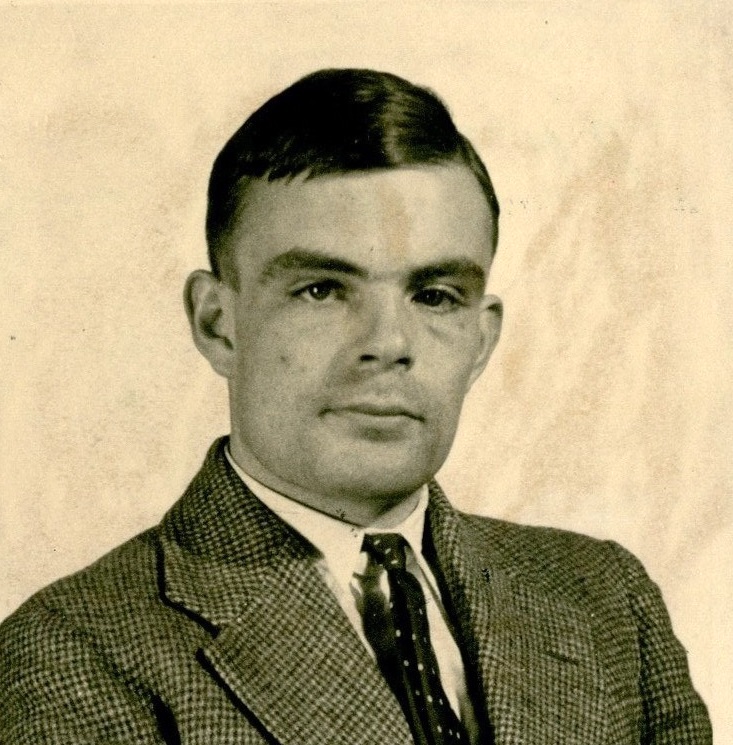
A black and white headshot of computer scientist Alan Turing.

The 70th anniversary of Turing’s death invites us to ponder: can we imagine AI models that will do well on the Turing test?

Published August 22, 2024

By Nitin Verma, PhD

Alan Turing (1912-1954) in 1936 at Princeton University.
Image courtesy of Wikimedia Commons.

Alan Turing is perhaps best remembered by many as the cryptography genius who led the British effort to break the German Enigma codes during WWII. His efforts provided crucial information about German troop movements and helped bring the war to an end.

2024 has been a noteworthy year in the story of Turing’s life as June 7th marked 70 years since his tragic death in 1954. But four years before that—in 1950—he kickstarted a revolution in digital computing by posing the question “can machines think?” and proposing an “imitation game” to answer it.

While this quest has been the holy grail for theoretical computer scientists since the publication of Turing’s 1950 paper, the public launch of ChatGPT in November 2022 has brought the question to the center stage of global conversation.

In his landmark 1950 paper, Turing predicted that: “[by about the year 2000] it will be possible to programme computers… [that] play the imitation game so well that an average interrogator will not have more than 70 per cent. chance of making the right identification after five minutes of questioning.” (p. 442). By “right identification”, Turing meant accurately distinguishing between human-generated and computer-generated text responses.

This “imitation game” eventually came to be known as the Turing test of machine intelligence. It is designed to determine whether a computer can successfully imitate a human to the point that a human interacting with it would be unable to tell the difference.

We’re much past the year 2000: Are we there yet?  

In 2022, Google let go of Blake Lemoine, a software engineer who had publicly claimed that the company’s LaMDA (Language Model for Dialogue Applications) program had attained sentience. Since then, the closest we’ve come to seeing Turing’s prediction come true is, perhaps, GPT-4, deepfakes, and OpenAI’s “Sora” text-to-video model that can churn out highly realistic video clips from mere text prompts.

Some researchers argue that LLMs (Large Language Models) such as GPT-4 do not yet pass the Turing test. Yet some others have flipped the script and argued that LLMs offer a way to assess human intelligence by positing a reverse Turing Test—i.e., what do our conversational interactions with LLMs reveal about our own intelligence?

Turing himself made a noteworthy remark about the imitation game in the same 1950 paper: “… we are not asking whether all digital computers would do well in the game nor whether the computers at present available would do well, but whether there are imaginable computers which would do well.” (Emphasis mine; p. 436).

Would Turing have imagined the current crop of generative AI models such as GPT-4 as ‘machines’ capable of “doing well” on the Turing test? I believe so, but we’re not quite there, yet. As an information scientist, I believe that in 2024 AI has come closer than ever to passing the Turing test.

If we’re not there yet, then should we strive to get there?

As with any other technology ever invented, as much as Turing may have only been thinking of the public good, there is always the potential for unforeseen consequences.

Technologies such as deepfake apps and conversational agents such as ChatGPT still need human creativity to be useful and usable. But still, the advanced AI that powers these technologies carries the potential of passing the Turing test. That potential portends a range of consequences for society that deserve our serious attention.

Leading scholars have already warned about the consequences of the ability of “fake” information to fuel distrust in public institutions including the judicial system and national security. The upheaval in the public imagination caused by ChatGPT even prompted US President Biden to issue an Executive Order on the Safe, Secure, and Trustworthy Development and Use of AI in the fall of 2023.

We’ll never know what Turing would have made of the spurt of AI advances in light of his own foundational work in theoretical computer science and artificial intelligence. His untimely death at the young age of 41 deprived the world of one of the greatest minds of the 20th century and the still more extraordinary achievements he could have made.

But it’s clear that the advances and use of AI technology have brought society to a turning point that he anticipated in his seminal works.

It remains difficult to say when—or whether—machines will truly surpass human-level intelligence. But more than 70 years after Turing’s death we are at a point where we can imagine AI agents that will do well on the Turing test. And if we can imagine it, we can someday build it too.

Passing a challenging test can be seen as a marker of progress. But would we truly rejoice in having our AI pass the Turing test, or some other benchmark of human–machine indistinguishability?

The Origin of the Term “Psychedelic”

A shot of brown and white psychedelic mushrooms.

The man who is known to have supplied author Aldous Huxley with hallucinogenic drugs publicly coined the word “psychedelic” during an Academy event in 1957.

Published April 4, 2024

By Nick Fetty

Psilocybin, also known as “magic mushrooms,” are among the hallucinogenic drugs that are studied for their medicinal and therapeutic benefits.

For many, the term “psychedelic” may conjure familiar images of the 1960s, mind-altering substances, and bands like Jefferson Airplane and the Grateful Dead. What may be less well known is that the public origin of the term itself can be traced to an event held at The New York Academy of Sciences.

Humphry Osmond was a psychiatrist, researcher, and professor of psychology at the University of Alabama. He served as a psychiatrist in the navy during World War II and after his service began conducting research on the use of hallucinogenic drugs to treat mental illness and substance abuse.

The Origins of LSD

Osmond was interested in the work of Swiss chemist Albert Hoffman who, in 1943, discovered the hallucinogenic drug lysergic acid diethylamide (LSD). This discovery actually came by accident, when Hoffman unknowingly ingested a small amount of the substance and experienced what’s believed to be the first “acid trip” as he rode his bike home, with some help from his assistant, after leaving the lab.

Word about the drug’s effects spread and eventually government intelligence agencies became intrigued in it’s (as well as mescaline’s) potential as a way to pry information out of individuals being interrogated. Osmond, however, saw a different application for the newly discovered drug and ironically enough thought it had potential to help treat substance abuse, specifically alcoholism.

Osmond moved to Saskatchewan, Canada in the early 1950s and conducted research at the Weyburn Mental Hospital with support from the Canadian government and the Rockefeller Foundation. Alongside Abram Hoffer, the duo experimented with LSD as a treatment, under carefully controlled conditions, for nearly 2000 patients struggling with alcoholism. The findings were quite promising, and the duo reported that 40 to 45 percent of those treated using LSD between 1954 and 1960 did not return to drinking after one year.

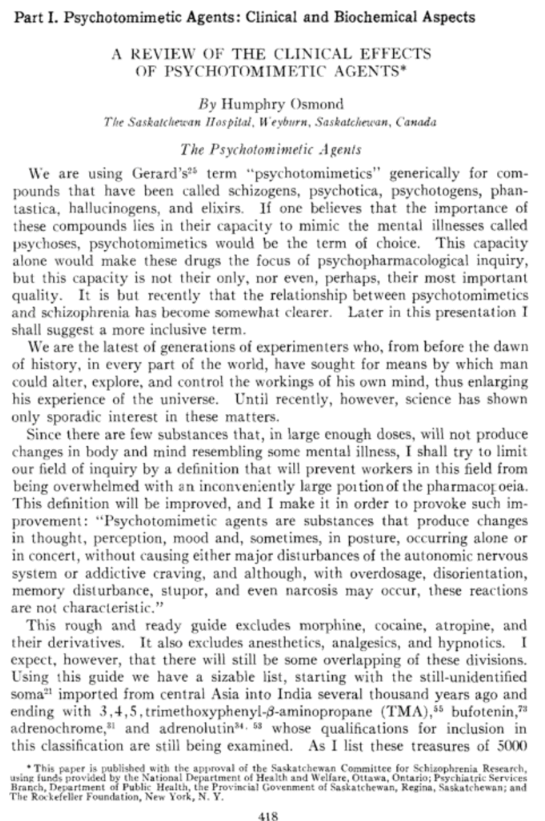
Image courtesy of Annals of the New York Academy of Sciences.

The Origin of the Term “Psychedelic”

During this era, Osmond connected with Aldous Huxley, the author renowned for his books Brave New World and The Doors of Perception. Osmond was known to supply Huxley with hallucinogenic drugs like LSD and mescaline.

Huxley and Osmond worked together to come up with a word to describe the effects of LSD. Huxley concocted “phanerothyme” by combining the Greek words for “to show” and “spirit” as well as the tagline: “To make this mundane world sublime, Take half a gram of phanerothyme.” Osmond, however, came up with his own phrase: psychedelic. He combined the Greek words for psyche (for mind or soul) and deloun (for show), along with his own rhyme: “To fathom Hell or soar angelic/Just take a pinch of psychedelic.” Osmond said the term meant “mind manifesting” and that it was “clear, euphonious and uncontaminated by other associations.”

Much like a user drops acid, Osmond dropped the term “psychedelic” during a meeting at The New York Academy of Sciences in 1957.  His appearance at the Academy was part of his effort to discuss his research in this area, which was published as “A Review of the Clinical Effects of Psychotomimetic Agents” in the March 1957 issue of Annals of the New York Academy of Sciences.

A Revival of Alternative Therapies

However, as backlash to the “turn on, tune in, drop out” mantra of the 1960s, governments became concerned with the potential harm of the recreational use of LSD. New York State and California made it illegal to possess the substance in 1966, and four years later it became illegal at the federal level.

Research on using hallucinogenic drugs in medical applications has been revived in recent years and is now being studied to treat everything from substance abuse and depression to post-traumatic stress disorder and anxiety. In at least one case in Silicon Valley, some have experimented with microdosing of psychedelic drugs (LSD and psilocybin) to improve work performance in areas like concentration and problem solving.

The Academy has a long history of hosting events that promote the use of alternative therapies to treat ailments. Reports from The New Yorker discuss the Academy’s involvement with therapeutic uses of meprobamate in the 1950s and hypnosis in the 1970s, while reporting in The New York Times examined research on the medicinal benefits of cannabis presented at the Academy in the 1970s. Today, the Academy continues to promote promising alternative therapies, including during a 2023 conference that examined near death experiences and the use of psychedelics in medical treatment.

What Near-Death and Psychedelic Experiences Reveal about Human Consciousness

A colorful illustration meant to depict something psychedelic.

A recent Academy event explored near-death experiences and the medical application of psychedelic remedies, combining elements of science and philosophy.

Published June 9, 2023

By David Freeman

What is the nature of consciousness? What happens to it at the brink of death—and beyond? In what ways can the scientific study of near-death experiences and the medicinal use of psychedelic compounds boost our understanding of the human condition and our ability to ease emotional suffering?

These and related questions were the focus of an Academy conference held on June 8, 2023, in New York City. The one-day event included presentations by psychologists, neurologists, biomedical researchers and a religious scholar. Additionally, there was a gripping first-person account of a near-death experience from renowned journalist and author Sebastian Junger.

What are Near-Death Experiences?

Near-death experiences, or NDE’s, are deeply affecting, often mystical episodes. Experts call them periods of “disconnected consciousness.” They affect some people who are close to death or in situations of grave physical or emotional danger. They are commonly marked by feelings of floating outside one’s body and the sensation of moving toward a bright light, as well with as encounters with dead relatives.

NDE’s have been documented across many different cultures and have been known since ancient times. “We’re talking about something that could be hundreds of thousands of years old,” said Brian C. Muraresku. He is the author of the 2020 book “The Immortality Key.” His book examines scientific evidence for the ritual use of psychedelics in classical antiquity. He was also one of the speakers at the conference.

There’s something about that kind of experience—near-death, psychedelic, mystical, whatever it is—that holds the entire human race together.

Brian C. Muraresku, author “The Immortality Key”

NDE’s are now known to be remarkably common. In recent research, 15 percent of intensive care unit patients reported having one. As did up to 23 percent of survivors of cardiac arrest. This is according to neuropsychologist Helena Cassol, Ph.D. Dr. Cassol is the scientific coordinator of Neurological Rehabilitation Center of the University Hospital of Liege in Belgium and also presented at the conference.

“More people have survived cardiac arrest and other situations and could recall those experiences” as a result of improved resuscitation techniques that have become available in recent years, she explained. She added that NDE’s now represent an emerging field of scientific research.

NDE’s can be personally transformative. Some people report a reduced fear of death in the wake of an NDE. Others report enhanced feelings of compassion or purpose. But some are saddled with a pattern of persistent intrusive thoughts or dreams or other negative after-effects. Given these possibilities, “I think it is important for people to be able to talk about these experiences and be heard in a nonjudgmental way,” Dr. Cassol said.

The Evolution of Near-Death Experiences

There may be an evolutionary basis for NDE’s. Daniel Kondziella, M.D., Ph.D., is a neurologist at Copenhagen University Hospital and an associate professor at the University of Copenhagen in Denmark. During his conference presnetation he described research linking the episodes to thanatosis. That’s the well-documented and remarkably consistent phenomenon in which animals—even insects—feign death in order to avoid being killed by predators.

The research suggests that the evolution of language in humans gave us the unique ability to transform this stereotyped behavior into the rich narratives used to describe the mysterious sensations and perceptions commonly seen in near-death experiences, Dr. Kondziella said. Not everyone is convinced by such research.

“Evolutionary explanations are just-so stories,” said Christof Koch, Ph.D. Dr. Koch is chief scientist and president of the Allen Institute for Brain Science, and also presented at the conference. “They may be true. They made be false. It just doesn’t matter. But the fact that we do have experiences—that is the remarkable thing.”

Studies of the neurological underpinnings of NDE’s suggest that the phenomenon arises amid a sort of blending of conscious states: waking, rapid-eye movement (REM) sleep and non-REM sleep.

“The physiological balance between conscious states is disrupted during the conditions of near-death, leading the brainstem arousal system controlling conscious states to blend waking and rapid eye movement consciousness into a hybrid state” known as REM intrusion,” said Kevin R. Nelson, M.D., a University of Kentucky neurologist and another speaker at the conference. “REM intrusion leads to many key features of near-death, including lying still, visual activation, out-of-body, and the experience’s narrative qualities.”

Most individuals who experience near-death are physiologically predisposed to REM intrusion, according to Dr. Nelson.

Psychedelics as Medical Treatment

As some scientists work to gain a better understanding of NDE’s, others are pursuing clinical trials of psychedelic compounds, which have been shown to trigger an altered state of awareness similar to that seen in people experiencing an NDE. A growing body of evidence suggests that these compounds—given under expert supervision and in carefully controlled settings—can ease emotional distress in terminally ill people quite profoundly.

One landmark 2016 study by researchers including Anthony P. Bossis, Ph.D., clinical assistant professor of psychiatry at NYU Grossman School of Medicine and another speaker at the conference, showed that a single treatment with psilocybin—a psychoactive compound found in some mushroom species that humans have consumed for thousands of years—brought rapid reductions in depression, anxiety, and hopelessness in people with terminal cancer.

The benefits of psilocybin treatment were greatest among individuals who reported strong mystical experiences during the sessions, according to Dr. Bossis. “The more robust that mystical experience, the greater the outcome in terms of reduction of depression,” he said. “These aren’t NDE’s,” he added, “but they’re deathlike experiences with a similar phenomenology.”

Recent research shows that psilocybin is just one of many drugs that can induce NDE-like such experiences and suggests that those induced by ketamine, an anesthetic with hallucinogenic effects, show greater similarity to NDE’s than those induced by psilocybin. But “we only studied the phenomenological similarity between subjective experiences” and didn’t assess the extent to which any of the drugs might be effective treatments for depression, said Charlotte Martial, Ph.D., a neuropsychologist at the University of Liege in Belgium and another conference speaker.

Junger’s Brush with Death

Sebastian Junger’s brush with death came three years ago, following the rupture of an aneurysm in his pancreatic artery. As doctors rushed to stanch the bleeding that threatened his survival, he recalled, he encountered an “infinitely dark” pit that threatened to pull him in but also the welcoming “essence” of his beloved, long-dead father. “It wasn’t quite a vision. It was halfway between a vision and a feeling,” he said.

A self-described atheist whose father was a physicist, Junger said the experience nonetheless led him to reconsider his ideas not only about life and death but about the nature of the universe.

“I wish I could say I believe in an afterlife. I don’t. But I definitely have lost the certitude of my rationality,” he said, adding that he now believes it was possible that “some kind of energy or quantum phenomena” interacts with reality in ways we don’t understand.

If some see NDE’s as possible evidence of the supernatural or a phenomenon beyond the scope of scientific knowledge, others are convinced that they are simply the result of physiological processes—such as the oxygen starvation to the brain that can result from cardiac arrest.

There is a “perfectly natural explanation for NDE’s,” said Dr. Kondziella. “No need to postulate any supernatural events.”

But Raymond A. Moody, Jr., M.D., Ph.D., the keynote speaker whose remarks set the stage for the conference, expressed uncertainty over what near-death experiences actually represent.

Science? Or philosophy?

“I really just don’t know,” he said. “I think the questions that we are dealing with—a lot of them are not yet scientific questions,” he added. “They are philosophical questions.”

Dr. Moody is the author of the 1975 book “Life after Life” that sparked interest in near-death experiences. He has been documenting NDE’s for many years and is credited with coining the term near-death experience.

Uncertainty about life’s transcendent questions is inevitable, according to Karen Armstrong, a London-based author of numerous books on religious affairs and the other keynote speaker at the conference.

“Neither religion nor science can really respond. Ultimately, we are all in a ‘Cloud of Unknowing,’” she said in a reference to an anonymous 14th Century text on spirituality and Christian mysticism. “We are all just trying to find some meaning in it all,” she added, “without which we humans fall very easily into despair.”

For Brian C. Muraresku, the strange perceptions and complex emotions seen in near-death and similar visionary experiences are central to the human experience. “There’s something about that kind of experience—near-death, psychedelic, mystical, whatever it is—that holds the entire human race together.”

Also read: Music on the Mind: A Neurologist’s Take