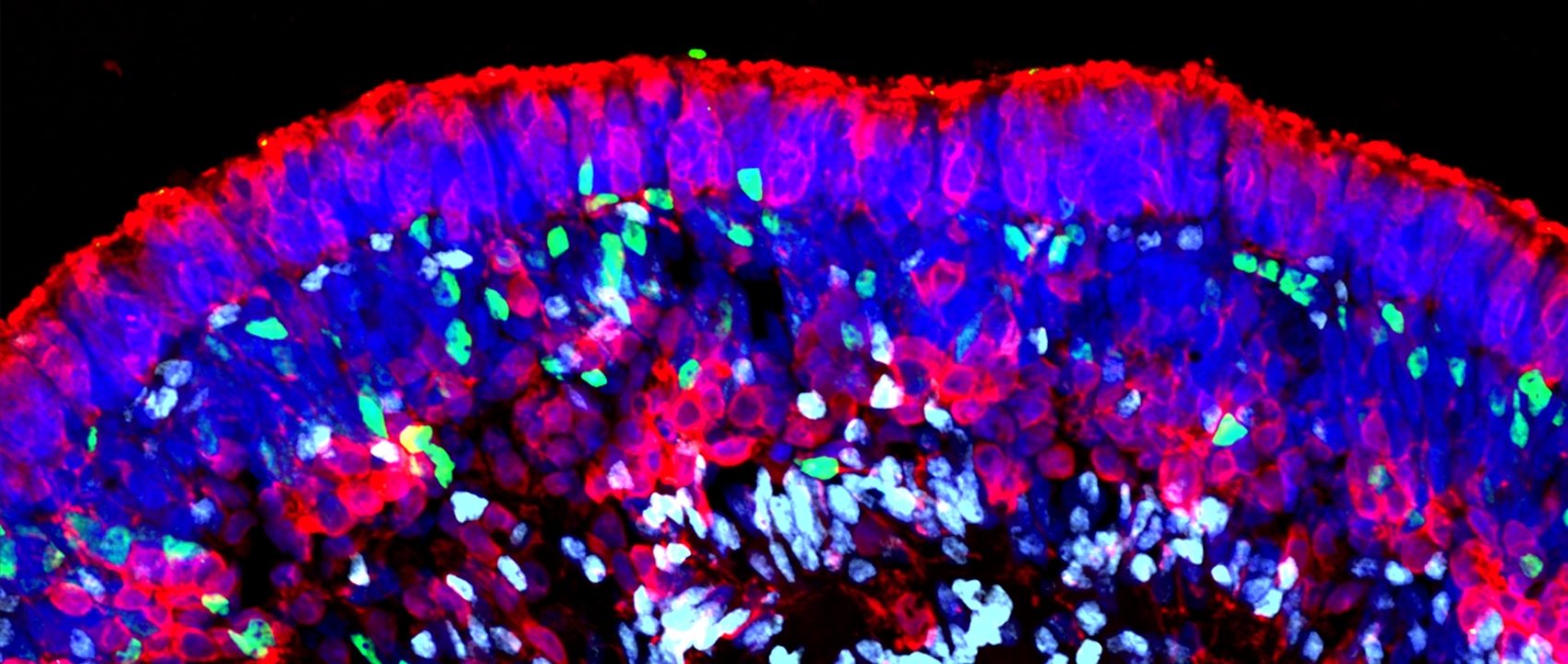
The interface among physiological, behavioral and communicative rhythms in humans and other animals
New in Annals
Date: 2026-03-19 ·
Issue: 2026 · Volume: 1557
Intention–Outcome Trade‐Off in Moral Character Learning
Contributors: Gaojie Huang| Yongbo Xu| Edmund Derrington| Jean‐Claude Dreher| Chen Qu|
Date: 2026-03-17 ·
Issue: 2026 · Volume: 1557
Kidney Tumor Segmentation With a Multistage Adaptive Boundary‐Aware Network
Contributors: Ruoyu Wu| Jing Shi| Jitao Zhou|
Date: 2026-03-17 ·
Issue: 2026 · Volume: 1557
Cultural Engagement Is Related to Decelerated Physiological Age: Doubly Robust Estimations in a National Cohort Study
Contributors: Daisy Fancourt| Saoirse Finn| Hei Wan Mak| Andrew Steptoe| Mikaela Bloomberg|
Date: 2026-03-16 ·
Issue: 2026 · Volume: 1557
Mechanisms of Autophagy and Inflammatory Response Crosstalk in Sepsis‐Associated Intestinal Dysfunction
Contributors: He Man| Sun Yi| Chai Chen|
Date: 2026-03-14 ·
Issue: 2026 · Volume: 1557
Cross‐Institutional Five‐Class Kellgren–Lawrence Grading of Knee Osteoarthritis via Multitask Deep Learning
Contributors: Tariq Alkhatatbeh| Ahmad Alkhatatbeh| Yan Liao| Zhilin Zhang| Hang Fang| Weidong Chen| Rongkai Zhang|
Date: 2026-03-13 ·
Issue: 2026 · Volume: 1557
Study of the Factors Influencing Circumferential Wavenumber Coupling in Filled Pipes
Contributors: Fuyan Lyu| Yuanhao Ma| Leilei Zhao| Guangming Guo| Zhixun Zhao| Qingran Wang| Haicheng Lu| Chunzhi Li| Can Cao|
Date: 2026-03-13 ·
Issue: 2026 · Volume: 1557
The Acceptability and Appropriateness of Delivering Postnatal Mental Health Support at Community Health Centers
Contributors: Yuyin Xiao| Qi Jiang| Yiwei Qian| Jiaqi Shi| Hanwen Zhang| Christina Rose Kennedy| Guohong Li| Fan Jiang| Scott Rozelle|
Date: 2026-03-13 ·
Issue: 2026 · Volume: 1557
Electroencephalography Microstates Reveal Variability in Efficacy of Transcutaneous Auricular Vagus Nerve Stimulation in Primary Dysmenorrhea
Contributors: Chenxi Wang| Jiahui Xia| Peng Li| Xiulong Feng| Likun Yang| Zhongqian Lu| Wen Wang|
Date: 2026-03-12 ·
Issue: 2026 · Volume: 1557
Augmentation‐Free Self‐Supervised Human Activity Recognition With Attention Mechanism and Adaptive Time Series Mixer
Contributors: Zhongwei Hou| Jin Han| Shixun Wu| Zhiqiang Wang| Miao Zhang| Dengyuan Xu|
Date: 2026-03-12 ·
Issue: 2026 · Volume: 1557
Explainable Model Differencing for MEG Decoding via Predict‐Probability Differences and Boundary‐Optimized Rules
Contributors: Yongdong Fan| Qiong Li| Haokun Mao| Xingyuan Song|
Displaying 1 - 10 of 47,127 results
Your Member Benefit
Become a member today to get free access to all Annals content including the archive.
Annals access is just one of the many benefits of Academy membership.
Latest Virtual Issues
Through a series experiments, reviews, and perspectives, this collection of papers explores the wide prevalence, impact, and utilization of rhythm…
Children and Law
The treatment of children in the legal system provides unique challenges. It is necessary to understand the developing brain and…
Moral Conviction
This special issue focuses on morality in a broad sense, including ideologies. Morality is often seen as a force for…
Functional Metabolites of the Microbiome
Much of the research on the microbiome has focused on microbial species and how they are associated with health, physiology,…
Language, Metacognition, and Decision-Making
This collection of papers focusses on how language and cognition influence judgements, perceptual decisions, learning, communication, and rehabilitation, and how…
From the Blog
The Urgent Need for Attention Sanctuaries
The commodification of our attention has led to calls for a break from digital content.
A Case for Going to Bat for the Bats
New research shows that action is necessary to protect the wellbeing of these winged mammals in North America.
Singing Lemurs Strike a Chord with Scientists
New research shows these peculiar primates may have played an evolutionary role in humans' ability to sing.
The Academy’s Role in Asbestos Abatement
Experts with the Academy have voiced concern about this dangerous carcinogen for more than half a century.
Prehistoric Sloth-Like Creatures May Have Roamed the US
The territory of these creatures likely extended further north than previously thought.