A Multidisciplinary Approach to Address Inadequate Calcium Intake
By combining scientific depth, data translation, and policy navigation, researchers hope to improve calcium intake across the globe.
Published September 24, 2025
By Nick Fetty
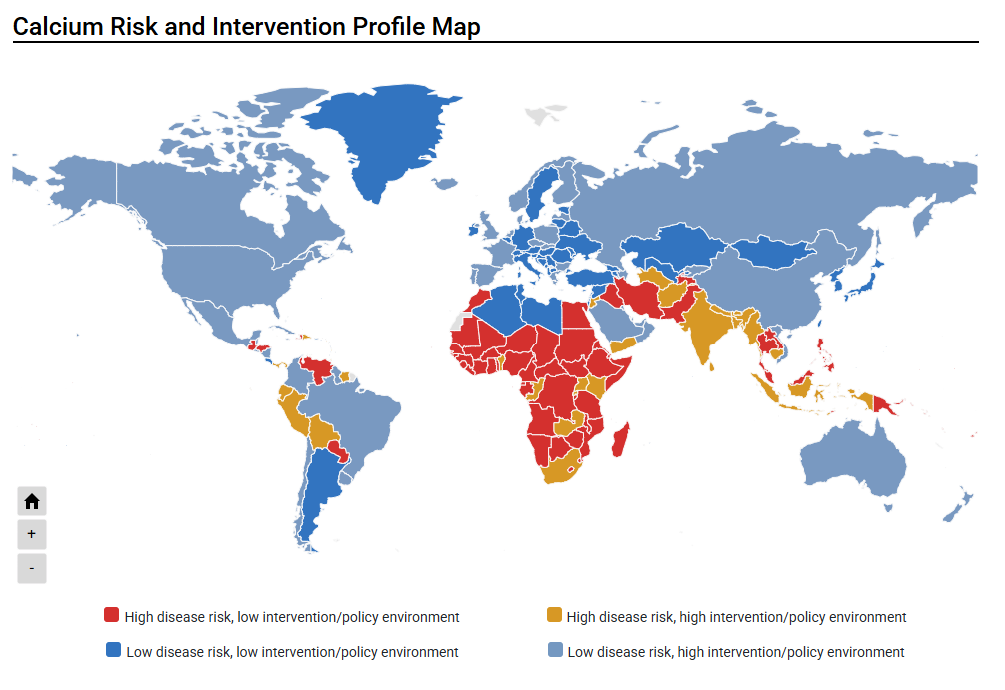
A research effort involving The New York Academy of Sciences’ Nutrition Science Program aims to provide governments and policy advocates with accurate information that can support policy change for better health outcomes.
The team of researchers led systematic reviews, integrated diverse datasets, and applied nutritional epidemiology to map global patterns of calcium intake. They then built an interactive platform that turns complex data into a living decision tool.
“With our cross-disciplinary approach, we connected the lab, the dataset, and the policy table, ensuring calcium is no longer an invisible nutrient in the global health conversation,” said Ziaul Rana, PhD, a former Program Manager for the Academy’s Nutrition Science Program.
As part of this effort, the Academy launched the Global Calcium Map Dashboard, an interactive, living atlas of calcium health and nutrition. More than a data platform, it illustrates patterns of dietary calcium intake, preeclampsia and preterm birth rates, and interventions. Calcium intake during pregnancy is especially important because it is associated with lower rates of preeclampsia, which is a significant contributor to preterm birth.
The platform’s country typologies make the invisible visible, categorizing nations by urgency, and highlighting where interventions can have the greatest impact. For policymakers and researchers, the map functions as both a compass and a call to action, guiding efforts to close critical gaps in maternal and child health.
The Issue of Calcium Accessibility
The accessibility of calcium rich foods, such as dairy products, vary greatly depending on location and traditional diets. While dairy products are generally accessible in places like the United States, this is not always the case abroad.
“In other parts of the world, dairy products can be very expensive or are just not commonly consumed and often the result is a much lower intake of calcium,” said Megan Bourassa, PhD, the former Associate Director for Nutrition Science at the Academy. “There are other sources of calcium, for example fish bones, generally consumed from small fish, or from certain vegetables, but in plant-based sources we have to worry about the bioavailability of the calcium. Often our bodies can’t efficiently use the calcium that is there.”
By spotlighting the role of calcium in health, this initiative seeks to reset priorities and drive action through supplementation, fortification, or tailored food-based solutions.
“Its innovation lies not just in what we built, but in how it can be used: a shared evidence base for countries, advocates, and global agencies to push for more equitable health outcomes,” said Dr. Rana. “Our goal is to help catalyze a shift so that adequate calcium intake becomes a core pillar of maternal and child health programs worldwide.”
An Advocacy Tool for Policy Change
The researchers hope the online dashboard can be an advocacy tool for policy change.
“When we put together the information from the maps, we can see areas that might benefit more from an intervention. Groups can use this information to approach policy makers to encourage change. It can also be helpful to see how other countries perform in a particular region,” said Dr. Bourassa.
For example, if a neighboring country has a well implemented calcium fortification program and lower preeclampsia rates, this might be a good rationale to implement calcium fortification in a country, assuming diets and other risk factors are similar.
The research team acknowledged the Instituto de Efectividad Clínica y Sanitaria in Buenos Aires, Argentina, for supporting the systematic literature reviews. The team also utilized publicly available data from the Institute for Health Metrics and Evaluation, known as the Global Burden of Disease Study, and from the Global Fortification Data Exchange. These data sources provide information for a wide array of contexts, and the researchers extracted information relevant for calcium to include in the dashboard. Support was also provided by the Children’s Investment Fund Foundation.
“We hope this work can enable policymakers, donors, and public health organizations to strategically allocate resources where calcium interventions could achieve maximum health impact and save the most lives,” said Dr. Bourassa.
Also read: Examining Multiple Micronutrient Supplementation During Pregnancy