Tata Transformation Prize Winners
Supporting breakthrough, innovative technologies that address India’s greatest challenges.
By recognizing and supporting the implementation at scale of high-impact research, the Tata Transformation Prize drives innovation in scientific disciplines of importance to India’s societal needs and economic competitiveness.
Winners by Year:
2025 | 2024 | 2023
2025 Winners

Food Security Winner
Padubidri V. Shivaprasad, PhD
National Centre for Biological Sciences
Padubidri V. Shivaprasad, PhD, addresses one of India’s greatest challenges—feeding the ever-increasing population that is set to reach 1.5 billion people by 2050 amid shrinking farmland and worsening climate stress. His pioneering innovation tackles this issue by using epigenetic engineering and small RNA-based modifications in rice, a primary staple crop in India, to enrich useful traits such as stress tolerance and nutrient quality. His unprecedented precision when altering the expression of specific genes overcomes limitations of conventional plant breeding approaches, which are often slow, labour-intensive and inefficient in predicting the outcomes. The rice varieties his lab engineers could reduce farmers’ dependence on fertilizer and pesticide, lower production costs, and improve nutritional quality for millions. His innovation could be implemented beyond India, providing a sustainable blueprint for staple crops worldwide in the face of global climate change.

Sustainability Winner
Balasubramanian Gopal, PhD
Indian Institute of Science
There is an urgent need in India for sustainable alternatives to chemical synthesis in manufacturing, as traditional methods are energy-intensive, high in pollution, and heavily reliant on imported goods. Domestically manufactured chemicals using engineered microbes are a promising solution, but challenges in scalability, cost, and efficiency remain. Balasubramanian Gopal, PhD, has developed a novel green chemistry platform using bioengineered E. coli to produce chemicals that are key ingredients in cosmetics, pharmaceuticals, and agricultural products. His team integrates artificial intelligence with experimental biology to rapidly design efficient enzymes, which are paired with optimized microbial strains engineered for high chemical yield without needing antibiotics or other environmentally harmful additives. Aligned with India’s biomanufacturing sector and global green chemistry goals, this innovation holds transformative potential to replace chemical synthesis in domestic production of high-value bioactive compounds—benefiting India’s health, agriculture, and environment while setting the stage for India to become a leader in this technology.

Healthcare Winner
Ambarish Ghosh, PhD
Indian Institute of Science
Current cancer therapies remain limited by the challenge of delivering medicines deep inside tumors while sparing healthy tissue—barriers that must be overcome to realize the promise of targeted and personalized medicine. Ambarish Ghosh, PhD, is addressing this challenge with innovative magnetic nanorobots—microscopic, helical devices that can be steered by gentle, biosafe magnetic fields to navigate through blood, dense tissue, and even cells. Built using scalable fabrication techniques, these nanorobots can deliver drugs directly to tumors and recognize chemical and mechanical differences that help them attach to cancerous regions while avoiding healthy cells. Ghosh’s team is also developing imaging tools that allow doctors to see and guide the nanorobots in real time during diagnosis and treatment. This platform has potential to transform cancer care through targeted, minimally invasive therapies that reduce side effects, shorten recovery, and lower costs—expanding access to advanced care in India and other low- and middle-income countries and position India as a global leader in affordable, personalized nanorobotic therapies.
2024 Winners

Food Security Winner
C. Anandharamakrishnan, PhD
CSIR – National Institute for Interdisciplinary Science & Technology
With nearly 30% of the population suffering from malnutrition and 7% affected by diabetes, management of hidden hunger and ensuring public health are urgent priorities for India. Therefore, there is an urgent need for solutions that address both malnutrition and health challenges.
C. Anandharamakrishnan, PhD, is a pioneer in food engineering research and has been working towards the development of innovative solutions to meet this dual challenge. Dr. Anandharamakrishnan’s proposes to develop rice fortified with multiple essential nutrients and rice designed to have a low glycemic index (GI), which could provide a healthier diet for the diabetic population. He will utilize advanced food technologies developed in his lab, including a 3-fluid nozzle spray drying process to efficiently encapsulate and deliver these nutrients in reconstituted rice. His lab has also developed Asia’s first engineered artificial gastrointestinal system, which his team uses to analyze nutrient release during digestion, ensuring the rice is optimized for maximum nutrient absorption and improved glycemic response.
The potential impact of this work is far-reaching. If successful, this fortified rice could provide a vital nutritional boost to millions of underserved people in India, while also providing a healthier diet for the diabetic population on a large scale. By addressing two major public health concerns simultaneously, Dr. Anandharamakrishnan’s work could pave the way for significant improvements in both nutrition and health conditions, with the potential to benefit not only India but also the 2 billion people worldwide who suffer from malnutrition.

Sustainability Winner
Amartya Mukhopadhyay, DPhil
Indian Institute of Technology Bombay
With the urgent global need for sustainable energy solutions, the development of affordable, eco-friendly batteries is critical. In India, where key materials for lithium-ion (Li-ion) batteries, such as lithium and cobalt, are scarce, sodium-ion (Na-ion) batteries offer a promising alternative.
Amartya Mukhopadhyay, DPhil, is spearheading efforts to advance Na-ion battery technology, which is approximately 20-25% cheaper than Li-ion batteries, operates in a broader temperature range, and is safer to store. Prof. Mukhopadhyay’s recent breakthroughs in materials science, particularly in creating air- and water-stable sodium-transition metal oxide cathodes and alloy-based anodes, have made Na-ion batteries more practical and sustainable for various uses. Prof. Mukhopadhyay’s approach leverages another key innovation from his lab – “aqueous processing” of battery electrodes – which replaces toxic solvents with water to reduce costs and environmental impact. The first phase of his project focuses on scaling up this water-based process and fine-tuning the batteries to ensure high capacity and long-lasting performance. The second phase will involve producing prototype cells and exploring commercialization opportunities through technology transfer or startup ventures.
This work addresses India’s need for cost-effective, safe, and sustainable energy storage solutions, particularly for renewable energy applications. If successful, Na-ion batteries could reduce India’s reliance on imported materials and provide a greener, more affordable option for the country’s growing energy demands.

Healthcare Winner
Raghavan Varadarajan, PhD
Indian Institute of Science
Respiratory Syncytial Virus (RSV) causes severe respiratory illness in over 30 million people annually, disproportionately affecting infants, young children, and the elderly. Over 120,000 deaths are attributed to RSV each year, with more than 97% occurring in developing countries, including India. Despite the availability of new RSV vaccines, their high cost makes them inaccessible to the populations most at risk.
Raghavan Varadarajan, PhD, aims to develop an RSV vaccine that addresses these challenges. Dr. Varadarajan will draw upon his lab’s extensive expertise in protein structure and vaccine design to engineer an efficacious vaccine that will provide broad and long-lasting protection against infection by this devastating virus. Furthermore, by employing cutting-edge methods in protein design and stabilization, Dr. Varadarajan’s team is optimizing the vaccine formulation and production system, to potentially reduce the cost of each dose by up to 95%, compared to recently approved RSV vaccines.
These breakthroughs could make RSV vaccination accessible to the populations that need it most, significantly reducing RSV-related illness, hospitalizations, and saving lives. Dr. Varadarajan’s research underscores India’s growing leadership in affordable healthcare innovation, addressing critical public health challenges both locally and globally.
2023 Winners
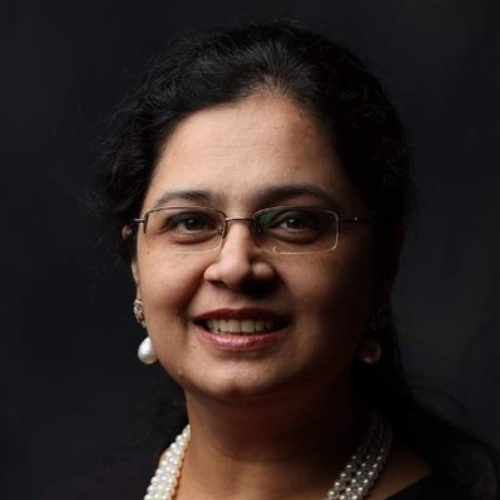
Food Security Winner
Shilpi Sharma, PhD
Indian Institute of Technology Delhi

Sustainability Winner
Purnananda Guptasarma, PhD
Indian Institute of Science Education and Research Mohali