New Insight into the Evolutionary History of Urban Mosquitoes
A new ‘Science’ paper by a Leon Levy Scholar on the London Underground Mosquito suggests that their ability to adapt to urban environments dates back further than previously thought.
Published October 31, 2025
By Nick Fetty
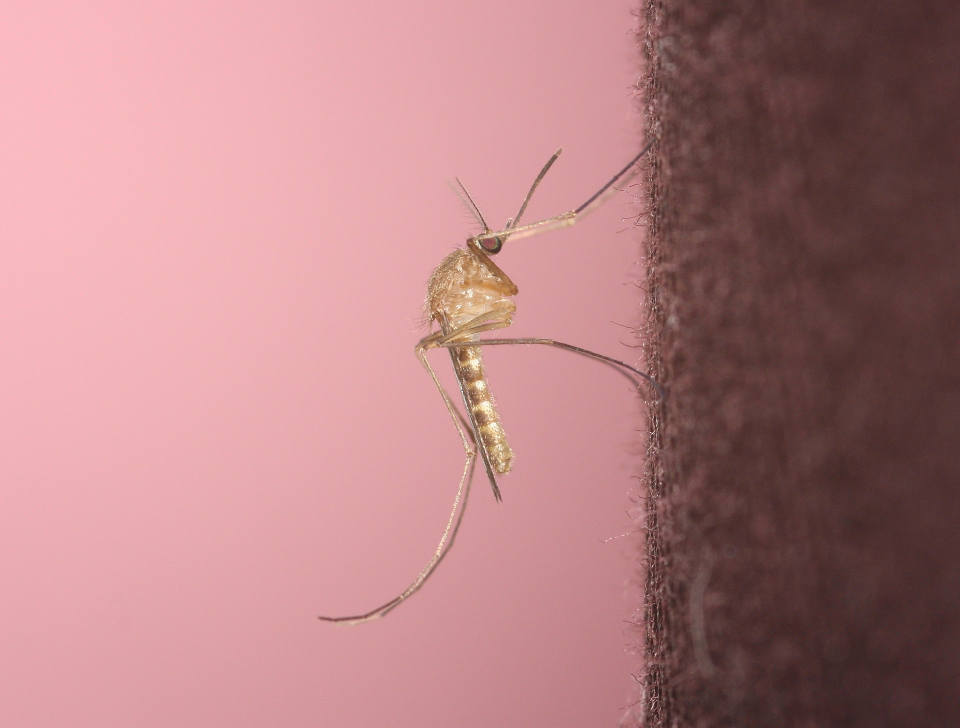

Culex pipiens form molestus, more commonly known as the London Underground Mosquito, has long been an example of the potential speed and complexity of urban adaptation.
Through years of underground habitation in the subways and cellars of northern Europe, the species is thought to have evolved from its bird-biting ancestors to an urban form, called molestus, that bites humans and other mammals. This is of interest to scientists because this characteristic within this species is thought to have contributed to the spread of West Nile virus in the United States and southern Europe over the past 20 years. While previous research has suggested that the mosquito evolved human-biting and other human-adaptive characteristics over the previous two centuries, new research published in the journal Science now shows this evolutionary history could date back more than 1000 years.
The paper was published in Science on October 23rd by a team of researchers, including first author Yuki Haba, PhD, a 2025 Leon Levy Scholar in Neuroscience. Named for the late philanthropist Leon Levy and administered by The New York Academy of Sciences, the Leon Levy Scholarships in Neuroscience aim to promote groundbreaking neuroscience research in New York City. The scholarship supports the most innovative young researchers during their postdoctoral research, which is a critical stage of their careers.
Analyzing Population Genomics
Dr. Haba built upon the research he did as a doctoral student at Princeton University. He applied his expertise in population genomics to the recent paper.
“As a behavioral and evolutionary scientist, I have been very much interested in the evolution of mosquitoes – whose human-biting behavior and the ability to vector deadly diseases are a threat to millions of people,” says Dr. Haba, who also serves as a postdoc at The Mortimer B. Zuckerman Mind Brain Behavior Institute at Columbia University. “I, together with my advisor Lindy McBride and more than 200 collaborators across the world, generated and analyzed the first global population genomic dataset of Culex pipiens, an important human-biting species. My expertise in population genomics was particularly helpful in analyzing large-scale datasets as well as in deciphering ecological contexts in which the human-biting mosquito originated.”
The research team sequenced the whole genomes of approximately 350 contemporary and historical Cx. pipiens mosquitoes from 77 populations across Europe, North Africa, and western Asia. They then used population genomic analysis, focusing on population structure, derived allele-sharing, phylogeny, and cross-coalescence, to better understand molestus’ evolutionary history.
“Our genomic data also provide a major revision to our understanding of gene flow between bird- and mammal-biting forms,” the researchers write. “We found that genetic signatures researchers previously ascribed to between-form hybridization instead reflect ancestral variation within bird-biting populations.”
Continuing to Evolve
The researchers now believe that molestus first started adapting to human environments more than 1000 years ago in the Mediterranean basin, likely Ancient Egypt or a similar early agricultural society.
“Rather than benchmarking the speed and complexity of urban evolution, this updated history highlights the role of early human society in priming taxa for colonization of modern urban environments,” the researchers conclude. “Our work also revises our fundamental understanding of gene flow in this important vector and opens the door to incisive investigation of the potential links between urbanization, hybridization, and arbovirus spillover to humans.”
Even though the researchers have shown that molestus has ancient origins, that doesn’t mean evolution has stopped. Once these mosquitoes moved underground, they faced a very different set of challenges — including the scarcity of hosts. In those settings, females that can lay eggs without a blood meal (a trait called autogeny) have a big advantage. This behavior and physiology are almost universal in northern underground populations but much less frequent in Egypt and surrounding regions.
“One exciting question for future research is whether that’s a bona fide recent, rapid adaptation to underground life, and whether it evolved just once or multiple times independently,” says Dr. Haba. “We think our study also has important and exciting public health implications, because molestus isn’t just a fascinating evolutionary story, it’s also a major vector for disease.”
New Avenues of Research
Aboveground molestus was once the primary carrier of a human-specific filarial parasite in Egypt, and it’s been implicated in the transmission of West Nile virus and other pathogens across Eurasia and North America. The researchers found that hybridization between bird-biting pipiens and human-biting molestus — which allows viruses to jump from birds to humans (referred to as ‘viral spillover’) — is much rarer than previously believed. What earlier studies interpreted as “mixing” often reflects shared ancient ancestry instead. But where hybridization does occur, it’s linked to human population density — meaning it happens more often in urban areas.
This finding gives researchers a new framework to explore how urbanization, gene flow, and disease transmission are all connected.
“By disentangling ancient variation from true hybridization events, we may be able to better predict where mosquitoes capable of bridging bird-to-human transmission might emerge,” says Dr. Haba. “We suggest future surveillance should incorporate as much genomic data and analyses as possible, so that we can better understand the links between urbanization, gene flow, ancestral variation, and viral spillover.”