Two Centuries of Science Research at Your Fingertips
Academy members will soon have access to the entire historical collection of the ‘Annals of the New York Academy of Sciences,’ dating back to 1823.
Published May 1, 2007
By Adelle Caravanos
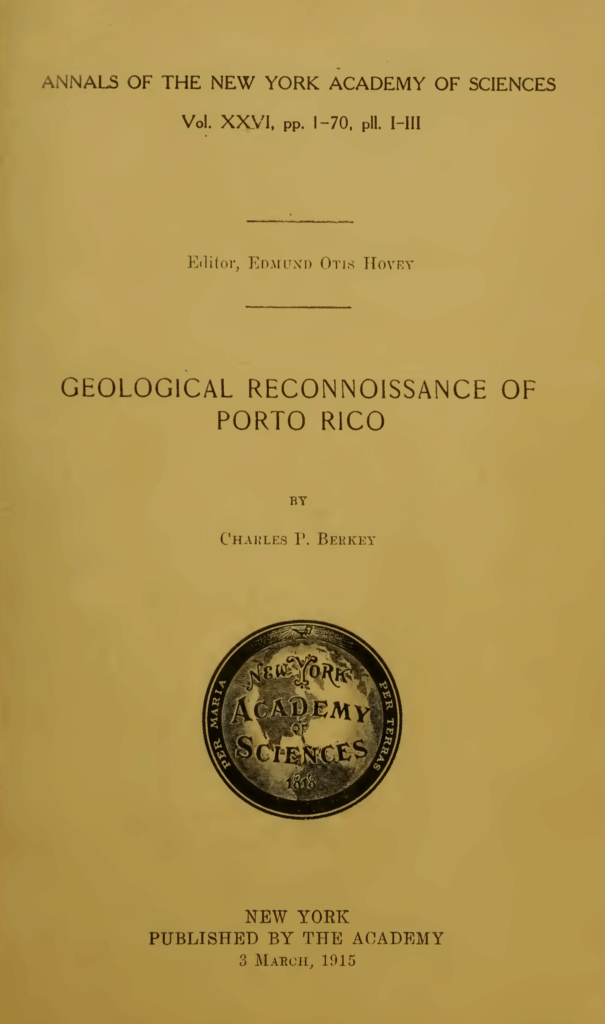
Published continually for 184 years, the Annals of the New York Academy of Sciences is now available online in its entirety for the first time. It stands as the longest-running American scientific serial publication. (Click here to visit the Annals archive.)
At the time the Annals was first published, two attempts at establishing an American scientific journal had recently failed: Historian Simon Baatz reports of one of those failures that “[Benjamin] Silliman had learnt a painful lesson: the fickleness of the scientific public often masqueraded as enthusiasm,” [1]. Distinguishing true enthusiasm from “fickleness” and adjusting the focus accordingly have been challenges for Annals editors ever since.
The Lyceum Years
For many years, the Annals published papers read by members at “sectional meetings” when the Academy was known as the Lyceum of Natural History in the City of New York. Some papers anticipate concerns that have only now moved into center stage: a paper on “sanitary science” (environmental pollution), “rather quaintly termed ‘filth among men,'” was published in the last Annals volume of the Lyceum days. [2]. The charm of antique language is one of the rewards of reading the early papers.
In the first Annals volume, DeWitt Clinton, just recently retired as governor of New York, began a paper on the ornithology of swallows with “a fanfare of allusions to classical authors, quoting Horace, Hesiod, and Virgil … Herodotus, Aristotle, and Pliny before getting down to scientific brass tacks.” [3] The swallow enthusiasts were undoubtedly happier with the lively, yet straightforward style of another contributor to the same volume: John James Audubon.
In following the successful formula of publishing the papers presented at its meetings, the Annals reflected the scientific interests of the day and remained viable by attracting support from sources such as the Audubon Fund, which subsidized publication until the early 20th century.
In 1899, about the time the Audubon Fund support was tapering off, the record of the Annual Meeting contained the following entry: “The publications of the Academy have been greatly improved as to quality, appearance, and dignity…The thanks of the Academy are certainly due to our enthusiastic and very careful Editor, Mr. van Ingen.”
The Leadership of Eunice Thomas Miner
Under the leadership of Eunice Thomas Miner (beginning in 1935), multi-day conferences rose in importance among the Academy’s activities, and the Annals began publishing conference proceedings. A landmark conference on electrophoresis was convened, paving the way for another conference, “Gel Electrophoresis,” held in 1963. It produced the two most cited Annals articles in history, by B. J. Davis and G. Scatchard, accumulating between them some 44,000 citations.
In the 1970s, the Annals editors broadened their remit by beginning selectively to consider for publication conferences that had not been sponsored and held under the Academy’s auspices. Science’s impact on society always raises controversy, and one quality of conference proceedings is that they allow speculative and often controversial assessments of a field. The Academy has discussed and published subjects years before the public became fully aware of their importance.
In 1973, the Annals published a paper by Raymond Damadian on the potential for NMR’s use in cancer research and diagnosis (Vol. 222). Annals also published early work on HIV and AIDS, with individual papers in 1982 and a full volume in 1984 (Vol. 437), followed by another in 1990 and two volumes on pediatric AIDS (1993, 2000).
The Academy was an early publisher of work on the neurologic basis for the self concept in psychology, beginning in 1961 (Vol. 91). In 1960, before the Surgeon General’s warning, the Academy convened and published the proceedings of a conference on cardiovascular effects of nicotine (Vol. 90). Volumes on asbestos (starting with Vol. 132 in 1965) have had a large impact on workplace health regulations.
Joining the Information Revolution
The Annals rose to the challenge of the information revolution with online publication in 1998, an initiative that no doubt assisted the steady increase of its impact and immediacy factors over the past seven years. The Academy currently publishes 28 new Annals volumes every year. The Institute for Scientific Information ranks the Annals in the top 2% of sources cited in the scientific literature. All Annals volumes dating back to 1823 have been digitized and are available in PDF format.
Access to Annals is one perk of being an Academy member. Not a member? Sign up today!
Notes
[1] Baatz, Simon. 1990. Ann. N.Y. Acad. Sci. 584: 31.
[2] Cullinan, Denis. 1993. Current Comments, #49 (Dec. 6), p. 403.
[3] Ibid.