Summary
April 24, 2026 | 8:30 AM – 6:00 PM ET
115 Broadway, 8th Floor, New York, NY 10006
Traditional descriptions of the scientific method explain how to test hypotheses but often leave unanswered how those hypotheses arise in the first place. Drawing on ideas articulated by François Jacob and further developed by Drs. Itai Yanai and Martin Lercher, “Night Science” refers to the creative, generative side of scientific inquiry, where new questions are formed, intuition is exercised, and novel associations are explored before formal hypotheses are defined. In contrast to “Day Science,” which emphasizes rigorous hypothesis testing and validation, Night Science highlights interdisciplinary thinking, ambiguity, and openness to unexpected connections as essential drivers of discovery.
The Night Science framework emerged from researchers’ lived experience of encountering conceptual dead ends and later recognizing that, like many experienced scientists, they had developed informal but powerful thinking tools to move forward. Night Science makes these essential creative practices visible, teachable, and shareable so that scientists can engage them intentionally from the start.
Join us to gain the tools needed to foster creative scientific thinking within your research community.
This training will be held in-person at the Academy’s space on 115 Broadway, 8th Floor, New York, NY 10006. Space is limited. Attendees are encouraged to register early.
About the Workshop
The Night Science Train-the-Trainer Workshop is a one-day, in-person program where scientists are trained to teach the Night Science Workshop on the Creative Scientific Process (CSP).
Workshop Focus and Activities
Participants in this program will:
- Engage deeply with the Night Science framework and its intellectual foundations;
- Explore and practice core thinking tools of the creative scientific process, including improvisational discussion, interdisciplinarity, the use of metaphor, question-generation techniques, and puzzle switching—strategically shifting between research questions to support creative breakthroughs;
- Learn effective instructional strategies for leading reflection, group dialogue, and hands-on exercises;
- Develop personalized narrative examples that model authentic engagement with scientific creativity;
- Examine the role of artificial intelligence (AI) as a support for creative scientific thinking, including how AI can function as a collaborative partner – prompting new ideas, challenging assumptions, and enabling the transfer of conceptual approaches across distinct fields;
- Receive guidance on adapting the workshop for different audiences, disciplines, and research environments.
What Participants Receive
Participants who complete the training will receive:
- Full curricular materials for delivering the Night Science Workshop on the Creative Scientific Process;
- A formal certificate of completion from the Night Science Institute;
- A verifiable Credly digital badge from the Night Science Institute, acknowledging their expertise;
- Ongoing support and connection through the Night Science Institute’s online community.
Institutions Where the Night Science Workshop Has Been Delivered
The Night Science Workshop and related courses have been delivered across institutions worldwide, with participants reporting strong value in applying these tools. Representative host institutions include EMBL, EMBO, Harvard Medical School, Karolinska Institutet, Memorial Sloan Kettering Cancer Center, the Pasteur Institute, Princeton University, and the U.S. National Institutes of Health. Together, these engagements demonstrate the workshop’s relevance across diverse research environments.
Speakers
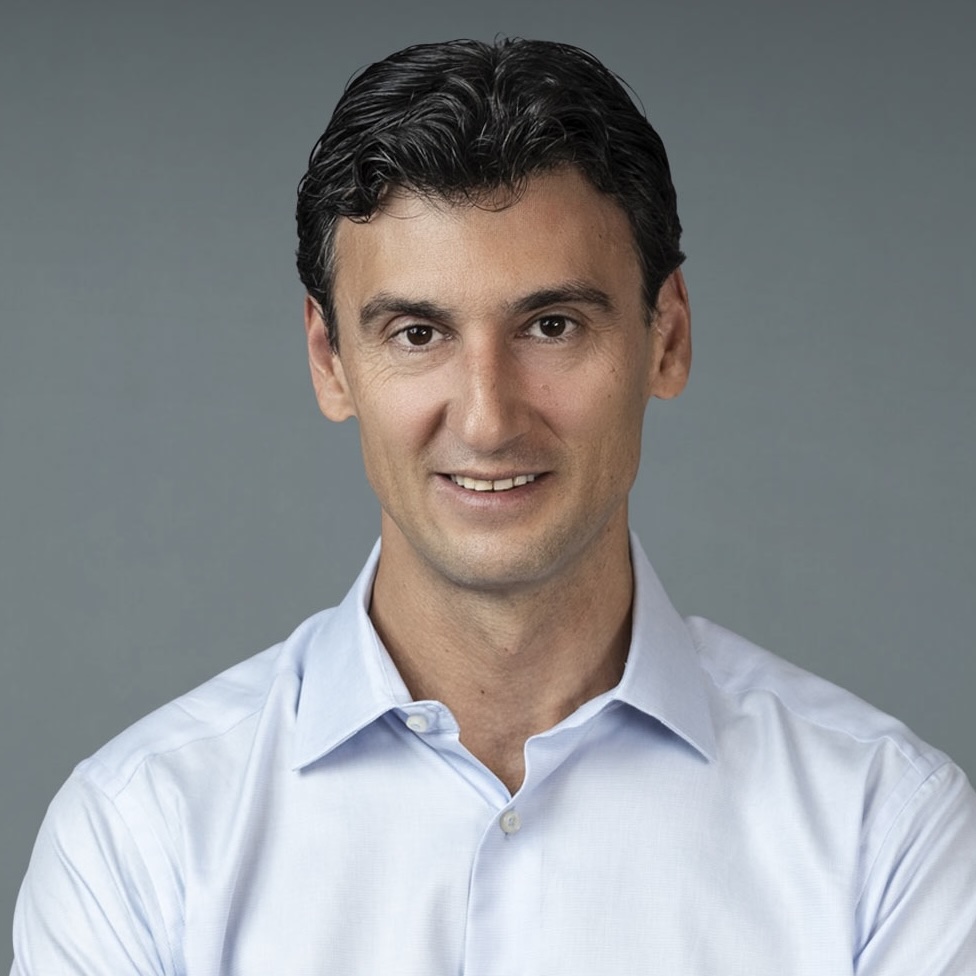
Itai Yanai, PhD
Co-Founder, The Night Science Institute
Scientific Director, Applied Bioinformatics Laboratories
Professor, New York University Grossman School of Medicine
Itai Yanai is a Professor at the New York University Grossman School of Medicine. He received his undergraduate degrees in Computer Engineering and the Philosophy of Science and his PhD in Bioinformatics from Boston University. After postdoctoral fellowships at Harvard University and the Weizmann Institute of Science, Yanai set up his independent lab at the Technion – Israel Institute of Technology, which became a pioneer of the single-cell RNA-Seq approach and its application to the study of evolution and development. The Yanai lab moved to NYU in 2016 and since then has been using computational and experimental approaches to make contributions to understanding cellular plasticity in the fields of tumor progression, cancer drug resistance, host-pathogen interactions and bacterial genome regulation. Together with Martin Lercher, Yanai has also co-authored a popular science book, entitled “The Society of Genes” and has co-founded the Night Science Institute which champions a cultural shift in science by training researchers to embrace the creative Night Science process as an essential complement to rigorous hypothesis testing.
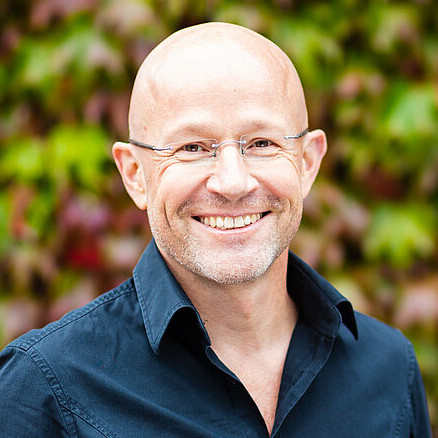
Martin Lercher, PhD
Co-Founder, The Night Science Institute
Professor, Heinrich Heine University Düsseldorf
Martin Lercher is a Professor at Heinrich Heine University Düsseldorf, Germany, with joint affiliations in the Institute for Computer Science and the Department of Biology. He received his undergraduate training in Physics from the University of Cologne and earned a PhD in Mathematical Physics from Cambridge University. After a successful stint in management, he conducted postdoctoral work in evolutionary genomics as a Royal Society University Research Fellow at the University of Bath, UK, and as a Heisenberg Fellow at the European Molecular Biology Laboratory (EMBL) in Heidelberg. In Düsseldorf, he established an interdisciplinary research program that develops mechanistic, physics-based models of biological systems, with a particular emphasis on thermodynamics and metabolism. His work spans bacterial cells and whole plants and combines mathematical modeling, genomics, and deep learning to understand how biological systems function and evolve in different environments. Lercher is also deeply engaged in scientific education, leading the development of a novel bachelor’s program in Quantitative Biology at his university. Together with Itai Yanai, he has co-authored the popular science book “The Society of Genes” and co-founded the Night Science Institute with the mission to transform the culture of science toward the appreciation and the explicit teaching of the creative part of the scientific process.
Sponsor
Registration
Registration has closed.