Radiantis: Solar in Structure
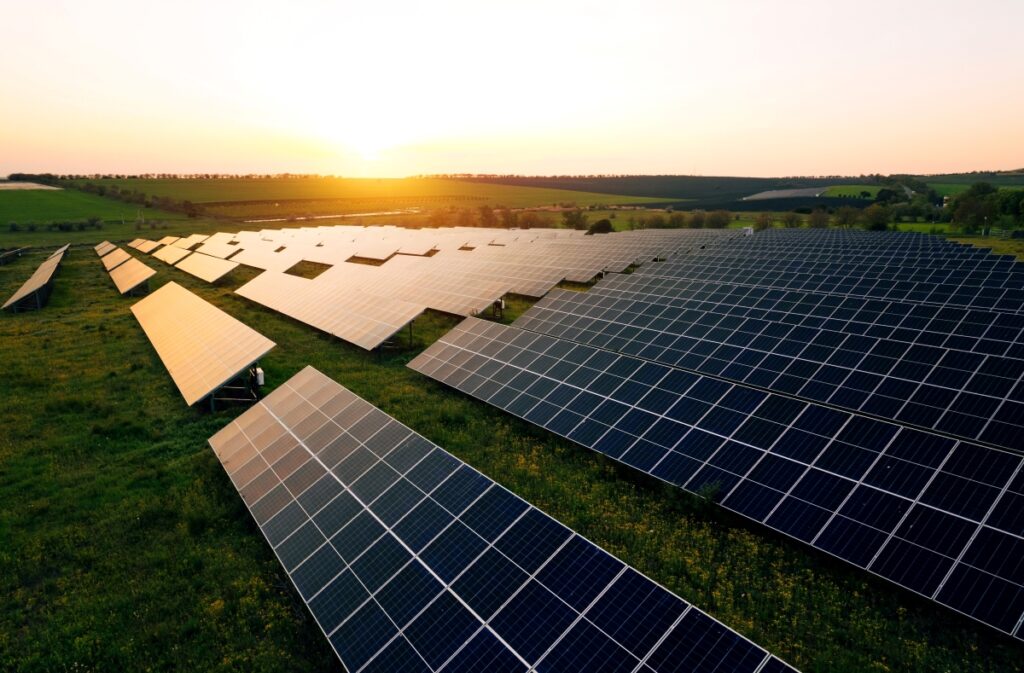
As rising global energy demand increases pressure to expand renewable power sources, in particular solar power, the winning team in the Fall 2025 Junior Academy Innovation Challenge developed an automated system to keep solar panels clean and operating efficiently.
Published May 8, 2026
By Nicole Pope
Winner of the Junior Academy Challenge – Fall 2025
“Energy Infrastructure: Solar Power”
Sponsored by The New York Academy of Sciences
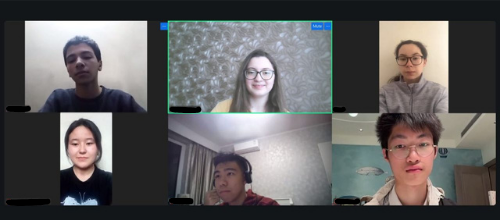
Team members: Hosila K. (Team Lead) (Uzbekistan), Yifan (Trevor) X. (China), Mohammed A. (Egypt), Nazli M. (Azerbaijan), Ruiheng (Ryan) W. (China), Lowri P. (United Kingdom)
Mentor: Ranjit Sahu (Virginia, United States)
Demand for energy keeps growing around the world, boosted in part by power-intensive new technologies like artificial intelligence (AI). Increasing energy production from renewable sources – solar power, in particular – is an obvious choice to curb greenhouse emissions and reduce dependence on fossil fuels. But issues like aging power grids designed for fossil fuels or fluctuations in solar energy output still hinder the adoption of renewable energy in some countries.
The teams participating in the Fall 2025 Junior Academy Innovation Challenge were asked to design an innovative and scalable solution to address infrastructure and storage issues, andmake solar energy use more reliable, efficient, and economical. The six international members of the winning team, from China, Uzbekistan, Egypt, Azerbaijan, and the United Kingdom, focused on developing automatic systems to keep solar panels clean, thus ensuring they can function at maximum capacity.
Initial Research
The team’s initial research revealed that solar panels can lose 10-15% of their efficiency, and up to 25% in arid regions, in just a few weeks. This translates into up to $10 billion losses annually for the industry. To promote wider adoption of solar power, the participants decided to tackle the maintenance of solar panels, an often overlooked but crucial aspect of solar energy. “I was shocked to learn that ‘soiling’ dust building up on panels is actually a multi-billion-dollar problem that can slash efficiency by more than 25%,” explains Team Lead Hosila H. “That showed me maintenance and technical issues are just as important as affordability in the clean energy transition.”
Collaborating online through the Launchpad platform, the participants designed the Distributed Predicted Reflex System (DPR), a sophisticated, self-operating device that keeps solar panels clean without human intervention and thus optimizes power generation. “Through mutual collaboration, we transitioned from initially working independently to making progress as a group, supporting each other with a clear division of labor,” says Ruiheng (Ryan) W., who offers a reminder that ensuring access to “affordable and clean energy like solar power, and ensuring people benefit from technological convenience and harmonious communities” is one of the 17 Sustainable Development Goals (SDG) of the UN 2030 Agenda.
A Fully Autonomous Solution
Internally, their 3D model includes a processor, the system’s brain, which monitors dust buildup, as well as DC motors and relays to activate the cleaning mechanisms. The exterior design features two antennas (a short-range Zigbee for local mesh networking and a long-range LoRaWN for cloud communication). A waterproof casing integrates power inputs from the solar panels, environmental sensor ports, and nozzle outlets for targeted air-jet cleaning. The system can be mounted securely to solar panel frames and draws power directly from the host panel. When sensors detect levels of soiling that disrupt power generation, compressed air travelling through the tubes is released to remove accumulated dust.
To make their solution fully autonomous, the team members gave their system three core attributes or functions. They made it “distributed”, which means that devices form a local network that works even if central communication fails. The DPR is also “predictive” and can forecast coming dust storms using weather data and act in advance. The DPR was given a “reflex” function, using sensors and smart algorithms to detect dust and activate air-based cleaning automatically. “The most important lesson I learned is that innovation is not only about having a big idea, but also about smart execution, strong team spirit, solid research, and the dedication of all team members,” says team member Mohammed A.
An Ambitious Project
With this ambitious project, the team aimed to turn solar panels into fully responsive assets that can maintain peak efficiency while supporting grid stability. Team member Yifan (Trevor) X. was already interested in solar power before working on this project with his international teammates. “Previously, I independently completed a prototype design for a solar cleaning vessel,” he explains. “This team collaboration made me realize that regular discussions and phased progress can achieve research goals more effectively. This further strengthened my belief in international scientific cooperation.”
While designing their project, the high school students also focused closely on sustainability and environmental impact. They estimated that the DPR, deployed in a 1 MW solar farm, could save 1 million liters of water annually, or the equivalent of drinking water for 2,500 people, while the energy recovered through cleaning would be sufficient to power an additional 200 homes.
“Academically, I realized that for a project to be successful, you have to consider an array of factors and consequences, even if they go against what you are trying to propose,” says team member Lowri P. The device they conceived has a modular design, which makes it easy to repair, and is built to last at least seven years. More than 90% of the components can be recycled at the end of its life.
“Working together with others helps you see the world through different perspectives and appreciate the power of teamwork in achieving meaningful outcomes,” says team member Nazli M. “This experience taught me that innovation is not about having access to the best resources — it’s about creativity, collaboration, and determination. Even with limited resources, it’s possible to create something truly significant.”