Iguanas and Geckos and Snakes…Oh My!
From geckos that can get a grip on any surface, to snakes that slither in secret hiding spots, a new exhibit at the American Museum of Natural History celebrates reptiles.
Published July 17, 2006
By Alison Snyder
Scaly, slithering, spitting, and poisonous. It’s little wonder so many people consider reptiles to be revolting! But a new exhibit at the American Museum of Natural History illuminates the bizarre beauty of these creatures, allowing the curious a closer look through January 7, 2007.
Lizards and Snakes: Alive! is an impressive showcase of more than 60 live reptiles representing 27 species from the Amazon, the Caribbean and Galapagos Islands, and countries including Cuba, Egypt, Fiji, Guatemala, Kenya, Madagascar, Mexico, New Guinea, New Zealand, Sudan, and the United States. Visitors get the chance to meet at least one unique member of each reptilian family.
Observe an electric green Cuban Knight Anole, famous for its ability to change the color of its skin in response to the environment or other stimuli. Like kindred anoles, it presents a bright red throat sac when courting mates. Nearby, get a close look at the sticky toes of lined-leaf tailed geckos as they suction themselves to their glass cases, or zoom in on them with a remote controlled camera that hangs in the tank.
Studying Squamates
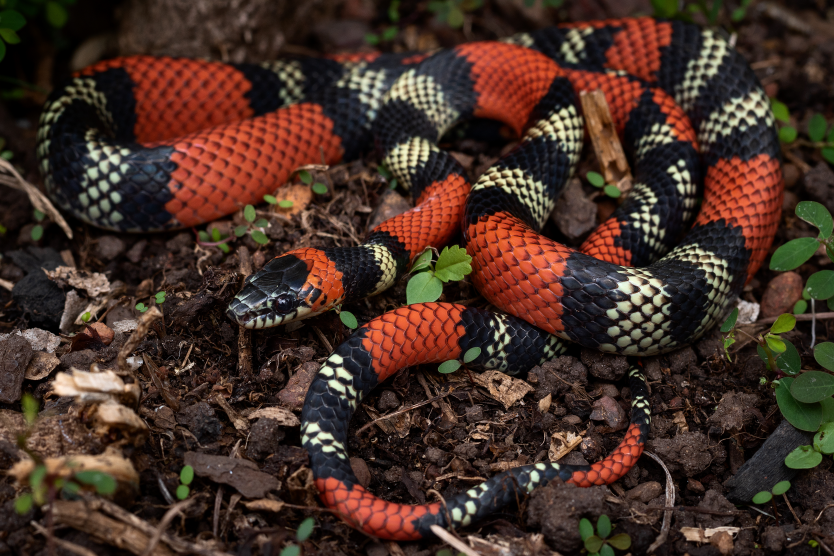
Half of the show is dedicated to snakes, small and large. A squat and velvety Gabon Viper steals the show with its leaf patterned head that allows it to disappear into its surroundings and sneak up on its prey. Next door to it, the Campbells Milk Snakes protect themselves by imitating the bright striped colors of deadly Coral Snakes, illustrating mimicry in nature.
For all their differences, members of this diverse group known as squamates share some distinct characteristics. Their common ancestry is explained in an evolutionary tree that greets visitors, and displays dispersed around the museum describe how squamates smell with their tongues and see the world all around them. In the squamate studio at the end of the exhibit, children can test what they learned about lizards and snakes and find out why scientists are interested in studying squamates.
Dying to know what lizards and snakes feel like? The studio also has reliefs of snake skins and lizard scales, if you’re brave enough to touch.
Also read: A Case for Going to Bat for the Bats