Health 2.0: Digital Technology in Clinical Care
Medical experts will convene to discuss how digital tools and strategies can improve healthcare for both providers and patients.
Published March 18, 2013
By Diana Friedman
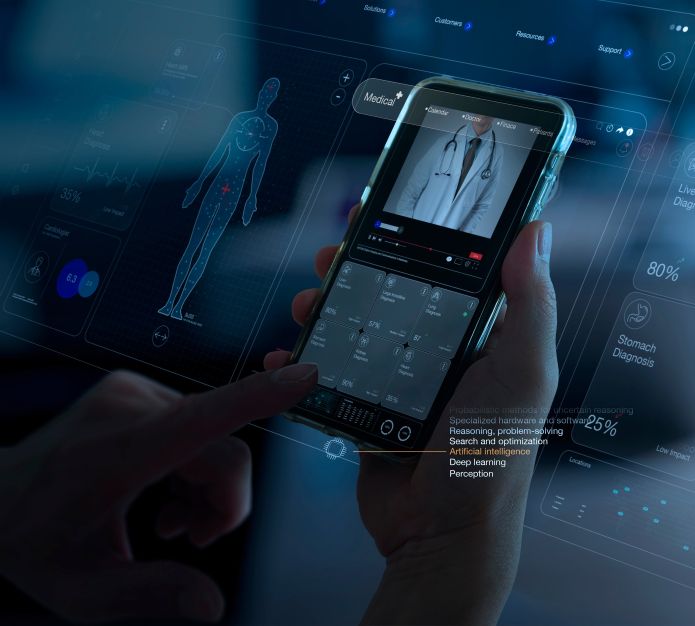
On Friday, March 22, 2013, the New York State Department of Health AIDS Institute, the Josiah Macy Jr. Foundation, and the New York Academy of Sciences, will present a one-day conference and simulcast webinar on Health 2.0: Digital Technology in Clinical Care to discuss emerging digital tools and strategies and their impact on healthcare, particularly related to HIV/AIDS and sexually transmitted infections (STIs).
“Connected health programs, including remote monitoring, mobile health (mhealth) initiatives, relational agents, sensors and other technology-enabled interventions can create behavior change, generate efficiencies and improve the quality of patient care,” says Joseph C. Kvedar, MD, Center for Connected Health, Partners HealthCare, Boston, Mass.
Medical labs in a phone, wearable monitoring devices, virtual nurses, consulting robots, interactive mobile devices, tailored texting, and 3-D anatomy lessons-these and other technologies promise dramatic change in medicine.
They will move point of care to wherever the patient is, vastly expand medical knowledge available to clinicians, researchers, and patients, and refocus health systems on wellness.
“Information technologies are transforming every facet of our society. The influence of information and communications technologies in healthcare practice is in its infancy, yet the potential is significant. Increasing evidence suggests that health information technologies may help us address healthcare disparities,” says Michael Christopher Gibbons, MD, Johns Hopkins Urban Health Institute, Baltimore, Maryland.
The conference, for clinicians, researchers, and educators, will be held at the New York Academy of Sciences in downtown Manhattan. CME credit will be available for onsite participants.
Strategies and Tools
Presentations will focus on strategies and tools designed to improve patient outcomes, provider communications, clinical decision support, research, and medical education. Legal and ethical issues, such as privacy and professionalism in e-health interactions, will also be discussed. Please note: The event will not address electronic health records, meaningful use, or health IT infrastructure.
Speakers are from The Center for Connected Health, the Center for Democracy & Technology, Daktari Diagnostics, Inc., IBM’s Watson Research Center, MIT Media Lab, the Health Games Research program of the Robert Wood Johnson Foundation, RTI International, and academic institutions including Columbia, Johns Hopkins, Northeastern, UC San Francisco and Santa Barbara, and New York University.
The event is the most recent in a series of activities sponsored by the New York State Department of Health AIDS Institute starting in 2010 to explore various aspects of health communications related to HIV and STIs, including social media, social marketing, message development, storytelling, and consumer engagement. It is also part of the New York Academy of Sciences’ Translational Medicine Initiative, sponsored by the Josiah Macy Jr. Foundation.
Also read: A Public Good: Accelerating AIDS Vaccine Development