The Woman Who Advanced 1950s Cancer Research

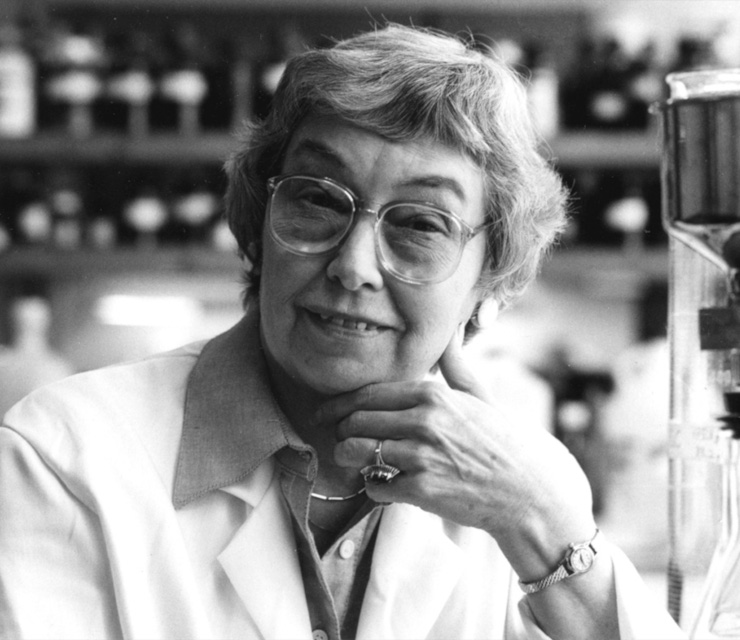
A woman poses in a research lab.

How a cancer researcher in the 1950s persevered when others were skeptical about her hypothesis — and ultimately changed the scientistic mindset.

Published January 1, 2017

By Marie Gentile and Robert Birchard

It was the early 1950s and two female scientists at Sloan Kettering were peering into a new electron microscope when they saw something unusual.

Both of them, Charlotte Friend and her co-worker Cecily Selby, had already earned their PhDs in bacteriology and were conducting further research on Ehrlich ascites carcinoma, a type of mouse tumor often used in cancer studies. Suddenly, the women noticed that the arrangements of particles in the tumor cells looked similar to cells infected with certain types of viruses. Could this point to a possible link between viruses and cancers?

At the time, the hypothesis that viruses can cause cancer was in its infancy — a few researchers had pondered the idea, but most scientists viewed it as illogical. To make researchers consider this seemingly absurd concept required a major shift in scientific mindset. But Friend, who would go on to become the first female President of the New York Academy of Sciences, was not the type of person to give up easily.

Growing Up

A daughter of Jewish immigrants, she was born in New York City in 1921 in Lower Manhattan, and developed her interest in medicine early — possibly because her father died from a heart infection when she was three.

After the stock market crash of 1929, her family was forced to go on public assistance, but despite growing up poor Friend was very focused on school and education. At ten, she had already mapped a scientific path for herself, detailing it in her school essay “Why I Want to Become a Bacteriologist.” She studied at Hunter College, received her Ph.D. at Yale, and continued her research as an associate professor in a program run jointly by Sloan Kettering and Cornell University.

Friend spent several years testing the viral-cancer-link hypothesis on mice. After multiple attempts, she showed that it was possible to transmit leukemia from one rodent to another, by injecting one mouse with tissue taken from another.

Overcoming Skepticism and Ridicule

Conducting research proved easier than presenting its results. When Friend first spoke about her findings at the American Academy of Cancer Research, she was met with such strong skepticism and ridicule that the memory stuck with her for the rest of her life. Twenty years later she described that experience in her presidential address to the American Academy of Cancer Research: “By no stretch of the imagination could the violent storm of controversy that erupted after the presentation have been anticipated.”

She bravely submitted to the barrage of questions despite the emotional turmoil, but didn’t necessarily manage to convince the attendees of her theory. Despite the cold shower of skepticism, Friend remained convinced of her idea, and continued to pursue it.

In 1957 she published her controversial findings in the Journal of Experimental Medicine. Shortly after, well-known researcher Jacob Furth replicated her results. Other scientists began pondering similar hypotheses, and the idea that cancer can be caused by a virus started to take hold. The scientific mindset was changing, finally.

An Overdue Recognition

By the 1960s Friend’s work was receiving its due academic recognition. In 1962 she became a recipient of the Alfred P. Sloan Award for Cancer Research. She helped establish the concept of the oncovirus, a virus that causes cancer. Her research is now used in developing HIV vaccines, and the leukemia virus she discovered, which was named after her, serves as the model for viral leukemogenesis studies.

But Friend wasn’t finished. In 1966 she began working at the new medical school at Mount Sinai Hospital, directing their Center for Experimental Cell Biology. While there, she made another crucial oncological discovery: cancer cells can be stopped from multiplying and revert to being normal cells through a chemical treatment by a compound called dimethyl sulfoxide. Such treatment could lead to new ways of fighting cancer, different from the traditional chemotherapy that works by killing tumor cells.

In the 1970s, Friend finally received the recognition she deserved. She was asked to serve as President of the Harvey Society and the American Association for Cancer Research. In 1976, she was elected into the National Academy of Sciences, which was a great scientific honor. Only a year later, she was serving as the New York Academy of Science’s Chair of the Fellowship and Honorary Life Membership committee, charged with reviewing nominations from Academy Members.

The Impact of the Academy’s First Female President

Within another year, Friend became the first female President of the Academy. The appointment was well-deserved for such a visionary pioneer of the sciences, as the Academy’s newsletter noted: “The more than one hundred papers she has published have been in such fields as viral oncology, regulation of cell growth and differentiation, virus/host-cell relationships, immunology and molecular biology.”

While working as the Academy’s President, Friend continued her scientific quests, all the while serving as a role model for young female researchers who pursued a science career at a time when few women were able to choose that path.


Also see:

Pioneering Anthropologist Advances the Academy

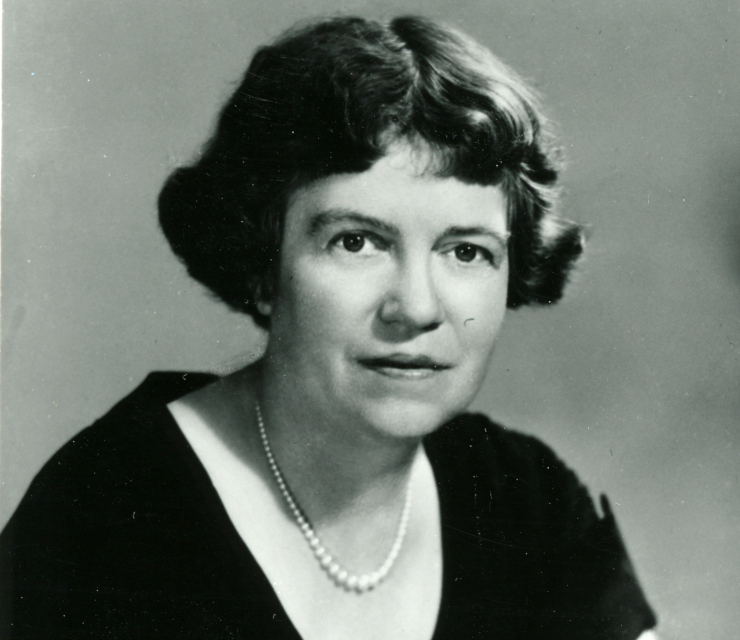
A woman wearing pearls.

Anthropologist Margaret Mead brought attention to cultural perspectives on scientific change.

Published January 1, 2017

By Marie Gentile and Robert Birchard

“The Academy has stood for new ideas, for the adventurous and experimental,” said Margaret Mead, at a celebration of the Academy’s 150th anniversary in 1967.

“Adventurous and experimental” well describes Mead’s own career. As a new PhD in the 1920s, she carried out pathbreaking—and controversial—anthropological fieldwork on childhood and adolescence among indigenous South Pacific peoples. She later turned her attention to the context of youth in her own society, famously commenting on the “generation gap” of the late 1960s.

An outspoken public intellectual, Mead became, during her lifetime, America’s most famous anthropologist. And she used her decades-long association with the Academy to bring attention to cultural perspectives on scientific change in an era that spanned the development of nuclear weapons to the energy crisis of the 1970s.

Getting Involved with the Academy

Mead first became involved in the Academy in the 1930s. By then she had already made her mark with her best-selling books Coming of Age in Samoa and Growing Up in New Guinea.

Her professional home was in New York City, at the American Museum of Natural History (AMNH), where she became Curator of Ethnology—and where the Academy’s headquarters occupied two rooms during the 1930s and 1940s.

It’s possible that Eunice Thomas Miner, the Academy’s Executive Director at the time, recruited Mead—Miner initiated an unprecedented Membership drive in the late 1930s. Both women held the title of Research Assistant at AMNH, where they became friends as well as colleagues.

For the next 40 years, Mead’s perspective as an anthropologist shaped Academy affairs. She understood science as a product of culture. In Academy forums and elsewhere, she compared science in different national contexts, professional and public understanding of science, and perception of science by young people and older generations.

Her many articles and talks on the implications of these different perspectives—whether for nuclear war, space exploration, science education, scientific literacy of the public, and other issues—converged with a growing concern within the Academy about the place of science in society.

Contributions to the Academy

Throughout this time, Mead contributed research to Annals, organized meetings, and served the Academy in official capacities, at different times as Chair of the Anthropology section, Vice President of the Scientific Council, and Vice President of the Academy.

The Academy first provided a platform for Mead’s research in 1942, when it published her book with Gregory Bateson, Balinese Character: A Photographic Analysis. Carried out from 1936 to 1938, Bateson and Mead’s fieldwork in Bali made unprecedented use of photography and film, generating some 25,000 still images.

Earlier anthropologists had taken photographs, but this project was the first to do so on such a large scale, and also the first to present the visual record as the primary scientific evidence with written documentation secondary. The book helped launch the new field of visual anthropology and it remains a classic today.

As she became more involved with the Academy, Mead valued its ability to convene experts in “symposia on the growing edge of knowledge,” as she put it—and “the structure it provided for creative interchange among the sciences.”

Considering the Cultural Implications

In October of 1957, one of these frontiers was launching earth-orbiting satellites. Mead later recalled that the announcement of the Soviet Sputnik launch came only two hours after she had mailed invitations to an Academy conference on the cultural implications of “man in space.” The conference was held later the same month, and the proceedings were published in Annals the next year.

By the 1970s, when the cultural relevance of science came more and more into public view, Mead returned to theme that she often explored—the distance between specialists and non-specialists; between scientists and the public. To her thinking, improving science education at all levels was vital to bridging this gap and ensuring both scientific advances and informed public debate and decision-making.

These and many other issues that Mead tackled in the 1960s and 1970s remain relevant to the Academy today, including childhood nutrition and the challenges faced by women in science. She was, “Always helpful to this Academy,” in the words of a 1973 citation praising her as an Academy Governor, and could “be counted on for sound advice based on high principles.”

Learn more about Mead


Also see:

The Critical Role of Democracy in Advancing Science

A cover shot of the publication Annals of The New York Academy of Sciences.

A look at the history and future of two groundbreaking bastions of knowledge dissemination.

Published August 1, 2014

By Gina Masullo

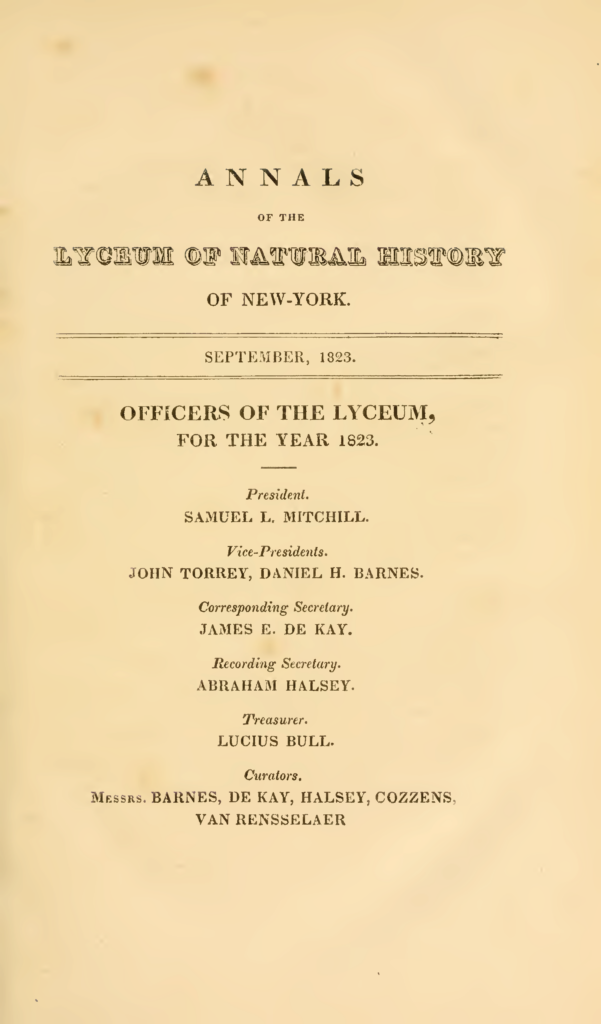
The cover for the September 1823 issue of Annals of the Lyceum of Natural History of New-York.

In an industry with more than 28,000 academic journals, to say that interested audiences have abundant choices for how they consume scientific information would be a gross understatement. But that wasn’t always the case. When the first issue of Annals of the New York Academy of Sciences (Annals) was published in 1823, it was one of only a handful of scientific journals, most of them unsuccessful, and it had around 100 subscribers—a number that remained stagnant for several years.

Though the interdisciplinary peer-review journal had an inauspicious start, its debut publication sparked a rich tradition of excellence and innovation in scientific publishing. Annals evolved from a resource for local scientific elites into a much respected and cited journal that’s read the world over, one of the longest continuously published scientific serials in the United States and a powerful symbol of the democratization of cutting-edge scientific information. Today, the Academy’s flagship publication, Annals has published more than 1,300 volumes over 191 years.

As the Academy began researching a variety of topics in greater detail during its first decades, its popularity grew; and, by association, so did interest in Annals. Sales of the journal quadrupled in 1939, the same year Eunice Miner was appointed executive secretary of the Academy. Miner passionately expanded the number of Academy memberships and hosted events; accordingly, Annals’ distribution increased exponentially.

By the 1960s, the Academy was sponsoring several dozen conferences a year, and distributing Annals to an audience of about 40,000. Each issue informed readers about the Academy’s conference proceedings, on topics increasingly varied and newsworthy—and a look back through its pages is a window into the challenges the scientific community has faced and overcome throughout history.

The First Large Scientific Assembly on Antibiotics

In 1946, for instance, the Academy hosted the first large scientific assembly on antibiotics, with a particular focus on combating tuberculosis. Margaret Mead published several Annals papers during her time as vice president at The New York Academy of Sciences in the 1970s; other notable contributors over the years have included Paul Ekman, Franz Boas, Edmund B. Wilson, Joshua Lederberg, and Ralph Steinman.

The Academy’s Puerto Rico survey, initiated in the early 20th century, attracted perhaps the most attention of all. Co-founder of the New York Botanical Garden (and Academy member) Nathaniel Lord Britton initiated a four-year study of the island’s geology, botany, and zoology. Starting in 1914 and including research from scientists in various sectors, the survey was the first and most comprehensive of its kind.

Reports from the island, published in Annals as well as the Journal of the New York Botanical Garden and the Bulletin of the American Museum of Natural History, were so well received that the project quickly grew in size, scope, and financial backing. By the summer of 1916, 23 research groups had visited the island to examine areas including entomology, mycology, anthropology, and paleontology. The groundbreaking project ultimately expanded to the Virgin Islands, incorporated research from an international community of scientists, and lasted more than 25 years, culminating in the publication of the multi-volume Scientific Survey of Puerto Rico and the Virgin Islands.

Expanding Scope & Reach

A cover shot of the publication Annals of The New York Academy of Sciences.

Annals has documented a large proportion of the conferences held by The New York Academy of Sciences, and, since 1981, it has covered news and discoveries from unaffiliated scientific conferences as well. With the expansion of technology and excitement for attention-grabbing efforts such as space exploration, interest in the Academy and its flagship publication continued to grow.

So, too, did the journal’s scope and reach. Annals is now available in 4,505 institutions worldwide via a partnership with the Wiley Online Library of licensed subscriptions, and in thousands of institutions in the developing world via philanthropic initiatives. During the last year (June 2013 – June 2014), Annals was the fifth-most accessed journal among Wiley’s 2,304 journals, where it received 2,283,137 visits. Google Scholar ranks the journal number 10 on its list of top health and medical science publications, in the company of esteemed publications like The New England Journal of Medicine and The Lancet.

Douglas Braaten, PhD, editor-in-chief of Annals of the New York Academy of Sciences and executive director of science publications, explains the journal’s continued relevance this way: “One of the most unique things about Annals is the ability to produce individually themed issues. We can essentially design what we publish; currently, that’s 28 individual projects per year, on varying topics—so readers really get both scope and depth into the topics.

“We also produce volumes stemming from conferences, which is one of the reasons Annals continues to be unique; we will commission papers from the invited speakers in a field from an international conference. The resulting collection of papers provides a state-of-the-art view of a topic for people who weren’t in the room. We have over a 100-year history of providing conference proceedings, the aim of which is to democratize scientific information.”

A Stellar Reputation

Also important to the publication’s stellar reputation is “a high-quality, peer-review process” and “traditional journal standards and ethics.”

Alongside its stalwart ethics, the Academy’s commitment to innovation ensures Annals’ growing influence and credibility. Within the last decade, annual reviews of specific scientific topics have become a staple of the publication.

George Uhl, PhD, chief of the Molecular Neurobiology Research Branch at the National Institute on Drug Abuse, serves as editor of the Annals series Addiction Reviews. “I don’t think there is anything like it in addiction, and I serve on several publication committees in this area,” he says. “The effort with Addiction Reviews is to try to review things that are getting to the point of being interesting rather than things that are already acknowledged by everyone as interesting, and I think that has helped the impact factor”—a statistic that calculates the average number of outside citations per article—which for this series is an impressive 13, compared to similar publications’ typical scores of two or three.

Other annual review topics include The Year in Cognitive Neuroscience, edited by Michael Miller, PhD, professor and vice chair of psychological and brain sciences at UC Santa Barbara, and Alan Kingstone, PhD, distinguished university scholar and professor of psychology at the University of British Columbia.

“Starting up an annual review in cognitive neuroscience was such an obviously brilliant idea,” explains Kingstone. “The field was nearly 20 years old, and there was a real need to provide those in cognitive neuroscience with a place to pull together key ideas on an annual basis.”

The Value of Themed Volumes

He continues, “The value of the themed volumes is evident in the impact that it has had on the field since its initial publication in 2008. As of last year, the reviews contributed to The Year in Cognitive Neuroscience have averaged 38 citations. The very first article in the 2008 edition, “The brain’s default network,” has been cited over 2,500 times. This impact rivals some of the most highly regarded journals, and demonstrates the high value the field places on these review articles to keep researchers up to date on a quickly evolving field.”

The Academy remains committed to quality of research, as well as innovation in information delivery. The number of methods the Academy uses to communicate research and ideas to the scientific community and beyond continues to grow. The 191 year-old journal has evolved from a print-only publication to a robust collection of interactive multimedia tools. Thanks to its partnership with Wiley, Academy members and institutions with Annals benefits can access every volume ever published via the Academy website; they can even read archives via a free mobile app.

eBriefings: Multimedia Science Reports

Further illustrating its commitment to bringing comprehensive, cutting-edge scientific information to a truly global audience, in 2003 the Academy introduced eBriefings: interactive, userfriendly web resources that increase the longevity and impact of Academy events. Conceived in the wake of the Academy’s interdisciplinary SARS conference, eBriefings are now a standard offering, providing the benefits of Academy events and conferences to those who are unable to attend in person.

The multimedia presentations include meeting summaries written by science writers and scientists, a selection of speakers’ slides and audio, and links to related information. Over the last decade, eBriefings have been cited by news outlets including The Wall Street Journal, US News & World Report, and Med News Today. They receive around 10,000 unique page views each month; in the last fiscal year, the presentations were accessed from more than 140 countries.

Explains Brooke Grindlinger, PhD, executive director of scientific programs at the Academy: “eBriefings offer everyone within the global scientific community access to today’s cutting-edge knowledge conveyed by world-renowned leaders in almost every discipline in science and technology. It’s your science, on your schedule, sowing the seeds for your next big idea.”

The Academy produces approximately 60 eBriefings each year; recent topics have run the gamut from Alzheimer’s disease to the use of “big data.” The online resources are presented in partnership with a global network of partners, including The Global HIV Vaccine Enterprise, The Johns Hopkins Bloomberg School of Public Health, The National Institutes of Health, and The U.S. Food and Drug Administration.

Expanding Interest in Emerging Topics

Jeanne Garbarino, PhD, director of science outreach at Rockefeller University, led an Academy panel in September 2013 titled “Crowdfunding: An Emerging Funding Mechanism for Science Research.” She explains that the eBriefing helped expand interest and research in this emerging topic: “It allowed me to connect with others who are interested in this topic, and also provided an opportunity to discuss more ways in which crowdfunding could be applied to scientific research.”

Garbarino adds, “Given the disproportionate distribution of scientific and educational resources in our nation, providing free access to high quality materials is always a good thing.”

This egalitarian approach to the dissemination of scientific knowledge is quite fitting in the context of the Academy’s history. As early as 1903, audiences filled the lecture hall at the American Museum of Natural History to hear Academy presentations on topics such as the Mount Pelée volcano on Martinique or the physical and economic aspects of Mexico. These presentations were particularly appealing because they incorporated cutting-edge technology of the time—lantern slides and stereopticon—that helped bring scientists’ invaluable research to life.

Hints Braaten, the editor of Annals: “A new contract with Wiley is reinvigorating Academy publishing and opening new avenues, such as Academy book publishing.” And as the technology and science fields continue to evolve, you can be sure that the Academy’s approach to disseminating vital information will, too, ensure that scientists and non-scientists alike will have access to globe-changing ideas and evidence for generations to come.


About the Author

Gina Masullo is a journalist in New York City.

Two Centuries of Science Research at Your Fingertips

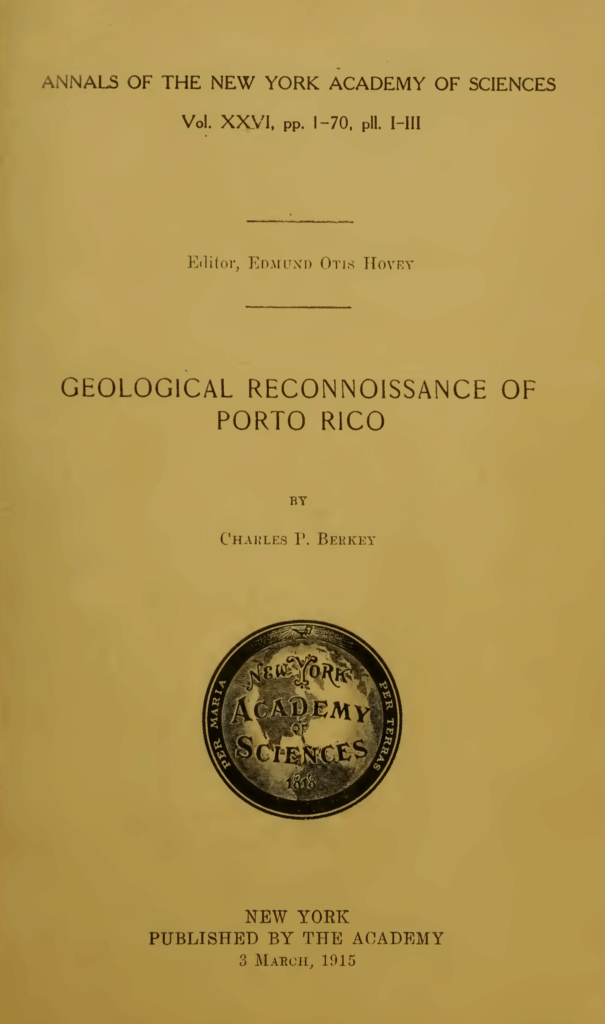
The front cover of 'Annals of the New York Academy of Sciences' in 1915.

Academy members will soon have access to the entire historical collection of the ‘Annals of the New York Academy of Sciences,’ dating back to 1823.

Published May 1, 2007

By Adelle Caravanos

Published continually for 184 years, the Annals of the New York Academy of Sciences is now available online in its entirety for the first time. It stands as the longest-running American scientific serial publication. (Click here to visit the Annals archive.)

At the time the Annals was first published, two attempts at establishing an American scientific journal had recently failed: Historian Simon Baatz reports of one of those failures that “[Benjamin] Silliman had learnt a painful lesson: the fickleness of the scientific public often masqueraded as enthusiasm,” [1]. Distinguishing true enthusiasm from “fickleness” and adjusting the focus accordingly have been challenges for Annals editors ever since.

The Lyceum Years

For many years, the Annals published papers read by members at “sectional meetings” when the Academy was known as the Lyceum of Natural History in the City of New York. Some papers anticipate concerns that have only now moved into center stage: a paper on “sanitary science” (environmental pollution), “rather quaintly termed ‘filth among men,'” was published in the last Annals volume of the Lyceum days. [2]. The charm of antique language is one of the rewards of reading the early papers.

In the first Annals volume, DeWitt Clinton, just recently retired as governor of New York, began a paper on the ornithology of swallows with “a fanfare of allusions to classical authors, quoting Horace, Hesiod, and Virgil … Herodotus, Aristotle, and Pliny before getting down to scientific brass tacks.” [3] The swallow enthusiasts were undoubtedly happier with the lively, yet straightforward style of another contributor to the same volume: John James Audubon.

In following the successful formula of publishing the papers presented at its meetings, the Annals reflected the scientific interests of the day and remained viable by attracting support from sources such as the Audubon Fund, which subsidized publication until the early 20th century.

In 1899, about the time the Audubon Fund support was tapering off, the record of the Annual Meeting contained the following entry: “The publications of the Academy have been greatly improved as to quality, appearance, and dignity…The thanks of the Academy are certainly due to our enthusiastic and very careful Editor, Mr. van Ingen.”

The Leadership of Eunice Thomas Miner

Under the leadership of Eunice Thomas Miner (beginning in 1935), multi-day conferences rose in importance among the Academy’s activities, and the Annals began publishing conference proceedings. A landmark conference on electrophoresis was convened, paving the way for another conference, “Gel Electrophoresis,” held in 1963. It produced the two most cited Annals articles in history, by B. J. Davis and G. Scatchard, accumulating between them some 44,000 citations.

In the 1970s, the Annals editors broadened their remit by beginning selectively to consider for publication conferences that had not been sponsored and held under the Academy’s auspices. Science’s impact on society always raises controversy, and one quality of conference proceedings is that they allow speculative and often controversial assessments of a field. The Academy has discussed and published subjects years before the public became fully aware of their importance.

In 1973, the Annals published a paper by Raymond Damadian on the potential for NMR’s use in cancer research and diagnosis (Vol. 222). Annals also published early work on HIV and AIDS, with individual papers in 1982 and a full volume in 1984 (Vol. 437), followed by another in 1990 and two volumes on pediatric AIDS (1993, 2000).

The Academy was an early publisher of work on the neurologic basis for the self concept in psychology, beginning in 1961 (Vol. 91). In 1960, before the Surgeon General’s warning, the Academy convened and published the proceedings of a conference on cardiovascular effects of nicotine (Vol. 90). Volumes on asbestos (starting with Vol. 132 in 1965) have had a large impact on workplace health regulations.

Joining the Information Revolution

The Annals rose to the challenge of the information revolution with online publication in 1998, an initiative that no doubt assisted the steady increase of its impact and immediacy factors over the past seven years. The Academy currently publishes 28 new Annals volumes every year. The Institute for Scientific Information ranks the Annals in the top 2% of sources cited in the scientific literature. All Annals volumes dating back to 1823 have been digitized and are available in PDF format.

Access to Annals is one perk of being an Academy member. Not a member? Sign up today!

Notes

[1] Baatz, Simon. 1990. Ann. N.Y. Acad. Sci. 584: 31.
[2] Cullinan, Denis. 1993. Current Comments, #49 (Dec. 6), p. 403.
[3] Ibid.

7WTC: A New Home, A Return to Downtown

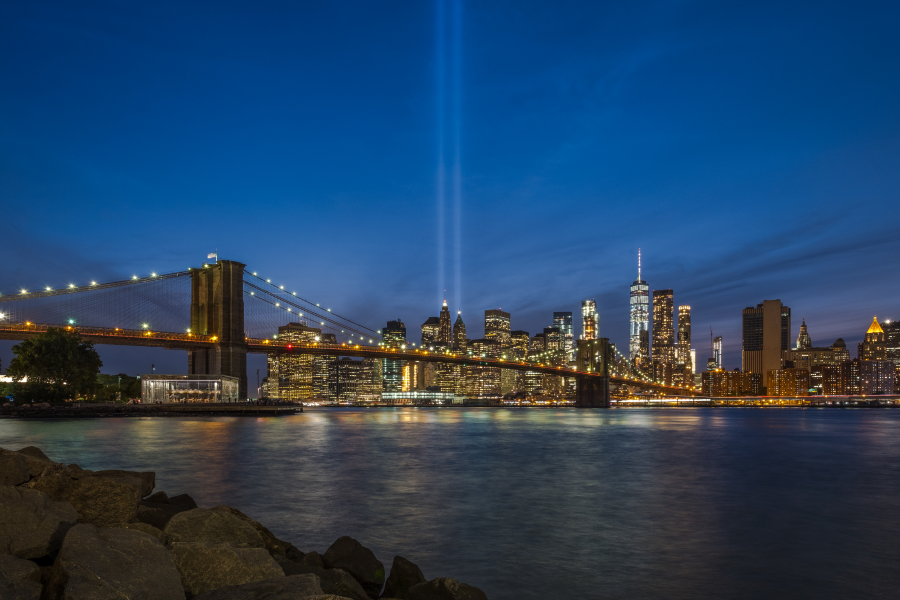
A shot of the Brooklyn Bridge looking forward lower Manhattan.

The Academy’s new home features elegant architecture, intriguing conceptual art, and advanced environmental and safety engineering.

Published July 1, 2006

By Glenn Collins

Image courtesy of quietbits via stock.adobe.com.

7 World Trade Center was the last tower to fall on September 11, 2001, and the first to be reborn at Ground Zero. This shimmering, sharp-edged, 52-story parallelogram redefines the cityscape, and the arrival of new occupants fulfills a dream for those who dealt firsthand with the rubble that preceded it.

Fortunately for incoming tenants—and those from The New York Academy of Sciences (the Academy) will be among the first, following the developer of the building himself, Larry A. Silverstein—there is much more than the burden of memory to be acknowledged. There is also the promise of award-winning new architecture, state-of-the-art design, intricate technological solutions to daunting challenges and constraints, and a tower that is not only more environmentally responsible than any other in the city but, not incidentally, safer than any other as well.

A Poignant Transparency

There’s one aspect of the building—known simply as “Seven” by its designers and builders—that fascinates those who know it well. They call it the “stealth building” because its glass skin scatters light, and at times lets the building, from many different angles, inhabit the boundary between transparent and reflective.

The intensity of this magical effect is greatest in the early morning and late afternoon. Sometimes the shimmering surface takes on a seemingly supernatural glow, especially when viewed from the Hudson River. Its shining aspect changes dramatically during shifting light and varying weather conditions, and at times, when the conditions are perfectly correct, “the elements of the building seem to merge with the sky,” said James Carpenter. He is the glass artist and MacArthur Fellow who helped design Seven, and envisions it as one huge prism.

Despite its eerie transparency, though, it is an office building. And Seven embodies the antithesis of insubstantiality in its vital statistics: it is 741 feet tall, it cost $700 million to build, and has 1.7 million square feet of office space on 42 tenant floors. The tower is sheathed in 538,420 square feet of glass, more than 12 acres. Bounded by Barclay Street on the north, Vesey Street on the south, Washington Street on the west, and Greenwich Street on the east, it is within five minutes of 13 subway lines, the PATH system, and New York Waterway ferries. It takes just one sharp right turn from its doors to reach the West Side Highway.

Zip Code: 10007

But Seven has always been more than just a building. Many of those involved in the new Seven have searing memories of the day when the old one fell, including Mr. Silverstein of Silverstein Properties, the developer of both the original tower and the new one, on land leased from the Port Authority of New York and New Jersey. Mr. Silverstein had a dermatology appointment on September 11, and therefore missed a breakfast meeting in Windows on the World, where no one survived.

Rebuilding Seven was an especially emotional experience for the workers who built it twice, like Elio Cettena and Mike Pinelli, who were onsite supervisors for Tishman Construction Corporation, the construction manager of both the new tower and the old in 1985.

And it is no exaggeration to say that every milestone of the building’s creation was followed avidly, from its November 2003 groundbreaking to its topping-out ceremony on October 21, 2004. Then, after installing 15 tons of steel, the final beam was positioned on the 52nd floor as 500 construction workers, Governor George Pataki, Mayor Michael Bloomberg, and Silverstein looked on. With smiles, salutes, and not a few tears, the steel beam—which was adorned with the same American flag used in the topping-out ceremony for the original 7 World Trade Center—was hoisted 750 feet in the air to its place at the summit of the building.

Gateway to a New Downtown

Back in the clean-up phase after 9/11, open forums had made it clear that the public wanted streets to run through the redeveloped Trade Center site, unlike the former 1960’s design with a “super-block” pedestal that brought street traffic to a dead end. Both community activists and Seven’s lead architect, David Childs of Skidmore, Owings & Merrill, advocated that Silverstein reduce Seven’s footprint to reestablish Greenwich Street, one of the city’s oldest north-south thoroughfares.

Silverstein acceded. Instead of proceeding directly south on Greenwich Street, travelers will take a jog around a new, triangular, 15,000-square-foot park and pedestrian plaza. Planted with 60 sweetgum trees and boxwood shrubs, the plaza will serve as an amenity to occupants and also, in the words of Childs, “as the gateway to the Trade Center site.” To come is a complex of office towers including the 1776-foot-tall Freedom Tower, a retail center on Church Street, the World Trade Center Memorial , and a commuter station designed by architect Santiago Calatrava. In front of Seven, a short stretch of Greenwich Street will serve as a private drive for taxis and limos.

As for the building itself, Mr. Childs was aiming for “restrained beauty and perfect pitch,” he said, that would derive its effect not only from formal restraint but also from attention to detail.

Lighting the Way

But to do so, the architects had to respond to “a unique set of design challenges,” Silverstein said. Those challenges are so unusual that the building is actually a feat of architectural legerdemain: Childs had to place a delicate skyscraper a top one of the ugliest pedestals in any Manhattan building, a monumental $100 million Con Edison substation.

Sheathed in concrete like the old substation, which was destroyed on September 11, the new substation has three transformers putting out 80 megawatts of power not only for Seven, but also for Battery Park City and, eventually, the buildings of the rebuilt Trade Center site. It can accommodate seven more transformers up to a total of 10, one more than the inventory in the original substation.

The facility, one of 24 substations in Manhattan, reduces 138,000-volt power from generating stations into more manageable, 13,000-volt current distributed to residential and commercial customers. If the $1.1 million, 20-foot-tall, 168-ton transformers are unsightly, then the shifting of the base of the new Seven to the west of the previous Seven (to create the park and reestablish Greenwich Street) made the Con Edison vaults even uglier, because the transformers had to be stacked vertically to save space.

Free Flow of Air

Since the transformers generate heat, they posed another constraint: The wall around them had to permit air to flow freely. Worse, atop the seven-story concrete substation, three floors of the building had to be devoted to mechanical equipment. Rentable offices, therefore, could not be situated until the 11th floor.

While it was obvious that the lower floors had to be clad in some sort of curtain wall (an independently supported outside screen), Childs was adamant that the solution to the quandary of the skyscraper’s base be “something integral, that was designed from the start,” he said, adding that it could not be some fig leaf-like “external piece of art.”

Hoping, as in the haiku and the sonnet, that limitation would be the catalyst for art, Childs sought out Carpenter, a sculptor and architect whose designs have summoned effects from the characteristics of light.

The substation problem came down to one question for Carpenter: “How do you turn an absorptive concrete block,” he asked, “into a reflective, emotive surface?”

A Solution

Carpenter’s solution was to design a sculptural installation for the base of the building, “a stainless-steel scrim that is animated with light,” he said, visually shifting naturally by day with the changing light conditions, and artificially at night with programmed illumination sequences using light-emitting diodes (LEDs). At the same time, the wall could also second as a porous ventilator for the hidden vaults of the three-story transformers, dissipating their heat.

And so, the wall is built of elegantly polished and machined 15-foot-tall, 5-foot-wide panels—each weighing 1500 pounds—of precisely crafted, high-precision triangular steel prism bars set in inner and outer rows.

During the day, these 130,000 prisms reflect ambient light and make the wall an active surface, capturing the sky in different directions, since the prism sections are set off by 15 degrees from each other. “The wall creates a moiré effect that moves by you, as if you are walking past stretched silk,” Childs said.

At night, on the north and south walls, 220,000 blue and white LEDs illuminate the wall of prisms from within, subtly reflecting off the steel and into the street. The diodes are easy to maintain, and give off little heat. At night, 12 motion-sensing cameras are programmed to follow passers-by, marking their passage in columns of multistory blue light on a white ground.

Art and Innovation

The building lobby, which has the postal address of 250 Greenwich Street, posed another architectural challenge: It had to be sandwiched between two banks of transformer vaults framed by unsightly structural columns five feet in diameter. Childs opened it all up with a street side, 46-foot-tall curtain wall of glass that welcomes daylight into the lobby; he cladded the columns in reflective stainless steel.

Then Childs commissioned an artistic centerpiece: A dominating, floor-to-ceiling, 14-by-65-foot wall of acid-etched translucent glass illuminated by whitish light-emitting diodes, created by Carpenter and the conceptual artist Jenny Holzer. Like Chinese calligraphy, Holzer’s work uses words as art, at the same time as it plays with the power of commercial billboards.

At Seven, she has programmed the wall to display thousands of ghostly white, streaming words of text. This never-ending ribbon of poetry and prose by dozens of authors—from Elizabeth Bishop and Allen Ginsberg to Langston Hughes and Walt Whitman—evokes the history of New York. Though the artwork resides in the lobby, it is visible to pedestrians outside, as well as to those congregating in the Greenwich Street park; it even can be seen blocks away, on Church Street.

The sum of these architectural efforts helped 7 World Trade Center to win a Municipal Art Society annual MASterwork award for urban design this year.

Building Safe

But Seven is far from being just a provocative pretty face. It is also the first office tower in New York City to win gold certification for its green—or environmentally sensitive—architecture, which seeks to reduce energy and natural-resource consumption and lower the building’s impact on the environment. The design incorporates the recycling of rainwater and the use of natural light and air in an interior where toxic materials have largely been eliminated.

Given the building’s location, security was also a crucial concern. “It was a challenge to put an office building on top of a power substation, but it was equally a challenge, if not more so, to create a building that would be safe—safer than anything that had previously been built,” said Silvian Marcus, chief executive officer of WSP Cantor Seinuk, the building’s structural engineers. For its work on 7 World Trade Center, his company recently won the 2006 award for engineering excellence from the New York Association of Consulting Engineers.

Marcus said that Seven’s steel framing “has sufficient redundancy to prevent a progressive collapse,” which was the failing of the Trade Center towers. Nevertheless, “the framing could not interfere with the exterior look of the building, so we tried to make the framing invisible,” he said.

The Bulky Base

Among the building’s security consultants was an Israeli firm experienced in blast effects. Ironically, the bulky base of 7 World Trade Center dramatically enhances its safety, security experts say, since its tenant space starts at the 11th floor above grade, well above immediate street-level blast effects from vehicle-borne explosives. Indeed, the New York Police Department has insisted that the Freedom Tower at Ground Zero—also being designed by Childs—incorporate a similar structurally massive base that is distinctly different from its upper office floors. The designers are likely to use stainless-steel cladding to hide it, adopting design and artistic strategies similar to those pioneered at Seven.

At the base of 7 World Trade Center, the architects have utilized glass, including the 46-foot-high lobby facade, that is laminated with layers of polyvinyl butyral, which stabilizes blast-shattered panes and keeps shards in place. Holzer’s language wall is also a security blanket. Not only does it screen the private precincts of the building, its lamination acts as a blast shield and its high-strength steel members will yield if they counter an explosion.

Massive Concrete Central Core

Further than this, the architects’ principal answer to disaster at Seven is its massive concrete central core, which extends from the base to the top, placing a shield around the stairways, the elevators, sprinkler pipes, and electrical conduits.

The base-to-top core, for the most part two feet thick, is double-constructed with steel reinforcing bars. Its two stairwells will be located at opposite sides of the core, about 110 feet apart, cutting down the possibility that they could be damaged at the same time.

The stairways are oversized, five and a half feet wide—20 percent wider than required by the city code—to permit rapid evacuation. They are fitted with independent emergency lighting and glow-in-the-dark paint and are pressurized to prevent the intrusion of smoke in case of a fire.

The stair landings are extra deep—8 feet by 11 feet—to enable employees in wheelchairs to wait for rescue while the more mobile are able to step past them. The stair treads are wide enough to permit people to walk down, Silverstein said, while emergency workers are walking up. The four fire stairs exit directly to the building’s exterior, preventing bottlenecks or the possible confusion that might result from exits that lead through the main lobby.

A Renaissance, With a View

The beauty of the execution is that the Academy’s visitors will remain indifferent to all this contingency planning. They can simply enjoy the building’s location, elegant architecture, and the Academy’s striking new offices on the 40th floor. Seven will be a welcoming landmark on the route from trendy Tribeca, with its mix of shopping and restaurants, to the cultural institutions of Lower Manhattan. Looking out the Academy’s office windows, or pausing in Seven’s park, its new tenants will have a privileged close-up view of New York’s oldest neighborhood being made new again.

Also read: Academy’s Past: Where It All Began


About the Author

Glenn Collins reports on Ground Zero for The New York Times.
Advancing Science 40 Stories Atop New York City

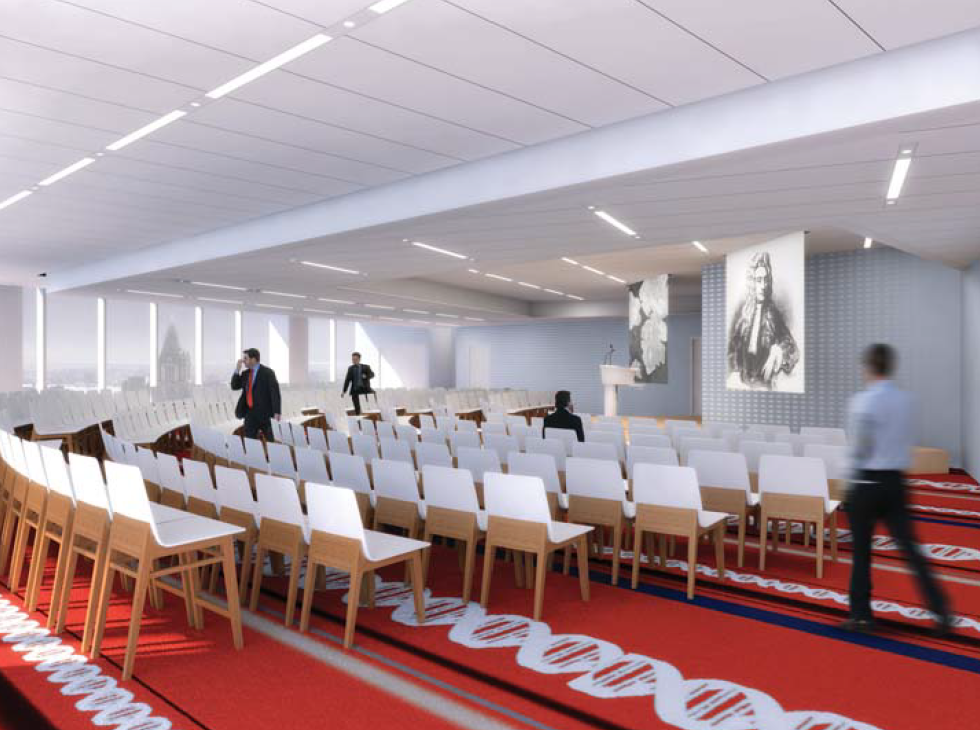
An artist rendering of the Academy's new conference room.

The Academy’s new home on the 40th floor of 7 World Trade Center will convey our distinguished heritage while also establishing an efficient environment for new ideas.

Published July 1, 2006

By Hugh Hardy

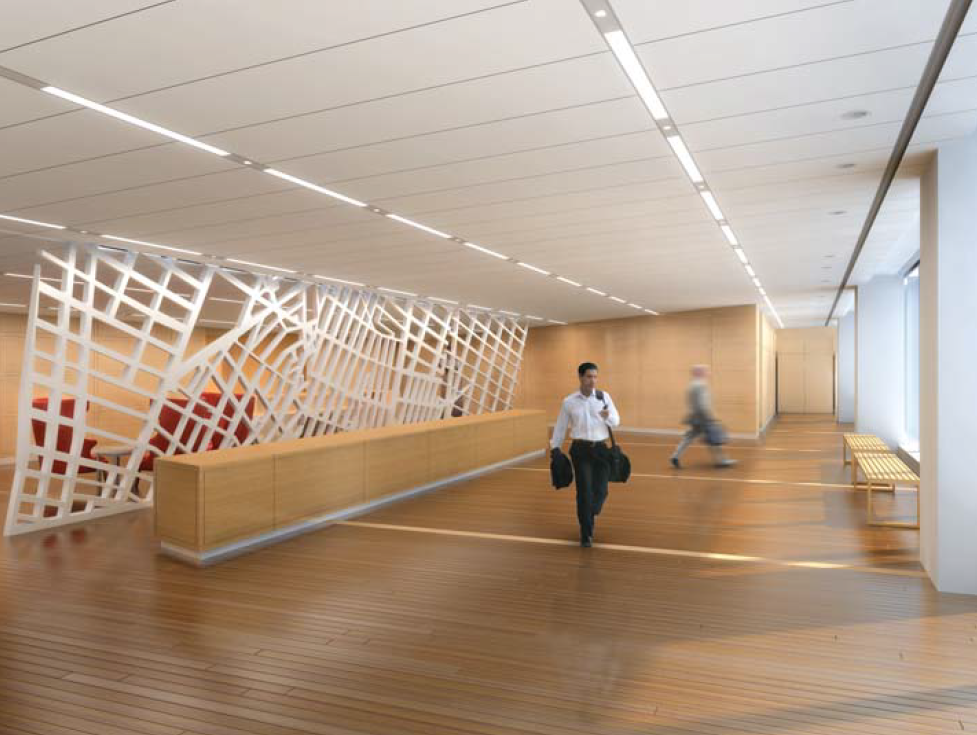
Reception area at 7 WTC. Image courtesy of H3 Hardy Collaboration Architecture.

In 1950, a mansion on East 63rd Street was the answer to The New York Academy of Sciences’ (the Academy’s) dreams. With its sixteenth-century Italian mantel in the entry hall and a library of carved English oak, the building exuded an air of old-world scholarship and elegance that suited members and impressed visitors.

Today, however, the Academy needs more office and meeting space than the mansion can provide. What’s more, the building’s traditional interiors and furnishings give no hint of the Academy’s progressive nature and mission. Rather than shrink from change, as its current rooms dictate, this institution embraces it. This outlook will become astoundingly clear when members make their first visit to the Academy’s new home, forty stories in the air, at 7 World Trade Center. With spectacular urban and water views from all points of the compass, this aerie will dramatize the institution’s central role in New York’s scientific life and signal its vitality to visitors who come from around the world to participate in its activities.

Of course, the Academy is not abandoning its traditions. Science is built upon the work of previous generations and on many legacies of investigation and thought, even as it crosses frontiers into the unknown. This project’s design challenge lies in conveying the Academy’s distinguished heritage while also establishing a contemporary and efficient environment for its forward-looking activities.

A Magnificent Blank Slate

The Academy looked for space in many older office buildings, where it would have had to make decisions about what lobby space, offices, and conference rooms to keep and what to change. Instead, by renting (on advantageous terms) the entire 40th floor of a spanking new building, the organization was presented with an expanse of raw space, a magnificent blank slate. Seven World Trade Center is the only structure in the city whose floor plate is a parallelogram from bottom to top, and it offers 28,000 usable square feet per floor, without a single column between its central core and its perimeter walls of glass.

Our floor plan for the Academy bisects the building’s parallelogram on a north-south axis to accommodate two basic functions, one private, one public. The eastern portion is devoted to public areas, containing a lobby, reception space, three meeting rooms, “breakout” areas, and the president’s office. The western half of the floor contains offices for the staff and support areas.

The Academy’s links to the past are made clear in the entrance lobby, where a monumental bronze bust of Charles Darwin, which long graced the Academy’s garden, is prominently displayed to the left of the entry. Behind the reception desk is a sculptural metal “art wall.” Its openwork filigree echoes nineteenth-century street patterns and illustrates the Academy’s three original downtown locations. This patterned surface forms a sloping wall, dividing the entrance lobby from a generous socializing space by the windows. From here, views of Lower Manhattan will astonish visitors. At this vantage point, flatscreen monitors will direct participants to their meeting areas, announce current activities, and present the latest multimedia web offerings from www.nyas.org.

A Focus on Flexibility and Sustainability

A meeting room at 7 WTC. Image courtesy of H3 Hardy Collaboration Architecture.

Conferences and meeting presentations require concentration, without the distraction of fascinating views. Therefore, three meeting rooms are fashioned so that each can shut out the panoramas. One of the conference rooms, shaped like a pod, is totally enclosed, while the others have shades that can hide the view. Groups from 30 to 300 people can be accommodated.

To the northeast, in one of the wide corners of the parallelogram, movable walls provide further flexibility, permitting corridors to be joined with the largest presentation room. A pantry permits catered food service for special events. Throughout the project, we worked with the goal of flexibility, knowing that activities will change within rooms from hour to hour, day to day.

Green concerns informed our planning. Lighting zones are monitored by motion sensors, and lights turn off after an allotted time if no one is present. Photometric sensors tied to westernmost lights automatically turn lights off during bright afternoon sunlight. In addition, almost all of the lighting is energy efficient fluorescent. Carpet tile is being used to reduce waste.

If areas of the carpet wear out over time or are stained, only those tiles need to be replaced instead of an entire run of carpet. The desk chairs are 44 percent recycled and 99 percent recyclable, and offices and workstations use high proportions of recycled materials, including steel paneling and mineral board, and glues and finishes that do not contain volatile organic compounds. Fabric for all of the upholstered walls and cubicles is 100 percent recycled polyester.

Combining Utility and Aesthetics

This institution has long held art in high esteem, using many forms of expression to suggest the shared interests of artists and scientists. An 80-foot-long gallery runs the length of the building’s interior core and will contain artworks relating to the Academy’s programs. Photographic panels, designed by the graphics firm 2×4, will decorate the conference rooms.

Those large images—some in black-and-white, some in color—depict details of the natural environment as seen through an electron microscope, as well as flowers distorted by anamorphic projection. The Academy’s new interior design utilizes materials that juxtapose tradition with innovation. We custom-designed a red carpet woven with a decorative gray-and-blue version of the DNA double helix. The carpet will offset paneling of light-colored wood.

After the Academy’s move this fall, visitors will enjoy a distinctive new facility that will encourage communication, discovery, and the generation of research and ideas. The Academy’s physical transformation represents its confidence in the future and its prominent role in the scientific and intellectual leadership of New York.

Learn more about the Academy’s history.


About the Author

Hugh Hardy and his firm, H3 Hardy Collaboration Architecture, are designing the space. Among Hardy’s well known projects in New York are the redesign of Bryant Park, the visitor center at the New York Botanic Garden, and the restoration of the BAM Harvey Theater.

Back to the Future: The Academy’s History

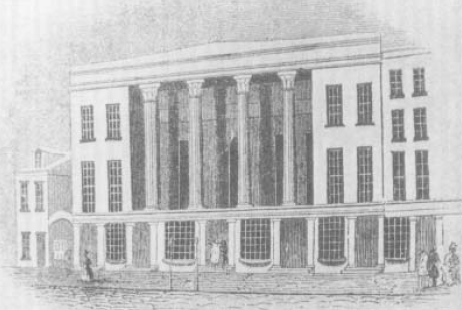
A black and white illustration of an old NYC building.

A pitiless creditor, arson, and rivalry between medical schools: All play a role in the history of the Academy’s real estate. Learn about the Academy’s history, dating back to 1817.

Published July 1, 2006

By Simon Baatz

The New York Institution on Chambers Street, home to several intellectual societies, housed the Academy in the early 19th century.

In a pleasant twist of fate, its move Downtown returns The New York Academy of Sciences (the Academy) to a location just blocks away from where it was founded nearly 200 years ago. On January 29, 1817, a group of 21 men, almost all recent graduates or professors of the College of Physicians and Surgeons, met for the first time in a room of that institution, then located on Barclay Street near Broadway, close to City Hall.

Known (until 1876) as the Lyceum of Natural History, the group was open to anyone with an interest in natural knowledge. By contrast, the two leading scientific societies of the prior century, Philadelphia’s American Philosophical Society and Boston’s American Academy of Arts and Sciences, were limited to the socially prominent.

A Link to the Medical School

The Lyceum’s link to a medical school was no coincidence: In the early 19th century, science was not part of the college curriculum and there was no career structure for science per se, so medicine was the logical profession for young men with scientific curiosity.

With the aim of hosting public lectures on science and establishing a museum of natural history, the Lyceum needed more capacious quarters, a situation that sounds familiar today. And so, in April 1817, the Lyceum moved to a set of rooms in the New York Institution on the south side of Chambers Street directly opposite City Hall. The New York Institution was a cultural and intellectual mecca; the three-story building, on loan to New York’s literary societies from the City, housed the New York Historical Society, the New York Literary and Philosophical Society, the American Academy of the Fine Arts, and the Lyceum of Natural History.

Rapid Expansion

The Lyceum of Natural History was able to take good advantage of the City’s generosity; over the next two decades, the membership and activities of the society expanded rapidly. The growth of the Lyceum caused the members to imagine that they might own their own building, thus ending their dependence on a loan that could be revoked at any moment. In 1831 the Lyceum did eventually move from the New York Institution into a temporary home provided by the New York Dispensary at the corner of White and Centre Streets. But this also was unsatisfactory and in 1834 the members initiated a subscription campaign to raise the funds to construct a new building.

A safe harbor with NYU at the Stuyvesant Institute on Broadway.

Their efforts seemed successful; two years later the Lyceum moved into its handsome new home on Broadway between Houston and Prince Streets. It was a notable accomplishment for scientific endeavor in New York City. There was a large lecture room on the first floor and on the second floor, a spacious gallery for the Lyceum’s collections in natural history. The members set aside rooms for a library at the rear of the building and several small meeting rooms on the third floor.

But it was all too good to last. To buy the land and build, the Lyceum incurred debt, hoping to pay it off through ongoing donations. Then came the severe economic recession of 1837. That stalled fund-raising and soon the Lyceum had to take on more debt, for a total of $35,000. The members struggled valiantly to hold onto their building but to no avail; a creditor threatened legal action and in 1843 the Lyceum sold its home at auction for $37,000.

A Serious Blow

The loss of the Broadway building was a serious blow. For a while, a small group of dispirited devotees met in the home of the Lyceum’s president. But then the Lyceum found shelter under the wing of a successful upstart, the newly founded medical school at New York University. That school felt that a tie to the Lyceum would bring it prestige in its competition with the well-established College of Physicians and Surgeons, later to be part of Columbia University.

Less than a year after their own building was sold, the Lyceum, along with its magnificent natural history collection and its superb library of books, moved to the NYU medical school’s home at the Stuyvesant Institute on Broadway between Bleecker and Bond Streets. In 1851 the Lyceum moved with the medical school to a new building on the outskirts of the city at 14th Street close to Third Avenue.

But 15 years later, disaster struck. The NYU medical school was adjacent to the Academy of Music, a large opera house on the corner of 14th Street. On the night of Monday, May 21, 1866, an arsonist set a fire to the rear of the Academy of Music. The flames quickly spread and soon the entire block on 14th Street between Irving Place and Third Avenue was ablaze.

The NYU medical school, along with the Mott Surgical Museum and the collections of the Lyceum of Natural History, burned to the ground despite the best efforts of New York City firemen. A collection of birds donated to the Lyceum by John James Audubon, a mineralogical collection from the New York State Geological Survey, and the ichthyological specimens of Samuel Latham Mitchill, an energetic founder of the Lyceum—all vanished in the flames.

Another Severe Setback

The loss of the Lyceum’s collections was a severe setback to the cause of science in New York; it was not certain that they would ever be replaced. But ironically, the loss cleared the way for the creation of a new institution, the American Museum of Natural History (AMNH). Thanks to the generosity of New York City and State, and of the city’s wealthiest citizens, the AMNH opened on Central Park West in 1874.

Its establishment meant a circumscribed role for the Lyceum of Natural History—it would no longer attempt to rebuild its own museum. But the creation of the AMNH had its blessings; renamed the New York Academy of Sciences, the former Lyceum moved into rooms in the museum’s capacious building on Central Park West and assumed a modest, yet significant, role as a spokesperson for the scientific community in New York City.

In the early decades of the 20th century, the Academy organized a comprehensive survey of the natural history of Puerto Rico, a project that coincided with the research of such notable members as Franz Boas and Nathaniel Lord Britton.

Rising from the Ashes

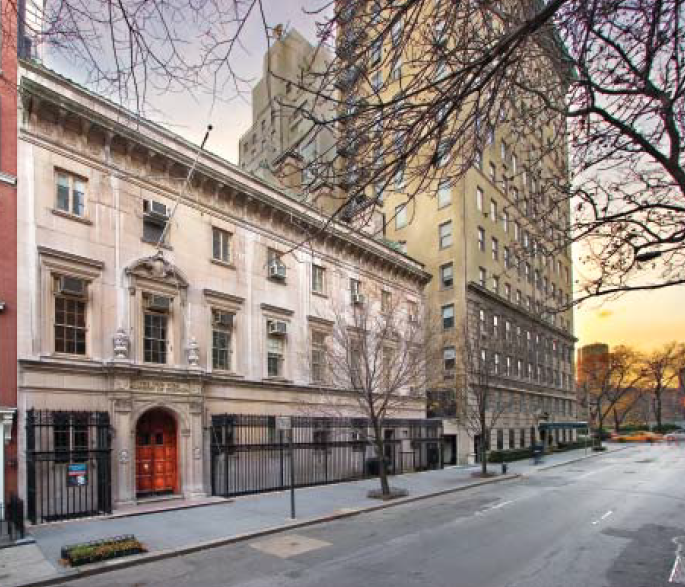
Farewell to the magnificent Woolworth Mansion on East 63rd Street.
Courtesy CBRE.

But it was Eunice Miner, a former researcher at the AMNH who was executive secretary of the Academy from 1939 through 1968, who did more than any other member to revitalize the Academy and to secure it a permanent home. In her rounds of New York philanthropists, Miner attracted the attention of Norman Woolworth, scion of the family that owned a network of chain stores. Woolworth was so impressed that, on learning of the Academy’s search for a new home, he donated his own ornate five-story mansion on East 63rd with the sole requirement that the Academy pay all the necessary legal fees.

It was a spectacular gift. The Academy, the oldest science organization in New York City, could now boast a magnificent home—and a permanent measure of independence and self-sufficiency. After many happy years, and after much careful consideration, Academy members voted to sell the mansion in 2005. But in the other whimsical twist of fate, the Academy’s new home looks down upon the magnificent Gothic spire of the landmark Woolworth Building, which housed the Woolworth company for 80 years and is now being converted into residential apartments. And, of course, the proceeds from the sale of the mansion have resulted in an endowment that will be the bulwark of the Academy for years to come, back Downtown.

Also read: Academy’s Past: Where It All Began (11-part series) and Knowledge, Culture and Science in the Metropolis: The New York Academy of Sciences (1817-1970)


About the Author

Simon Baatz, who teaches American history at George Mason University, is the author of Knowledge, Culture, and Science in the Metropolis: The New York Academy of Sciences 1817-1970 (1990). His most recent book, For the Thrill of It: The Murder that Shocked Chicago, a history of the Leopold-Loeb case, will be published by HarperCollins in 2007.

The Journey of a Psychopharmacological Pioneer

Various colorful pills.

From escaping Nazi-occupied Czechoslovakia to pharmaceutical breakthroughs to rubbing elbows with Aldous Huxley, Frank Berger has seen a lot in his life and career.

Published May 1, 2000

By Merle Spiegel

Image courtesy of Artinun via stock.adobe.com.

Anti-anxiety medications represent a significant share of the vast number of pharmaceuticals in widespread use today. In 1955, however, when Frank Berger invented meprobamate, it was the first and only anti-anxiety tranquilizer on the market. Berger, an Academy member for 51 years and a member of its Lyceum Society and Darwin Associates, was a true pioneer in the field of psychopharmacology.

Born in Czechoslovakia, Berger received his MD degree from the University of Prague and worked as a microbiologist at the National Institute of Health in Prague. The day after Hitler occupied Czechoslovakia in 1939, he and his wife fled to England—with the assistance of the Quakers. After quickly learning to speak English, Berger first worked as a physician in a refugee camp. Two years later, he became a resident physician in an infectious diseases hospital and then a researcher in microbiology in the West Riding of Yorkshire Laboratories.

Berger looked back on his amazingly successful career in a recent interview.

How did you get started in pharmaceutical research?

I was looking for a preservative for penicillin and came up with a compound called mephenesin, which stabilized penicillin by killing contaminants in the air that broke it down. However, a more elegant preservative was discovered at the same time, making mephenesin unnecessary for this use. While studying the compound in animals, I had noticed that it produced remarkable relaxation of the voluntary muscles without affecting respiration, heartbeat, and other vital functions—and I realized that it might have applications in medicine. Mephenesin was first used to produce muscle relaxation along with anesthesia in surgery. It was effective but not practical—since it wasn’t very soluble, and large amounts had to be injected intravenously.

Did you try to develop a more soluble form?

No, at this point my work on mephenesin had become pretty well known, and I was offered a position at the University of Rochester Medical School in the U.S. I wanted to focus on producing relaxation in people with muscle spasms such as cerebral palsy and spastic paralysis. Soon, though, I realized that mephenesin was even more effective in reducing anxiety—which, in turn, reduced muscle tension. And it was clear to me that anxiety was one of the big unsolved problems in medicine at the time.

However, mephenesin had a short duration of action and didn’t remain effective for long. Nevertheless, Squibb decided to market mephenesin under the brand name Tolserol in 1948, and it became the company’s bestselling product that year.

Were you able to find a long-acting form of mephenesin?

I was recruited by Carter-Wallace to do just that. Carter-Wallace was a well-known manufacturer of over-the-counter products—Carter’s Little Liver Pills, for example— and wanted to expand into pharmaceuticals. I discovered a new compound called meprobamate, which was very effective in treating anxiety and was pretty long-acting as well. Meprobamate was patented in 1955 and marketed as Miltown by Carter-Wallace and as Equanil by Wyeth.

How successful was it?

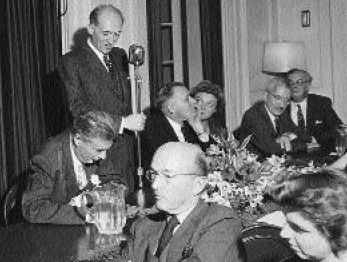
Frank Berger at the podium addressing The New York Academy of Sciences’ 1956 conference on psychopharmacology. Novelist and philosopher Aldous Huxley is to the left of Berger. Harry Beckman, professor of pharmacology and author of the best-selling Treatment in General Practice, is second from right, and renowned scientist Julian Huxley is at far right.

It became popular very quickly and soon was the most widely used prescription drug in the U.S. Meprobamate and other tranquilizing drugs were the subject of a major conference at The New York Academy of Sciences (the Academy) in October 1956. In the keynote address, Aldous Huxley predicted that these drugs were capable of changing the quality of human consciousness—a development that he thought would be more revolutionary than achievements in nuclear physics.

What did you do next?

In addition to building Carter-Wallace’s pharmaceutical business, I spent the next few years developing a compound that could be used in place of aspirin and codeine for everyday treatment of muscle and back pain. The result, carisoprodol, provides pain relief to the skeletal muscles without affecting the mind. It was marketed as Soma by Carter-Wallace and as Rela by Schering .

Did you stay at Carter-Wallace until you retired?

No, I returned to academia as professor of psychiatry at the University of Louisville, and served as a consultant to several pharmaceutical companies. This gave me a wonderful opportunity to spend part of each year in Geneva, Paris, London, and Milan. Even now, at the age of 87, I haven’t really retired. I still go to the office early each morning and keep up with what’s going on in my field.

What do you think is the most exciting development in pharmacology today?

Viagra. Just as meprobamate was the first drug to treat anxiety, Viagra is the first drug to treat sexual dysfunction. It’s a major breakthrough.

Also read:The Origin of the Term “Psychedelic”