The Intersection of Sports and STEM

Piquing kids’ interest in science, technology, engineering, and math may be as easy as picking up a ball.

Published August 1, 2012

By Adedeji B. Badiru

Much has been said about the need to find new strategies to spark the interest of kids in STEM education. This is essential for preserving the nation’s technological superiority and ensuring economic advancement. The key is to find the right “hook and bait” to get youngsters interested in technical and scientific fields.

Recent studies have concluded that physical activities can enhance the learning potential of kids. Why not, then, channel that connection toward enhancing STEM education through a structured sports and STEM curriculum?

Ball-based sports (soccer, basketball, tennis, softball, racquetball, etc.) are particularly well-suited for translation into engaging STEM lessons. After all, all balls are not created equal. The STEM properties of sports balls are different based on their intended purposes. Kids can study the properties of individual balls or do a comparative analysis of different types of balls.

Sparking Curiosity

On a recent visit to the Air Force Institute of Technology, Astronaut Mike Fossum, a 1981 graduate of the institute, showed a video where a colleague of his on the International Space Station played baseball all by himself. He would pitch the ball and then let himself float ahead of the ball so that he could bat, then catch the ball at the other end, eventually throwing it to himself again. This is an exciting illustration of how the lack of gravity in space can be exploited for a self-played game.

I do not know many young kids who will see such a demonstration and not ask further questions. With questions comes inquisitiveness and with inquisitiveness comes interest. Teachers can use this interest to explain, engage, and retain attention for STEM principles.

A specific example of using ball sports to teach STEM subjects is provided by the education-oriented website, www.physicsofsoccer.com. This resource presents an engaging connection between physics and soccer. Issues addressed by the website include what makes a ball bounce, how gravity affects the flight path of a soccer ball, and how friction and moisture impede a ball’s path.

These are issues that inquiring young minds would be delighted to explore in a fun, relational way. For example, the flight path of a kicked soccer ball can be modeled to provide engaging simulation experiments to teach kids new concepts about gravity, lift, and drag, without the intimidation that can often accompany these subjects.

Soccer Ball Dissection

Analogous to the way kids learn biology by dissecting a frog, the “dissection” of a soccer ball, both literally and figuratively, can reveal learning opportunities for the STEM properties embodied in the ball. The image to the right illustrates where and how STEM elements fit into the overall integrity of the soccer ball in terms of mathematical description of the shape, surface properties, and shape design of the ball.

The shape of a soccer ball is an example of a solid spherical polyhedron, also known as truncated icosahedrons, which has 12 black pentagons, 20 white hexagons, 60 vertices, and 90 edges.

This example of dissecting a soccer ball to illustrate STEM applications is not in itself the goal here, but rather provides an example of the ways that parents and teachers can leverage whatever is at hand (e.g., sports equipment or other props) to explain and spark interest in STEM subjects.

Every sports opportunity can be leveraged as a science learning opportunity. The key is to recognize and exploit the available opportunity. If we do this, STEM may spread more sustainably than we ever imagined.


About the Author

Adedeji B. Badiru is professor and head of Systems and Engineering Management at the Air Force Institute of Technology in Dayton, OH.

Expanding Educational Empires in a Globalized World

Higher education is not immune to the effects of globalization. Academics must be proactive to remain internationally competitive.

Published June 1, 2012

Image courtesy of Kizilkaya Photos – istockphoto.com.

By Mitch Leventhal, as told to Diana Friedman

The concept of “study abroad” experiences has changed drastically since I began my career in education. Thirty years ago, studying abroad was thought of as something “those humanities students do.” Rather than being seen as integral to succeeding in a future career, it was a life experience, and it was heavily concentrated on Europe, the humanities, and female students.

Flash-forward three dozen years and international student mobility is a huge trend with the numbers of students crossing borders for education increasing by the day. While the U.S. is currently the top destination for education in terms of raw numbers, it is losing market share, as higher education becomes more commoditized and students can “shop around” for their education the way we might shop around for a car.

Part of the reason for this is that there is a growing awareness that being prepared for the workforce means being prepared to work between not only job verticals, but cultures—and with some frequency (the average person now has 4.6 jobs in their lifetime). Even one job can require a transition between cultures and languages. A means to gain these skills is exposure of an international context, whether through a distinct study abroad time period, or the undertaking of an education entirely in a different country.

A Large and Growing Market

One of the benefits of higher education is that it is a large and growing market, not a zero-sum market. To capitalize on this, many universities are looking to move into regions where the opportunities for expansion are greater than at their home bases. The State University of New York (SUNY), for instance, recently launched a physical campus in Korea. I believe these expansion efforts are generally positive, both for universities and potential students, so long as they are undertaken with care.

It is hard work to set up an overseas branch campus with comparable quality and experience as the original location (some universities franchise their brands to third parties, resulting in significant compromises). It is even harder to do it and create a situation where the branch campus is economically sustainable—that is, it is sustainable on tuition alone. This can be difficult as many students look to international schools for good educational value.

There are success stories, however: INSEAD’s Singapore-based outpost of the European business school has been so successful that it can command tuitions similar to the original location, and students go back and forth between the campuses in France and Singapore to further strengthen their education.

The Impact of Branch Campuses

Just as globalization has contributed to the geographical spread of universities, branch campuses can have globalizing effects on their geographical areas. To start, there’s a multiplier effect on the local economy because of the sheer number of businesses and services that are required to support international students.

Right here in New York, we now have the Cornell University/ Technion-Israel Institute initiative—a New York City-based engineering campus. Having a lot of Israeli and Middle East researchers come to the US for engineering education may change the trade relationship between these countries.

There’s also often a cultural impact as well. One can hope that the University of Nottingham and New York University—both of which now have campuses in China—may help the Chinese liberalize their approach to undergraduate education. As for SUNY, we look forward to expanding our global reach not only through programs established abroad, but also through crosscutting research and teaching—bringing the benefits of international education to students at all of our campuses, whether local or abroad.

Read more about learning opportunities offered by the Academy.

How An Innovation Challenge Advances Scientific Research

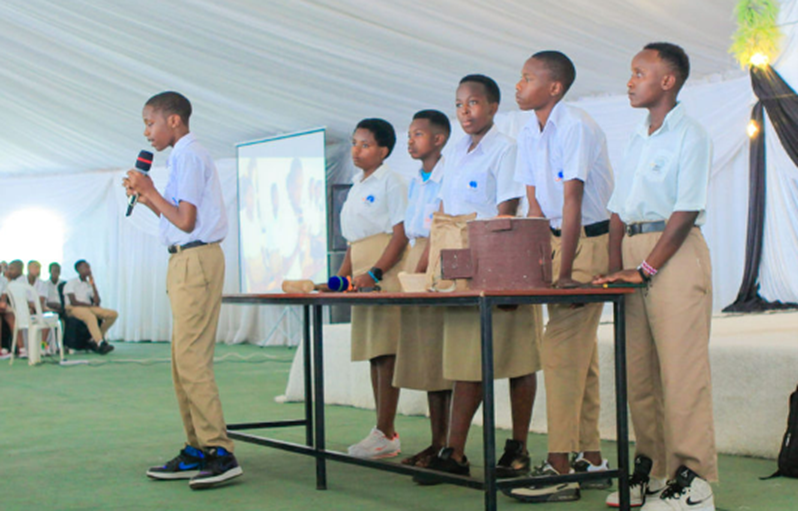
A group of students present their school project in front of onlookers.

Innovation challenges not only provide an interactive way for students and other innovators to embrace science, but they can also play a direct role in making the world a better place.

Published December 1, 2011

By Adrienne J. Burke

In a day and age when “thinking outside the box” is universally touted as the fastest path to scientific and technological innovation, incentive prize contests have come to be seen as one of the most creative ways to generate groundbreaking ideas. Here’s how it works: Broadcast a challenge with specific parameters and reward whoever solves it first. This simple but increasingly popular approach to tackling scientific problems goes so far outside the box, in fact, that winning solutions frequently come from completely unexpected or even unknown entities.

Consider the solvers in some recent contests: It was a concrete industry chemist in Illinois who figured out how to separate frozen oil from water in an Exxon Valdez oil spill cleanup challenge. A human resources professional posed a winning research question in a Harvard diabetes challenge. A Columbia University experimental astrophysicist won a Bill and Melinda Gates Foundation challenge for suggesting a new approach to controlling malaria. And a team of West Philadelphia high-school kids built a super-efficient car that was a strong contender for an X Prize.

Even one of the most celebrated incentive contests in history is legendary for its surprising winner: a self-educated English watchmaker won Parliament’s £23,000 Longitude Prize for inventing the marine chronometer in the 18th century.

Ideas from Untapped Sources

Extracting ideas from untapped sources is largely the point of incentive contests. Proponents of the approach, which is sometimes called crowdsourcing or open innovation, frequently quote the wisdom of Sun Microsystems founder Bill Joy: “No matter who you are, most of the smartest people work for someone else.” When a problem has stumped your field’s experts, they say, casting the net to a broader, more diverse, and multidisciplinary population can yield amazing solutions. In fact, studies by Harvard Business School professor and innovation researcher Karim Lakhani have shown that winning solutions in challenge contests are most likely to come from solvers whose area of expertise is six disciplines removed from the problem.

At Scientists Without Borders, a program conceived by The New York Academy of Sciences (the Academy) in conjunction with the United Nations’ Millennium Project, a web-enabled platform for seeking and suggesting solutions to science and technology challenges in the developing world is yielding input from a global and multidisciplinary set of innovators. The same is true at the Gates Foundation, where Program Officer Andrew Serazin says the five-year, $100 million Grand Challenges Explorations initiative to promote innovation in global health has successfully harvested ideas from a highly diverse set of people. “We’ve gotten some promising projects out of it, and we’ve gotten as much value out of reading applications,” he says.

Low Startup Costs

The startup costs for getting into the challenge-posing game can be surprisingly low. Platforms such as Scientists Without Borders and businesses like InnoCentive, IdeaConnection, NineSigma, and OmniCompete that facilitate contests for so-called “seekers,” make it easy for anyone to post a problem online and field solutions from around the world. You don’t need to offer a huge monetary reward to sponsor a successful incentive contest, either. Serazin contends that as little as a few thousand dollars can draw contestants, and plenty of seekers on Puri’s site get input without offering any reward at all.

Even if your organization isn’t ready to post its challenges to the outside world, simply employing the philosophies and practices of incentive contests can spur innovation within your own workplace. InnoCentive CEO Dwayne Spradlin notes, “The challenge-based approach is a fun way to get people inside an organization involved in solving a problem.”

Henry Chesbrough, the executive director of the Center for Open Innovation at University of California, Berkeley, Haas School of Business says, “Any organization has biases, myopia, previous experiences that advantage certain approaches and discourage or discount others. A contest can transcend these cognitive barriers.”

Contest Limits and Benefits

While useful, contests also have their limits. And not every scientific puzzle lends itself to the challenge format. Experts agree that, to be suitable, a problem must be able to be very well defined, and the parameters for winning very clear.

“An explicitly identified goal is essential to focusing the world’s attention on a challenge,” Serazin says, “and the achievement of the goal must be measurable.” He points to contests such as the Ansari X Prize, which promised $10 million to the team that could build and launch a spacecraft capable of carrying three people to 100 kilometers above the earth’s surface twice within two weeks. Contestants’ performance could be measured so that it would be clear who the winner was. “In health and biomedicine, getting that kind of specificity is not easy,” he warns.

Nor should incentive contests be seen as a cheap way to outsource R&D. Forming and managing a challenge requires substantial internal knowledge and resources. The genome researcher Craig Venter hosted a DNA sequencing challenge for several years before turning it over to the X Prize Foundation to administer. With the level of expertise and management the contest demands, he says, “it costs several million dollars to run a contest to give away $10 million.”

As Chesbrough notes, prize competitions aren’t going to render the internal R&D department obsolete, but they can complement, extend, and inform it. A small but growing segment of the business world agrees with him. According to a widely cited study by the consulting firm McKinsey, almost $250 million was awarded to prize-winning problem solvers between 2000 and 2007.

Meeting the Challenge

Large corporations, small businesses, philanthropies, universities, government agencies, and nonprofits—from GE to the Gates Foundation, from NASA to Scientists Without Borders—are among the organizations now offering cash to outsiders who can meet their challenges. InnoCentive, one of the best known companies serving the incentive contest market, has hosted more than 1,000 challenges since 2001 and boasts a solver community of more than 200,000 individuals in 200 countries. Robynn Sturm, advisor for open innovation at the White House Office of Science and Technology Policy, says challenges should be a part of any innovation portfolio. Today, analysts estimate the incentive-based prize market at $2 billion and growing.

President Obama is accountable for some of that projected growth. He recently called on federal agencies to increase their use of prizes and challenges to spur innovation. “Prizes and challenges are not the right tool for every problem, but right now they’re being so underutilized that it’s safe for us to call on all agencies to increase their use,” says Sturm. Already, the White House-sponsored Challenge.gov website features nearly 60 government challenges, and a banner there encourages government agency leaders to “challenge the world.” Government-sponsored contests are inspiring citizens of all stripes to offer up novel solutions to national problems such as childhood obesity, energy storage, and keeping astronauts’ food fresh in outer space.

OSTP Deputy Director for Policy, Tom Kalil, says that, in addition to increasing the number and diversity of minds tackling a problem, contests offer several advantages over traditional grantmaking, including freeing the government to pay only for results, not for unfruitful research. The approach, he says, also “allows us to establish a bold and important goal without having to choose the path or the team that is most likely to succeed.”

Different Approaches

Adds Sturm, “Prizes and challenges allow you to see a number of different approaches all at once. With a grant or contract, you have to pick your course and cross your fingers. With a prize, you can say, ‘This is our goal, and we’re happy to pay anyone who hits it, however they do it.’”

Scientists Without Borders uses challenges as one part of an open innovation platform designed specifically to generate scientific and technological breakthroughs in global development. It enables members of the community to work together and combine their resources and expertise to take action and accelerate progress. Organizers believe the challenge approach will move the needle by generating, refining, or unearthing effective solutions and then getting them deployed as widely as possible.

Craig Venter notes one more benefit of incentive contests: they can serve as truth serum against exaggerated claims and marketing spiel. When Venter joined forces with the X Prize Foundation to establish the $10 million Archon Genomics X Prize the idea was to incite progress in genomic sequencing technologies and to get beyond what he considers to be industry spin about the state of the art.

The winner will be, specifically, the first team to build a device and use it to sequence 100 human genomes within 10 days or less, with an accuracy of no more than one error in every 100,000 bases sequenced, with sequences accurately covering at least 98 percent of the genome, and at a recurring cost of no more than $10,000 per genome. “You can’t fake it,” Venter says. “There will be clear winners for a set of standards.” If prizes and contests can incentivize people and provide a reality check of all the claims that are out there, he says, “then they can really help science move ahead.”

Incentivized in Academia

What does a scientist, lab head, or manager need to know to enter the challenge arena? Tom Kalil points to the Harvard Catalyst/InnoCentive Type 1 Diabetes Ideation Challenge as an example of how the scientific community can use challenges— both within an organization and more broadly—to generate not just technological solutions, but new research ideas.

With funding from the National Center for Research Resources, the Harvard Clinical and Translational Science Center offered a cash reward for winning answers to the question, “What do we not know to cure type 1 diabetes?” Contestants were asked to formulate well-defined problems aimed at advancing knowledge about, and ultimately eradicating, the disease.

The challenge was open to the entire Harvard community as well as InnoCentive’s 200,000 solvers. Ultimately, nearly 800 respondents expressed interest in the contest, 150 submissions were evaluated, and 12 winners were each awarded a $2,500 prize. The winners included a patient, an undergraduate student, an MD/PhD student, a human resources representative, and researchers from unrelated scientific fields.

Promoting Collaboration

Eva Guinan, director of the Harvard Catalyst Linkages program and associate director of Clinical/Translational Research at Dana-Farber Cancer Institute, says the contest itself was an experiment to see how the model could work in an academic biomedical environment, given that researchers are traditionally disincentivized from collaborating. She says top-down management support was one key to securing widespread participation. In an email to the tens of thousands members of the Harvard community, from deans to janitors, President Drew Faust endorsed every employee’s participation in the challenge, suggesting that it would “help stimulate innovative thinking and potential new understandings and therapies.”

“Companies need to open up and break down boundaries between departments,” Spradlin says. He points to a recent InnoCentive client—a large engineering organization that hosted an incentive contest internally, but opened the competition only to staffers with information technology backgrounds. “We told them to run the contest all over the company. The solution came from someone in the finance department.”

Be a Seeker and a Solver

Harvard’s Karim Lakhani suggests scientists can spur innovation in their own labs just by participating in contests, either as solvers or seekers. “Often scientists and PIs get narrowly focused in one area, but we know that being exposed to new questions and expanding your horizons can yield creativity,” he says. “There might be a very interesting problem out there that lets you directly export and apply knowledge from your field to a different field. That creative expression is worthwhile in itself, and working on another problem may unlock a problem in your field.”

For would-be seekers, he suggests a strategic approach: There might be problems you are stuck on, or a set of problems that aren’t high priority for your lab but need to be knocked off your list, he says. Those would be worth broadcasting to see if outsiders come up with interesting solutions. “Take a portfolio approach to your lab,” he says. “Decompose your problems and express them in modules. Then be strategic about them and say, ‘I think we’d benefit from outside perspectives here.’ It’s a very different way to do science.”

Not Just Motivated by Money

Edward Jung, founder and CTO of Intellectual Ventures in Seattle, says that crucial to results is the problem statement. “If you’re trying to invent the Boeing 787, you don’t put out a request to invent an airplane,” he says. “You divide it up into smaller, tractable pieces such as, ‘design a more efficient way of modulating turbine blades.’”

And Harvard’s Eva Guinan adds a word of caution: Before launching a challenge, “you really have to be convinced that it’s what your organization wants to do. There are a lot of people who aren’t believers.” With internal challenges, beware of managers who don’t buy in. “There can be complaints such as, ‘This person is working for me, and I don’t appreciate that they’re sitting on their computer working for someone else,’” Guinan says.

Others can be so hung up on the belief that the PhD is the smartest person in the room, that they’re not willing to consider input from anyone without an academic pedigree. “You have to be willing to push this as an issue of social and cultural change,” Guinan says. Karim Lakhani points to one more secret of incentive contests: Participants often aren’t motivated by the money. “Most people know they’re going to lose, but they participate anyway,” he says.

Instead, participants are drawn by the opportunities to be part of a group effort, work on an interesting problem, learn something new, achieve a clear goal, and get feedback on their work. “This is at the heart of why people do science,” he says.

What’s Next in Incentivizing Science?

At the forefront of new models for hosting challenges is the grassroots, collaborative approach to problem solving that Scientists Without Borders enables. While the platform is also host to competitive incentive-prize contests, such as a current PepsiCo-sponsored challenge that seeks ideas for curbing folic acid deficiency, it also enables users to seek input from the broad and global Scientists Without Borders community—engendering a teamwork approach to solving the challenges of the developing world. Organizers don’t just want people to find each other—they want them to work together and combine their resources and expertise to take action and accelerate progress.

Unique among organizations that facilitate challenges, Scientists Without Borders provides user-friendly online modules that allow anyone to frame and post a challenge, offers an expert advisory panel for guidance, and enables users to help each other solve problems regardless of where the challenges exist or users reside. Organizers call it a bottom-up, user-generated challenge model that will surface barriers on the ground, in the field, or at the bench that might otherwise be overlooked.

Whether in the global development niche that Scientists Without Borders fills or in a scientific laboratory looking to ignite its members’ creativity, open innovation tools like incentive contests and challenges can be powerful and inspiring ways to tap human ingenuity.

Learn more about the Academy’s Innovation Challenges.

Guidance for Novice Educators and How to Thrive

A classroom with math equations on the chalkboard.

From surviving the “awkward phase” to methods for effectively engaging students, these education professionals offer advice for rising teachers.

Published February 25, 2011

By Adrienne J. Burke

Image courtesy of Drazen via stock.adobe.com.

On February 24, 2011, The New York Academy of Sciences (the Academy) hosted young scientists and mathematicians for a panel discussion titled Thinking about Teaching: Myths and Realities of Becoming an Educator. The panel included:

  • Hilleary Osheroff, Program Manager for the Science Research Mentoring Program at the American Museum of Natural History
  • Ellen Cohn, biology teacher at Bronx Science
  • Heather Cook, Assistant Professor in the Department of Biological Sciences at Wagner College
  • Nicole Gillespie, Associate Director of Teaching Fellowships at the Knowles Science Teaching Foundation
  • Gabriel Rosenberg, master teacher in the Math for America Program at Bard College Early High School.

The purpose of the panel was two-fold: to demonstrate a variety of teaching-focused jobs and to share the insight of people who have transitioned into these careers from a research background. Panelists gave their impressions of what it is like to hold these positions after doing research. The panel included a faculty member at a small, teaching-focused, liberal arts college, two high school teachers, an educator who both teaches and coordinates research for students at a museum, and the director of a program that recruits and supports math and science teachers.

Regardless of the speakers’ job titles, one idea was universally confirmed in their comments: teaching is a dynamic and difficult profession that does not mirror the teaching experience of most PhDs, namely as a teaching assistant. The panelists were candid about their initial naïvetè about the difference between being a content expert and being able to teach a subject to students. All of them identified a steep learning curve that leveled off after two to three years.

Surviving the “Awkward Phase”

In order to survive this initial “awkward phase,” new teachers need, as the panelists noted based on their own experience, key support resources that focus on helping teachers find a professional learning community that includes other teachers in the same general content area as well as master teachers who can help solve problems, offer teaching resources, and simply provide moral support on a bad day. For the panelists, balancing those bad days were the positive attributes of teaching, including building relationships with the students, watching them succeed, the designing creative lesson plans, and being a professional learner.

During the Q & A audience members were curious about the balance between research and teaching in the panelists’ education positions, but most of the panel members responded that they have not been engaged in research at a high level since they moved from academia to teaching. Some panelists, however, did articulate the efforts they have made to incorporate research into their current work.

Cook spoke about finding the right project for a given set of resources, working with undergrads, and her current scientific interests. Rosenberg discussed choosing to do research during the summer and taking on additional paid teaching responsibilities. Cohn, who coordinates two classes of students doing research, admitted that she missed doing research herself but that she was happy to live vicariously through her students.

Tips for Teachers

  • Find out first if you like working with kids by tutoring or teaching in an after school program. If you don’t like working with kids then teaching probably isn’t the right choice.
  • During an interview for a faculty position, ask specific questions about the teaching load, the expectations for academic advising, and the balance between research and teaching required to get tenure. There is a huge variation in these expectations across different small liberal arts colleges.
  • Don’t try to navigate the state certification system alone. Make contact with programs that recruit and train professionals like you.
  • Develop a method to learn from your mistakes, and don’t take yourself too seriously. Learn to fail gracefully, and trust that you can recover from a bad day teaching.
  • Learn how to capture people’s attention through hands-on demonstrations or interactive work. If possible, avoid lecturing.
  • Choose a school where the administration is supportive of your teaching style. Be prepared to deal with some students and parents who push for better grades than the students have earned.
  • Kids love fire, slime, gross stuff, and taking things apart. Learn to embrace the mess that science makes.
  • Smile and present yourself as a real person—this will help break down student misconceptions of what scientists are. Be very careful, however, about what you share, and maintain a cautious, professional relationship with students and parents.
  • Ask yourself what evidence you have that your students are learning. Design your assignments to gather that evidence and to learn about how students learn and what their misconceptions are about the subject.
  • No matter where you end up, develop a strong professional network. It will make a huge difference in your first few years of teaching.

Learn more about the Academy’s educational programming.

How Math is Like a Ladder to the Moon

For unsolved time-dependent processes like the motion of fluids, I want to try to find a few important parameters and then successively add information to build up a better and better picture—and all of this using the methods of algebraic topology.”

Published May 1, 2010

By Dennis Sullivan, as told to Abigail Jeffries

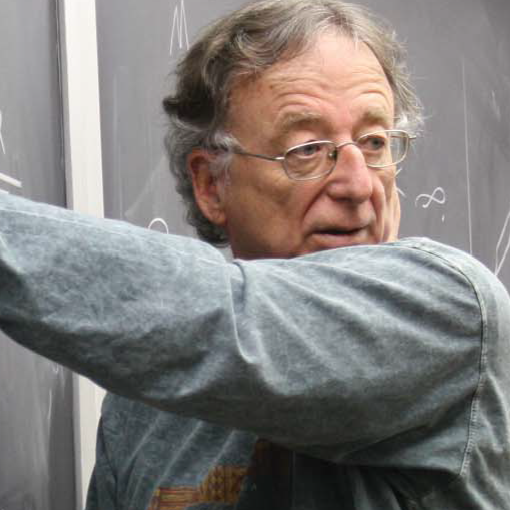
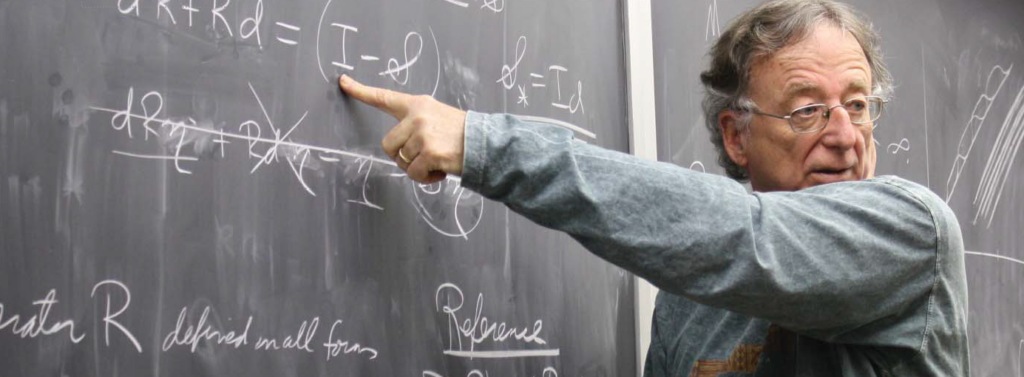
Image courtesy of Scott P. Moore.

My interest in mathematics began when I was nine or ten years old. I liked to think about ideas and do math puzzles, and I noticed there was some structure of prediction. Later on, I came to know this was called statistics, related to chance events. This ability to predict amazed me. I was a late bloomer academically in the sense that I didn’t have any pressure to study when I was growing up. In college I got back into academics again and made a fresh start. I was able to attend Rice University in Houston, which at the time was like a scaled-down Caltech. I rediscovered my academic self there after being a quasi-juvenile-delinquent, running around working on hotrods!

There’s an interesting theory that, among mathematicians for example, a person may discover they like mathematics and have a strong aptitude. They get so involved in it that their personality development is arrested at that point. They just stop caring about the finer points of their finishing, you might say. I’ve seen this in every one of my six children. They’re like little mathematicians or little scientists, then for some reason that usually washes out. They get interested in other things. For some of us, like me, it didn’t wash out.

After receiving my BA from Rice in 1963, I received my doctorate in 1966 from Princeton, where I wrote my thesis on triangulating homotopy equivalences. This work became part of surgery theory, which describes a way of manipulating mathematical spaces called manifolds.

Analyzing Mathematical Concepts

Almost everywhere you look, when you start to analyze a mathematical concept, it’s as if there’s this tightly woven Oriental rug covered by dried leaves. You sweep away the leaves, and you start finding out about it, and everywhere you look the beautiful tapestry is there to be uncovered. You can sweep anywhere and find it underneath, with all sorts of fantastic structure.

I was a member of the Institut des Hautes Études Scientifiques in France from 1974 until 1997. IHES was modeled after the Institute for Advanced Study in Princeton. It was a wonderful place for people like me who like to work on math all the time. I had no duties. I was given an office and a research environment with a library and a secretary. My colleagues were the best in the world, and I enjoyed the steady flow of visitors. I just worked on math. It was paradise.

While at IHES, I did some mentoring of people who had recently received their PhDs or who were on sabbatical and focusing on their research. The atmosphere was wonderfully collegial. Our lunches would start at one o’clock and we’d sometimes still be sitting there until tea at four o’clock, writing ideas on the backs of napkins.

During that time, and due to the six-month academic year in France, I was able to take advantage of an offer for the Einstein Chair at the City University of New York Graduate Center in 1981. So, I split my time between IHES and CUNY until 1997. I would move to each place for about six months. When my fourth child was in first grade, the back-and-forth schedule wasn’t tenable, so I substituted my current position as professor at SUNY Stony Brook for the position at IHES.

Receiving the National Medal of Science

The awards I have received have all meant a great deal, but the National Medal of Science in 2004 was special. At the White House we met George Lucas (which thrilled my 11-year-old son); the developer of the liver transplant which had saved the life of a relative one year before; and the inventor of the first computer games, Simon and Pong. All of us were receiving either science or technical awards from President Bush.

The Wolf Prize in Mathematics this year was for Shing-Tung Yau’s work on curved spaces and for my work in algebraic topology and conformal dynamics. Topology is an approach that allows one to ask scientific questions that are more qualitative in nature, such as whether or not a system would evolve and then come back to its original configuration, or whether there are cycles, and if so how many.

These are questions that can be expressed in words, without formulae, and they often involve integers or whole numbers or counting. By moving from formulaic considerations, which turn out to be very complicated, to a place where you try to define things in such a way that they can be counted, a problem becomes easier to understand.

You can study complicated spaces of many dimensions using algebraic topology. Think of the three-dimensional space we live in as a large hotel full of rooms, little boxes next to each other that fill up the entire space. Algebraic topology breaks down the hotel space we might otherwise think of as being continuous into all these little boxes put together.

Discrete Mathematical Descriptions

You can list these boxes on a computer or in your mind and give them names, and you can record how pairs of boxes relate to each other. If you give me the names of all the boxes and you tell me their relationships, then I can assign a purely algebraic description to each box and start applying algebraic topology to reconstruct many of the properties of the overall space.

We need discrete mathematical descriptions like these that can be inserted into a computer computation in an efficient way. Even though computers are very fast, it’s easy to generate problems that are much too big for them. If you’re trying to apply computers to study the flow of blood around the heart in the human body, this process is happening in space with a lot of little particles moving around. You cannot input an accurate assemblage of points and the way they all interact and ask a computer to compute that; it’s overwhelming.

In my work with conformal dynamics, I consider dynamical systems (processes that evolve in time) in small dimensions to make them more manageable. Some processes are reversible, meaning that they can run backward and forward, but others, such as a fire, are not. These non-reversible processes are more complex, but you can study them in very small dimensions. They can be studied in discrete time to reveal a very interesting structure that’s beautiful and that can also be analyzed. In the world of conformal geometry, you see the amazing fractal patterns of the Mandelbrot set, for example. It’s extremely interesting mathematically, and the incredible intricacy has an explanation via conformal dynamics.

Technology to Prove Math Theorems

I started studying this around 1980. There were primitive computers then that could draw figures, and you could plot this out and see all sorts of fantastic patterns. Then, we started trying to prove things about them. You could observe them, but to prove them as math theorems required technology, new ideas, and research.

That’s what I was working on at IHES. To draw a comparison to music, this structure is as breathtaking as if you had only known rhythmic drums and suddenly I show you Mozart. It was totally unexpected that such an incredibly beautiful structure should be there in such a simple problem.

Math is actually a very robust field. There are a lot of new ideas coming forth, and a lot of progress is being made. Yet in many ways we’re still at the beginning. Sometimes you use a problem as a North Star to guide you.

You don’t actually solve it because it’s often not that tractable yet, but the first steps you take to solve it lead you to other steps. You find other things, other structures. It’s like building a ladder to the moon: you have to build the steps of the ladder, always moving out and up.

The Next 15 Years

I expect many new developments in the next 15 years. Complex data will be attacked with all of the tools available, and we will see ideas from physics gain in influence. New technological developments have already impacted my work. The conformal dynamics used computer computations to find out what to prove. This was not really possible before 1980.

We still need ways to do fluid simulation, and this was pointed out at the White House event by George Lucas’ animators. For unsolved time-dependent processes like the motion of fluids, I want to try to find a few important parameters and then successively add information to build up a better and better picture—and all of this using the methods of algebraic topology.

I want to keep working on this algebraic model of space and its geometry. That’s my goal in a nutshell, and I hope my work will be useful in the sense that people can apply it.

Can Our Knowledge of Nature Ever Be Complete?

“So, even if there are other intelligent life forms out there, we are, for all practical purposes, alone. This revelation should fill us with awe.”

Published May 1, 2010

By Marcelo Gleiser

Image courtesy of Juan via stock.adobe.com.

I’d like to start this essay with a statement that might be surprising coming from a scientist: We are surrounded by the mysterious.

I’ll follow with a quote from another scientist: “The fairest thing we can experience is the mysterious. It is the fundamental emotion which stands at the cradle of true art and true science.”

Albert Einstein wrote those words in 1930, as part of a text entitled “What I Believe.” By “mysterious,” we both mean “that which is beyond our current knowledge.” That is, the knowledge we still don’t have of the universe. Einstein was well aware that we could only understand part of the whole. “What I see in Nature is a magnificent structure that we can comprehend only very imperfectly, and that must fill a thinking person with a feeling of humility,” he said.

Sadly, this concession to our limitations has been forgotten over the years. Perhaps some of the blame goes to Einstein: for the last two decades of his life, he searched for a “final theory,” a mathematical structure that would reveal the unity of nature, perfect in conception and in symmetry. His approach has been criticized for having been out of touch with the mainstream physics of the time. But his legacy as a unifier remains strong, having inspired a new generation of theoretical physicists in search of a final theory of nature.

Einstein believed—as did the Pythagoreans of pre-Socratic Greece—that geometry is the key to nature’s deepest secrets. Likewise, superstring theory—the preeminent modern incarnation of the final theory—aims to build a unified explanation for how the elementary particles of matter interact among themselves based on geometrical arguments.

The Ultimate Triumph of Reductionism

The stated goal is far from humble: the Theory of Everything should be the ultimate triumph of reductionism, the culmination of a search that started some 25 centuries ago in the Turkish town of Miletus. Can such a theory ever be devised? Or is the notion of unification, of Nature’s deep unity, more a myth, inspired by the pervasive influence of monotheistic ideas in Western thought?

To answer this question we must turn to particle physics, the branch of physics that searches for matter’s smallest building blocks. There is no question that the notion of symmetry is one of the cornerstones of physics. To deny this would be foolish

Many theories that successfully describe natural phenomena are based on the idea of symmetry and how it is applied mathematically. The problem starts when symmetry stops being a tool and becomes dogma. Because it’s been so successful so many times, it’s hard not to elevate symmetry to a pedestal and claim that nature’s harmony must be the expression of a grand mathematical code hiding underneath it all. The problem is, we have no experimental evidence that it must be so.

Current particle physics identifies four fundamental forces of nature: to the familiar gravitational and electromagnetic forces, we add the strong and weak nuclear forces, both active only within the confines of the atomic nucleus. The goal of unification is to show that all of these forces are, in fact, manifestations of a single force.

“Beauty is Truth, Truth Beauty”

We can’t perceive this unity at the low energies of our everyday lives, or even in our most powerful accelerators. But close to the Big Bang, at inconceivably high energies, the unity of nature would be revealed in all its amazing beauty. One senses Plato’s legacy—the belief that only in the pure beauty of mathematics can truth be found—or, as Keats wrote, that “beauty is truth, truth beauty.” Unfortunately, nature is not willing to cooperate.

One of the great triumphs of modern physics is the Standard Model of particle physics, a theory that collects all (or almost all) that we know of the world of the very small. In the 1960s, Sheldon Glashow, Abdus Salam, and Steve Weinberg built a theoretical framework whereby the electromagnetic and weak interactions were “unified”: At high energies, the weak interaction behaves in ways similar to electromagnetism.

The theory made some remarkable predictions, which were spectacularly confirmed by experiments in 1983 at the European Center for Particle Physics. In spite of its well-deserved success, the reality is that the theory can’t be considered a truly unified description of the two forces. Traces of both forces remain throughout; too many experimental facts must be accommodated by hand. In 35 years of attempts and massive experimental searches for the predicted effects such unification would entail, efforts to go beyond this “electroweak” unification to incorporate the strong force have failed.

Interestingly, we can detect a growing attitude shift in recent papers published by the high-energy physics community. Many scientists are proposing that perhaps things are not so perfect after all—that perhaps the universe started with the forces as described by the Standard Model, featuring only the partial electroweak unification.

Surrounded by the Mysterious

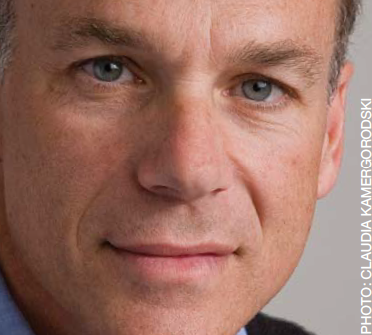
Image courtesy of Claudia Kamergorodski.

We can now revert to our opening statement—that we are surrounded by the mysterious. One of the problems with the notion of a final unification is that it assumes that we have complete knowledge of the fundamental particles and their interactions. Einstein was criticized for his stubborn attachment to gravity and electromagnetism; how can we be sure that there aren’t other interactions out there, beyond those we can currently measure?

We only know what our instruments tell us. And although their accuracy is increasing, allowing us to see more of the cosmos, it will always be limited. Since we cannot know all there is to know, we cannot build a theory of everything. We don’t even know what “everything” is!

The historian of ideas Isaiah Berlin called the notion of ultimate explanations a “fallacy,” blaming it on the pre-Socratics. There is a perennial darkness out there, beyond the circle of our current knowledge. And although this circle is always expanding, so is the level of our ignorance.

Imagine how much Galileo found he didn’t know when he pointed his telescope to the sky in 1609; just as when van Leeuwenhoek looked through his micro-scope only a few years earlier. In our times, think of all that the Hubble Space Telescope has revealed. Einstein was right when he wrote of how imperfect and limited our knowledge of nature is. And Berlin was right to condemn the rigidity of monistic ideals.

As we leave notions of mathematical perfection and final unification behind, what do we have left? A universe that thrives on the imperfect, on the manifestation of asymmetries from particles to galaxies; a universe that is no less fascinating for not hiding a “mind of God.”

Fundamental Imperfections

The argument doesn’t stop with fundamental physics. Life itself is only possible due to fundamental imperfections. Take, for example, the remarkable chirality, or handedness, of organic molecules. As Pasteur revealed more than 150 years ago, life seems to have a marked preference for molecules of specific spatial configurations. In modern times, we identify the amino acids that make up all proteins in living organisms as being “left -handed,” while the sugars that form the backbone of RNA and DNA are identified as being “right-handed.”

Handedness here relates to how these molecules are able to rotate the polarization of light either to the left or to the right, like the blades of a fan. The curious thing is that, when synthesized in the laboratory, these amino acids and sugars come out fifty-fifty. So, out of two choices, life picks only one.

No one knows why, although there are many tantalizing ideas. Perhaps, as I suggested in a recent paper, the choice of chirality depends on the complex interactions between the primitive organic chemistry and the early terrestrial environment of four billion years ago. Other life forms in other planets or moons may have opposite chirality to ours.

Survival by Genetic Mutation

As life developed, it only survived because of genetic mutations, themselves imperfections during the reproductive cycle. Life’s complexity, the transition from single-celled to multicellular organisms, is an amazing feat of adaptability, of the symbiotic relationship between living creatures and Earth’s unique properties.

As we look out at our neighbors in this solar system, we see barren worlds, most probably devoid of life. What about the rest of the galaxy or even the universe as a whole? Current research indicates that simple life may not be so rare; but complex life, and, in particular, intelligent life, is a whole other story. The Search for Extraterrestrial Intelligence program, known as SETI, is 50 years old, but no radio signal from an alien civilization has been detected. Furthermore, the distances are vast; with current technology, it would take us over 110,000 years to arrive at the nearest star, Alpha Centauri.

So, even if there are other intelligent life forms out there, we are, for all practical purposes, alone. This revelation should fill us with awe: we are how the universe thinks about itself. And for this reason, we have the moral obligation to preserve life at all cost. Not bad for a species that has only a limited knowledge of reality.

About Marcelo Gleiser

Marcelo Gleiser is the Appleton Professor of Natural Philosophy and Professor of Physics and Astronomy at Dartmouth College. He is a Fellow of the American Physical Society and the recipient of the Presidential Fellow Award from the White House and the National Science Foundation, as well as several literary awards. He is the author of A Tear at the Edge of Creation: A Radical New Vision for Life in an Imperfect Universe (Free Press), published in April 2010.

New Insights into Science Teaching as a Profession

An empty and clean science lab at either a high school or college.

Data suggests that science comprehension among American high school students is middle of the pack compared to peer countries. Here are some tips for teachers to improve comprehension.

Published April 9, 2010

By Erica Nofi

Image courtesy of Khunatorn via stock.adobe.com.

The second event presented by the New York Science Education Initiative brought together more than 150 secondary science teachers, research scientists, and other educators to discuss the future of science teaching as a profession and the roles that scientists can play in improving education.

Sheila Tobias, a writer focused on math and science learning, presented the initial results of the Science Teaching as a Profession project, which she co-directs. Tobias and her colleague Anne Baffert conducted their research through their web site and in personal interviews with science teachers and science chairs. Beginning with the question: “Does your work life make you feel like a professional?” the team surveyed hundreds of secondary science teachers about the status of teaching, what it would take to retain teachers in this high-attrition field, and many other issues.

Improvement Needed in Science Comprehension

Although the research was opportunistic—depending on individual teachers to volunteer their opinions through online participation—rather than systematic, it provides valuable insight to the current state of careers in science teaching. The project led to a book of the same title, co-authored with Baffert and published by the National Science Teachers Association.

Tobias argued that the trend toward test-based assessment and teacher accountability has eroded the professionalism and status of teaching as a career, to the detriment of science education. She compared teaching to other professions, such as medicine and law, whose practitioners are highly-trained, self-policing, and place service over personal gain. Tobias outlined these and other identifiers of professionalism, and used teacher interview results to illustrate how returning the qualities of professionalism to teaching would improve teacher job satisfaction and retention, as well as overall educational quality.

Tobias concluded by noting that the U.S. was recently rated by the Organisation for Economic Cooperation and Development (OECD) as 29th out of 57 countries in high school students’ science comprehension. While this statistic is upsetting, Tobias claimed it offers an opportunity to make a serious change in the teaching of science in this country, one that will give our students an advantage in the technology-centric markets of the future. The participation of practicing scientists in this process is vital both to the content and status of science education.

Challenges and Successes in the Science Classroom

Following Tobias’s talk, the audience broke out into small discussion groups, each of which included a scientist and a staff member from The New York Academy of Sciences (the Academy) as facilitator. The groups discussed their experiences teaching science and the potential of collaborating with scientists to improve science education.

Teachers, discussing their successes and challenges in the classroom, found that topics that relate directly to students and their lives were most engaging. Teachers reported that students responded best when the material was related to:

  • Their bodies
  • The immediate environment
  • Their futures and careers
  • Their idealism and ability to influence the world

The “Wow Factor” is also a tool to increase engagement:

  • Surprising demonstrations, a.k.a. discrepant events
  • Explosions
  • Extremes and awe, such as in Astronomy or Paleontology
  • Real materials, such as dissections, or extremely detailed models

Teachers presented extensive tool chests of engagement techniques, but when it came to challenges, two central topics quickly emerged: scientific thinking and math. Additionally, it was pointed out that sometimes it can be difficult to tell whether a student is struggling with a conceptual misunderstanding or a math difficulty. Teachers also shared that the best way to make math understandable is to provide context, whether by relating the math to the students’ lives, or by teaching the math through the science concepts.

Creativity and Thinking About Science

It was agreed that the key to teaching scientific thinking is the reintroduction of creativity to the classroom, a proposition that can be difficult when students expect test-based teaching methods. Some teachers said that by the time students have reached high school, they have already been trained to think of science as a subject of rote memorization.

Despite this challenge, many teachers have found success by placing students in the role of primary investigators rather than having them follow lab instructions. For example, one teacher had the students present their findings from unguided experiments at a mock conference.

What Scientists Can Bring to Classrooms

Teachers generally agreed that outside visitors can inspire extra interest and attention. Bringing scientists into the classroom can give students a real, relatable connection to the practice of science, as well as the opportunity to see themselves in the role of a scientist. Hearing scientists discuss the process they use in their labs can also help students understand scientific thinking.

In addition to directly relating their experiences in the lab, visiting scientists can also give students the chance to see their classroom teachers as ongoing learners, and scientists as former students. Seeing parallels between their learning process and the learning processes of teachers and scientists can also inspire investment in science learning.

What Teachers Can Learn from Scientists

Given the opportunity to interact directly with scientists, teachers suggested that they would use it both to improve their own understanding of science and to learn techniques to reach students. Many teachers mentioned that learning more cutting-edge science to bring to the classroom would help them engage students. They also wanted to gain a deeper understanding of the topics they are already teaching, and learn new ways of teaching them, including new demos or experiments to do with supplies already on hand. Particular interest was also expressed in discovering ways to integrate more scientific thinking, experiments, or current science into standards.

Scientists Can Also Learn from Teachers and Classrooms

Scientists at the event pointed out that they also have a lot to learn from classroom situations. Many scientists want to learn how to express the concepts in their work more clearly to general audiences, and graduate students in particular need experience, outreach, and teaching on their resumes.

While agreeing that bringing scientists into the classroom was a positive experience for all involved, both scientists and teachers shared some cautionary comments about the process. The outlook of the scientist is geared toward rigor, while a teacher is interested in the excitement of science—the two viewpoints may be difficult to reconcile, but have much to offer one another. Teachers also noted that both students and scientists need to be prepared for classroom interaction: students should prepare questions, while scientists should be briefed on the students’ level of understanding.

How to Connect Scientists with Classrooms

Scientists at the event overwhelmingly indicated that their colleagues are interested in becoming involved with K-12 education and value their experiences in schools. However, both teachers and researchers have difficulty making contact with willing partners—several individuals related bad experiences when looking for laboratories or classrooms with which to partner. Another complaint was that most scientists participate in “high-end” competitions, events, or programs, rather than in schools where improvement is most needed.

Many participants were interested in an online network or listing of schools and laboratories interested in partnerships, visiting speakers, mentors, and internships—the Academy’s ability to build communities may be an answer to this need. Scientists suggested that schools institute semi-formalized “lecture series” to attract graduate student speakers looking for experience. Another possibility is for research institutions to systematically encourage their faculty and staff to participate in school efforts.

How Can Scientists Support Teachers

The most important theme that arose in this final discussion was the need for mutual respect. Science teachers need the respect of the entire community, and if scientists are to help increase the effectiveness of science education, they must respect science teachers and demonstrate that respect. The support of scientists would be influential in the attempt to return professionalism to science teaching.

There are several ways for scientists to help engage the public in science education, beyond speaking in classrooms. Teachers at the event suggested that scientists could help involve parents and impress upon them the value and importance of science education—possibly through speaking to parents groups or giving evening demonstrations for parents. Scientists can also speak with or write to media outlets like newspapers, radio shows, and web sites, and encourage other scientists to participate.

Also read: Supporting Science Education for the Good of Society and Advancing Science Education in New York City

Embracing Globalization in Science Education

The globalization of universities must be embraced, not feared, in order to advance STEM research internationally and empower the next generation.

Published March 1, 2010

By Ben Wildavsky

For several years now—and not for the first time in our nation’s history—CEOs, politicians, and education leaders have regularly decried the shortcomings of STEM (science, technology, engineering, and math) education in America’s elementary and secondary schools. And they have vigorously promoted a reform agenda aimed at tackling those problems.

But what about our colleges and universities? On the one hand, America’s research universities are universally acknowledged as the world’s leaders in science and engineering, unsurpassed since World War II in the sheer volume and excellence of the scholarship and innovation they generate. On the other, there are signs that the rest of the world is gaining on us fast—building new universities, improving existing ones, competing hard for the best students, and recruiting U.S.-trained PhDs to return home to work in university and industry labs. Should we be worried?

There is no question that the academic enterprise has become increasingly global, particularly in the sciences. Overall, nearly three million students now study outside their home nations—a 57 percent increase in the last decade. In the United States, by far the largest magnet for students from overseas, foreign students now dominate doctoral programs in STEM fields, constituting, for example, 65 percent, 64 percent, and 56 percent, respectively, of PhDs in computer science, engineering, and physics. Tsinghua and Peking universities together recently surpassed Berkeley as the top sources of students who go on to earn American PhD’s.

A Race to Create World Class Universities

Faculty are on the move, too: Half the world’s top physicists no longer work in their native countries. And major institutions such as New York University and the University of Nottingham are creating branch campuses in the Middle East and Asia—there are now 162 satellite campuses worldwide, an increase of 43 percent in just the past three years. At the same time, growing numbers of traditional student “sender” nations, from South Korea, China, and Saudi Arabia to France and Germany, are trying to improve both the quantity and the quality of their own degrees, engaging in a fierce—and expensive—race to create world-class research universities.

All this competition has led to considerable handwringing. During a 2008 campaign stop, for instance, then-candidate Barack Obama spoke in alarmed tones about the threat such academic competition poses to the United States. “If we want to keep on building the cars of the future here in America,” he declared, “we can’t afford to see the number of PhD’s in engineering climbing in China, South Korea, and Japan even as it’s dropped here in America.”

Nor are such concerns limited to the U.S. Beyond anxious rhetoric, in a number of nations worries about brain drain and educational competition have led to outright academic protectionism. India and China are notorious for the legal and bureaucratic obstacles they erect to West-ern universities wishing to set up satellite campuses catering to local students. And some countries erect barriers to students who want to leave: The president of one of the prestigious Indian Institutes of Technology effectively banned undergraduates from taking academic or business internships overseas.

Quotas on Foreign Students

Photo courtesy of Chris Strong.

Elsewhere, educators institute quotas on foreign students, as in Malaysia, which places a five percent cap on the number of foreign undergraduates who can attend the country’s public universities (just as the University of Tennessee once placed a 20 percent cap on the percentage of foreign graduate students in each department). Perhaps the silliest example of this protectionist mentality can be found in Germany, which for years prevented holders of doctorates earned outside the European Union from using the title “Dr.” Even a recent reform plan would extend that privilege only to holders of doctorates from 200 U.S. research universities and a limited number of universities in Australia, Israel, Japan, Canada, and Russia.

There are other impediments to global mobility, too, not always explicitly protectionist, but all having the de facto effect of discouraging or preventing open access to universities around the world. In the post-9/11 era, legitimate security concerns led to enormous student visa delays and bureaucratic hassles for foreigners aspiring to study in Great Britain and the United States. As the problem was recognized and visa processing was streamlined, international student numbers rebounded and eventually increased.

By 2009, however, visa delays became common again, particularly for graduate and postdoctoral students in science and engineering, who form the backbone of many university-based research laboratories and thus serve as key players in the U.S. drive for scientific and technical innovation. Then there are severe limits on H-1B visas, which allow highly skilled foreigners, usually in science and engineering, to work temporarily in the United States and serve as an enticement for the best and brightest to study and perhaps remain here. With just 85,000 or so H-1B visas issued each year—and permanent-resident visas for skilled workers also scarce—waiting lists are long, which sends some talented students elsewhere.

Free Trade in Mind

Perhaps some of the anxiety over the new global academic enterprise is understandable, particularly in a period of massive economic uncertainty. But setting up protectionist obstacles is a big mistake. The globalization of higher education should be embraced, not feared—including in the U.S. In the near term, it’s worth remembering that, despite the alarmism often heard about the global academic wars, U.S. dominance of the research world remains near-complete.

A RAND report found that almost two-thirds of highly cited articles in science and technology come from the U.S. Seventy percent of Nobel Prize winners are employed by U.S. universities, which lead global college rankings. And Yale president Richard Levin notes that the U.S. accounts for 40 percent of global spending on higher education.

That said, it’s quite true that other countries are scrambling to emulate the American model and to give us a run for our money. Yet there is every reason to believe that the worldwide competition for human talent, the race to produce innovative research, the push to extend university campuses to multiple countries, and the rush to produce talented graduates who can strengthen increasingly knowledge-based economies will be good for us as well. Why? First and foremost, because knowledge is not a zero-sum game. Intellectual gains by one country often benefit others.

More PhD production and burgeoning research in China, for instance, doesn’t take away from American’s store of learning—it enhances what we know and can accomplish. In fact, Chinese research may well provide the building blocks for innovation by U.S. entrepreneurs—or those from other nations. “When new knowledge is created, it’s a public good and can be used by many,” RAND economist James Hosek told the Chronicle of Higher Education.

The Economics of Global Academic Culture

Indeed, the economic benefits of a global academic culture are significant. In a recent essay, Harvard economist Richard Freeman says these gains should accrue both to the U.S. and the rest of the world. The globalization of higher education, he writes, “by accelerating the rate of technological advance associated with science and engineering and by speeding the adoption of best practices around the world…will lower the costs of production and prices of goods.”

Just as free trade in manufacturing or call-center support provides the lowest-cost goods and services, benefiting both consumers and the most efficient producers, global academic competition is making free movement of people and ideas, on the basis of merit, more and more the norm, with enormously positive consequences for individuals, for universities, and for nations. Today’s swirling patterns of mobility and knowledge transmission constitute a new kind of free trade: free trade in minds.

Still, even if the new world of academic globalization brings economic benefits, won’t it weaken American universities? Quite the contrary, says Freeman, who predicts that by educating top students, attracting some to stay, and “positioning the U.S. as an open hub of ideas and connections” for college graduates around the world, the nation can hold on to “excellence and leadership in the ‘empire of the mind’ and in the economic world more so than if it views the rapid increase in graduates overseas as a competitive threat.”

Less Angst, More Sense of Possibility

National borders simply don’t have the symbolic or practical meaning they once did, which bodes well for academic quality on all sides. Already, the degree of international collaboration on scientific papers has risen substantially. And there is early evidence that the most influential scholars are particularly likely to have international research experience: Well over half the highly cited researchers based in Australia, Canada, Italy, and Switzerland have spent time outside their home countries at some point during their academic careers, according to a 2005 study.

The United States should respond to the globalization of higher education not with angst but with a sense of possibility. Neither a gradual erosion in the U.S. market share of students nor the emergence of ambitious new competitors in Asia, Europe, and the Middle East means that American universities are on some in-evitable path to decline. There is nothing wrong with nations competing, trying to improve their citizens’ human capital and to reap the economic benefits that come with more and better education.

By eliminating protectionist barriers at home, by lobbying for their removal abroad, by continuing to recruit and welcome the best students in the world, by sending more students overseas, by fostering cross-national research collaboration, and by strengthening its own research universities in science, engineering, and other fields, the U.S. will not only sustain its own academic excellence but will continue to expand the sum total of global knowledge and prosperity.

Also read: Climate Change and Collective Action: The Knowledge Resistance Problem


About the Author

Ben Wildavsky is a senior fellow in research and policy at the Kauffman Foundation and a guest scholar at the Brookings Institution. This essay is adapted from The Great Brain Race: How Global Universities Are Reshaping the World, published by Princeton University Press.

A Case for American STEM Education

Acts of Congress, research studies, passionate scientific community leaders, and a new Academy initiative all aim to stem the collapse of American STEM education.

Published March 1, 2010

By Alan Dove, PhD

On October 4, 1957, a rocket launched from the steppes of Kazakhstan delivered the first artificial satellite into Earth’s orbit, giving the Soviet Union an early lead in the defining technological competition of the Cold War. In response, a new generation of American students rushed into careers in science and engineering. Less than 12 years later, this home-grown talent pool helped land the Apollo 11 spacecraft on the moon, planting the Stars and Stripes in lunar soil and establishing the dominance of American science.

Or not.

The Sputnik story has become one of the most enduring myths in American science education, but it’s mostly fiction. While Sputnik did spark widespread public fear and inspire a strong political response in the form of the National Defense Education Act of 1958, the actual number of science and engineering enrollments at colleges remained virtually flat throughout the 1960s. Instead of a homegrown talent pool, the Mercury, Gemini, and Apollo programs relied heavily on engineers educated in Europe. The Apollo landing was a thoroughly impressive engineering feat, but it produced little new science.

Indeed, as a long succession of international studies and government reports have argued, American science education largely stagnated after World War II: The average American public school graduate is scientifically illiterate, they say.

On October 23, 2009, Secretary of Education Arne Duncan addressed President Obama’s Council of Advisors on Science and Technology, citing disturbing statistics about the state of STEM (Science, Technology, Engineering, and Mathematics) education in the United States: “In science, our eighth graders are behind their peers in eight countries… Four countries—Korea, Singapore, Hong Kong, and Finland—outperform U.S. students on math, science and all other subjects.”

Closing the Achievement Gap

Secretary Duncan outlined a number of goals that must be reached in order to close the achievement gap and improve American students’ comprehension of the STEM disciplines. Aided by this new Federal push for STEM education, experts from diverse fields and political viewpoints are now trying to address the longstanding failure. In the process, they are asking fundamental questions about the way America educates its citizens: how worried does the U.S. need to be about science education, why has it been so bad for so long, and what can be done to improve it?

Anyone studying American science education must immediately confront a paradox: despite decades of documenting its own weaknesses in science education at the K-12 level, the nation has remained a world leader in scientific and technological achievement. If the U.S. is so awful at teaching science, why are Americans still so good at practicing it?

One explanation is the time lag inherent in scientific training. “I’ve always called the whole situation the quiet crisis,” says Shirley Jackson, President of Rensselaer Polytechnic Institute in Troy, NY. “It’s quiet because it takes years to educate a world-class scientist or engineer. It starts with the very early educational years and goes all the way through levels of advanced study,” she says. As a result, problems in the public school system could take a generation to manifest themselves in university laboratories and corporate R&D campuses.

Imported Talent

Imported talent also masks the issue. “After World War II something like 70 percent of the world’s economic output was centered here in the United States,” says Jim Gates, professor of physics at the University of Maryland in College Park. “That meant that as a society we could count on the brightest minds from around the world seeking opportunity to come to us because we were the place where the most opportunity was apparent.”

In recent years, though, educators have begun worrying about two additional trends. “There are stories of very talented colleagues from Asia who have essentially decided to repatriate either to India or China…and this is a phenomenon I think we’ve seen in academia increasing for the last several years,” says Gates. At the same time, emerging economies such as China and India have made enormous investments in science and engineering education in order to mine rich veins of talent in their immense populations.

It’s been a hard threat to quantify, though. The 2005 National Academy of Sciences report “Rising Above the Gathering Storm” presented some attention-grabbing statistics. For example, the report asserted that in 2004 China graduated 600,000 new engineers, India 350,000, and the U.S. only 70,000. However, the committee’s methods for deriving those figures came under fire from critics who pointed out that the definition of “engineer” varied considerably from one country to another. Correcting that error halved the number of Chinese engineers, doubled the American number, and showed that the U.S. still had a commanding lead in engineers per capita.

Choosing Careers Outside of Science and Engineering

More recently, a report released in October 2009 by investigators at Rutgers and Georgetown argued that U.S. universities are graduating more than enough scientists and engineers, but many choose jobs outside of their major field. According to that report, which was sponsored by the Sloan Foundation, the perceived shortage of technical expertise is more likely due to American companies’ unwillingness to pay for it.

That viewpoint has its critics, of course. “I’m well familiar with the Sloan study, but what we’re really talking about is innovation capacity,” says Jackson, who helped write the 2005 National Academy report. She adds that the real problem will manifest itself over the next few years, as the first rounds of baby boomers begin to leave the workforce. “We have a population of people…from the various sectors who are beginning to retire, and those retirements are beginning to accelerate.” While current employment statistics might show plenty of scientists and engineers for available positions, Jackson and others expect the impending retirements to alter that.

While debate about whether the U.S. is adequately training the next generation of professional scientists rages on, it’s hard to disagree with those who argue that the country needs to improve the scientific literacy of its lay public. “We seem to accept that people need to be able to read and write in order to be educated, to be able to function in society, and that is obviously critical, but what we have to also recognize is that people need certain baseline mathematical skills and some knowledge of science and technology in order to be literate,” says Jackson.

A Scientifically Literate Public

Gates concurs: “Having a scientifically literate public is going to be critical as our nation wrestles with problems whose solutions seem inherently to involve science and technology.” In particular, he cites climate change, where scientists have had considerable difficulty explaining a well-established phenomenon to politicians and citizens who have little understanding of basic math and physics. “Having a public that is scientifically illiterate doesn’t bode well for the future of our country,” he says.

Other education reform proponents are more blunt. “I regard the collapse of math and science education as the greatest long-term strategic problem the United States has, and likely to end our role as the leading country in the world,” says former U.S. House Speaker Newt Gingrich.

Famous for engineering the 1994 Republican Congressional victories, Gingrich, a former college history professor, is outspoken about the need to reform a public education system that he says values certification over knowledge. “We…don’t have physicists teaching physics, we don’t have chemists teaching chemistry, and we don’t have biologists teaching biology,” he says.

Highlighting the political breadth of the issue, Gingrich recently accompanied Education Secretary Duncan and Reverend Al Sharpton on a tour of high schools in Philadelphia. Despite their radically different positions on other issues, the three agreed that American science education urgently needs help.

Others point out that improving public science education is also a prerequisite to training more scientists. “Without that…educational base, we don’t have the base to draw indigenous talent from, talent that may then actually become the next generation of scientists and engineers, so they’re two issues, but they are linked,” says Jackson.

Resistance is Feudal

There is no shortage of potential causes for the nation’s scientific ignorance. Indeed, critics of the educational system often focus on whichever problems seem most relevant to their agenda. Advocates of charter schools like to point to powerful teachers’ unions and administratively bloated school systems. Privatizing education with charter schools, they argue, would give these bureaucracies nimble, efficient competition, forcing the public system to reform or die.

Others emphasize staffing problems instead, such as the tendency for science teachers to have majored in education rather than science, and a transient labor pool in which a third of K-12 teachers leave the profession within five years of being hired. In their view, both public and charter schools must draw and retain more highly trained science teachers.

Still others point to the balkanization of the American educational system, which allows each state and even each school district, wide latitude in setting curricula and standards. “Most developed countries have not just national tests, but national curricula,” says Gates. “We can’t say that the quality of education can differ in California and New York versus Wyoming and Florida,” he adds. “We want to have a common, internationally competitive set of standards.”

Getting more than 14,000 school districts in 50 states to agree on those standards, however, remains difficult. Gates has seen the problem firsthand from his seat on Maryland’s school board. “School boards and superintendents basically have their own feifdoms,” he says.

School districts aren’t the only feudal systems. Getting the national-level education agencies to coordinate their activities has been a tall order. An analysis by the Department of Education found that in 2006, a dozen different Federal agencies spent a total of more than $3 billion on science education initiatives, but a lack of coordination often made the efforts redundant or counterproductive.

The America COMPETES Act of 2007

To address some of these problems, Congressman Bart Gordon, D-TN, introduced the America COMPETES Act of 2007 which, among other things, established the Robert Noyce Teacher Scholarship. The fund, which Congress endowed with $115 million this year, encourages math and science majors to become teachers, and current math and science teachers to go back for more training. “We found that a very large percent of our teachers who teach math and science have neither certification nor a degree to teach those two subjects, so we have set up programs to help with that competency,” says Gordon.

Gordon, who chairs the House Committee on Science and Technology, also wrote the STEM Act of 2009. That bill aims to improve the coordination of Federal STEM education efforts and make them more user-friendly. “We did some digging and found that there were a number of STEM education programs all across the Federal government…that you couldn’t find just by looking down a table of contents, you really had to dig in, and so we felt that by having better coordination, that we would be able to get better leverage there,” says Gordon. The STEM Act passed the House in June and is now awaiting action in the Senate.

Besides streamlining the system, national standards and more unified Federal efforts could help nip some antiscientific trends, such as creationist school boards that attempt to undermine the central organizing principle of biology. American creationists, who preach a literal interpretation of the Bible, have often aligned themselves with conservative Republicans for political leverage.

Reducing the Attention Deficit

The party is not of one mind on the issue, though. “There have been four parallel evolutions of sabertoothed cats over the last 40 million years…and you can see literally almost the exact same steps of adaptation. Now, it’s very hard to look at that and not believe some kind of evolution occurs,” says Gingrich. He adds that the lesson for educational policy is equally obvious: “I have no problem with creationism being taught as a philosophical or cultural course, as long as you teach evolution as a science course, because I think they’re two fundamentally different things.”

Winning the argument for evolution in biology is only a small step toward reforming STEM education nationwide, though. Indeed, some critics of the current system advocate widespread and radical changes. Gingrich, for example, suggests incentive programs to pay students for performance: “I propose in every state that we adopt a position that if you can graduate a year early, you get the extra cost of your 12th year as an automatic scholarship to either [vocational] school or college.”

Others advocate much faster adoption of technology in the classroom. Jim Gates says the average modern science classroom has few technological advances over the classroom of 50 or 60 years ago. Instead of continuing to rely on textbooks and chalkboards, he suggests switching to electronic texts and presentations, and allowing teachers to download new material instantly as it becomes available. “We have this incredible technology that’s remaking the world around us…and to think that somehow education will be untouched by this revolution…is extremely naive,” he says.

Past Reform Efforts

Radical innovations certainly sound interesting, but the history of past reform efforts in American science education provides a sobering counterpoint. Early in the Clinton administration, for example, the National Science Foundation (NSF) launched an ambitious program called Systemic Initiatives to help whole school systems make large-scale changes in science education. The initiatives achieved some notable successes in boosting science achievement, particularly in poor rural and urban districts.

Then, in 2002, Congress passed a mammoth set of reforms called No Child Left Behind (NCLB). To fund NCLB projects, the NSF had to drain $160 million from the Systemic Initiatives budget, effectively sidelining the program less than 10 years after it had begun. NCLB, in turn, has been widely panned by educators, politicians, and scientists. Critics argue that NCLB’s heavy emphasis on standardized testing has encouraged states and school districts to manipulate the tests rather than make genuine improvements. Because of this, NCLB is now set for its own overhaul, potentially shifting the science education agenda yet again.

This time, though, reformers have brought a new constituency into the discussion: state governors. Aided by the American Association for the Advancement of Science, the National Governors’ Association has now developed a STEM Education initiative, including grants to fund reform efforts in individual states. Such state-level programs could go a long way toward improving the system nationwide if they are properly coordinated. “We need to think about what can be done to knit together the range of activities across the local, state and Federal level that involve public, private, and academic sectors, and that’s a challenge,” says Jackson.

An Interesting Trend

Scientists and engineers can also take heart from an interesting trend in college data: while the Space Race had little effect on the number of new enrollments in these fields, they spiked in the late 1970s and early 1980s. Various commentators have suggested that students were following an altruistic urge to solve pressing environmental and energy problems, which were just coming to the fore then, or that they simply wanted to improve their employability during an epic recession.

In either case, history seems primed to repeat itself. Both environmental degradation and skyrocketing unemployment are making headlines again, and science and engineering enrollments are once again on the rise.

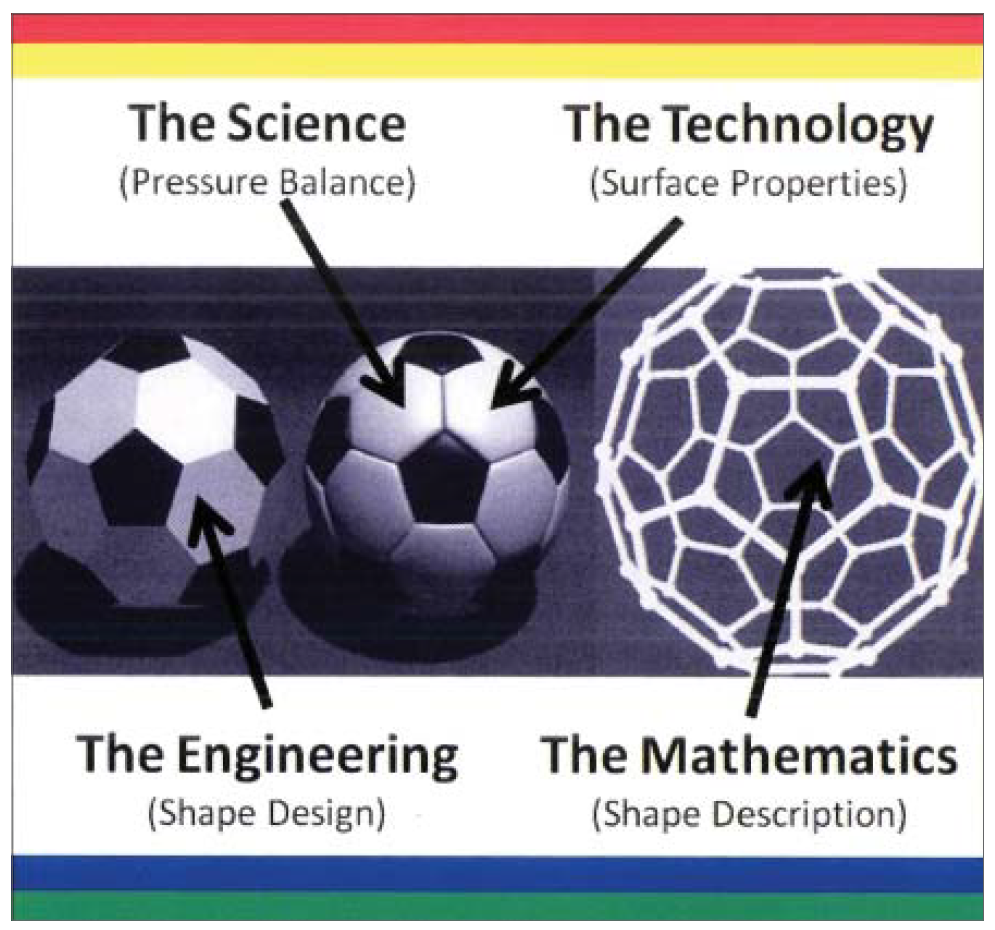
Corporate Responsibility and a Greener Future

A shot of a man in a suit and tie talking.

Nobel Laureate and Academy Governor R.K. Pachauri says business must take the lead in promoting a more sustainable future across the globe.

Published September 1, 2009

By Adrienne J. Burke

Rajendra K. Pachauri. Image courtesy of Nick Sundt/U.S. Climate Change Science Program/U.S. Department of Commerce via Wikimedia Commons.

Rajendra K. Pachauri stepped into the global green spotlight in 2007 when he accepted the Nobel Peace Prize on behalf of the Intergovernmental Panel on Climate Change with former Vice President Al Gore. The 69-year-old industrial engineer and economist has chaired the IPCC, established by the World Meteorological Organization and the United Nations Environment Program, since 2002, and recently took a half-time position as head of Yale University’s Climate and Energy Institute. But he has been working on issues of sustainability and climate change for far longer. He has directed The Energy and Resources Institute, one of Asia’s leading centers of sustainable development research and education, since 1981, and he helped lay the groundwork for the 1997 Kyoto Protocol.

In the interest of continuing to build its strength as a global resource of sustainable science and technology expertise, The New York Academy of Sciences (the Academy) recently elected R.K. Pachauri to its International Board of Governors, and will honor him for his work promoting urban sustainability at the Sixth Annual Science & the City Gala in New York on November 16.

An ardent vegetarian who urges individuals to take responsibility for the environment, Pachauri has also been outspoken about the importance of corporate leadership in sustainability. The Fourth Assessment Report issued by the IPCC under his leadership is considered the most detailed analysis of global climate change ever undertaken. Among its numerous recommendations is the advice that “changes in lifestyle and behavior patterns can contribute to climate change mitigation across all sectors. Management practices can also have a positive role.”

How do you define sustainability?

Simplistically, it is what Mrs. Brundtland and the World Commission on Environment and Development put forward in 1987: a form of development which meets the needs of the current generation without compromising the ability for future generations to meet their own needs. It’s simple, but how one applies it in practice is not all that easy.

Is there a different definition for corporate sustainability?

No, I wouldn’t say so, because the principles are the same. Corporates also have a responsibility to see that we don’t degrade the environment, that we don’t overspend our natural resources.

Could corporations be models of sustainability for communities, cities, or governments?

As a matter of fact, they have to become models for all of society because there’s going to be a greater and greater level of economic activity in the corporate sector, and therefore what they do will have a profound and a very wide impact on society as a whole.

What do you mean when you say that a “complete reorientation of thinking” among the leadership of the corporate sector is overdue?

There’s been a disproportionate focus on profits, not only in the very narrow financial sense but also in the very short term. You’ve seen many examples of corporates who found over a period of time that their profitability was actually impaired because they had this narrow and short-term focus. Given the changes that are taking place in the world, customers and even suppliers are going to be much more sensitive to the corporate responsibility that leaders show towards society. If corporate organizations don’t take this newly apparent dimension into account, they are obviously going to lose markets and their market share. This is why a complete reorientation of thinking will be necessary.

Sustainability contains a genuine profit motive?

Yes, and that profit motive essentially would require reflection for a longer period of time than has been the case traditionally. Let me take the example of Wal-Mart—this is one major company that has moved more genuinely towards sustainability, towards green issues. Or you take a company like General Electric. They’re pursuing the business that they’ve been doing in the past, but they have shown a clear commitment to looking at the future of green technologies and investing in them. To different extents, a number of organizations are beginning to show this, and the ones that have practiced this philosophy have actually benefitted.

Where governments have failed, then, could corporations take the lead in promoting sustainability?

You really need the combination of the two. If government has policies, for instance, which impose irrational prices rather than promote sustainability, then clearly the corporation will not be able to do much about it. Corporations are answering to their shareholders. It’s important, of course, for shareholders to be educated and to show a certain sensitivity to social causes, but there’s a limit to that. If governments come up with policies that run counter to sustainable development, then there’s nothing you can do about it. You really need a combination of enlightened government policy and enlightened corporate leadership. In the absence of that, I don’t think you get the right results.

You’ve said it’s crucial that governments from around the world reach agreement on tackling the challenge of climate change at the United Nations Climate Change Conference this December in Copenhagen. What will you consider to be a successful outcome of that gathering?

There are three [desired] outcomes. First, a very firm commitment to reduce emissions by 2020. Then, a commitment to provide funding for those countries that are really deprived, that don’t have the money to adapt to the effects of climate change. And something that allows relatively easy access to clean technologies for the developing countries.

Is addressing climate change and getting to sustainability a bigger challenge for policymakers or for R&D scientists?

First and foremost, it’s a challenge for people at large. You really have to convince the public of the fact that what we’ve been practicing for a long time is not sustainable and we have to bring about a shift. In a democracy, you would expect that the public will put pressure on the politicians and the leadership to do what’s expected.

And it’s essential for scientists to become effective communicators. Unless they do that, the public is not going to get to know the seriousness of some of the problems that we’re facing and the kind of solutions that are required. Scientists have an increasing role in informing the public.

The Fourth Assessment report from the IPCC suggests that management practices could have a positive role in climate change mitigation. What are examples of such management practices?

There’s a tangible part of the impact and an intangible part. The tangible part is what you actually save, what you actually reduce in energy consumption. On the shop floor or in a factory, launch a program of energy efficiency whereby you ensure that every unit of energy is consumed using the most efficient methods, the most efficient ecologies. Just cutting out waste as part of management practices could have a major impact.

The intangible part is creating a culture that would ensure that the organization will always focus on sustainability. It’s like safety. There are organizations that are extremely safety conscious with seldom any accidents or explosions. Similarly, for organizations that are very particular about the efficiency of energy use and minimizing waste, it’s all part of managing practices which can achieve a great deal.

Also read: Climate Change: A Slow-Motion Tsunami