Recent progress in the understanding of human disease has led to an explosion in the number of new medicines and therapeutics available for adults — however, significantly fewer drugs are developed and evaluated specifically for children due to complex ethical and logistical issues. Listen to this podcast addressing topics on how to provide children with evidence-based treatments while protecting them from inappropriate research.
This podcast highlights discussions from the Ethical Considerations in Research for Pediatric Populations symposium presented by The New York Academy of Sciences and NYU Grossman School of Medicine and is made available thanks to funding provided by Johnson & Johnson.
The New York Academy of Sciences’ President and CEO Nicholas Dirks spoke recently with SVP and Director of IBM Research Dario Gil about how science is changing.
Science in 1945 was big science at big labs, with lots of barriers—including the barriers of national borders.
The New York Academy of Sciences (the Academy) has a history that goes back over twice as far. But it is a 200-year-old institution that is not doing old fashioned science. Instead, the Academy is striving to meet the needs of the 21st century.
Academy President and CEO Nicholas Dirks spoke recently with SVP and Director of IBM Research Dario Gil about how science is changing.
The two leaders have been instrumental in the launch the International Science Reserve (ISR), a network designed to help scientists meet many of the big challenges we are facing today. It is an ambitious program to facilitate evidence-based solutions to global crises.
Nick started the conversation by asking Dario to describe what he thinks characterizes the best contemporary science.
Individual Rights and the Public Good
Computer science is at the heart of many of the rapid developments we are witnessing in science, medicine, engineering, and technology. Dario and Nick discussed these achievements, as well as challenges in balancing those against threats to individual rights and the public good.
The pandemic placed many new demands on science and scientists. IBM stepped up in many important ways, including by setting up a system to provide computing resources to scientists, clinical researchers, and drug developers. Those efforts pointed to future opportunities for the sharing of computing and other resources in times of global need. In his conversation with Nick, Dario explained how this experience set the stage for the International Science Reserve.
The ISR recently completed an important milestone, its first “readiness” exercise. This featured three wildfire scenarios–a crown fire in the conifer forests of the Northwestern United States, a rapidly moving brush fire in Greece, and a slow burning peatland fire in Indonesia. The exercise demonstrated success in building an international network of scientists willing and able to contribute their skills to crisis response. The exercise also yielded important information about how to assemble resources those scientists could call upon to support their research when disaster strikes.
Do you want to be part of this impactful network of scientists? Join the ISR today
Daniel Brandenburg, the 2022 Blavatnik Regional Awards Finalist in Physical Sciences & Engineering, offers tips on how to find a healthy work-life balance in the new age of hybrid work.
Published September 21, 2022
By Daniel Brandenburg
Daniel Brandenburg
For many of us, COVID ushered in an era of working from home. I was traveling for a scientific conference when Brookhaven National Laboratory first sent all employees home to work. It was an eerie experience returning from a trip and just never going back to my office. At first, I loved working from home, since every extra minute with my wife and two young daughters is a gift. As I tried to balance everything, I quickly realized that working from home is a double-edged sword. As much as I loved being seconds away from my family, I really benefit from a “work” routine—of getting out of the house and going to the office.
The change in external environment naturally helped change my internal focus, shifting it onto my research and work. Then, at the end of the day when I left my office, the change in environment helped my to-do list slip out of my mind. Working from home removed that routine overnight along with the environment switching that I relied on to kick-start my morning focus and my winding down each day. At first, I didn’t even have a home office, since we lived in a small apartment. So, I worked wherever I could find some peace and quiet. But when you train yourself to focus on work at your dinner table or in your living room, it is hard to ever forget about work in your own home.
If left unchecked, that turns into an unhealthy cycle: work, eat, sleep, work.
And that is not a good routine for life or for long-term quality and productivity. Whenever I catch myself getting too overwhelmed with my research or falling into a bad routine, my family is what helps me find balance. That help comes primarily in two ways:
1) Balance is hard work. My family gives me something outside of work I truly care about enough to invest the hard work needed to find balance.
2) They expect me to succeed in finding balance, and they celebrate with me when I do.
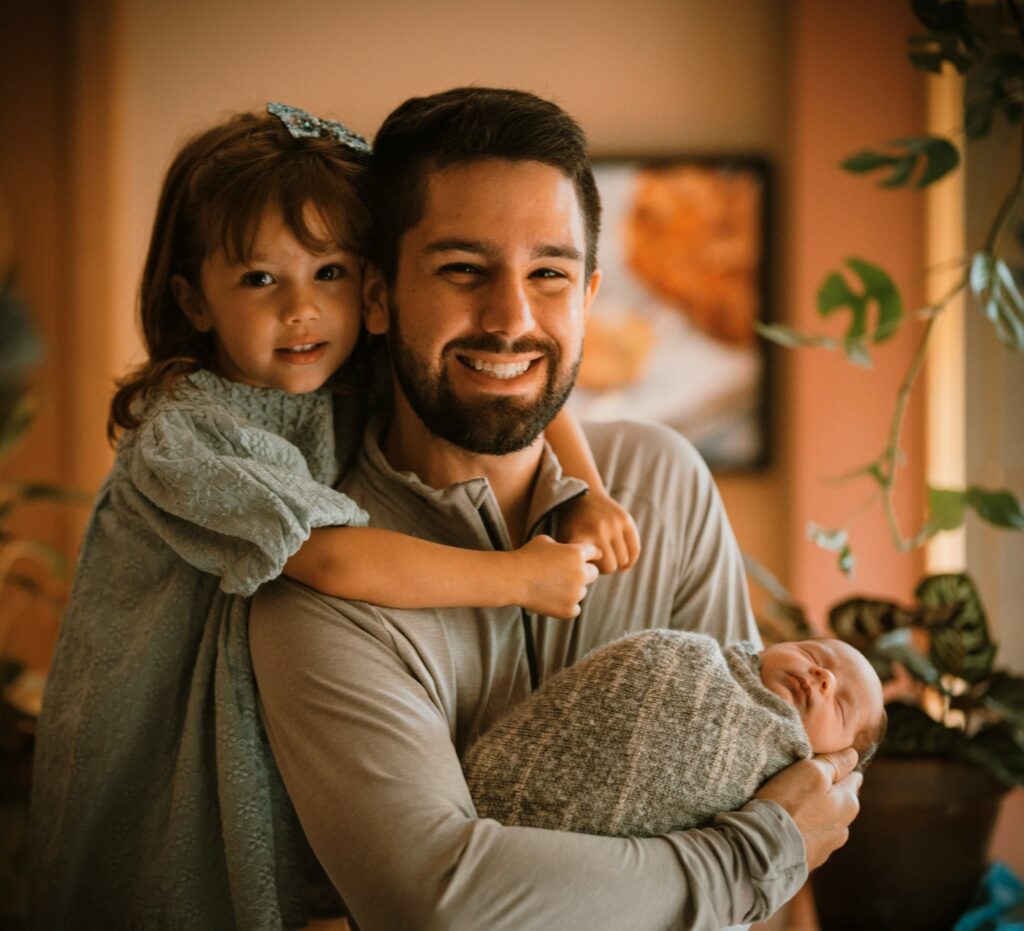
Daniel with his two children.
I think number one is easy to overlook. Anything that requires hard work needs to be compelled by something you value, otherwise it can be hard to stay motivated. Most scientists genuinely enjoy their research, so what is the harm in another hour or two? Having a daughter that is eagerly awaiting my free time puts that into sharp focus and gives me a reason to put healthy boundaries on my time. I enjoy physics and most of my daily work, so it’s even more important for me to recognize and remember that time spent on work, is time not spent on something else that’s important and good.
But number two is at least as important for me. “Balance” isn’t something that happens once; it is a process and a pattern with ups and downs at different periods. And academia is a competitive field. Even more, I work in a large scientific collaboration with over 700 members from across the globe—there’s really no concept of a nine-to-five. So sometimes I work a long day or, if a major conference is coming, maybe a long couple of weeks. Those are the times when it is easiest for it to become normal, to slip into an unhealthy work routine. But my family doesn’t operate on deadlines, so they are expecting me to make time for them every day, regardless of the day or week. And when I do, they are happier, and I am too. This expectation for successful balance is a kind of restorative force, preventing me from ever getting too unhealthy. I am glad for that kind of positive pressure in my life.
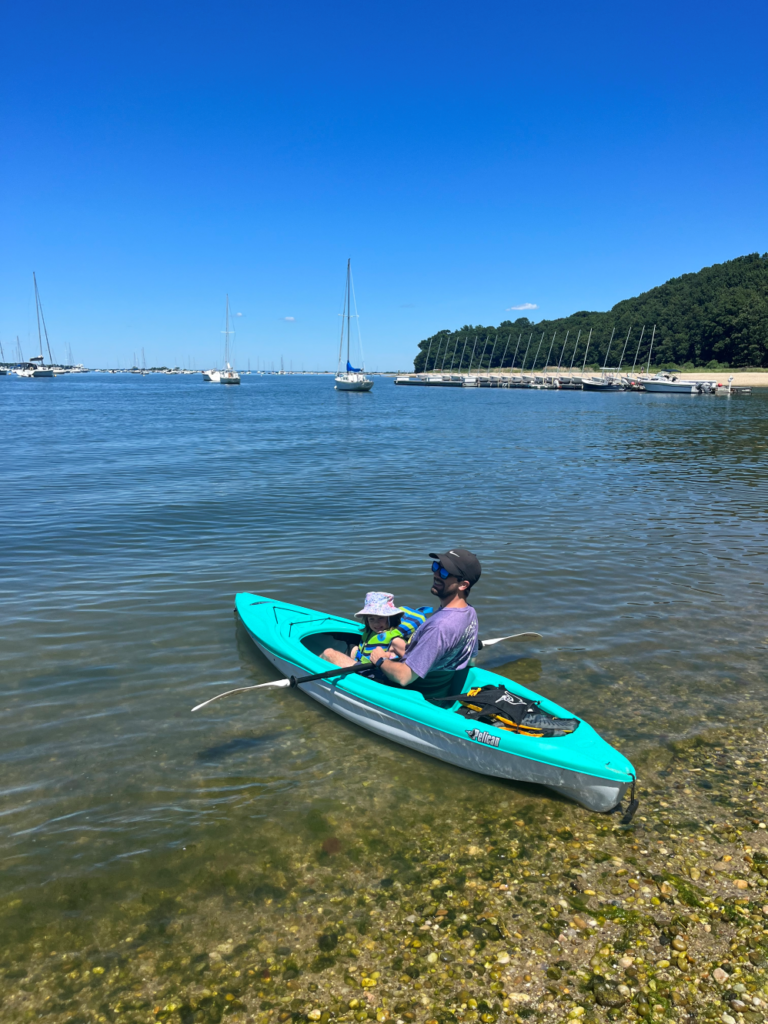
Daniel kayaking with his daughter.
So, practically speaking, I try to focus 100 percent on work when I am working. I set up my environment to remove distractions and unrelated interests. This lets me feel accomplished and honest with my time at the end of the day. Then, once the workday is done, I try to plan quality time with my family. For instance, my daughter and I have been making use of the hot summer to go kayaking together. She is still small enough to sit in my lap in a single kayak. We often spend hours together talking, exploring, and looking for fish. Even the more mundane parts of daily life can be planned for a better outcome. I acquired a love of cooking from my father, so often I’ll try to make dinner with my wife or daughter’s help. Since my older daughter is only three-and-a-half years old, I must find creative ways for her to help. Sometimes that means giving her an extra bowl and her own ingredients to mix. Sometimes it means making a mess—that’s my wife’s favorite 😉
These kinds of activities are my favorite because they engage my mind, they help me relax, and they often provide teachable moments for my daughters.
This piece was originally published on the National Postdoctoral Association member blog as part of 2022 National Postdoc Appreciation Week. Current Academy Members can receive a 20% discount on a National Postdoctoral Association postdoc individual membership by emailing info@nyas.org and requesting the NPA membership discount code
One lesson from the COVID pandemic was the importance of preparation.
Published June 9, 2022
By Nicholas B. Dirks
My journey leading the New York Academy of Sciences roughly coincides with the global calamity of SARS-CoV-2. As I reflect on my two-year anniversary, I cannot help but consider how much we have depended on scientists for the development of vaccines and therapeutics. Even though we are still experiencing the long tail of the pandemic, we are beginning to feel the worst may be behind us. One consequence is that we can more fully turn our attention to other crises, especially the very real dangers of climate change.
The Academy convenes experts for the exchange of scientific knowledge. Photo: Roger Torda
The global response to the COVID-19 pandemic was remarkable, but there were shortfalls, too. One lesson was the importance of preparation, and it is to improve scientific preparation for the next global crisis—no matter what it might be—that we are making great strides with the International Science Reserve. It’s an ambitious program to pre-position resources that scientists will need—and to ready scientists themselves—to conduct research and find evidence-based solutions to global emergencies.
That’s a big part of our mission, along with improving science literacy, promoting interdisciplinary and innovative science, and supporting the training of new generations of scientists. While the Academy is 200 years old, as we head toward the mid-21st century we are fulfilling our mission in new, forward-looking ways. Let me provide some updates, and ask for your continued support for our critically-important work.
The International Science Reserve
We have just completed our first readiness exercise for the International Science Reserve (ISR). Scientists in our ISR Member Network—which stands a thousand strong, with representation from 90 countries—submitted research proposals in response to simulated wildfire emergencies in the U.S., Greece, and Indonesia. We are analyzing the proposals to learn:
What data, data-gathering resources, equipment, facilities, and personnel are needed to support scientists in crisis response;
What resources transcend specific types of crises and thus can be put in place now;
What systems for resource matching and the mobilization of scientists should be in place for quick responses to global emergencies.
The Academy supports early-career scientists through a variety of programs, including the Interstellar Initiative.
Early-Career Science
We are working on the ISR with IBM, UL, Google, Pfizer and other partners. But we need your support to run additional readiness exercises, and to use our findings in building an operations plan. The goal is nothing less than to maximize the power of science to save lives, livelihoods, and the environment.
The Academy is helping young scientists at the most critical stage of their careers, as they transition from graduate school toward success in professional research.
K-12 STEM
The Academy works with younger scientists too. We nurture early interest in science among ever more diverse groups of young people. With the support of EnCorps, for example, we’re placing scientists in in classrooms across New York City’s five boroughs. In a partnership with the Clifford Chance law firm and Ericcson, we’ve enrolled more than 500 students in Rwanda and Oman in STEM innovation challenges. We are working to diversify and expand STEM education in scores of countries around the world, including with a new program in Colombia.
Mentorship
We are helping scientists give back, across all levels of education. Our Mentors Program places experienced scientists with young people in classrooms and alongside student teams working on extracurricular projects. Our mentors also advise older students as they enter the workforce and our programs support scientists who may wish to change careers, to work as teachers themselves.
With this letter, I am announcing our partnership with the Leon Levy Foundation to support neuroscience post docs at universities and medical centers across the New York metropolitan area. The plan is to help remove barriers to advancement and provide significant support for the best and brightest young minds in the field.
Our Science Alliance brings graduate students and post docs together to gain communications and management skills, and to learn about professional opportunities and career strategies, including ways to fight bias in the workplace.
To support our belief that the best science takes place when problems are attacked with interdisciplinary perspectives by people from diverse backgrounds, we run the Interstellar Initiative with the Japan Agency for Medical Research and Development. It is a 6-month workshop to support teams of young scientists from around the world in developing innovative research proposals in the life sciences.
Our awards programs focus on early career scientists, to help them advance to become leaders in their fields.
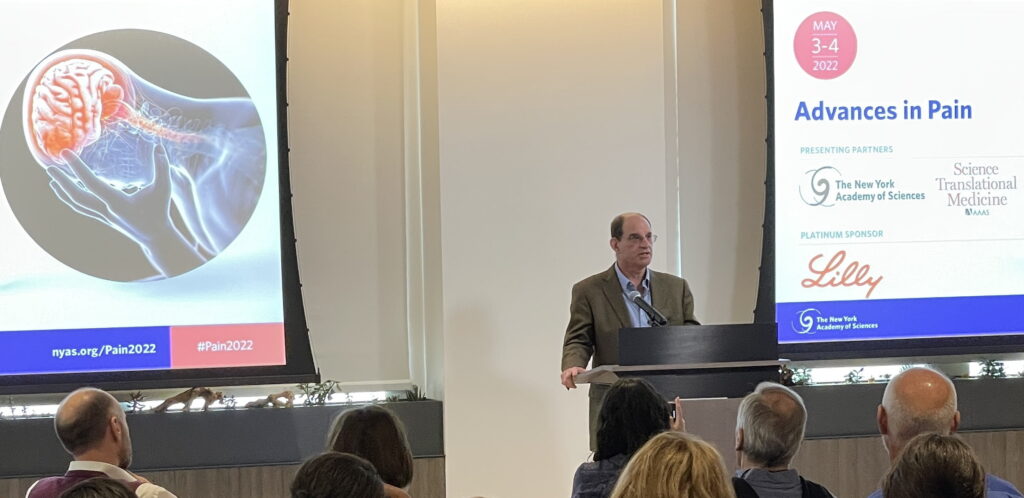
Recent Nobel Prize laureate David Julius presents at the Academy’s Advances in Pain conference in May. Photo: Roger Torda
Scientific Convenings
Of course, we continue to convene scientists and policy experts for the exchange of scientific knowledge. Each year, our conferences feature Nobel Prize laureates and dozens of other researchers at the leading edge of their fields. We help specialists work together, and we tackle topics that grab the attention of broader audiences. Examples include a series on new evidence for the therapeutic value of psychedelics, ways to recognize and reduce bias in the health sciences, and continuing reports on SARS-CoV-2.
Annals of the New York Academy of Sciences
Our multidisciplinary science journal, Annals of the New York Academy of Sciences, publishes research of current interest for the broad scientific community and society at large. Recent articles have presented work on mathematics anxiety and performance, the benefits of micronutrients during pregnancy, and the biodiversity and composition of bat communities.
We are an independent, democratic organization, open to all who want to help advance science. Now, more than ever, we believe that this commitment is critically important for the lives of our children and grandchildren. Geopolitical forces continue to drive us apart in ways that not only fracture the world but also the practice and advancement of science. We work to bridge those divides, and to foster collaboration, innovation, and the imagination we need to solve our global challenges.
We receive no government funding, and your support plays a critical role in helping science—and scientists—work toward a better, safe, and prosperous world. Please continue your valuable support for the New York Academy of Sciences.
The ISR is designed to mobilize and use different kinds of knowledge from across borders, sectors, and disciplines.
Published May 11, 2022
By Nicholas B. Dirks
Crossing the streams has always been part of my academic career. As a historian and cultural anthropologist, my own research and writing has been rooted in the value of interdisciplinary thought. I have been fortunate to draw together insights from colleagues who largely work in separate if contiguous worlds. When bridging disciplines as separate as those in the humanities and social sciences with the sciences, however, the efforts we make to connect must be even more strenuous. At the same time, the rewards that can come from this kind of exchange are even greater.
I strongly believe we need to create new ways to learn from differing perspectives and disciplines. This means more than interdisciplinary inquiry, as it can also be about linking traditional forms of knowledge with those that come from cutting edge research and analysis.
This kind of capacious thinking lies at the heart of our commitment at The New York Academy of Sciences to promote science-based solutions to global challenges through our International Science Reserve (ISR), which is designed to mobilize and use different kinds of knowledge from across borders, sectors, and disciplines.
In my own areas of expertise, I know that the decades between the 1970s and end of the 20th century saw the disciplines of history and anthropology draw closer together, with historians paying more attention to social and cultural factors and the significance of everyday experience in the study of the past.
The people, rather than elites, became the focus of their inquiry—anthropological insights into agriculture, kinship, ritual, and folk customs enabled historians to develop richer and more inclusive narratives about social structures and relationships, as well as about human relationships with the environment over the long period of time we now call the Anthropocene. In the same way, the ISR will aim to bring together not only cutting-edge scientific expertise but also past knowledge that may come from an era when we were more attuned to natural rhythms and processes than we are today, when industrialization and technological development have created new levels of autonomy from the natural world.
The ISR recently launched its first scenario planning exercise—focusing on how scientific expertise and resources can be mobilized to combat wildfire emergencies. Wildfires are not new environmental phenomena; human civilization has lived alongside the risk of wildfires for thousands of years. And so, as wildfires increase in both frequency and magnitude due to climate change, we can learn from indigenous communities and traditional forms of knowledge when it comes to environmental stewardship.
In California, which saw a record-breaking season of devastating wildfires in 2020, local knowledge from the Yurok and Karuk Northern California tribes may hold the key to managing wildfires through ‘cultural burns.’ This is a practice which involves
intentional burning designed to cultivate biodiverse landscapes, remove excess fire fuel, and ensure that the ecosystem is more resilient overall. Indigenous preparation of the land has been practiced for thousands of years but it is only recently being recognized as an effective tool to control fire risk.
After a century of fire suppression, enforced by laws which prevented cultural burning, the Yosemite and Sequoia-Kings Canyon National Parks in California’s Sierra Nevada initiated programs to manage wildfires through burning programs. A recent UC Berkeley Study of the Illilouette Creek Basin in Yosemite showed that where traditional fire regimes were restored, there were multiple positive effects: greater landscape and species diversity, increased soil moisture, decreased drought-induced tree mortality, and more landscape fire resistance due to a reduced forest cover.
Decreased forest cover during the managed wildfire period means that when an unintended fire is started (by lightning strike for instance), the more varied landscapes – with trees, shrubland, bushes all at different heights – were more resilient to fire. In contrast, when the crowns of trees catch fire in a homogenous forest canopy, a blaze can spread rapidly along the top of the uniform tree canopy, helping the fire spread more quickly.
The view that indigenous burning can benefit forest ecosystems is gaining growing acceptance among policy makers in different parts of the world as evidenced by the Aboriginal burning regimes in Kakadu national park in Australia and Pilanesberg National Park in South Africa. Meanwhile in the US, the federal Forest Service increasingly partners with Tribes to improve wildfire resilience and protect cultural resources through the Tribal Relations Program. In California, fire suppressing laws have been reversed with a new California law, effective January 1, 2022, affirming the right to cultural burns, reducing the layers of liability and permission needed to set fire to the land for the purposes of controlled forest management.
Recognizing indigenous knowledge benefits our understanding of wildfire management in the 21st century and provides insights into other challenges such as biodiversity loss, including even the hunt for new drugs such as antibiotics. This is reinforced in the findings of the IPBES Global Assessment Report on Biodiversity and Ecosystem Services that indigenous and local knowledge plays a large part in preventing wildfire and other crises.
For habitats in which indigenous people and local communities can manage their land, there is less loss of biodiversity and ecosystem function. For example, in the Amazon (region of Bolivia, Brazil and Colombia): wherever indigenous people have secure tenure, the deforestation rates are two-to-three times lower than in similar forests where they don’t have control over the forests.
Increased recognition of such knowledge will also help retain traditional culture and inform land management policy, which has historically excluded indigenous voices and banned indigenous practices.
This is why the ISR and The New York Academy of Sciences proudly aligns with ‘Open Science’ principles and welcomes involvement from everyone – regardless of discipline or geography – within our community of experts. Everyone may register to encourage project proposal submissions in relation to ISR identified crisis areas, so that we are able to benefit from the rich and diverse forms of knowledge that in some cases have been part of our heritage for centuries – particularly in terms of environmental stewardship.
Indeed, our first call for proposals on the topic of wildfires included submissions from a range of countries including Brazil and the Philippines as well as the US and Australia. I strongly support the incorporation of different sources of knowledge in the service of a larger, shared culture of enquiry and practice, ultimately adapting modern and traditional modalities of knowledge for the work of science in developing appropriate and effective solutions for tackling the global challenges that we all face today.
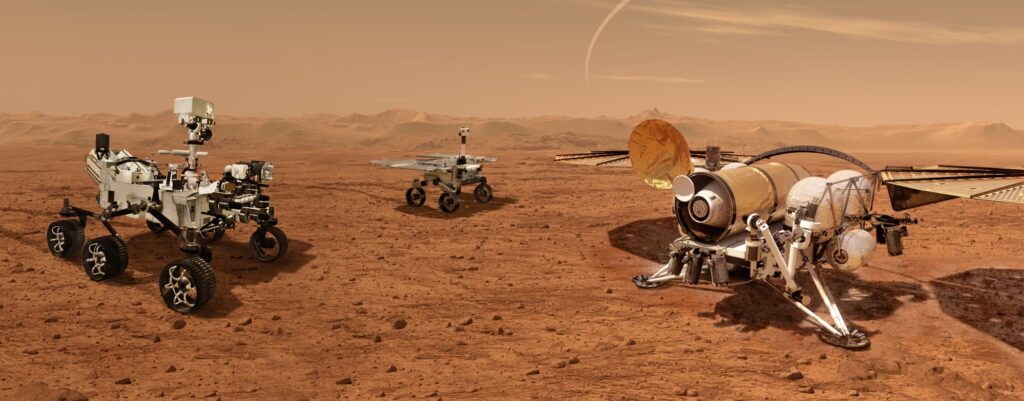
Travel to Mars — and successful habitation there — will take more than good science, technology and engineering. It will require solutions to challenges in politics, ethics and law.
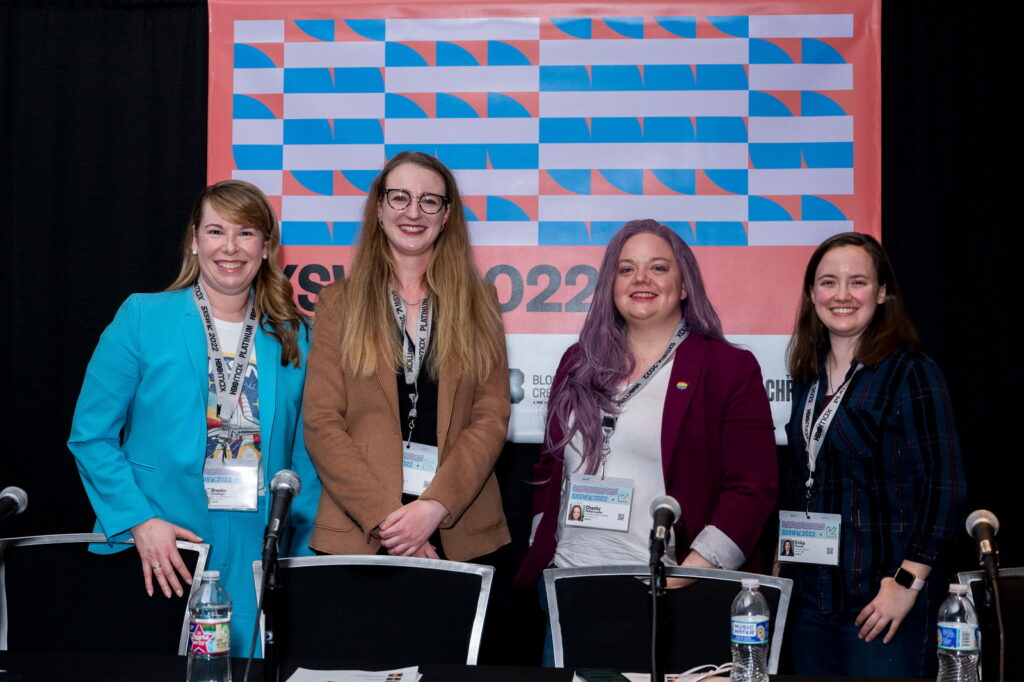
At this year’s South by Southwest Festival, I had the pleasure of asking a panel of experts some big questions about travel to Mars. The journey will push limits of the human body and may take us to the edge of ethical behavior – or beyond. Here are my top 10 questions and takeaways from the conversation.
1. The effects of space travel on the human body may not be reversible.
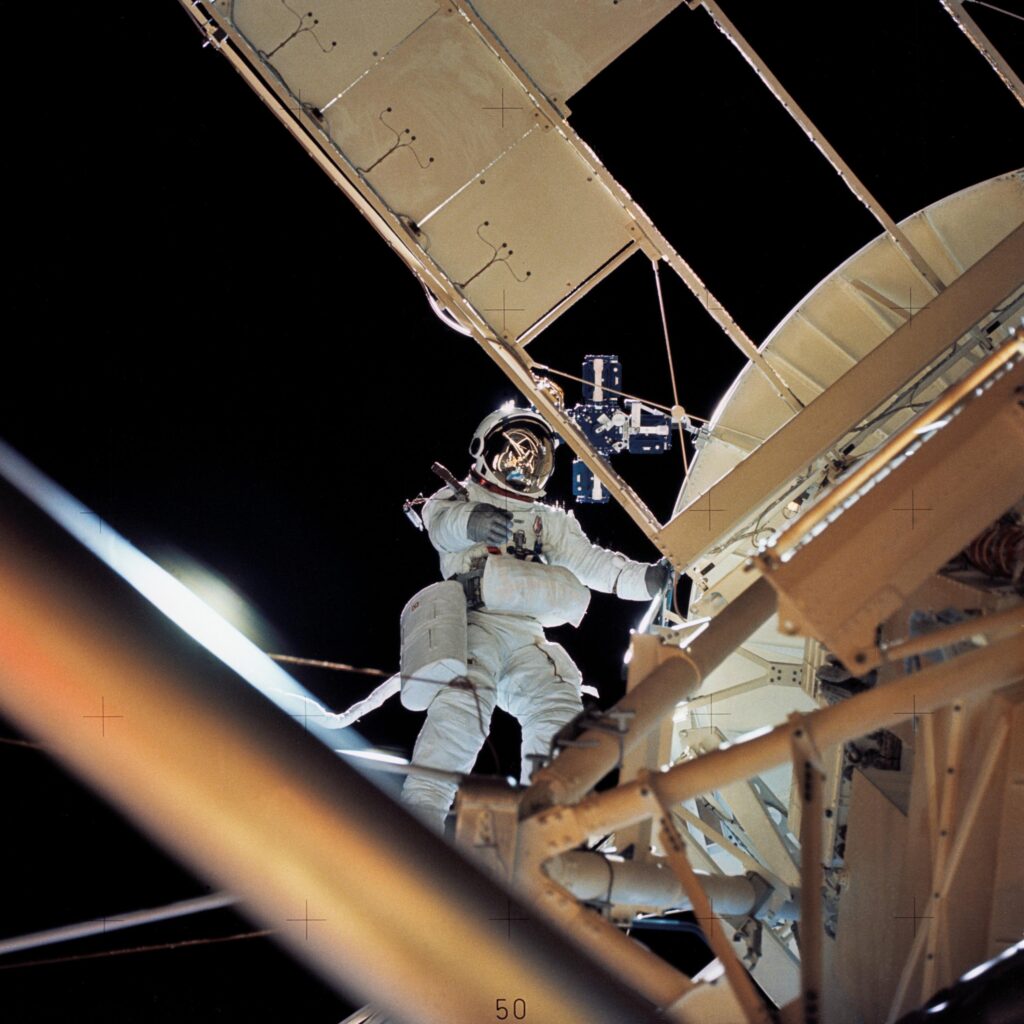
Two hazards astronauts will face during a trip to Mars—and a stay there—are DNA-breaking radiation and the effects of weightlessness and microgravity.
Astronauts have been exposed to the hazards of weightlessness and radiation in space since 1968. Here Owen Garriott retrieves an experiment outside Skylab in 1973.
“Imagine you’re lying off the side of your bed when you’re a kid, and all the blood is rushing to your head. In microgravity, the result of increased pressure that builds up in the head, pressing against the brain and against the eyes, can cause changes in vision—Spaceflight Associated Neuro-Ocular Syndrome,” explained Eliah Overbey, PhD, a NASA space biology postdoctoral fellow and postdoctoral associate in computational biomedicine of physiology and biophysics at Weill Cornell Medicine. “Over 50% of astronauts will experience some sort of vision change when they’re in space. Some of that does reverse when they return to Earth and some of it does not, some of it persists.”
2. The jury is still out on whether there is—or ever was—life on Mars.
“Right now, it looks like Mars’ surface is probably pretty inhospitable to microbes. So, the evidence that we’re looking for at the surface is really focused more on past life, life in the geologic record. But it’s a completely different story in the subsurface,” reported Charity Phillips-Lander, PhD, a senior research scientist in astrobiology at the Southwest Research Institute who studies the habitability and possible bio-signatures of planetary bodies.
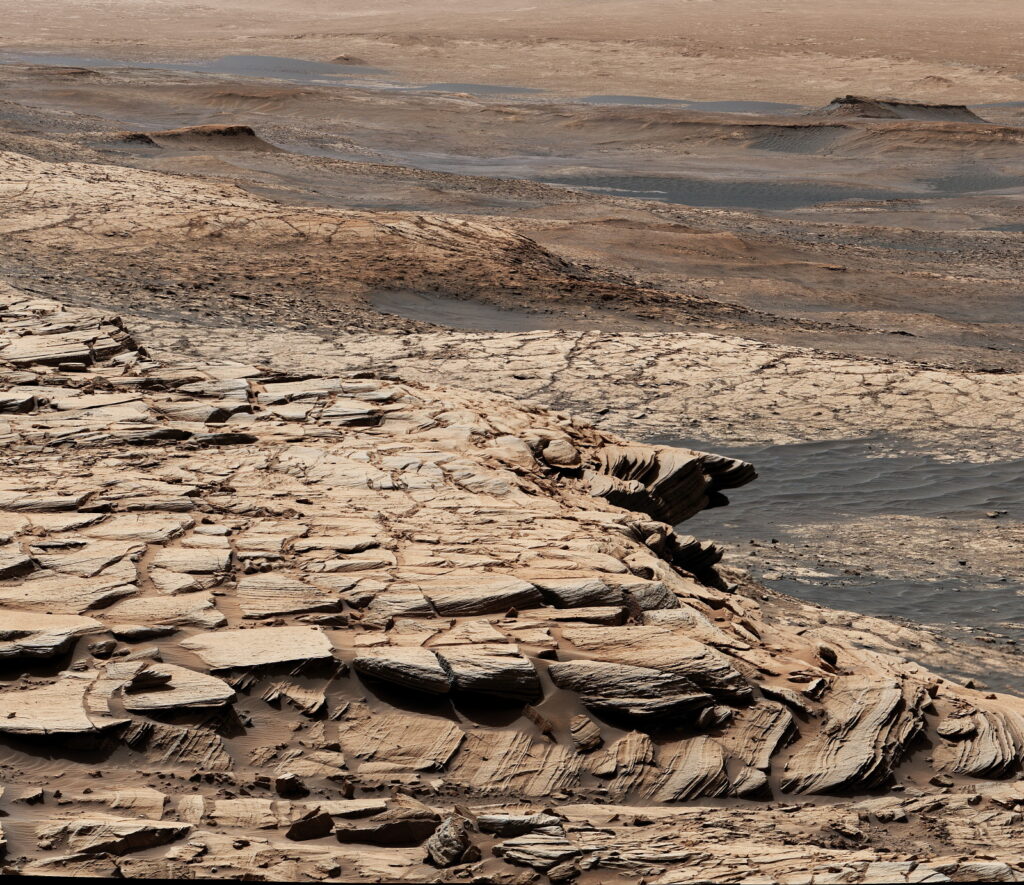
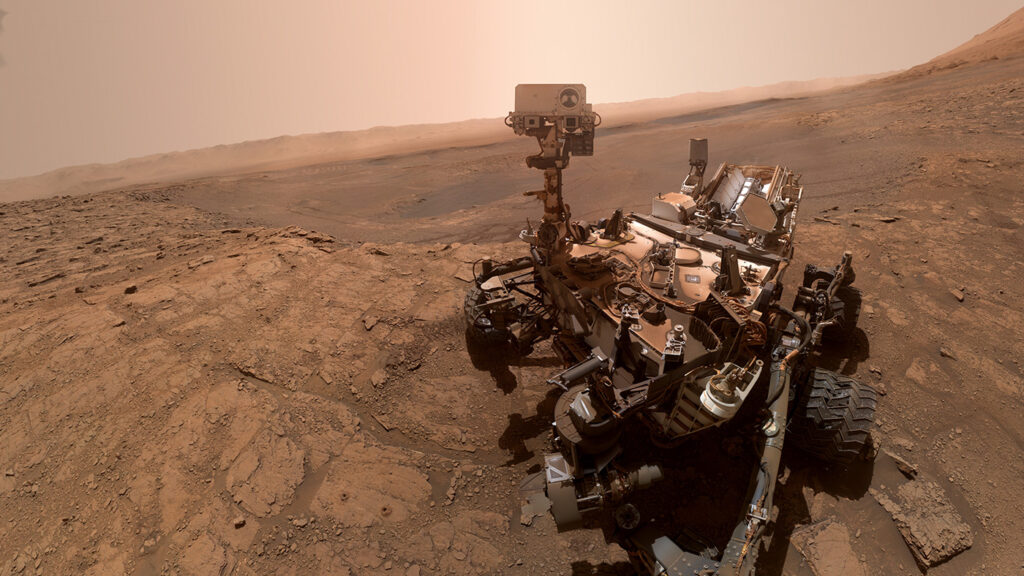
Floor of Gale Crater is seen toward the top of this photo, taken from Curiosity Mars Rover
“We see manganese oxides—what you would call ‘desert varnish’—that show up in some of the rocks in Hale Crater on Mars and also on Earth. Those are typically precipitated by microorganisms. Jezero Crater and Gale Crater show really low carbon isotopic values that might be indicative of methanotrophs—microbes that eat methane for a living. We’ve seen methane in Mars’ atmosphere.” That’s possible evidence, Phillips-Lander said, of evidence of life on Mars in the past. “But we need more evidence, and that’s what Perseverance is rolling around looking for right now,” she added, referring to the robot that is now roaming the planet.
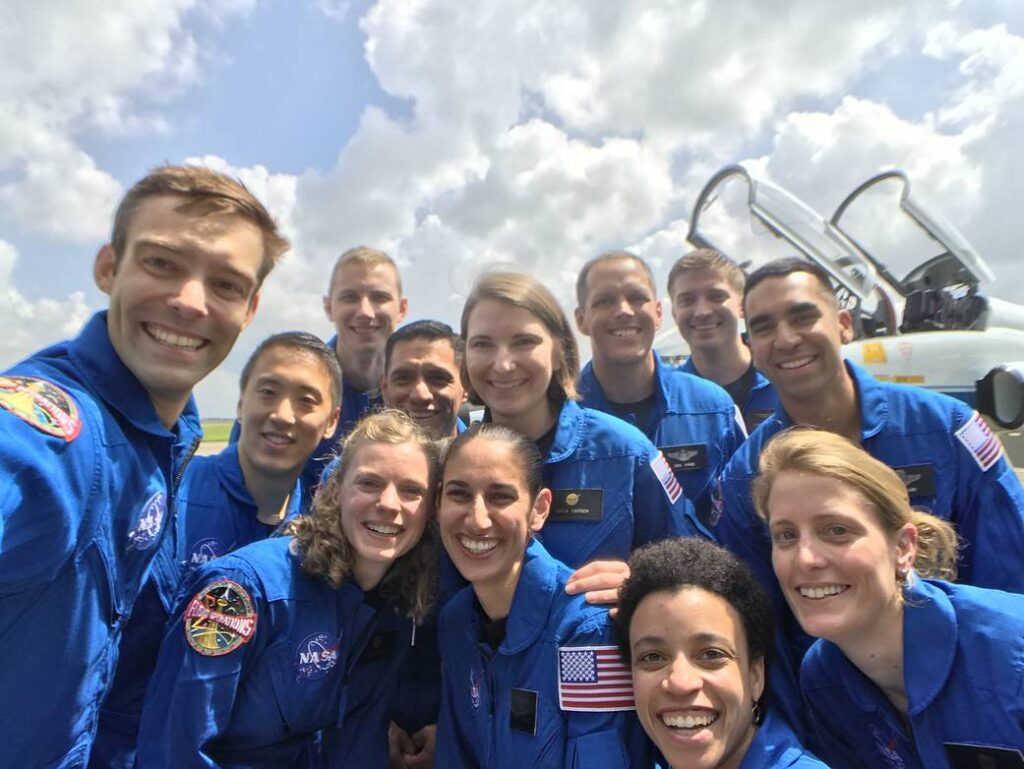
Candidate astronauts selfie
3. Who gets to go? It is not too soon to call for disability inclusion in space exploration.
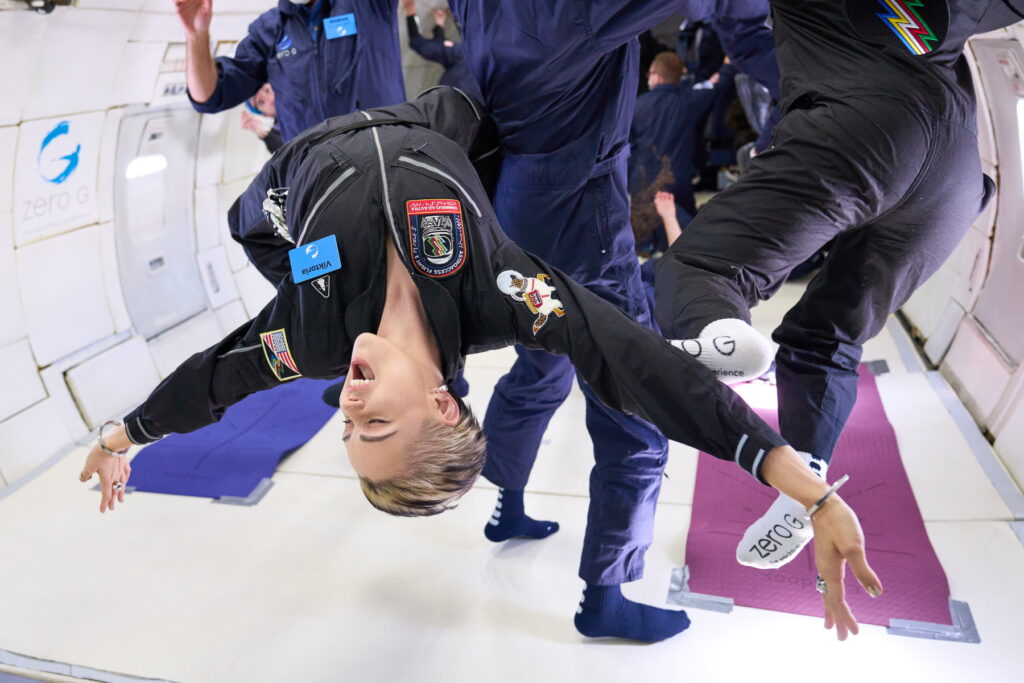
“Deciding who among the 8 billion of us gets to go up into space, and even go to Mars, is a tough question,” said Erika Nesvold, PhD, a co-founder of the JustSpace Alliance, which advocates for a more ethical, inclusive future in space. “Until now, the people who are able to go to space were the people selected by agencies like NASA, or more recently, people who have been able to afford space tourism flights. If you wanted to go to space, you need to be able to pass the astronaut selection, including a really strict health screening. This means that the people who have gone to space so far have primarily been very healthy, able-bodied people, which leaves out a huge portion of our population who are disabled. Why don’t we have disabled astronauts? What would it look like to redesign our space technology, to make it more accessible to people with disabilities?” Nesvold highlighted projects such as AstroAccess, which has just started launching disabled scientists, veterans, athletes, students, and artists on parabolic flights to experience weightlessness and low gravity conditions. A key goal is to investigate how space vehicles can be modified so that all astronauts and explorers—regardless of disability on Earth—can thrive in space.
Pop artist Viktoria floats upside down in zero gravity on board AstroAccess Flight 1 in October, 2021. Photo: AI Powers for Zero Gravity Corporation
4. Space immigration: let’s not repeat the mistakes we’ve made on Earth.
NASA is hoping to put astronauts on Mars by 2035. It’s not difficult to conceive that, in the years to follow, others may arrive on Mars as migrants or as refugees. “Even now, we can see the huge human rights issues that come up when one group of people moves to a new place, especially if there are already people in that place,” reflected Nesvold. “Suppose we manage to get a population of humans living on Mars and then a second group wants to go there too. How will the original inhabitants feel about that immigration?” Nesvold said the response might vary, for example, depending on whether the new arrivals are fleeing strife, or if they have something to offer economically. “It’s worth getting some historians in the room… [How can we] learn from what’s happened here on Earth, to protect all of those groups in the future?”
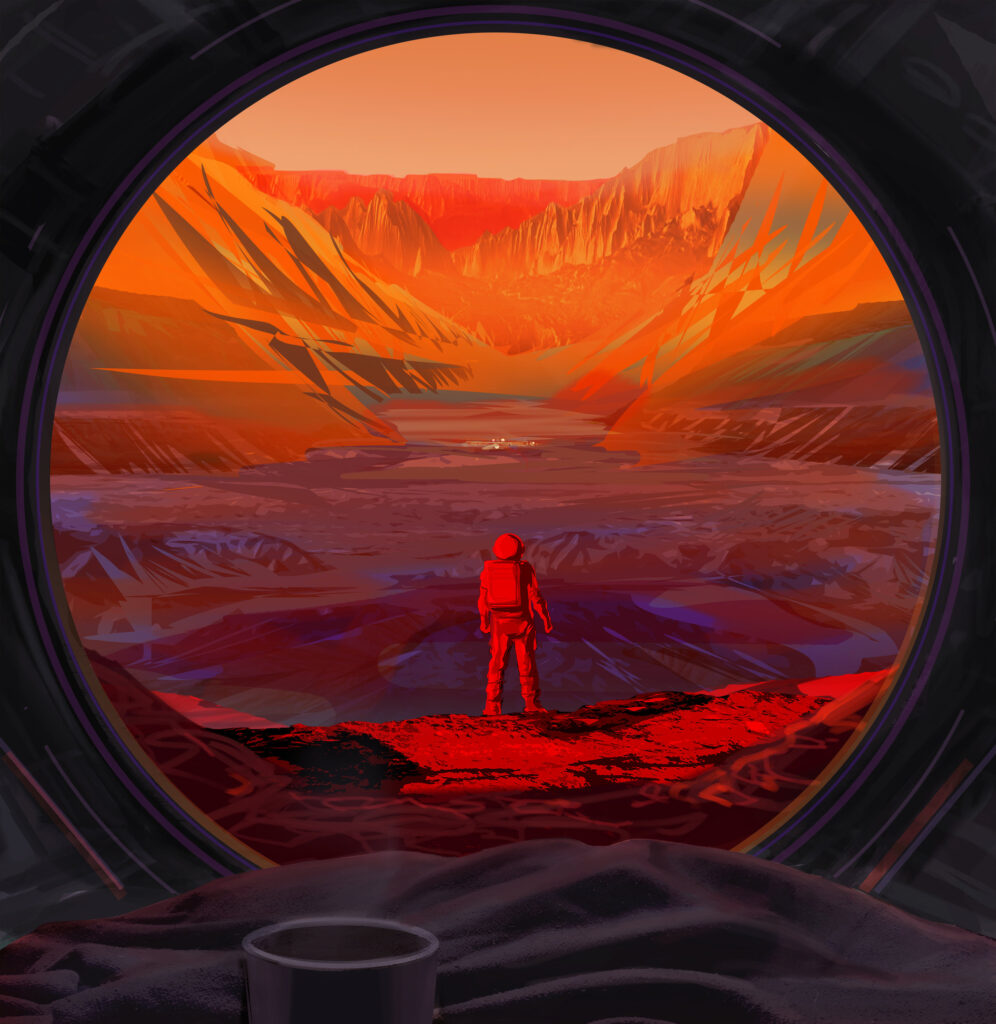
NASA illustration of an astronaut on Mars
5. Survival hacks have to be sustainable.
“One of the things that we need to focus on is sustainability, because for every ounce of material you take with you, you also have to provide fuel to get it there,” Phillips-Lander pointed out. “Through NASA’s biological and physical science programs, we’re experimenting with things like growing food on the moon. How do we do that, and how do we assess and prospect for the resources we might need? How do we print bricks, because we’re going to need to build a habitat? Can we create bioregenerative habitats that take CO2 and turn it back into oxygen, either through plants or microbes? We’re also looking at developing synthetic microbes that can carry out specific processes that might be beneficial to humans.”
6. Ethical quandaries abound if we engineer a “better human” for space travel.
Opportunities to protect and prepare the human body in advance of space travel, and for longer-term survival on Mars, are now on the horizon with bioengineering technologies like CRISPR gene editing and immunotherapy. “Is there some way that we can engineer astronauts to be more radiation-resistant or to overcome the fluid shifts that are going to cause different sorts of cognitive effects?” asked Overbey. “There’s an ethical question, really under debate on Earth: how much should we be editing the genome? Should you be editing cells that are going to pass on to your children? Can we justify gene editing in these contexts to overcome some of these limitations? Are we actually now morally obligated to do genetic engineering in order to adapt to those environments?” Overbey continued, “If we’re changing our genetic code, making permanent changes, are we changing how we define humans as a species, and making changes to genomes that will affect future generations?” Nesvold expanded on these ethical conundrums: “If we want to have self-sustaining human settlements in space, we have to figure out whether human reproduction is possible in space, with all the weightlessness and the radiation. At some point, even if you’ve done studies on animals, we’re going to have to try it, and that involves experimenting on pregnant people and fetuses… It’s a big ethical barrier to getting to the point of having self-sustaining human populations in space.”
Might we terraform Mars, turning it from a red planet to a green one, or a blue one like Earth, in an effort to make it more hospitable? “If we just go in and whole-scale terraform Mars right off the bat, then we defeat one of the scientific goals of human exploration, which is to figure out if there was life on Mars, or if there is life on Mars today,” warned Phillips-Lander. “So, initial missions are going to focus on minimizing the risk of contamination. We’ve established areas of Mars that are categorized as special regions because they have the highest potential for life. And so those areas are mostly off limits,” Nesvold said, referring to policies developed by the Committee on Space Research of the International Council for Science. She added: “The problem is that any terraforming we do to make Mars more like Earth, makes Mars less like Mars.” She paraphrased a question of scientific ethics raised in the film Jurassic Park: “We need to work really hard to make sure that no one eventually says about us, that we were so busy thinking about whether we could, that we didn’t think about whether we should.”
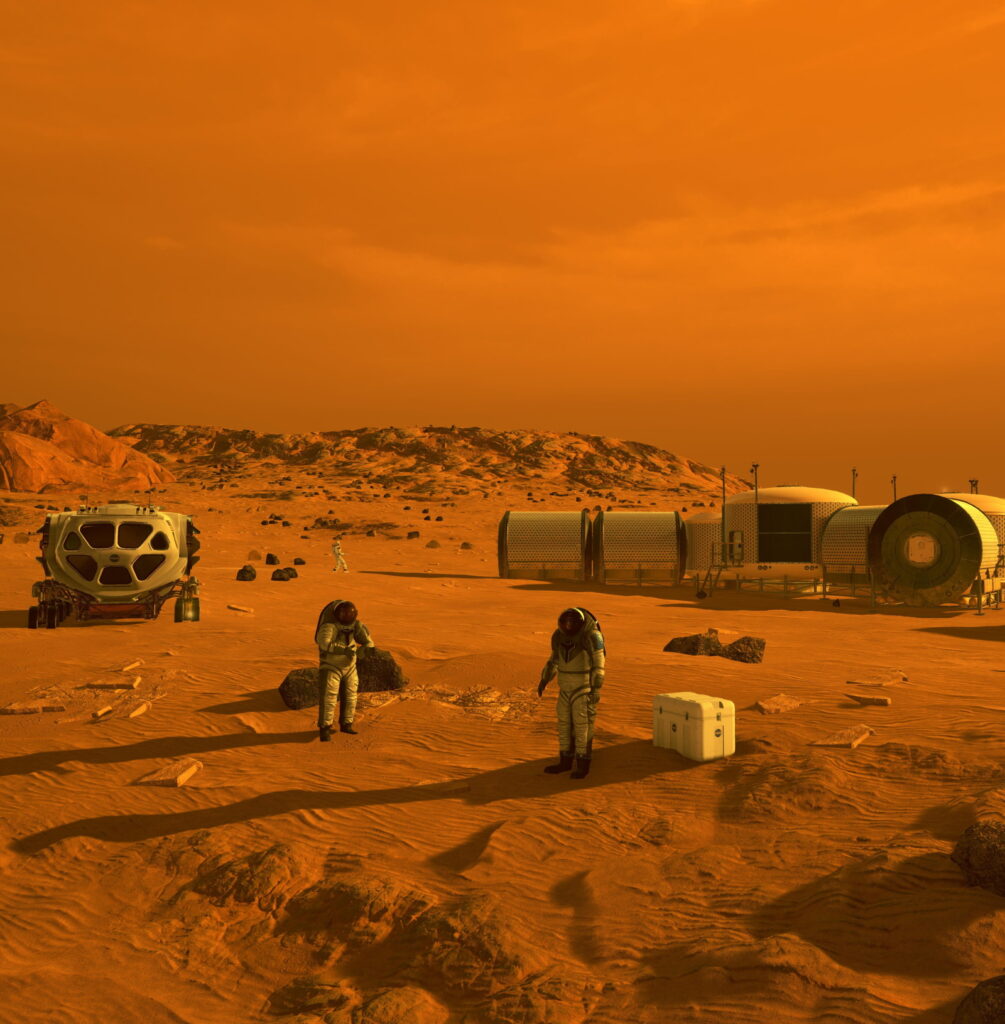
NASA Concept illustration, human settlement on Mars
8. How do we protect the rights of Mars amid an alien invasion?
Before we become too wrapped up in our own self-preservation as a species, we should remember an alien invasion is about to take place. But this time, we will be the aliens. The Outer Space Treaty of 1967 outlines a series of planetary protections that govern space and space travel, but many questions remain about the scope and enforceability of the treaty. “For every planetary mission that we undertake, part of the evaluation process for mission selection is planetary protection,” explained Phillips-Lander. She said mission planners must develop “a viable burden limit”—a maximum number of organisms that a spacecraft is allowed to carry. “For a special region like a lava tube on Mars that might be a habitable environment for life, that’s basically zero, which is really challenging to achieve,” she said. “We have a whole suite of clean rooms on Earth that are designed for that, and back planetary protection, so that we’re not bringing novel organisms back to Earth and releasing them, because that would obviously be potentially bad. We’re trying to do it both ways.” Nesvold took the conversation on the protection of Mars astrobiology further: “What rights do the microbes have to not be exterminated if we want to move up there with our Earth microbes and potentially wipe them out? We all use Lysol, and we’re all really trying to kill a certain virus right now. But this would be a really unusual population of microbes. Are they special because they come from another planet? And there are people who argue that even an environment that has no life in it has some kind of intrinsic rights to its own integrity.”
Mars Curiosity rover after drilling rock samples with Gale Crater in the background
9. How can we live together on Mars?
Numerous ethical, sociological, and even psychological questions must be considered for space travel. “As we’re trying to figure out how we will live in this space environment, we also have to figure out how we’ll live with each other in the space environment, because sometimes the other humans in your group are your biggest problem or your most important asset as you’re facing a really extreme environment,” Nesvold said. “We’re going to have to figure out how to self-organize and have some self-governance, the way that small groups have throughout history. We’ll need to be able to answer questions like: How do we handle conflicts between people living in space or between the people living in space and the ones back on Earth? What happens if you move to Mars to take a job and then you lose that job—do you have to pay for water, food, and air in space? Do you get a free ticket back to Earth or are you just on your own in a deadly environment? We’re certainly capable of bringing our inequalities with us into space, and I’m very confident we’re capable of inventing new ones in space. We need to be deliberate about this and think about what kind of future we want for ourselves, wherever it is, and make sure that we’re taking steps to protect that future for our descendants in space.”
10. Space capitalism: will its innovations be our salvation?
Why should we be spending so much money to explore Mars? Will the benefit warrant the costs?
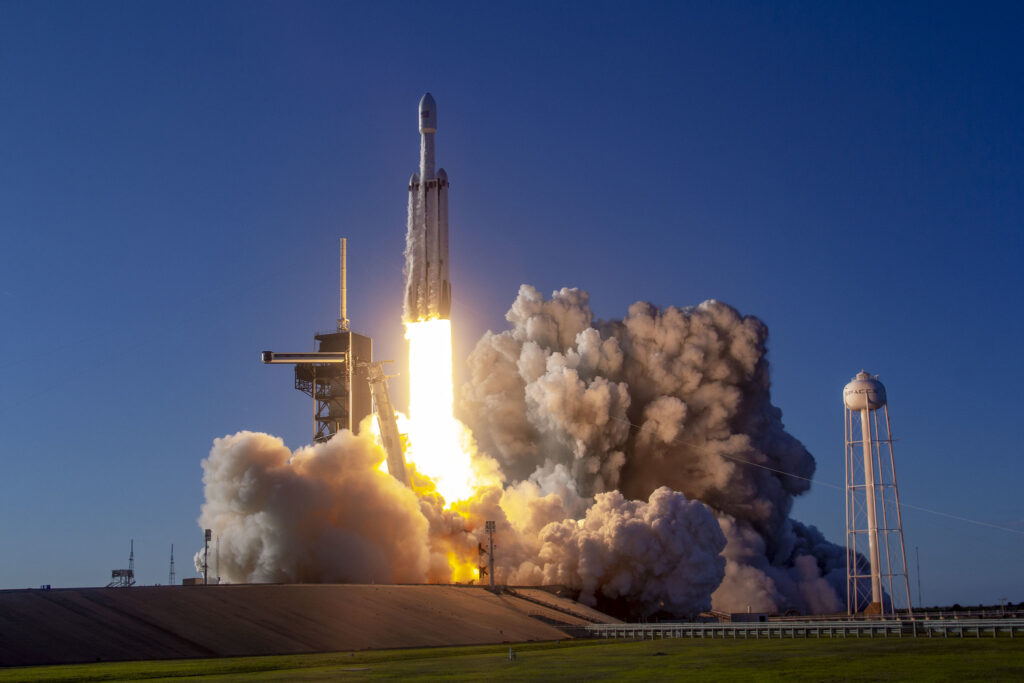
Falcon 9 liftoff; photo: SpaceX
“The return on investment is worth it because we’re going to get new technologies or access to resources that you don’t have here on Earth,” posited Nesvold. “But you have to make sure that those benefits are actually being distributed equitably.” When asked to comment on the billionaire-driven space ecosystem that we see flourishing today, Nesvold responded: “A big issue with the space program since its creation has been that it had to survive off of taxpayer money. If you can make the space sector profitable it becomes self-sustaining…. Profit-seeking is a big part of what’s supporting this industry and helping it move forward. Capitalism brings innovation, and innovation is what we need for space. The problem is that capitalism also roots a lot of misery and inequality. The trick is figure out how to get the innovation without increasing inequality and environmental destruction.”
One partial solution, Overbey said, are public-private partnerships that establish “guardrails” against out-of-control self-interest in space exploration. In her closing remarks, she described one big-picture view of why we should take on the challenge of space exploration: “We may think the Earth will end at some point, maybe millions, billions of years in the future. Or there’s always the threat that something could go horribly wrong on Earth within our lifetimes. Right now, where we’re at, we don’t have the science with our technology to sustain ourselves in space or on another planet indefinitely. So, when we think about return on investment, is it numbers and dollar signs for medicine, for a new technology?” Or, Oberbey asked, “What is the cost of [saving] the human race?”
Minor edits have been made to quotes for clarity.
Photos and illustrations courtesy NASA, unless noted otherwise.
The International Science Reserve, in coordination with The New York Academy of Sciences, is an ambitious future-proofing initiative for the public good.
Published April 14, 2022
By Nicholas B. Dirks
With its long history of championing science-based solutions to global challenges, the Academy is ideally situated to establish the International Science Reserve (ISR). The ISR will be a network of networks: of communities of experts across scientific disciplines, across sectors, and across borders. The Academy is building the ISR on the model of collaboration we have embodied throughout our 200+ year history as a trusted global convener of scientists across public, private, and academic domains. The ISR reaches across those domains to speed up research and solutions to help prepare for and then ameliorate the effects of complex global crises, such as a great earthquake, a water-borne pandemic, or a cyber-attack.
The goal of the ISR is to quickly connect scientists to scientific resources for faster and better crisis preparedness to help people and protect communities from further disaster. To do this, the ISR fosters collaborative networks and builds experience and expertise within those networks by rehearsing what would happen in a real crisis. These scenario-planning or readiness exercises will help scientists be well equipped in advance to respond to urgent challenges (as this video describes) that are not only possible but likely in future years. Filling an important gap in existing crisis response mechanisms, the ISR will not replace those mechanisms but strengthen them and make them more effective.
In working to prepare communities of scientists and scientific resource providers to respond to many crises, The ISR will be guided by our Executive Board. The ISR builds on the design of the High-Performance Computing Consortium (HPCC) whose work during the Covid-19 outbreak provided enormous and immediate benefits. The ISR expands that work by leveraging not just high computational resources but also specialized talent, labs, databases, and networks of researchers and institutions. It, therefore, relies on our communities of scientific experts, our relationships with industry, federal agencies, and global institutions, our ISR founding partners, as well as ISR members.
The ongoing pandemic and the range of responses around the world have shown us all the value of good preparation. In the scenario planning exercises that are a key step in pre-preparing the ISR science communities, different stakeholders can role-play what they would and could do in the event of a global crisis. The first ISR pilot exercises focus on wildfires, a phenomenon of increasing frequency and magnitude both in the United States and across the world, a direct result of climate change.
The success of the pilot will be measured by the extent to which we can test current wisdom about the resources that scientists need to help protect people and nature during wildfires and to set them up for faster and more equitable recovery afterwards. We can use the valuable information coming out of the wildfire pilot to keep improving processes to identify needed resources in advance, to match scientists to those resources, and to track the projects and lessons that result.
Indeed, science is a process and develops in real-time as we iterate in a constant improvement process, fine-tuning our systems of communication and collaboration. We expect to have the results of our pilot ready in mid-2022 and will announce our next ISR crisis focus areas soon after.
While we have just begun, we are satisfied to see strong indications that a wide range of people and partners are energized by the ISR’s ideas and ambition. We have in place an Executive Board, generous funding partners including IBM, Google, UL, and Pfizer, collaborators such as the National Science Foundation, and we have already recruited over 1,000 scientists into our engaged ISR community.
The wide range of responses we’ve seen to the COVID-19 pandemic, as well as the associated skepticism about scientific expertise, have shown a real need for science-informed leadership in the service of the public good – at both a national and global scale. The pandemic also revealed the need for a scientific appreciation of how existing disparities and inequalities will be worsened by these kinds of crises if public policy does not start by protecting the most vulnerable first. The ISR at The New York Academy of Sciences is stepping up to help drive evidence-based change.
It is only by heeding the hard lessons from the pandemic that the world can truly prepare to respond more effectively when the next global crisis comes. It is the Academy’s ambition for the ISR to strengthen response and recovery efforts to save lives, restore services, and offer hope for better outcomes in the future. The ultimate measure of our success is not the impact of the ISR on the scientific community. The measure of success is the impact on the lives of all people and the health of our planet.
In June 2020, we were all in one of the first waves of the still-ongoing COVID-19 pandemic, which had crippled our world. And back then, neither I nor anyone else could anticipate just how much damage and dread this disease would bring – and for many, feelings of uncertainty and nervousness about the future just wouldn’t go away.
But many of us were already thinking ahead. This crisis would eventually end, we assumed. But it most likely wouldn’t be the last one. In my conversations with leaders across governments and industries, there was a common thread from us all: we wanted the world to be ready for the next crisis ahead of time.
Today, this vision is becoming a reality with the International Science Reserve (ISR), powered by The New York Academy of Sciences with participation from IBM and other public and private sector leaders. This new organization intends to become a nimble network of academia, industry, and government, blurring geographical borders to collaboratively prepare for the next global emergency. Although ISR is at the very dawn of our journey – I am confident we will make a difference when the next crisis strikes.
Early at the start of the pandemic, our teams at IBM rapidly mobilized thousands of researchers to help fight the deadly virus. We weren’t working in a vacuum – a few months earlier, IBM, the White House, and the US Department of Energy had launched a new global body called the COVID-19 HPC Consortium. This organization rapidly expanded to include many partners from academia, industry, and US national labs, pooling together the world’s most powerful high-performance computing resources to offer to scientists fighting the disease.
Working together, the HPC Consortium (HPCC) was able to quickly aggregate and open unfettered access to the power of dozens of supercomputers to scientists searching for a vaccine or treatment against the virus. The success of the HPCC demonstrated the power of what’s possible when we break down borders and red tape to quickly collaborate and accelerate science in times when it’s needed most.
Ultimately, the HPCC delivered steady results thanks to the efforts of our members and the researchers worldwide using its computing resources. With partners including Google Cloud, IBM, Intel, Microsoft, Amazon Web Services, NASA, MIT, NSF, the Department of Energy’s national labs, as well as government and academic organizations from beyond the US, the Consortium has so far helped more than 100 research teams to come up with new treatments, better understand the spread of COVID-19, and much more. Every milestone has been a testament to the crucial importance of global collaboration – and for the establishment of a new, broader, organization that would go beyond computing and enable us to prepare for future catastrophes from multiple fronts.
Ready for “Known Unknowns”
At IBM, we soon began to think about how we could make this broader vision a reality. An organization… a global body… always ready for ‘known unknowns’ and large-scale emergencies we could anticipate and prepare for ahead of time… similar to a military reserve always ready to defend in case of war.
Our world needs a reserve of scientists, of experts in different fields that would always be ready to address any future global crisis. An organization with the bottom-up nature of the reserve concept, comprised of researchers using the power of the network to prepare for a new emergency.
We know that another pandemic is very likely, possibly with some new, unknown pathogen. That the world will continue to have more devastating wildfires and deadly earthquakes. Cyberattacks could take out infrastructure on a massive scale and asteroids could threaten the Earth. That such ongoing problems as antibiotic resistance and climate change could trigger a catastrophe at any time. And if we start preparing for the next crisis early – unlike with COVID-19, scrambling in haste and panic – then we will be much more likely to save lives.
Over the past year, IBM has been working with The New York Academy of Sciences (NYAS) to establish the International Science Reserve (ISR) to execute this vision. The ISR is still a very young organization, but we are gathering steam. We have a vision. Together with global talent from various scientific and technological fields, we will have an invaluable reserve of expertise – much-needed to tackle a future emergency.
Much like being a parent, science never stops. Daniel Straus, 2021 Blavatnik Regional Awards Winner in Chemistry, provides insight on how to balance these two responsibilities.
Published September 23, 2021
By Daniel Straus
Daniel Straus with his family
Science never stops, for better or for worse. I am a competitive person. A constant fear of mine is being “scooped” by another lab, rendering months or years of research unpublishable for a lack of novelty. Taking time off work exacerbates this risk—people in other labs will keep working while I am not. This fear preoccupied me when I took time off after my first child was born.
When my daughter Elizabeth was born in 2016, I was a graduate student at the University of Pennsylvania. Graduate students at Penn are not considered employees, so I did not have access to the 12 weeks of protected unpaid leave under the Family and Medical Leave Act. I was fortunate that Penn offered eight paid weeks to graduate students after the birth of a child—paternity leave is often overlooked, and many graduate schools do not provide any paternity leave.
After Elizabeth was born, I took the first two weeks off to take care of her, bond with her, and support my wife. I then went back to work for ten more weeks while my wife stayed home with Elizabeth. Then, my wife returned to work, and I took the remaining six weeks of my leave. My productivity at work in the ten weeks I was back was poor and I don’t remember much of this time because I barely slept. I can only imagine how unproductive I would have been had I gone back to work immediately after her birth.
During the last six weeks of my leave I was more relaxed because I realized my time was much better spent with my daughter. There was nothing as spectacular as watching my child learn and do new things every day. Nothing can replace family—I enjoy my work and doing science, but I work to live and to support my family. The time spent at home did not impede my science anyway; rather, it helped me bond with my daughter and rest so that when I did go back to work full-time, I could maximize my productivity and not fall asleep at my desk.
Being a parent has improved my science. I have learned to be more productive in the time I spend in lab so I can spend as much time as possible with my family at home. I am much better at planning my days in lab in advance and also at saying “no” to non-essential things for which I do not have time, such as reviewing manuscripts during busy times.
My mentoring skills have also improved from being a parent. Elizabeth loves doing things herself—even as a one-year-old, she hated having things done for her. When I would try to buckle her into her highchair, for instance, she would scream “SELF” or “LIZZY DO IT.” She couldn’t buckle herself the first few times she tried, and she relented to letting me help after five minutes of struggling. But by trying so many times, she eventually figured out how to do it herself. No student has ever screamed “SELF” when I would “help” (they would probably say “interfere”) with something they were doing, so Elizabeth taught me that when someone is figuring out how to do something, many times the most helpful thing is to do nothing until asked.
Being a scientist has also improved my parenting. In the lab, I reason through questions on my own or with the help of my mentors—there usually isn’t an immediately correct answer because if there were, it would not be novel research. When Elizabeth asks me a question, being a scientist has taught me to first ask her, “what do you think?” so she can develop her own reasoning skills. Curiosity is better satisfied through discovery than through answers. She also loves science and likes to learn new things—her favorite YouTube channel is SciShow Kids, where she watches age-appropriate videos about topics in science, and after watching one she is so excited to share the new things she learned with me. Much of my postdoctoral work involves solving the crystal structures of materials, so when she saw me looking at a crystal structure on my laptop, she wanted to “do crystals” too because she thinks that I drag around a 3D model of a crystal structure all day at work (she’s not entirely wrong…).
My son Noah was born in April, and thankfully Princeton provides employees (including postdocs) 12 paid weeks of parental leave. Parenting is hard work, and people who are not parents may not understand this. While on parental leave, I received emails from multiple people saying, “I hope you’re enjoying your vacation.” Being with Noah is more exhausting than being in lab, but also more rewarding. Science still never stops—I had to submit a manuscript revision while home to meet a deadline—but I am trying to enjoy every minute with Noah before going back to work full-time, because parenting never stops either.
This piece was originally published on the National Postdoctoral Association member blog as part of 2021 National Postdoc Appreciation Week. Current Academy Members can receive a 20% discount on a National Postdoctoral Association postdoc individual membership by emailing info@nyas.org and requesting the NPA membership discount code
Unlike the pandemic, the impact of climate change has always been a much tougher sell.
Published June 29, 2021
By Nicholas B. Dirks
June 1 marked the official start of hurricane season and already tropical storms Ana, Bill and Claudette have made their respective debuts.
And while summer has only just officially started, early hot dry conditions in Arizona, California, Oregon, Utah and New Mexico are exacerbating enormous wildfires putting a strain on local first responder services. Severe drought conditions in the west is restricting the use of essential water supplies. Its impact on the nation’s food supply has yet to be determined.
In May, National Oceanic and Atmospheric Administration (NOAA) released revised temperature “normals” which show a significant shift towards warmer temperatures. We are far from the state of readiness required to deal with the inevitable outcomes.
Scientists have been sounding the alarm about the human impact upon climate change for well over a century. French mathematician and physicist Joseph Fourier, who is generally credited with the discovery of the greenhouse effect, wrote in an 1827 paper that: “The establishment and progress of human societies, the action of natural forces, can notably change, and in vast regions, the state of the surface, the distribution of water and the great movements of the air.”
But unlike the pandemic, which was a highly visible emergency with nightly news reports showing crowded ER’s and patients on ventilators, the impact of climate change has always been a much tougher sell. In addition, when proposed changes come up against “the pocketbook,” there is pushback.
Recent Research and “Crisis Fatigue”
A recent paper published in Annals of the New York Academy of Sciences — The distributional impact of climate change – discusses the various impacts of climate change from both a social and environmental perspective. As with many other global issues, the impacts of climate change will most certainly affect poorer countries even more severely, but that doesn’t let the rich ones like the United States off the hook.
Then there is the risk of “crisis fatigue”—the continual sounding of an alarm about something that is not immediately visible, to the point that the problem is so overwhelming that individual actions won’t help. But as we learned from Covid-19, there is no local crisis of this kind that doesn’t soon become a global crisis.
Science is an incremental process, and scientific knowledge is based on multiple arguments, experiments, and developments. However, the scientific consensus that climate change is not only real, but escalating faster than many scientists had predicted, is based on measurements and models that issue a clear and urgent warning. We need to act now, and fast, to drive effective policy to combat climate change.
Training scientists to be better communicators is a good step, but much more must and can be done to develop a public consensus that might mirror the scientific consensus. Climatologists, meteorologists and environmental scientists play an important role, but we need to enlist all the disciplines of the academy (including social scientists and humanists), all the agencies of government (domestically and internationally), and all the major sectors of the economy to help chart a way forward.
The Impediment of Knowledge Resistance
As Mikael Klintman, in his recent book, “Knowledge Resistance,” has argued, “it becomes crucial to ask what we as individuals and groups can do about knowledge resistance in cases where, in the long run, it is problematic to ourselves and to others – humans, animals, and the environment alike.”
Professionals from healthcare, insurance, business, as well as legal and financial sectors can help scientists and public officials “sell” appropriate actions and solutions. The average person may not pay much mind to the science behind reducing carbon emissions but put in the context of how much taxpayer money is used to treat patients who have respiratory conditions exacerbated by polluted air from auto emissions, and it’s a different conversation.
Policymakers supporting the development of wetlands or sensitive barrier islands might be more inclined to rethink such plans if voters are provided with data on how much it is likely to cost when severe storms hit, in terms of increased taxes to pay for emergency relief, rebuilding, and higher insurance rates. Like the warnings and recommendations about COVID-19, climate change has become a deeply partisan issue, but preparedness for the long-term impacts of climate change is not “hysterics” or “alarmist” as some would argue.
Ignoring the impact of COVID-19 cost millions their lives, and billions of dollars in healthcare costs and lost income. The economic cost of lost jobs and wages, as well as the cost of care of COVID patients, especially those who still have long-term health effects, has still to be tallied.
All the data are showing us what will happen if we are not ready. Science can deliver on the knowledge, but it will take genuine collective action to hone and sell the messages that can tread that fine line between preparation and panic.