The Evolution of a Global Scientific Readiness Force

With global talent from various fields, we have an invaluable reserve of expertise to tackle a future emergency. 

Published March 16, 2022

By Dario Gil
In June 2020, we were all in one of the first waves of the still-ongoing COVID-19 pandemic, which had crippled our world. And back then, neither I nor anyone else could anticipate just how much damage and dread this disease would bring – and for many, feelings of uncertainty and nervousness about the future just wouldn’t go away. 

But many of us were already thinking ahead. This crisis would eventually end, we assumed. But it most likely wouldn’t be the last one. In my conversations with leaders across governments and industries, there was a common thread from us all: we wanted the world to be ready for the next crisis ahead of time.  

Today, this vision is becoming a reality with the International Science Reserve (ISR), powered by The New York Academy of Sciences with participation from IBM and other public and private sector leaders. This new organization intends to become a nimble network of academia, industry, and government, blurring geographical borders to collaboratively prepare for the next global emergency. Although ISR is at the very dawn of our journey – I am confident we will make a difference when the next crisis strikes. 

We are confident in the ISR approach because we have a great example to learn from – the COVID-19 High-Performance Computing (HPC) Consortium.  

Rapid Mobilization

Early at the start of the pandemic, our teams at IBM rapidly mobilized thousands of researchers to help fight the deadly virus. We weren’t working in a vacuum – a few months earlier, IBM, the White House, and the US Department of Energy had launched a new global body called the COVID-19 HPC Consortium. This organization rapidly expanded to include many partners from academia, industry, and US national labs, pooling together the world’s most powerful high-performance computing resources to offer to scientists fighting the disease.  

Working together, the HPC Consortium (HPCC) was able to quickly aggregate and open unfettered access to the power of dozens of supercomputers to scientists searching for a vaccine or treatment against the virus. The success of the HPCC demonstrated the power of what’s possible when we break down borders and red tape to quickly collaborate and accelerate science in times when it’s needed most.  

Ultimately, the HPCC delivered steady results thanks to the efforts of our members and the researchers worldwide using its computing resources. With partners including Google Cloud, IBM, Intel, Microsoft, Amazon Web Services, NASA, MIT, NSF, the Department of Energy’s national labs, as well as government and academic organizations from beyond the US, the Consortium has so far helped more than 100 research teams to come up with new treatments, better understand the spread of COVID-19, and much more. Every milestone has been a testament to the crucial importance of global collaboration – and for the establishment of a new, broader, organization that would go beyond computing and enable us to prepare for future catastrophes from multiple fronts.  

Ready for “Known Unknowns”

At IBM, we soon began to think about how we could make this broader vision a reality. An organization… a global body… always ready for ‘known unknowns’ and large-scale emergencies we could anticipate and prepare for ahead of time… similar to a military reserve always ready to defend in case of war.  

Our world needs a reserve of scientists, of experts in different fields that would always be ready to address any future global crisis. An organization with the bottom-up nature of the reserve concept, comprised of researchers using the power of the network to prepare for a new emergency.  

We know that another pandemic is very likely, possibly with some new, unknown pathogen. That the world will continue to have more devastating wildfires and deadly earthquakes. Cyberattacks could take out infrastructure on a massive scale and asteroids could threaten the Earth. That such ongoing problems as antibiotic resistance and climate change could trigger a catastrophe at any time. And if we start preparing for the next crisis early – unlike with COVID-19, scrambling in haste and panic – then we will be much more likely to save lives. 

Over the past year, IBM has been working with The New York Academy of Sciences (NYAS) to establish the International Science Reserve (ISR) to execute this vision. The ISR is still a very young organization, but we are gathering steam. We have a vision. Together with global talent from various scientific and technological fields, we will have an invaluable reserve of expertise – much-needed to tackle a future emergency. 

Let’s prepare for the next crisis – together.  
Assessing Fire Risk and Preparedness

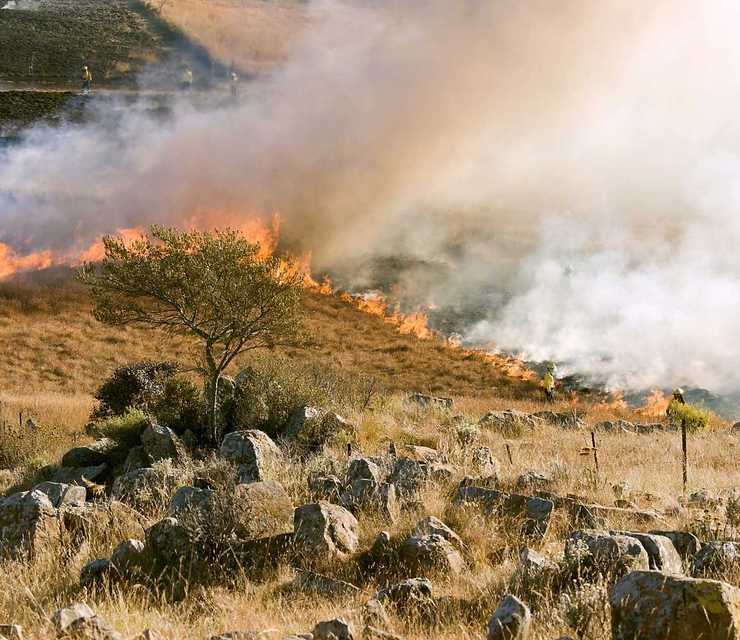
A wildfire blazes on dry grasses, while firefighters combat the flames.

We’ve faced unimaginable difficulties in public health since 2020, but the pandemic isn’t the only crisis confronting communities across the globe.

Published January 11, 2022

By ISR Staff

Although wildfires have been ravaging countries around the world for the last decade, many have recently seen their worst blazes in generations.

In 2020, Colorado and California made global headlines for recording their largest wildfires in history, collectively burning through almost 5 million acres of land. In a report from the National Interagency Coordination Center, the amount of land burned by wildfires in the western U.S reached 8.8 million acres—an area larger than the entire state of Maryland. Unfortunately, these disasters are not just occurring in the U.S.

Climate change exacerbates conditions that are favorable for wildfires, including hotter temperatures, longer droughts, and drier vegetation. Today, we’re experiencing these conditions in real-time as record high temperatures now occur twice as often as record lows across the United States.

As wildfires continue to increase in frequency and severity, we must be prepared for the next crisis that threatens to devastate lives.

Scientists are a crucial component of any large-scale response to a global emergency, and the current procedures around wildfire preparedness and prevention are not sufficient enough to successfully mitigate the issue. 

Over the last decade, federal investments in wildfire research have been disproportionately lower than the amount spent on wildfire suppression. For example, the U.S. Forest Service spent nearly $2 billion towards putting out wildfires in 2016, yet only received $27 million to fund their National Fire Plan Research and Development Program that same year. More recently, the ongoing health crisis has led to researchers getting reduced financial support from federal and state government agencies to help address the magnitude of fire risk and preparedness.

Outside of the need for increased research investments,  there is also a lack of cohesion between industry, academia, and government when it comes to wildfire prevention. Last year’s COVID-19 High-Performance Computing Consortium, an innovative public-private body that provided more than 600 petaflops of free computing power to the COVID-19 research effort, successfully proved that harnessing the power of industry and academia is the best way to flexibly address a future crisis.

This is why we’re recruiting scientists to join the International Science Reserve (ISR), a global network of experts working to accelerate solutions that will help mitigate global crises like wildfires. While there are existing organizations dedicated to crisis response, the ISR is specifically focused on mobilizing scientists to augment existing response organizations. This creates an engaged ‘crisis community’ which regularly participates in preparedness exercises and contributes to a better understanding of the role of science in crisis mitigation. In the long term, this could influence future policy regarding the role of science in crisis preparation and response.

The International Science Reserve will bring together an esteemed network of scientists to accelerate solutions to prepare for — and help mitigate — the impact of wildfires. 

To help slow the rapid spread of wildfires, scientists in the International Science Reserve (ISR) will address the issue with a multitude of actions. These actions may include:

  • Integrating long-term climate modelling into scenario planning so national and international organizations can better prepare for when and where wildfires are likely to be a danger. 
  • Collaborating with international scientists to examine long-term climate trends as well as organizations involved in short- and medium-term weather forecasting, such as the U.S. National Oceanic and Atmospheric Administration.
  • Partnering with the World Meteorological Organization to ensure that accessible and timely data are made available to determine impacts of smoke and air pollution stemming from the fires.
  • Conducting in-depth analyses of the responses of various organizations to wildfires, as well as highlighting best practices for actions which are known to be effective to help with future prevention.

If you or your organization are interested in learning more about the International Science Reserve and how you can get involved, please contact us at ISR@nyas.org. We need your partnership in this mission.

Also read: The International Science Reserve – An Ambitious Future-Proofing Initiative for the Public Good