Expert on HIV/AIDS Appointed to Advisory Group

A young child gets blood drawn by a medical professional.

Academy member Chinua Akukwe answers the “call to duty” as he uses his public health expertise to combat the spread of HIV/AIDS, specifically in Africa.

Published April 16, 2012

By Diana Friedman

Chinua Akukwe, professorial lecturer in the Departments of Global Health and Prevention and Community Health in the George Washington University (GWU) School of Public Health and Health Services and former chair of the Technical Advisory Board of the GWU Africa Center for Health and Human Security, has been appointed to the independent Global Advisory Group on Funding Priorities for UNITAID. UNITAID is dedicated to scaling up access to treatment for HIV/AIDS, malaria, and tuberculosis by leveraging price reductions for quality diagnostics and medicines and accelerating the pace at which these are made available. Since 2006, UNITAID has committed over U.S. $1.5 billion to support projects in 94 countries.

“This appointment is a call to duty during one of the most important periods in global health and financing for international development,” says Akukwe. “UNITAID, with its focus on innovative mechanisms for scaling up access to medicines and other public health goods, can play a more significant role in leveraging scarce resources to reach more individuals and families in need,” he adds.

Akukwe is an expert on the global response to HIV/AIDS, with a particular focus on Africa. He developed the “Communicable Diseases Guidelines” of the Africa Development Bank that established HIV/AIDS, malaria, and tuberculosis as priority health conditions. He also developed the “Strategic Framework for the Implementation of Universal Access to HIV/AIDS, Malaria and Tuberculosis” for the African Union Commission, which was subsequently approved by the African Council of Health Ministers.

Also read: A New Approach to Treating HIV/AIDS in Iran

Informing the New Age of Human Space Flight

A shot of stars and galaxies.

Can NASA afford to look beyond the international space station given budget constraints?

Published August 13, 2009

By Adrienne J. Burke

Academy member Norman Augustine, who chaired a National Academy of Sciences committee on strengthening research and education in science and technology, has another critical assignment. He’s chairing an expert panel investigating options for the future of the U.S. space program.

NASA convened the committee in response to a request by President Obama and the Office of Science and Technology Policy in May. The panel, which heard from former astronaut Sally Ride and others in Washington, DC, held its last scheduled public hearing August 12. It has until the end of the month to deliver its report.

Ride told the committee that the U.S. can’t afford to send humans on any missions beyond those to the international space station – such as to Mars – without boosting NASA’s budget. Augustine, former chief executive of Lockheed Martin, acknowledged that, “If we do want a strong space program, we might have to face up to investing more,” according to the New York Times.

A Long and Illustrious Career

Augustine has had a long and illustrious career in the worlds of science and engineering. In addition to his long-standing Academy membership and tenure at Lockheed Martin Corp., he serves on the President’s Council of Advisors on Science and Technology and the U.S. Department of Homeland Security’s Advisory Council. He also is a former undersecretary of the Army and served as chairman and principal officer of the American Red Cross

He has been honored with numerous awards, including the National Medal of Technology and the U.S. Department of Defense’s highest civilian award, the Distinguished Service Medal, given to him five times. He also received the 2005 AAAS Philip Hauge Abelson Prize and the 2006 Public Welfare Medal from the National Academy of Sciences (NAS).

Augustine was among several experts who testified before Congress in 2007 on the NAS report Rising Above the Gathering Storm: Energizing and Employing America for a Brighter Economic Future. The report, released in 2005, was requested by Congress as a way to address concerns that the U.S. was falling behind other nations in assuring the adequacy of its scientific and technical infrastructure and pipeline of young investigators.

Want to be part of this impactful and inclusive community? Join today!

The Role of Government in Advancing Science

As President Obama takes steps to “restore science to its rightful place,” Washington insiders and Academy members weigh in on his challenges and priorities.

Published March 1, 2009

By Adrienne J. Burke

President Obama and his science team, from left, NOAA Chief Jane Lubchenco; President’s Council of Advisers on Science and Technology Co-Chairs Harold Varmus and Eric Lander, Presidential Science Adviser and Director of the White House Office of Science and Technology Policy John Holdren; and Secretary of Energy Steven Chu. Illustration by David Simonds.

It’s no exaggeration to say that applause rang out in the halls of science on January 20 when President Barack Obama pledged during his inaugural address to “restore science to its rightful place.”

“If you heard a faint cheer about 30 rows back when he said those words, that was me,” says physicist and Congressman Rush Holt (D-NJ).

President Obama’s pledge was consistent with his appointments, announced a month earlier, of several distinguished career scientists, including two Nobel Laureates and three members of The New York Academy of Sciences (the Academy), to the top government science posts. And in his first two months in office, he took several more steps toward upholding it.

In February, the President signed off on an unprecedented $24 billion in new funding for science and technology research and development, including more than $10 billion for the National Institutes of Health (NIH) and $3 billion for the National Science Foundation (NSF), as part of the American Recovery and Reinvestment Act. Days later, in his first address to Congress, the President acknowledged the importance of science to an economic recovery, saying that the solutions to America’s recession reside “in our laboratories and our universities.”

Making Good on Campaign Promises

In March, he made good on campaign promises to reverse the Bush administration’s restrictions on federal funding for embryonic stem cell research by directing the NIH to develop new rules within four months. And when Congress, days later, confirmed Harvard physicist John Holdren as Presidential Science Adviser and Director of the White House Office of Science and Technology Policy, Obama had already assigned him the task of developing “a strategy for restoring scientific integrity to government decision making.”

Though it remains to be seen if the federal support for science will be sustained beyond the Administration’s jobs-creation program, to many, the new President’s announcements mark a refreshing departure from eight years of neglect and even rejection of sound science on critical issues by the White House. Some scientists and science advocates see Obama’s recent moves as their payoff for months of hard work aimed at bringing the country’s science crisis to his attention before he took office, or while he was still on the campaign trail.

Shawn Otto, a Minnesota-based screenwriter with a bachelor’s degree in physics and a passion for science policy, began during the November 2007 Hollywood writers’ strike to advocate for discussion of the scientific issues among the contenders for the US presidency. With the help of five other volunteers, Otto established ScienceDebate 2008 with a website and a petition calling for a presidential science policy debate. The movement gained momentum as the American Association for the Advancement of Science (AAAS), National Academies, and Council on Competitiveness became ScienceDebate cosponsors and 38,000 scientists, engineers, and other concerned citizens, including the presidents of more than 100 universities, signed the petition.

Candidates Addressing Science

Although no debate took place, ScienceDebate did succeed in getting the Obama and McCain campaigns to provide written answers to 14 science policy questions on topics including climate change, energy, science education, biosecurity, stem cells, genetics research, and US competitiveness. Says Otto, “It’s the first time we are aware that the endorsed candidates for president have laid out their science policies in advance of the election.”

The Washington-based Union of Concerned Scientists (UCS) also urged the president to take up the cause of science. With input from thousands of scientists, current and former government science advisors, congressional aides, reporters, and public interest organizations, in January the UCS submitted a set of detailed recommendations to President-elect Obama and Congress for restoring scientific integrity to federal policymaking. UCS senior scientist Francesca Grifo saw the Scientific Integrity Presidential Memorandum that Obama issued in March as “proof that the administration had heard the cry” of almost 15,000 scientists who had signed a statement denouncing the politicization of science.

Other groups including the National Academies and the Woodrow Wilson International Center for Scholars issued reports urging the new president to quickly appoint a nationally respected scientist to the position of Presidential Science Adviser. John Edward Porter, a former Republican congressman from Illinois and chair of the committee that wrote the National Academies’ report, says, “The Bush administration largely ignored science and wouldn’t provide ongoing funding increases even at the level of inflation. I believe [the new] president understands the importance of science.” He and others are gratified by the early appointment of Holdren.

Science As Jobs Program

Observers are also pleased to see science being recognized as a crucial contributor to economic growth—in Obama’s speeches and especially in the Recovery and Reinvestment Act. Columbia University Professor and Academy President’s Council member Eric Kandel led 49 Nobel Laureates and several other top American scientists in penning a January 9, 2009, letter to the then President-elect urging him to “consider an immediate increase in funding for scientific research” as part of the economic stimulus package.

“Increased science funding is an ideal stimulus: it creates good jobs across the economy; there is large pent-up need so that money can be spent immediately; and it represents an investment in the infrastructure of scientific research and higher education that are vital to the future,” Kandel and his colleagues wrote in the open letter published as an op-ed in the New York Daily News and the Financial Times in January.

The massive funding for science and technology included in the final bill is “an acknowledgement of the importance of science to economic health,” says Kandel.

A Science-Intensive Approach

Former House Speaker Newt Gingrich says he is “very much in favor of a science-intensive approach to how we think about the future of the country.” Over the next 25 years, he warns, “waves of new knowledge will affect our economy, the environment, health, national security.” Although he considers the bulk of the $787 billion Recovery Act to be “a remarkable waste,” Gingrich says he is pleased with how it treats science.

“Most scientists have been reluctant to present science as a jobs program because it cheapens it,” says Congressman Holt. “But if you get an NIH or NSF grant, that money goes to hire $50,000-a-year lab techs and electricians who will wire the labs. Science funding does indeed make jobs.” In a speech on the House floor in February, Holt urged colleagues to consider that for every $1 billion invested in science, 20,000 US jobs are created.

Nevertheless, many politicians still don’t buy into the importance of investing in science as economic stimulus. Congressman Vernon Ehlers (R-MI), an atomic physicist who sits on the House Science & Technology Committee, says, “I can’t say that the mood toward science in Congress has changed because of the current recession. Very few individuals relate science with stimulus.”

Holt concurs. At the recent annual meeting of the AAAS in Chicago he told an audience, “Most members of Congress avoid science at all costs.”

“It’s really amazing,” says Kandel. “The whole Internet era has exploded and every aspect of industry came out of a few technical institutes throughout the country, yet science has been seen as the underpinning of the intellectual enterprise but not the economic enterprise.”

A Science-Friendly Point of View

Truth be told, even Obama and his team of economic advisors had to be coached to adopt their science-friendly point of view. ScienceDebate CEO Otto says science was simply not on either Obama or McCain’s campaign agenda before the grass roots organization gained critical mass. “I think Obama came to understand through our efforts and the efforts of others during the campaign how passionately people felt that science had been abandoned by the previous administration and substituted with ideology.”

Still, Holt told The New York Times in January that the President’s economic advisors “don’t have a deep appreciation of the role of research and development as a short-term, mid-term, and long-term economic engine.” Holt suggested that the billions contained in the stimulus package for energy research are not enough.

For now, the money is beginning to flow back into the country’s labs. Kandel says the effect of the stimulus bill has been immediate: “I’m speaking to a project officer now to get about $100,000. Everybody and his uncle is doing this, and within four to eight weeks I will be able to create some jobs.”

From agriculture, energy, and IT to oceans, medicine, and space, research of all kinds will indeed benefit from the Recovery and Reinvestment Act. The bill contains at least $24 billion for science and technology research and development. NSF Director Arden Bement announced in March that his organization is working on a plan for quickly disbursing the $3 billion it was awarded. Bement said NSF would award the majority of the $2 billion available for “Research and Related Activities” before September 30 to proposals that were already under review or had been declined since October 2008.

Researching Health, Space, Weather, Energy and More

The NIH, awarded more than $10 billion to be allocated by September 2010, will direct $1 billion to institutions seeking to construct, renovate, or repair biomedical or behavioral research facilities; about $100 million to Biomedical Research Core Centers for multidisciplinary research; and another $200 million for “Research and Research Infrastructure Grand Opportunities.” Acting Director Raynard Kingston told The New York Times in February that the agency would also quickly act to fund some of the 14,000 applications with scientific merit that have been turned down lately due to insufficient funds.

The legislation also includes $1 billion in funding for NASA, of which $400 million will go for science missions; more than $800 million for the National Oceanic and Atmospheric Administration; $1.6 billion for physical sciences research funded  through the Department of Energy (DOE) Office of Science; and another $400 million for the Advanced Research  Project Agency-Energy to support high-risk, high-payoff research into energy sources and energy efficiency in collaboration with private industry and universities. Energy Secretary and Academy member Steven Chu announced that nearly $1.2 billion would go “for major construction, laboratory infrastructure, and research efforts sponsored across the nation by the DOE Office of Science.”

Despite the bounty, scientists and supporters warn that a stimulus package and a presidential memo alone won’t restore science to its “rightful place.”

Maintaining Adequate Funding

Many worry that the jobs-creation funding, much of which must be distributed within two years, will not be sustained. “You can’t support science for two years,” says Kandel. “Science goes on in perpetuity. To solve problems of health and environment, science has to be supported long-term. Obama is aware of this, but he has made no statement about how long [this level of funding] will last.”

“I’m not being critical of the stimulus package, but it’s not clear that things in it will ever see another dime,” says Lewis Shepherd, chief technology officer of the Microsoft Institute for Advanced Technology in Governments and a former senior technology officer at the Defense Intelligence Agency. “It’s not as easy as telling Los Alamos National Laboratory, ‘we’re going to give you a 60 percent budget increase for one year only.’ That’s just not the way science works.”

Congressman Bart Gordon (D-TN), chair of the House Committee on Science & Technology, says it’s legitimate to be concerned that the boost for science will be a flash in the pan. “With difficult economic times you could see how that could happen,” says Gordon. “But when the President called me before his swearing in he said he was a science guy, and when Speaker Pelosi talks to any group about our future and our competitiveness she says there are four things we have to do and that’s ‘science, science, science, and science’.”

Bring Back the OTA

One way some are suggesting that Congress can be kept apprised of the importance of science funding would be to re-establish the Office of Technology Assessment (OTA), the congressional scientific advisory body that was shut down by the 1995 “Contract with America.” With a $22 million annual budget and a staff of 143, the office was known for generating high-level reports on bleeding-edge science and technology issues. Shepherd says, “There’s been a gaping void for 15 years since OTA was disestablished. I suspect, as others do, that much of the last decade’s decline in R&D and scientific programs have occurred at a time when Congress disarmed itself from getting advice.”

Speaking at the AAAS meeting, Holt said, “When OTA was disbanded, Congress gave itself a lobotomy. Our national policies have suffered ever since. The issues have grown more complex, but our tools to evaluate and understand them have not.” Holt intends to submit a formal request for funding and to argue the case for reopening the OTA before the full Appropriations Committee in May.

Pay Attention to P-CAST

How else to ensure that scientists and scientific research get the respect they need from government to contribute to a renewed economy of innovation? The President should consult frequently with Presidential Science Adviser Holdren and the President’s Council of Advisors on Science and Technology (P-CAST), say many observers.

Gingrich notes that “presidential advisers matter as much as presidents listen to them.” P-CAST has been truly influential only three times in history, he says: “When it was created under Eisenhower, when it was a part of the Apollo program under Kennedy, and when the science adviser was indispensable under Reagan in preparing a Strategic Defense Initiative.”

But most agree that the scientists Obama selected to co-chair P-CAST—Nobel Laureate and former NIH director Harold Varmus and Broad Institute Director Eric Lander (both Academy members)—are not the types to go unheard. Further, Porter says he is optimistic that Holdren will not be “ignored” the way he says President Bush’s science adviser John Marburger was. “I hope that Holdren is put at the table for cabinet meetings whenever a matter involving science comes up, that the president will go to him regularly for science advice.”

There’s an urgency for more scientists to involve themselves in policymaking, he says. “In the US, scientists have been aloof from the political process. We need them in policymaking positions where they’re part of the decision-making process.”

The Perfect Climate for Scientists to Get Involved

Porter suggests that scientists call up the campaign of their favorite candidate and ask to join their science advisory committee. “Most of them will say, ‘We don’t have one,’” says Porter. “So, say, ‘OK, I will start one for you!’ Campaigns aren’t in the business of refusing people who want to work for them. We have scientists all across the country who could step up.”

Rush Holt says this is the perfect climate for scientists to get involved. “The essence of science is to ask questions so they can be answered empirically and verifiably, always with the understanding that you may be proven wrong,” he says. “That’s an essential underpinning of science. Obama seems to operate that way.”

Otto, the ScienceDebate CEO, is cautiously optimistic. “We don’t think with one election the world has changed. In order for the president to get some of his aggressive initiatives through, he’s going to need the support of Congress and they of the American people. So, this discussion of science’s role in America is going to have to be ongoing.”

Also read: Isolationism Will Make Science Less Effective

An Academy Member’s Work in Prime Time

For Academy member Paul Eckman, art imitates life as he lends his psychological expertise to a popular television show focused on snuffing out liars.

Published March 1, 2009

By Adrienne J. Burke

Image courtesy of kanpisut via stock.adobe.com.

Decades into a distinguished psychology career researching and decoding the facial expressions of people from California to Papua New Guinea, Paul Ekman, a member of The New York Academy of Sciences (the Academy), now finds himself dedicating half his time to a Fox Network television show.

A new series, Lie To Me, is based on the life work of the scientist known for developing the Facial Action Coding System to read the meaning in human expression. The show’s protagonist, Cal Lightman, is “the world’s leading deception expert” who assists law enforcement and government agencies by studying facial expressions and involuntary body language to discover whether and why someone is lying.

Ekman, who had attained celebrity scientist status over the years as he appeared on numerous outlets including Larry King, Oprah, Johnny Carson, and the Bill Moyers’ special The Truth About Lying, says the new Fox program “is an unusual role for a scientist in a television program, and an unusual television program to rely on science.”

The show’s genesis was a 2002 New Yorker article that described Ekman’s work. It caught the eye of Brian Grazer, head of Imagine Television and producer of the shows 24 and House and blockbuster movies such as The Titanic and Ghostbusters. “Brian contacted me and said ‘I love your work and I want to get it on TV and I want to get the right writer’,” says Ekman. Two years later, Ekman began collaborating with writer Samuel Baum and now has a contract with 20th Century Fox to critically review each script for scientific accuracy and plausibility.

Art Imitates Life

Paul Eckman. Photo by Michael Ian.

Ekman loans the show’s producers his private collection of materials depicting liars and truth tellers, and provides the show’s actors with video clips of him demonstrating some of the most difficult-to-perform facial expressions and gestures. Ekman also writes a weekly column, The Truth about Lie to Me, in which he elaborates on parts of that week’s episode that are based on science and explains which parts shouldn’t be taken seriously. For fans who want even more detail, Ekman pens a bimonthly newsletter about the nature of lying called Reading Between the Lies.

Ekman says that while many cases on the show draw on his own experiences, Fox’s writers are barred from basing personal aspects of Lightman’s character on him. For instance, Ekman says, “Cal Lightman is young, divorced, British, and has a strained relationship with his one child while I have a 30-year marriage and good relationships with my two children.”

Ekman says there are also some striking professional differences between him and the television version of the lie expert: “Lightman is always more certain than I am about everything. He solves in 24 hours what sometimes takes me six months. He has a better equipped, better looking lab than me. And I do work with a number of government agencies, but not as many as he’s working with. Clearly more branches are impressed with the usefulness of his work than the usefulness of mine!”

Nevertheless, Ekman says each case mimics work he is either doing at the moment or has undertaken in the past. “They haven’t done anything that I haven’t already done, but they’re doing more of it because they’re better funded and he’s younger than me!”

Also read: The Fraught and Fruitful Future of Fungi

A Scientist by Trade, A Leader by Example

When it comes to supporting science, the work of past Academy President Fleur L. Stand is never done. Even in retirement she continued to advance science for the public good.

Published September 1, 2008

By Adelle Caravanos

Fleur Strand and her husband Curt

Contribute. Revitalize. Innovate. Used as a call to action in The New York Academy of Sciences’ (the Academy’s) first ever Comprehensive Campaign, these three words can easily describe the modus operandi of Academy Past President Fleur L. Strand. A member since 1950, the distinguished professor of biology and neural science became the second female Academy president in 1987. But Strand’s dedication and deep involvement with the organization did not end there. More than 20 years later she remains an active member and generous supporter.

Born and raised in South Africa, Strand came to New York in 1945 and earned both her undergraduate and doctoral degrees in biology at New York University. She continued her work at the Free University of Berlin and the University of Leiden in the Netherlands. Strand’s research at the time showed that adreno-cortical hormone (ACTH) has a direct effect on neuromuscular activity—a finding that was considered blasphemous, as it required ACTH to bypass its usual intermediary, the adrenal cortex. Unable to get her research published, Strand became discouraged.

Fortunately, it was around that time that she met David De Wied, the father of neuropeptide research, at an International Physiological Society meeting in Munich. De Wied encouraged her work; his own had demonstrated the same effect of neuropeptides on the brain and on behavior—now a universally accepted concept, basic to this field of research.

Ascending the Academic Ranks

Strand returned to NYU in 1961 and worked her way up the academic ranks to her present position as the Carroll and Milton Petrie Professor Emerita of Biology and Neural Science, following her retirement in 1966. She is the recipient of the school’s Distinguished Teaching Award and has chaired the Mayor’s Award for Science and Technology committee. She has authored several textbooks, including one for which she won the American Medical Writer’s Award. Strand was selected as Outstanding Woman Scientist by the New York Chapter of the Association for Women in Science in 1987. She also served on the New York State Spinal Cord Injury Board, from which she reluctantly resigned when she moved to Colorado.

For 58 years, Strand has been an active Academy member, attending and organizing meetings and editing more than eight Annals volumes. She also worked with the editors on The Sciences, “particularly in the choice of the wonderful art that characterized that magazine,” she says. Strand is a lifetime member of the Academy and was elected a Fellow in 1976. Her participation in so many facets of the Academy’s activities culminated in her inauguration as Academy President at the 170th Annual Dinner.

“After I was inaugurated, I was honored to give Surgeon General C. Everett Koop the Presidential Award,” she says. “This was at the beginning of the realization of AIDS as an important social and political issue, and Dr. Koop was one of the first to call for an alliance of American social, political, and medical organizations.” Then, as now, the Academy was the unique, neutral meeting ground where these alliances could be forged, with science at the center of the discussion, she adds.

Madam President

During her tenure as President, Strand was particularly interested in bringing “new young blood” into the Academy, and attempted to do so by initiating a founding group of active student leaders. Although this program did not succeed during her presidency, she is pleased to support the great success of the Academy’s current program, the Science Alliance for Graduate Students and Postdocs. Strand adds that she has kept in close contact with many of her own doctoral students, most of whom are deeply involved in academic or research positions. She says they report on their current research and projects at an annual neuropeptide conference at Strand’s upstate New York home.

Earlier this year, Strand reached out to former Academy leaders, inviting them to support the new Comprehensive Campaign: “Sustainability through Science and Technology.” She called for the creation of a “Past President’s Fund” which boasts remarkably high participation.

Katie Thibodeau, the Academy’s major gifts officer, praises Strand’s dedication to the Academy. “Dr. Strand answered our call to action with enthusiasm,” Thibodeau says. “Her passion and commitment to science and to the Academy’s essential role in shaping science is inspiring and truly valued.”

In addition to her work with past Academy presidents, Strand has pledged her continued support of the Science Alliance, the program for which she planted the seeds more than 20 years ago. Through this and other programs, she predicts that the Academy will continue to strengthen its function as an important, neutral convening organization for scientists, business leaders, and policy makers.

Also read: Scientific Community Mourns Fleur L. Strand


About the Author

Adelle Caravanos is a freelance science reporter living in Queens, New York.

Industry Strategies for Enabling Innovation

Tech experts and entrepreneurs provide their insight on what drives innovation in the digital era, and what you can do to thrive.

Published May 1, 2008

By Leslie Taylor and Adreinne Burke

Every second year since 2004, Finland’s President has presented the $1.5 million Millennium Technology Prize to an individual whose innovation “improves the quality of human life and promotes sustainability in many ways.” World Wide Web developer Tim Berners-Lee and Shuji Nakamura, inventor of the MOCVD technique for manufacturing energy-efficient light, are past winners. And in April, an audience gathered at The New York Academy of Sciences as four finalists for the 2008 prize were announced.

Finland’s “tribute to life-enhancing technological innovations,” is just one, albeit the grandest, in an exploding field of awards, books, conventions, fairs, and symposia celebrating innovative science.

Magazines including Business Week, Fast Company, and Wired publish annual lists of the world’s most innovative companies, and MIT’s Technology Review crowns the year’s Top 100 Innovators. The FIRST Robotics Competition, Tech Challenge, and LEGO Leagues established by Dean Kamen—himself the innovator of several important medical technologies—inspires more than 150,000 youths in 38 countries to innovate and “dream of becoming science and technology heroes.”

Through his Innovation 25 Strategy Council, Kiyoshi Kurokawa, science advisor to the Prime Minister of Japan, urges his compatriots to undertake creative technology endeavors. And, as Academy President Ellis Rubinstein notes, leaders of cities the world over are competing for the unofficial title of Idea Capital. Even The New York Academy of Sciences is developing its own Industry Innovation Awards program.

To be sure, definitions for innovation abound. Depending on whom you ask, innovation is lifealtering, process changing, disruptive, sustainable, earthshattering, or breathtaking. Google Engineering Director Alan Warren says innovation is about “taking a set of tools or capabilities and coming up with a new way of putting them together that is going to provide value for the users.” Dean Kamen argues, “it’s not clever widgets and inventions, but it is the wheel, fire, and moveable type.” An innovative technology, Kamen says, “is something so profound that it changes the way people live, work, or play.”

Regardless of how it’s defined, most people know innovation when they see it, and few would disagree with the choice of Tim Berners-Lee or Shuji Nakamura as world-class innovators.

What seems harder to agree on than what defines innovation is what enables it to happen. Are certain conditions necessary to create an environment that breeds innovation? Is innovation most reliant on brilliant people, plentiful resources, or an ideal work culture? Is it about having the perfect combination of those factors, or something else entirely? And how do some companies, such as Google or DEKA, manage to generate one life-altering tool or technology after another?

We asked the leaders of those and three other organizations to tell us what they believe is the key to scientific innovation in industry. We didn’t get the same answer twice.

XEROX: Realize the Customer’s Dream

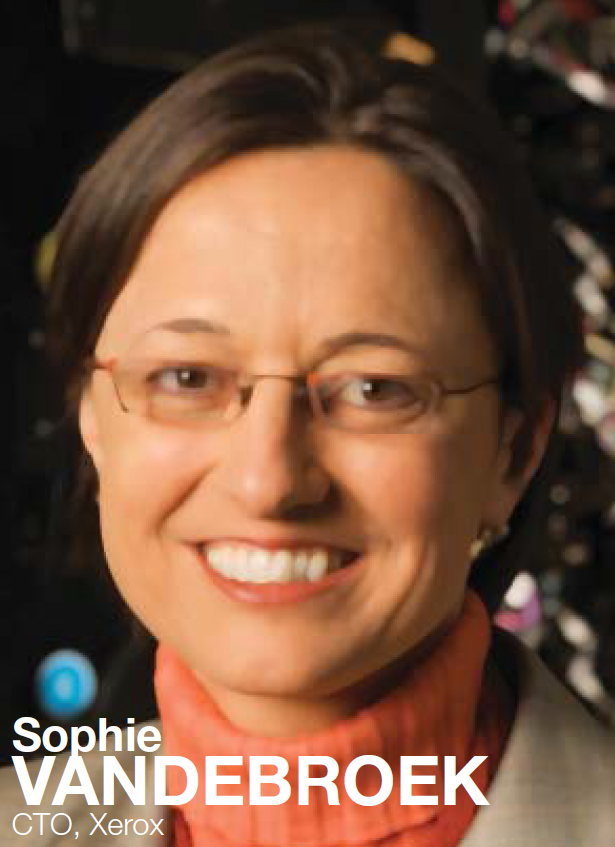
Raised by a painter-poet mother and an engineer father, Academy member Sophie Vandebroek might seem to have been destined to be an innovative scientist. But her definition of innovation isn’t so heavy on free-thinking and creativity. “You innovate when you make a significant difference to the customers—when they benefit from the product or service that you provide,” says the Chief Technology Officer for Xerox.

Over the company’s lifespan, Xerox has been issued more than 55,000 patents worldwide and continues to win more than 10 every week. But inventing is just half of the innovation equation, according to Vandebroek, who is also president of the Xerox Innovation Group. Her formula? Innovation = invention + entrepreneurship.

An invention can be cool, but it might not change the business process, make a significant impact, improve efficiency, or create new markets, Vandebroek says. “Innovation is a practical and successful application of a breakthrough invention,” she explains, adding that, at Xerox, “the way we innovate starts and ends with the customer.”

To really grasp Xerox customers’ needs and address their “pain points,” Vandebroek instituted a practice by which Xerox researchers host “dreaming sessions” with about 2,000 customers each year. For instance, when Xerox acquired the litigation document management company Amici in 2006, Xerox staff sought out meetings with potential customers of its products—the chief information officers of several top law firms.

Amici offered software to enable lawyers to automatically pull data for trial from among reams of documents containing millions of pieces of evidence. But in Vandebroek’s conversations with CIOs, she discovered that legal professionals need to sift through evidence by hand to decide if it is relevant to a case or if it needs to be kept secure—a tedious and error-prone process. “It was a pain point,” Vandebroek says, but to automate the process and eliminate human intervention was no solution.

Instead, Xerox developed smart document software that used machine learning and linguistics to process and analyze content for attorneys, find facts in documents, and filter private information. Vandebroek says the dreaming sessions enabled her staff to more effectively apply their expertise to the customers’ problems.

In another example of how dreaming sessions contribute to innovation, Vandebroek says a team of anthropologists from Xerox’s Palo Alto Research Center spent six months conducting on-site observations of some of the company’s large enterprise customers. They noticed that nearly 45 percent of what people print winds up in the recycling bin within 24 hours—an expensive and environmentally unsound habit. Meanwhile, at a Xerox research facility in Canada, materials scientists and chemists had developed a temporary printing system that could make type disappear from a page 24 hours after being printed.

Vandebroek says going on site to experience the customers’ operation is a key to innovation. “If I simply ask my customers what they want, they might not be familiar with the state-of-the-art that allows you to do such things.” She adds, “As Henry Ford said, ‘If I gave my customers what they wanted, it would have been a faster horse.’”

IMAGINATIK: Harness the Wisdom of Crowds

In a world where competition is global and corporations can be as populous as small cities, it’s too risky to rely on a few people to come up with all your good ideas, says Mark Turrell, CEO of Imaginatik, a Boston and Winchester, UK-based company that makes enterprise software for collaborative innovation and idea management. Problems can better be solved when you tap into the brains of tens, hundreds, thousands, tens of thousands of people, he says.

“Let’s say you ask for input from 500 people. Even if 400 can’t be bothered to respond, 100 participate. Of those, 30 will have 38 ideas, of which 10 to 15 percent will be good,” says Turrell. “Because you are working at volume, you’re bound to get one brilliant answer. Always.”

While working on a PhD in the Information Management Department of Cass Business School in London, Turrell studied critical mass and diffusion theory of collaborative technologies, how they spread through organizations, and how people adopt and use them. Based on what he learned, Turrell created a methodology and Web-based software for collaborative problem solving that has been used more than 4,000 times to address a variety of problems.

Hewlett-Packard employed his system as a brainstorming device to solicit ideas for meaningful projects the company could undertake as part of an Earth Day celebration. And Pfizer used it to tap into its own institutional wisdom: To expand its drug pipeline, the pharma want-ed to dig up compounds that the company once had under development but did not finish developing for some business reason, such as lack of interest in a certain drug market.

The company used Imaginatik software to engage the help of 15,000 employees in finding an existing drug ready for phase 3. Compounds that had made it that far along in the pipeline, Pfizer reasoned, have approximately $100 million net present value. They found one within a week.

Turrell says there are tricks that can encourage people to use a collaborative system. A narrow focus and a short time frame will get 30 times better participation than any long-term program, he says. People are always busy, and they procrastinate, he explains, so it’s important to encourage them to do today what they’d prefer to put off until tomorrow. Plus, people are more likely to come up with great ideas in response to a specific query than to a general invitation for suggestions. Asking, “How can we reduce bureaucracy or reduce our energy consumption?” prompts more useful and creative responses than just requesting suggestions on how to improve company performance.

Many of the great ideas that became some of the most successful products, or even whole industries, were developed at the grassroots level, Turrell points out. But leadership—to set goals and identify and provide support for the best ideas—is also critical. Turrell’s favorite recipe for promoting innovation? “Openness to using the thousand eyes, ears, and brains everywhere, but at the same time having a focus and direction.”

GOOGLE: Hire the Best, Then Get Out of Their Way

Google Engineering Director Alan Warren, whose employer is the poster child for 21st century innovation, says it has become so by hiring the right people and fostering a culture where they thrive.

Recent innovations out of Google’s New York City office, such as Google Spreadsheets, which transformed a traditionally desktop-bound application into a collaborative workspace, are the products of the company’s hands-off approach to management.

“You can’t make someone an innovator if they don’t have a curiosity and desire to make things better, to do something new and useful. And you can’t put someone like that in the wrong environment and expect good things to pop out,” Warren says.

Google seeks new hires with what Warren calls “serious horsepower”—people who are not just super smart, but who also have a creative bent. “We ask ourselves, ‘Has a candidate just taken a problem that’s been handed to them by a thesis advisor and worked their way through it, or have they taken [a problem], spun it out this way, figured out how it applies to that, and then come up with this over here?’ We look for that kind of spark,” he says.

Another question Warren asks a hiring committee is to consider is : “Would you like this person sitting in the cube next to you and working on your project with you?”

“We won’t bring someone in just because of horsepower if we don’t think they’ll add to the environment,” he says. He wants people who are happy to let others bounce ideas off of them and who will participate in offsite teambuilding outings such as the recent company-wide ski trip.

That’s because Google developers usually attack projects in small teams. “The natural number that our developers tend to organically subdivide into is three,” he says, adding that it’s “a group size that minimizes the overhead from over-organizing and coordinating.”

The Google philosophy also holds that an overly hierarchical management structure can obstruct innovation. Micromanagement is strongly discouraged. As a manager, Warren believes his job is to bring smart people together then take a step back. “I don’t manage or direct in the traditional sense,” he says. “My job is to help communicate to employees what the company priorities are, what I see as the important challenges and needs out there, and to give them some ideas and directions to go in.”

But it is the job of the engineers to figure out just what needs to get done, he explains. “I manage them by reviewing what they are planning to do, rather than by figuring out what they should do and telling them to do it.”

DEKA: Celebrate Failure, and Move on Fast

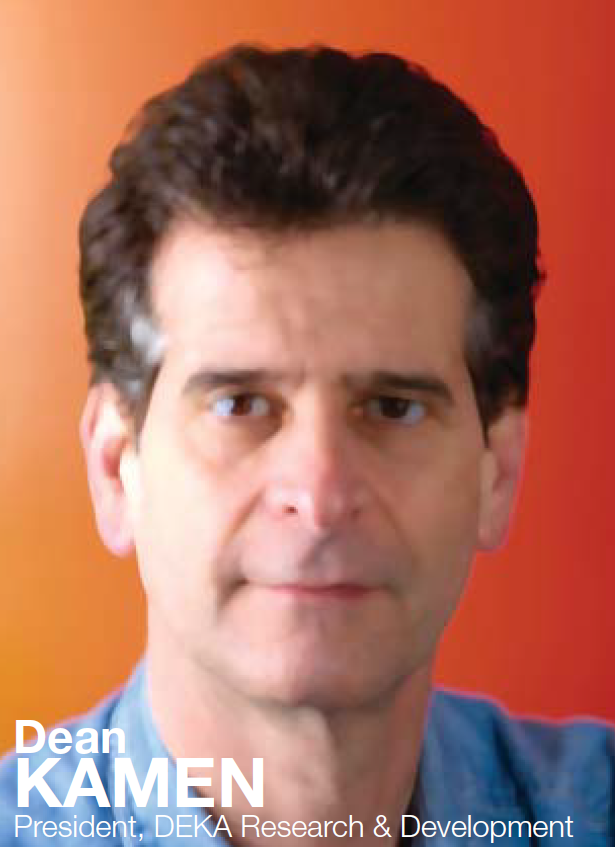
Perhaps best known for his electric “human transporter,” the Segway, inventor and entrepreneur Dean Kamen holds 400 patents and is responsible for creating life-transforming technologies such as the mobile peritoneal dialysis machine (140 million shipped), the iBOT Mobility System—which enables people typically confined to a wheelchair to maneuver stairs and rough terrain, reach high shelves, and greet a standing person at eye-level—and, still under development, a robotic prosthetic arm, designed especially for amputee soldiers returning from Iraq.

Kamen says he fosters innovation at his Manchester, NH, company, DEKA Research & Development, by embracing failure. “In most companies the penalty for failure is substantially disproportionate to the reward for success, which causes rational people to be risk averse,” Kamen says. “DEKA is a place that embraces change and a place that celebrates failure in a weird way.”

When an idea doesn’t pan out, Kamen says it’s important to view the project, not the person or the company, as the failure. “Let it fail quickly, learn, recover, laugh, and move on,” he says. “At the end of any day I’d like to see guys running around yelling ‘Eureka!’ or else I’d like to see smoke and a ball of flames. Spectacular death is better than the warm death of mediocrity.”

Asked whether brilliant people, the right resources, or a strong culture is most important to an innovative workplace, Kamen responds, “You need the right people, resources, and culture. And mostly you need to be able to work really hard.” Modern culture suggests that life is about instant gratification, Kamen complains. “The jingles kids see say, ‘Life is short. Play hard.’ My motto is ‘Life is short. Work hard.’ I don’t think there’s a shortcut to innovation,” says the man who claims to have never had a job or collected a paycheck in his life.

Kamen also suggests that a small company like DEKA, with about 200 employees, is better suited to innovate than behemoths. “Big organizations are good at doing certain things that are important for the world to have, like consistency and quality. Good management is about consistency and never being surprised. But that’s contrary to what innovation is,” he says.

So, what is innovation? “People are comfortable with the way things are,” Kamen explains. “Innovation is therefore so rare it only occurs when some idea or technology is so profoundly better than what existed before that people are willing to change.”

How does he know when DEKA has produced something that meets his definition of innovative? “When you deliver the first one that actually works—something that you think is a big idea and you show it to someone and their deep analytic response is, ‘Wow!’ Then you know you’re on to something.”

NYSERNET: If You Build It, They Will Come and Be Brillant

Academy member Timothy Lance believes that great infrastructure is the key to enabling scientific innovation. Scientists around New York State who are relying on his organization’s vast computing network are the proof of his point.

“Suppose you’ve got a computational model that has some-thing to do with protein folding,” begins Lance, president and chairman of the board of NYSERNet, a private not-for-profit corporation that has delivered state-of-the-art Internet services to New York State’s research and education community for more than 20 years.

Now, he says, “Suppose you’ve got a very good lab scientist who knows a lot about proteins and the way they behave. Once upon a time he might have said, ‘To run the model is going to take a week and then it will take another two days to download the results.’”

But, Lance asks, what if you put this incredibly fast computer and network at his disposal so that the model can be run in two seconds? “He might see the results and say ‘That’s interesting, but hey I wonder, what if x is different? Let’s tweak this and see what happens.’ [This experiment] is quantitatively different but it’s also qualitatively different because it’s so quick that you’ve got this brilliant mind able to turn multiple things over and come up with an idea.”

Founded in 1985 by a consortium of institutions grappling with lack of access to high-performance computing, NYSERNet counts among its members New York State’s leading universities, colleges, museums, healthcare facilities, primary and secondary schools, and research institutions. In 1987, NYSERNet deployed a regional Internet Protocol network—the first use of the technology outside the U.S. Department of Defense, and the first statewide implementation.

In the days before the public Internet, scientists couldn’t quickly share data or exchange ideas, Lance notes. And before NYSERNet, research institutions paid for dialup so their investigators could call in to the nearest supercomputing center. By providing them with access to the computational and connectivity tools they need, NYSERNet has advanced research and educational initiatives, and thereby innovation, in New York State.

Over the past three years, in order to end its dependence on carrier-provided circuits, NYSERNet has deployed or acquired a vast network of fiber optic cable—over 1,500 miles of fiber in New York City. When the Large Hadron Collider comes online in Switzerland this year, all data flowing from it to the Americas will be routed through NYSERNet’s primary collocation site at 32 Avenue of the Americas in Manhattan, Lance says.

“Now the networks are so powerful that we can look at harder problems and bigger datasets, bigger transfers, and more computational cycles,” says Lance. “Of course, there can be innovation by having breathtaking ideas that don’t require any computers and I sometimes kid around that what we’re doing with these supercomputers is enabling ordinary men to do what Gauss would do in his head overnight. But in fact, to visualize some problems requires so much data or computation or tools that the infrastructure becomes an absolutely critical tool forgetting an idea of what’s going on.”
The Evolution of an Environmental Scientist

Rosina M. Bierbaum was always mindful of pollution and other environmental matters growing up in Pennsylvania, so perhaps it’s no surprise that she made a career of it.

Published September 1, 2007

By Rosina M. Bierbaum, as told to Abigail Jeffries

Rosina M. Bierbaum, PhD

I grew up in Bethlehem, Pennsylvania, a steel town, as the middle of five children. We lived only two blocks from the main steel plant, so I was exposed to air pollution issues from a very early age. Particulates in the air coated our cars and windowsills every day, so my siblings and I were constantly dusting! This was before the Clean Air Act.

At age 11 my interest in the environment blossomed when I read Rachel Carson’s other book, The Sea Around Us. I became very concerned about the preservation of aquatic and marine ecosystems. My father’s boat store afforded me many opportunities to study the Pocono Mountain lakes, and increasing signs of pollution worried me.

My ninth grade biology teacher was my first mentor, and a real gem. She arranged for students to work in local college labs on weekends. We studied Drosophila genetics, synthesized aspirin, and tried not to explode things; I really got hooked on science.

After taking an ecology summer course at LaSalle College at age 14, I entered—and won!—local and national science fairs with projects examining how irradiation affected the interaction of algae and bacteria. Using a meat sterilization lamp in my grandfather’s butcher store, I discovered that there were some antibiotic properties in the algae Chlorella that were destroyed by ultraviolet radiation. I went on to major in both biology and English at Boston College and pursued a PhD in ecology and evolutionary biology at SUNY, Stony Brook.

A Shift to the Science-Policy World

By then, my career goal was to conduct research on marine invertebrates in a beautiful coastal setting for the rest of my life. But one of my many mentors, Dr. Bentley Glass, admonished me to participate in the science-policy world. Since I didn’t even read a daily newspaper then, he essentially embarrassed me into applying for a Congressional fellowship, which I, somewhat unhappily at the time, won. So, I left the ivory tower, but what an epiphany awaited!

In those 20 subsequent years working for the Congress and then the White House, I learned that science is not the loudest voice, that civic scientists must be ready to translate the relevance of technical information to whatever policy issue is urgent, and that one must ensure scientists are at the table when decisions about budgets, treaties, policies, and regulations are made. Economists and lawyers were routinely consulted, but it took some persistence to ensure scientists became part of the group of usual suspects.

I left my position as acting director of the White House Science Office in 2001 to return to academia to train the next generation of environmental leaders in the way I wish I had been educated when I went to DC— not just to know a narrow slice of science but to be able to speak the languages of economics, policy, law, engineering, and negotiation.

That’s my mission now, to combine social sciences, natural sciences, and design in an integrated education to enable tomorrow’s leaders to achieve a sustainable planet.

Also read: The Environmental Impact of ‘Silent Spring’


About the Authors

Rosina M. Bierbaum is the Dean of the School of Natural Resources and Environment at the University of Michigan. She holds a Ph.D. in Ecology and Evolution from the State University of New York, Stony Brook and has been a member of the Academy since 2000.

Abigail Jeffries is a freelance science and health reporter living in Tolland, CT.

A Laboratory for Science Education in NYC

With an alumni association reads like a dream science team from Fantasy University, Stuyvesant High School proves itself as one of the best in the nation.

Published July 1, 2006

By David Cohn

Image courtesy of Emi Suzuki

The principal’s office at Stuyvesant High School is lined with trophies of many shapes, but only one size: big. A few of the prizes are for sports, such as swimming, but most are for cerebral pursuits such as science, math, and chess. In one corner of the room looms a giant check from the Intel Science Talent Search, which awards $1000 to a school when its student is chosen as one of 300 semifinalists in the annual nationwide contest. Stuyvesant’s check for this year is made out for $8000, but that’s nothing unusual.

With a strong focus in math and science, Stuyvesant, located on the Hudson River at Chambers Street in Battery Park City, is recognized as one of the best public high schools in the country. The school has produced four Nobel laureates, and the membership of the 30,000-strong alumni association reads like a dream science team for a game of Fantasy University.

Members of The New York Academy of Sciences (the Academy) who are Stuyvesant grads are too numerous to list here, but they include Brian Greene of Columbia University, a leading authority on superstring theory; Eric Lander of MIT, the genomics pioneer; and physicist Nicholas Samios, director of the Brookhaven National Laboratory. Joshua Lederberg, who won the Nobel Prize for Medicine in 1958 for discovering the mechanisms of genetic recombination in bacteria, is a Stuyvesant grad, class of 1941. He recalls bright young students bouncing ideas off each other and “arguing the merits of going into science,” an atmosphere not too different from today’s.

The Top Achievers

Image courtesy of Emi Suzuki

Stuyvesant’s 800 incoming students represent the top achievers from the 25,000 children who take the Specialized High School Admissions Test, the SAT-like exam that determines who can attend one of New York’s special science and technology public high schools. “If I walked into the 9th grade assembly and said ‘Will everyone who was valedictorian and salutatorian last year in their junior high please stand up,’ about two-thirds would stand,” says principal Stanley Teitel.

Once accepted, students can choose from a varied curriculum that includes ten language choices, tough basic science classes, and advanced science courses in fields including oceanography, molecular biology, and psychology. Students leave Stuyvesant “prepared for the next level,” says Teitel, which is often a top-tier college or Ivy League university. In fact, Stuyvesant has limited the number of colleges to which students can apply to seven, to reduce overlap.

From All-Male to All-Star

The formerly all-male school became coed in 1969, and moved in 1992 from East 15th St. to its new campus in Lower Manhattan, a stone’s throw away from Rockefeller and other Battery Park City parks where students go to relax, eat, and take in majestic Hudson River views. The school’s remarkable labs, which specialize in everything from earth sciences to robotics engineering, “really capture the energy and enthusiasm of the school,” says Robert Sherwood, president of the Alumni Association, which donates most of the money to fund the facilities.

Image courtesy of Emi Suzuki

The location, only a few blocks from most major subway lines, makes it convenient for students who come from all five boroughs. The location also opens young minds. “Coming from Queens, I didn’t have much interaction with Manhattan,” says Emi Suzuki, president of ARISTA, a national honors society and Stuyvesant’s largest club. “So when I started at Stuyvesant, commuting really exposed me to all kinds of different people.”

Suzuki, like many of her classmates, has already had time in a professional lab. With the help of an internship advisor, she was able to spend last summer at the Memorial Sloan-Kettering Cancer Center under the mentorship of Dr. Harold Varmus, 1989 recipient of the Nobel Prize. Suzuki cultured cells, and produced and purified immunoadhesion-marker proteins. Others in her class interned at prestigious laboratories at Columbia, NYU, or Cornell.

“Stuyvesant absolutely does not give us internships on a silver platter,” Suzuki says, “but I do think that our school’s reputation helps.”

Learn more about educational programming at the Academy.

Flying High and Cutting through the Glass Ceiling

From sitting on the lap of Einstein as a child to making significant advances in aerospace and materials engineering as an adult, Pamela Kay Strong has done it all.

Published August 1, 2004

By Dan Van Atta

“Many, many times I’ve been the only woman in the room,” commented Pamela Kay Strong, a member of The New York Academy of Sciences (the Academy) from Huntington Beach, Calif. Her distinguished career in science and engineering was recently recognized when she was named a Fellow of the Society for the Advancement of Material and Process Engineering (SAMPE). “I think it’s made me a stronger person.”

A chemist and engineer whose career spans more than 30 years in the aerospace industry – including technical leadership positions at Hughes Aircraft Co., General Electric Co., Northrop Corp. and, since 1987, The Boeing Co. – Dr. Strong is just the third female among the 93 individuals to be so honored by SAMPE.

Strong’s identification with science began as a young child. Her father, W. T. Strong, worked in the missile and space division of Goodyear at Holloman Air Force Base and often hosted visiting scientists, who were introduced to her as “uncle” or “aunt” in the family home. “I was an aerospace brat,” Strong said with a chuckle during a recent interview. She added that she can recall sitting on Albert Einstein’s lap and, at age 5, building a wooden rocket with the help of Wernher von Braun.

Shooting for the Stars

She then reiterated an anecdote that was published earlier this year in S&T, the science and technology newsletter of her alma mater, Bryn Mawr College. When “Uncle Wernher” asked her how the launch of her wooden rocket had gone, she responded: “It didn’t go to the moon.” Strong said he then asked, “Well, did you get it off the ground?”

Her reply was, “Yes, it went as high as a tree.” To that response von Braun retorted: “Then it was a success! I can’t get mine off the ground.”

Strong’s interest in science had also taken off. In 1972 she earned a BS in organic chemistry from the Philadelphia College of Pharmacy and Science, and two years later her MS and PhD equivalent, also in organic chemistry, from Bryn Mawr. She soon followed in her father’s footsteps, entering the male-dominated aircraft industry.

“In the beginning it was ‘what’s this woman doing here?’” Strong recalled. “But after six months it became come out and join us – in the softball game or whatever it was they were doing. I’ve always tried to get along, and I quickly became one of the boys.”

At the same time, she was equally committed to “doing the best possible job that you can.” At GE in the mid-1980s she was an important member of the team that established the parameters needed to consistently manufacture commercial parts from polyimide (PMR-15) and other aircraft structural composites – an advance that led to significant improvements in aircraft performance.

Continue Fighting the Glass Ceiling

Pamela Kay Strong receives Fellows award from SAMPE International President Clark Johnson.

Strong’s title is currently “Principal Engineer/Scientist 5/Technical Specialist” in the Materials and Process Engineering Department of Boeing’s Integrated Defense Systems business unit in Long Beach. She and her team provide technical and design support for nonmetallic manufacturing processes and material parameters used in aircraft, rockets and the B-1B Bomber. In receiving the SAMPE recognition, she was cited for her contributions to the advancement of such diverse material technologies as composites, low observables and ablative materials.

“It’s unfortunate that women have to work 10 times as hard as men,” Strong said, then displayed her tongue-in-cheek sense of humor, “but it’s good that it’s so easy for us to do that.”

Her advice to young women seeking a career in science and engineering is much the same as for those already engaged in technical careers. “Find a mentor as fast as you can and hang on for dear life – don’t burn any bridges along your way.”

“And continue fighting the glass ceiling,” Strong concluded, “but don’t forget to bring your diamond glass cutting etcher with you.”

Not a member of this impactful and inclusive science community? Sign up today!

Saving Lives in the Aftermath of Sept 11 Attack

Academy member and medical doctor Robert Lahita didn’t hesitate to use his medical knowledge to help others during this traumatic experience.

Published November 1, 2001

By Fred Moreno, Dan Van Atta, Jill Stolarik, and Jennifer Tang

Image courtesy of VOJTa Herout via stock.adobe.com.

On September 24, in a cheerful ceremony as part of the Academy’s 183rd Annual Meeting, Dr. Robert Lahita received a special award in appreciation of his years of service as a member of The New York Academy of Sciences (the Academy’s) Board of Governors.

Less than two weeks earlier, on Tuesday, September 11, Lahita was at center stage of a far different venue — a New Jersey pier across from the smoking ruins of what had been the twin towers of the World Trade Center. What had started as a quiet morning making rounds at St. Vincent’s Hospital in New York’s Greenwich Village, where he is Chief of Rheumatology, became a living nightmare of burned and mangled bodies arriving by tugboat and ferry from the collapsed buildings across the Hudson River.

“As soon as I heard about the attack, I left the hospital and caught a train to Jersey City, where I’m the medical director of the mobile intensive care units of Hudson County and EMS at Jersey City Medical Center,” Lahita said. Most of his equipment, such as burn kits and trauma materials for treating patients, was in his car in New Jersey. “An EMS dispatcher sent me to the Colgate-Palmolive piers, where hundreds of victims were being unloaded by the Coast Guard and other groups. Had I parked that morning in Manhattan, I might have gone directly to the scene and been among the missing,” he observed.

The Walking Wounded

When Lahita arrived in Jersey City, a handful of paramedics and EMS technicians were trying to deal with the wounded. As the only doctor on the scene, Lahita took over and began treating injuries that ranged from open skull fractures and crushed pelvises to broken arms and legs. Many were firefighters and police officers, as well as “the walking wounded” – people temporarily blinded from the billowing smoke and ash.

“It was the most devastating scene I’ve ever seen in my life,” he said. “There was lots of blood and a great deal of emotion. It seemed like Armageddon.”

Because the radio transmitter atop the towers was destroyed, Lahita’s efforts to call for more help were thwarted. He immediately assigned specific tasks to everyone working with him. Chairs with wheels were converted into makeshift stretchers, splints were fashioned out of window blinds and, as other supplies like bandages began dwindling, office workers contributed their first-aid kits.

A Scene of Mass Confusion

Dr. Bob Lahita.

After an hour Lahita was joined by another doctor and more medical personnel began arriving. As the 200 most critical patients were delivered to area hospitals, Port Authority officials asked Lahita to accompany them on a caravan headed to “ground zero” via the Holland Tunnel. There he found a scene of mass confusion, debris, smoke, fire and five inches of smoldering ash.

“I saw dust, papers and scattered personal belongings everywhere,” he said. “Everyone was covered with ash and it was difficult to breathe.” Lahita carried boxes of masks and began distributing them to rescue workers.

A resident of Ridgewood, New Jersey, Lahita later learned that 35 people from his area were among the dead. However, he knows that his efforts helped save an untold number of people. “I work best under pressure, but this was beyond what I’ve ever experienced,” he said. “I’ll never forget it.” Nor will the people whose lives he saved.

Lahita joins other Members and friends of the Academy in expressing their condolences to those who have lost loved ones in the tragedy. “The Academy personifies science,” he said. “This is a sad occasion for all of us, as the World Trade Center was also a magnificent feat of engineering science.”

Lahita is a Fellow of The New York Academy of Sciences and has been a Member since 1979. He chairs the Academy’s Conference Committee, which he joined in 1991. He also has co-organized two major Academy conferences, B Lymphocytes and Autoimmunity and Neuropsychiatric Manifestations of Systemic Lupus Erythematosus (SLE). Since 1994, he has been a Member of the Academy’s Committee on the Annals of the New York Academy of Sciences.

Also read: How Trauma Changes Us: Life after 9/11