With an alumni association reads like a dream science team from Fantasy University, Stuyvesant High School proves itself as one of the best in the nation.
Published July 1, 2006
By David Cohn
Image courtesy of Emi Suzuki
The principal’s office at Stuyvesant High School is lined with trophies of many shapes, but only one size: big. A few of the prizes are for sports, such as swimming, but most are for cerebral pursuits such as science, math, and chess. In one corner of the room looms a giant check from the Intel Science Talent Search, which awards $1000 to a school when its student is chosen as one of 300 semifinalists in the annual nationwide contest. Stuyvesant’s check for this year is made out for $8000, but that’s nothing unusual.
With a strong focus in math and science, Stuyvesant, located on the Hudson River at Chambers Street in Battery Park City, is recognized as one of the best public high schools in the country. The school has produced four Nobel laureates, and the membership of the 30,000-strong alumni association reads like a dream science team for a game of Fantasy University.
Members of The New York Academy of Sciences (the Academy) who are Stuyvesant grads are too numerous to list here, but they include Brian Greene of Columbia University, a leading authority on superstring theory; Eric Lander of MIT, the genomics pioneer; and physicist Nicholas Samios, director of the Brookhaven National Laboratory. Joshua Lederberg, who won the Nobel Prize for Medicine in 1958 for discovering the mechanisms of genetic recombination in bacteria, is a Stuyvesant grad, class of 1941. He recalls bright young students bouncing ideas off each other and “arguing the merits of going into science,” an atmosphere not too different from today’s.
The Top Achievers
Image courtesy of Emi Suzuki
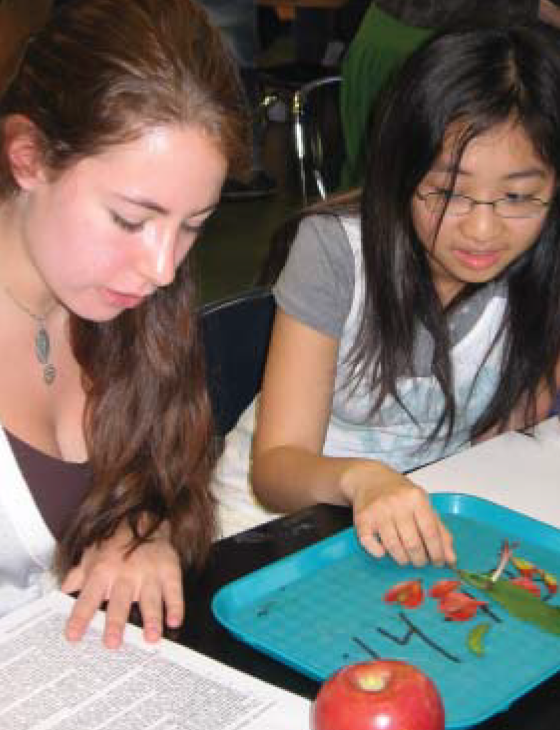
Stuyvesant’s 800 incoming students represent the top achievers from the 25,000 children who take the Specialized High School Admissions Test, the SAT-like exam that determines who can attend one of New York’s special science and technology public high schools. “If I walked into the 9th grade assembly and said ‘Will everyone who was valedictorian and salutatorian last year in their junior high please stand up,’ about two-thirds would stand,” says principal Stanley Teitel.
Once accepted, students can choose from a varied curriculum that includes ten language choices, tough basic science classes, and advanced science courses in fields including oceanography, molecular biology, and psychology. Students leave Stuyvesant “prepared for the next level,” says Teitel, which is often a top-tier college or Ivy League university. In fact, Stuyvesant has limited the number of colleges to which students can apply to seven, to reduce overlap.
From All-Male to All-Star
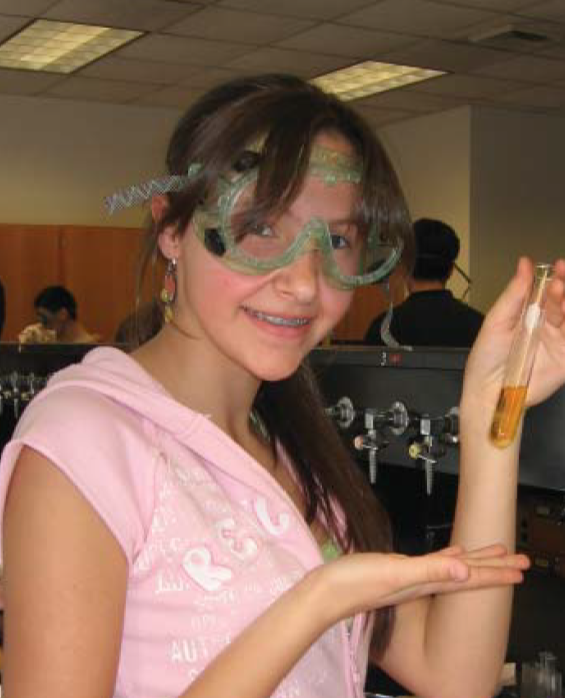
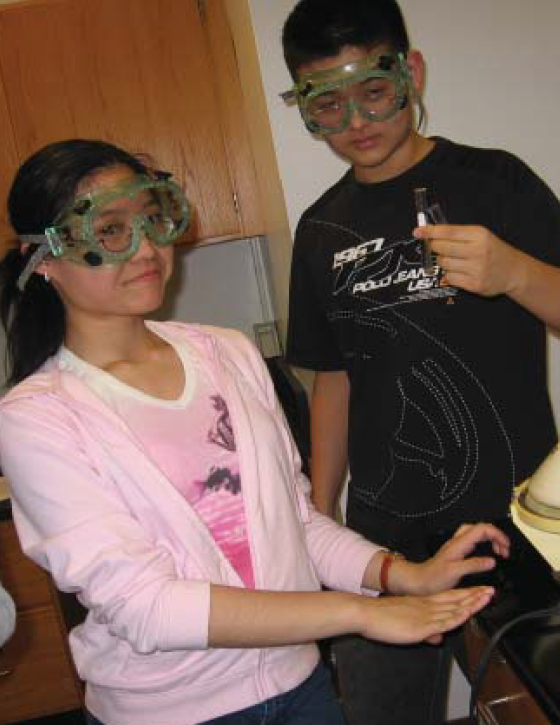
The formerly all-male school became coed in 1969, and moved in 1992 from East 15th St. to its new campus in Lower Manhattan, a stone’s throw away from Rockefeller and other Battery Park City parks where students go to relax, eat, and take in majestic Hudson River views. The school’s remarkable labs, which specialize in everything from earth sciences to robotics engineering, “really capture the energy and enthusiasm of the school,” says Robert Sherwood, president of the Alumni Association, which donates most of the money to fund the facilities.
Image courtesy of Emi Suzuki
The location, only a few blocks from most major subway lines, makes it convenient for students who come from all five boroughs. The location also opens young minds. “Coming from Queens, I didn’t have much interaction with Manhattan,” says Emi Suzuki, president of ARISTA, a national honors society and Stuyvesant’s largest club. “So when I started at Stuyvesant, commuting really exposed me to all kinds of different people.”
Suzuki, like many of her classmates, has already had time in a professional lab. With the help of an internship advisor, she was able to spend last summer at the Memorial Sloan-Kettering Cancer Center under the mentorship of Dr. Harold Varmus, 1989 recipient of the Nobel Prize. Suzuki cultured cells, and produced and purified immunoadhesion-marker proteins. Others in her class interned at prestigious laboratories at Columbia, NYU, or Cornell.
“Stuyvesant absolutely does not give us internships on a silver platter,” Suzuki says, “but I do think that our school’s reputation helps.”
From sitting on the lap of Einstein as a child to making significant advances in aerospace and materials engineering as an adult, Pamela Kay Strong has done it all.
“Many, many times I’ve been the only woman in the room,” commented Pamela Kay Strong, a member of The New York Academy of Sciences (the Academy) from Huntington Beach, Calif. Her distinguished career in science and engineering was recently recognized when she was named a Fellow of the Society for the Advancement of Material and Process Engineering (SAMPE). “I think it’s made me a stronger person.”
A chemist and engineer whose career spans more than 30 years in the aerospace industry – including technical leadership positions at Hughes Aircraft Co., General Electric Co., Northrop Corp. and, since 1987, The Boeing Co. – Dr. Strong is just the third female among the 93 individuals to be so honored by SAMPE.
Strong’s identification with science began as a young child. Her father, W. T. Strong, worked in the missile and space division of Goodyear at Holloman Air Force Base and often hosted visiting scientists, who were introduced to her as “uncle” or “aunt” in the family home. “I was an aerospace brat,” Strong said with a chuckle during a recent interview. She added that she can recall sitting on Albert Einstein’s lap and, at age 5, building a wooden rocket with the help of Wernher von Braun.
Shooting for the Stars
She then reiterated an anecdote that was published earlier this year in S&T, the science and technology newsletter of her alma mater, Bryn Mawr College. When “Uncle Wernher” asked her how the launch of her wooden rocket had gone, she responded: “It didn’t go to the moon.” Strong said he then asked, “Well, did you get it off the ground?”
Her reply was, “Yes, it went as high as a tree.” To that response von Braun retorted: “Then it was a success! I can’t get mine off the ground.”
Strong’s interest in science had also taken off. In 1972 she earned a BS in organic chemistry from the Philadelphia College of Pharmacy and Science, and two years later her MS and PhD equivalent, also in organic chemistry, from Bryn Mawr. She soon followed in her father’s footsteps, entering the male-dominated aircraft industry.
“In the beginning it was ‘what’s this woman doing here?’” Strong recalled. “But after six months it became come out and join us – in the softball game or whatever it was they were doing. I’ve always tried to get along, and I quickly became one of the boys.”
At the same time, she was equally committed to “doing the best possible job that you can.” At GE in the mid-1980s she was an important member of the team that established the parameters needed to consistently manufacture commercial parts from polyimide (PMR-15) and other aircraft structural composites – an advance that led to significant improvements in aircraft performance.
Continue Fighting the Glass Ceiling
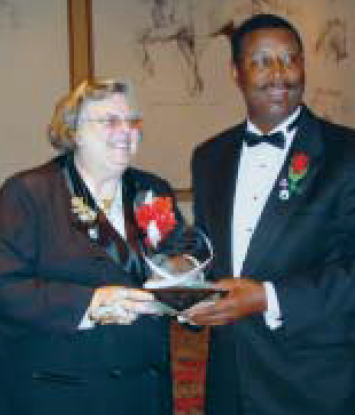
Pamela Kay Strong receives Fellows award from SAMPE International President Clark Johnson.
Strong’s title is currently “Principal Engineer/Scientist 5/Technical Specialist” in the Materials and Process Engineering Department of Boeing’s Integrated Defense Systems business unit in Long Beach. She and her team provide technical and design support for nonmetallic manufacturing processes and material parameters used in aircraft, rockets and the B-1B Bomber. In receiving the SAMPE recognition, she was cited for her contributions to the advancement of such diverse material technologies as composites, low observables and ablative materials.
“It’s unfortunate that women have to work 10 times as hard as men,” Strong said, then displayed her tongue-in-cheek sense of humor, “but it’s good that it’s so easy for us to do that.”
Her advice to young women seeking a career in science and engineering is much the same as for those already engaged in technical careers. “Find a mentor as fast as you can and hang on for dear life – don’t burn any bridges along your way.”
“And continue fighting the glass ceiling,” Strong concluded, “but don’t forget to bring your diamond glass cutting etcher with you.”
Not a member of this impactful and inclusive science community? Sign up today!
On September 24, in a cheerful ceremony as part of the Academy’s 183rd Annual Meeting, Dr. Robert Lahita received a special award in appreciation of his years of service as a member of The New York Academy of Sciences (the Academy’s) Board of Governors.
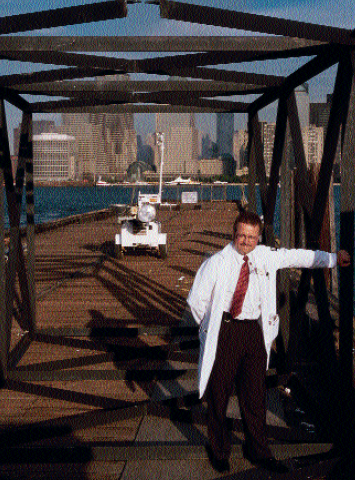
Less than two weeks earlier, on Tuesday, September 11, Lahita was at center stage of a far different venue — a New Jersey pier across from the smoking ruins of what had been the twin towers of the World Trade Center. What had started as a quiet morning making rounds at St. Vincent’s Hospital in New York’s Greenwich Village, where he is Chief of Rheumatology, became a living nightmare of burned and mangled bodies arriving by tugboat and ferry from the collapsed buildings across the Hudson River.
“As soon as I heard about the attack, I left the hospital and caught a train to Jersey City, where I’m the medical director of the mobile intensive care units of Hudson County and EMS at Jersey City Medical Center,” Lahita said. Most of his equipment, such as burn kits and trauma materials for treating patients, was in his car in New Jersey. “An EMS dispatcher sent me to the Colgate-Palmolive piers, where hundreds of victims were being unloaded by the Coast Guard and other groups. Had I parked that morning in Manhattan, I might have gone directly to the scene and been among the missing,” he observed.
The Walking Wounded
When Lahita arrived in Jersey City, a handful of paramedics and EMS technicians were trying to deal with the wounded. As the only doctor on the scene, Lahita took over and began treating injuries that ranged from open skull fractures and crushed pelvises to broken arms and legs. Many were firefighters and police officers, as well as “the walking wounded” – people temporarily blinded from the billowing smoke and ash.
“It was the most devastating scene I’ve ever seen in my life,” he said. “There was lots of blood and a great deal of emotion. It seemed like Armageddon.”
Because the radio transmitter atop the towers was destroyed, Lahita’s efforts to call for more help were thwarted. He immediately assigned specific tasks to everyone working with him. Chairs with wheels were converted into makeshift stretchers, splints were fashioned out of window blinds and, as other supplies like bandages began dwindling, office workers contributed their first-aid kits.
A Scene of Mass Confusion
Dr. Bob Lahita.
After an hour Lahita was joined by another doctor and more medical personnel began arriving. As the 200 most critical patients were delivered to area hospitals, Port Authority officials asked Lahita to accompany them on a caravan headed to “ground zero” via the Holland Tunnel. There he found a scene of mass confusion, debris, smoke, fire and five inches of smoldering ash.
“I saw dust, papers and scattered personal belongings everywhere,” he said. “Everyone was covered with ash and it was difficult to breathe.” Lahita carried boxes of masks and began distributing them to rescue workers.
A resident of Ridgewood, New Jersey, Lahita later learned that 35 people from his area were among the dead. However, he knows that his efforts helped save an untold number of people. “I work best under pressure, but this was beyond what I’ve ever experienced,” he said. “I’ll never forget it.” Nor will the people whose lives he saved.
Lahita joins other Members and friends of the Academy in expressing their condolences to those who have lost loved ones in the tragedy. “The Academy personifies science,” he said. “This is a sad occasion for all of us, as the World Trade Center was also a magnificent feat of engineering science.”
Lahita is a Fellow of The New York Academy of Sciences and has been a Member since 1979. He chairs the Academy’s Conference Committee, which he joined in 1991. He also has co-organized two major Academy conferences, B Lymphocytes and Autoimmunity and Neuropsychiatric Manifestations of Systemic Lupus Erythematosus (SLE). Since 1994, he has been a Member of the Academy’s Committee on the Annals of the New York Academy of Sciences.
Medical advancements around stem cells are often covered in the news these days, but what is a stem cell? Learn more about the science and potential of these versatile cells from our conversation with Donald Orlic, researcher with the National Institutes of Health.
Published September 1, 2001
By Levin Santos
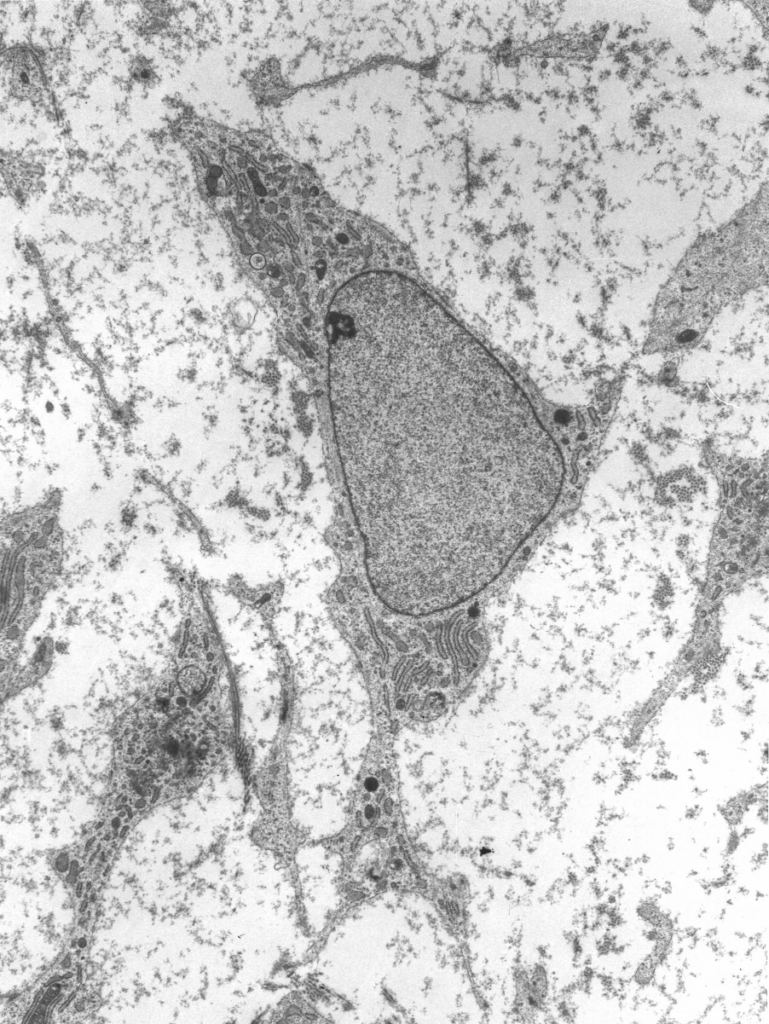
Transmission electron micrograph of a mesenchymal stem cell displaying typical ultrastructural characteristics. Image courtesy Robert M. Hunt, GNU Free Documentation License, via Wikimedia Commons. No changes were made to the original work.
It has been grabbing headline news everywhere. Embryonic stem cell research has been politicized but the battle lines are blurred; staunch antiabortionists are siding with liberal Hollywood stars to pressure President George Bush to approve federal funding for human embryonic stem cell research.
How stem cells work is still largely unknown. Much of the promising work has thus far been done on the less controversial adult stem cells. Donald Orlic, member of The New York Academy of Sciences (the Academy) since 1984, is trying to unravel the mystery. He is a staff scientist at the National Human Genome Research Institute of the National Institutes of Health in Maryland. His work has been described more fully in Volume 938 of Annals of the New York Academy of Sciences: Hematopoietic Stem Cells 2000: Basic and Clinical Sciences.
What are you presently working on?
My interest during these years at NIH has been in the area of adult bone marrow stem cell research. I’ve been interested in purifying hematopoietic or bone marrow stem cells and also studying their cell biology, especially with respect to gene therapy. So I spent a number of years working on questions of improving gene therapy in bone marrow stem cells. More recently, I’ve become interested in what is defined either as stem cell plasticity or transdifferentiation.
What is plasticity or transdifferentiation?
Bone marrow stem cells were previously thought to produce mature blood cells and that’s all. They’re now known to have the capacity to produce nerve cells, skeletal muscle cells and cardiac muscle cells, as well as epithelium and blood vessels throughout the body. It is this ability that is described as plasticity. It’s a form of differentiation that heretofore was not recognized. Instead of being limited in their ability to form mature blood cells, we now see that these bone marrow stem cells have the capacity to form cell types of seemingly unrelated tissues and organs. It’s a kind of differentiation that goes across tissue or organ barriers and so is referred to as transdifferentiation.
In your studies, what has been your most interesting finding?
My own particular findings, made in collaboration with Dr. Piero Anversa and his staff at New York Medical College in Valhalla, NY, have been directed at the capacity of adult mouse bone marrow stem cells to differentiate into cells of the heart, and what is more, to repair damaged heart tissue. To date, this work has been exclusively in mice. The original paper was published in Nature in April 2001.
How difficult is it to extract these adult stem cells?
Although the bones are small, it’s not difficult at all to harvest adult mouse bone marrow. It takes some effort and experience to purify the stem cells that we are referring to because these cells are present in a ratio of one per 10,000 bone marrow cells. You can see that they are an extremely rare population of cells. We and other researchers have found a way to enrich them using surface antigens or surface protein markers that are recognized by monoclonal antibodies and on the basis of that labeling with monoclonal antibodies, we’re able to enrich these cells tremendously using the power of flow cytometry.
What is this instrument used for?
Donald Orlic
In combination with appropriate surface protein markers, a flow cytometer gives us the capacity to eliminate the cells that are not recognized as stem cells. These cells are highly concentrated or purified and they have a tremendous potential for expansion and differentiation into mature blood cells after transplantation into recipients. As few as 50 of these cells can repopulate the entire hematopoietic system of an animal. That is how all of this work began.
So this research has been going on for a while?
The study of stem cells is something that has been interesting to people who work in hematology, going back as long as anyone can remember. It has always been realized there was an ultimate cell that was referred to as a stem cell but virtually nothing was known of its characteristics—either its morphology or its functions—until the last twenty to thirty years. So that’s not new; what is really new is the fact that the stem cells which have been studied and utilized in bone marrow transplantation for patients with blood diseases for years have been shown to have this newly discovered characteristic of producing cells of different organs.
Do these stem cells have therapeutic uses?
These bone marrow stem cells definitely have therapeutic uses. They’re used extensively in every hospital where bone marrow transplantation occurs.
What about the therapeutic potential based on your work with cardiac tissue?
We deliberately injure the heart of adult mice and then, using these adult bone marrow stem cells, we repair the injury. Our finding is that these adult bone marrow stem cells had the capacity to regenerate new tissue—both muscle tissue and blood vessels. As a result of the newly repaired areas of the injured heart, those hearts showed an improved function. They had the capability of functioning better than the controls that were not given bone marrow stem cells.
Have you tried the repair of other deliberately injured organs?
We have not to date done anything like that, although the damage that we can induce in the heart can also be induced in other organs such as the kidneys or the brain. What we did essentially was to mimic a heart attack in these adult mice. So it’s a condition very similar to what we see in human patients. This work is not yet at the stage of pre-clinical trial.
However, it is an early, promising and exciting study. We are pursuing additional work along these lines but we have not reached the point of saying that we can be engaged in pre-clinical trials and certainly we don’t feel that the observations that we have published justify going to clinical trials on human beings at this time.
What happens to the control mice not given the stem cells?
If left untouched, in the region where the blood flow was blocked or deprived, healing would soon begin in the form of a scar. Without intervention of any sort, the healthy cells die, the blood vessels are destroyed and the entire tissue is replaced by scar tissue similar to when you cut your skin. If we intervene at an early time following the induction of a heart attack in these mice, then we can prevent the scar tissue formation. What’s even more important is that the cells that we inject into the heart have the capacity to regenerate new tissue where that damaged tissue occurred.
Did you observe any rejection in your studies?
Rejection of course is always a possibility but in our particular study, the mice are inbred strains that share the same immune markers. They have the same histocompatibility antigens. When we harvest their bone marrow, these mice do not survive; we remove bone marrow from a small number of mice, purify the stem cells and inject those cells into a compatible mouse that has the induced myocardial infarct or heart attack. In our model, there is no issue of incompatibility because these are inbred strains. If we were to go on to a large animal model like dogs or monkeys, there always is the possibility of an immune reaction to the transplanted cells.
How were the stem cells delivered to the damaged hearts?
These stem cells are delivered directly into the beating hearts of these mice—not into the cavity of the heart—but into the wall where the damage occurred. We exteriorize the heart through the chest wall and while it’s beating, we inject the stem cells directly into the beating heart and then they migrate from the site of injection into the site of injury. These cells then receive some signals which we have not yet been able to identify that induces them to multiply and also to differentiate into muscle cells of the heart.
Could you say that there was a cure in this case?
Yes, you could definitely say that. It’s not 100% yet in our first study but the improvement in our study was 35% over the level of heart function in those hearts that were damaged but not treated with these bone marrow stem cells. So there was a better recovery in those treated hearts; thus it’s a partial cure.
Have you used embryonic mouse stem cells to treat these damaged hearts?
We have not done any work with mouse embryonic stem cells. There are others who have tried to use mouse fetal and mouse embryonic stem cells in heart repair. Although they report a degree of success, no one working with either embryonic, fetal, or adult stem cells, to my knowledge, has ever repaired the injured heart tissue to the degree that we have succeeded with adult bone marrow stem cells.
So adult stem cells seem to work better in this case?
For the time being, based on the experiments that have been done thus far, the most successful approach has been with adult bone marrow stem cells.
What are the future directions for your research?
With the mouse model, we intend to extend our observations to four to six months which is a large portion of an adult mouse life span. Since mice live between one and a half to two years, extending the time frame should hopefully show us a better rate of success. Then we will extend these studies to larger animal models.
I think one of the important things that we must learn if we’re to advance this field significantly is what controls transdifferentiation in these bone marrow stem cells. What signals are necessary to induce a response in bone marrow stem cells to become heart muscle cells?
When we know what these signals are—and we do not to date—whether it’s in regard to bone marrow stem cells or mouse fetal or mouse embryonic stem cells, then I think we will have a lot more information about how these cells accomplish what they do. That in turn will allow us to explore what today seems to be an unlimited capacity to generate cells of a different type than we previously thought possible.
The New York Academy of Sciences’ (the Academy’s) most valuable asset is the knowledge and experience of its members. Ninety-year-old Adnan Waly — an Academy member for 49 years, and an active member of its Lyceum Society — has watched and been a part of the unfolding of the “century of physics.”
During his long career, he had personal contact with almost all the eminent scientists working in or passing through Germany in the 1930s and 1940s. Waly shared his memories in an extensive series of interviews with Professor Martin Pope. Evelyn Samuel transcribed the entire series, which is available at the Niels Bohr Library of the American Institute of Physics.
Following are some selected highlights:
High-Voltage Mistakes
“We had a one-million-volt pulse generator, but if you activated this, all the instruments in the institute would break down. So the whole room was coated in aluminum in order to protect the other instruments, and I was standing beautifully on aluminum and adjusting the spark gaps. In order to make photographic exposures of some discharges, the control table was separated by a dark curtain so the one on the controls could not see the generator.
“Brasch [Arno] was at the controls, and when I had just adjusted the last spark he misunderstood something I said and switched the thing on. The current entered my arm. I had an insulating rod in my hand, and it broke into a million pieces. The current went through my body and out through my feet. I got an incredible cramp in my lungs, and my lungs collapsed totally.
“No air. I collapsed. The soles of my feet had big blisters where the current went out, and my arm was paralyzed for three days. Brasch came running over and dragged me to a nice comfortable chair. Then he did something else – he lost his head. He went into his bag – I’ll never forget this – and took out a piece of cake, which he knew I liked. Then he stuffed this in my mouth. I almost suffocated. I’ll never forget that. He almost killed me a second time.”
A Visit with the Gestapo
“When Hitler came to power, Max von Laue tried to recommend Jewish scientists to universities in the States, but he could not send letters as the mail was opened. I could travel because I had an Egyptian passport. My wife — at that time, my girlfriend — was Jewish. I went to the Egyptian embassy and said, ‘I’m an Egyptian.’ I didn’t know anything about Egypt — my father [who was from Egypt] had died when I was two years old. I pestered them until I got an Egyptian passport for myself and my wife.
“So I had an Egyptian passport and could travel. I traveled once to Egypt and twice to Holland to deliver the letters of von Laue. The Gestapo then asked me to come to their headquarters. It is very unpleasant to be summoned to Gestapo headquarters. A barred iron door closed behind me, and I was quizzed by two investigators for quite a while about why I traveled so much.
“At that time I had a very good imagination and an excellent memory. I concocted all sorts of stories, which they tried to pierce and defuse. After a few hours they bought my story. I had posted a friend in a car and told him to go to the Egyptian Consulate and tell them what happened if I didn’t return in five hours. But I was released.”
Art Meets Science at the Academy
“I was at The New York Academy of Sciences attending a lecture of the Nuclear Section. I found a seat in an empty row because not too many people were interested in nuclear physics at the time. The door opened, and in came a gentleman flanked by two gorgeous women. It was Salvadore Dali with his moustache and his cane. He sat in my row with the ladies, and he put his cane up, two hands on the cane and his chin resting on it, as was his habit. He looked at the pictures that were presented.
“One of the pictures was of a cloud chamber — a photograph of particles moving apart from a center. Some time afterwards I saw a television program where Dali was interviewed, and his latest painting was exactly what he had seen at the Academy, with tracks coming out from the center. ‘You don’t know what this is?’ Dali said to the interviewer. ‘These are pimmesons.’ The lecture had been on the π meson.”
A scientific researcher, writer, and translator, Academy member Toshiyuki Esaki plays a critical role in promoting and advancing science in service of the public good.
Published March 1, 2000
By Fred Moreno, Anne de León, and Jennifer Tang
Toshiyuki Esaki, a member of The New York Academy of Sciences (the Academy), doesn’t have much time for leisure travel, having been only to London (once) and Honolulu (twice) — with the purpose of each trip being “to participate in scientific meetings,” he says.
But even without leaving his native Japan, Esaki says he keeps informed about the latest scientific developments in his field by logging into the Academy’s online meetings, as well as reading the Annals, Academy Update, and The Sciences. A researcher who specializes in computer-aided design of bioactive molecules, Esaki also teaches the elementary course on information technology at Chukyo University in Nagoya. He also works as an abstractor of scientific journals and translates academic books into Japanese.
Eskai grew up in Nagoya and studied pharmaceutical sciences at Kyoto University. He says his interest in drug action at the electronic level was sparked by a lecture on quantum mechanics by one of the collaborators of Prof. Hideki Yukawa, the first Nobel Laureate in Japan. His current project is to develop a computer system to predict biological activities of molecules on the basis of their 3D chemical structures. “I am particularly interested in the theoretical elucidation of drug action at the sub-molecular level,” he says.
Raising his Consciousness as a Scientist
Esaki joined the Academy in 1994. “When I received the invitation to become a member of the Academy, I felt it was an honor to join this advanced scientific society,” he says.
He prizes the Annals, especially its series of pharmacological titles. He finds the online information at the Academy web site invaluable and also enjoys communicating with other scientists via e-mail. “I have used my membership as a source for research themes and topics in my work,” he notes, adding that Academy ideas and activities are “the compass” for his work and “raise my consciousness as a scientist.”
Esaki has published books on molecular modeling and has a forthcoming book on chemical pharmacology. He has worked for over twenty years as a translator. This year, Esaki received the Longtime Cooperator Award from Japan’s Science and Technology Corporation in recognition of his work translating reports on medicinal chemistry, pharmaceutical sciences and pharmacology that had been published in the U.S. and Western Europe.
“I feel my work in translation is the best way I can contribute to the front lines of the Japanese scientific world,” he says.
For members like Carolyn Foster, The New York Academy of Sciences offers a “neutral ground” where academics and industrial scientists can come together to advance a common goal.
Nearly 30 years ago, Carolyn Foster attended a mini-symposium sponsored by The New York Academy of Sciences (the Academy) that had a profound effect on her life. “It made me go back to study biochemical pharmacology”—a career path that had not been part of her plans.
Now a senior principal scientist in the central nervous system and cardiovascular pharmacology division at the Schering-Plough Institute, Foster’s participation in Academy activities has continued unabated. Indeed, in part through Foster’s leadership as the president of the Biochemical Pharmacology Discussion Group, the organizing arm of the Academy’s Biochemistry Section, the discussion group has evolved into an international forum that is about to celebrate its 35th anniversary.
“The Academy provides a unique ‘neutral ground’ where the drug industry and academe can meet,” explains Foster, a collegial place to exchange notes in cutting-edge research in the continuing effort to develop therapies for such diseases as Alzheimer’s. “It’s all about education and opening up communication.”
A Value Beyond Calculation
Foster has vivid memories of particularly instructive meetings, including one at which Parkinson’s patients shared their experiences and observations and raised good questions. The value of this exchange to academics and industrial scientists, she recalls, was beyond calculation.
When Foster is not immersed in her scientific research or her activities at the Academy (which includes service on its Conference Committee), she is involved in science education efforts, such as the Kean College Women in Science Technology project.
Her tireless advancement of the work of the Academy was recognized recently. She was one of 15 scientists named an Academy Fellow, honored for “a lifetime of scientific achievement and service.”