Inspired to Fight Cancer and Empower Girls

An image of a stethoscope and a cancer awareness ribbon.

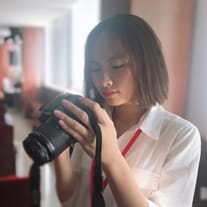
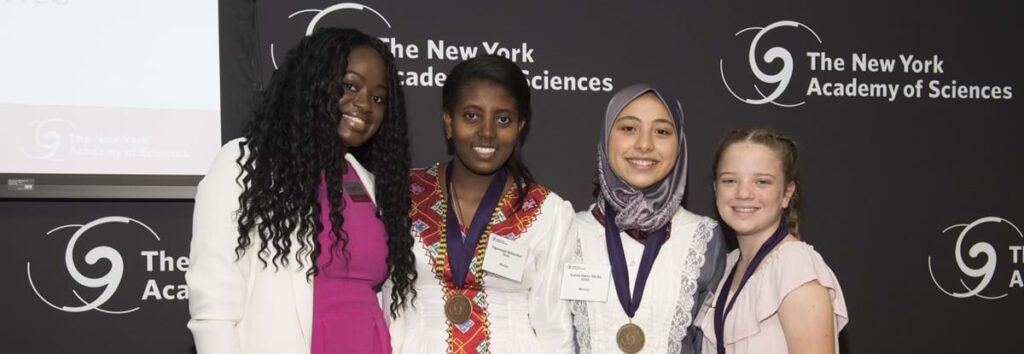
Sthuthi Satish is exploring her interest in a variety of STEM fields through her participation in the Junior Academy, but her first experience with the wonders of science started very close to home.

Published May 1, 2019

By Mandy Carr

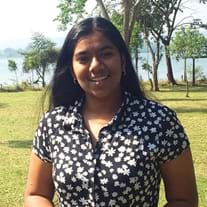
Sthuthi Satish

Sthuthi Satish can’t remember when she started dreaming of being a doctor. What she does remember is being seven years old and looking at her mother’s medical charts showing stage two cancer. Her mom underwent surgery and beat cancer and Sthuthi’s love for surgery began.

The 15 year-old, who attends Bangalore International School in India, admits to not understanding the complications of surgery then, but saw the possibilities of it. Today, she hopes to become a neurosurgeon.

“My love for the brain is rather recent,” she said. “I am fascinated by the fact that the brain controls pretty much all conscious actions in the human body, and yet we know so little about it.”

Building Upon Previous STEM Experience

Sthuthi had few opportunities to join STEM activities before participating in the New York Academy of Sciences’ Junior Academy program. She worked on many challenges focusing on sustainability and aerospace. She worked with other high school students from across the globe as part of the winning team for the Human-Wildlife Challenge.

Sthuthi was concerned that no one was addressing the negative effects of solar panels on wild birds.  Her team believes that infrared sensors and speakers producing beeping noises at 3 kHz can deter birds from landing on solar panels.

During her first year in the Junior Academy, she saw a posting on Launchpad, the Academy’s virtual collaboration platform, about getting involved in a Girls in Science panel at the third annual International Day of Women and Girls in Science event at the United Nations Headquarters in New York City. She stayed in touch with one of the organizers, HRH Princess Dr. Nisreen El-Hashemite, Executive Director of the Royal Academy of Science International Trust which lead to an invitation from Dr. El-Hashemite to chair a panel at the 2019 event.

Finding What Drives Her

This is also how she became a Girls in Science Advocate for the Royal Academy of Science. Additionally, Sthuthi is one of the administrators on the Girls in Science 4 SDGs International platform, a program Dr. El-Hashemite made possible. For Sthuthi it’s all about priorities.

“I always believe that if I have enough time to watch Netflix, then I definitely have time to work on something I love,” she said. Sthuthi hopes to attend college either in the United States or Sweden.

How Today’s Inspiration Can Impact Tomorrow’s Cures

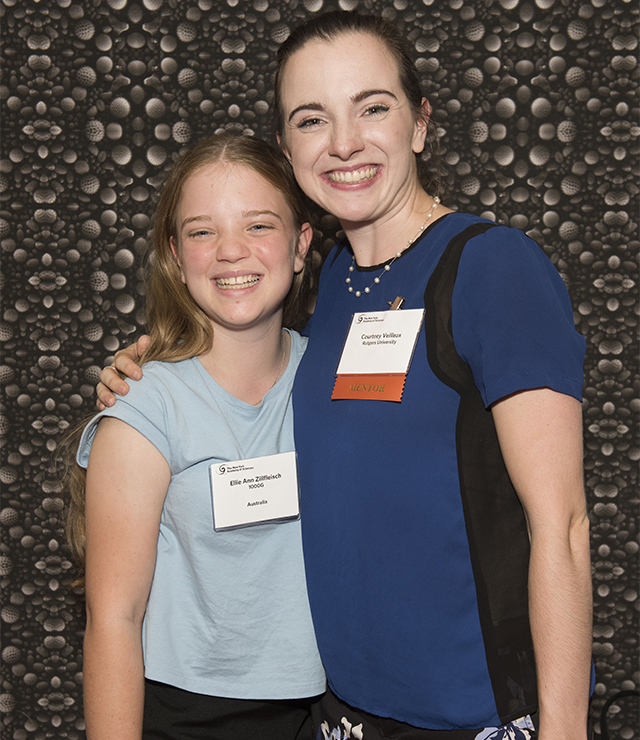
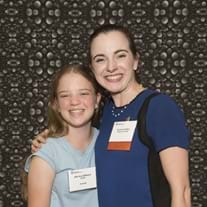
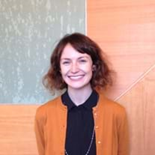
A young student smiles and poses with her mentor.

Ellie Zillfleisch looks forward to the day where she might help others suffering from Chronic Recurrent Multifocal Osteomyelitis.

Published October 22, 2018

By Marie Gentile, Mandy Carr, and Richard Birchard

A hospital bed might not be where you’d expect to find a career revelation, but that’s where Ellie Zillfleisch, 14, discovered her love for STEM. She grew up in Julatten, a small, rural town in Queensland, Australia, home to just 1,000 people. At 11, doctors diagnosed her with Chronic Recurrent Multifocal Osteomyelitis (CRMO), a disease that develops bone lesions. CRMO affects 1 out of every 1,000,000 people.

“My bones look like honeycombs, which is kind of cool (even though it’s painful),” says Ellie.

There is no standard treatment for CRMO. She started having symptoms when she was eight, and doctors routinely misdiagnosed her with rheumatoid arthritis, cancer, and osteomyelitis. Going to hospitals in big cities intimidated Ellie, who was used to her small town life.

A First Foray into Medicine

After spending a month in a hospital in Brisbane, she started having acute anxiety attacks. Her fear of needles grew when she thought her IVs would fall out. To prove they’d stay in place, doctors let her take off the tape that held the tubes in place. Ellie thinks of this as her first foray into medicine.

To overcome CRMO, Ellie found inspiration from the superhero, Green Arrow, whose superpower involves using trick arrows to stop bad things from happening and who often refers to this Russian proverb: “the shark that doesn’t swim drowns.”

“If I did not beat this disease, it would swallow me,” she told us. “I often thank those doctors in the hospital all those years ago, as now I am hoping to pursue medicine as a career and say, ‘I shattered this disease.’”

Ellie Zillfleisch met her mentor, Courtney Veilleux, at the GSA Summit. 

Chasing a Dream

Despite her chronic disease and small-town roots, she looks for every opportunity to get closer to her dream. Ellie heard about The New York Academy of Sciences’ 1000 Girls, 1000 Futures program from a friend who took part. When she realized a STEM mentor could give her the edge in college and her future career, she applied immediately.

Ellie felt overwhelmed when she started 1000 Girls, 1000 Futures. She wasn’t sure if she would have enough time to participate while staying on track with school and other extracurricular activities. Her mentor reassured her she was capable of completing all her tasks and taught her to balance her busy schedule. Ellie believes she improved her work-life balance by setting manageable goals for each day.

One of the opportunities 1000 Girls, 1000 Futures provided her was attending the Global STEM Alliance Summit in New York City. She received an all-expense paid trip to New York because she was picked as a “Mentee of the Month.” Mentors nominate students for this award for being active and exemplary participants.

Interacting with a global community of students has shown Ellie a world outside her own in Julatten. She even wants to attend college in the United States because she believes there are more opportunities for women in STEM there.


Read more:

Devising New Therapies Across Borders

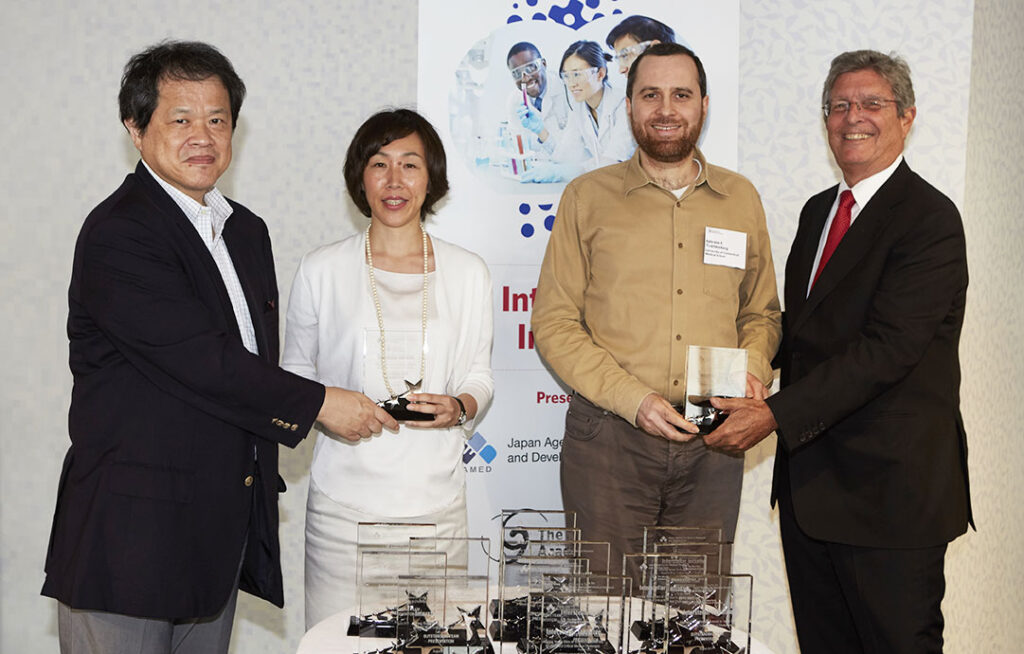
Award winners pose together with their trophies.

When Japanese physicist Kumiko Hayashi of Tohoku University and neuroscientist Ephraim Trakhtenberg of the University of Connecticut met at the New York Academy of Sciences this year, the synergies between their work weren’t immediately obvious.

Published October 1, 2017

By Hallie Kapner

The two scientists were paired together as part of the Interstellar Initiative, a joint project of the Academy and the Japan Agency for Medical Research and Development (AMED), which grouped 50 early-career scientists from around the world for interdisciplinary research projects.

“The biggest global challenges, whether in health, the environment, or energy, require scientists with different expertise to work together,” said Academy President & CEO Ellis Rubinstein. “The Interstellar Initiative brings together brilliant young scientists who would likely never cross paths, and supports them as they develop solutions to major health issues.”

Devising New Therapies

Hayashi and Trakhtenberg are devising new therapies to restore neuronal function following injury. As human cells mature, their ability to replicate is severely reduced. This phenomenon is especially prevalent in the brain, where the creation of new neurons exists only at very low levels in adulthood. Trakhtenberg’s work suggests that motor proteins may be involved in this loss.

“If we can understand the dynamics of these proteins, we may be able to reverse the process,” he said. Over the past several years, Hayashi developed novel algorithms that can be applied to motor protein measurement and analysis. “I don’t know much about neuroscience,” she said, “but it turns out that my algorithms can illuminate some mechanisms of the brain.”

From left to right: President Suematsu, Japan Agency for Medical Research and Development (AMED), recognizes the collaborative work of Japanese physicist Kumiko Hayashi, Tohoku University and neuroscientist Ephraim Trakhtenberg, University of Connecticut, along with Ellis Rubinstein, President and CEO, New York Academy of Sciences at the recent Interstellar Initiative workshop presented by AMED and the Academy.

International Collaboration

This teamwork is precisely what AMED president Makoto Suematsu envisioned creating through the Interstellar Initiative, part of a broader strategy to bring international partnerships and new funding streams to Japan’s R & D pipeline. As technological advances that enable data sharing and ease remote collaboration have become ubiquitous, Suematsu believes it is crucial for Japanese researchers to join global research efforts.

“International collaboration is critical in many fields,” Suematsu said. “From infectious disease outbreaks to cancer treatment and drug development, we can accomplish much more when we reach out, shake hands and collaborate.”

Cancer Research

Another Interstellar Initiative team, comprised of NYU biologist Carlos Carmona-Fontaine, oncologist Valerie Chew of Singapore Health Services and physicist Shuichi Shimma of Osaka University, is juggling large time differences and global transport of perishable patient samples as they pursue their project. Blending Chew’s expertise in oncology with Carmona-Fontaine’s efforts to understand the role of metabolites in cancer cells and Shimma’s imaging techniques, the group is uncovering the interplay of metabolite activity and immune changes in tumor cells.

Noting that the Interstellar Initiative breaks down barriers that inhibit cross-disciplinary partnerships, Carmona-Fontaine commented that scientists “usually stick to our own communities, and there’s often a disconnect between scientists from different parts of the world — yet there are many advantages to learning different ways to look at a similar problem.” Chew was thrilled to be paired with teammates who brought both new expertise and new technologies. “If you’re working in your own zone, you’ll do what’s familiar,” she said. “But bringing together different disciplines and technologies creates a novel, creative environment for solving problems.”

Realizing Applications For Their Research

Proposals devised by Interstellar Initiative teams will be submitted to international funding agencies. For physician and biologist Deepak Lamba and biologist Akira Satoh, such funding may help them realize applications for their research. Lamba, who is developing methods for using stem cells to repair retinal tissue, is working with Satoh, whose research is illuminating the regenerative pathways of amphibians. They are probing the factors that influence regenerative capabilities in mammalian and amphibious cells, with the hope of developing methods of repairing and regenerating damaged tissue.

“[Stem cell research is] moving so quickly that I think we’ll start seeing applications in the not-so-distant future,” Lamba said. Satoh noted that stem cell research is less popular among Japanese scientists, while Lamba added that few labs in the US are using amphibians to study regenerative pathways. “We would never have done this on our own — it’s a unique challenge for us to do together.”

Rubinstein is quick to highlight that this is just the beginning for the Interstellar Initiative. “This is only our first cohort, and there’s so much exciting research in the works already,” he said.

Also read: A New Approach to Studying Aging and Improving Health

Science State: From New York City to Syracuse

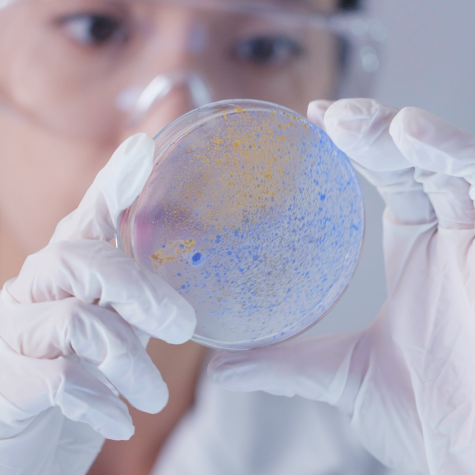
A scientist examines a petri dish.

The New York Academy of Sciences’ (the Academy’s) Scientist-in-Residence Program now extends beyond the bounds of New York City.

Published June 09, 2017

By Marie Gentile and Robert Birchard

Image courtesy of leungchopan via stock.adobe.com.

Over the past nine months, Erin Barta has been diligently working to implement the Academy’s Scientist-in-Residence Program (SiR) in Syracuse, New York. While this is a first for Barta after graduating in 2014 from Clark University’s Master’s Program in International Development and Social Change, it is also a first for the Academy. Syracuse’s SiR Program is the first expansion of the program outside of New York City.

The guiding principle behind SiR is that students who are exposed to science through inquiry-based learning techniques are more likely to succeed in—and be engaged with—science. SiR matches a scientist with a public school teacher and the teacher’s students, and advises them on developing a science project that follows the scientific method. The scientist will act as a mentor to both teacher and students and share their insights on the scientific method, project design and presentation of results.

A Crash Course in Program Management

Barta’s work is primarily concerned with building and supporting these budding partnerships. She collaborates with the scientists and staff at the SUNY College of Environmental Science & Forestry, and with the dedicated teachers and administrators in the Syracuse public school system, to ensure that students are learning the techniques that will allow them to thrive in the STEM fields.

“Adapting the SiR program to Syracuse has been a crash course in program management. I have a front row seat to what it means to build a program from the ground up,” said Barta. “As the academic year draws to a close so will this year’s program. After celebrating our participants’ efforts and successes, the upcoming months will be spent exploring ways to make SiR even more rewarding for students.”

Paying it Forward

Erin Barta

Barta believes in SiR because she understands the importance of a mentor. As a college student she was inspired by faculty who were generous with their time and feedback. According to Barta, a good mentor can help a person, “gain a better sense of self, and radically reframe notions of our own capabilities. In my case, I was emboldened to pursue scholarships, internships and graduate school opportunities that I previously thought were out of my reach.”

According to Barta, mentorship provides a model for, “existing and engaging” in the world. A good mentor can provide an example of how to navigate all the competing factors between personal goals and obligations, versus those of the professional career. “Mentorship makes us privy to the experience of wisdom of those who have gone before us, which reconfigures our vision of what is possible.”

Barta and SiR are a well-made match. SiR seeks to encourage high school students to pursue their scientific interests in an academically rigorous manner, while providing their teachers with a resource to help their students succeed.

When she completes her VISTA service in September, Barta will continue to build her experience in project management and development in the nonprofit sector in Syracuse.

Learn more about the Academy’s Scientist-in-Residence program.

Academy Inspires Future with Young Einsteins Program

This summer, the program tackled the energy crisis, terrorism, and how pigeon waste can be used as a biological weapon.

Published July 28, 2006

By Jennifer Tang

Image courtesy of Sensay via stock.adobe.com.

Can pigeon waste be used to spread a dangerous fungus affecting millions of people? How can carbon dioxide, the greenhouse gas linked to global warming, be used to extract a natural gas, methane, to help curb our energy crisis? How can we protect New Yorks computers from hackers and terrorism?

These are just some of the cutting-edge scientific topics being tackled by 55 students in the Academy’s Science Research Training Program (SRTP). Now in its 30th year, the eight-week summer program has prepared thousands of high school students for careers in the sciences by training them to do hands-on, scientific research with leading scientists from institutions such as Columbia University, Burke Rehabilitation Center, New York Medical College, NYU School of Medicine, and Cold Spring Harbor Laboratory.

Each spring, hundreds of students from public and private schools located in New York City, Westchester, Long Island, New Jersey and Connecticut apply to get into this competitive program, which is open only to newcomers. Students choose their favorite category (i.e., biology, chemistry, computer science) and are assigned a mentor. After working Monday to Thursday, students supplement their lab experiences by attending special Friday workshops held at the Academy.

The workshops examine the responsibilities of a scientist from a multiplicity of perspectives and discuss issues such as writing and presenting scientific papers. Last week, the Academy held a panel discussion on alterative science careers featuring The New York Times reporter Andrew Revkin, astrophysicist Garret Schneider and lawyer and chemist Mary Jane O’Connell.

Cell Phones and Pigeons

Working with her mentor, Dr. Jason Nieh from Columbia University, Janice Escobar, a fifteen-year-old student from Manhattan’s Chapin School, has embarked on a project not likely to be found in a typical high school science textbook – mapping cell phone networks in order to prevent new acts of terrorism. “Recently, terrorists in Iraq have been using cell phones to detonate bombs,” she observed. “Perhaps our research could ultimately help prevent events like that from happening in Manhattan. We’re also mapping out the number of open access points in the city. Where there is an open access point, Internet hackers could do a number of harmful things: break into private files, download illegal programs, and create viruses.”

Another student, Steven Mieses from the Bronx’s High School of American Studies at Lehman College, is spending his summer studying pigeons but from the perspective of a lab bench rather than that of a park. “Cryptoccoccus neoformansis a fungus commonly found in pigeon waste and affects people who are immunocompromised,” he says. “New York City is heavily populated with pigeons, putting people with HIV, or people who have undergone immuno-suppressive therapy such as chemotherapy, at risk of contracting this deadly pathogenic fungus.”

Working with his mentor, Dr. Arturo Casadevall at the Albert Einstein College of Medicine, Steven studies Crypotoccoccus neoformans cells under a microscope and tests for antibodies. “By helping to make these antibodies for GalXM, we can possibly eliminate one of the many opportunistic infections in the world and save thousands of lives,” he says. “This is why science is my favorite subject – in the lab, I never know if the day will end in failure or success. What I do know is that the day is going to have many surprises.”

Excitement of the Unknown

Unexpected discoveries and surprising results are true to the experience of real scientists, says Matthew Kelly, the Program’s Coordinator. “The purpose of the program is to give students a taste of what real-life scientific research is all about,” he says.

Students thrive on satisfying their curiosity. Yena Jun, a student from New Jersey’s Academy for the Advancement of Science and Technology, stresses that’s why she became a SRTP student.

“At my school, the results of the lab experiments are often known before the experiments actually take place,” she says. “In the SRTP, we don’t know what the results will be.”

Yena and Zeke Miller, a student from Davis Renov Stahler Yeshiva High School for Boys in Woodmere, New York, are studying how methane gas might be extracted and used as an alterative fuel, a project that would help today’s energy crisis.

“Gas hydrates, which are found in huge quantities in marine and Arctic sediments, contain twice the amount of carbon found in all other fossil fuels and make them a significant energy source in the future,” she observes. “However, extracting methane hydrates from sediments in the ocean floor may cause landslides or lead to further climate change. We’re looking at how carbon dioxide might be used to replace methane, an intriguing concept that would kill two birds with one stone – use methane as a fuel and reduce the level of carbon dioxide in the atmosphere, a cause of global warming.”

Hooked on Science

It’s challenging subjects like these and their potential to make an impact on today’s society that has SRTP students hooked on science. “I hope that my research will help speed up progress in curbing dependence upon foreign oil – with methane in such abundant supply, this would be a potential solution to the world’s energy problems,” Zeke says.

Despite the hot weather, most SRTP students say they don’t regret spending their summers in labs or libraries rather than tossing volleyballs on the beach. “Being in the program makes you more aware of the roles politics, economics, ethics and society play in scientific findings, and overall you become aware of the issues that we are faced with now,” says Janice.

Steven adds, “Unlike a vacation that ends once the summer is over, the information I learn here will be with me forever, and I can take it wherever I go.”

Do you know a young, inspiring scientist? Encourage them to check out the Academy’s educational programming.