Food Waste

Organic composting.

Eligibility

  • This challenge is only open to Junior Academy students from the USA and countries in the MENA (Middle East and North Africa) region. Mentors can be from any country.
  • Maximum of six (6) students per team, plus one (1) mentor.

Overview

Nearly one third of all food worldwide goes to waste somewhere in the journey from farm to plate. The issue is not limited to wealthier countries, but causes of the waste vary by country and region, and the impact is not equitable. Preventing the billion metric tons of food wasted each year could reduce world hunger, minimize greenhouse gasses, and prevent habitat and biodiversity loss across the globe. In this challenge, you are asked to design innovative technological and social solutions that reduce food waste with an eye towards promoting sustainability, equity, and responsible consumption.

Challenge

Design an innovative, scalable solution that helps reduce food waste at the local level (household, local restaurants, retail) or at the regional level (agriculture), while promoting sustainability, equity, and responsible consumption.

Consider the following when designing your solution:

  • What type of food waste will your solution address?
    • Household waste? Restaurant or grocery waste?
    • Specific foods such as fresh vegetables? Meat? Dry goods?
    • Specific harvests or regions?
    • Something else?
  • How can your solution be available to and adopted by the entire community?
  • How will you approach the problem? Will you take a technology approach or a social approach?
  • How can your solution address equity issues in food availability?
    • How might you integrate community co-design into your solution?
    • How might your solution be scaled to impact other regions or other countries?
  • How can you keep the cost of your solution low enough to encourage implementation?
  • How sustainable is your solution? 
  • What region or community might your solution impact the most?
  • What public policy might be needed to support or implement your solution?

See the challenge course syllabus.

Success Evaluation Criteria

Solutions will be judged based on the following criteria:

  • Innovation and Design Thinking: Is the design and approach unique and/or innovative? Does the design show a high degree of originality and imagination?
  • Scientific Quality: Are the appropriate references and analytical methods used and are the insights derived correctly?
  • Presentation Quality: Is this concept concisely and clearly explained? Are the findings/recommendations communicated clearly and persuasively?
  • Commercial Viability/Potential: Does the solution have the potential to make a difference?
  • Sustainability: What is the social impact on local communities? How does the solution incorporate positive environmental or social objectives? Is the solution in line with a sustainable or justice focused future?
  • Teamwork and collaboration: Was the experience a collaborative endeavor? Was the knowledge gained from the experience reflected upon and tied back to a civic engagement mindset? (From Personal Reflections)

See the challenge rubric.

Winners

The winning team, Save2Serve, had a creative and innovative approach of designing an innovative, scalable solution that helps reduce food waste at the local level (household, local restaurants, retail) or at the regional level (agriculture), while promoting sustainability, equity, and responsible consumption.

Team members: 

  • Jana H. (Team Lead) (Egypt)
  • Louay C. (Tunisia)
  • Tiffany G. (Massachusetts, United States)
  • Neev H. (Virginia, United States)
  • Adam A. (Egypt)
  • Salwa A. (Egypt)

Mentor: Brisa Torres (Germany)

Sponsors

The Junior Academy is implemented by The New York Academy of Sciences and is supported by the J. Christopher Stevens Virtual Exchange Initiative (JCSVEI). JCSVEI is a U.S. Department of State’s Bureau of Educational and Cultural Affairs program administered by the Aspen Institute.

Marine Biodiversity

An underwater shot.

Eligibility

  • This challenge is open to Junior Academy students who are residents of one of the 5 boroughs of New York City.
  • Maximum of six (6) students per team, plus one (1) mentor.

Overview

Offshore wind farms can offer a renewable energy source to meet the growing demand for energy of coastal communities and cities around the world, but there are also some environmental drawbacks. The construction and presence of wind turbines can disrupt marine life behavior, damage sensitive marine habitats, and reduce biodiversity in marine communities. This challenge asks you to design and plan offshore wind farms with the least negative impact on marine life that support and even increase biodiversity. How could you make offshore wind energy truly sustainable?

Challenge

Design an innovative solution that supports marine biodiversity by creating or improving marine habitats within or around offshore wind farms, while also minimizing disruption and damage to the ocean floor and water column during installation and operation.

Consider the following when designing your solution:

  • How could your solution also incorporate strategies for ongoing environmental monitoring and mitigation to ensure long-term ecosystem health?
  • What will motivate industry to implement your solution?
  • What policies might need to be implemented at the government level to fully realize your solution?
  • How will materials be sourced? Will there be a downstream environmental impact?
  • What will your solution cost? Will it be a practical choice?

See the challenge course syllabus.

Success Evaluation Criteria

Solutions will be judged based on the following criteria:

  • Innovation and Design Thinking: Is the design and approach unique and/or innovative? Does the design show a high degree of originality and imagination?
  • Scientific Quality: Are the appropriate references and analytical methods used and are the insights derived correctly?
  • Presentation Quality: Is this concept concisely and clearly explained? Are the findings/recommendations communicated clearly and persuasively?
  • Commercial Viability/Potential: Does the solution have the potential to make a difference?
  • Sustainability: What is the social impact on local communities? How does the solution incorporate positive environmental or social objectives? Is the solution in line with a sustainable or justice focused future?
  • Teamwork and collaboration: Was the experience a collaborative endeavor? Was the knowledge gained from the experience reflected upon and tied back to a civic engagement mindset? (From Personal Reflections)

See the challenge rubric.

Winners

The winning team, BioTurbine Collective (Marine Life Sustaining Wind Farms), had an innovative approach of finding ways to support marine biodiversity by creating or improving marine habitats within or around offshore wind farms, while also minimizing disruption and damage to the ocean floor and water column during installation and operation.

Team members: 

  • Dakila G. (Team Lead) (New York, United States)
  • Aizah Z. (New York, United States)
  • Lucy L. (New York, United States)
  • Biying L. (New York, United States)
  • Mikaela V. (New York, United States)
  • Anna L. (New York, United States)

Mentor: Krenare Bruqi (France)

Sponsor

Energy Infrastructure: Solar Power

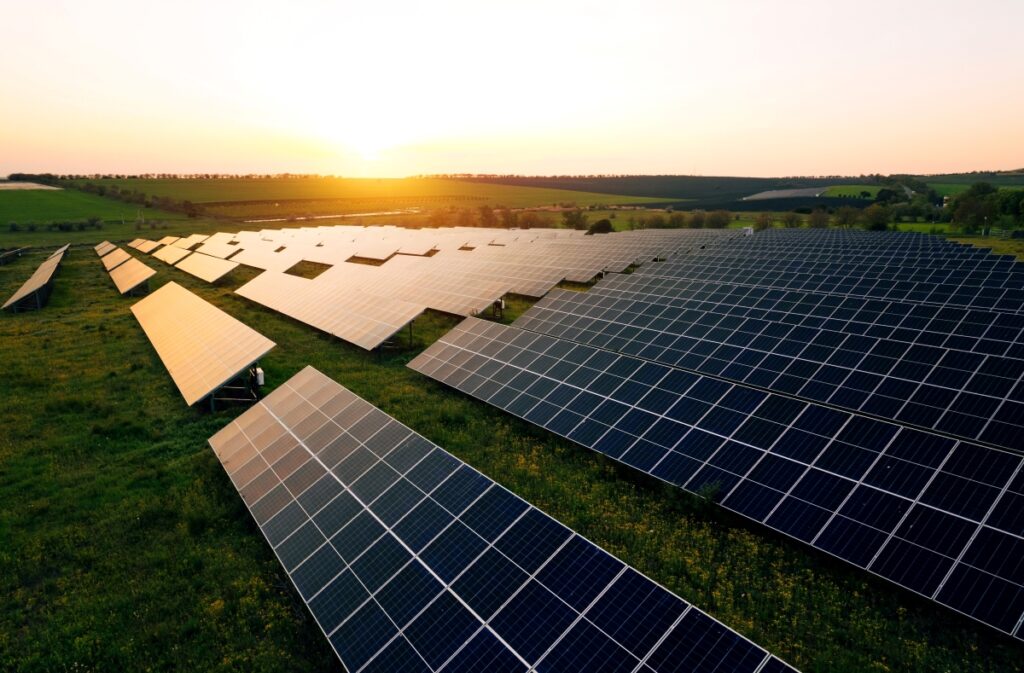
Solar panels.

Eligibility

  • This challenge is open to all Junior Academy students.
  • Maximum of six (6) students per team, plus one (1) mentor.

Overview

In an increasingly electrified world, shifting from fossil fuel dependence to renewable energy is necessary to sustainably meet the growing demand. Making this transition will require 2 areas of innovation:

  1. Retrofitting current infrastructure, building new solar-ready infrastructure, and/or replacing aging power grids originally built to rely on fossil fuels.
  2. Technology that allows for the efficient and reliable distribution of solar power from areas and times of high solar input to areas and times of high electricity demand.

What innovative solution could you design to make the shift from traditional energy sources to renewable solar energy a reality?

Challenge

Design an innovative and scalable solution to improve electrical infrastructure and/or energy storage technology in order to make solar energy use more reliable, efficient, and economical for meeting the energy demands of technology and society.

Consider the following when designing your solution:

  • What level will you focus your solution on? Individual households or buildings? City infrastructure? Regional power grids? Agriculture? Nomadic communities?
  • What geographical or governmental region will you focus your solution on? What are the most urgent energy challenges in this region? How can your solution be scaled to other regions?
  • What are the supply, demand, distribution needs, and storage capabilities of electricity for your specific territory or geographical location?
  • What might be the cost of your solution? Will it be affordable for your focus audience?
  • How might retrofitting be part of your solution?
  • How could Artificial Intelligence (AI) be incorporated into your solution? Identifying ideal locations for retrofitting existing infrastructure? Managing energy flow? Managing energy use and storage? Through machine learning? Diagnosing and/or responding to system or grid fluctuations? Something else?
  • How can you use available data and research to inform or test your solution?
  • How will you prototype your solution?
  • Could your solution be expanded to other renewable energy sources such as wind or geothermal?

See the challenge course syllabus.

Success Evaluation Criteria

Solutions will be judged based on the following criteria:

  • Innovation and Design Thinking: Is the design and approach unique and/or innovative? Does the design show a high degree of originality and imagination?
  • Scientific Quality: Are the appropriate references and analytical methods used and are the insights derived correctly?
  • Presentation Quality: Is this concept concisely and clearly explained? Are the findings/recommendations communicated clearly and persuasively?
  • Commercial Viability/Potential: Does the solution have the potential to make a difference?
  • Sustainability: What is the social impact on local communities? How does the solution incorporate positive environmental or social objectives? Is the solution in line with a sustainable or justice focused future?
  • Teamwork and collaboration: Was the experience a collaborative endeavor? Was the knowledge gained from the experience reflected upon and tied back to a civic engagement mindset? (From Personal Reflections)

See the challenge rubric.

Winners

The winning team, Radiantis Solar in Structure, had a futuristic approach in designing an innovative and scalable solution to improve electrical infrastructure and/or energy storage technology in order to make solar energy use more reliable, efficient, and economical for meeting the energy demands of technology and society.

Team members: 

  • Hosila K. (Team Lead) (Uzbekistan)
  • Yifan (Trevor) X. (China)
  • Mohammed A. (Egypt)
  • Nazli M. (Azerbaijan)
  • Ruiheng (Ryan) W. (China)
  • Lowri P. (United Kingdom)

Mentor: Ranjit Sahu (Virginia, United States)

Sponsor

Living in the Extremes

A woman hiking, looking at a series of structures that appear to be from an old civilization.

Overview

Our world is constantly changing; with the rise of severe natural disasters mainly due to climate change and our growing world population, we must explore ways to live in more extreme environments. What are these extremes and how can humans live there? How might we face the challenges of excessive heat, rising sea levels, or increased erosion due to torrential rain? What will it take to explore new avenues of living in space, living on different celestial bodies aside from our home planet, living in the deep sea, or in the middle of a desert? In this challenge, you will focus on one “extreme environment” and propose a comprehensive solution to sustain life there. Your team will be asked to consider how to reduce the effects of the “extreme environment” and must also consider society, ethics, and further impacts from your solution on earth.

Challenge

Design a comprehensive solution for living and thriving in a specific extreme environment.

Consider the following when designing your solution:

  • What could be considered an extreme environment?
    • What are the causes of these extreme environments?
  • What are the environmental challenges and risks of the extreme environment you have chosen?
  • How would your shelter, home, living environment address the issues that the extreme environment poses?
    • Would your solution help address issues related to climate change? World population growth? Food deserts? Etc.
  • How can you integrate Community Co-Design into your solution?

See the challenge course syllabus.

Success Evaluation Criteria

Solutions will be judged based on the following criteria:

  • Innovation and Design Thinking: Is the design and approach unique and/or innovative? Does the design show a high degree of originality and imagination?
  • Scientific Quality: Are the appropriate references and analytical methods used and are the insights derived correctly?
  • Presentation Quality: Is this concept concisely and clearly explained? Are the findings/recommendations communicated clearly and persuasively?
  • Commercial Viability/Potential: Does the solution have the potential to make a difference?
  • Sustainability: What is the social impact on local communities? How does the solution incorporate positive environmental or social objectives? Is the solution in line with a sustainable or justice focused future?
  • Teamwork and collaboration: Was the experience a collaborative endeavor? Was the knowledge gained from the experience reflected upon and tied back to a civic engagement mindset? (From Personal Reflections)

See the challenge rubric.

Winners

The winning team, Living in Extreme Heat (TAIU), had an innovative approach in designing a shelter or living system for living and thriving in a specific extreme environment. 

Team members: 

  • Katelyn G. (Team Lead) (California, United States)
  • Rishab S. (India)
  • Adham M. (Egypt)
  • Youssef I. (Egypt)
  • Shravika S. (Virginia, United States)
  • Mentor: Anavi Jain (Tennessee, United States)

Sponsor

Air Quality & Health

A woman wearing a facemask looks out from her balcony to a hazy, air polluted city skyline.

Overview

Air quality has been a known health issue to people and cultures around the world for hundreds of years. Around 400 BC Hippocrates made the connection between disease and “miasma” (bad air). In 1952, the “Great Smog of London” reached peak pollution levels and precipitated the deaths of between 10,000 and 12,000 people as well as negative health outcomes for an estimated 100,000 people. Today air pollution is believed to account for 7 million deaths annually, most of which are the result of non-communicable diseases (NCDs), including heart disease, lung disease, and cancer. In this challenge you will design a technical solution to address a key source of pollution in order to make a positive impact on NCDs. How could you take a scientific and design thinking approach to contribute to a sustainable and equitable shift in this ongoing environmental and health challenge? 

Challenge

Identify or target a specific source of pollution and design a technical solution that would reduce or eliminate air pollutants while also reducing the impacts of one or more non-communicable diseases.

Consider the following when designing your solution:

  • What pollution source will you address?
    • Fossil fuel combustion? Which fossil fuel? 
    • Wildfires? 
    • Industry (Food, Agriculture, Fashion? 
    • Something else?
  • What air pollutants will your solution minimize? Smog? Ozone? Carbon dioxide? Soot? Ammonia? Something else? 
  • How will you approach the problem? Will you take a community approach or an industry approach? What industry or industries will you tackle?  
  • How can your solution address equity issues in air quality and/or public health?
    • How might you integrate community co-design into your solution?
    • How might your solution be scaled to impact other regions or other countries? 
  • How can you keep the cost of your solution low enough to encourage implementation?
  • How sustainable is your solution? 
  • What region or community might your solution impact the most?
  • What public policy might be needed to support or implement your solution?

See the challenge course syllabus.

Success Evaluation Criteria

Solutions will be judged based on the following criteria:

  • Innovation and Design Thinking: Is the design and approach unique and/or innovative? Does the design show a high degree of originality and imagination?
  • Scientific Quality: Are the appropriate references and analytical methods used and are the insights derived correctly?
  • Presentation Quality: Is this concept concisely and clearly explained? Are the findings/recommendations communicated clearly and persuasively?
  • Commercial Viability/Potential: Does the solution have the potential to make a difference?
  • Sustainability: What is the social impact on local communities? How does the solution incorporate positive environmental or social objectives? Is the solution in line with a sustainable or justice focused future?
  • Teamwork and collaboration: Was the experience a collaborative endeavor? Was the knowledge gained from the experience reflected upon and tied back to a civic engagement mindset? (From Personal Reflections)

See the challenge rubric.

Winners

The winning team, Eco-twisters, had an innovative approach in creating a sustainable, eco-friendly air filter that is both cheap and effective.

Team members: 

  • Kelsey M. (Team Lead) (California, United States) 
  • Hana H. (Egypt) 
  • Zoha H. (North Carolina, United States) 
  • Islam H. (Saudi Arabia) 
  • Sanaya M. (New Jersey, United States) 
  • Kavish S. (North Carolina, United States)
  • Mentor: Brisa Torres (Germany)

Sponsors

The Junior Academy is implemented by The New York Academy of Sciences and is supported by the J. Christopher Stevens Virtual Exchange Initiative (JCSVEI). JCSVEI is a U.S. Department of State’s Bureau of Educational and Cultural Affairs program administered by the Aspen Institute.

Ethical AI

An illustration of an abstract AI concept.

Overview

AI is changing the landscape of the world as we know it. It offers opportunities to impact humanity in positive ways by minimizing human error, streamlining data analysis and decision-making, as well as lowering risk to human lives – to name a few benefits. At the same time, with deep-fakes, biased algorithms and the ethical questions around AI such as art generators and chat-gpt, we as a society must grapple with the challenges of AI. How can we maximize the benefits of AI while also implementing useful boundaries to minimize the disadvantages and dangers? Can we create systems or implement new technology to address ethical issues surrounding AI? In this challenge, you will develop a solution to address one specific issue that AI poses.

Challenge

Design a technical solution that addresses and considers one clearly outlined and defined issue that AI poses in our global society.

Consider the following when designing your solution:

  • What are some of the issues that AI poses in our society? What are the impacts or implications of those issues?
  • Focus on one specific issue that AI poses. How could your solution be used by society at large? How would you propose governments use your solution?
  • Are there any downsides to your solution? What else would you and your team have to consider to create an ethical solution?
  • Who is your solution calling upon to act or implement? How does your data or solution support that societal change or law?
  • How can you integrate community co-design into your solution?

See the challenge course syllabus.

Success Evaluation Criteria

Solutions will be judged based on the following criteria:

  • Innovation and Design Thinking: Is the design and approach unique and/or innovative? Does the design show a high degree of originality and imagination?
  • Scientific Quality: Are the appropriate references and analytical methods used and are the insights derived correctly?
  • Presentation Quality: Is this concept concisely and clearly explained? Are the findings/recommendations communicated clearly and persuasively?
  • Commercial Viability/Potential: Does the solution have the potential to make a difference?
  • Sustainability: What is the social impact on local communities? How does the solution incorporate positive environmental or social objectives? Is the solution in line with a sustainable or justice focused future?
  • Teamwork and collaboration: Was the experience a collaborative endeavor? Was the knowledge gained from the experience reflected upon and tied back to a civic engagement mindset? (From Personal Reflections)

See the challenge rubric.

Winners

The winning team, Reducing BIAS in AI models, had a futuristic approach in designing a technical solution that addresses and considers one clearly outlined and defined issue that AI poses in our global society.

Team members:

  • Emma L. (Team Lead) (New Jersey, United States)
  • Shubh J. (California, United States)
  • Darren C. (New York, United States)
  • Aradhana S. (Pennsylvania, United States)
  • Shreshtha B. (Kuwait)
  • Jemali D. (New York, United States)

Mentor: Abdul Rauf (Pakistan)

Sponsor

Upcycling and Waste Management

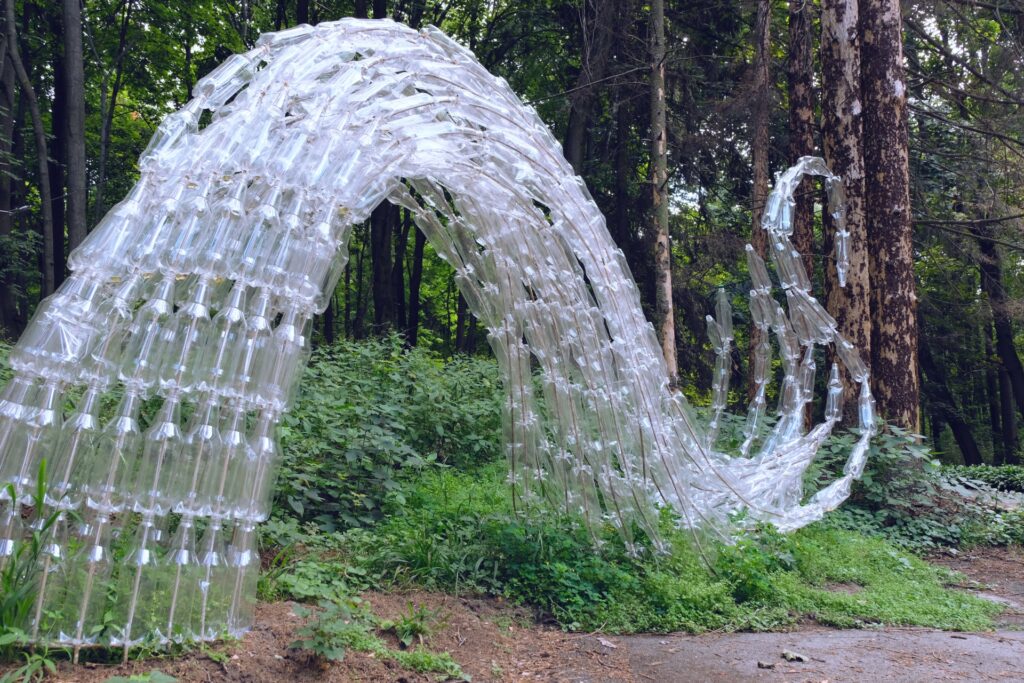
Sculpture made of glass bottles

Overview

Imagine you are going to the store and you make some purchases. How much of that purchase will end up in a landfill? Did that product contain recyclable packaging? Now think about all of the waste you produce, food waste, product waste, textile waste… It can be overwhelming to think about. Do you know how much waste you produce in one day, one month, one year? Is it more or less than what you were expecting? How can you reduce that consumption and encourage others to consume less?

In this challenge, you will be designing a comprehensive solution to waste management at a scale that makes a measurable impact. It’s not only us as individuals who waste and contribute to unmanageable waste sites but large companies and corporations too. In this challenge we will explore how we can make small and large changes that lead us all to a more mindful and resourceful future.

Challenge

Design a solution to reduce waste generation by encouraging long-term product use and shifting away from the “use-and-dispose” culture.

You will design an end-to-end/overall solution that takes into account product design, business model, and societal behavioral and mindset reset needed to make changes possible.

Your solution should focus on one specific product category, such as electronics, clothing, food containers, household items, and more.

When designing your solution, think about the following:

  • Durable Product Design: How can products be made more durable and repairable to ensure long-term use?
  • Behavioral Change: What educational or incentive-based approaches could encourage people to adopt waste prevention habits?
  • Sharing Economy: Could a platform be created to facilitate product sharing, renting, or second-hand exchanges within a community?
  • Repair and Maintenance: How can repair services be made more accessible and affordable to extend product life?
  • Data Tracking: How can technology monitor product usage and encourage responsible disposal only when necessary?
  • Business Model: How can sustainable practices be integrated into profitable business models that encourage long-term product use and reduce waste?

Whenever possible, consider whether your product can be upcycled and have a second life.

See the challenge course syllabus.

Success Evaluation Criteria

Solutions will be judged based on the following criteria:

  • Innovation and Design Thinking: Is the design and approach unique and/or innovative? Does the design show a high degree of originality and imagination?
  • Scientific Quality: Are the appropriate references and analytical methods used and are the insights derived correctly?
  • Presentation Quality: Is this concept concisely and clearly explained? Are the findings/recommendations communicated clearly and persuasively?
  • Commercial Viability/Potential: Does the solution have the potential to make a difference?
  • Sustainability: What is the social impact on local communities? How does the solution incorporate positive environmental or social objectives? Is the solution in line with a sustainable or justice focused future?
  • Teamwork and collaboration: Was the experience a collaborative endeavor? Was the knowledge gained from the experience reflected upon and tied back to a civic engagement mindset? (From Personal Reflections)

See the challenge rubric.

Winners

The winning team, The Last Strand – Upcycling, had a creative and innovative approach of designing a solution to reduce waste generation by encouraging long-term product use and shifting away from the “use-and-dispose” culture.

Team members:

  • Vedeesh B. (Team Lead) (India)
  • Livia G. (Sweden)
  • Muhammad Q. (New Jersey, United States)
  • Syed R. (Florida, United States)

Mentor: Christine Yu (Hong Kong)

Sponsor

Remediation in South Brooklyn

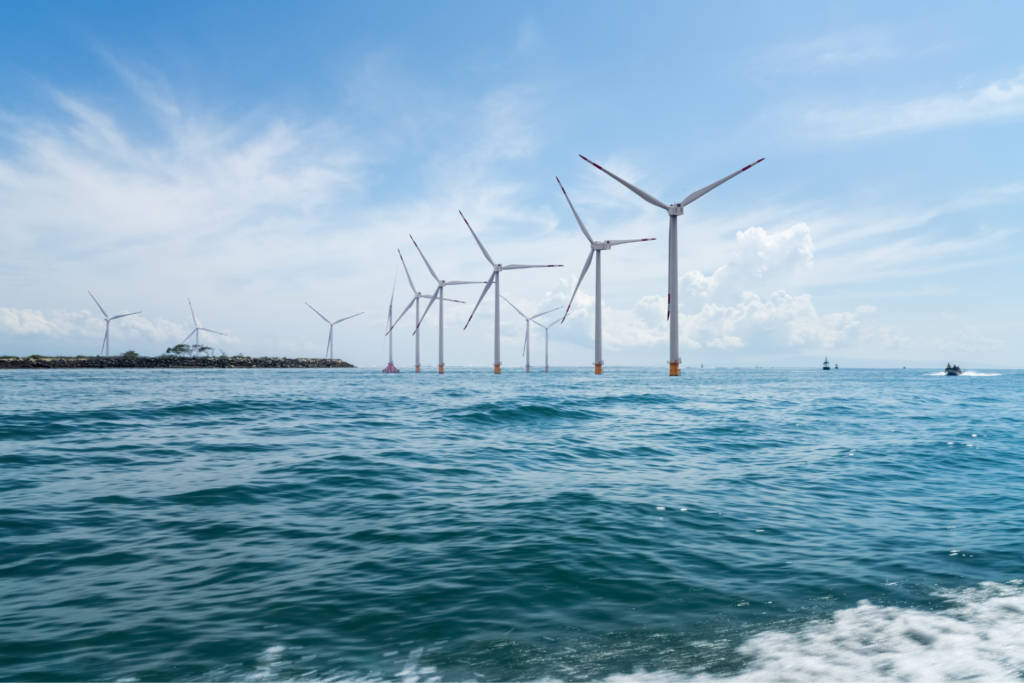
Offshore wind turbines.

Overview

Offshore wind has the potential to reimagine the cityscape of New York City. With increased summer temperatures and the heavy reliance on an overworked cooling system, New York City will be the new home to a wind farm right in our backyard. The South Brooklyn Marine Terminal will be the new hub for Empire Wind 1 and Equinor’s wind farm. In this challenge you are asked to design solutions that remediate the building of offshore wind renewable energy infrastructure in New York City through the lens of STEM and the community, focusing on land and water preparation.

Challenge

At the South Brooklyn Marine Terminal in Sunset Park, there are areas on land and in the water that call for immediate remediation to prepare for the new offshore Empire Wind complex.

Focus on one of the following areas and design a comprehensive solution for remediation:

  • Preparation for building on land
    • Noise/traffic/actual construction/air monitoring
    • Current buildings from 1970s
    • Regrade hydraulics separator for run-off stormwater
  • Preparation in the water

Integrate the following into your solution:

  • Social justice 
    • A concept that asserts every person should have the same rights and opportunities, and that wealth and resources should benefit everyone – is not always integrated into remediation, making already disadvantaged communities even more vulnerable to negative impacts of climate change.
    • Think about how social justice can be included in your solution, looking at racial, urban, identity, accessibility, and/or environmental justice.
  • Community co-design
    • The shared mapping of a problem, identifying shared priorities, and designing, implementing and evaluating a potential solution together with those most affected by the issue (in this Challenge, residents of Sunset Park).
  • New or adapted technologies (AI, AR/VR, nanotechnology, materials, robotics),
  • Processes, steps (such as detecting seafloor anomalies/seafloor mapping, underwater sea vehicles) that are preliminary to your solution.

Innovative solutions may be completely new ideas or solutions that have worked in other regions but are adapted for New York’s unique needs and people. Solutions need to be tested to ensure they are effective for community needs as offshore wind infrastructure is built up in the near future.

See the challenge course syllabus.

Success Evaluation Criteria

Solutions will be judged based on the following criteria:

  • Innovation and Design Thinking: Is the design and approach unique and/or innovative? Does the design show a high degree of originality and imagination?
  • Scientific Quality: Are the appropriate references and analytical methods used and are the insights derived correctly?
  • Presentation Quality: Is this concept concisely and clearly explained? Are the findings/recommendations communicated clearly and persuasively?
  • Commercial Viability/Potential: Does the solution have the potential to make a difference?
  • Sustainability: What is the social impact on local communities? How does the solution incorporate positive environmental or social objectives? Is the solution in line with a sustainable or justice focused future?
  • Teamwork and collaboration: Was the experience a collaborative endeavor? Was the knowledge gained from the experience reflected upon and tied back to a civic engagement mindset? (From Personal Reflections)

See the challenge rubric.

Winners

The winning team, Remediation in South Brooklyn: Upgrading the Hydraulic System, had an innovative approach of finding ways to remediate the areas on land and in the water to prepare for the new offshore Empire Wind complex.

Team members:

  • Cameron A. (Team Lead) (New York, United States)
  • Ohee S. (New York, United States)
  • Cindy W. (New York, United States)
  • Ankea C. (New York, United States)
  • Ayten A. (New York, United States)
  • Annika C. (New York, United States)

Mentor: Xiwei Huang (New York, United States)

Sponsor

Circular Textiles

Overview

Textiles play a vital role in our lives from our clothes, to our homes to everyday products in the background of our TikTok feed. But how often do we think about those textiles – who made them? How are they made? How do they get from the raw materials to our hands? 

The vast majority of textiles have a linear path – raw materials are made into textiles and then go from the sales rack to the landfill. With the rise of fast fashion and other rapid textile production in different industries, there is an urgent need and business opportunities for innovative, sustainable, and circular flow of textiles within the supply chain. How can we draw upon the concepts of a circular economy and inject innovative approaches to sustainable and circular practices within the textile supply chain?

Winners

The winning team, EcoFashion, developed a unique approach to the Circular Textile model by developing a synthetic cellulose fiber using agricultural waste, sustainable color dye methods, and an app to educate users on sustainable fashion practices.

Team members: Rachita J. (India) (Team Lead), Mariia H. (Ukraine), Sofía R. (Colombia), Alex B. (United States), Sylvia X. (United States), Altynay N. (Kazakhstan)

Mentor: Xanthi C. (Greece)

Sponsor

Wearables

Overview

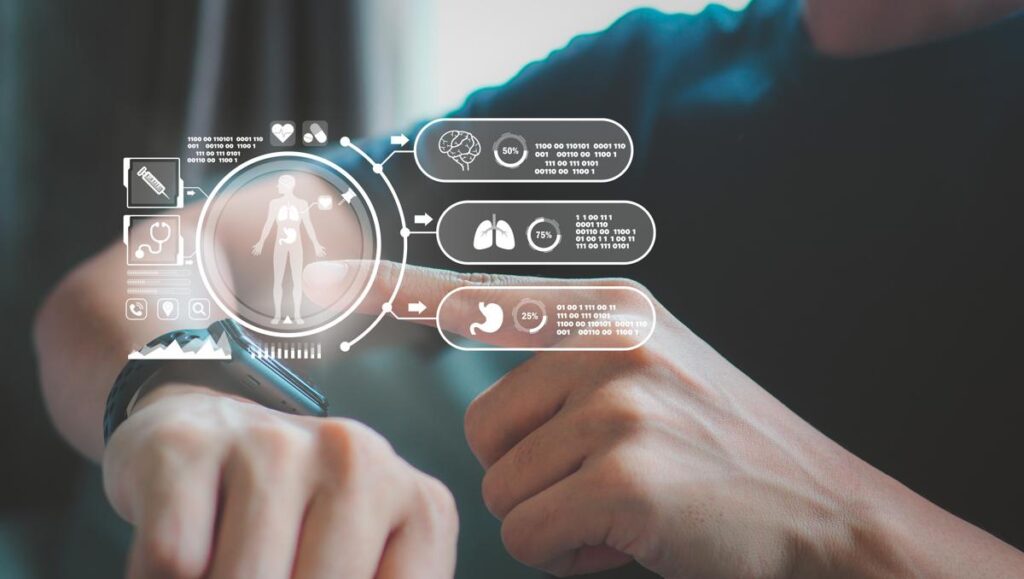
From watches to implants to sensor-enabled clothes, tiny, “wearable” microprocessors are all around us both in consumer and industrial uses. With the explosion of the Internet of Things (IOT) and Artificial Intelligence (AI), the current and near-future possibilities for wearable technology are only limited by our imagination. Used widely and connected in a network, wearables hold the potential to be powerful tools for responding to some of the world’s trickiest issues.

How could you use today’s wearable devices, or design new wearable technology, to address challenging issues in disaster management or non-communicable diseases?

Winners

The winning team, VisionXcelerate, focused on a solution to help elderly individuals with dementia by developing a pair of smart glasses integrated with artificial intelligence (AI) and augmented reality (AR) technologies to assist with daily tasks such as medication reminders and person recognition, along with fall detection systems and GPS tracking to assist caretakers.

Team members: Riya K. (India), Shreeniket B. (United States), Sysha R. (India), Prakul P. (India), Tisha S. (India), Medha T. (United States)

Sponsor