8 Things to Know About the Ebola Outbreak Now Spreading in DRC and Uganda
A concerning Ebola outbreak is unfolding in the Democratic Republic of the Congo (DRC), with associated cases in Uganda.
Published May 20, 2026
By Syra Madad, D.H.Sc., M.Sc., MCP, CHEP
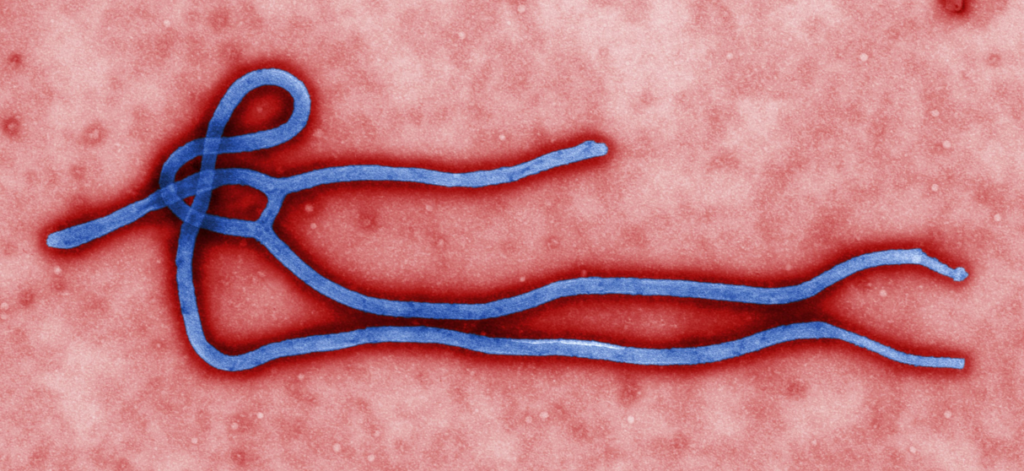
For the general public in the United States, the risk currently remains low. There are no reported cases in the United States tied to this outbreak, and Ebola does not spread through the air like measles or COVID-19. It spreads through direct contact with the body fluids of a person who is sick with or has died from Ebola disease.
But “low risk here” should never be mistaken for “low concern.” Having supported Ebola response efforts during the 2014–2016 outbreak and related U.S. domestic preparedness and response activities, I know that clear, accurate communication is essential. This outbreak has several features that deserve close attention from public health leaders, healthcare systems, travelers, and policymakers.
1. This is not the Ebola strain most people know.
The current outbreak is caused by Bundibugyo virus, a species of Ebola virus that has caused only a small number of known outbreaks. This matters because the tools we often associate with Ebola response are not all interchangeable. The U.S.-licensed Ebola vaccine, ERVEBO, is indicated for prevention of Ebola disease caused by Zaire ebolavirus, not Bundibugyo virus. There are currently no FDA-licensed or authorized vaccine and no FDA-approved or authorized treatment specifically for Bundibugyo virus disease.
2. The outbreak appears to have been detected late.
CDC’s May 19 Health Alert Network advisory reported that, as of May 16, DRC had 246 suspected cases and 80 deaths, with Bundibugyo virus infection confirmed in samples from clusters in Ituri Province. Uganda has also reported associated cases linked to travel from DRC, including cases identified in Kampala; one patient reportedly died while receiving care. More recent reporting from May 19 described more than 500 suspected cases and more than 130 suspected deaths, underscoring how quickly the situation is evolving. Late detection means public health teams are not starting at the beginning of a transmission chain. Instead, they are trying to reconstruct weeks of exposures, missed diagnoses, unsafe burials, healthcare contacts, cross-border movement, and community spread after the fact. That makes contact tracing harder, isolation more difficult, and containment more urgent.
3. Healthcare worker infections are a flashing red warning light.
Ebola is often called a disease of caregiving because the highest-risk exposures frequently occur among those providing hands-on care: family members, burial workers, and healthcare personnel. CDC notes that healthcare providers and family members caring for someone with Ebola disease without proper infection control are among those at highest risk. Reports of healthcare worker deaths or infections are especially concerning because they can signal gaps in infection prevention, delayed recognition, inadequate PPE, overwhelmed facilities, or all of the above. When healthcare workers become infected, health systems lose trusted responders at the very moment they are most needed.
4. The location makes containment much harder.
The outbreak is centered in northeastern DRC, including Ituri Province, an area affected by insecurity, population displacement, mining-related movement, and frequent cross-border travel. CDC specifically identifies these factors as conditions that may increase the risk of further transmission. This is not just a virology problem, it is a logistics, trust, conflict, and mobility problem. Public health response depends on safe access to communities, reliable laboratory testing, rapid isolation, contact tracing, and community cooperation. Each of those becomes harder in a setting marked by insecurity and displacement.
5. A PHEIC is a global alarm bell, not a reason to panic.
WHO declared this outbreak a Public Health Emergency of International Concern (PHEIC) on May 17, 2026. WHO defines a PHEIC as an extraordinary event that poses a public health risk to other countries through international spread and may require a coordinated international response. In plain language: a PHEIC is a call to mobilize money, personnel, supplies, surveillance, laboratory capacity, and cross-border coordination.
6. The Title 42 order is extraordinary and should be understood carefully.
According to the outbreak information shared, the U.S. federal response includes enhanced travel screening, entry restrictions, and a Title 42 order beginning May 18: a 30-day restriction on entry for foreign travelers who have been in DRC, Uganda, or South Sudan in the prior 21 days, with exemptions for U.S. citizens and permanent residents. That is a major federal action. Travel restrictions may reduce some travel volume and buy time, but they are not a substitute for outbreak control at the source. They can also create unintended consequences, including stigma, disincentives to disclose travel history, and disruption of response logistics. The core work remains surveillance, testing, isolation, infection prevention, safe burials, community engagement, and support for affected countries.
7. The World Cup changes the preparedness conversation.
The U.S., Canada, and Mexico are hosting the 2026 FIFA World Cup from June 11 to July 19, and the New York/New Jersey region will host eight matches, including the final on July 19. Ebola is not easy to transmit in casual public settings and the current risk to U.S. residents remains low. But mass gatherings bring large volumes of international travel, crowded venues, and heightened demands on emergency departments, urgent care, public health hotlines, and airport screening systems. The lesson is not to alarm fans, it is to ensure frontline healthcare and public health systems are ready to ask the right travel questions, identify compatible symptoms, isolate quickly, and inform public health authorities without delay.
8. The public health message must be precise: low U.S. risk, high global stakes.
For the U.S. public, the practical takeaway is straightforward: risk remains very low unless someone has recently been in an affected area or had direct contact with a symptomatic or deceased person with Ebola disease. Ebola is not airborne, and people are not considered contagious before symptoms appear. For healthcare systems, the message is equally clear: travel screening matters, PPE training matters, and “identify, isolate, inform” remains the backbone of preparedness.
This is an evolving story. Updates may be added as the World Health Organization (WHO) releases more information.