Dual Use Research: H5N1 Influenza Virus and Beyond
The New York Academy of Sciences will host ‘Dual Use Research: H5N1 Influenza Virus and Beyond’ where a panel of scientists, publishers, and legal experts to discuss controversial studies on the avian influenza virus.
Published January 23, 2012
By Diana Friedman
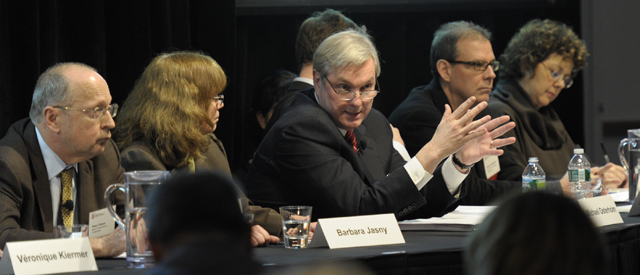
The U.S. National Science Advisory Board for Biosecurity (NSABB) recently recommended that journals Nature and Science remove certain methodological details from controversial studies on the avian influenza virus (H5N1) to minimize the risk of these findings being misused by would-be bioterrorists. On February 2 from 6pm to 8pm, the Emerging Infectious Diseases & Microbiology Discussion Group of the New York Academy of Sciences presents Dual Use Research: H5N1 Influenza Virus and Beyond, a discussion between scientists, publishers, and legal experts that will explore the myriad issues surrounding the impending publication of these two studies and measures that will need to be undertaken to ensure the security of future such research.
To weigh in on matters of censorship and public safety, W. Ian Lipkin, MD, Center for Infection & Immunity at Columbia University, will moderate a panel discussion with Arturo Casadevall, MD, PhD, Albert Einstein College of Medicine, and member, NSABB; Laurie Garrett, PhD, Council on Foreign Relations; Barbara R. Jasny, PhD, Science; Veronique Kiermer, PhD, Nature Publishing Group; Michael T. Osterholm, PhD, MPH, Center for Infectious Disease Research and Policy, University of Minnesota, and member, NSABB; Peter Palese, PhD, Mount Sinai School of Medicine; Vincent Racaniello, PhD, Columbia University; and Alan S. Ruldolph, PhD, Defense Threat Reduction Agency.
Thoughtfully Addressing Challenges
“Scientific investigation into the biology of pathogens, host response, diagnostics, drugs, and vaccines is critical to reducing the burden of infectious diseases; thus, the challenge is to manage dual use research so as maximize benefit and minimize risk,” says Lipkin. “Scientists have a responsibility to engage with one another and the larger community in thoughtfully addressing this challenge.”
“By attending this event, members of the audience will have an opportunity to understand viewpoints of a wide range of stakeholders, shape the discussion, and thereby influence the future of dual use research,” adds Lipkin.
Also read: Confronting Emerging Infections Diseases Now