Gotham Gardeners and Noxious Neighbors
An urban ecologist extols the virtues of indigenous plants in NYC; more than 1,000 of which have occupied the area longer than humans.
Published April 24, 2006
By Adrienne J. Burke
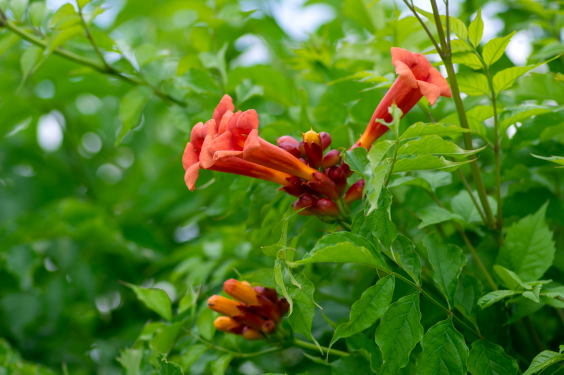
If you’re a resident of the concrete jungle, you might be surprised to learn that you share your home with some 1,300 plant species that have been native New Yorkers far longer than any of the city’s human inhabitants, having thrived through thousands of steamy summers and snowy winters here.
But what’s more surprising is that, second to new construction and development, the biggest threat to the livelihood of the city’s native plants are the numerous non-native species. New York is home to another 800 types of trees, shrubs, and vines that began arriving with human immigrants 350 years ago. They include greenery robust enough to sprout up through pavement, or out of the sides of concrete buildings, such as the Asian Tree of Heaven. And a small but significant number of these exotic invasives, as they’re called, have nasty habits like snuffing out their neighbors.
“We used to have more indigenous plants,” says Marielle Anzelone, a plant ecologist with the Natural Resource Group of the New York City Parks & Recreation Department. “Some are extirpated from New York but still exist in Long Island.” Consider the orchid: At one time, 30 indigenous varieties thrived within the five boroughs. Today only six remain, and those aren’t doing very well, Anzelone says.
Anzelone, a Brooklyn resident with a master’s degree in ecology and evolution from Rutgers University, has made it her mission to protect New York’s native plant species. In addition to speaking to gardening groups around the city and working with large scale environmental restoration projects, she has initiated a new program that will let New Yorkers learn about and purchase indigenous plants and flowers, for both planting and placing in vases. Several vendors at the Greenmarkets in Union Square in Manhattan and Grand Army Plaza near Prospect Park in Brooklyn will participate in the program, which begins this week and runs through October.
Noxious Neighbors
It’s easy to see Anzelone has taken up the cause of the natives. Many invasive plants grow on top of others, blocking out sunlight, and strangling trees and shrubs. “If the girdling doesn’t kill the plant outright, they cut into the tissue of the plant along the trunk leaving it exposed to disease,” Anzelone says.
One such culprit is the Oriental bittersweet, a woody vine with yellow berries that is considered one of the top 10 invasive plants in the city. Originally brought to New York from Asia in 1939 by a horticulturist at the New York Botanical Garden, Oriental bittersweet was propagated and spread quickly through the region. It can now be found every autumn in shop windows along Madison Avenue. “If it’s in a wreath on your door, birds come by, eat the berries, and disperse them to a park near your home,” Anzelone explains.
“A lot of people think that’s just evolution,” she says. But evolution happens over geologic time, not in a matter of decades, she argues. “Twenty years ago you wouldn’t have seen a Porcelain berry in Pelham Bay Park.” Today, she says, that invasive species carpets the park and grows rampantly along the Hutchinson River Parkway where it has caused the limbs of native trees to fall on passing vehicles.
Native Plant Virtues
Highway hazards aside, Anzelone says there are plenty of reasons to care about preserving native New York plants. “The plants we have here evolved over thousands of years and this is the matrix we’re dependent upon. Once you start losing plants, it’s a sign that something is going wrong,” she says.
Native plants interact with local wildlife in ways many city dwellers don’t think about, she says. For instance, Pussytoes and Asters are among the plants that caterpillars feed on and that later attract butterflies. And Flowering Dogwood provides a high fat food that attracts migratory birds.
Anzelone says that the spring ephemerals in bloom this month convey the health of an ecosystem with their unique survival strategy: Because they thrive in sun, not shade, these plants bloom earlier than the plants that will shade their ground. They pop up in March and April, and, being low to the ground, rely on ants to disperse their seeds. When the environment becomes inhospitable to ants or the seeds they carry, the spring ephemeral days will be numbered.
Greenmarket Scheme
The good news for gardeners is that native plants are easier to grow than invasives, Anzelone says. “Standard gardening practice is to take something you like, put it in the ground, and put in extras [like fertilizer].” When gardening with natives, she says, first assess your site: If you have a sunny window box facing south, you will want to simulate an open system like a meadow that gets full sun and is dry. But if you have a shady yard, then you’ll choose plants that would live in a forest interior.
“If you start off doing it that way, then at the end of the day there are fewer inputs with native plants. You don’t need to fertilize, you can use less water, and you shouldn’t use any kind of pest control either, because you want to encourage the native pollinators to come,” Anzelone says.
Native New Yorker Window Box
Here’s a list of indigenous wildflowers, shrubs, and grasses that will thrive in low-nutrient soil in a sunny spot. Your container should hold at least 5 inches of a growing medium that drains well.
- Field Pussytoes (Antennaria neglecta)
- Wild columbine (Aquilegia canadensis)
- Butterfly weed (Asclepias tuberosa)
- Smooth blue aster (Symphyotrichum laeve)
- Wild blue lupine (Lupinus perennis)
- Spotted bee-balm (Monarda punctata)
- Prickly pear cactus (Opuntia humifusa)
From “Gardening with New York City Native Plants,” published by the NYC Dept. of Parks & Recreation Natural Resources Group.
Urban Invaders
As many of their names indicate, the trees, shrubs, vines, herbs, and graminoids on this list are foreign to New York, and considered noxious weeds for the threat they pose to native plant species and the local ecological balance.
- Norway maple (Acer platanoides)
- Sycamore maple (A. pseudoplatanus)
- Tree of heaven (Ailanthus altissima)
- White mulberry (Morus alba)
- Black locust (Robinia pseudoacacia)
- Japanese barberry (Berberis thunbergii)
- Russian olive (Elaeagnus angustifolia)
- Amur river privet (Ligustrum obtusifolium)
- European privet (L. vulgare)
- Tartarian honeysuckle (Lonicera tatarica)
- Amur honeysuckle (L. maackii)
- Multiflora rose (Rosa multiflora)
- Porcelain berry (Ampelopsis brevipedunculata)
- Oriental bittersweet (Celastrus orbiculatus)
- Japanese honeysuckle (Lonicera japonica)
- Japanese wisteria (Wisteria floribunda)
- Garlic mustard (Alliaria petiolata)
- Common mugwort (Artemisia vulgaris)
- Purple loosestrife (Lythrum salicaria)
- Japanese knotweed (Polygonum cuspidatum)
- Lesser celandine (Ranunculus ficaria)
- Japanese stilt grass (Microstegium vimineum)
- Common reed (Phragmites autralis)
Anzelone says the native plant program she developed for the Greenmarkets was borne out of the frustration she experienced giving lectures at nature centers and having people ask, Where can I get native plants? “Information is difficult to find,” she acknowledges. “Just because something is available, doesn’t mean it’s a good thing to plant. You can easily purchase something that is considered a noxious weed.”
She realized that offering native flowers would be a perfect fit with the philosophy of the Greenmarkets, which offer only local produce. And she found that some farmers were already growing plants that they didn’t realize were native, such as Maidenhair fern, Witch hazel, and Blazing star. “Not only are these plants beautiful, but they come with a rich history,” Anzelone says.
Also read: Sprawling Cities Can Coexist with Thriving Ecosystems and The Environment’s Best Friend: GM or Organic?