How Science Can Better Serve Society
At FUTURE FORUM: Science for Society, experts from academia, nonprofits, and international organizations examined how transparency, empathy, and public engagement can strengthen trust in science and inspire meaningful action.
Published October 27, 2026
By Nick Fetty
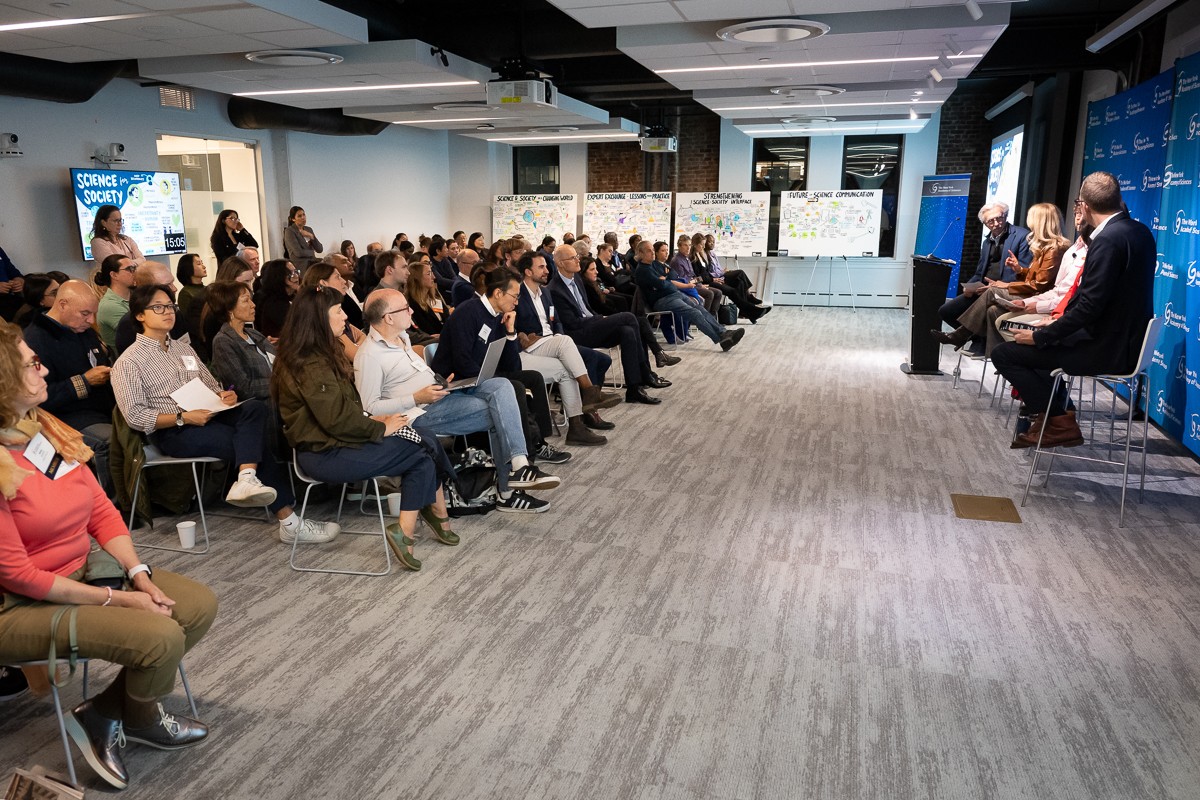
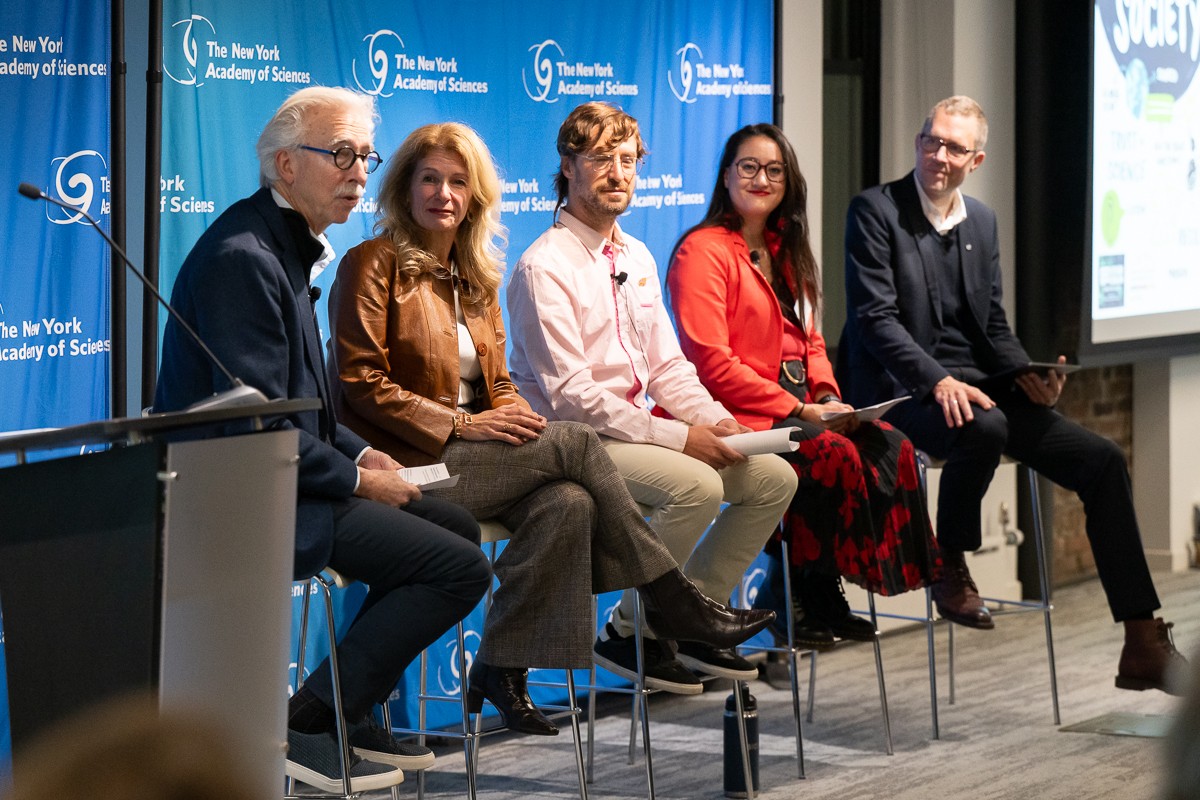
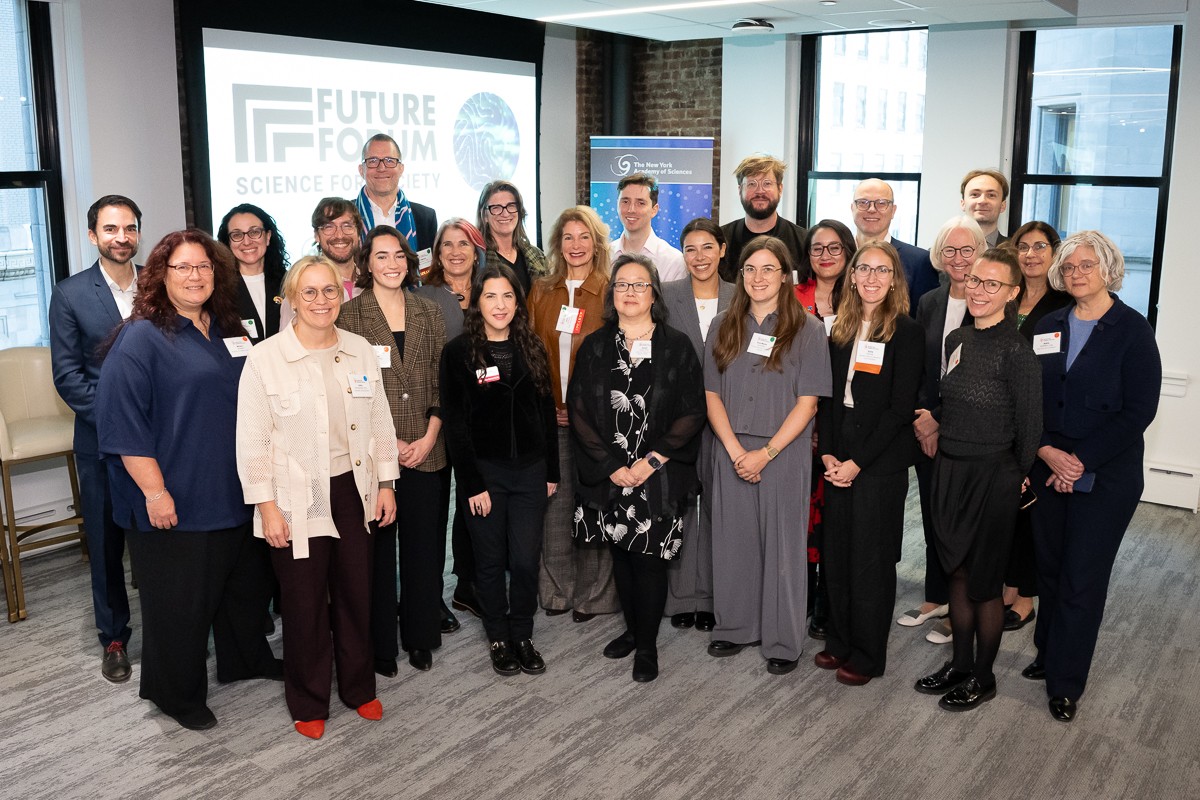
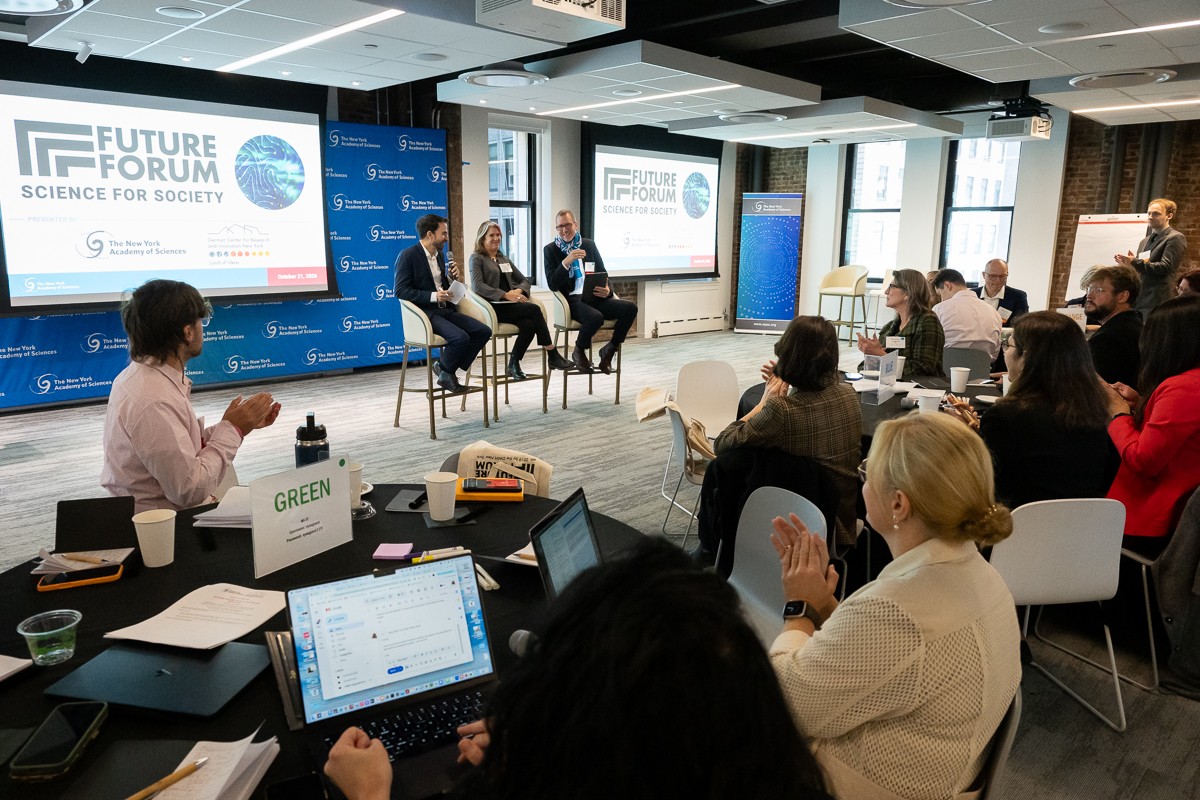
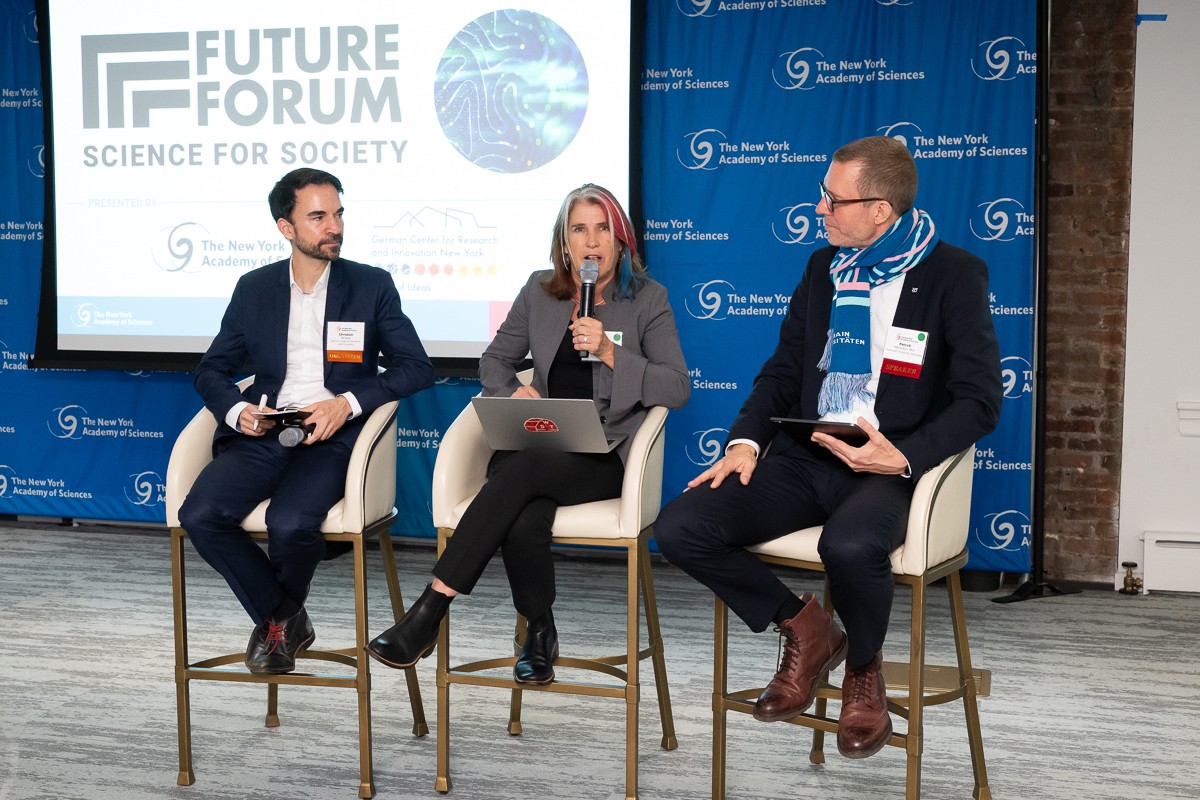
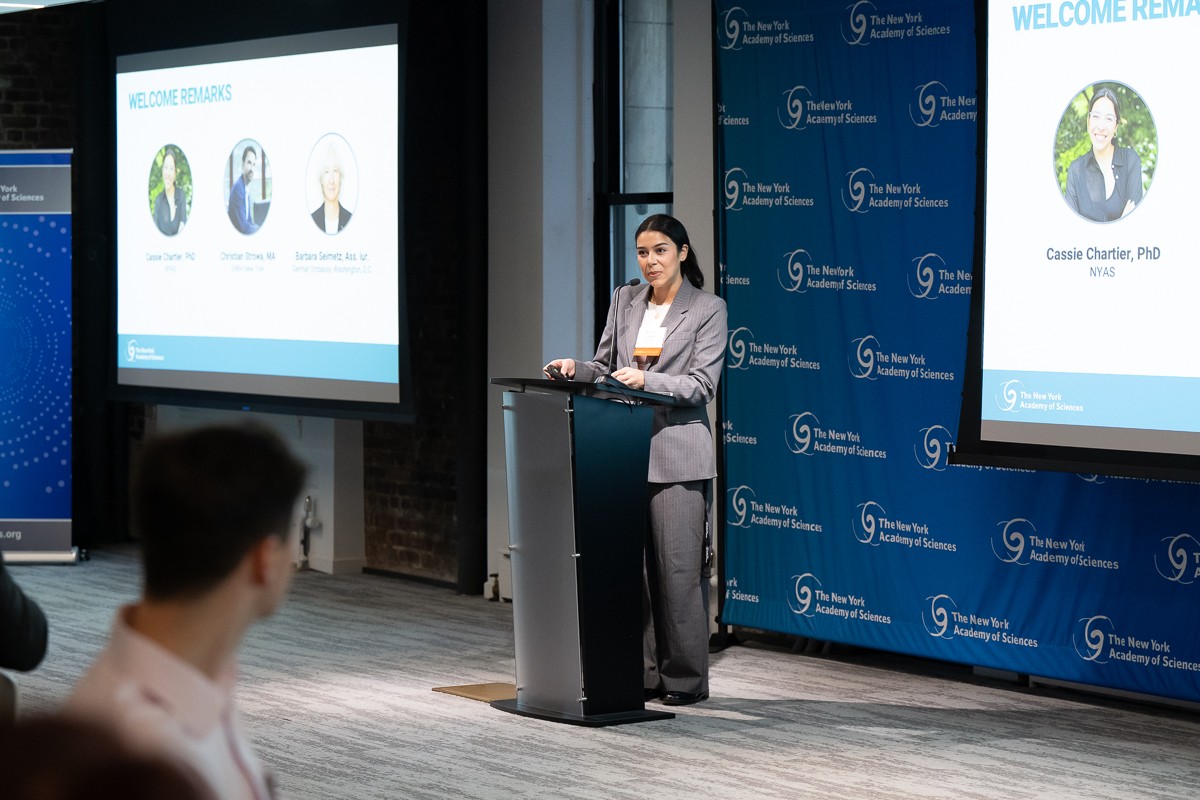
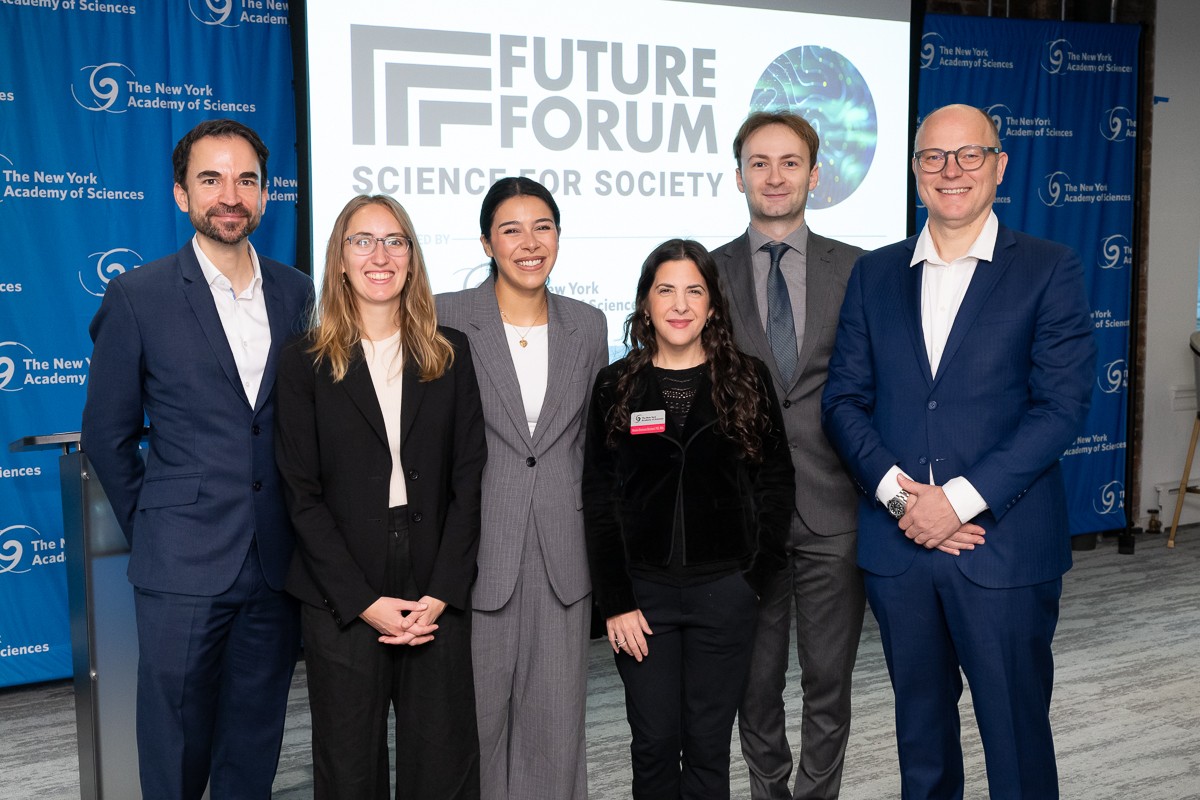
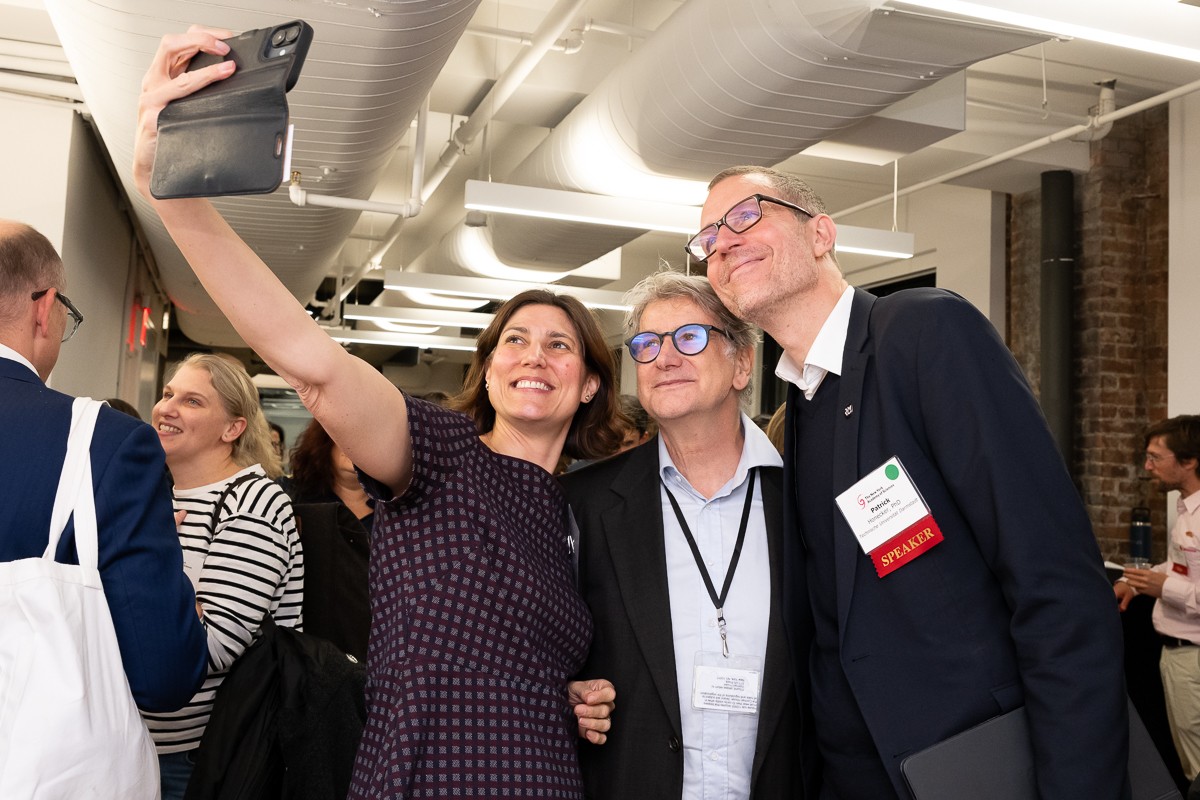
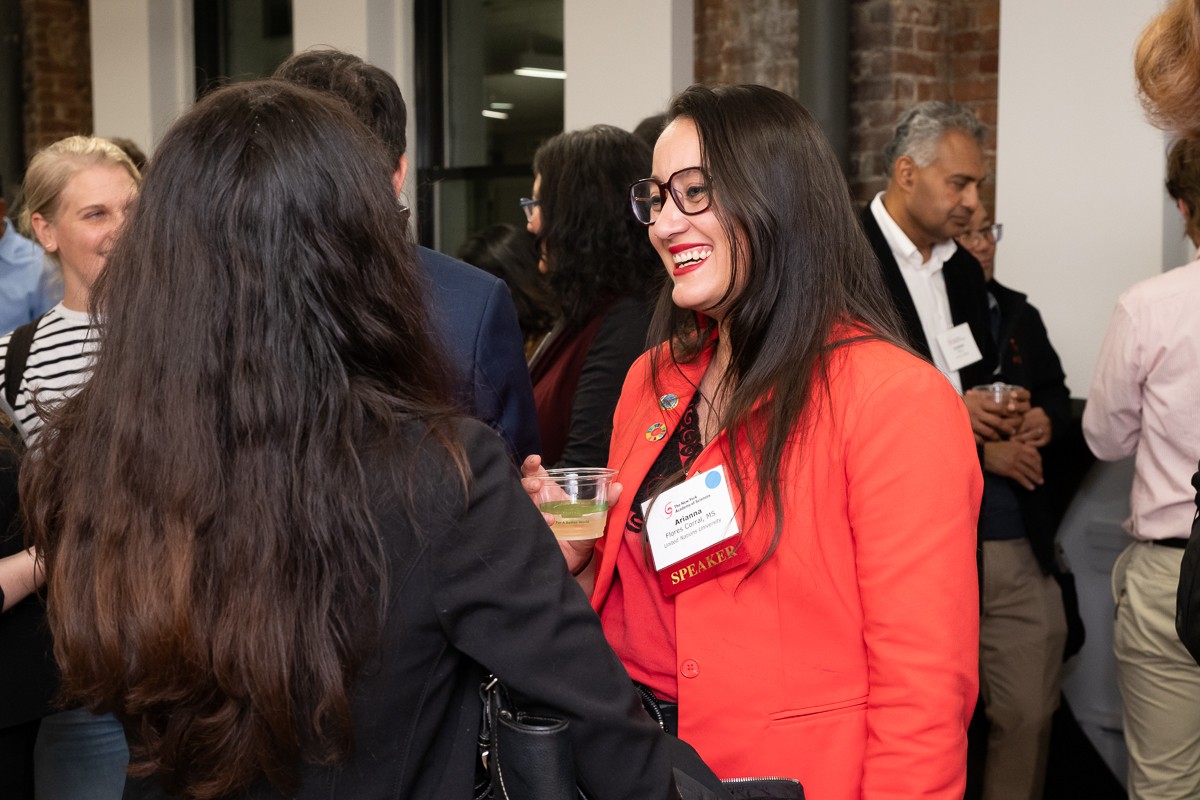
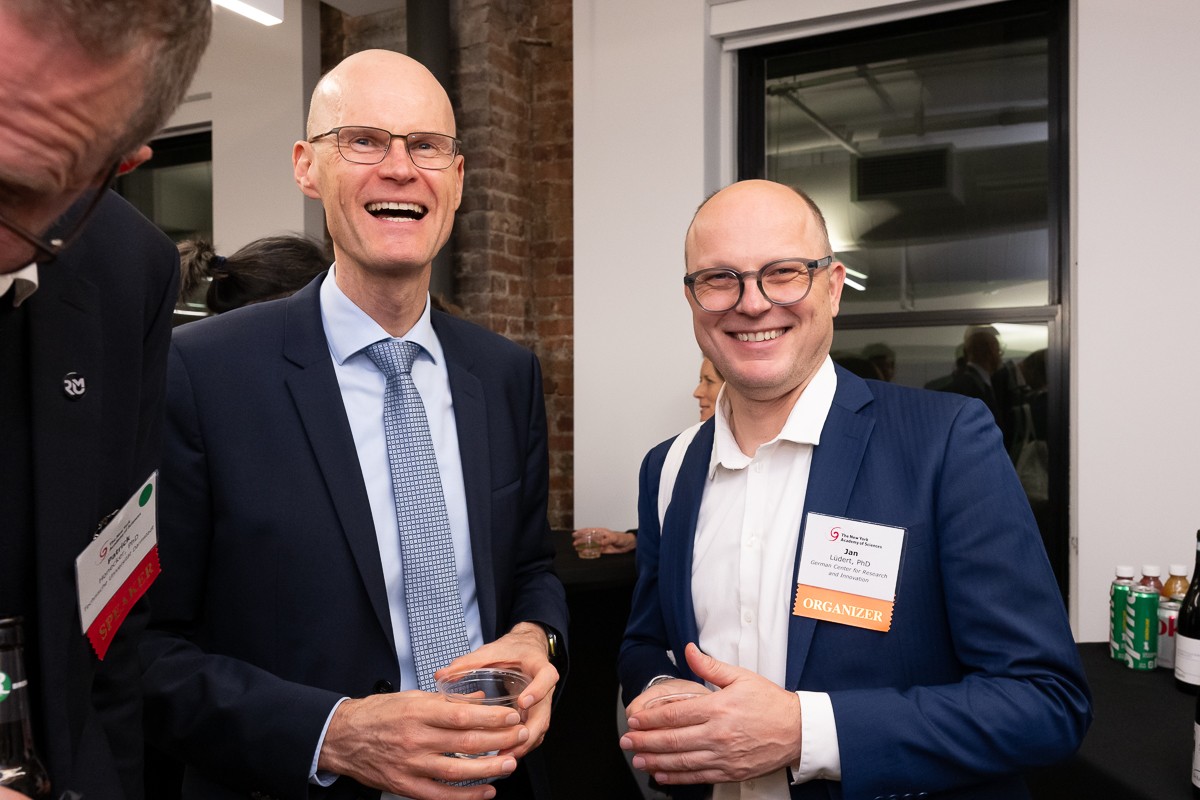
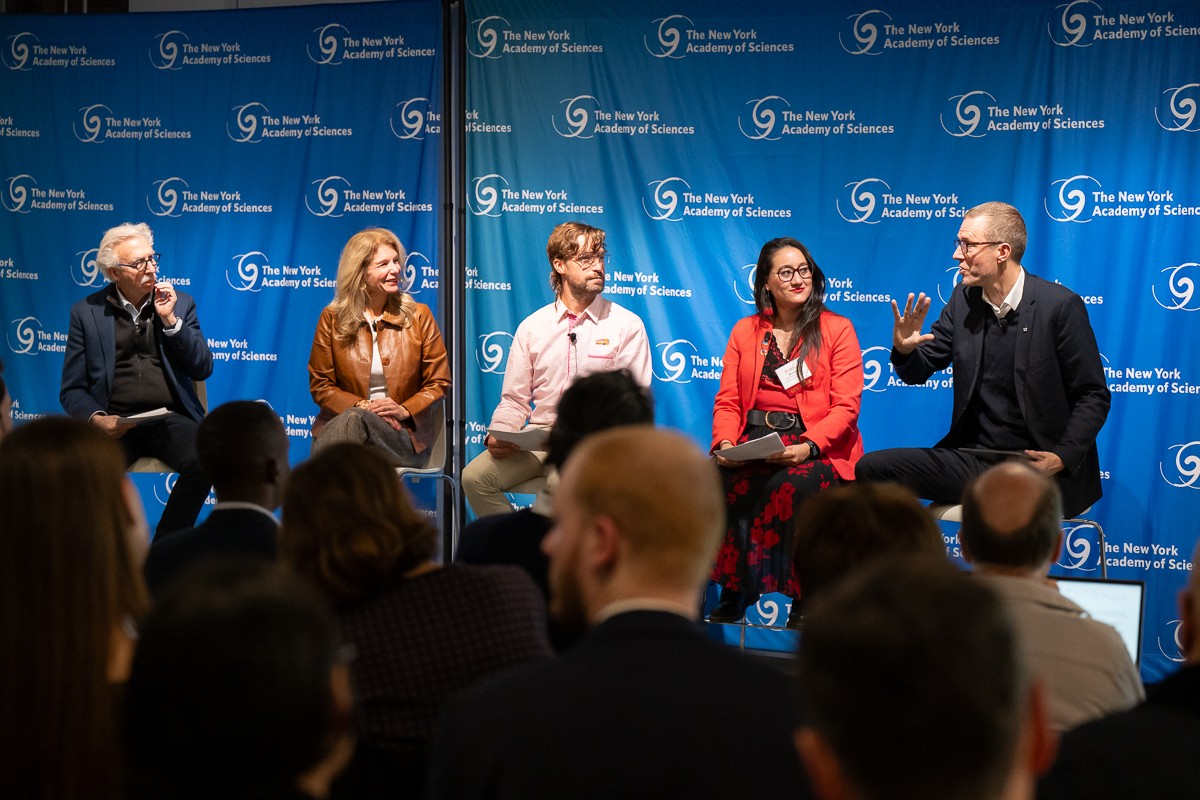
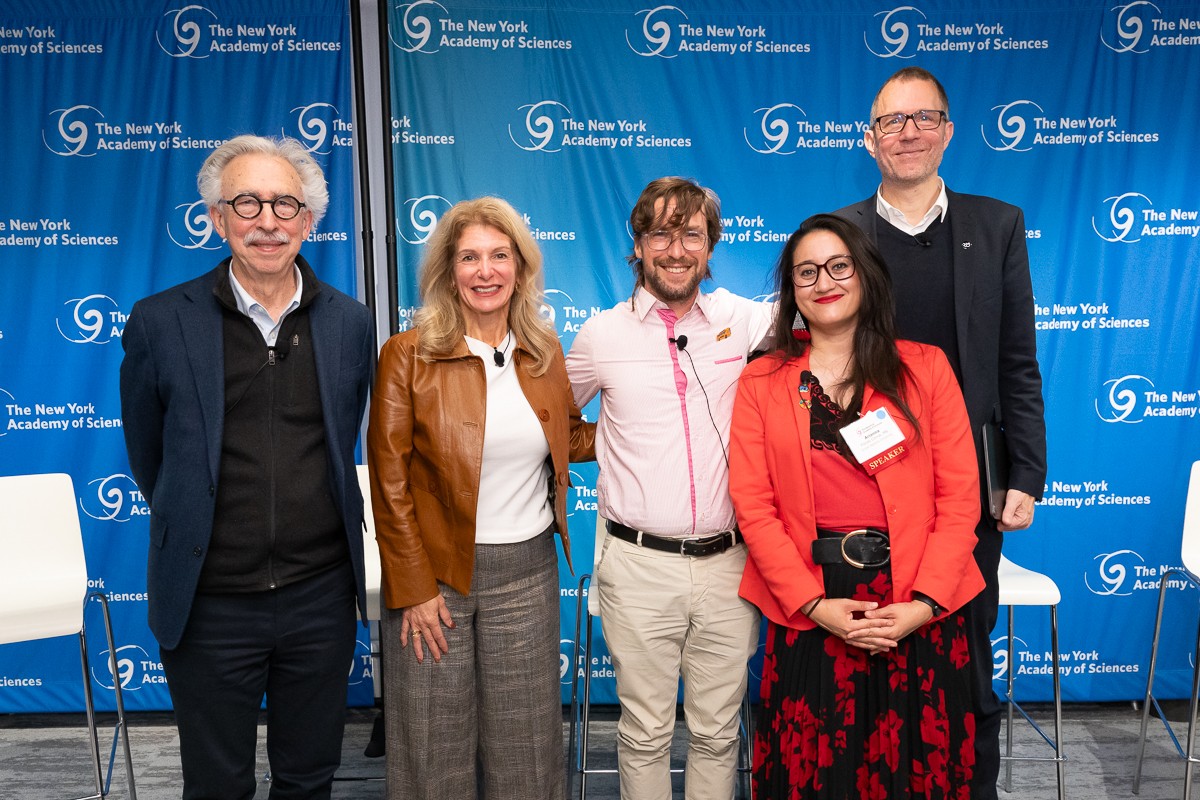
The New York Academy of Sciences and the German Center for Research and Innovation New York (DWIH NY) presented FUTURE FORUM: Science for Society on Wednesday, October 21, 2026. This day-long forum included a closed-door expert workshop with more than a dozen leaders in science communication, engagement, and policy from the U.S. and Germany. The day concluded with a panel discussion, moderated by Academy President and CEO Nick Dirks, that brought together leading experts to explore how science can more effectively serve society through communication, collaboration, and public engagement. Panelists include:
- Laura Lindenfeld, PhD, Alan Alda Center for Communicating Science, Stony Brook University
- Arianna Flores Corral, MS, United Nations University
- Ben Dubin-Thaler, PhD, BioBus
- Patrick Honecker, PhD, TU Darmstadt
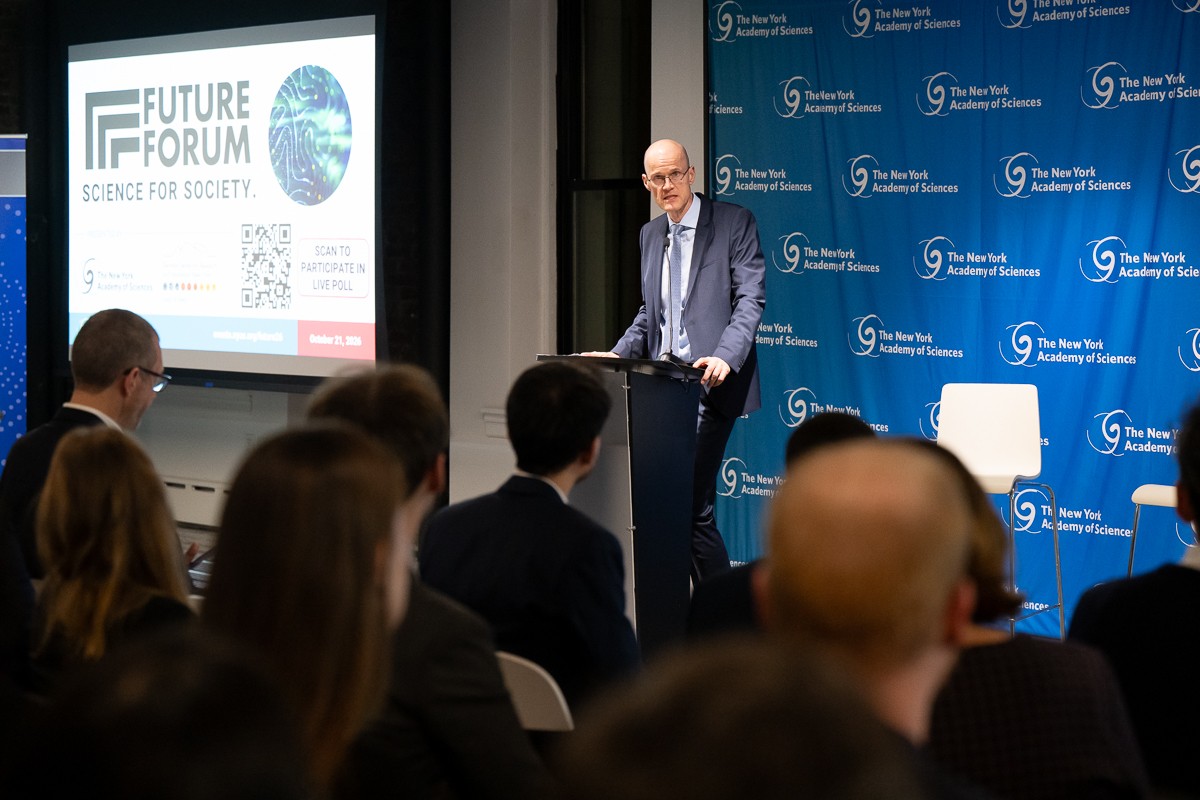
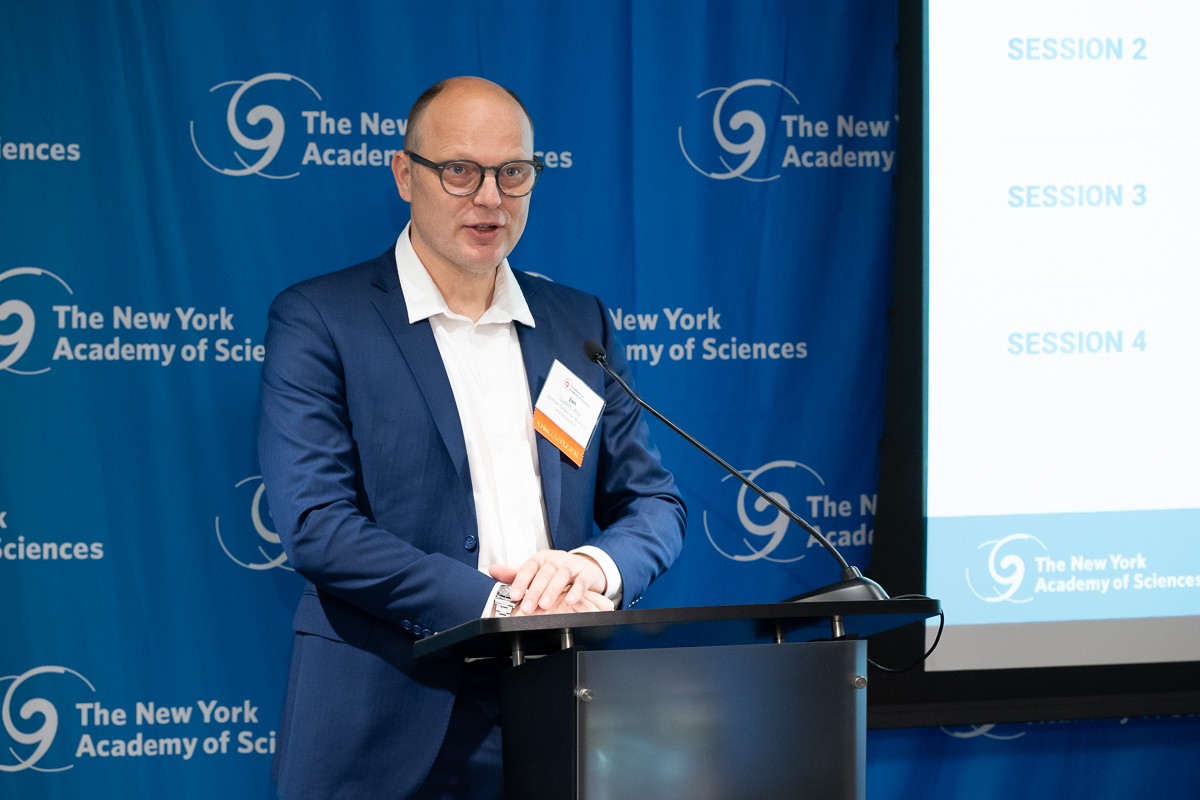
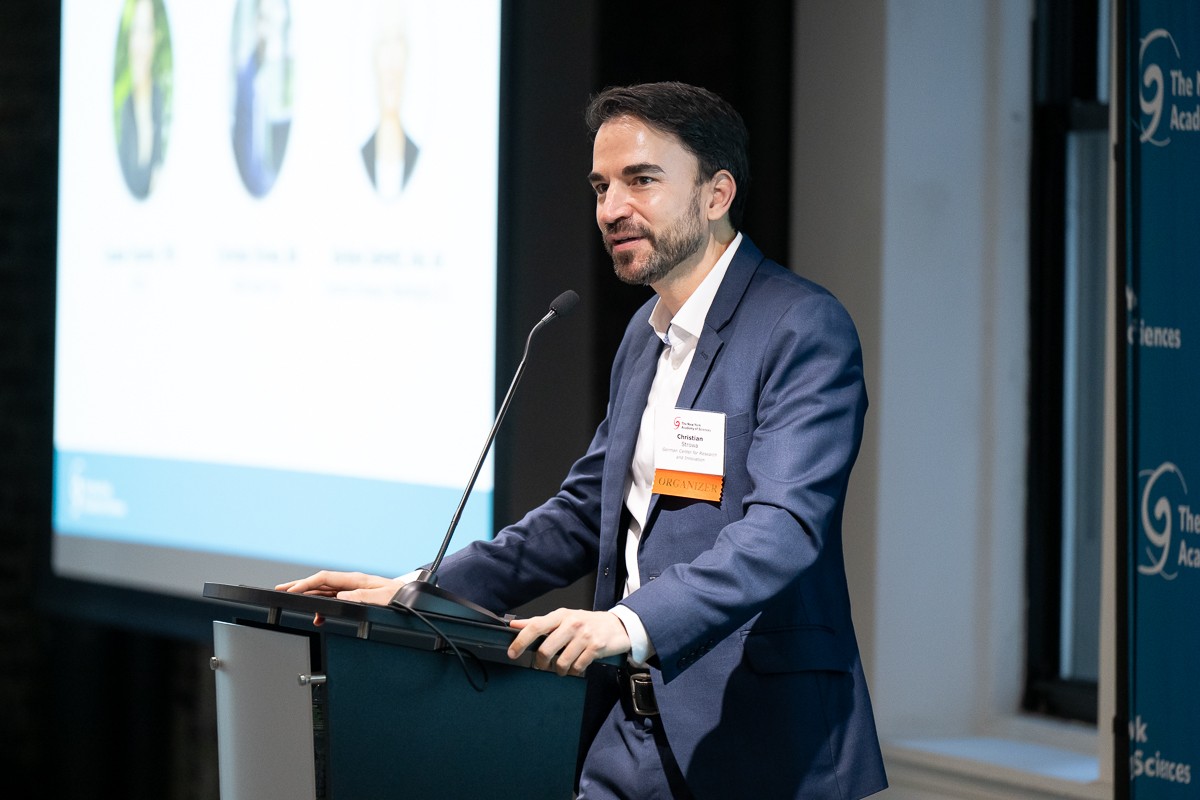
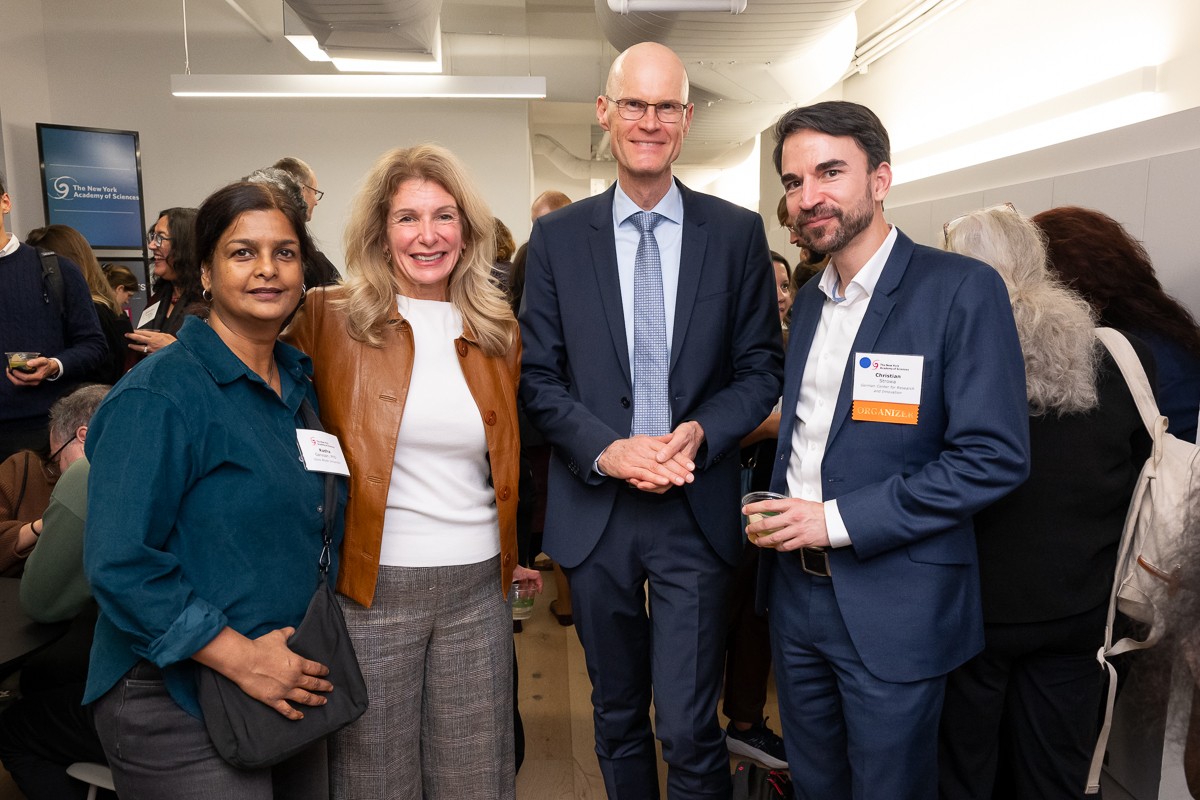
Christian Strowa, MA, Director, DWIH NY, kicked off the discussion by emphasizing the need for events like this at a time when institutional mistrust and political polarization are on the rise.
“I think this shows that science communication, trust in science, the challenges that the trust in science currently faces, is not just a German topic, it’s not just an American topic, it’s become a global topic,” said Strowa.
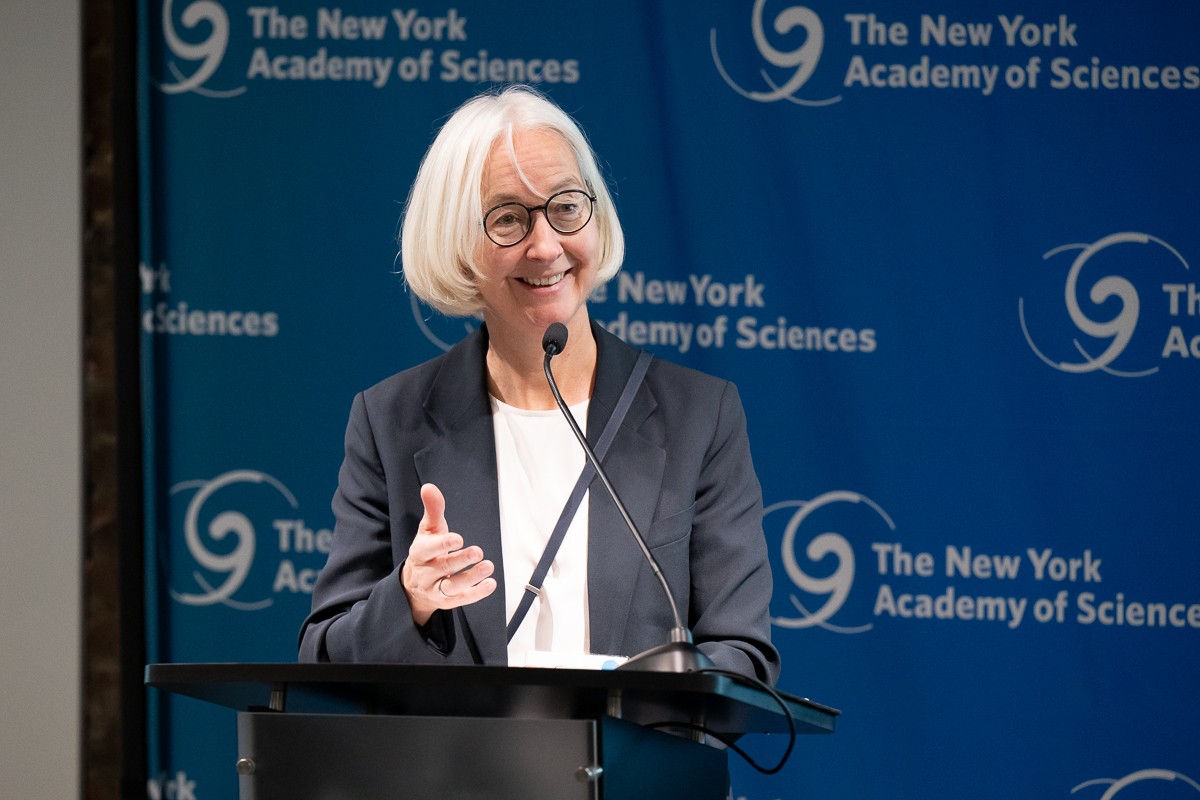
Carsten Rüpke, Deputy Consul General & Head of Economic Affairs, Consulate General of the Federal Republic of Germany New York, then shared some remarks about the important relationship between scientists and diplomats.
“This forum shows Germany and the United States have much to learn from another, not only in laboratories and lecture halls, but also in how we bridge the gap between research and public life,” Rüpke said. “Discovery may begin in a laboratory, but the conversation about its meanings belongs everywhere, in schools, in museums, in the media, and around the kitchen table.”
Transparency and Uncertainty in Science
Dirks then kicked off the panel discussion by presenting an active survey question in which nearly half (45%) of those in attendance indicated they “strongly agree” that “greater transparency about scientific uncertainty strengthens public trust in science.”
Ben Dubin-Thaler, PhD, is the founder of BioBus, a nonprofit that makes science opportunities available to K-12 students in NYC and Boston, by literally putting a lab on wheels. He feels that uncertainty should be embraced in science.
“So much of what students do in the classroom and experience as science is about certainty and there’s a right answer and there’s a wrong answer,” Dubin-Thaler said. “And part of what the magic, I think, of what we do at BioBus is that we try to break open and complicate that view and say, look, it is about uncertainty and about collecting evidence and coming to a consensus of some kind. I’ve seen to some degree that that picture of uncertainty helps people understand the scientific process in a pretty fundamental way.”
Arianna Flores Corral, MS, a communications analyst at United Nations University in Bonn, Germany, agreed that the uncertainty element should be embraced and better communicated.
“I think uncertainty is very human. Humanizing science and making it relatable to people is what actually [builds] trust,” Flores Corral said. “Uncertainty shows this human trait that cannot be copied by AI, for example.”
Patrick Honecker, PhD, chief communication officer at the Technical University of Darmstadt (TU Darmstadt), said that much like other parts of science, communicating uncertainty is “complicated.”
“My motto is, always in search of knowledge, never in possession of the final truth,” he said.
Communicating Science
Laura Lindenfeld, PhD, has been directing the Alan Alda Center for Communicating Science at Stony Brook University for a decade. The center was founded by actor, author, citizen scientist, and philanthropist Alan Alda (best known for playing Hawkeye Pierce in the TV series M*A*S*H) who saw parallels between techniques in acting and science communication. Lindenfeld saw these parallels firsthand while participating in an improv exercise hosted by the center.
“I realized how thoughtfully scaffolded this experience was to help us connect, to make genuine human connections, which is at the core of building trust,” she said. “And that’s really the method to the madness, is showing up as genuine human beings, demonstrating care, respect, treating people with dignity, and being someone who others would want to listen to.”
Honecker said “trust is the outcome, not the goal,” while Flores Corral pointed out that eliciting an emotive response is effective in science communication because emotions transcend language and context.
Dubin-Thaler conceded there can be an “arrogance of science” but he believes that can be rectified by improving science communication and making it a “two-way street.” Instead of always asking students to trust the teacher, the teacher should also trust the student which can be empowering for an aspiring scientist.
Transparency, Access, Engagement
Lindenfeld said empathy can be an effective tool for science communicators, who if they can better understand their audience, they can more effectively communicate their message. She pointed out that the word “communication” derives from the word “community.”
“I don’t like this idea that science is separate and we have to bridge science to society. Science is part of society. We created it together,” said Lindenfeld. “How do we make sure there’s a greater sense of belonging within science, so we’re not asking people to make such a huge emotional and cognitive leap to build trust with someone?”
Honecker tied this to an ongoing effort in Germany, funded by the government, to establish a Center for Reasonable Science Communication. He said the center aims to improve scientific engagement with the public through four strength areas: communication, enabling science, policy advice, and strengthening research and evaluation.
For Flores Corral, she said it’s more about impact than engagement. Instead, science communicators need to ask themselves the right questions and draft their message appropriately.
“Why are you engaging? What do you want the people to do? What do you want them to know? Why would you want people only to know something?” Flores Corral pondered. “You need to activate them. You need to inspire them. You need to motivate them.”
Optimism for the Future
Many fears exist around phenomena like AI and climate change, which have potential to impact nearly all of us. Flores Corral sees an opportunity for the audience to become active participants in the broader conversation.
“I think something that gives me hope is this idea that climate communication and science communication is changing in a way that sees the audience as someone that can act and can do something to make our world more sustainable,” she said. “So this change of mindsets where we started seeing a climate and science communication that is not only about showing the risks, which are relevant, of course, we need to know what’s happening, but do we need to only know what’s happening, or do we need to know what can we do to change what’s happening? What solutions exist to do it?”
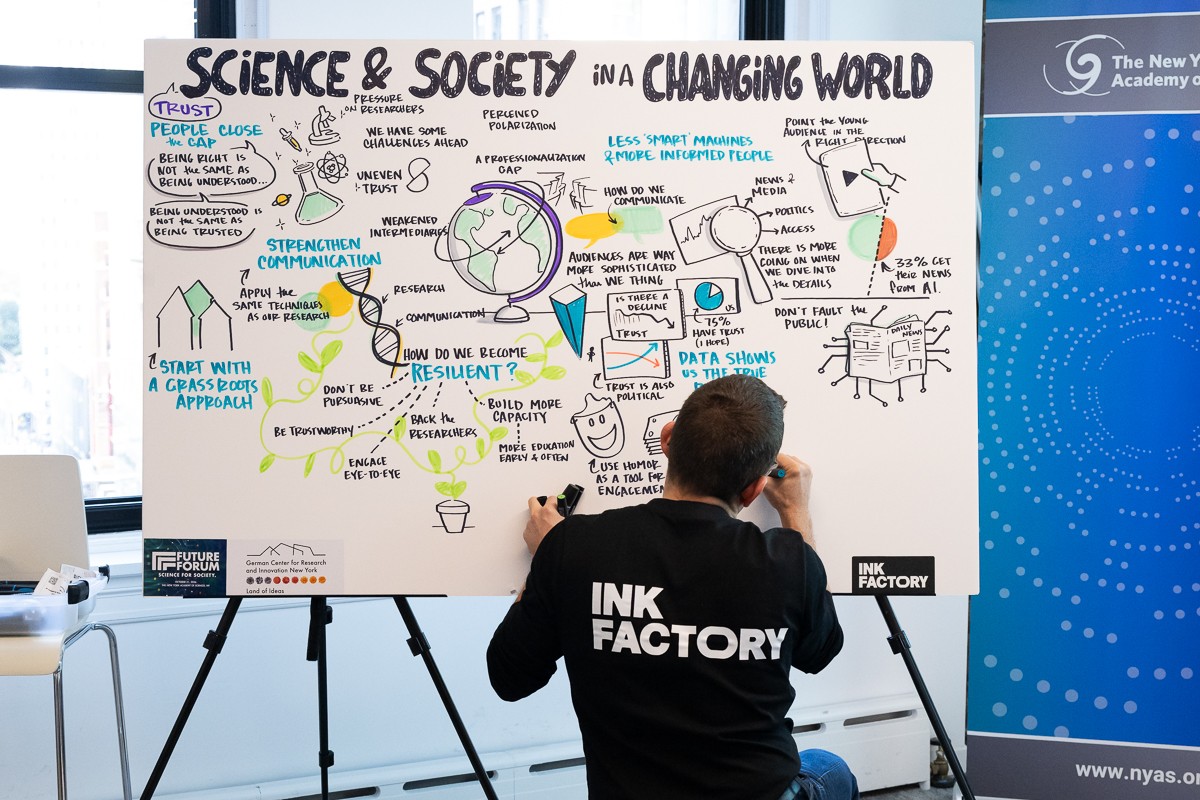
The event concluded with a question/answer session from attendees where the panelists covered everything from lessons learned from the COVID pandemic to the role visual artists can play in science communication.
The FUTURE FORUM, established in 2019, brings together experts from Germany, the United States, and beyond to exchange perspectives on emerging issues in science, innovation, and society. Through focused expert dialogue and public engagement, the format creates space to examine shared challenges, identify new perspectives, and strengthen transatlantic exchange. Stay tuned for 2027 events.