NEUROfest: Theater That Goes to Your Head
A month-long festival of plays, puppet shows, and operas that explore neurological disorders through performance.
Published January 1, 2006
By Adelle Caravanos

Imagine waking up one morning and realizing that your parents have been replaced by imposters; or suddenly being unable to form a sentence; or experiencing the music of a saxophone as the color blue, instead of a melody.
And then imagine that it is all in your head.
Symptoms of those neurological disorders, Capgras Syndrome, aphasia and synesthesia, and numerous others are explored by the works of NEUROfest, a month-long theater festival featuring more than 20 performances, readings and seminars. Presented by the Untitled Theater Company #61, NEUROfest examines the ways the mind is both hampered and augmented by neurological conditions.
Edward Einhorn, NEUROfest‘s artistic director, says the goals of the festival are to raise awareness and understanding of these ailments, and to use the ideas and symptoms as metaphors for various human experiences.
“I started realizing how many writers have been attracted to this subject matter,” Einhorn said, citing the works of Oliver Sacks, A. R. Luria and others who have creatively explored neurological states. “That was part of the inspiration.”
Cognitive Creativity
To organize NEUROfest, Einhorn contacted artists who were working on similar projects, accepted submissions and searched for pieces that used the mechanisms of the brain to comment on the mysteries of the mind. The result is the first-ever theater festival dedicated to the central nervous system.
“I wanted to reach out to people who were doing different things in theater,” said Einhorn. The variety of disorders and their range of symptoms lent themselves to different theatrical styles and techniques. Hence, the festival includes an opera about autism (Tabula Rasa), a family musical about Tourette’s Syndrome, with main characters Blinky, Tick and Screamer (Welcome to Tourettaville), and a puppet show about Asperger’s Syndrome (The Boy Who Wanted to Be A Robot), among others.
Einhorn previously dabbled in the realm of psychological drama while working on a play inspired by the life of his grandfather, a hematologist and discoverer of the Rh factor. Einhorn’s own mother, his main source of historical data on his grandfather, had suffered a stroke and was experiencing symptoms of dementia as he interviewed her. The finished play, Doctors Jane and Alexander, deals with science history, and the ways that mental facilities deteriorate with age and disease.
There’s a Little Bit in Everyone
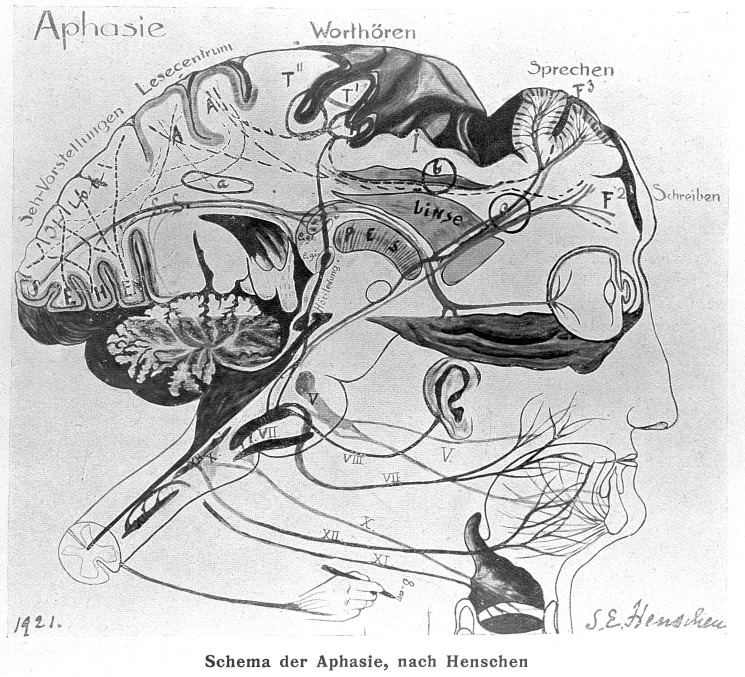
One of the most interesting things about neurological conditions, said Einhorn, is that “many of them appear to be exaggerations of other human behaviors.” As an example he cites two pieces, Strangers and Linguish, that deal with aphasia, which impairs the ability to comprehend language. Although clinical aphasia occurs after a brain injury or stroke, “we all sometimes find ourselves unable to find the right words” in a given situation, Einhorn said. Because of this, audience members can relate to the characters, allowing them a more empathetic approach to dealing with the disorder.
Although the public might be aware of most of the conditions that NEUROfest covers, Einhorn warns that there are many misconceptions about brain disorders. To correct them, the theater will host expert seminars about the various diseases after certain performances.
The Show Must Go On
NEUROfest will include a special performance of a play about the mental meltdown of a literature professor. But the real story of Cincinnati is behind the scenes. During rehearsals, lead actress Nancy Walsh suffered from a grand-mal seizure that alerted doctors to a brain tumor. The tumor was removed successfully, but for a period of time afterwards, Walsh suffered from a form of aphasia. While she could recite sentences and phrases that she had already memorized, she was unable to articulate new thoughts.
Amazingly, after her surgery, Walsh performed Cincinnati numerous times before she had completely recovered from the aphasia, repeating verbatim the words she had committed to memory before her seizure. On Monday, January 16th, Walsh will perform Cincinnati as part of NEUROfest, and afterwards, she will participate in a discussion with the doctor who treated her, about her remarkable experience.
NEUROfest will be held at Theater 5, located at 311 W. 43rd St., between Eighth & Ninth Avenues from January 5 to 29.
Also read: New Approaches to Tackling Neurodegenerative Disease