Three Public-Health Alerts, One Test for New York
Rabbit Fever, Foodborne Illness and a New Vaccine Fight
Published August 17, 2026
By Syra Madad, D.H.Sc., M.Sc., MCP, CHEP
Three developments, the appearance of “rabbit fever” on Long Island, a surge of cyclosporiasis in New York City, and a presidential executive order reshaping childhood vaccine recommendations, may seem unrelated. Together, they demonstrate how much public health depends on institutions that can detect hazards early, explain uncertainty honestly and keep effective prevention within everyone’s reach.
Tularemia
Suffolk County has reported four cases of tularemia, the uncommon bacterial infection popularly known as rabbit fever, so far in 2026. The count is modest, but its timing and geographic concentration make it a signal worth tracking. Suffolk recorded one case in 2022, three in 2023 and four in 2024, according to county data. Local officials reported six cases in 2025. This year’s count has therefore already matched the county’s 2024 total.
The geographic pattern is also notable. An analysis published by the Centers for Disease Control and Prevention found that Suffolk County accounted for 43% of the tularemia cases reported in New York outside New York City from 1993 through 2023. The researchers concluded that the findings point to localized risk and a need for continued human and tick surveillance.
Tularemia is caused by the bacterium Francisella tularensis. People can acquire it through tick or deer-fly bites, direct contact with infected animals, contaminated water, or inhalation of contaminated dust or aerosols. It is not known to spread from person to person. Symptoms vary but can include fever, a skin ulcer and swollen lymph nodes. Although the disease can be serious, most infections can be treated successfully with appropriate antibiotics.
Prevention is straightforward: use an insect repellent registered by the Environmental Protection Agency, wear protective clothing, check promptly for ticks and use gloves when handling sick or dead wildlife. The CDC also advises people not to mow over animal carcasses because mowing can send contaminated material into the air, creating a less familiar route of exposure.
Cyclosporiasis
In New York City, the immediate concern is different in both scale and route of transmission. As of Aug. 10, the city had recorded 594 cases of cyclosporiasis diagnosed since May 1. The data are preliminary, and investigations are continuing. Although cases can occur throughout the year, they typically increase during the warmer months. The CDC defines the annual United States cyclosporiasis season as May 1 through Aug. 31.
Cyclosporiasis is a diarrheal illness caused by the parasite Cyclospora cayetanensis. People become infected by consuming contaminated food or water. Symptoms can include prolonged watery diarrhea, stomach cramps, nausea, fatigue, loss of appetite and weight loss. Previous North American outbreaks have been linked to fresh produce, including raspberries, leafy greens, onions, basil, and cilantro, according to the city Health Department.
The FDA and CDC are also investigating a 2026 multistate outbreak linked to recalled iceberg lettuce from Taylor Farms de Mexico. Some recalled products were distributed in New York, although the FDA says their use-by dates have passed and they should no longer be on store shelves or served in restaurants. Consumers should continue monitoring recall and outbreak notices from the FDA, the CDC, and state and city health departments. If officials identify a product for recall, consumers should not eat it and should follow the disposal and cleaning instructions in the notice.
New Yorkers should wash their hands regularly and rinse fresh produce thoroughly under clean, running water. But washing reduces risk, it does not eliminate Cyclospora. Cooking is more effective: heating food to at least 158 degrees Fahrenheit, or 70 degrees Celsius, kills the parasite. We can’t, however, cook or wash their way out of every breakdown in a complex food-supply chain. Public agencies must identify common exposures, trace products across jurisdictions, and communicate rapidly with clinicians, retailers and the public.
Anyone with persistent or recurring watery diarrhea should contact a healthcare professional, particularly if dehydration is a concern. Diagnosis requires stool testing, and patients may need to ask specifically for Cyclospora testing because routine stool examinations do not always include it.
New Executive Order on Vaccinations
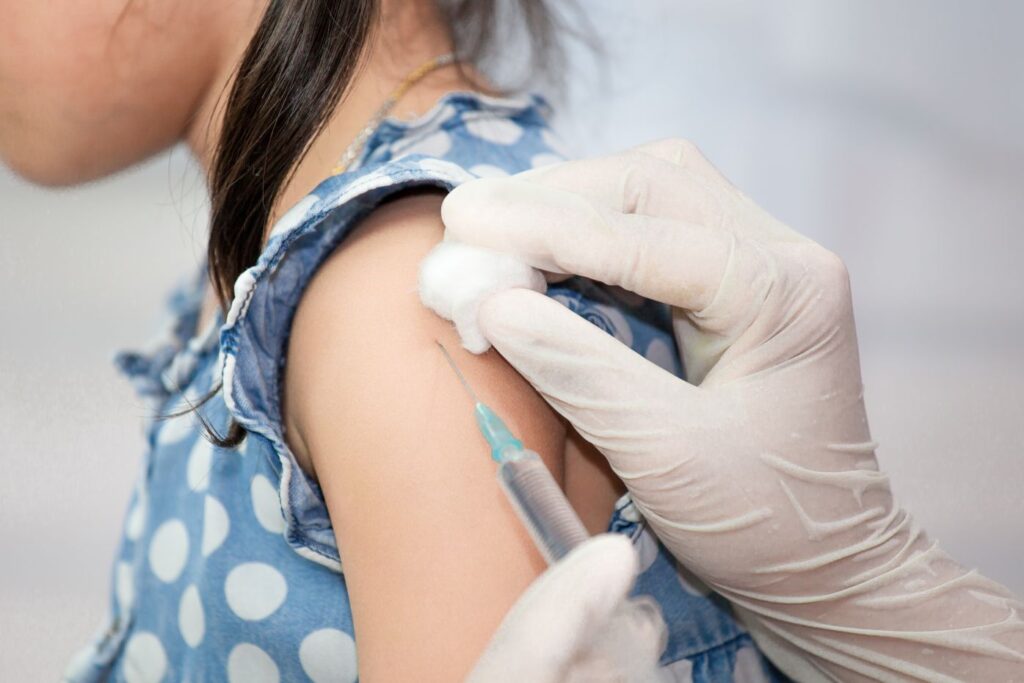
The third development may have the broadest consequences. President Trump’s Aug. 10 executive order reduces the number of diseases for which vaccination is routinely recommended for every child from 18 to 11. Other immunizations including hepatitis A and B, rotavirus, meningococcal, influenza and Covid-19 vaccines, are assigned to risk-based or “shared clinical decision-making” categories.
President Trump described the order as addressing autism, although autism is not mentioned in it and extensive research has found no causal association between vaccines and autism. Nor does the order present new clinical trial or safety data showing that the existing schedule is unsafe or ineffective. Instead, it relies on an HHS assessment comparing American recommendations with those of other developed countries, comparisons that do not fully account for differences in disease patterns, health systems or access to care.
The order also favors separating the combined MMR vaccine and administering childhood vaccines at separate visits. No individual measles, mumps or rubella vaccines are currently licensed in the United States. More visits would increase burdens on families and could reduce vaccination: a study of nearly 100,000 children found that those whose shots were intentionally spread out made more visits but received fewer vaccines.
The order’s immediate legal effect is more limited than its sweeping language suggests. Federal vaccine recommendations ordinarily proceed through the Advisory Committee on Immunization Practices and are then adopted by the CDC, a process that also affects insurance coverage and the Vaccines for Children program. A president cannot independently rewrite state school-entry laws.
The order could nevertheless pressure states. It directs the attorney general to support certain legal challenges involving religious freedom, parental authority and vaccine exemptions. It also instructs the Departments of Justice, Education, and Health and Human Services to review whether federal contractors and grantees including states and localities are meeting federal obligations. New York could therefore face litigation or disputes over federal funding even if its laws remain unchanged.
For now, the immediate message is crucial: New York State’s childhood vaccine recommendations and school requirements have not changed. Children attending public, private or religious schools, prekindergarten or day care must receive the required immunizations unless they have a valid medical exemption. Families should continue following the state schedule and consult their pediatricians rather than delay vaccination while federal policy is contested.
New York must also prepare for longer-term effects. Moving vaccines from routine recommendations to individualized decisions could confuse families and reduce coverage, while requiring additional appointments could widen existing disparities. State and city officials should protect vaccine access, monitor coverage across communities, support pediatric and primary-care practices and explain their recommendations plainly.
Bottom Line
Tularemia, cyclosporiasis and childhood vaccination present distinct public-health challenges, but they demand the same response: follow the evidence, communicate clearly and ensure that prevention and protection remain accessible to every New Yorker.