To the Moon with Human Endurance and Innovation
The Artemis II mission carries four brave souls on a historic ten-day voyage around the Moon, proving that human courage and our brightest dreams can reach the deep stars. This journey transforms space from a distant government frontier into a shared home for all, inviting every heart on Earth to follow the light of discovery in real-time.
Published February 11, 2026
By Malmi Kiriwandalage, MSc, BA
The Ultimate Test of Grit
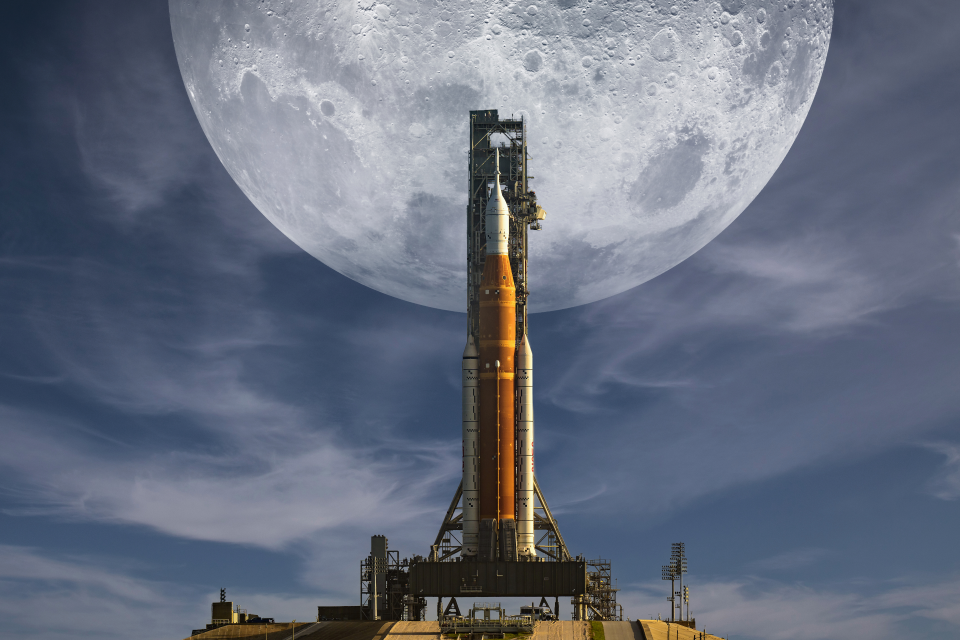
Four astronauts sit atop the most powerful rocket ever built. This March, the Artemis II mission launches from Florida. The crew includes Commander Reid Wiseman and Pilot Victor Glover. Mission Specialists Christina Koch and Jeremy Hansen join them. They represent a new chapter in lunar history.
Artemis II pushes these four explorers to the edge of human limits. They travel farther from Earth than any crew in fifty years. This ten-day flyby tests deep-space survival for the first time since Apollo. There is no quick return and no nearby safe haven. Unlike the space station, this capsule offers no regular resupply.
The crew relies entirely on their training and onboard systems. Communication delays remind them of their total isolation. This distance places immense mental pressure on every team member. The crew selection is a deliberate strategic move. These experts bring skills in engineering, piloting, and long-duration flight.
They simulate the multidisciplinary teams needed for Mars. Their ability to solve problems under stress remains vital. Physical strain defines this lunar journey. The crew leaves the protection of Earth’s magnetic field. They face high radiation levels and prolonged microgravity. This mission gathers critical data on human biology in deep space.
The Orion spacecraft faces its first real human trial. It is a validation of life-support systems in extreme conditions. Astronauts live in confined quarters while managing complex hardware. They function as part of the engineering experiment itself.
Finally, this crew carries the weight of human history. Their success determines the future of lunar bases. They prove that sustained exploration beyond Earth is possible again. This flyby is a rehearsal for our deep-space future. We are watching the next era of discovery begin.
A Mission for All Humanity
Space is no longer just a “government project.” NASA now leads a vast global coalition. This mission includes the Canadian Space Agency and European partners. It relies on private companies like SpaceX and Lockheed Martin. This shift creates a sustainable space economy for everyone.
We are moving toward a shared human endeavor. Private firms now build habitats and lunar landers. Governments provide the vision and safety standards. This model lowers costs and invites rapid innovation. It turns the Moon into a place for research and industry.
The goal is a permanent human presence. We are not just visiting the Moon again. We are learning to live there. This requires a diverse global workforce. Engineers, artists, and doctors all have a role. Space belongs to the pioneers, not just the agencies.
Small businesses now contribute critical components for the Orion capsule. Universities run experiments that fly alongside the crew. This commercial ecosystem creates jobs across many sectors. It ensures that space exploration remains a common goal. We share the risks and the rewards of discovery.
The Artemis Accords establish a framework for peaceful cooperation. Over forty nations sign on to these principles. They agree to share scientific data and protect heritage sites. This prevents a new space race and fosters global unity.
Transparency is the hallmark of this new era. Private-public partnerships make space travel more accessible. We see more launches and more breakthroughs than ever before. This collective effort ensures that we stay in deep space for good. We are building a bridge to the stars together. The Moon is just the first step in our journey.
Join the Lunar Journey
You do not need an astronaut suit to participate. Local science centers offer real-time mission tracking for everyone. Many museums host live watch parties for the launch and flyby. These hubs provide high-definition feeds and expert commentary. They bring the lunar far side directly to your neighborhood.
Digital platforms offer an intimate look at the flight. NASA streams live views from the Orion capsule cameras. You can watch the Earth rise over the lunar horizon. Social media creators share behind-the-scenes updates every single day. Science enthusiasts join the global conversation using official mission hashtags.
Interactive apps let you see what the astronauts see. You can track the spacecraft’s exact speed and position. Virtual reality experiences allow you to sit inside the cockpit. These tools bridge the gap between Earth and deep space. They turn a distant mission into a local event.
Schools can download official STEM toolkits for their classrooms. These resources allow students to solve real mission flight problems. Students calculate trajectories and study lunar geology from their desks. Teachers use live data to inspire the next generation of explorers. This mission belongs to the classroom as much as the cockpit.
Families can use mobile apps to spot the Moon together. Every person on Earth can witness this journey as it happens. We invite you to look up and join us. This is a shared human moment for all people. Your curiosity fuels the future of space exploration.
Stay informed about the latest mission news, launch dates, and public engagement opportunities by subscribing to the NASA newsletter.
From the Shaping Science Podcast: Ariel Ekblaw on the Intersection of Physics, AI, Philosophy, and Ethics in Space Exploration