U.S. May Be Weeks Away from Losing Its Measles Elimination Status
In hospitals, measles is not a memory, it is an airborne alarm bell.
Published January 20, 2026
By Syra Madad, D.H.Sc., M.Sc., MCP, CHEP
The virus can linger in a room for up to two hours after an infected person leaves, silently exposing newborns, chemotherapy patients and anyone else who cannot be vaccinated. It is among the most contagious pathogens humans face: a widely cited systematic review estimates measles’ basic reproduction number (R₀) at 12–18 in a fully susceptible population. In practical terms, if one person has measles, up to nine in ten nearby people who are not immune will become infected.
Against that biology, the United States is now perilously close to losing something it earned with decades of public health work: measles elimination.
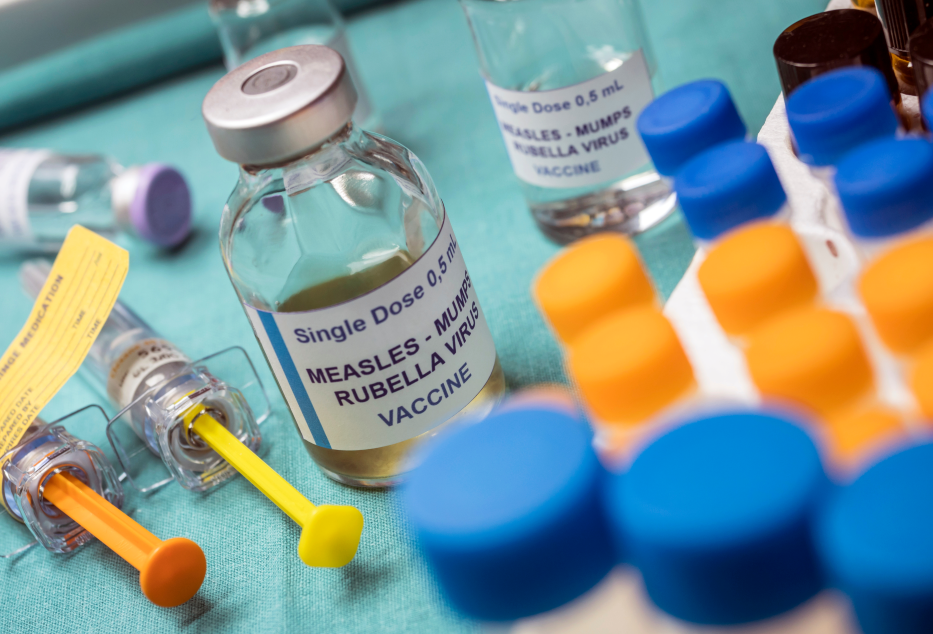
As of January 13, 2026, the CDC had confirmed 171 measles cases so far this year across nine states and 96% of them are tied to outbreaks that began in 2025. Last year, the U.S. logged 2,242 confirmed cases, the highest annual total since 1992 and by far the most since measles was declared eliminated in 2000; 93% of those cases occurred in people who were unvaccinated or of unknown vaccination status.
“Elimination” is a technical, time-based designation, not a moral one. Under the Pan American Health Organization (PAHO) framework, a country loses elimination status if there is continuous transmission of the same measles virus lineage for 12 months or more in the presence of adequate surveillance. That is why the calendar matters so much right now.
The Clock Could Run Out in Two Different Ways
First, if PAHO determines that recent outbreaks are all part of a single, continuous chain of transmission stretching back to January 2025, the U.S. would cross the 12-month threshold this winter. There was a massive outbreak in Texas in January 2025 with more than 760 cases; infections have since subsided there, but large outbreaks are now actively growing in South Carolina and remain ongoing in Utah and Arizona. So far, however, CDC leadership has said there is no epidemiological evidence that the Texas, Utah/Arizona and Spartanburg (South Carolina) outbreaks are one continuous chain of transmission. That distinction may determine whether elimination is formally lost or narrowly preserved.
Second, even if PAHO judges these outbreaks to be separate, the persistence of 2025 outbreaks into early 2026 still edges the country closer to reestablishing endemic transmission. Elimination depends not just on case counts, but on whether spread can be interrupted quickly and consistently and right now, it is not.
South Carolina illustrates why. The Spartanburg-centered outbreak has already surpassed 550 cases and is still accelerating. Public health officials have documented exposures in churches, restaurants and multiple health care settings, and hundreds of children have been quarantined. Overall student vaccination in Spartanburg County is about 90%, below the 95% level needed for measles herd immunity. Nonmedical exemptions there have risen to roughly 8%, up from about 3% in 2020.
This is Not an Isolated Problem
A recent county-level analysis in JAMA found that nonmedical vaccine exemptions have risen in more than half of U.S. counties since the COVID-19 pandemic, creating geographic pockets where measles can burn unchecked even when statewide averages look reassuring . Nationally, MMR coverage among kindergartners has fallen from 95.2% in 2019–2020 to 92.5% in 2024–2025, leaving roughly 286,000 children at risk.
Why does this matter? Because measles is not benign. In 2025, 11% of U.S. cases required hospitalization. Complications can include pneumonia, encephalitis and death, with young children and immunocompromised people at greatest risk.
We know what works. Two doses of MMR are about 97% effective at preventing measles, and decades of evidence have found no link between MMR vaccination and autism. What we lack is consistent political and policy commitment: eliminating nonmedical exemptions, closing local immunity gaps, and making vaccination easy, routine and expected again.
Whether the U.S. loses its elimination status in January or narrowly avoids it may hinge on viral genetics and epidemiological lineages. But the larger verdict is already clear. If we allow preventable outbreaks to become normal, we will have squandered a historic public health achievement not because measles got stronger, but because our collective resolve got weaker.
Stay Connected with Dr. Madad:
Instagram
Twitter/X
LinkedIn
Facebook