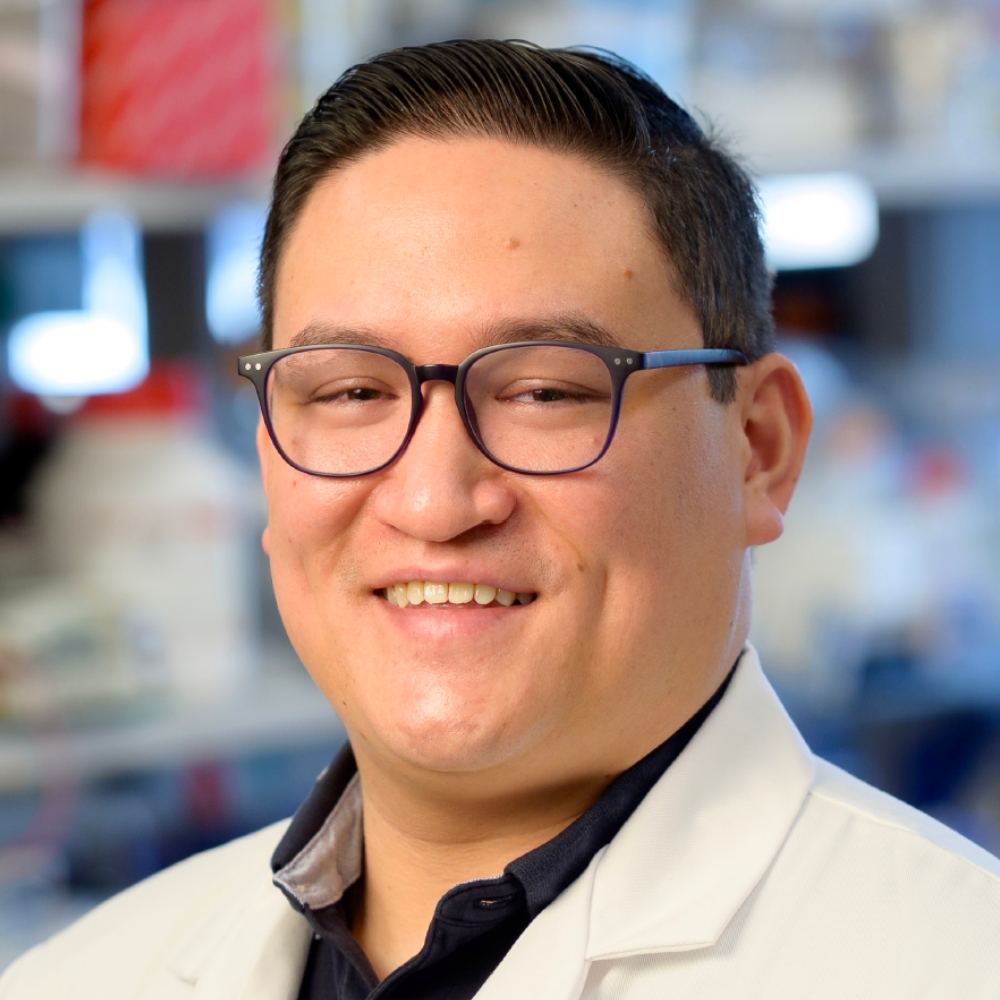
Emmet Huang-Hobbs, PhD
2026 Leon Levy Scholar in Neuroscience
Memorial Sloan Kettering Cancer Center
Sub-disciplinary Category
Cancer Neuroscience
Previous Positions
- BS, McGill University
- PhD, Baylor College of Medicine (Dr. Benjamin Deneen)
Bio
Emmet Huang-Hobbs earned his PhD in Cancer Neuroscience under the mentorship of Dr. Benjamin Deneen at Baylor College of Medicine in 2023. His thesis work focused on remote neuronal activity’s impact on glioma infiltration in the brain. As a Leon Levy scholar at Memorial Sloan Kettering Cancer Center under the mentorship of Dr. Charles Sawyers, he studies tumor-neuron interactions across the neuroendocrine transition in prostate cancer, an increasingly common mechanism of escape from antiandrogen therapy. Emmet investigates how prostate cancers co-opt neuronal signaling pathways during tumor progression, influence axonogenesis and innervation, and develop intratumoral electrochemical networks. This research will integrate molecular biology and neuroscience approaches with the goal of revealing new therapeutic vulnerabilities in prostate tumors.
Research Summary
Investigating how prostate tumors co-opt neuronal signaling pathways during the transition from adenocarcinoma to the deadly neuroendocrine subtype.
Technical Overview
Neuroendocrine prostate cancer (NEPC) represents the most lethal prostate cancer subtype, emerging via prostate adenocarcinoma’s ability to undergo a lineage transition in response to androgen deprivation therapy. NEPC tumors exhibit profound therapy resistance and acquire neuroendocrine features including neurotransmitter synthesis and the capacity to receive neural signals, yet the molecular consequences of these neural inputs on tumor progression remain poorly understood. Mounting evidence across multiple cancer types demonstrates that tumors can recruit innervating neurons to support progression and establish intratumoral electrochemical signaling networks as they transition to neuroendocrine subtypes. Whether similar phenomena occur during the NEPC transition is unknown. Emmet will investigate the mechanisms driving neuroendocrine intratumoral electrochemical signaling networks and their impacts on tumor progression. Additionally, Emmet will characterize tumor innervation across the NEPC transition in vivo. Using integrated approaches combining functional genetics, real-time imaging of tumor cell activity, electrophysiological recordings, and neural circuit mapping, Emmet will define how interactions between tumors and the nervous system change during disease progression, and how the tumor itself develops its own signaling networks. This research will provide insights into how aggressive NEPC tumors hijack neuronal programs to drive lineage plasticity, identify their microenvironmental effect on innervation, and identify new therapeutic vulnerabilities in neuroendocrine prostate cancer.
Learn about the The Leon Levy Scholarships in Neuroscience.