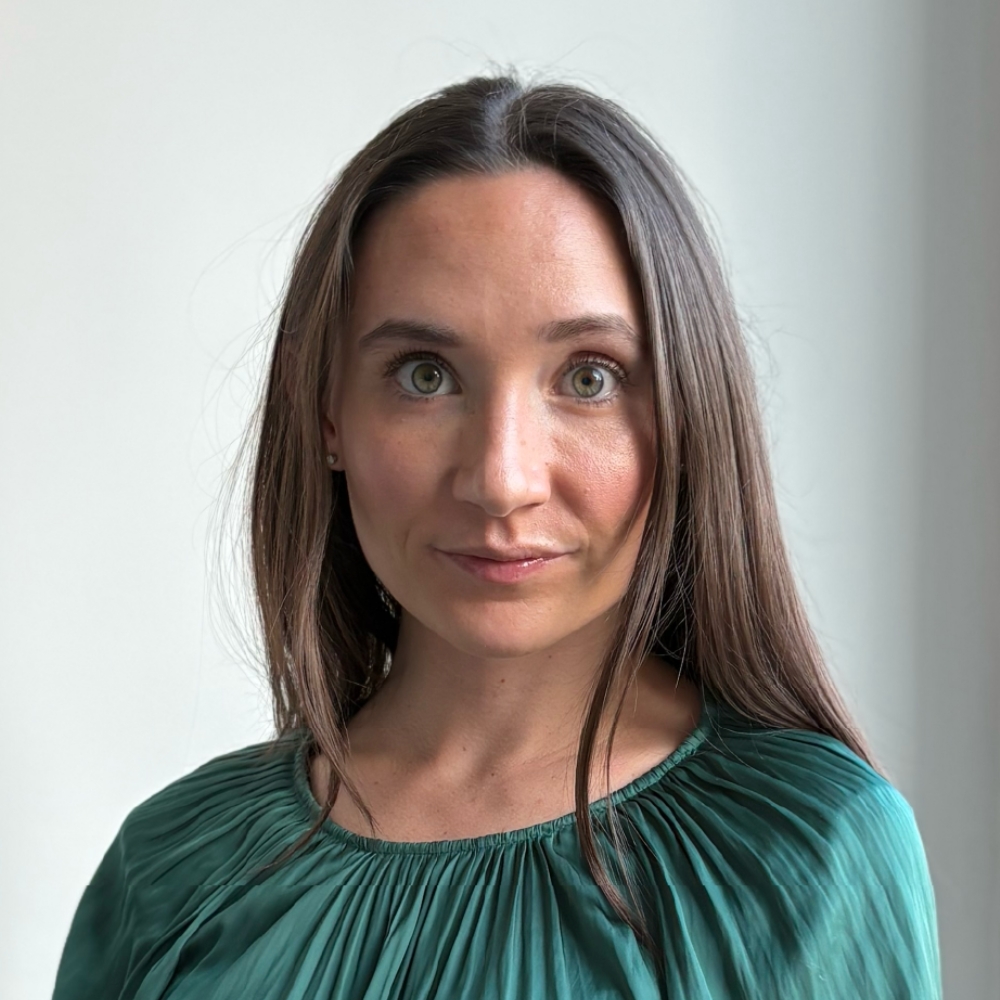
Margaret Schroeder, PhD
2026 Leon Levy Scholar in Neuroscience
The Rockefeller University
Sub-disciplinary Category
Cellular & Molecular Neuroscience
Previous Positions
- BS, University of Pennsylvania
- BSE, University of Pennsylvania
- MSE, University of Pennsylvania
- PhD, Massachusetts Institute of Technology (Dr. Guoping Feng, Dr. Ed Boyden)
Bio
Dr. Margaret Schroeder earned dual undergraduate degrees in Bioengineering and Economics and a master’s degree in Bioengineering from the University of Pennsylvania. During her undergraduate and master’s research, she developed a fascination with astrocytes while studying how their calcium activity responds to neuronal injury in vitro. Margaret went on to earn her PhD in the Department of Brain and Cognitive Sciences at MIT, under the supervision of Dr. Guoping Feng and Dr. Ed Boyden. Her thesis work characterized the postnatal regional specialization of astrocytes in mouse and marmoset using single-nucleus transcriptomics. She also helped develop and deploy new expansion microscopy variants. Margaret is currently a postdoc in the laboratory of Dr. Robert Darnell at the Rockefeller University. As a Leon Levy Neuroscience Scholar, she investigates the bi-directional translational and RNA regulatory consequences of neuron-astrocyte communication.
Research Summary
Interrogating the molecular underpinnings of local astrocyte-neuron plasticity in health and disease.
Technical Overview
Interactions between neurons and astrocytes are critical for healthy brain function and often go awry in disease. Like neurons, astrocytes translate RNAs locally in their processes, a phenomenon which is likely activity-dependent and regulated by RNA-binding proteins. Little is known about RNA-mediated astrocyte plasticity, its role in neuron-astrocyte communication, and its dysregulation in diseases such as Fragile X Syndrome (FXS), the leading cause of inherited intellectual disability. FXS is caused by a mutation in FMRP, an RNA binding protein that is expressed in both neurons and astrocytes and has been shown to regulate translation of mRNA to protein. Dr. Schroeder will characterize the local translational, FMRP regulatory, and proteomic changes in astrocytes following neuronal activation in healthy and FMRP mutant brains, as well as the reciprocal astrocyte calcium activity-dependent changes in neuronal RNA plasticity at the synapse. This work will improve our understanding of RNA-mediated astrocytic and synaptic plasticity following neuron-astrocyte communication and may offer new pathways for therapeutic intervention in FXS and related conditions.
Learn about the The Leon Levy Scholarships in Neuroscience.