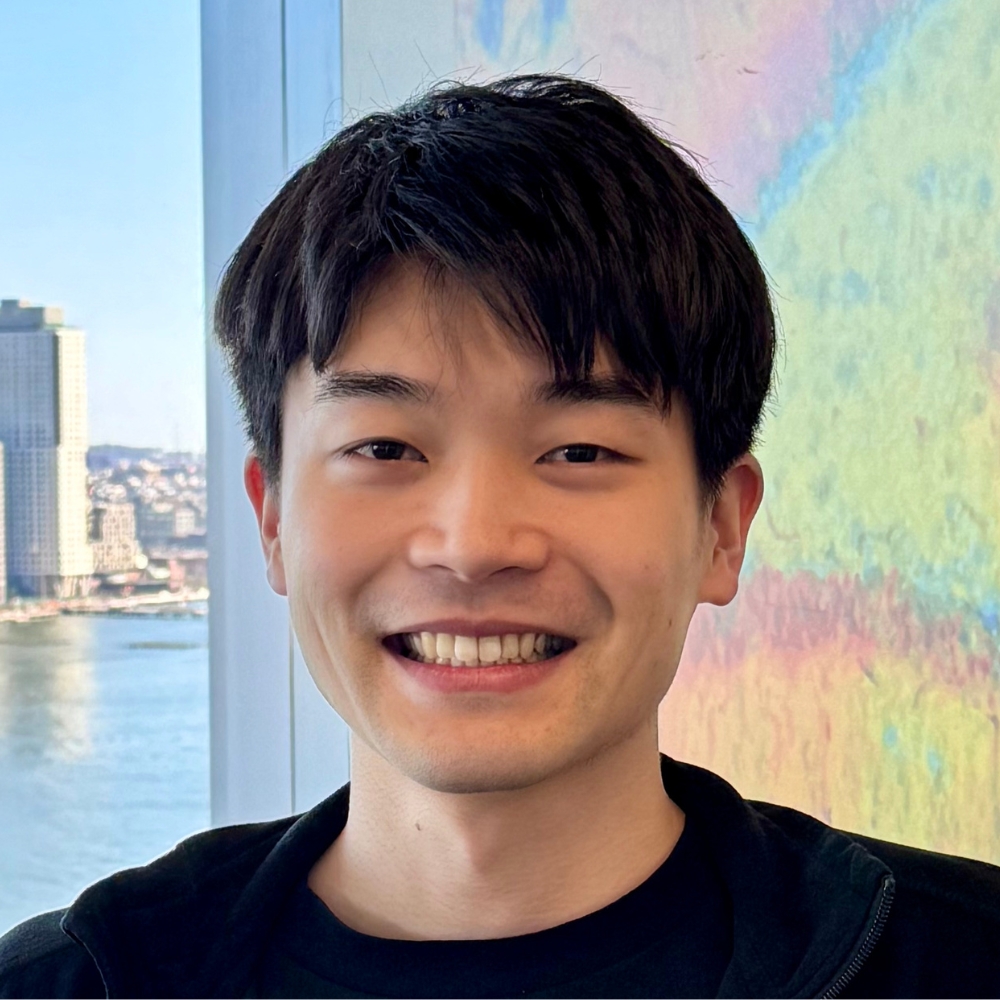
Takayoshi Kuwabara, PhD
2026 Leon Levy Scholar in Neuroscience
NYU Grossman School of Medicine, Institute of Translational Neuroscience
Sub-disciplinary Category
Systems Neuroscience
Previous Positions
- BS, University of Tsukuba
- MS, The University of Tokyo
- PhD, The University of Tokyo (Dr. Takeo Kubo)
Bio
Dr. Takayoshi Kuwabara received his PhD in molecular biology from The University of Tokyo under the supervision of Dr. Takeo Kubo. His thesis focused on how the brain evolved by comparing eusocial honey bees and solitary sawflies at the level of cell types. He is currently a postdoctoral fellow in Dr. Dayu Lin’s lab at NYU Langone Health. As a Leon Levy research fellow, he investigates the neural circuits underlying emotions and social behavior.
Research Summary
Investigating the neural circuit mechanisms of aggression and fear.
Technical Overview
Emotions such as aggression and fear are fundamental survival behaviors conserved across animal species. These responses are highly flexible, allowing animals to adapt emotional expression based on prior experience. The hypothalamus and its connected circuits are central drivers of defensive and aggressive behaviors. Understanding how experience-dependent plasticity within these networks enables emotional adaptation is an emerging area of research. Dr. Takayoshi Kuwabara aims to define how fear and aggression change after social and non-social experiences. He examines how mice express fear in different contexts and how they learn to suppress aggression when it is no longer adaptive. To address these questions, he develops quantitative behavioral paradigms in mice and pairs them with circuit-level analyses of hypothalamus-centered networks. Ultimately, this work will reveal how these networks implement plasticity to flexibly regulate aggression and fear while providing a crucial framework for understanding maladaptive emotional behaviors in neuropsychiatric disease.
Learn about the The Leon Levy Scholarships in Neuroscience.