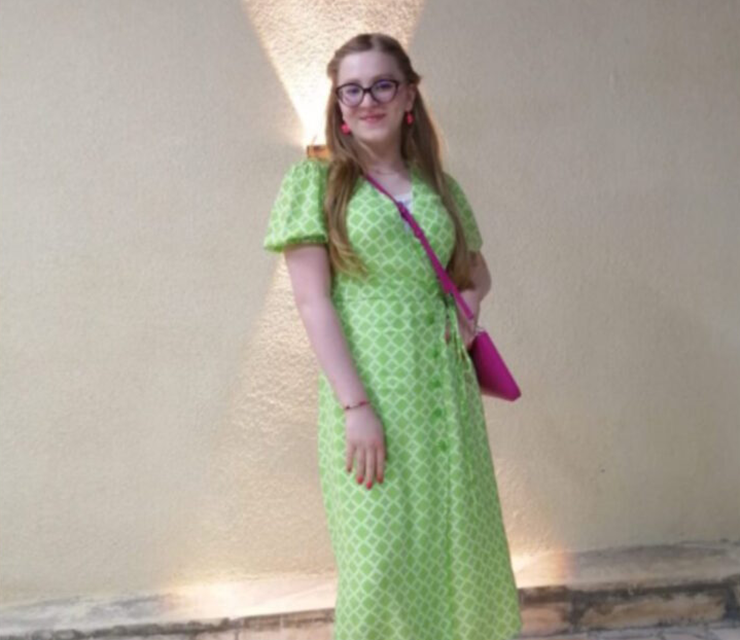
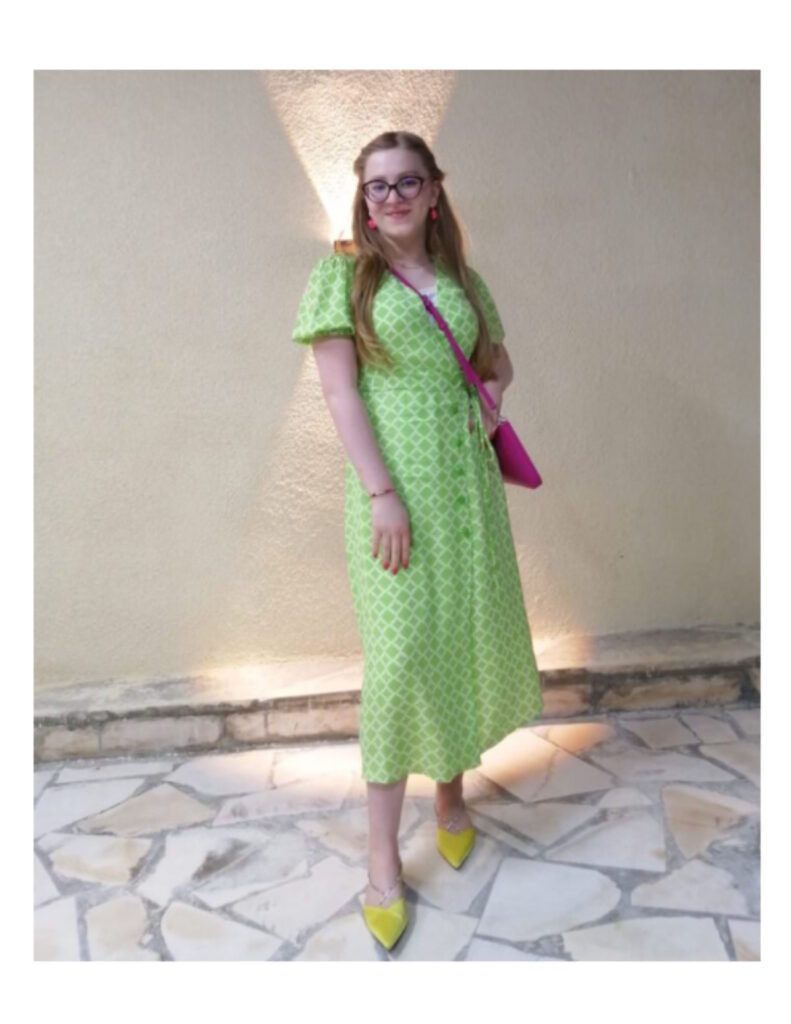
Junior Academy participant Sebsa wants to pursue a career that enables her to combine science and entrepreneurship.
Published September 7, 2023
By Nicole Pope
For Sebsa, a 14-year-old student living in Amman, Jordan, it all began with an ad on social media via the Royal Health Awareness Society, urging teens interested in science and innovation to apply for the Junior Academy Challenge.
Sebsa’s curiosity was triggered, but she hesitated at first. Few of her schoolmates shared her passion for science and she had never embarked on a virtual collaborative project.
Yet taking this first step has launched the teen on an exciting new path. Accepted as a Challenge participant, Sebsa teamed up with four other students (one from Jordan, three from the U.S.) to address The Impact of COVID-19 on Non-Communicable Diseases.
“We were all a bit nervous when we first met online,” Sebsa says, adding that it took no time for their initial shyness to evaporate. “I immediately realized: this is the type of people I want to connect with.”
For three months, the teenagers collaborated closely via the online Launchpad platform. They chose to focus on diabetes, a condition that affects millions around the world. First, they had to gain better knowledge of the disease. Sebsa’s primary role was to collect data on diabetes in the Middle East.
“Our mentor helped us identify good resources,” she says.
Mitigating the Impact of COVID
The team then discussed innovative ways to mitigate the negative impact of COVID-related lockdowns and restrictions on the treatment of diabetes, eventually opting to create an application that would enable doctors to monitor their diabetic patients remotely. App development was a new field for Sebsa, who feels she learned a lot from the interaction with her teammates.
Completing the challenge required hard work and pressure felt intense at times, Sebsa says. One of four sisters, she enjoyed strong support at home from her family. The end result justified all her efforts.
“I am very proud of what we have achieved,” Sebsa says, delighted that her team’s project was named one of the finalists with their contribution. “But the proudest person was my mom, because she works in healthcare, and is my science teacher.”
Submitting the Junior Academy project marked the completion of Sebsa’s first international collaboration, but the teen’s journey into science and innovation is just beginning. At school, she was invited to create a 45-minute presentation about her team’s project and talk about her Junior Academy experience with her classmates, who were impressed with her spirit of initiative and newfound knowledge.
Many expressed a wish to follow in her footsteps. Working across borders with like-minded students has boosted Sebsa’s self-confidence.
“She is reaching for the stars and the moon,” jokes her 19-year-old sister Sina.
Building Upon Past Success
Inspired by this first success, Sebsa is constantly seeking new opportunities to learn and shine. In partnership with her 17-year-old sister Simaza and four other participants, she entered a National Competition for Young Entrepreneurship, organized by Entro Gate, and won first place.
After enrolling in a robotics and technology course, Sebsa decided to test her new teamwork skills in a nationwide tournament in Jordan, coming in third in the competition. She has signed up for yet another science program with Jordan’s Abdul Hameed Shoman Foundation that focuses on applying science to real-life problem solving.
The Junior Academy Challenge has taught Sebsa important skills such as organization, efficiency, and teamwork. Above all, the experience has fueled her desire to keep pushing her personal boundaries and explore the wide world of science.
“I want to study science, but also entrepreneurship,” says the teenager. “I want a career that links the two and doesn’t just benefit me but enables me to help others.”
The Junior Academy was supported by the Stevens Initiative, which is sponsored by the U.S. Department of State, with funding provided by the U.S. Government, and is administered by the Aspen Institute. A version of this story was originally published on the Stevens Initiative’s website here.
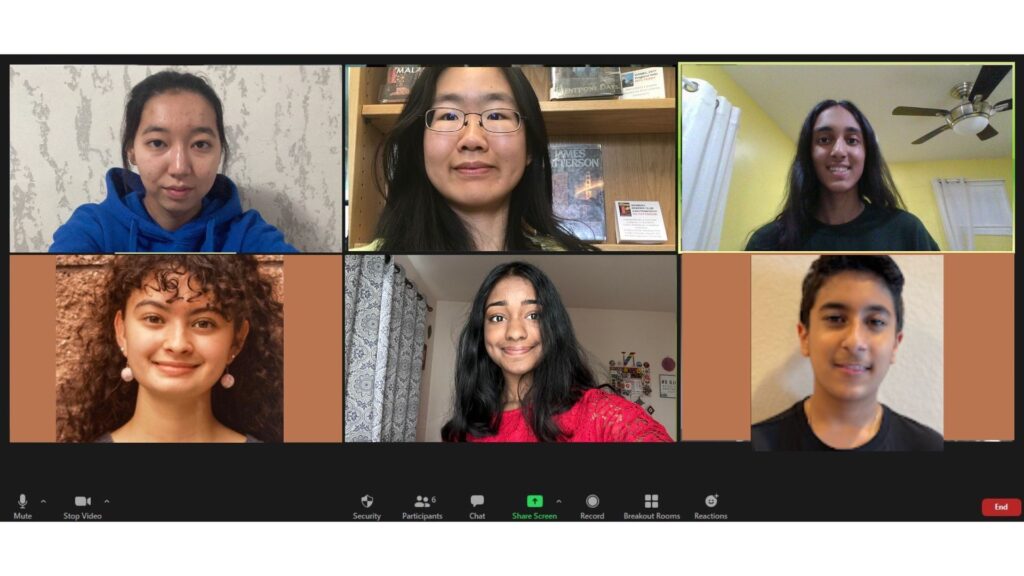
Team Members: Catherine L. (Team Lead) (China), Advika S. (India), Cara C. (United States), Snigdha S. (India), Shruthi D. (United States), Shivani D. (India)
Mentor: Katherine Wert (United States)
Many adolescents struggle with mental health issues and a conflicted relationship with food, brought on by a variety of psychological and social factors–including toxic beauty standards, pressure to be thin, stress and hormones. Eating disorders can have a devastating impact on young people’s mental and physical health.
A six-member international team of science-loving high school students were named the winning team in the Junior Academychallenge “Building Community to Support Student Mental Health” with the creation of Nutribona, a feature-rich app specifically aimed at 13- to 18-year-olds with food concerns.
After consulting with experts and conducting a survey among their peers which revealed a significant prevalence of food-related issues, team members designed this app to help users make better daily nutritional choices. In particular, they wanted to raise awareness of the gut-brain axis, the link between food intake/the consumption of specific nutrients and mood/psychological well-being.
“As I looked into the psychological aspects of Nutribona, I was able to understand the importance of dealing with such disorders at a young age,” says Snigdha. “I realized how big a role an online community has in our daily lives and I believe we were able to create a design that tackles physical and mental health head-on.”
What is Nutribona?
Nutribona offers several innovative features designed to address food-related disorders, such as healthful recipes– alongside several features addressing harmful behaviors such as excessive exercise, episodes of binge/purge, and binge eating. The app also offers access to anonymous chat spaces where users can share their problems with a supportive community and the ability to reach out to psychologists and nutritionists.
Nutribona promotes yoga, a gentle form of exercise that contributes to reducing stress and anxiety and building body strength and flexibility, rather than promoting weight loss. A personal page can be used to track progress. App users can also play games and take part in health-related challenges.
“My favorite part of the challenge is that it offered me a chance to go through a complete design process,” explains Catherine, the Team Lead. “The mindset of design thinking really helps me a lot in building solutions, from research, to interviews, to finally testing.”
Teamwork + Mentorship = Success
This ambitious project was the result of intense teamwork under the guidance of an encouraging mentor.
“Our team was able to work together and divide tasks equally amongst each other,” states Cara. “We collaboratively tested our ideas together and always asked for feedback to improve our work.”
While developing their project, the students felt they learned a lot from each other.
“Even now, as the project is over, I find it hard to believe that I was part of this journey, this incredible experience of learning and discovering and thinking and solving,” says Shivani. “I saw ideas form and evolve and turn into something spectacular.”
The six students are exploring ways to make their app available internationally, and are also considering how to make it commercially viable– eventually deciding that it should be supported by ads carefully selected to prevent a negative impact on users, while considering the necessity of charging a small fee later on.
“Eating difficulties are a major part of mental health. Eating guilt-free is something that everyone should be able to experience,” believes Shruthi. “Looking at our solution, I feel a sense of pride and achievement,” says Advika. “Together we have created a solution that is not only feasible but also viable in the real world.”
Team members:Yuanning (Helen) H. (Team Lead) (United States), Aadi M. (United States), Riya K. (United States), Nachammai A. (United States), Sheila M. (United States), Ayazhan K. (Kazakhstan)
Mentor:Kalyani Neti (India)
As climate change continues to threaten water supplies around the world, the ability to access clean water– a right taken for granted by many people in developed countries– is an ongoing struggle for many populations around the world, particularly in tropical regions. According to the World Health Organization, only 53% of medical facilities in these tropical regions have secure, clean water sources. This results in epidemics of cholera (3 million annually) and diarrhea (1.7 billion cases annually).
Additionally, sepsis from dirty water causes 670,000 infant deaths per year. Six enterprising teens from the United States and Kazakhstan heard the call. The formed Cleaners of Warm Water: Air to Water to Healthcare. They won the Spring 2023 Innovation Challenge on Water Sustainability, sponsored by the Royal Swedish Academy of Engineering Sciences (IVA). The team consisted of Yuanning (Helen) H. (United States. Team Lead), Aadi M. (United States), Riya K. (United States), Nachammai A. (United States), Sheila M. (United States), and Ayazhan K. (Kazakhstan). They worked under the guidance of their mentor, Kalyani Neti (India), to devise an ingenious solution for an acute problem. That problem: Lack of access to sterile, medical-grade water, crucial for healthcare in the tropics.
A Broad Range of Skills
The team began their mission, coordinating across time zones to meet online, swapping ideas, and considering various approaches. The multidisciplinary nature of the challenge meant they had to draw on a broad range of skills.
“I got to use knowledge from biology, chemistry, and physics to devise a coherent plan for our prototype and to identify a legitimate target group,” says Team Lead Yuanning (Helen). “I learned so much from all my teammates whose different personal experiences led to their different approaches to problems. For example, I, who lives in the cold and moist Northeast of the United States, would never have come up with the idea of creating sterile water for tropical regions.”
Dividing and Conquering the Workload Across Time Zones
Eventually, the six students decided to develop an affordable air-to-water generator that uses fans to capture humidity in the air (typically between 77% and 88% in tropical countries) and turn it into water. Drawing on their respective strengths, they divided the tasks among the group and created focused roles.
Sheila took on a research-centered role. “I read multiple reports of the World Health Organization and the United Nations in addition to research papers to gain a deeper understanding of the numbers and the types of people affected. I am passionate about global, equitable healthcare, so I was excited to use our water sustainability project to address both the problems of water insecurity and inadequate healthcare.”
Her teammate Ayazhan gathered and organized statistical data on water issues in the tropics. “I searched a lot for statistics and learned that water pollution is a really big problem in tropical regions, justifying it with metric research results,” she explains.
The team members’ intense online sessions soon generated exciting new ideas. “It is a rewarding experience to meet every week, share ideas, plan our solution and work on implementing our idea in the real world,” says Nachammai. “I worked on data confirmation, conducted interviews, and evaluated the results produced through our surveys. I also did research on future collaborations and on ways we could improve our prototype and solution as a team.”
Designing Blueprints — and 3D Models
Their efforts resulted in the development of an affordable 3D prototype of their machine, which can generate 63 liters, (half a bathtub) of water. By trapping groundwater molecules before they get contaminated by germs, parasites or chemicals, the air-to-water generator reduces the need for filtering and delivers small amounts of clean water cheaply, using sustainable energy sources.
Team member Aadi was in charge of designing and developing the blueprints as well as the 3D model. “I also created the simulation where I demonstrated the construction along with the explanation of each part of our prototype,” he says. To complement their air-to-water generator, the students also developed an app that facilitates the maintenance of the machine and enables users to find the nearest source of sustainable hydropower to fuel it.
During the third phase of their project, the students focused on marketing their invention, building a website that details the technology used and touts its benefits to potential users. “Each team member brought with them a different skill set and perspective,” says Riya, who worked on the website design. “I really loved working with a team of dedicated and passionate individuals interested in STEM fields.”
And it doesn’t end there. The team members plan to use 3D printing to turn their model into a functioning and marketable machine, and seek to take their project even further by collaborating with local governments and non-profit organizations in the targeted countries.
Team members:Tianze H. (Team Lead) (United States), Tianlai H. (United States), Radwa A. (Egypt)
Mentor:Olusola Ladokun (Nigeria)
Urban gardening can be an effective way to provide fresh and healthy food at a low cost, particularly in parts of the world where food security remains elusive. But it involves many variables– climate, soil, location, sun exposure, type of crop– and urban residents often need education and guidance in order to be successful gardeners right from the start.
Three students — Tianze H. (United States, Team Lead), Tianlai H. (United States), Radwa A. (Egypt) — worked under the guidance of their mentor, Olusola Ladokun (Nigeria) to address this knowledge gap, and ultimately won the Spring 2023 Junior Academy Innovation Challenge with their project, “Family Farming: The Ultimate Planting Companion”. The project aims to promote urban gardening around the world by providing useful tips to city dwellers that enables them to supplement their diet with home grown crops.
“After long discussions we finally settled on the current idea,” says Tianlai. “Personally, I contributed creative ideas for our projects, like using deep learning algorithms in our application. I also worked with my teammates on the slides, adding things that they might have missed.” To identify what information would-be gardeners might need, the team conducted a small survey before designing an eco-friendly app called Family Farmers. The app contains a scanner that taps into existing plant and weather databases in order to identify the best potential garden locations based on available amount of space and local climate. The app also provides information about farming methods. It also shows how common household items can help reduce gardening costs.
Adding a Fun Factor to Urban Gardening
Family Farmers is designed to be the ultimate tool for aspiring gardeners, with an AI search engine that can be used to find suitable plants, an option to share progress and tips with a community of like-minded garden enthusiasts, and a calendar to remind users when to water and take care of their plants. The students also added an element of entertainment to their app, with plant-related games that provide fun facts about gardening.
Developing this innovative solution required hard work. The small but mighty team size (just three people) did not deter the committed students– in fact, it helped with the difficult task of coordinating online meetings across time zones.
Strengthening Relationships
“The size of the group does not matter. In fact, it might have even helped everyone strengthen our relationships,” says Team Lead Tianze.
“We were also able to help each other and make up for what we may not be good at. The teammates were willing to cooperate and overcome the time differences that we have,” says Tianze. “We were also able to help each other and make up for what we may not be good at. Helping to solve a real-world problem was a great experience.”
Team member Radwa enjoyed researching the issues surrounding gardening in an urban environment and collaborating with international students. “This was my first time in a program that involves meeting students from different nationalities and working together on new ideas,” he said. “This is a wonderful thing and I’m very glad to have gone through this experience, meeting new friends and learning many things in a field that I’m passionate about. I hope to do something that is related to it one day.”
The Junior Academy was supported by the Stevens Initiative, which is sponsored by the U.S. Department of State, with funding provided by the U.S. Government, and is administered by the Aspen Institute.
The New York Academy of Sciences works in partnership with New York City high schools to promote interest in STEM subjects among students. Many high school students from New York have taken part in Junior Academy challenges, which enable them to team up with peers from various countries around the world to devise innovative solutions to real-life issues.
Published June 29, 2023
By Nicole Pope
We interviewed Angela, and a group of students from around NYC, who recently participated in the Junior Academy about their experiences.
Newfound Confidence and a Broader Understanding of Science
When we catch up with Angela, she has just embarked on her second Junior Academy challenge. Her team is still at the beginning of the three-month process to find a solution. The high school student is excited about making new connections and learning about a new topic. “I’m doing the public health and climate change challenge,” Angela says. “Some of my current team members are from Egypt and although we still have a language barrier, we’ve been communicating really well.”
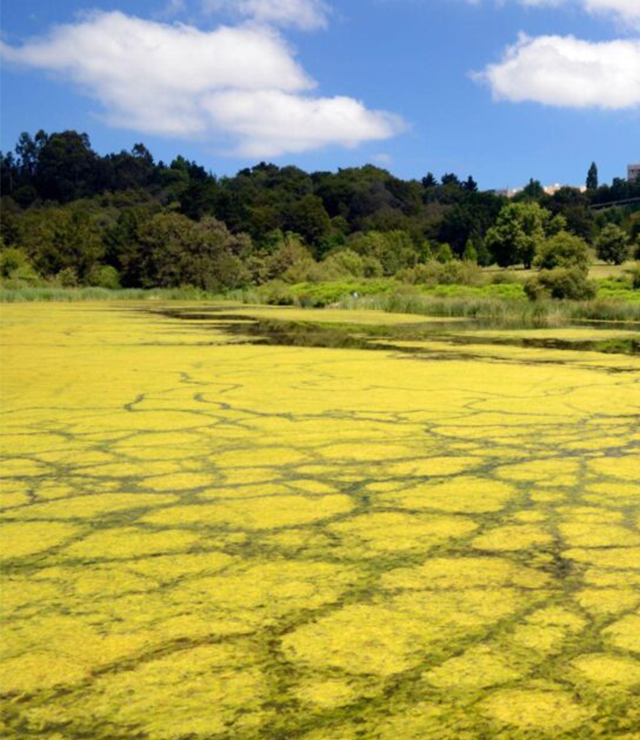
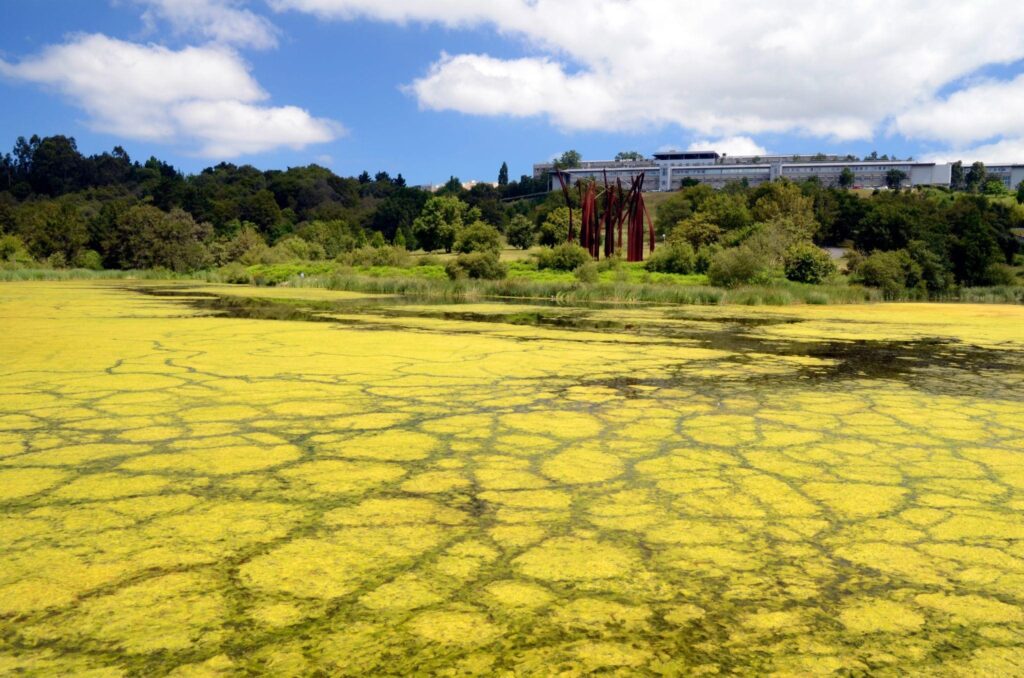
This time, she is familiar with the process and what it entails. Angela first signed up for a Junior Academy challenge (designed by the Royal Academy of Engineering in Sweden) on the Restoration of Aquatic Ecosystems in 2021, encouraged by her older sister who had taken part in an earlier competition. For their project, Angela’s team focused on tackling overgrown algae in the Yellow Sea.
When she enrolled, Angela wasn’t sure how much she would benefit from working online with other students. The experience, it turns out, “far exceeded my expectations,” she says. “It’s been amazing.”
Global Collaboration
Angela enjoyed introducing herself to her teammates and getting to know them better through their regular interactions over the Launchpad platform. “This program was one of my first experiences meeting people from different U.S. states. I’ve really grown my network. I was able to bond with people from different places, different schools,” she says. “We still talk to each other. It’s cool. I can say I have a friend in Texas.”
Working collaboratively with her teammates and mentor has increased Angela’s self-confidence. “I used to be more on the quiet side, sometimes afraid of sharing because I was afraid I would be wrong,” she explains. “But everyone makes mistakes and we work off them, and it helps build the final product in the project. Being able to answer questions with the mistakes we made in the past has been great.”
Angela also credits her teammates for encouraging her to express her views. “At the start, seeing everyone so open was a shock for me. Everyone was sharing their ideas,” she explains. Initially, she was more reticent. “Over time, my teammates understood and they would bring me into the conversation and ask, ‘Do you have something to add?’”
Empowering Shy Participants
Enabling shy participants and giving them space to be heard in a collective environment is a lesson from the challenge that Angela is now applying to other areas of her life.
Her communication skills have improved. In class, she no longer hesitates to speak up. “Whenever I raise my hand, I have more confidence in what I’m going to say – even if it comes out wrong and you cause some laughter in class. I’m learning, they’re learning.”
The Junior Academy has changed Angela’s understanding of science and she has a broader understanding of the arduous but exhilarating path to scientific progress. “When I was younger, I thought research meant you just google something and it’s over. But now I see everything we do is shaped by a very long process,” she says. “Even if you find a solution, you can continue and share it with the scientific community. This has really shaped me as a person.”
Applying What They Learn
When Angela recently attended a Model U.N. conference on climate change, she was proud to discuss her work and her team’s achievements on the aquatic ecosystems project. With the knowledge she had acquired, she was even able to provide input for the conference resolution.
Angela loves the student-led, hands-on collaboration with her teammates (very different from the science classes at school, she points out) but also highlights the contribution of the team mentors, who guide them through the project.
“I think my favorite part, aside from collaborating with people, was the final product: creating something. One of my teammates was able to create a 3D model on an app on the computer. Some of us didn’t know how to do that,” she says. “This is something I want to continue to work on and develop my skills.”
Prior to joining the Junior Academy, Angela was mainly interested in computer science and political science. “Working with mentors has opened me to possibilities that are out there – so many majors I didn’t know of when I started, in 10th grade,” she says.
The Junior Academy has revealed new areas of interest for Angela. “Being able to do research in different fields, such as biology and biomedical, has really changed what I want to do, and now I’m focusing more on working toward that field.” Whatever subject of study she eventually chooses, Angela hopes to have a transformative impact and to contribute to the solution of pressing issues. “I hope I can do that and apply in the future what I learn now and in college.”
Student Interviewed
Angela, High School for Dual Language and Asian Studies Challenge: Restoration of Aquatic Ecosystems (Fall 2021) Project: Prevention of Algae
Interviews from Junior Academy Participants from New York City Schools
What did you learn from engaging with students from around the world?
Joseph: Coming from New York, I was already exposed to a multitude of cultures and perspectives, but my past experiences were nowhere near the scope of this project. I felt like the country that my team’s project focused on, Egypt, was gradually becoming a part of me. Conversing with Bashar and Noor, my [Egyptian] teammates, has taught me the importance of open mindedness– from coordinating early morning meetings across time zones to listening intently to their findings as they knew their community on a much deeper level.
Courtney: This was my first time working on a Junior Academy challenge. I had so much fun and I really enjoyed being able to bring in my coding skills to contribute to the team. It was also really insightful to be able to work with people of different backgrounds because it gave me new perspectives and ideas I never would have thought of alone.
Demetra: My team’s varied perspectives were needed in order to come up with our solution. I do not think we would have had the same process or results if we all lived in the same place and had the same experiences.
Jocelyn: A significant part of this challenge that made it enjoyable was working in a group. If I had worked alone, I wouldn’t have been able to come up with some of the solutions and research that we came up with. We were able to work harmoniously as a team. Because everyone had different skill sets, we were able to split up the work to best complement each of our background knowledge and experiences. We also helped each other out whenever needed, allowing our work to be done thoroughly and effectively.
Ethan: I was surprised that I could collaborate with students around the world to brainstorm and develop solutions for contemporary problems. Initially, I expected this process to be difficult since I only had a few skills. However, working collaboratively in a group made the process significantly easier and approachable since my group members were extremely talented and diligent.
What have you learned about science and how it works? What skills have you gained?
Jocelyn: Throughout this challenge, I’ve not only improved in my collaborative and communication skills, but I’ve also grown as a researcher and creative thinker. The challenge definitely prompted me to think outside of the box to come up with my own creative solutions to various issues. In order to devise these solutions, I had to look through countless research journals and papers, allowing me to refine my research skills as I carefully selected pieces of information to include in our deliverables. I’m extremely grateful for having the opportunity to participate in The Junior Academy due to the innumerable knowledge and teamwork, collaboration, communication, and research skills that I walked away with.
Yewon: Despite several setbacks and hurdles we’ve had to overcome along the way, I’m glad to have learned valuable lessons through trials and errors.
Qing Yi: While it was a smooth process overall, we had our set of obstacles that we had to overcome, such as our schedule, and what exactly our main goal was by the end of the project as there were so many factors and ideas, and we had to solve them. But of course, we overcame them over time and especially with the help of our mentor, Renee.
How important was it to have a mentor?
Yewon: Dr. Mails has been a wonderful mentor and guide to us, offering her timely advice and aiding us in producing work that we could all be proud of, consistently.
Joseph: The project was one of the first instances I have worked with such a passionate mentor, Ms. Janice Havasy. Her extensive knowledge and profound experience in this field proved essential to the progression of our challenge from time to time.
Ethan: Our mentor considerably assisted our group by thoroughly reviewing our brainstorming and development stages, including our deliverables, to identify flaws and ways to make our solution more explicit and effective. Throughout this program, I learned and incorporated graphic design, and I hope to learn web-development or programming in the future since they are critical skills to create virtual solutions. Ultimately, all our group demonstrated a collective effort to create multiple effective solutions to combat misinformation in the public health sector.
Courtney: Working with a mentor was also really helpful as she was able to point out aspects of our project we may have overlooked. Overall, I think I was able to grow personally and professionally through this project.
Demetra: The Junior Academy has been a unique experience because it is largely student led. I have had few opportunities to participate in entirely student run projects outside of clubs at my school, and it was really enjoyable to be able to work out issues and bounce ideas off of my peers rather than an adult with more experience and education. Our mentor helped to guide us and provided advice, but she also let us make our own decisions and choose which direction our project went in. I think that my team had the right balance of guidance from our mentor and leadership from the student participants.
Jocelyn: Our mentor provided extremely valuable feedback that prompted us to consider additional ideas and solutions that we didn’t previously look into. He also consistently communicated with us to ensure that we stayed on track and remained organized.
What was the broader impact of your participation in the Junior Academy Challenge?
Joseph: The Junior Academy has served as a bridge for me to make meaningful connections – combining medicine and social sciences in my research and bonding with teammates from all walks of life. I am beyond grateful for being able to grow and communicate with my peers and mentor, and would love to do it again!
Demetra: I learned about a topic I knew almost nothing about before I started this program, and I was able to do it with people I would never have met without this program, as well. I will use my experience in the Junior Academy to inform my future experiences in STEM, leadership, and teamwork, and I hope to join the program again in the future!
Qing Yi: Everyone did a great job working together, with the short deadlines, the long calls, and our perseverance we made it so far. It wasn’t easy but it was an amazing effort and involvement of each and every single team member.
Ethan: This program gave me a foundation in STEM, and I hope to partake in other future challenges to develop more skills to develop more effective projects.
Students Interviewed
Ethan, Queens High School for the Sciences at York College Challenge: Combating Misinformation in the Public Sector (Spring 2022) Project: Misinformation Management
Jocelyn, Townsend Harris High School Challenge: Healthcare on Demand: The Future of Telemedicine (Fall 2020) Project: Telehealth Technology Meets Healthcare
Yewon, The High School for Math, Science and Engineering Challenge: Restoration of Aquatic Ecosystems (Fall 2021) Project: De-Eutrophying Lakes
Joseph, Stuyvesant High School Challenge: The Impact of COVID-19 on Non-Communicable Diseases (Fall 2021) Project: Coronavirus Controllers
Courtney, Stuyvesant High School Challenge: The Impact of COVID-19 on Non-Communicable Diseases (Fall 2021) Project: Data Innovate
Demetra, Dominican Academy Challenge: Restoration of Aquatic Ecosystems (Fall 2021) Project: Prevention of Algae
Quing Yi, Stuyvesant High School Challenge: Restoration of Aquatic Ecosystems (Fall 2021) Project: Algae Geostrainer – The Restorative Buffer
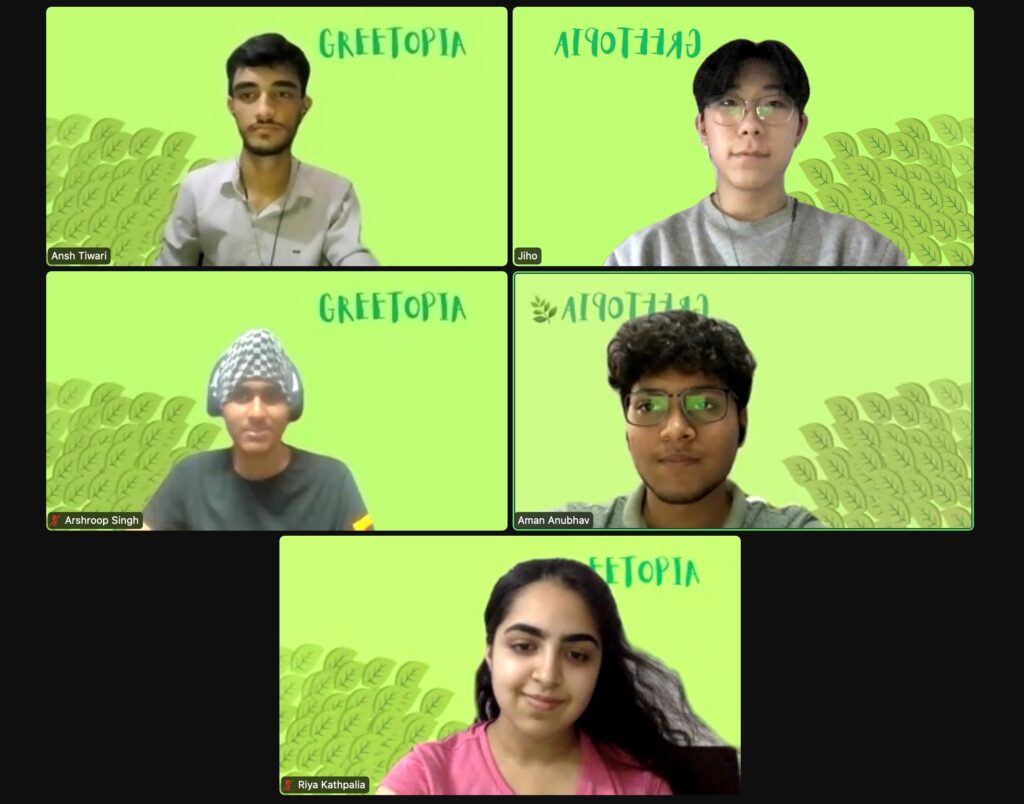
Team Members: Jiho L. (Team Lead) (Republic of Korea), Ansh T. (India), Riya K. (India), Arshroop S. (India), Aman A. (India), Rawnaq A. (Oman)
Mentor: Olusola Ladokun (Nigeria)
Among the 85 teams that embarked on the Green Redesign Challenge in Fall 2022, one team stood out.
By improving irrigation and reducing the waste of resources, Team Greetopia aims to bring innovation to agriculture. They were named the winning project in the challenge.
Based on research and stories shared by numerous farmers, the team identified key issues, illustrated by stark figures: 2 quadrillion gallons of agricultural water are wasted annually[1], and agriculture uses 2.2 quadrillion KJ of energy every year[2], about 5% of world energy demand. They also found that 1.2 billion tons of food[3]– enough to feed the entire US population for 3.64 years– is wasted, never leaving the farm.
Working online, across time zones, created initial difficulties– but the team members found ways of collaborating productively.
“I’m grateful to have experienced the diverse cultures coming together for the betterment of this human society,” says Aman. “Time zones were a hurdle in the smooth performance of the team, but we managed it by distributing the work evenly to be performed by individuals at their time of comfort, alongside holding alternate team meetings at common times.”
Challenges in Agriculture
The Organisation for Economic Co-operation and Development (OECD) has identified lack of innovation as one of the biggest challenges in agriculture. In a world facing multiple challenges such as depleted natural resources, climate change, and pollution, developing more efficient agricultural systems is crucial for our survival.
Through online brainstorming, the team concluded that emerging technologies like the Internet of Things (IoT) and Artificial Intelligence (AI) can address some of these issues and can help farmers who often lack the skill set to optimize agricultural methods. Overuse of fertilizer, for example, can pollute waterways, burn crops, deplete the soil of minerals and increase air pollution.
“It was an amazing experience to have connected with like-minded individuals and research world-changing approaches!” says Riya.
Greetopia team members decided to develop a web application that would tackle the excessive use of non-renewable resources.
“I got to research and learn more about the important crises around the world, such as concrete pollution, irrigation, etc.,” says Arshroop. “The constant communication within the team allowed us to keep up with the information and learn a lot of valuable lessons through the program.”
Utilizing the Internet of Things
In particular, the students opted to use the Internet of Things (IoT) to increase efficiency in irrigation and modernize farming practices that have remained unchanged for centuries.
“As team lead, I worked on planning our work, informing each member of what they have to do until certain target dates, creating documents to make the process efficient, and of course, conducting research about our research topic and filling in the milestones,” explains Team Lead Jiho.
The team devised “Kanad”, a farming application that delivers four main functions. First, it senses soil moisture levels by using a machine-learning component called Long Short-Term Memory Network (LSTM), which gets more accurate with use. Second, farmers can enter information on the Nitrogen, Phosphorus and Potassium (NPK) content in the soil, (also analyzed by sensors) to identify the most optimally adapting crops for these soil characteristics and locations.
Utilizing Machine-Learning
Machine-learning can also recommend the optimal amount of fertilizer based on the same NPK levels in the field. Finally, farmers can enter images of their crop into the web-based application, which will use the Convolutional Neural Network deep learning system to identify potential crop diseases with an accuracy of 95.25%.
Arriving at this successful solution did not prove easy: the team decided to change direction halfway through the Challenge.
“I’m glad that the team members understood the sudden change in our projected target in the middle of the program, which led to a successful ending,” says Ansh. In the end, perseverance paid off and the outcome amply justified the effort involved.
“Despite the obstacles we encountered, we made it till the end,” says Rawnaq. “We did not just complete the challenge but the result was awesome.”
[1] Source: UN Food and Agriculture Organisation [2] Source: US Department of Agriculture [3] Source: World Wildlife Fund (WWF-UK)
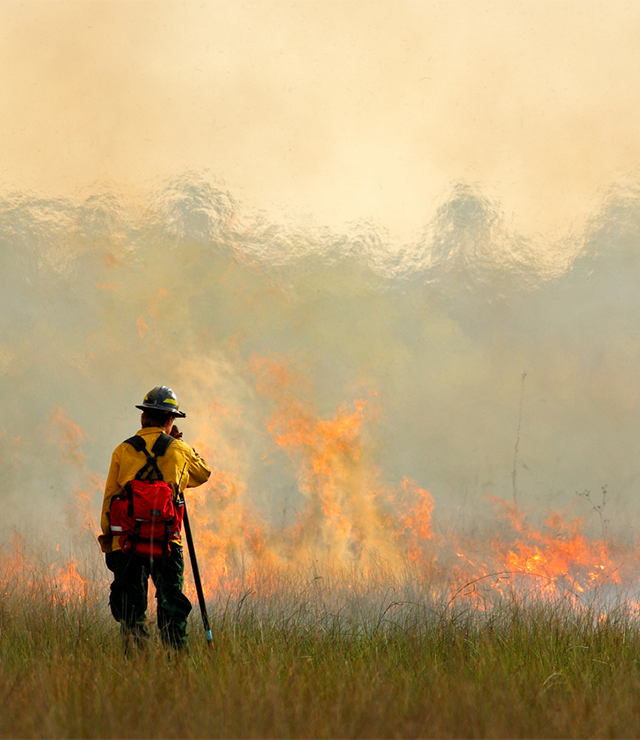
Prolonged droughts, caused by climate change, have amplified the risks of forest fires around the globe– making blazes bigger, more frequent, and more intense.
These fires devastate vast swathes of forests and often spread into residential areas, threatening lives and housing. Research by the University of Maryland suggests that fires cause forests to lose 3 million more hectares annually than in 2001. Furthermore, the UN Environment Program estimates that by 2100, the number of forest fires will increase by 50%.
The team Intelligent Forest — Chinmay R. (India, Team Lead), Rohan S. (India), and Soumik P. (India) — worked under the guidance of their mentor Malarvizhi Arulraj (United States) to tackle this critical issue as part of the “Forestry for a Sustainable Future” Fall 2022 Junior Academy Challenge, sponsored by the Royal Swedish Academy of Engineering Sciences (IVA). Intelligent Forest bested the field among 175 competitors. Their innovative method to predict the risk of fire helped them to win.
“It was great taking on real world problems and using our intellect to solve them. I learned various things throughout the course of the challenge such as AI, weather patterns, machine learning applications and much more,” says Rohan. “We worked hard as a team and came up with a solution in the end together.”
Understanding Forest Fires
Forest fires can be triggered by natural factors, such as lightning, or by human factors, such as the careless dropping of a cigarette or the lighting of an unnecessary fire in severe drought conditions. Crown fires burn the entire length of the trees while surface fires only scorch dried leaves and grass.
In some cases, fire can rage under the ground. As the team discovered over the course of their research, climatic conditions play a critical role– the hotter and drier the weather, the more destructive the fire is likely to be.
Finding ways to mitigate the impact of these now-frequent infernos required hard work, but the team members worked collaboratively to achieve results.
“There were times when I was uncertain as to whether we would even reach the end, but here we are,” says Soumik. “It was a fun experience working with my team members, and I had the opportunity to add and develop my skills. My main contribution was helping with the research side of things and suggesting ideas and edits.”
Utilizing Artificial Intelligence
With support from their mentor, the students decided to focus on harnessing the power of Artificial Intelligence (AI) to analyze forest and temperature data, in the hope that it would be possible to predict the risk of fires.
“I was impressed by the plans and ideas the team put together and was absolutely delighted to mentor the team,” says their mentor, Malarvizhi. “They chose a problem and approach that was hard and challenging. Especially, finding the best dataset and creating working machine-learning algorithms needs a lot of effort.”
Using data on fire alerts and meteorological information (minimal and maximal temperatures, rainfall, solar radiation and daily evaporation) collected in the Brisbane area in Australia between 2012 and 2022, the team tested two different AI approaches: Decision Tree and Random Forest.
The Results
The goal was to create four categories: no risk, low risk, medium risk or high risk of fire. The results provided the proof-of-concept the team expected. With the Decision Tree approach, they were able to predict fire risk with 70% accuracy, while the accuracy was 79% using the Random Forest approach.
These findings demonstrated that with the help of AI, it is possible to predict the risk of forest fires with 70–80% accuracy, which, in turn, allows for increased preparedness and limited impact.
“The project was a great learning experience for me,” says Team Lead Chinmay. “I had taken Artificial Intelligence as a subject in high school and this project taught me how I could apply what I had learned in a real-life situation.”
Winners of the Junior Academy Innovation Challenge Spring 2022: “Flexible Use of Electricity”
Published July 1, 2022
By Roger Torda
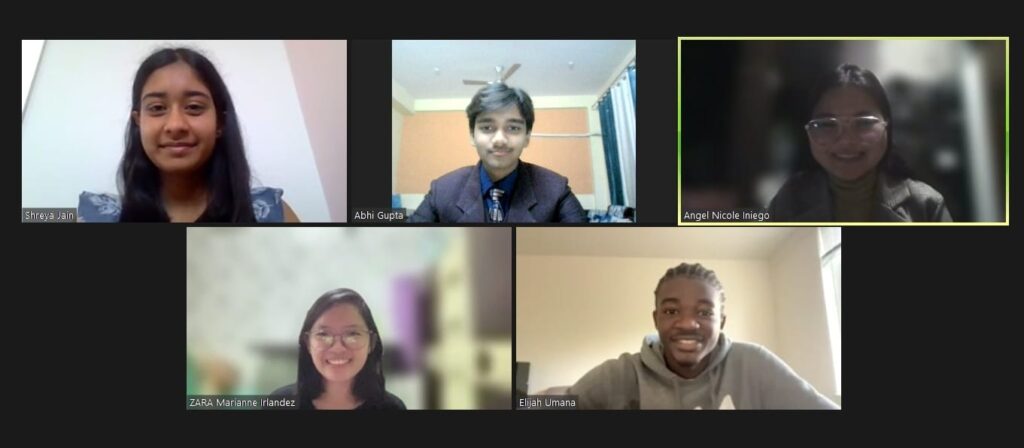
Team Members: Abhi G. (Team Lead) (India), Marianne I. (Philippines), Shreya J. (Canada), Angel I. (Philippines), Elijah U. (Nigeria)
Mentor: Muhammad Mahad Malik (Pakistan)
For this Junior Academy challenge on Flexible Use of Electricity, the five Power On team members chose to address a thorny issue: the energy deficit in the Philippines, where electricity demand is growing rapidly, and supply falls short of demand– leaving close to 30% of the population without electricity or facing significant fluctuations in electricity supply known as brownouts. Constraints on access to power are especially acute in rural areas and on the country’s numerous islands.
“The flexible electricity challenge is one of the most complex research projects I’ve ever worked on as it took quite a while for me to decipher the exact problems that needed to be tackled,” explains Elijah. “However, this pushed me to engage more in extensive readings, and actively be a part of reaching out to and interviewing numerous experts.”
After conducting a survey in nine countries, consulting their mentor and experts, and brainstorming through the Academy’s Launchpad platform, the team members narrowed down potential solutions to focus on three approaches.
“Asking questions and making sure that we understood the concepts fueled me to keep on collecting more knowledge,” says Marianne. “Interviewing different experts from different fields gave us new perspectives when we dealt with this challenge. Because a problem has deep roots, it is important to look at it from different angles.”
Raising Public Awareness
First, based on the results of their survey, the students determined it was important to raise public awareness of electricity issues such as peaks/non-peaks, flexible use of electricity, and supply, storage and distribution. They’ve addressed this need for awareness with an entertaining game designed to educate consumers.
“I had to meet experts from around the globe to hear their perspectives on flexible electricity,” explains Angel. “It made me realize that people may have different geographies and have various living standards, but what we have in common is that we face similar problems, such as balancing the demand and supply of electricity.”
The second pillar of the students’ project is Demaflex, an app to forecast demand and improve the response. The app would analyze data to predict times of high demand and encourage consumers to reduce the pressure on the power grid by scheduling their use of various appliances (such as dishwashers or washing machines) during off-peak periods. By sending recommendations to power users, the app would promote flexible use of electricity.
Finally, the team focused on developing Electrade, an app-based, decentralized, user-friendly energy trading platform that would allow people to buy energy and sell excess electricity back to the grid. The enterprising students will be working with the Department of Science and Technology (DOST) and the Philippine Council for Industry, Energy, and Emerging Technology Research and Development (PCIEERD), which have created a partnership program to grant startup funding towards commercializing their solutions.
An Eye-Opening Experience
Seeing their project take shape has given the team members a great sense of achievement.
“Electricity, in particular, always seemed like an intimidating challenge to tackle, but now, I’ve learned so much,” says Shreya. “I’m proud of the solution that we created and the work we’ve done to create, test, innovate, and communicate our project to the world.”
Participating in the Junior Academy challenge has been an intense learning experience and the students are delighted that their hard work has paid off– winning the challenge is merely the icing on the cake.
“The Flexible Electricity Challenge, for me personally, was quite an eye-opener. From all the research done by everyone on the team, I’ve learned quite a few things about the grid, electricity supply, and the demand response system,” says Team Lead Abhi. “The late nights and the sheer amount of work each and every one put in on our project is something I’ll always remember and be grateful for.”
Meet Sea Saviors, the winning team of the Fall 2021 Junior Academy Challenge “Restoration of Aquatic Ecosystems.”
Published December 15, 2021
By Roger Torda
In the fall of 2021, six budding scientists entered the Junior Academy Challenge and teamed up online to address eutrophication in the Black Sea area and the Dnieper River that runs across Ukraine. Team members were Anzhelika-Mariia H. (Team Lead) (Ukraine), Kusum S. (Nepal), Aman Kumar F. (India), Manan P. (India), Ksheerja S. (India), and Viktoriia L. (Ukraine); the team worked under the mentorship ofPratibha Gupta (India).
Eutrophication is a naturally-occurring process that affects the chemical composition of water bodies. When this process is accelerated by human factors like industrial waste, sewage and fertilizers from farms, it causes excessive growth of algae and phytoplankton, oxygen deficiency, and dead zones – thus threatening ecosystems, biodiversity, and public health.
As a first step, the Challenge participants conducted research to better understand the root causes of the problem in the Dnieper River basin.
“I got tons of insights on eutrophication and how it is destroying our planet’s life,” explains Aman Kumar.
Encouraged by their mentor Pratibha (a.k.a. “Power Girl”), the students also looked at existing solutions before brainstorming new approaches that could improve the aquatic environment.
“Our mentor’s enlightening advice and expertise showed me just how vital the role of mentor is,” says Manan. “Hopefully, some day, I can become a Junior Academy mentor!”
Focusing Ecological Ditches
The team eventually opted to focus on ecological ditches, a traditional drainage system that developed in Ukraine in the 1960s, when the country was still part of the Soviet Union. Located at the edge of fields, eco-ditches allow excess rainwater to be carried away. In their conventional form, the drainage channels are inefficient at filtering unwanted fertilizer or nutrients and the team sought ways to improve them with better engineering.
“The diversity of our group, not only geographical, but also the unique personality that each of us carried added immense value to our work,” says Kusum.
The students identified a potential solution of adding plants with strong filtration capacity to eco-ditches, and looked at hydraulic flow rate control.
“I met hardworking individuals who helped me improve my own skills and taught me many valuable lessons in teamwork and analytical thinking,” says Ksheerja.
Eco-ditches require regular maintenance to remove sediments. While polluting industries can be easily identified, farms are harder to locate – yet farms release nitrogen and phosphorus fertilizers that affect the delicate chemical balance of water bodies. The students saw a potential path to a sustainable solution: by mapping agricultural farms and existing canals, they could be linked into common drainage systems that could be monitored.
Raising Awareness Through Gaming
Raising awareness of the threats posed by eutrophication is also crucial. The Sea Saviors designed a web-based computer game aimed at children aged 8-13 to sensitize them to environmental issues.
“My role was to be a game designer and developer. Because of the Junior Academy, I found out about different ways of creating the video game and practiced one more game developing engine,” says Viktoriia.
In the two-level game, a friendly sea monster tries to make the aquatic environment more habitable for his fish buddies. In the process, Bob the Monster introduces young players to ecological ditches and the cultivation of oyster shells as ways of regulating the aquatic ecosystem.
“My team was tenacious and industrious from the beginning,” says Pratibha, thrilled with her mentees’ achievements. “Each member had faith in the other one to work diligently.”
For the winning team members, the project has been a stimulating learning experience that allowed them to form strong bonds.
“Working on this project boosted my motivation to continue my studies in the hope of becoming a scientist one day,” said Anzhelika-Mariia.
Teams, made up of 28 students from 11 countries, win international challenges in Space Exploration, Smart Technology for Home and Health, Cybersecurity, Sustainable Transportation, and the battle against COVID-19.
Published August 12, 2020
By Roger Torda
Five international teams made up of 28 students from 11 countries have demonstrated they can solve challenges that vex the most experienced scientists and engineers. The students are among more than a thousand that competed in 2020 Challenges run by teams, made up of 28 students from 11 countries, won international challenges in various fields of science as part of The New York Academy of Sciences’ Global STEM Alliance. The teams collaborated across borders to develop solutions related to the coronavirus pandemic, routine healthcare monitoring, cybersecurity, lunar exploration, and sustainable transportation.
The Combating COVID-19 Challenge
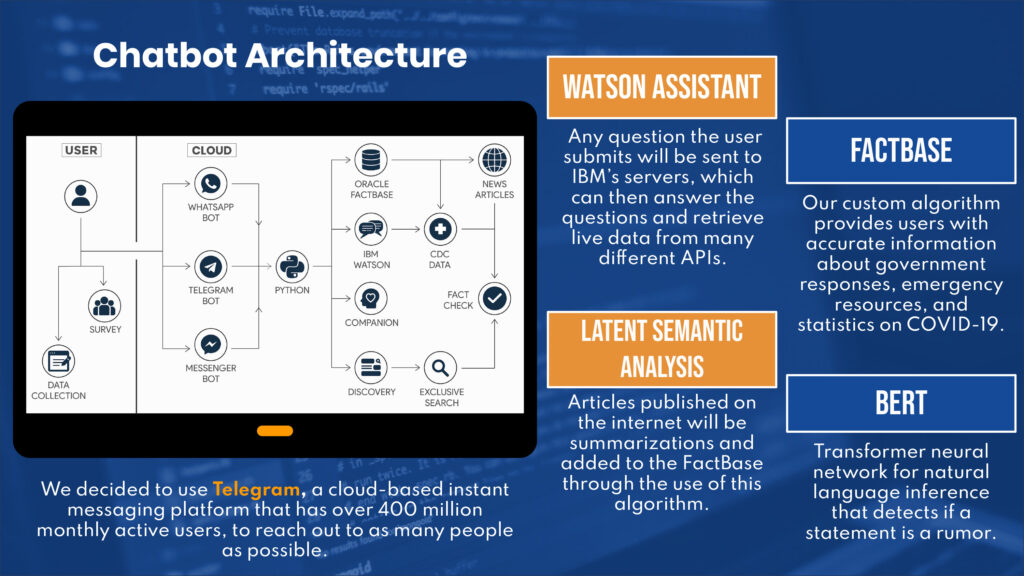
“I didn’t want to stand by and passively wait for the pandemic to be over,” said Young Chen, explaining why he assembled a team to enter the Combating COVID-19 Challenge. “It was a combination of curiosity, risk-taking, and desire to help my community.” Chen, from Ashburn, Virginia, four other students from the United States, and another from New Delhi, India, won first place among 200 entries in the global competition. Their winning project, called GOvid-19, was a chatbot to provide users with information about government responses, emergency resources, and statistics on COVID-19, and ways they can help fight the pandemic.
The Academy’s goal with the competitions is to help students develop capabilities necessary for effective work and leadership in STEM fields. “Providing opportunities for students to build 21st-century skills like problem solving, collaboration and communication are core goals of our challenge programs,” said Hank Nourse, Senior Vice President & Chief Learning Officer for the Academy, in announcing the winners of the Challenges. This year, several of the Challenges were especially valuable as non-classroom projects for students whose schools had closed because of COVID-19. “Several of these teams completed their work during shutdowns due to the pandemic,” Nourse explained. “We are happy to know that our digital tools allowed students to continue working and learning without interruption.”
The Intelligent Homes & Health Challenge
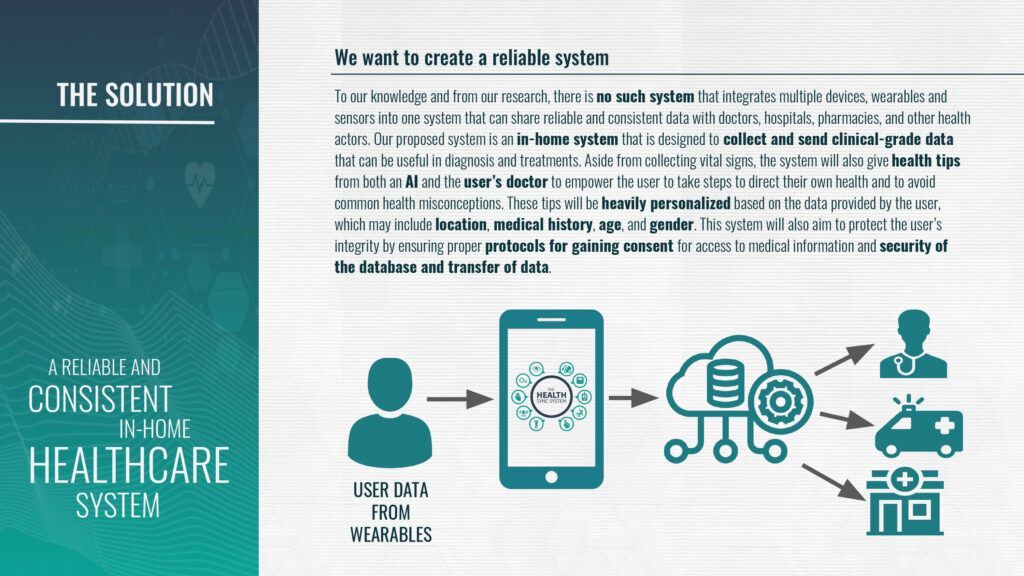
Zoe Piccirillo, leader for the team that won the Intelligent Homes & Health Challenge, described some of what she learned: “I have become a more open-minded, collaborative and creative individual from working with the motivated and bright members of our team… My team members also helped make our final solution more inclusive. The diversity of the group provided new perspectives regarding what values and concerns are prevalent across the world.” Zoe’s Health Sync team designed a secure, in-home health monitoring system connecting patients, doctors, and pharmacists. Zoe, from New York City, worked with another student from the United States, two from Sweden, and one each from the Philippines and Australia.
I have become a more open-minded, collaborative and creative individual from working with the motivated and bright members of our team.
Zoe Piccirillo
After assembling their teams, the students use the Academy’s Launchpad platform to connect with a volunteer mentor and then to reach out to other experts as they conduct research. “Mentors are often early career scientists, from academia and industry, who volunteer their time to help guide the students with their projects,” explained Kaari Casey, GSA program manager.
“I’m incredibly proud of my teams,” said Jessica Black, the mentor for Health Sync and a veteran of nine previous Challenges. “Often, the topics that are presented for these challenges are varied and out of the scope of what most students are studying in school,” Black continued. “They have to integrate their knowledge base with newly acquired information that must be obtained through research. It’s a new process for many of them. To see the resolutions and presentations they formulate by the end of the challenge is incredible.”
Black is a fellow in pediatric oncology at New York-Presbyterian/Weill Cornell Medical Center in New York City. “As a female in STEM I feel it’s really important to act as a role model not just for my female students, but for all of my students,” she added. The Intelligent Homes and Health Challenge was sponsored by the Royal Swedish Academy of Engineering Sciences, AstraZeneca, and Chalmers University of Technology.
The Cybersecurity in the Age of IoT Challenge
A team calling itself Cybercastle won the Cybersecurity in the Age of IoT Challenge, with a system that uses blockchain technology to encrypt medical records. Team lead Rasmus Häggkvist, from Norrbotten, Sweden, described his criteria for forming a team using Launchpad, saying he “was looking for kind, organized, diligent, and prudent perfectionists.” He found them in all corners of the world, including India, Morocco, Canada and the Philippines. The Cybersecurity Challenge was sponsored by the S&P Global Foundation, with 25 employees from S&P Global serving as mentors to student teams.
The Space Challenge
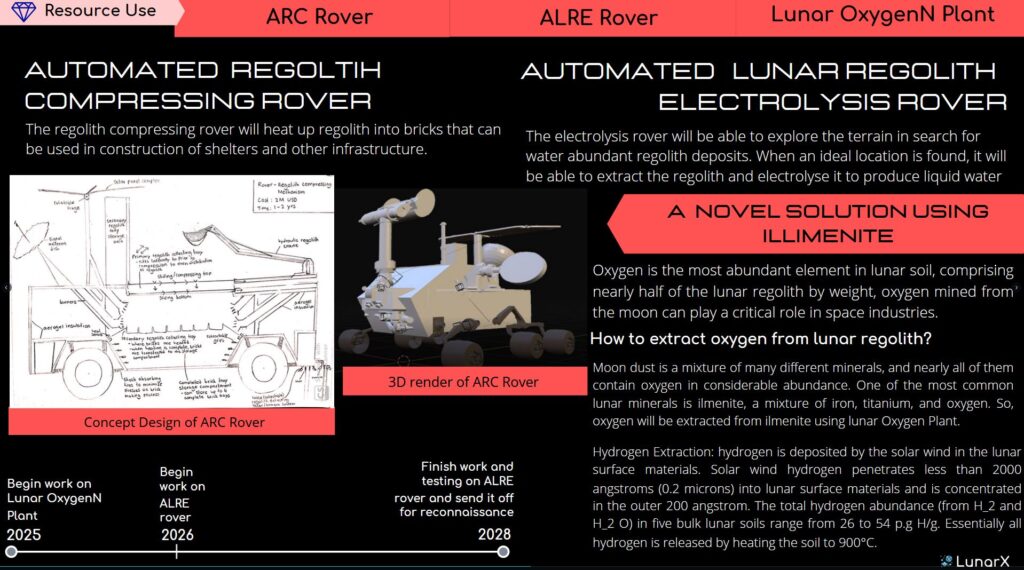
The LunarX team won the Space Challenge for its plan to colonize the Moon, including designs for shelters, sustainable food and water systems, and artificial intelligence tools for energy and mobile transport. Sachee Kachchakaduge, the team’s leader from Vancouver, Canada, pointed to the importance of using digital communications in a global project: “We used asynchronous collaboration to work on our own time. Distance and time zones did not prove to be issues, and we were able to work as if we were school friends or classmates.”
Sachee also pointed to opportunities to expand skills in sometimes unexpected ways: “At the surface, challenges seem like they only teach you about the topic at hand. However, in reality, you learn many other things. The team provides a safe space for everyone to try new software, and to learn from others and to test out your ideas.” Sachee’s teammates were from the United Arab Emirates, the Republic of Moldova, India, and the United States.
LunarX team mentor Garret Schneider, a retired aeronautical and astronautical engineer who worked in the Air Force and in industry, said the team worked hard to avoid becoming overwhelmed: “I think their biggest obstacles were digesting all the information and possibilities, and also deciding where to focus their energies…. [This] contributed to their success, as well as their dedication to tie all the elements of their solution together in a thorough, coherent manner.” Garret, who has volunteered with the Academy for close to 20 years, said he benefits as well as the students: “I have a renewed respect for the intelligence and capability and spirit of our youth – I feel pride to have been associated with them.”
The Chain of Transportation Challenge
A team calling itself LiFe won the Sustainable Chain of Transportation Challenge. The team designed a battery, a vehicle and an app to match specific transportation needs with the most efficient transportation solutions. Team member Abby Liang, from Troy, Michigan, said: “My new knowledge about the scientific research and design process, as well as both technical and creative skills from coding to policy frameworks to project management, will stay with me as I continue in my studies… I am so proud of our final comprehensive design.”
Members of the team were from Mexico, New Zealand, Egypt and the United States. The Sustainable Chain of Transportation Challenge was sponsored by the Royal Swedish Academy of Engineering Sciences and the Volvo Group.
Winning teams will receive a trip to New York City for next year’s annual GSA Summit, as this year’s Summit was postponed due to the coronavirus pandemic. In lieu of the in-person event this year, a virtual summit was held last month. Nicholas B. Dirks, the Academy’s President and CEO, addressed almost a thousand students and mentors, with a message about the importance of cross-discipline curiosity.
Laura Helmuth, Editor-In-Chief of Scientific American, delivered a keynote address, describing career pathways to science journalism and explaining the importance of good communication in the practice of science.
One of S&P Global’s 25 Challenge mentors echoed the belief that the exchange of ideas is a two-way process. “I wanted the chance… [to] get some exposure to what the next generation thinks about the problems the world is facing,” said Ryan Duve, a senior data scientist. Ryan worked with several teams and mentored a team called Symblot, which competed in the Cybersecurity Challenge. “I think the most important part of mentoring is just being a positive example of what you can be when you grow up,” he continued. “Too many young people only hear about different professions in articles and never really get a chance to do Q&A with a practitioner, which is a role I thought I could help fill.”
Winning Teams for the 2020 Global STEM Alliance Challenges
Combatting COVID-19
Abhay Sheshadri, Monroe Township, NJ, US; Anshul Mahajan, New Delhi, India; Regan Razon, Morrisville, NC, US; Tanush Swaminathan, Monroe Township, NJ, US; Young Chen, Asburn, VA, US.
Sachee Kachchakaduge, Vancouver, Canada; Sreenidhi Vijayaraghavan, Dubai, United Arab Emirates; Andreea Bujor, Ungheni, Republic of Moldova; Abhinav Agarwal, Jaipur, India; Arnav Hazra, San Francisco, CA, US; Naveen HV, Mysore, India.
Intelligent Homes & Health
Sara Rydell, Stockholm, Sweden; Jana Montanez, Parañaque City, Philippines; Ansh Gadodia, Princeton Junction, NJ, US; Sophia Li, Melbourne, Australia; Alice Forslund, Göteborg, Sweden; Zoe Piccirillo, New York, NY, US.
Sustainable Chain of Transportation
Cynthia Ramirez Meneses, Texcoco, Mexico; Izabela Zmirska, St. Augustine, FL, US; Evie Rose Grace, Dunedin, New Zealand; Ishita Bhimavarapu, Princeton, NJ, US; Abby Liang, Troy, MI, US.