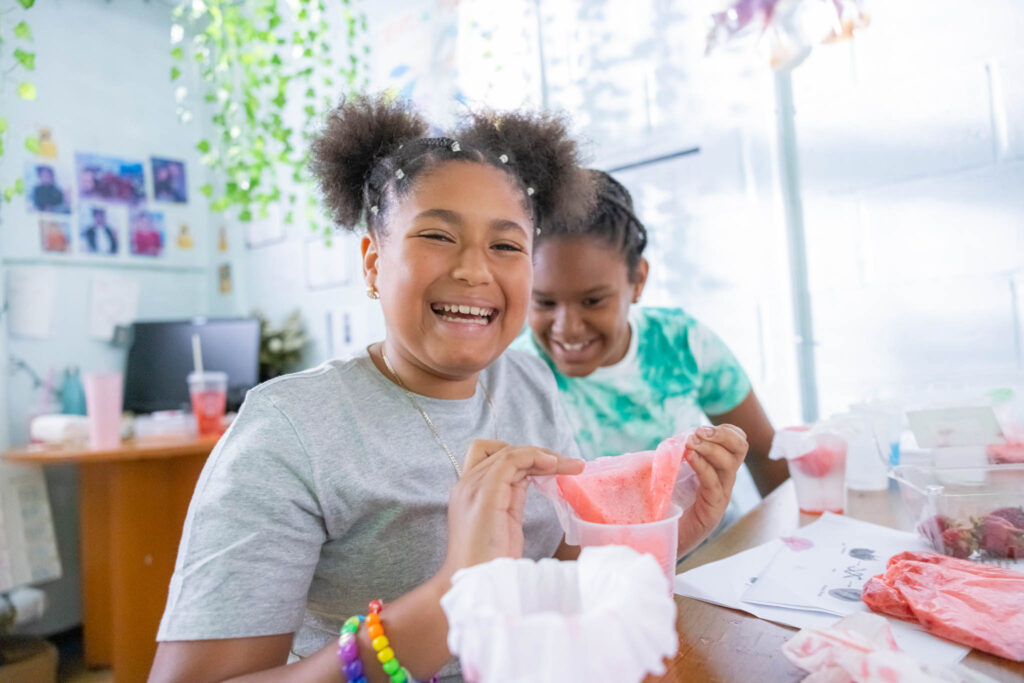
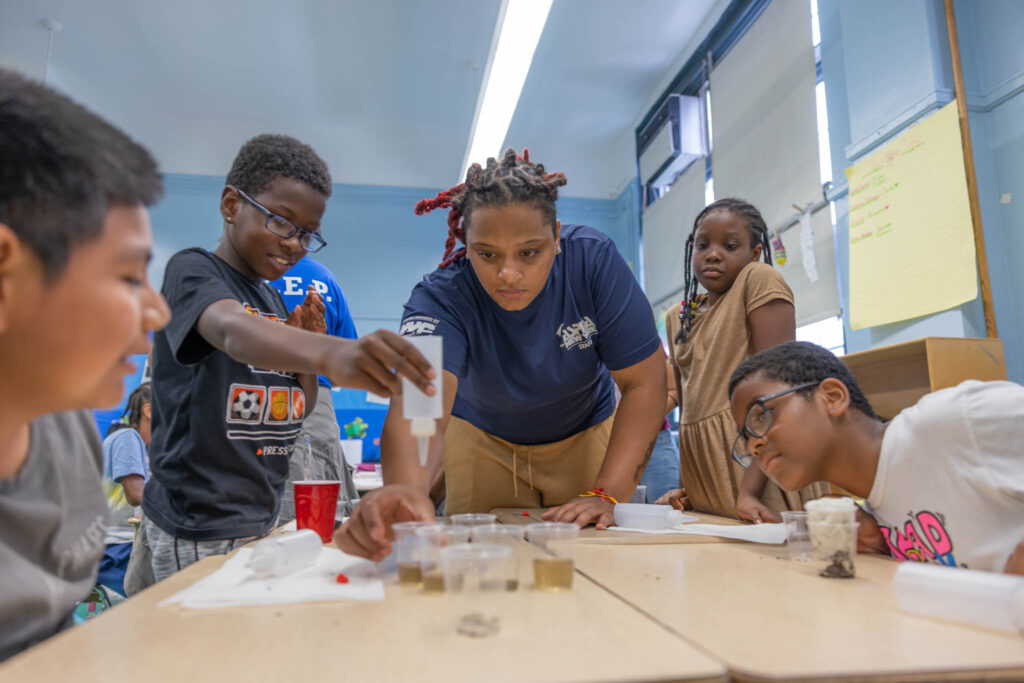
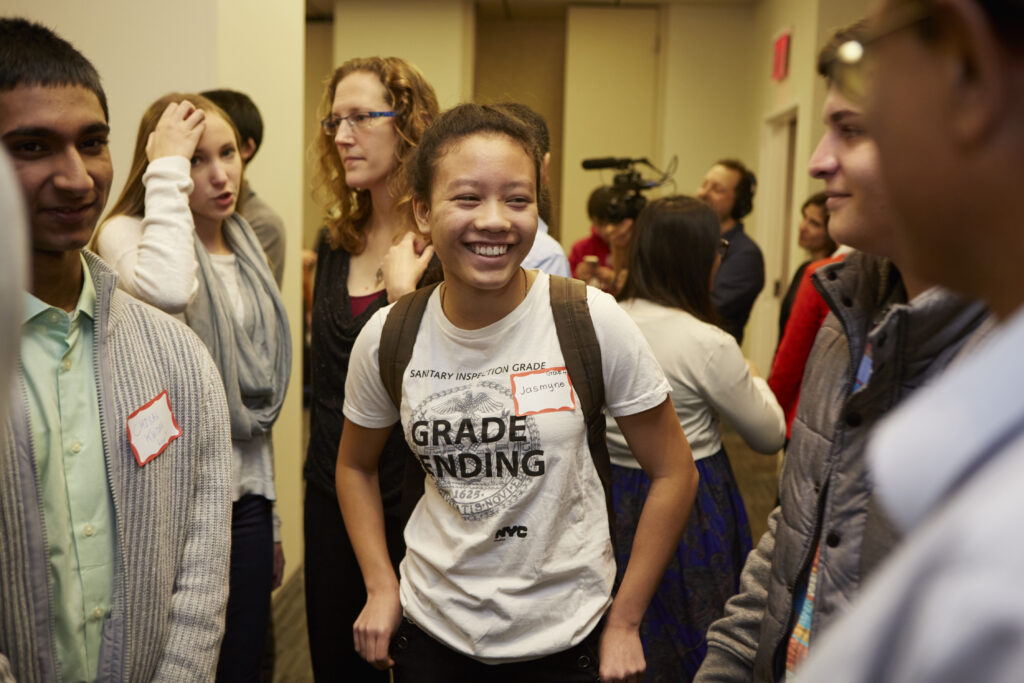
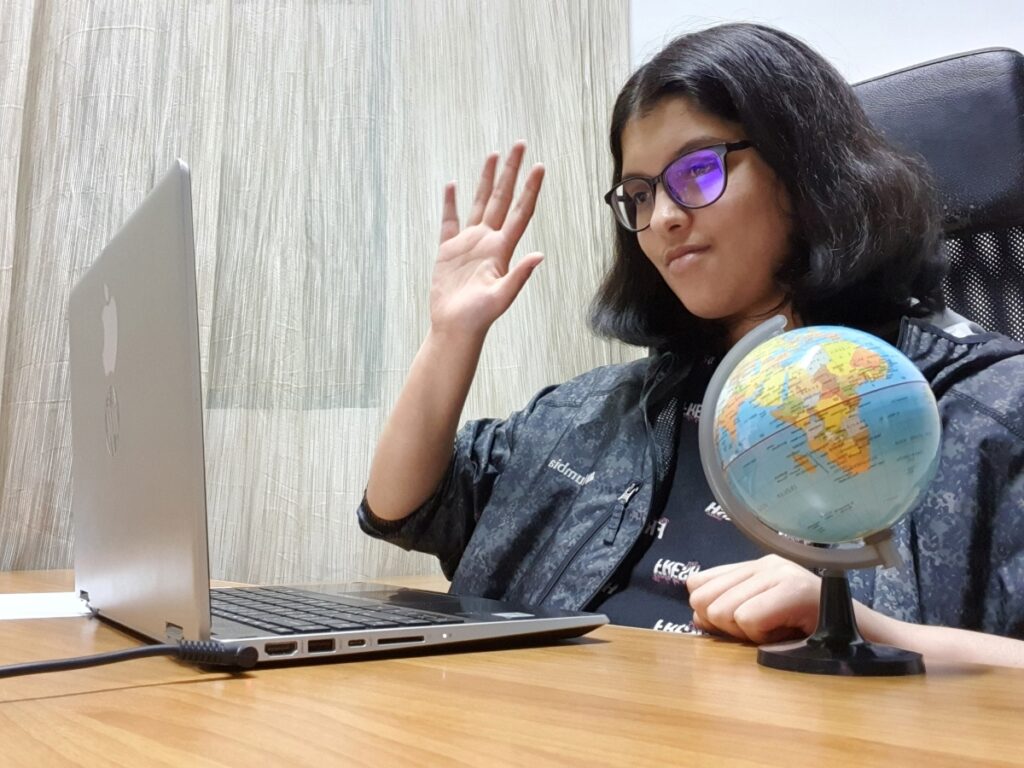
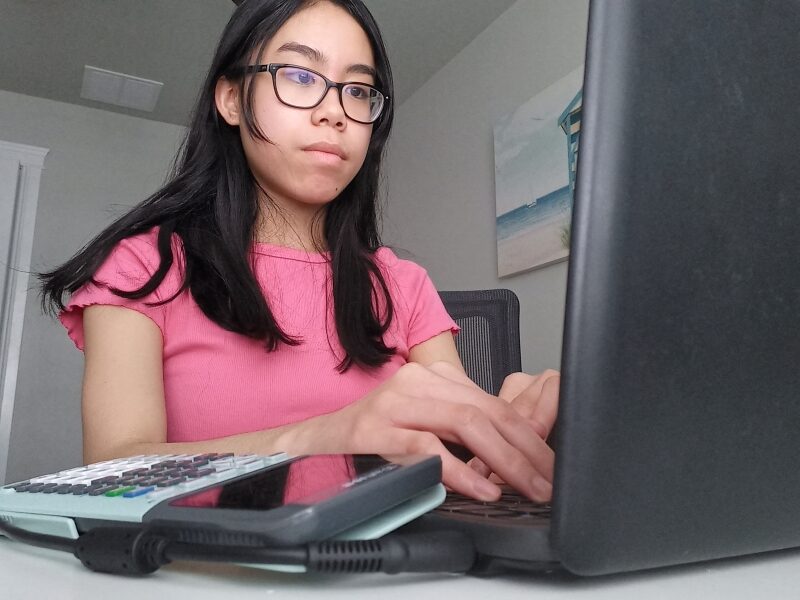
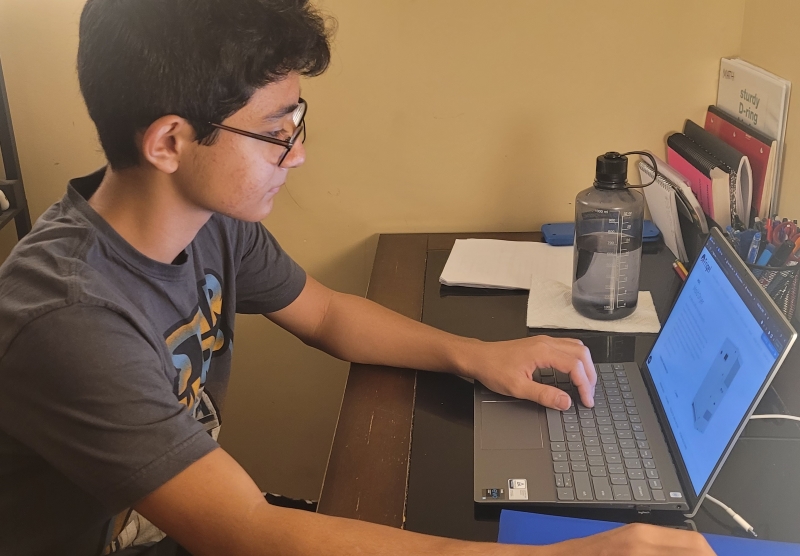
Our high school programs are designed for students who have a curiosity about science but don’t have opportunities in their own school to work with a scientist on a real research project. We aim to bridge the gaps and welcome all high school students worldwide who have a desire to use STEM to tackle challenges in their communities.
There are several ways we partner with external organizations to offer high school students exciting opportunities to deepen their understanding of STEM.
Download the New York Academy of Sciences STEM Education 10-Year Impact Report, 2024.
[{"id":28728,"link":"https:\/\/www.nyas.org\/ideas-insights\/blog\/combating-extreme-heat-environments-through-technology-architecture-infrastructure-and-urbanization\/","name":"combating-extreme-heat-environments-through-technology-architecture-infrastructure-and-urbanization","thumbnail":{"url":"https:\/\/www.nyas.org\/wp-content\/uploads\/2025\/02\/ja-living-in-the-extremes-1024x683.jpg","alt":"A woman hiking, looking at a series of structures that appear to be from an old civilization."},"title":"Combating Extreme Heat Environments through Technology Architecture Infrastructure and Urbanization","author":{"name":"The New York Academy of Sciences","link":"https:\/\/www.nyas.org\/author\/nickfetty\/"},"date":"Aug 5, 2025","dateGMT":"2025-08-05 17:00:07","modifiedDate":"2025-10-31 19:43:32","modifiedDateGMT":"2025-10-31 19:43:32","commentCount":"0","commentStatus":"closed","categories":{"coma":"<a href=\"https:\/\/www.nyas.org\/category\/climate\/\" rel=\"category tag\">Climate<\/a>, <a href=\"https:\/\/www.nyas.org\/category\/education\/\" rel=\"category tag\">Education<\/a>","space":"<a href=\"https:\/\/www.nyas.org\/category\/climate\/\" rel=\"category tag\">Climate<\/a> <a href=\"https:\/\/www.nyas.org\/category\/education\/\" rel=\"category tag\">Education<\/a>"},"taxonomies":{"blog-highlight":"","blog-category":"<a href='https:\/\/www.nyas.org\/blog-category\/program-wrap-up\/' rel='blog-category'>Program Wrap-Up<\/a>","feature":"<a href='https:\/\/www.nyas.org\/feature\/program-participant\/' rel='feature'>Program Participant<\/a>","program-category":"<a href='https:\/\/www.nyas.org\/program-category\/innovation-challenge\/' rel='program-category'>Innovation Challenge<\/a><a href='https:\/\/www.nyas.org\/program-category\/junior-academy\/' rel='program-category'>Junior Academy<\/a><a href='https:\/\/www.nyas.org\/program-category\/learning\/' rel='program-category'>Learning<\/a>","scientific-theme":"<a href='https:\/\/www.nyas.org\/scientific-theme\/health-disease\/' rel='scientific-theme'>Health & Disease<\/a><a href='https:\/\/www.nyas.org\/scientific-theme\/sustainable-planet\/' rel='scientific-theme'>Sustainable Planet<\/a>","speaker-name":""},"readTime":{"min":4,"sec":15},"status":"publish","excerpt":"Finding an innovative approach to improve the housing and living environment for communities living in scorching heat."},{"id":28724,"link":"https:\/\/www.nyas.org\/ideas-insights\/blog\/eco-twisters\/","name":"eco-twisters","thumbnail":{"url":"https:\/\/www.nyas.org\/wp-content\/uploads\/2025\/02\/ja-air-quality-health-1024x536.jpg","alt":"A woman wearing a facemask looks out from her balcony to a hazy, air polluted city skyline."},"title":"Eco-twisters","author":{"name":"The New York Academy of Sciences","link":"https:\/\/www.nyas.org\/author\/nickfetty\/"},"date":"Aug 5, 2025","dateGMT":"2025-08-05 16:55:52","modifiedDate":"2025-10-31 19:43:26","modifiedDateGMT":"2025-10-31 19:43:26","commentCount":"0","commentStatus":"closed","categories":{"coma":"<a href=\"https:\/\/www.nyas.org\/category\/climate\/\" rel=\"category tag\">Climate<\/a>, <a href=\"https:\/\/www.nyas.org\/category\/education\/\" rel=\"category tag\">Education<\/a>","space":"<a href=\"https:\/\/www.nyas.org\/category\/climate\/\" rel=\"category tag\">Climate<\/a> <a href=\"https:\/\/www.nyas.org\/category\/education\/\" rel=\"category tag\">Education<\/a>"},"taxonomies":{"blog-highlight":"","blog-category":"<a href='https:\/\/www.nyas.org\/blog-category\/program-wrap-up\/' rel='blog-category'>Program Wrap-Up<\/a>","feature":"<a href='https:\/\/www.nyas.org\/feature\/program-participant\/' rel='feature'>Program Participant<\/a>","program-category":"<a href='https:\/\/www.nyas.org\/program-category\/innovation-challenge\/' rel='program-category'>Innovation Challenge<\/a><a href='https:\/\/www.nyas.org\/program-category\/junior-academy\/' rel='program-category'>Junior Academy<\/a><a href='https:\/\/www.nyas.org\/program-category\/learning\/' rel='program-category'>Learning<\/a>","scientific-theme":"<a href='https:\/\/www.nyas.org\/scientific-theme\/health-disease\/' rel='scientific-theme'>Health & Disease<\/a><a href='https:\/\/www.nyas.org\/scientific-theme\/sustainable-planet\/' rel='scientific-theme'>Sustainable Planet<\/a>","speaker-name":""},"readTime":{"min":4,"sec":12},"status":"publish","excerpt":"\u201cWhen redesigning our solution, we prioritized accessibility and eco-friendliness and ended up reducing the size.\u201d"},{"id":28592,"link":"https:\/\/www.nyas.org\/ideas-insights\/blog\/the-junior-academy-symposium-sparks-creative-solutions-to-modern-problems\/","name":"the-junior-academy-symposium-sparks-creative-solutions-to-modern-problems","thumbnail":{"url":"https:\/\/www.nyas.org\/wp-content\/uploads\/2023\/12\/Junior-Academy.png","alt":""},"title":"The Junior Academy Symposium Sparks Creative Solutions to Modern Problems","author":{"name":"The New York Academy of Sciences","link":"https:\/\/www.nyas.org\/author\/nickfetty\/"},"date":"Jul 28, 2025","dateGMT":"2025-07-28 12:50:07","modifiedDate":"2025-10-31 19:43:08","modifiedDateGMT":"2025-10-31 19:43:08","commentCount":"0","commentStatus":"closed","categories":{"coma":"<a href=\"https:\/\/www.nyas.org\/category\/education\/\" rel=\"category tag\">Education<\/a>","space":"<a href=\"https:\/\/www.nyas.org\/category\/education\/\" rel=\"category tag\">Education<\/a>"},"taxonomies":{"blog-highlight":"","blog-category":"<a href='https:\/\/www.nyas.org\/blog-category\/program-wrap-up\/' rel='blog-category'>Program Wrap-Up<\/a>","feature":"<a href='https:\/\/www.nyas.org\/feature\/program-participant\/' rel='feature'>Program Participant<\/a>","program-category":"<a href='https:\/\/www.nyas.org\/program-category\/junior-academy\/' rel='program-category'>Junior Academy<\/a><a href='https:\/\/www.nyas.org\/program-category\/learning\/' rel='program-category'>Learning<\/a>","scientific-theme":"<a href='https:\/\/www.nyas.org\/scientific-theme\/stem-pathways\/' rel='scientific-theme'>STEM Pathways<\/a>","speaker-name":""},"readTime":{"min":5,"sec":45},"status":"publish","excerpt":"Though separated by geography and Zoom screens, the desire to connect and create was on full display."},{"id":26483,"link":"https:\/\/www.nyas.org\/ideas-insights\/blog\/the-last-strand\/","name":"the-last-strand","thumbnail":{"url":"https:\/\/www.nyas.org\/wp-content\/uploads\/2025\/05\/Upcycling-and-Waste-Management-Challenge-Image.png","alt":"Public artwork to bring attention to waste management."},"title":"The Last Strand","author":{"name":"The New York Academy of Sciences","link":"https:\/\/www.nyas.org\/author\/nickfetty\/"},"date":"May 16, 2025","dateGMT":"2025-05-16 12:29:49","modifiedDate":"2025-10-31 19:39:16","modifiedDateGMT":"2025-10-31 19:39:16","commentCount":"0","commentStatus":"closed","categories":{"coma":"Uncategorized","space":"Uncategorized"},"taxonomies":{"blog-highlight":"","blog-category":"<a href='https:\/\/www.nyas.org\/blog-category\/story-of-impact\/' rel='blog-category'>Story of Impact<\/a>","feature":"","program-category":"<a href='https:\/\/www.nyas.org\/program-category\/innovation-challenge\/' rel='program-category'>Innovation Challenge<\/a><a href='https:\/\/www.nyas.org\/program-category\/junior-academy\/' rel='program-category'>Junior Academy<\/a><a href='https:\/\/www.nyas.org\/program-category\/learning\/' rel='program-category'>Learning<\/a>","scientific-theme":"<a href='https:\/\/www.nyas.org\/scientific-theme\/sustainable-planet\/' rel='scientific-theme'>Sustainable Planet<\/a>","speaker-name":""},"readTime":{"min":4,"sec":38},"status":"publish","excerpt":"Winners of the Fall 2024 Junior Academy Challenge: \"Upcycling & Waste Management\""},{"id":26476,"link":"https:\/\/www.nyas.org\/ideas-insights\/blog\/upgrading-the-hydraulic-system\/","name":"upgrading-the-hydraulic-system","thumbnail":{"url":"https:\/\/www.nyas.org\/wp-content\/uploads\/2025\/05\/Remediation-in-South-Brooklyn-Challenge-Image.png","alt":"Offshore wind turbines."},"title":"Upgrading the Hydraulic System","author":{"name":"The New York Academy of Sciences","link":"https:\/\/www.nyas.org\/author\/nickfetty\/"},"date":"May 16, 2025","dateGMT":"2025-05-16 12:24:01","modifiedDate":"2025-10-31 19:39:08","modifiedDateGMT":"2025-10-31 19:39:08","commentCount":"0","commentStatus":"closed","categories":{"coma":"<a href=\"https:\/\/www.nyas.org\/category\/climate\/\" rel=\"category tag\">Climate<\/a>, <a href=\"https:\/\/www.nyas.org\/category\/new-york-city\/\" rel=\"category tag\">New York City<\/a>","space":"<a href=\"https:\/\/www.nyas.org\/category\/climate\/\" rel=\"category tag\">Climate<\/a> <a href=\"https:\/\/www.nyas.org\/category\/new-york-city\/\" rel=\"category tag\">New York City<\/a>"},"taxonomies":{"blog-highlight":"","blog-category":"<a href='https:\/\/www.nyas.org\/blog-category\/story-of-impact\/' rel='blog-category'>Story of Impact<\/a>","feature":"","program-category":"<a href='https:\/\/www.nyas.org\/program-category\/innovation-challenge\/' rel='program-category'>Innovation Challenge<\/a><a href='https:\/\/www.nyas.org\/program-category\/junior-academy\/' rel='program-category'>Junior Academy<\/a><a href='https:\/\/www.nyas.org\/program-category\/learning\/' rel='program-category'>Learning<\/a>","scientific-theme":"<a href='https:\/\/www.nyas.org\/scientific-theme\/sustainable-planet\/' rel='scientific-theme'>Sustainable Planet<\/a>","speaker-name":""},"readTime":{"min":4,"sec":51},"status":"publish","excerpt":"Winners of the Fall 2024 Junior Academy Challenge: \" Remediation in South Brooklyn\""},{"id":26472,"link":"https:\/\/www.nyas.org\/ideas-insights\/blog\/fairify-reducing-bias-in-ai-models\/","name":"fairify-reducing-bias-in-ai-models","thumbnail":{"url":"https:\/\/www.nyas.org\/wp-content\/uploads\/2025\/05\/Ethical-AI-Challenge-Image.png","alt":""},"title":"fAIrify - Reducing BIAS in AI Models","author":{"name":"The New York Academy of Sciences","link":"https:\/\/www.nyas.org\/author\/nickfetty\/"},"date":"May 16, 2025","dateGMT":"2025-05-16 12:19:43","modifiedDate":"2025-10-31 19:38:59","modifiedDateGMT":"2025-10-31 19:38:59","commentCount":"0","commentStatus":"closed","categories":{"coma":"<a href=\"https:\/\/www.nyas.org\/category\/architecture-and-infrastructure\/\" rel=\"category tag\">Architecture and Infrastructure<\/a>","space":"<a href=\"https:\/\/www.nyas.org\/category\/architecture-and-infrastructure\/\" rel=\"category tag\">Architecture and Infrastructure<\/a>"},"taxonomies":{"blog-highlight":"","blog-category":"<a href='https:\/\/www.nyas.org\/blog-category\/story-of-impact\/' rel='blog-category'>Story of Impact<\/a>","feature":"","program-category":"<a href='https:\/\/www.nyas.org\/program-category\/innovation-challenge\/' rel='program-category'>Innovation Challenge<\/a><a href='https:\/\/www.nyas.org\/program-category\/junior-academy\/' rel='program-category'>Junior Academy<\/a><a href='https:\/\/www.nyas.org\/program-category\/learning\/' rel='program-category'>Learning<\/a>","scientific-theme":"<a href='https:\/\/www.nyas.org\/scientific-theme\/technology-innovation\/' rel='scientific-theme'>Technology & Innovation<\/a>","speaker-name":""},"readTime":{"min":4,"sec":17},"status":"publish","excerpt":"Winners of the Fall 2024 Junior Academy Challenge: \"Ethical AI\""},{"id":26021,"link":"https:\/\/www.nyas.org\/ideas-insights\/blog\/the-junior-academys-impact-on-an-aspiring-engineer\/","name":"the-junior-academys-impact-on-an-aspiring-engineer","thumbnail":{"url":"https:\/\/www.nyas.org\/wp-content\/uploads\/2025\/04\/Ruhi-Samudra-Headshot.png","alt":"A woman smiles for the camera."},"title":"The Junior Academy's Impact on an Aspiring Engineer","author":{"name":"The New York Academy of Sciences","link":"https:\/\/www.nyas.org\/author\/nickfetty\/"},"date":"Apr 25, 2025","dateGMT":"2025-04-25 15:30:12","modifiedDate":"2025-10-31 19:34:36","modifiedDateGMT":"2025-10-31 19:34:36","commentCount":"0","commentStatus":"closed","categories":{"coma":"<a href=\"https:\/\/www.nyas.org\/category\/brooke-elliott\/\" rel=\"category tag\">Brooke Elliott<\/a>, <a href=\"https:\/\/www.nyas.org\/category\/outreach\/\" rel=\"category tag\">Outreach<\/a>","space":"<a href=\"https:\/\/www.nyas.org\/category\/brooke-elliott\/\" rel=\"category tag\">Brooke Elliott<\/a> <a href=\"https:\/\/www.nyas.org\/category\/outreach\/\" rel=\"category tag\">Outreach<\/a>"},"taxonomies":{"blog-highlight":"","blog-category":"<a href='https:\/\/www.nyas.org\/blog-category\/profile\/' rel='blog-category'>Profile<\/a><a href='https:\/\/www.nyas.org\/blog-category\/story-of-impact\/' rel='blog-category'>Story of Impact<\/a>","feature":"<a href='https:\/\/www.nyas.org\/feature\/program-participant\/' rel='feature'>Program Participant<\/a>","program-category":"<a href='https:\/\/www.nyas.org\/program-category\/junior-academy\/' rel='program-category'>Junior Academy<\/a><a href='https:\/\/www.nyas.org\/program-category\/learning\/' rel='program-category'>Learning<\/a>","scientific-theme":"<a href='https:\/\/www.nyas.org\/scientific-theme\/stem-pathways\/' rel='scientific-theme'>STEM Pathways<\/a>","speaker-name":""},"readTime":{"min":3,"sec":28},"status":"publish","excerpt":"Ruhi Samudra's participation in the Junior Academy led her to launch her own website."},{"id":25857,"link":"https:\/\/www.nyas.org\/ideas-insights\/blog\/the-lasting-impact-of-the-junior-academy\/","name":"the-lasting-impact-of-the-junior-academy","thumbnail":{"url":"https:\/\/www.nyas.org\/wp-content\/uploads\/2025\/04\/NYAS-1992-Presentation-1024x730.jpg","alt":"A young woman stands at a podium."},"title":"The Lasting Impact of the Junior Academy","author":{"name":"The New York Academy of Sciences","link":"https:\/\/www.nyas.org\/author\/nickfetty\/"},"date":"Apr 16, 2025","dateGMT":"2025-04-16 13:55:06","modifiedDate":"2025-10-31 19:33:57","modifiedDateGMT":"2025-10-31 19:33:57","commentCount":"0","commentStatus":"closed","categories":{"coma":"<a href=\"https:\/\/www.nyas.org\/category\/brooke-elliott\/\" rel=\"category tag\">Brooke Elliott<\/a>","space":"<a href=\"https:\/\/www.nyas.org\/category\/brooke-elliott\/\" rel=\"category tag\">Brooke Elliott<\/a>"},"taxonomies":{"blog-highlight":"","blog-category":"<a href='https:\/\/www.nyas.org\/blog-category\/profile\/' rel='blog-category'>Profile<\/a>","feature":"<a href='https:\/\/www.nyas.org\/feature\/program-participant\/' rel='feature'>Program Participant<\/a>","program-category":"<a href='https:\/\/www.nyas.org\/program-category\/junior-academy\/' rel='program-category'>Junior Academy<\/a><a href='https:\/\/www.nyas.org\/program-category\/learning\/' rel='program-category'>Learning<\/a>","scientific-theme":"<a href='https:\/\/www.nyas.org\/scientific-theme\/stem-pathways\/' rel='scientific-theme'>STEM Pathways<\/a>","speaker-name":""},"readTime":{"min":4,"sec":26},"status":"publish","excerpt":"Dr. Zolotor's passion for public health goes back to her time in the Junior Academy in the 1990s."},{"id":17463,"link":"https:\/\/www.nyas.org\/ideas-insights\/blog\/using-artificial-intelligence-and-augmented-reality-to-assist-dementia-patients\/","name":"using-artificial-intelligence-and-augmented-reality-to-assist-dementia-patients","thumbnail":{"url":"https:\/\/www.nyas.org\/wp-content\/uploads\/2024\/08\/Using-Artificial-Intelligence-and-Augmented-Reality-to-Assist-Dementia-Patients-1024x752.jpg","alt":"A photo of a man checking his smartwatch, with AI graphics over-imposed."},"title":"Assisting Dementia Patients with AI and AR","author":{"name":"The New York Academy of Sciences","link":"https:\/\/www.nyas.org\/author\/nickfetty\/"},"date":"Aug 14, 2024","dateGMT":"2024-08-14 15:02:39","modifiedDate":"2025-11-05 20:55:25","modifiedDateGMT":"2025-11-05 20:55:25","commentCount":"0","commentStatus":"closed","categories":{"coma":"<a href=\"https:\/\/www.nyas.org\/category\/ai\/\" rel=\"category tag\">Artificial Intelligence<\/a>","space":"<a href=\"https:\/\/www.nyas.org\/category\/ai\/\" rel=\"category tag\">Artificial Intelligence<\/a>"},"taxonomies":{"blog-highlight":"","blog-category":"<a href='https:\/\/www.nyas.org\/blog-category\/story-of-impact\/' rel='blog-category'>Story of Impact<\/a>","feature":"<a href='https:\/\/www.nyas.org\/feature\/program-participant\/' rel='feature'>Program Participant<\/a>","program-category":"<a href='https:\/\/www.nyas.org\/program-category\/innovation-challenge\/' rel='program-category'>Innovation Challenge<\/a><a href='https:\/\/www.nyas.org\/program-category\/junior-academy\/' rel='program-category'>Junior Academy<\/a><a href='https:\/\/www.nyas.org\/program-category\/learning\/' rel='program-category'>Learning<\/a>","scientific-theme":"<a href='https:\/\/www.nyas.org\/scientific-theme\/health-disease\/' rel='scientific-theme'>Health & Disease<\/a><a href='https:\/\/www.nyas.org\/scientific-theme\/stem-pathways\/' rel='scientific-theme'>STEM Pathways<\/a>","speaker-name":""},"readTime":{"min":4,"sec":7},"status":"publish","excerpt":"Winners of the Junior Academy Innovation Challenge Spring 2024: \u201cWearables\u201d"},{"id":17461,"link":"https:\/\/www.nyas.org\/ideas-insights\/blog\/developing-circular-textile-practices-through-recyclable-fabrics-and-reducing-color-dye-pollution\/","name":"developing-circular-textile-practices-through-recyclable-fabrics-and-reducing-color-dye-pollution","thumbnail":{"url":"https:\/\/www.nyas.org\/wp-content\/uploads\/2024\/08\/Developing-Circular-Textile-Practices-Through-Recyclable-Fabrics-and-Reducing-Color-Dye-Pollution-1024x683.jpg","alt":"Sustainable textiles hanged up on a tree outside."},"title":"Students Make Sustainable Fashion Statement","author":{"name":"The New York Academy of Sciences","link":"https:\/\/www.nyas.org\/author\/nickfetty\/"},"date":"Aug 14, 2024","dateGMT":"2024-08-14 14:57:00","modifiedDate":"2025-10-31 19:46:48","modifiedDateGMT":"2025-10-31 19:46:48","commentCount":"0","commentStatus":"closed","categories":{"coma":"<a href=\"https:\/\/www.nyas.org\/category\/fashion\/\" rel=\"category tag\">Fashion<\/a>","space":"<a href=\"https:\/\/www.nyas.org\/category\/fashion\/\" rel=\"category tag\">Fashion<\/a>"},"taxonomies":{"blog-highlight":"","blog-category":"<a href='https:\/\/www.nyas.org\/blog-category\/story-of-impact\/' rel='blog-category'>Story of Impact<\/a>","feature":"<a href='https:\/\/www.nyas.org\/feature\/program-participant\/' rel='feature'>Program Participant<\/a>","program-category":"<a href='https:\/\/www.nyas.org\/program-category\/innovation-challenge\/' rel='program-category'>Innovation Challenge<\/a><a href='https:\/\/www.nyas.org\/program-category\/junior-academy\/' rel='program-category'>Junior Academy<\/a><a href='https:\/\/www.nyas.org\/program-category\/learning\/' rel='program-category'>Learning<\/a>","scientific-theme":"<a href='https:\/\/www.nyas.org\/scientific-theme\/stem-pathways\/' rel='scientific-theme'>STEM Pathways<\/a><a href='https:\/\/www.nyas.org\/scientific-theme\/sustainable-planet\/' rel='scientific-theme'>Sustainable Planet<\/a>","speaker-name":""},"readTime":{"min":4,"sec":11},"status":"publish","excerpt":"Winners of the Junior Academy Innovation Challenge Spring 2024: \u201cCircular Textiles\u201d"}]
To partner on a program aimed at engaging STEM-interested high school students, contact education@nyas.org.