The Role of a Strong Mentor in Your Career Journey

Not everyone knows what they want to be when they grow up. A mentor can ease your mind as you navigate the confusing path of planning out your future.

Published June 21, 2018

By Alexis Clements

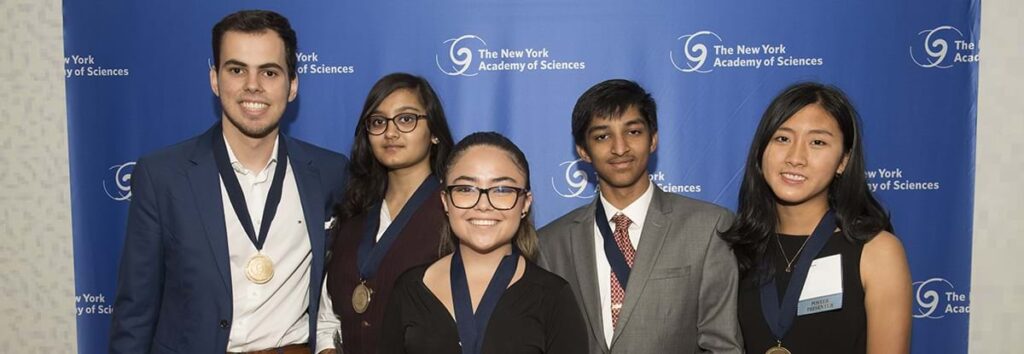
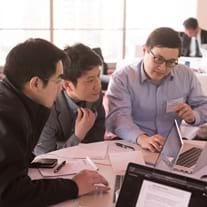
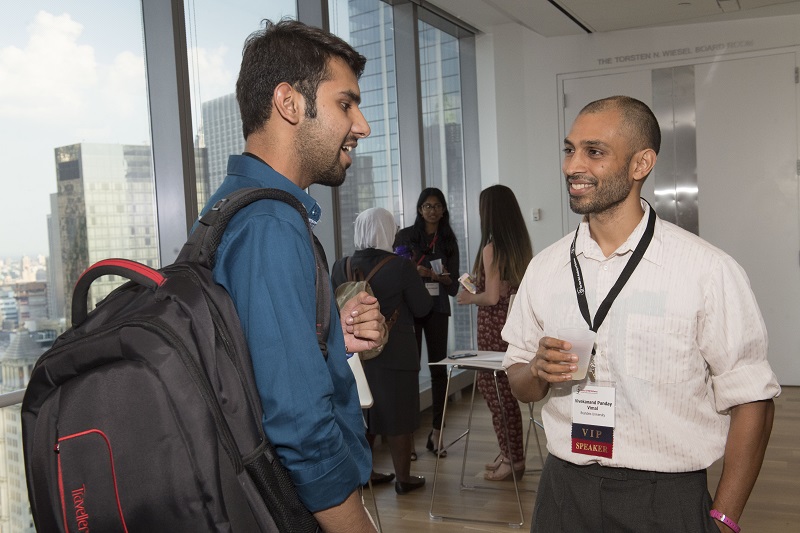
A networking event at The New York Academy of Sciences.

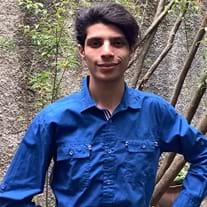
Not everyone knows what they want to be when they grow up—it can be a scary prospect to figure out what you want to do with the rest of your life. A mentor can ease your mind as you navigate the confusing path of planning out your future. That’s why, when Paul Noujaim, 17, from Darien, Conn., heard about United Technologies STEM U through his high school, he seized the opportunity to join. (United Technologies was renamed Raytheon Technologies Corp. in 2019.)

Mentoring is one component of United Technologies (UTC) STEM U, an initiative developed jointly with The New York Academy of Sciences (the Academy) in 2017 to inspire more students to pursue STEM careers. Through an online platform, student mentees ages 13-18 complete learning modules that teach them 21st century skills such as communication and leadership, and also help them navigate the college search and application process. Students are assigned a personal mentor, whom they interact with on a regular basis, at mutually-agreed upon times, for a period of one year. 

Paul’s mentor, Justin Giza, is Manager of Digital Newsstand Operations for Barnes & Noble Inc. He recalls his first impressions of Paul when the pair began the program: “At first he seemed a little overwhelmed by what he wanted to do in life. I talked him through the many hoops and jumps I’ve personally made to reach where I’m at today. I think it put his mind at ease to know that he didn’t need to have everything mapped out, as long as he keeps his eyes open for fresh and exciting challenges.”

Different Perspectives can Inspire Confidence

Paul Noujaim

Justin himself had more of an informal mentoring experience, taught by both his father and grandfather to stay flexible in his career path and simply look out for opportunities that interested him. After graduating from college, Justin worked at a coffee shop and did freelance audio work on the side. Through people he met as part of that job, Justin moved towards food writing and sound editing for an online startup publication.

“That job really kicked things off for me—it rolled a lot of my interests into one beautiful ball of tech and food,” Justin explained. And it ultimately helped him launch his career with Barnes & Noble.

Hearing about Justin’s career journey showed Paul that it’s okay for him to not know all the answers yet. “Justin has been in the same shoes as I am, going through the college process and planning for the future,” Paul says. “He’s been able to offer me advice and anecdotes from his life that are very applicable to my own.” Paul adds that the perspective he’s been able to get from Justin—an adult outside his school and family circle—has made him more confident about his future.  

Inspiring Passion in STEM

Justin Giza

Although many of the mentors in the program are STEM professionals, it’s not a requirement to be a scientist or engineer. What is required? A passion for getting more young people interested in STEM.

“I have always had a love for education,” Justin notes. “I feel we need more people involved in STEM as a whole because the workforce is moving away from traditional labor jobs and moving towards STEM fields.” Justin’s right—according to the U.S. Census Bureau, STEM jobs have grown 79 percent since 1990. “Mentoring through UTC STEM U has been a great way for me to help foster a sense of curiosity in STEM,” he explains.

But the benefits of a mentoring relationship aren’t just a one-way street. While Justin was able to inspire Paul, working with Paul helped Justin improve his own communication skills. One tip Justin says he would offer to other mentors: “If you find yourself taking up most of the conversational space, you aren’t guiding—you’re probably instructing. Instead, try to ask more questions about your mentee; to identify what they really need.”

Learn more about educational and mentoring opportunities at the Academy.

A Need for Sustainable Urban Ecosystems in the Future

A shot of the NYC skyline

Imagine an “Intellicity,” where neural networks ensure everything works together.

Published May 1, 2018

By Lori Greene

Today’s students will be the inhabitants of tomorrow’s cities, so they want more sustainable ways of living and working in urban ecosystems.

That was the premise behind United Technologies’ Future of Buildings Innovation Challenge. This event was created by The New York Academy of Sciences and launched in September 2017.

Fifty-two teams of students 13 to 18 years old from across the globe competed. Their goal: to conceive the most inventive green building solution.

Imagining an “Intellicity,” was the creation of one team. Here, neural networks run a building’s systems to ensure people, machines and the environment work in concert to adroitly use and conserve resources.

Reducing Waste

In the “Intellicity” paradigm, little is wasted.  Solar panels and wind turbines create an on-going source of clean, abundant, renewable energy. Rainwater collected from the roofs of buildings provide water for indoor plumbing and hydroponic systems. Once inside, hydroponic walls can repurpose rainwater for food growth. Intellicity’s student founders want to ensure that people are harnessing energy generated by city activity and putting it to use.

Floor tiles in larger structures convert footsteps into electrical energy, and waste is turned into fertilizer.  Solar panels on windows maximize sunlight and capture the energy to help run a building’s lighting and temperature systems.  Revolving doors connected to electric generators can be used to capture energy as people walk in and out. This creates another source to power the structure’s electricity, heating and cooling needs.

The Applications of Artificial Intelligence

Using artificial intelligence (AI), energy is redistributed to increase the comfort and productivity of building occupants. The AI system that would run the integrated interior and exterior building networks “learns” from several inputs and the resulting outputs.  For example, during high usage times, the power could go towards controlling lighting as well as heating and cooling rooms. Over time, the network records occupant preferences and automatically adjusts the room, heat and light depending on who enters and leaves.

Similarly, the team sought to give people an opportunity to interact with their building using a “neural network.” This computer system was developed around the human nervous system. It aims to allow the building to communicate back through an app detailing the energy being collected, used and wasted in the structure.

Retrofitting Existing Infrastructure

With the flexibility of AI, the team theorizes that this can also be implemented in a variety of structures. This includes transportation hubs such as airports as well as offices and apartment buildings. According to the plan, each section of the building could provide sustainable energy with minimal impact to the environment around it. Rather than redesigning structures, the team suggests using sensors in every room. They also suggested monitoring software that can help devise a customized solution to precisely redistribute energy.

Integrating neural networks into buildings to create an energy efficient sustainable future is Intellicity’s ultimate goal.

Check: nyas.org/challenges for information about the UTC Future Buildings and Cities Challenge winners.

The True Value of Teamwork and Collaboration

It was through his participation in the Junior Academy that Patrick Pallagi “discovered the true value of teamwork and collaboration.” This trait remains strong with him today.

Published March 05, 2018

By Patrick Pallagi

Patrick Pallagi

Imagine the inventor of the first-ever time machine reaches out to you and gives you a challenge. She says, “I will send you and two of your best friends two hundred years back into the past, but you have to create all the technologies that humans have invented over the last two centuries.” Could you invent everything in that team of three? Do you think your friends could help you code all the programs, develop aircraft engines, create safe communication systems, and build a vehicle to take you to the Moon?

While a small group can make significant progress, I think we can agree that our present day would look very different if only three people were focused on finding breakthrough technologies. Fortunately, science has an amazing potential to unite people thanks to the single most effective engine of growth—curiosity.

Last summer, I had the privilege to travel along the Franco-Swiss border and visit CERN, the largest particle physics laboratory in the world. It’s one great example among many of curiosity pushing the boundaries of science and technology. Founded in 1954, CERN’s mission is focused on doing fundamental research in high-energy physics. And while it does that, it’s also bringing nations and scientists together.

In fact, it was the desire to help research processes become more efficient and make scientific publications more easily accessible that led Tim Berners-Lee, a British scientist at CERN, to invent the World Wide Web in 1989. This invention revolutionized the way we communicate and helped put the laboratory in its current position, allowing a global network of over ten thousand scientists from more than a hundred countries to work in collaboration together.

Discovering the True Value of Teamwork and Collaboration

Today, scientists at CERN use the world’s largest and most complex scientific instruments to study the basic constituents of matter—fundamental particles. These experiments produce an incredible amount of data, around 100 Gigabytes per second. This is so much data that not even a quantum computer could process it on its own! Luckily, there is a clever solution to process all that data. The solution involves a unique network of supercomputers–like the ones in my hometown, Budapest–which help each other filter and store the results.

The inventions of the last two hundred years have truly changed the way people communicate, maintain friendships, live, and work. I think we can agree that our society, as it continues to evolve, will benefit immensely if we do all we can to give opportunities to young students to discover the true value of teamwork and collaboration.

For that reason, I feel very lucky to be part of the Junior Academy. Thanks to this program, I have had the chance to form an international team with teammates from South Korea, India, the UAE and the U.S. We see eye to eye on so many things. We like one another’s cuisine, hiking, and the mathematics and physics we’re focusing on in our research. But when we began to work on making the ideas in our research project a reality, our differences became apparent.
Optimistic about the Future of Science

Our South Korean teammate focused primarily on research processes and the technology side. Our American teammates brought a business perspective and questions of scalability. My European training left me somewhere in the middle: I liked the idea of making our research profitable, but I was leaning more towards the technology side. Over the months, the creative clash of viewpoints bred success. Together we managed to develop methods which could be used in creating more efficient solar panels.

Needless to say, I am very excited and optimistic about the future of science. My experience makes me think that the next breakthroughs are going to come from collaborations across seemingly different fields. For example, using supercomputers to help us study neuroscience, or particle physicists developing new approaches to fight cancer. And I’m sure we’ll be embracing artificial intelligence in ways we don’t even expect, from filming more immersive wildlife documentaries to making risk-free autonomous vehicles.

Last but not least, I believe quantum computing paired with new information technologies will continue to help old and new scientific networks flourish, and as a result, it will help create genuine friendships and bring cultures together.


About the Author

Now an Academy ambassador, Patrick first came to the Academy as a Junior Academy participant. He was also part of CERN’s 2017 S’Cool LAB Summer CAMP. While there he not only engaged in research, he also produced the official promotional video for the program. He is currently specializing in Natural Sciences at Jedlik Anyos Grammar School​ in Budapest.

Devising New Therapies Across Borders

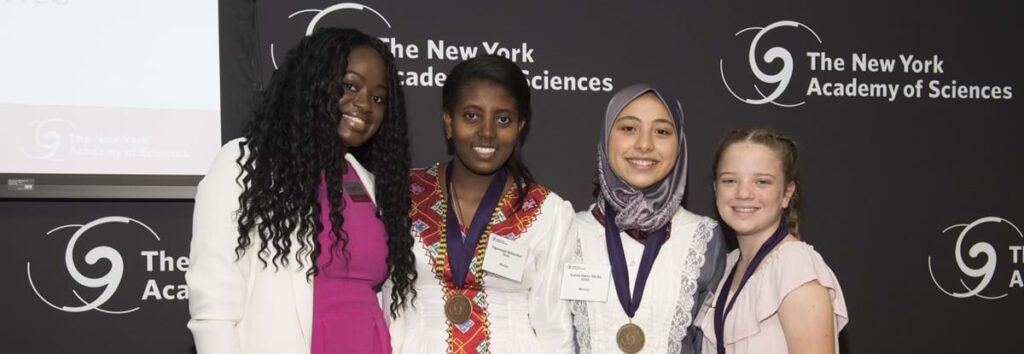
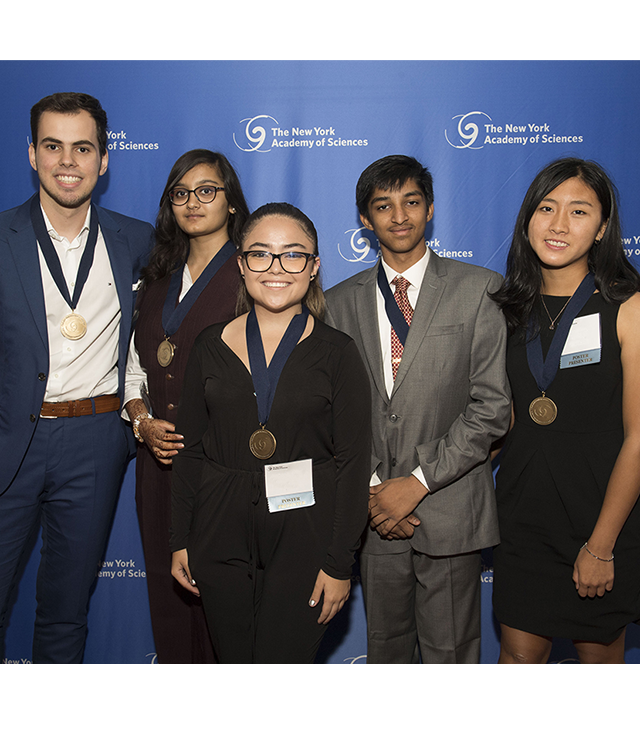
Award winners pose together with their trophies.

When Japanese physicist Kumiko Hayashi of Tohoku University and neuroscientist Ephraim Trakhtenberg of the University of Connecticut met at the New York Academy of Sciences this year, the synergies between their work weren’t immediately obvious.

Published October 1, 2017

By Hallie Kapner

The two scientists were paired together as part of the Interstellar Initiative, a joint project of the Academy and the Japan Agency for Medical Research and Development (AMED), which grouped 50 early-career scientists from around the world for interdisciplinary research projects.

“The biggest global challenges, whether in health, the environment, or energy, require scientists with different expertise to work together,” said Academy President & CEO Ellis Rubinstein. “The Interstellar Initiative brings together brilliant young scientists who would likely never cross paths, and supports them as they develop solutions to major health issues.”

Devising New Therapies

Hayashi and Trakhtenberg are devising new therapies to restore neuronal function following injury. As human cells mature, their ability to replicate is severely reduced. This phenomenon is especially prevalent in the brain, where the creation of new neurons exists only at very low levels in adulthood. Trakhtenberg’s work suggests that motor proteins may be involved in this loss.

“If we can understand the dynamics of these proteins, we may be able to reverse the process,” he said. Over the past several years, Hayashi developed novel algorithms that can be applied to motor protein measurement and analysis. “I don’t know much about neuroscience,” she said, “but it turns out that my algorithms can illuminate some mechanisms of the brain.”

From left to right: President Suematsu, Japan Agency for Medical Research and Development (AMED), recognizes the collaborative work of Japanese physicist Kumiko Hayashi, Tohoku University and neuroscientist Ephraim Trakhtenberg, University of Connecticut, along with Ellis Rubinstein, President and CEO, New York Academy of Sciences at the recent Interstellar Initiative workshop presented by AMED and the Academy.

International Collaboration

This teamwork is precisely what AMED president Makoto Suematsu envisioned creating through the Interstellar Initiative, part of a broader strategy to bring international partnerships and new funding streams to Japan’s R & D pipeline. As technological advances that enable data sharing and ease remote collaboration have become ubiquitous, Suematsu believes it is crucial for Japanese researchers to join global research efforts.

“International collaboration is critical in many fields,” Suematsu said. “From infectious disease outbreaks to cancer treatment and drug development, we can accomplish much more when we reach out, shake hands and collaborate.”

Cancer Research

Another Interstellar Initiative team, comprised of NYU biologist Carlos Carmona-Fontaine, oncologist Valerie Chew of Singapore Health Services and physicist Shuichi Shimma of Osaka University, is juggling large time differences and global transport of perishable patient samples as they pursue their project. Blending Chew’s expertise in oncology with Carmona-Fontaine’s efforts to understand the role of metabolites in cancer cells and Shimma’s imaging techniques, the group is uncovering the interplay of metabolite activity and immune changes in tumor cells.

Noting that the Interstellar Initiative breaks down barriers that inhibit cross-disciplinary partnerships, Carmona-Fontaine commented that scientists “usually stick to our own communities, and there’s often a disconnect between scientists from different parts of the world — yet there are many advantages to learning different ways to look at a similar problem.” Chew was thrilled to be paired with teammates who brought both new expertise and new technologies. “If you’re working in your own zone, you’ll do what’s familiar,” she said. “But bringing together different disciplines and technologies creates a novel, creative environment for solving problems.”

Realizing Applications For Their Research

Proposals devised by Interstellar Initiative teams will be submitted to international funding agencies. For physician and biologist Deepak Lamba and biologist Akira Satoh, such funding may help them realize applications for their research. Lamba, who is developing methods for using stem cells to repair retinal tissue, is working with Satoh, whose research is illuminating the regenerative pathways of amphibians. They are probing the factors that influence regenerative capabilities in mammalian and amphibious cells, with the hope of developing methods of repairing and regenerating damaged tissue.

“[Stem cell research is] moving so quickly that I think we’ll start seeing applications in the not-so-distant future,” Lamba said. Satoh noted that stem cell research is less popular among Japanese scientists, while Lamba added that few labs in the US are using amphibians to study regenerative pathways. “We would never have done this on our own — it’s a unique challenge for us to do together.”

Rubinstein is quick to highlight that this is just the beginning for the Interstellar Initiative. “This is only our first cohort, and there’s so much exciting research in the works already,” he said.

Also read: A New Approach to Studying Aging and Improving Health

Empowerment Enables More Women to Succeed in STEM

A student presents her research and poster.

Meet Academy member and mentor Jacqualyn Jade Schulman who believes that, through science, anything is possible.

Published July 26, 2017

By Marie Gentile and Robert Birchard

Jacqualyn with her Mentee

Jacqualyn Jade Schulman is a scientist of many talents. As a Graduate Assistant working in Dr. Richard Wojcikiewicz’s lab within the Pharmacology department at SUNY Upstate Medical University, she conducts research that might one day lead to vital therapies for cancer. As a mentor, she volunteers her time to participate in multiple programs of the Academy’s Global STEM Alliance. And when she’s out of the lab, you might find Jacqualyn bowling strikes at her local bowling alley.

What has been one of the most rewarding moments of your scientific career?

I have just been selected to give a presentation at a conference at Cold Spring Harbor Laboratories in August 2017. I am so honored, excited, and nervous at the same time!

What are you currently working on in the lab?

There is a family of proteins that work together to either promote or protect against cell death. I am studying a specific protein in this family named BOK, and the field currently does not know if Bok’s role is to promote cell death or to protect against it. Our lab discovered that Bok binds to a calcium channel that sits in the endoplasmic reticulum. I am working on understanding what Bok’s role is in cell death and how binding to this calcium channel affects its function. If we understand how this family of proteins work we can figure out how to either promote or protect against cell death, which could be vital therapies for diseases such as cancer.

At the Global STEM Alliance Summit

My personal definition of science is…

Constantly questioning everything, remembering that anything is possible, and accepting that negative data is a positive thing.

When you’re out of the lab, what are some of your hobbies?

My biggest hobby is bowling! I have been bowling in leagues since I was 5 years old and was able to bowl competitively in college and travel to tournaments. I haven’t bowled a 300 yet, but my high game is a 289!

What drew you to become a mentor in the 1000 Girls, 1000 Futures and Next Scholars programs?

I chose to get involved because I did not have any mentors in the STEM field while I was in high school. When I heard about 1000 Girls, 1000 Futures, one of the first things I thought was that I wished I had this while I was in high school. I wanted to be the mentor that I wished I had.

These girls just amaze me with everything they are doing while in high school. It’s inspiring to see girls in high school so involved in their communities and gaining work experience in STEM fields. It is such a rewarding experience to know I played a role, even if it is just a small one, in helping them determine which college to attend or which major to study.

Why do you think it is critical to mentor girls and women in STEM?

We are still struggling with a gender gap. When I took a computer science course in college, I was the only woman in a class of about 50 students. Each field of STEM has such a plethora of jobs within it and I want to make sure these young women know about all the opportunities that are out there. When I turn my laptop on, the log-in screen always displays a different image with some facts. Recently, the background image was a landscape with stars and it included the fact that only 6.7% of women graduate with STEM degrees. I want to have a part in increasing that percentage.


Peruse our mentorship opportunities, and sign up today!

Promoting Equitable Access to STEM Education

A woman poses for the camera.

“By connecting young people with successful STEM professionals, the Global STEM Alliance provides a network of support for students who might otherwise feel isolated or disconnected from their discipline.”

Published June 9, 2017

By Marie Gentile and Robert Birchard

Giovanna Collu, PhD

Giovanna Collu, PhD, is a researcher, communicator, and mentor with a drive to encourage the next generation of scientists to overcome challenges they face in STEM fields. For the last 12 years, Collu has been investigating how cells communicate with each other to produce fully formed adult organisms.

Throughout her career, Collu has engaged with several outreach groups to promote equitable access to the benefits of STEM education. At the University of Manchester, she worked with the Manchester Access Programme to support underrepresented minority students transitioning to college, and with a Wellcome Trust-funded initiative to bring local underserved students into a university research environment to discover science firsthand and participate in fun, science-based activities. Collu also taught on the Manchester Leadership Programme, a course that framed leadership issues in a social and ethical context for the next generation of leaders.

Here in the US, she has worked with The New York Academy of Sciences (the Academy) to engage middle-school pupils with forensic science in an afterschool program in Harlem, in association with Cold Spring Harbor Laboratory’s DNA Learning Center. Collu continues to promote women in STEM through mentoring summer students and has participated in the NeXXt Scholars Program since 2013.

Why and how are STEM education and the Global STEM Alliance important to you?

Initiatives such as the Afterschool Mentoring and NeXXt Scholars Programs promote equity in STEM education, which in turn creates much-needed diversity in STEM professions. These programs are an opportunity not only to reach individual young scientists but also to make a positive impact in making society more equitable as a whole. The Academy’s STEM education programs are a vital tool if we are to level the playing field for underserved communities. It is an honor to support young people from backgrounds that are currently underrepresented in STEM fields to pursue their passion and curiosity.

What are/were your goals for participation in the Global STEM Alliance?

My goals were to inspire individual students and to gain an understanding of the challenges faced by this generation of STEM students. Having benefited from mentoring opportunities myself, I am keen to join the community of researchers encouraging younger generations to follow their curiosity and enter STEM fields.

What is the most important benefit you feel the Global STEM Alliance provides?

The Alliance gives young people from diverse backgrounds the access to mentoring that they would not otherwise have. Mentoring and exposure to positive role models are vital for realizing potential and raising aspirations in young people. By connecting young people with successful STEM professionals, the Global STEM Alliance provides a network of support for students who might otherwise feel isolated or disconnected from their discipline. The Alliance guides young people as they are finding their own path into STEM fields and reveals a whole realm of career possibilities.

Learn more about the Afterschool STEM Mentoring Program!


More About Dr. Collu

Postdoctoral Fellow, Developmental and Regenerative Biology, Icahn School of Medicine at Mount Sinai

Academy Affiliation: NeXXt Scholars Program, Afterschool STEM Mentoring Program

Honors: Recipient of Biotechnology and Biological Sciences Research Council PhD studentship, Medical Research Council Masters Studentship, and King’s College bursaries for undergraduate research

Degrees: PhD and MRes in Developmental Biology, University of Manchester, UK; MA and BA (Hons.) in Natural Sciences, University of Cambridge, UK

How to Get Motivated Kids Invested in Science

A man poses for the camera.

“I think the key thing here is that these kids are in a class by themselves. World class. Not just smart, but motivated, eager, and most important invested.

Published June 9, 2017

By Marie Gentile and Robert Birchard

Ron Fritz, PhD

Ron Fritz, PhD, works for PepsiCo and also serves as a mentor for the Junior Academy at The New York Academy of Sciences. He talks about his experience mentoring and the encouraging growth he sees from his students.

What are your students working on?

Food Loss and Waste: Transportation and Logistics. Specifically, they came up with an ingenious use of evaporative cooling; designing, building, and testing a non-electric ‘fridge’ (based on ‘zeer pot’ technology) made of recycled materials.

What surprised you about your students?

I knew they would be smart and clever, but what surprised me was their incredible focus and tenacity in going after solutions to design problems encountered. They didn’t back off or quit when a challenge emerged but rather relished the opportunity to overcome it.

What surprised you about your mentoring experience?

The student’s ‘relentless’ engagement made it great fun for me and I think for the team as a whole. There’s nothing better than being part of a team working like failure is not an option. It was exhilarating because of the awesome work ethic the students employed and the leadership that evolved among them. To be honest, just prior to the kickoff of the challenge I was considering dropping out due to increased business demands on my schedule. I am so glad I didn’t. Even though those demands did not diminish, these kids’ efforts were inspiring and kept me going.

What kind of growth did you see in your students?

With some of the students it was leadership, in others “followership” – with all it was ‘hey, we’ve got a great team, great ideas and great talents that can make a difference!’ That attitude energized everyone, including myself. Perhaps the correct word is ‘devoted’ to finishing the team’s mission. I think the type of camaraderie experienced was a first for some of the students. Also, the level of talent brought together. As a youth sports coach over the years, this was like realizing you have something really special going on with a particular collection of kids.

Anything else you’d like to share?

Yes. I think the key thing here is that these kids are in a class by themselves. World class. Not just smart, but motivated, eager, and most important invested. This makes mentoring in this venue a unique experience, truly providing an opportunity to accomplish something of significance with ‘no holds barred’, ‘blue sky’ thinkers.

Learn more about the Junior Academy!

Science State: From New York City to Syracuse

A scientist examines a petri dish.

The New York Academy of Sciences’ (the Academy’s) Scientist-in-Residence Program now extends beyond the bounds of New York City.

Published June 09, 2017

By Marie Gentile and Robert Birchard

Image courtesy of leungchopan via stock.adobe.com.

Over the past nine months, Erin Barta has been diligently working to implement the Academy’s Scientist-in-Residence Program (SiR) in Syracuse, New York. While this is a first for Barta after graduating in 2014 from Clark University’s Master’s Program in International Development and Social Change, it is also a first for the Academy. Syracuse’s SiR Program is the first expansion of the program outside of New York City.

The guiding principle behind SiR is that students who are exposed to science through inquiry-based learning techniques are more likely to succeed in—and be engaged with—science. SiR matches a scientist with a public school teacher and the teacher’s students, and advises them on developing a science project that follows the scientific method. The scientist will act as a mentor to both teacher and students and share their insights on the scientific method, project design and presentation of results.

A Crash Course in Program Management

Barta’s work is primarily concerned with building and supporting these budding partnerships. She collaborates with the scientists and staff at the SUNY College of Environmental Science & Forestry, and with the dedicated teachers and administrators in the Syracuse public school system, to ensure that students are learning the techniques that will allow them to thrive in the STEM fields.

“Adapting the SiR program to Syracuse has been a crash course in program management. I have a front row seat to what it means to build a program from the ground up,” said Barta. “As the academic year draws to a close so will this year’s program. After celebrating our participants’ efforts and successes, the upcoming months will be spent exploring ways to make SiR even more rewarding for students.”

Paying it Forward

Erin Barta

Barta believes in SiR because she understands the importance of a mentor. As a college student she was inspired by faculty who were generous with their time and feedback. According to Barta, a good mentor can help a person, “gain a better sense of self, and radically reframe notions of our own capabilities. In my case, I was emboldened to pursue scholarships, internships and graduate school opportunities that I previously thought were out of my reach.”

According to Barta, mentorship provides a model for, “existing and engaging” in the world. A good mentor can provide an example of how to navigate all the competing factors between personal goals and obligations, versus those of the professional career. “Mentorship makes us privy to the experience of wisdom of those who have gone before us, which reconfigures our vision of what is possible.”

Barta and SiR are a well-made match. SiR seeks to encourage high school students to pursue their scientific interests in an academically rigorous manner, while providing their teachers with a resource to help their students succeed.

When she completes her VISTA service in September, Barta will continue to build her experience in project management and development in the nonprofit sector in Syracuse.

Learn more about the Academy’s Scientist-in-Residence program.

Life in the Junior Academy in the 1970s

A member of The New York Academy of Sciences’ Junior Academy reminisces about her involvement in the program, including as president, during the 1970s.

Published September 1, 2016

By W.M. Akers

Junior Academy president Paul Sullivan passes the torch to Joy Hecht.

An environmental economist, Joy Hecht, PhD, has studied the economic impact of environmental damage everywhere from Lebanon to Malawi. But in 1974, she spent most of her free time somewhere less exciting: the Xerox room of The New York Academy of Sciences (the Academy). As president of the Junior Academy, Hecht oversaw an entirely student-run operation with members all over New York. We spoke to her recently to ask about her memories of the Junior Academy, and the special bond she and the other students formed.

How did you get involved with the Junior Academy?

I went to Hunter High School, which at that time was an all-girls school. My mother told me, “You should get involved with the Junior Academy of Sciences. You can meet boys that way.” I got involved with it, initially as a way to meet boys, and it became a part of my life.

I think a great deal of what made the Junior Academy awesome is that it was run by high school kids. We did all the work. No one else was telling us what to do.

What was the Junior Academy like then?

It was a place to hang out. The Junior Academy had its files at the Xerox room, so we all hung out at the Xerox machine. We were organizing events, we were doing mailings, we would get kids in after school to stuff envelopes. We always had a group of kids who were hanging around. It was very social.

We were often there after five o’clock, and we had free run of the place. I distinctly remember wandering in and out of the president’s conference room after everyone went home. These were really nerdy kids—a lot of big Trekkies—so we weren’t the type who were going to demolish the building, even though we did snoop around the place.

When you became president, how did you change things?

I started out doing the same stuff the Academy had been doing all along. That fall, my mother took me and my sister out to San Francisco, and I looked up the California Academy of Sciences, and I spent a bunch of time talking to the guy who ran their Junior Academy.
He asked me, “When you look back on this experience, what do you want to have accomplished? Do you want to feel like you did something new, or do you want to have just kept the Junior Academy what it was?”

So I went home, and I told the group: “We organize lectures, and we do field trips, but it doesn’t really make any difference. What we need to do is get these kids working in science, to see if they like it.”

We started calling up the Academy members who had labs, and asked if they were willing to take on high school kids during the summer. We put together what we called the summer opportunities booklet—we published it and distributed it. I assume there were kids who ended up working in labs because of it. That was the most important thing, to actually get kids doing stuff in science, instead of just going to lectures.

And did you meet boys?

Oh, yes. Paul Sullivan ended up being my first boyfriend. Mind you, I hated Paul at the beginning. He was the president the year before me, and I couldn’t wait for him to leave so I could take over, but then the summer before my senior year of high school, he called to tell me the Academy had hired him as the Junior Academy advisor. I was madder than hell, but I got over it.

Every June, one of the field trips would be a trip up to Mohonk. There was a trail there we always hiked, and it’s something my cohort at the Academy kept doing every summer for four or five years after high school. When Paul died in 1999, we all found each other again, and we went on the same trail at Mohonk, and we planted a tree in his memory. We didn’t stay boyfriend and girlfriend very long, but we stayed good friends throughout his life.

Inspired by the Nonstop Thirst for More Knowledge

A logo with the text #IAmNYAS

The Academy community represents one of the most dynamic and diverse groups of STEM professionals and science enthusiasts and supporters around the world, with more than 16,000 Members across 100 countries.

Published May 1, 2016

By Diana Friedman

Academy Members are building STEM careers, overcoming the challenges associated with cutting-edge research, putting science into practice, influencing policy, and supporting future generations of science leaders.

We invite you to get to know your fellow Academy Members and learn about new opportunities to interact and get involved!

Devika Varma

Devika Varma is a PhD candidate in Biomedical Engineering at The City College of New York. Her thesis focuses on developing novel, plant-based materials for intervertebral disc repair and regeneration. In short, she is working to figure out a non-invasive treatment for back pain. In her spare time, Devika mentors students by participating in the Academy’s mentoring programs.

Who has been your biggest science inspiration?

My grandfather, K.K.R Varma, has been my biggest science inspiration. He would always encourage me to read science fiction authors and push his collection of Popular Mechanics my way. Even at the age of 90 he is learning new languages like Urdu and Arabic. He also continues to brush up on his Calculus. This constant thirst for knowledge is what continues to inspire me. I am very lucky to have him in my life.

What’s a fun fact about you that might surprise your friends or colleagues?

I strongly believe in the power of human “poop.” Human excreta is packed with nutrients and has tons of untapped energy which I believe can be manipulated to power our future and increase our agricultural productivity, organically. Resourceful sanitation can create biofuel and compost from dry toilets. Sounds like a pipe dream, but organizations such as SOIL in Haiti are setting great examples.

What is the most important benefit you feel the Academy’s Global STEM Alliance provides?

The programming at the Global STEM Alliance has been very impressive in terms of how impactful they are for young professionals in STEM and how genuine their outreach efforts have been. Their mentoring programs such as the Afterschool STEM Mentoring Program and its “Food Connection” project have really helped me tap into the inner mentor in me.

Expand Your Network!

Inspired by the passion, expertise, and unique perspectives of your fellow Members? Tap in to the incredible network the Academy offers through our mentoring programs.

We’re thrilled to offer you access to a new opportunity to get involved and interact: Member-to-Member Mentoring. The program matches you with a mentor—or a mentee—who is a fellow STEM professional and Academy Member. Depending upon your experience level and needs, you can request a mentor, become a mentor, or both.

Interested in mentoring students? We also offer incredible mentorship opportunities through the Academy’s Global STEM Alliance, which delivers education programs that can help you develop your teaching and communication skills, while paying it forward to the next generation of scientific innovators. The Junior Academy and 1000 Girls, 1000 Futures are recruiting new mentors this June.


Peruse our mentorship opportunities, and sign up today!