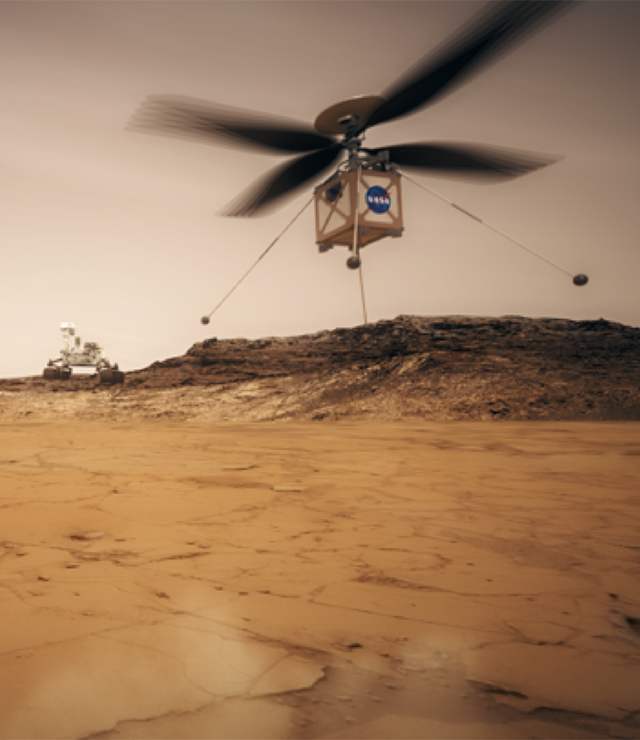
Mimi Aung of NASA’s Jet Propulsion Laboratory gives a glimpse of what to expect from the launch mission of the Mars Helicopter.
October 1, 2018
By Charles Cooper
Sometime around February 2021, NASA will drop a new rotorcraft on Mars that will be the first device to fly in the atmosphere of a planet besides Earth.
“In deep space exploration we have never done anything like this before,” said Mimi Aung, the project manager overseeing a team at NASA’s Jet Propulsion Laboratory (JPL) that has labored since 2013 to demonstrate the viability of heavier-than-air flying vehicles on Mars.
The Mars Helicopter, as it’s called, is a technological marvel. Weighing in at slightly less than four pounds, it sports a fuselage that’s about the size of a softball. NASA used off-the-shelf materials, including lightweight avionics, solar cells, high-density batteries and carbon fibers. The flying device is also a completely “green” piece of equipment. It includes solar panels that can collect solar energy to recharge the battery when the helicopter is at rest.
Upon landing, the helicopter will spend most of the day on the Martian surface recharging its lithium-ion batteries as it prepares to venture into the Martian atmosphere during the planned 30-day flight test campaign. The idea is to perform reconnaissance missions of nearby regions that the Rover cannot access due to ground impediments or steep terrain.
The First Flight
In its initial flight, the helicopter will hover three meters above the surface for about 30 seconds. NASA hopes to send the helicopter as high as 40 meters into the atmosphere. The maximum flight distance will extend a few hundred meters from the Rover. The longest it will remain aloft at any one time is 90 seconds.
“When we explore the surface with Rovers we want the ability to see ahead with high-definition images. This is going to allow detailed information about the Martian surface that we’ve never had before,” Aung said.
NASA controllers will send commands to the Rover, which will then relay information to the helicopter. The transmissions will take between four and 12 minutes to arrive. Time lag will vary depending on the relative position of the Earth and Mars.
The helicopter will need to survive on its own through the cold Martian nights. Temperatures can get down to 90 degrees below zero centigrade. The unit includes a heating mechanism controlled by an onboard computer that reads the temperature sensors to prevent freezing. NASA envisions that future generations of aerial vehicles will be equipped with far more robust features, allowing them to travel farther and higher.
Perhaps the greatest challenge of the next century will be to build a space infrastructure that will serve all of humanity, rather than only a privileged few.
Published October 1, 2018
By Marie Gentile
If you are a person of a “certain age,” you may remember a bright summer day nearly 50 years ago when grainy black and white images were beamed down to our television sets from the surface of the moon.
Humankind had achieved what was once thought to be laughably impossible — developed the technology to escape the gravitational pull of our home planet and land on another terrestrial surface. How could anyone feel anything other than the most incredible sense of pride and wonder? And of course, for Americans, it was a defining moment — as a nation we had won the “space race” through a technological achievement by which all others would be measured.
In the decades since, space travel has become relatively commonplace. There were seven subsequent manned moon missions, as well as unmanned missions conducted by the Soviet Union, the European Space Agency, Japan, India and the People’s Republic of China. Later, the Space Shuttle would serve as the world’s first interstellar “work horse,” carrying and fetching loads back and forth from the International Space Station. Such trips barely registered on the news cycle.
The New Space Race
Fast forward to 2018 and we stand on the precipice of a new “space race.” There are billions of dollars in private investment being pumped into various space related start-ups around the world, making the commercial space race — in theory at least — anyone’s to win.
Technology and capital hurdles aside, this is an opportunity for humanity to get something right from the beginning. The UN Sustainable Development Goals, launched in 2015, represent an unprecedented global commitment to addressing global challenges through collective action in science and technology.
But they are also a potent reminder of what is at stake if we fail — combatting hunger, educating children, developing new treatments for disease and new technologies to support sustainable infrastructure and economic development. As we mobilize to address these worthy goals, we must also recognize the lessons to be learned from our past mistakes, and apply them to the sustainable development of space for human use.
Unlike Earth, space has no borders. We cannot rope off a section or build a wall and say to others “this is ours and you may not enter.” Perhaps the greatest challenge of the next century will be to build a space infrastructure that will serve all of humanity, rather than only a privileged few.
A Myriad of Issues to be Addressed
How will we construct buildings in space and where will we put them? How will we grow food? How will space traffic be managed? Who will collect all that space trash? There are already a myriad of issues to be addressed — and these are the ones we know about. It will require collaboration across all of our planet’s governments, and across the global scientific community, to develop answers to these questions and the ones still to be asked.
Much of our work at the New York Academy of Sciences is tied to achieving the UN Sustainable Development Goals because we believe that they can be achieved, and they WILL be achieved, if we work together. As NASA, other space agencies and private sector companies ponder humanity’s future in space, it is incumbent on all of us in the scientific community and the public at large to consider what that future might be.
If we’re smart and are willing to learn from past mistakes, we stand a very good chance of getting it right from the beginning. And maybe as we aim for a sustainable future in space, we’ll succeed in solving the major challenges facing our own planet along the way.
As a guest lecturer, Dr. Huba Zoghbi, recipient of the 2018 Ross Prize in Molecular Medicine observed “imposter syndrome” more often in women, compared to men. Here’s how we can change that.
Published October 1, 2018
By Kari Fischer, PhD
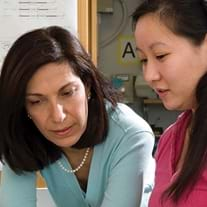
Dr. Huda Zoghbi, with Hsiao-Tuan Chao, MD, PhD, previously a graduate student in the lab who recently completed a child Neurology residency and was named winner of the NIH DP5 award.
Huda Zoghbi, MD, is a highly decorated scientist, with multiple awards garnered for her work unveiling the genetic mutations underlying two rare neurodegenerative diseases: Rett syndrome and spinocerebellar ataxia.
After receiving the sixth annual Ross Prize in Molecular Medicine (2018), she confessed that she could not appreciate her success until well into her 50s. This is far too late for a woman in science, when many leave research careers before they even begin.
While traveling as a guest lecturer, meeting hundreds of young researchers, Dr. Zoghbi observed this same distrust in one’s own accomplishments, otherwise known as “imposter syndrome,” in women, but not in men.
“Many women doubted if they could be good enough; that they could move on to the next step of their careers.”
Fixing the “Leaky Pipeline”
These women are manifestations of the “leaky pipeline” — in 2015, only 35 percent of tenured biology professors were women, though they represented over half of the PhD candidates. Their career misgivings are one among many challenges women face, including an overlap in timing between postdoctoral fellowships, seeking tenure, and starting a family; potential psychiatric disorders and depression (one-third of PhDs are at risk); and pervasive gender discrimination. An understandably difficult path.
“I see the drive, the intellect, the value they bring to science, and it troubles me when I see them going on a job interview, not walking out of the lab with the same confidence as a man,” Dr. Zoghbi said in describing her own trainees.
Dr. Zoghbi’s approach for countering self-doubt is simple, and easy to apply while other barriers await institutional change. She uses the best tool a scientist has: evidence.
“Whenever a woman in my lab would tell me, ‘I just don’t know if I can make it,’ I would pull out my CV and show them where I was at their stage, and highlight how much more impressive they are.” She share shares her experience to effectively tell them “If I can do it you can do it” … “I think that simple act helped me keep many women in science.”
Balancing a STEM Career with Motherhood
She models her actions on the women who supported her own career. While crediting her scientific mentors for her success, Dr. Zoghbi also recognizes the importance of her “life mentors,” and the little moments that were impactful.
Upon returning to her neuropathology rotation, with a two-month-old daughter at home, she experienced the associated anxiety of a working mother who might be missing out.
While seated at a teaching microscope with Dr. Dawna Armstrong, former Professor of Pathology at Baylor, she remembered, “We were not even looking at each other, and she could sense my tension … We’re looking at brain section after brain section, and in the midst of that she said, ‘You know they sleep all the time at this age, you’re not missing much’.”
Just one reassuring sentence brought her instant relief, though this style of mentoring may not come naturally for everyone.
“I don’t expect every mentor to be super nurturing, and that’s okay…give your trainees an opportunity to find other mentors to help them in areas where you don’t feel qualified,” Dr. Zoghbi said, cautioning that in the same way small gestures can bolster a career, a few words can also derail one, even if that was not the intention.
“Women have shared with me, ‘I dropped out of science because my mentor said ‘X’, and that made me believe I can’t do it,’” she said. “What you say can have a lasting impact on your trainees.”
The Lasting Impact of the Ross Prize
On a larger scale, scientific prizes like the Ross Prize are another way to extend a message of affirmation to women.
“I get embarrassed by the attention,” Dr. Zoghbi admits. “[But] so many young girls emailed me, and told me that after watching the videos of [an acceptance] speech, now they want to be a scientist and they believe they can do it.”
The approbation and visibility female scientists receive from these awards galvanizes the next generation. With more mentors like Dr. Zoghbi, their biggest challenge will not be themselves, but the science itself — which is as it should be.
The Ross Prize in Molecular Medicine was established in conjunction with the Feinstein Institute for Medical Research and Molecular Medicine.
Sign up today to be a mentor so you can inspire tomorrow’s changemakers!
And read more about the Ross Prize and past awardees:
It won’t be long before space becomes home to an assortment of commercial, industrial and scientific outposts.
Published October 1, 2018
By Charles Cooper
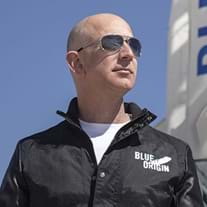
Jeff Bezos
Space may indeed be the final frontier, but it’s also becoming increasingly crowded.
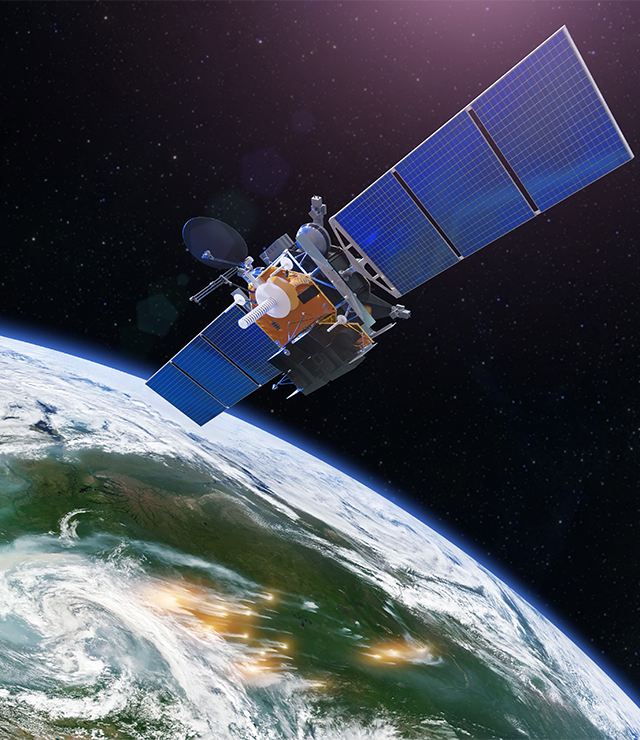
Not today. And perhaps not tomorrow. But it won’t be long before space becomes home to an assortment of commercial, industrial and scientific outposts. In fact, about 900 satellites already circle in low Earth orbit (LEO), most notably the International Space Station (ISS) and the Iridium network of communication satellites. They’re about to have company.
A startup made headlines earlier this year with plans to build a luxury hotel by 2022 that would host 12-day stays in space. Russia’s space agency is reportedly working on a project to add private suites to the ISS, complete with big windows, exercise equipment and, of course, Wi-Fi. Elsewhere, shorter space tourism ventures are being worked on by the likes of Jeff Bezos’ Blue Origin and Virgin Galactic’s suborbital SpaceShip.
But space tourism is just a sideshow to the main event: A future in which humans are able to live safely beyond the Earth for extended, even indefinite, periods of time — and do it sustainably. However, before any of those futuristic scenarios materialize, governments and organizations back on Earth need to come to an agreement on rules to manage the emergence of what will be a complicated ecosystem shared by public and private entities.
Setting Up a Space Traffic Control System
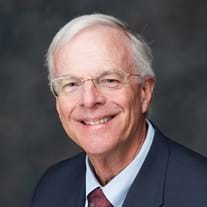
William Ailor
Prior to World War II, the air traffic control system was established to coordinate and track flights. Could something similar work for LEO? In theory, yes, but with a few tweaks.
“Each country has air traffic control responsibilities over their own territory, [but] space is different,” said Dr. William Ailor, the principal engineer for the Center for Orbital and Reentry Debris Studies at The Aerospace Corporation. “For things that are in orbit, there is no way to control that; a satellite goes over all of our countries.”
Any system would need to track a constellation of constantly moving satellites and platforms, requiring feeding continual streams of data to operators to move their spacecraft when needed. It would also require acceptance at the international level, which raises its own set of challenges.
What form would a space traffic management system take and who would pay for it? And how to ensure it remains in operation regardless of what’s happening on Earth.
“If there’s a war going on, the satellites are still up there and so you still need to protect them,” said Ailor, adding that despite the challenges, there’s general acceptance of the need to provide space traffic management and space situational services.
“It’s a dynamic situation but I think it’s agreed that space is a common domain and that we all have to work together to bring together the best data possible to be able to provide warnings. There are large constellations of satellites being proposed for LEO. I think the operators of these satellites know they will need assistance … [so] it’s important to pursue this.”
Thinking about a Post-ISS Future
Since Apollo 17’s final moon mission in 1972, NASA hasn’t pursued human exploration beyond LEO.
The agency’s focus subsequently shifted to building and operating the Space Shuttle and the ISS for testing and research. It’s been a successful tenure and the ISS, which services a number of participating partner nations, has demonstrated the viability of putting installations into LEO for extended stretches. The next step would be the commercialization of LEO with platform services as well as a fleet of smaller, space stations and other installations to pursue various commercial endeavors.
For example, Elon Musk’s SpaceX is considering the deployment of a 4,000 satellite constellation to offer global Internet service worldwide. Companies like SpaceX, United Launch Alliance — a partnership between Boeing and Lockheed Martin — and others, have all sprung up to provide cargo and commercial transportation services for the space station. Stratolaunch, the space company of billionaire Microsoft co-founder Paul Allen, is also getting into the market, with plans to develop medium-lift rockets and a reusable space cargo plane that would carry cargo to and from Earth with a follow-on variant that could carry people.
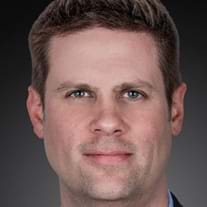
Christian Maender
“At the end of the day, the government wants to be a minority customer of those services,” says Christian Maender, who serves as the Director of In-Space Manufacturing and Research at Axiom Space.
The Development of a Space Economy
Maender envisions the development of a space economy in which government no longer takes the lead, but instead buys a myriad of space services, just as it would for terrestrial purposes.
Relieved of the need to provide the infrastructure, space-faring nations like the U.S. will be looking for a place to fly its astronauts to train in LEO in advance of missions to the moon and Mars. They’ll also have an interest in continuing some baseline level of microgravity research to answer questions relevant to exploration and basic science investigation.
“As long as the government’s needs are being met by a platform, they are happy to see the private sector design a space station that addresses their needs as well as the market demand from the commercial sector,” says Maender.
Perhaps no issue is more crucial to the future settlement of LEO than safety. Unfortunately, more than 20,000 metric tons of debris has been sent into orbit over the last five decades. While some of this flotsam has returned to Earth, most of it remains in orbit and is likely to remain so, possibly for millions of years.
If LEO does eventually host tens of thousands of people, companies specializing in removing debris from orbit will have incentive to help clean it up. Until then, however, any space platforms or habitations will need to be equipped with collision avoidance systems to reduce accident risk.
Space Manufacturing Becomes a Reality
Scientists envision a future in which certain manufacturing processes wind up getting transferred from the Earth, a move that would both save money and make it easier to send other craft to explore deep space.
Indeed, LEO may also offer manufacturing opportunities to build superior products. Microgravity offers a unique environment that provides an almost near-perfect vacuum and excellent conditions for the manufacture of many products. A fiber optic that’s uniformly pure when made in microgravity would drastically reduce the number of repeaters needed to run a signal. Indeed, the signal would extend without attenuation for hundreds of kilometers longer than you would find on Earth. New alloys could be combined to produce better single crystal turbine blades or other types of products — the result being stronger and lighter parts for aircraft.
Nowadays, spacecraft are built to survive fairly violent liftoffs from their launch pads on Earth. But if you can build a spacecraft in LEO, the process would require much less material since you’re sending less mass into orbit. Deep space missions won’t require rockets to be weighed down with extra shielding to protect crews against radiation. Or, as Maender puts it, “you can essentially build butterfly wings instead of building buttresses for launch.”
What’s more, there’s the possibility of a space gift for Mother Earth. Looking into the future — perhaps in another century or two — scientists say it’s possible to imagine scenarios in which some of the most environmentally damaging manufacturing processes get moved off the Earth. At that point, many pollutants currently produced on Earth either will be processed differently or left in the vacuum of space.
These researchers are combining fashion with scientific utility.
Published October 1, 2018
By Alan Dove, PhD
As space agencies consider sending astronauts on voyages that could last months or years, ordinary activities that we take for granted on Earth become major scientific and engineering challenges. Consider that most mundane of all human chores: laundry.
Aboard the International Space Station, astronauts receive regular deliveries of fresh clothing from Earth. They typically wear each outfit for several days before throwing it into the trash, which is then “de-orbited” to burn up in Earth’s atmosphere. That approach is clearly unsustainable. If future space crews want to reach more distant destinations, they’ll need to move past incinerating their underwear.
Given the impracticality of planting acres of cotton on Mars or raising silkworms in microgravity, sustainable space clothing will require entirely new strategies for manufacturing and maintaining textiles. Fortunately, researchers working at the frontiers of fabric design are already exploring ideas that could make clothing more sustainable both in space and on Earth.
Sweat Equity
Many of the requirements for clothing a human body on Earth will be the same anywhere in the universe.
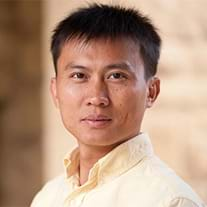
“One of the most important things is thermal comfort, when the weather gets cold you want to keep yourself warm, and when the weather is hot, how do you cool yourself down?” says Yi Cui, Professor of Materials Science and Engineering at Stanford University. He adds that “we [also] need to get the sweat out.”
Cui and his colleagues have developed several types of textiles that can help with those challenges. In one project, the researchers created a nanoporous metallic coating that can be embedded into cloth, causing it to reflect infrared radiation back towards the body. Another effort yielded a nanoporous polyethylene textile that allows infrared radiation to escape.
The two technologies can be combined in a single garment. “This bifunctional textile has two layers of coating … so you can wear it one way and this can keep your body warm, but if you wear it inside out … then you can cool your body down.”
Yi Cui
Climate-Controlled Clothing
Widespread use of such garments could save significant amounts of energy, either aboard space stations or inside office buildings.
“If you wear this in the indoor environment, then your air conditioning does not need to be so cool in the summer, and the set point can go up several degrees Celsius,” says Cui.
His calculations show that this change alone could decrease building energy consumption by 30 percent in a warm climate.
For space exploration, bifunctional outfits could help astronauts to adapt to enormous temperature changes from day to night on planets with thin or nonexistent atmospheres. Cui has also thought about the laundry problem.
“Would you be able to wash your clothing? Probably you would not have that much water [in space],” says Cui. Instead, he envisions self-cleaning clothing, perhaps using nanoengineered antibacterial coatings to inhibit odors and continuously sanitize the cloth.
Harvesting Energy From Clothing
Keeping an antibacterial coating active might require energy, but that could also come from the clothing itself. Cui explains that future textiles may incorporate photovoltaic systems to generate their own power supply from available light.
Harvesting energy from clothing is a high priority for textile engineers, as they already have plenty of ideas that will require power.
Alternatively, an outfit could exploit the temperature difference between the body and the environment to generate power, an approach that could work especially well when the garment is designed to cool the wearer. Instead of simply letting the excess heat escape, a power-generating garment would redirect it to generate electricity.
“Sensing body condition could become important, and … textiles could even do therapeutics, deliver drugs and things like that,” says Cui.
Clothing that senses and responds intelligently to the wearer’s condition and the environment would help long-distance space travelers cope with extreme conditions, while likely finding clinical uses on the ground as well.
Space outfits loaded with smart sensors, personal climate control, and energy collecting circuitry could have one major drawback, however: maintenance. When these complex systems inevitably break down, they’ll need to be fixed or rebuilt without support from Earth. Cui points out that the cooling fabric he developed, at least, is recyclable. Astronauts could theoretically melt it, extrude fresh fibers, and weave them into a new garment to replace the old one.
Score One For The Cows
Suzanne Lee
Other textile developers agree that recyclability will be critical for sustainable space travel.
“You can’t have things shipped to you, you need to be working with some sort of system … using your own waste stream as an input for anything that you need to consume,” says Suzanne Lee, Chief Creative Officer for Modern Meadow and founder of the Biofabricate Conference in New York City.
Modern Meadow’s approach to sustainability draws on the original closed-loop recycling system: biology. The company’s first product is a biofabricated leather produced by microbial fermentation.
“We actually start with collagen, which is the protein that makes up a material like leather, but we have it in a liquid form, and then we can do endless things with that protein in that form,” says Lee.
While the notion of omitting animals from leatherworking may appeal to vegans, Lee explains that the benefits of biosynthesis extend much further. Fermentation can be scaled to use far fewer resources than animal farming, and genetically engineered microbes can make collagen from a wide range of potential feed stocks, including waste that might be produced on a space voyage.
Biofabrication also shortens the path to the final product. Rather than being constrained by the shape and thickness of an animal hide, Modern Meadow’s leather can be sprayed, extruded and molded in whatever ways product developers need.
“You’re also able to form it potentially around a three-dimensional form, so then you get into reducing the numbers of processes that you might have in manufacturing, [negating] the need for a piece of equipment like a sewing machine,” says Lee.
Spiderman Was On To Something
While biofabrication could help produce a sustainable supply of ordinary clothing for astronauts, Lee cautions against trying to apply it too broadly.
“Let’s not underestimate the complexity of materials for space,” she says. For example, a space suit for extra-vehicular use is likely too complex to consider growing from scratch. Instead, multi-layered garments and spacecraft components with sophisticated life-support roles would likely be repaired rather than recycled on a long voyage.
That said, at least some of the components of future space fabrics may come from biofabrication. Lee points to spider silk, the strongest natural fiber, which several research teams and companies are now trying to manufacture at commercial scale. Clothing and even structures may soon incorporate spider silk, taking advantage of its extraordinary strength-to-weight ratio combined with its relatively low environmental impact.
Rather than pure spider silk bridge cables or textiles, Lee sees this and other biofabricated fibers being combined with more conventional materials.
“You might want the functionality of a biofabricated material, but combine it with an existing yarn or an existing textile structure,” says Lee.
Promising Prototypes
None of the new bio-materials have achieved the manufacturing scale needed to meet demands on Earth, and making these processes portable enough for space travel will require even more development. However, the field has produced some promising prototypes.
AMSilk, a Germany-based producer of silk biopolymers, collaborated with sportswear giant Adidas recently to produce a biodegradable athletic shoe. Another company, Bolt Threads of Emeryville, CA, produced a pilot batch of leather-like hats made with fungal mycelium.
Whether future astronauts actually end up recycling their clothing or growing new pairs of socks from their garbage, thinking about the constraints of space travel gives researchers a framework for improving sustainability closer to home.
“It’s an environment where you’re really trying to get the most out of the smallest amount of resources you have,” says Lee, adding that “as we think about a more populous Earth, then I’m sure it will have applications here too.”
It might even be the demise of the weekly laundry chore as we know it.
How scientists are approaching the critical need to minimize the creation of space debris, even as we expand space explorations.
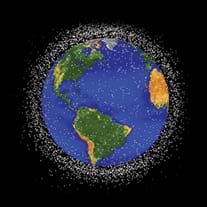
Low Earth orbit is the region of space within 2,000 kilometers of the Earth’s surface. It is the most concentrated area for orbital debris.
Published October 1, 2018
By Robert Birchard
In 1957, the former Soviet Union launched the first satellite, Sputnik, into orbit. Not to be outdone, the United States responded with its first successful satellite, Explorer, in 1958. The Space Race was officially on.
Sixty plus years later, Earth’s orbit is no longer the exclusive realm of Cold War superpowers. Today satellites are ubiquitous, launched by operators from the public and private sectors, touching all aspects of the economy and modern life. When Sputnik first left Earth’s orbit this frontier seemed limitless, but it has become more crowded with over half a century of satellite launches.
Mostly concerned with getting satellites into orbit, few scientist and engineers bothered about what happened once they got there, until NASA scientist Donald Kessler posited what is known as the “Kessler Syndrome.” This nightmare scenario envisioned a point where the density of objects in orbit would be such that a collision would generate enough space debris to increase the likelihood of further collisions, eventually rendering Earth’s orbit unusable for any satellites.
What is Space Debris?
Space debris refers to the manmade objects that still orbit the Earth, but no longer serve any purpose. This includes anything from derelict satellites and their abandoned orbital launchers, to tools lost by astronauts on spacewalks, to specks of paint chipped off the exterior of a satellite. It is estimated that Earth’s orbit contains 21,000 objects larger than 10 centimeters (cm), 500,000 objects from 1-10 cm in diameter, and over 100 million objects smaller than one cm.
Juan Carlos Dolado-Perez
According to Juan Carlos Dolado-Pérez, PhD, Head of the Space Debris Modelling and Risk Assessment Office, the Centre National d’Etudes Spatiales (the French Space Agency), the increase in catalogued space debris followed a rather linear increase of nearly 200 objects per year from 1957-2007. Recent catastrophic events have demonstrated the resulting risk and the difficulties in navigating an increasingly crowded orbit.
The Chinese Fengyun satellite was destroyed in 2007 during an anti-satellite test adding over 3,000 catalogued debris fragments to orbit. Then a 2009 collision between the active Iridium-33 and out-of-service Cosmos-2251 satellites created over 2,000 catalogued debris fragments.
Not If, but When
“The real question is not if, but under which conditions, exponential growth of space debris will create more serious problems for space activities,” said Dolado-Pérez. “We study this question with space debris evolutionary models. Such models don’t predict the future, they allow space debris experts to study the most likely future. This is a very complicated task with many uncertainties, which need to be taken into account during calculations.”
“In many models future launch traffic is defined based on past activity, but with the emergence of the commercial space sector, aspects of these models have to be updated and take into account the uncertainty of how space will be used in the coming decades,” he says. “Moreover, the quality of debris mitigation efforts and levels of compliance will have a major impact on the size of the debris population.”
Factors Outside of Human Control
Besides variables like the increasing rate of satellite launches, there are factors outside of human control affecting space debris in orbit.
“The solar activity affects orbital drag, which can make it easier or more difficult for space debris to drop out of its orbit, and unfortunately our capability for properly predicting future solar activity is limited,” Dolado-Pérez explained. “Also the increase of gases like carbon-dioxide, (due to human activity), will have an effect on the Earth’s upper atmospheric density, which will affect the time it takes for space debris to fall out of orbit.”
James Ryan
Sir Isaac Newton is credited with the adage that “what goes up must come down,” but when referring to Earth’s orbit, the rate at which items can fall to Earth, varies.
“Low Earth orbit is heavily populated with satellites. Everything sent there will come down eventually,” said James Ryan, PhD, a professor in the Department of Physics and Space Science Center at the University of New Hampshire. “The other extreme is geosynchronous orbit where the orbital lifetime is practically unlimited. But mid-level orbit may be the most problematic. The orbital lifetimes there are extremely long. Junk will accumulate over hundreds of years.”
These timeframes are too long to rely on natural forces to clear Earth’s orbit. Human efforts to remove debris requires overcoming several hurdles and there is no curb-side pick-up in space.
“Manually removing debris from any orbit is awkward, inefficient, expensive and energy consuming,” Ryan explained. “One has to sidle up to the errant object, and either move it to a lower orbit, capture it or boost it to an out of the way orbit. This takes energy and is basically a one-by-one process on thousands of objects.”
“An Ounce of Prevention is Worth a Pound of Cure”
Ryan would prefer to focus on preventing the buildup of space debris in the first place.
“An ounce of prevention is worth a pound of cure,” he said. “The design of satellites must include policies and procedures for carrying out easy deorbiting. Recycling boosters like those used by SpaceX solves a lot of problems, and shows promise. Piece-by-piece removal is impractical, except for very specific circumstances, such as a large spacecraft with no means to remove itself from orbit.”
Nikolai Khlystov
“We should not only design resilient satellites, we also need to operate them responsibly … and ensure we minimize the creation of new debris as we expand orbital operations,” said Nikolai Khlystov, Lead for the Aerospace Industry at the World Economic Forum. “The key challenge with the current regime is that current international guidelines are not enforceable.”
Khlystov suggests that a framework called the Space Sustainability Rating (SSR) could help minimize the creation of new space debris. The SSR was developed by the Global Future Council on Space Technologies, a multi-stakeholder group of international space experts and passed on to the Forum for actual development.
The SSR would provide a single, simple and transparent system to identify debris mitigation compliance in satellite design, launch and operation, thereby limiting confusion caused by overlapping and non-binding regulations put forth by various government space agencies. Private companies would benefit by “showcasing and advertising their rating without disclosing any sensitive details, as the rating would be published by a neutral third party,” he said.
More Transparency and Public Input
The SSR would provide transparency and allow the public to identify the responsible actors in the space sector.
“The fact that private actors have been entering the space sector in large numbers is a good thing. Their entrance brings innovation, new ideas, increased funding and lots of other benefits. We need to work together in a public-private partnership way to solve this particular challenge,” he added.
“Beyond SSR, one could imagine in the future a sort of consortia of public-private stakeholders — space agencies, satellite operators, launch providers, insurance companies and even investors — who come together and pool resources to solve the common problem of space debris. Of course, this kind of set-up would need careful planning and agreement,” Khlystov explained. “In principle all these actors are interested in maintaining the sustainability of orbits as they all have resources and interests that are at stake.”
Although space is infinite, Earth’s orbit is not. Its harshness belies its fragility.
“Our society is extremely reliant on space activities. Digital TV and radio broadcast, weather reporting, GPS, bank transactions and the internet all require satellites to function,” said Dolado-Pérez. “When we launch new satellites, it has to be done in a manner that keeps space sustainable. Earth’s orbit needs to be cherished because it is unique.”
By Marie Gentile, Mandy Carr, and Richard Birchard
If you’re a STEM professional, or an aspiring one, then scientific conferences are going to be an important part of your career, whether you work in academia, industry, or government. But figuring out how to get the most out of these events isn’t always obvious, particularly for those new to the experience. So we polled some of our Members and staff for their recommendations on the top ten things everyone, at any stage of their career, should do at a scientific conference.
1. Submit a Poster or Talk Abstract
There’s no better way to get your work out into the world and get instant feedback from your peers and colleagues than to present your work live at a conference. In fact, that’s the whole reason scientific conferences exist. You never know where those next crucial insights are going to come from, but you’ll significantly increase your chances of gaining them by sharing your work.
2. Dress Professionally
Everyone in the room at a conference is a potential colleague, business partner, or employer. And if you’re meeting that person for the first time, you’re making an impression that’s going to stick. Make sure it’s a good impression. Plus, how you dress can have a big impact on your self-esteem and confidence. If you dress in a way that makes you look like you’re at the top of your game, you’re more likely to feel that way too.
3. Bring Business Cards
Even in the age of digital devices, being able to quickly give someone all your relevant contact info on a single card helps ensure not only that they can easily get in touch with you, but also that they’ll remember you at the end of the conference. Even if you don’t have an official business card yet, you can make your own at home or order them through inexpensive online printing companies.
4. Download and Use the Event App
These days, more and more conference organizers are going digital when it comes to program booklets and conference materials by using smartphone apps for their events (the Academy uses an app for all of our events). But another benefit of event apps is the networking opportunities embedded within them. For instance, you can often view a list of attendees and request their contact info directly in event apps.
5. Arrive When Registration Opens
Many conferences host breakfast receptions during morning registration periods. This is an under-appreciated time to network. It’s also a great time to get a sense of who else is at the conference and who you might want to connect with during the day. An added bonus if you’re at the conference on your own is that you might meet people to compare notes with throughout the conference.
6. Sit Near the Front
Not only will you have the best line of sight to the speakers and their slides, you’ll also be closer to the speaker at the end of the talk if it’s someone you’d really like to chat with.
7. Take Notes
Conferences can sometimes feel a bit daunting when there are lots of different ideas being discussed. A great way to stay focused is by jotting down notes during the talks you attend. After the conference they can also help jog your memory, when you want to remember some of the most important things that were said.
8. Ask Questions
Many times it can feel like everyone in the room is nodding along in complete agreement through an entire talk, but often that’s more perception than reality. Science today is inherently complex and there’s a lot that attendees don’t know, or nuances that speakers don’t explore. Make a point of asking at least a couple of questions at every conference you attend. And when you ask your question, start by stating your name, saying where you work or attend school, and then ask your question. This gives people an easy way to follow up with you if they’re interested in the question you asked.
9. Post to Social Media
Not only does posting to social help the friends and colleagues following you gain insights from the conference you’re attending, it also gives you a chance to build connections. Posting, liking, and sharing on social at a conference is a great way to network, often giving you access to people you might not otherwise meet. Just make sure to use the conference hashtag so people can find your posts easily.
10. Attend the Networking Reception
Time and time again, we hear from our Members that they’ve met business partners or research collaborators during our conferences, and it’s inevitably because they stuck around to have those face-to-face conversations at the end of the day. Struggling with where to start the conversation? Did someone in the crowd ask a provocative question that interested you? Follow up there. Or strike up a conversation with those next to you in line for food or drinks. Where did they travel from? What brought them to the conference? Once you break the ice, things get a lot easier, and you’ll be surprised how much less intimidating these events can be once you’ve done it a few times.
Now that you’re ready to get the most out of your next scientific conference, check out our list of upcoming events, so you can put these suggestions to use.
In an age where instant communication can immediately spread misinformation, the consequences of scientific denialism are more serious than ever.
Published June 06, 2018
By Marie Gentile, Mandy Carr, and Richard Birchard
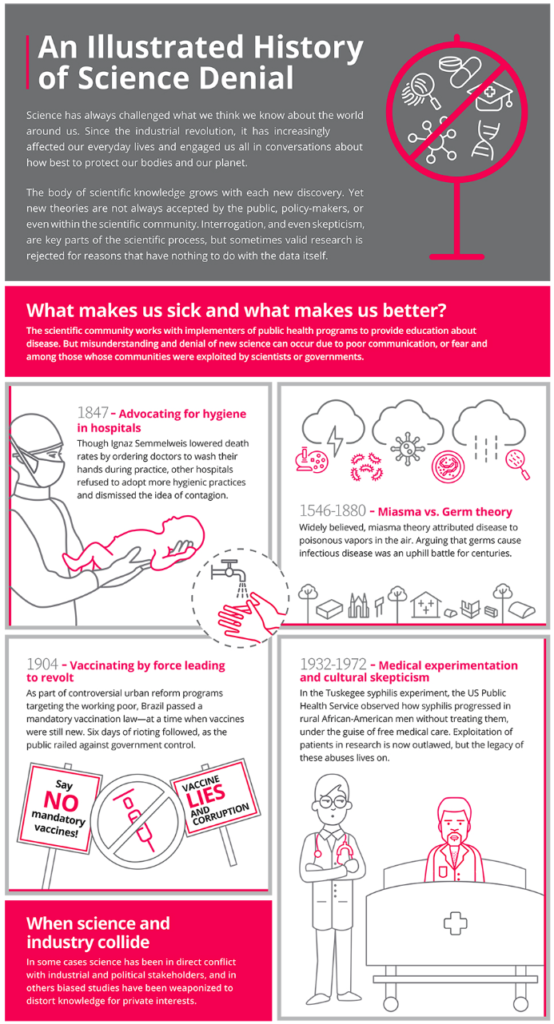
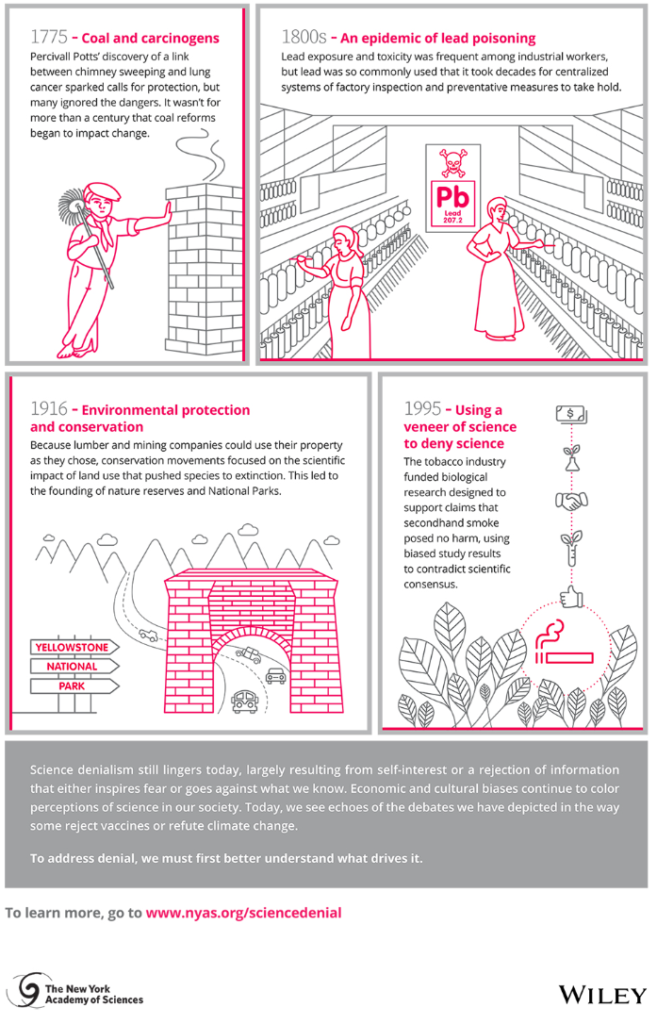
Still, it’s important to maintain perspective and remember that scientific denialism is not a new phenomenon. For as long as scientists have challenged our understanding of the world, there have been science denialists who oppose new consensus. Below is a brief illustrated history of some of the most notable instances of science denial.
Recent advances in human enhancement technologies offer new opportunities to redesign ourselves.
Published May 15, 2018
By Marie Gentile, Mandy Carr, and Richard Birchard
Recent advances in human enhancement technologies offer new and unique opportunities to redesign ourselves. Such efforts have a long history, as people have been attempting to overcome their biological limitations or remove supposed flaws for millennia.
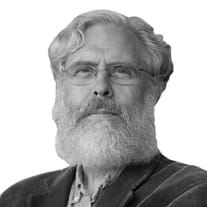
George Church, PhD, Wyss Institute at Harvard University
As George Church, PhD, from the Wyss Institute at Harvard University explained, before the 21st century human enhancements included anything from: vaccines preventing smallpox, polio, and measles; to cars and jets that moved people across the world at previously unimaginable speeds and distances; to the smartphone you may be reading this article on; and the cup of coffee you drink every morning to help wake up. Dr. Church believes that the latest human enhancement efforts in fields like gene editing and artificial intelligence are only following this well-trod path.
Human Enhancement Technologies
Eventually, Dr. Church suspects that human enhancement technologies could provide resistance to diseases such as malaria, tuberculosis, and Lyme disease, allow for up-to-date diagnostic readouts in healthcare, and even reverse aging. Advancement in genome editing technologies such as CRISPR could have the greatest impact by targeting, for example, human genes like CCR5 — an essential gene for HIV virus entry into target cell — and lead to a functional cure for HIV infection.
Such promises for the future of enhancement technologies are exciting, but not without potential risk. Critics have questioned the ethics of using these technologies to fundamentally alter human biology, and have called for careful investigations of the risks and potential complications before we can safely apply these new technologies. Moreover, there may be additional considerations if these new technologies are used for non-therapeutic purposes.
“If you have a sick person and you’re thinking about using a new drug to help them, risk is always tolerated — because the person’s life is at stake. But when you’re thinking about enhancement technology, it’s a slightly different risk-benefit calculus because that person isn’t necessarily dying or suffering, they’re receiving an enhancement,” says Josephine Johnston, LLB, MBHL from The Hastings Center.
The Ethics of Defining Enhancement Technologies
Josephine Johnston, LLB, MBHL, The Hastings Center
Additionally, she argued, “by definition, an enhancement technology claims to improve a person or a group of people. What it means to be improved, to be better, is very much a socially and culturally constructed notion. I would worry most about social pressure to conform to limited visions of the good and the improved, and our failure to adequately question and interrogate those visions.”
It is critical to discuss the principles that govern the ethical conduct of human enhancement. Dr. George Church stated that the NIH requires grantees to teach the responsible conduct of research to young scientists. He added that “most engineering disciplines have safety and security components and a code of ethics.”
However, Ms. Johnston maintained that individual scientists alone shouldn’t be required to focus on the ethics of the individual use of the technology they develop.
“I don’t think they should ignore it, but that’s not primarily the work that scientists are trained to do and it would be an unreasonable thing to place on [their] shoulders.” However, she continued, “I do think that it’s crucial for scientists as a collective group to be involved in discussions for developing policy.”
What Does it Mean to Be Human?
While there have been, and will continue to be major technology revolutions in human enhancement, Ms. Johnston believes that human enhancement raises long standing questions about what it means to be human.
“There are going to be upsides and downsides to these different enhancement technologies, but that complexity might be difficult to see at first and we might not agree on,” says Johnston. “How will we know when we’re seeing something that really, truly can improve people’s lives? These questions about what makes for a good — or even a better — life are questions we’ve been grappling with for a long time. I’m not sure that I see a brand new question. Just new iterations of old questions about what it means to live well.”
From global data-sharing efforts to local educational campaigns, new urban sustainability projects are shaping the cities of a greener future.
Published May 1, 2018
By Alan Dove, PhD
In 1900, about 13 percent of the world’s population lived in cities. Today, well over half of it does, and that proportion continues to grow. Cities now account for three-fourths of global gross domestic product, and about the same fraction of human-generated carbon emissions.
Because they concentrate huge amounts of human activity into small areas, cities are ideal test beds for new sustainability efforts. Inspired by the United Nations’ Sustainable Development Goals (SDGs) new collaborations have sprung up between political leaders, scientists, communities and non-governmental organizations. From global data-sharing efforts to local educational campaigns, these new urban sustainability projects are shaping the cities of the future.
Christiana Figueres
The Political Climate
Nations formally sign international agreements such as the SDGs, but in the case of urban sustainability, it falls to the leaders of individual cities to implement relevant policies. Fortunately, compared to national or regional governments, “cities are much more in tune with the direct impact of their policies, and they are much more in tune with the quality of life of citizens … from day to day,” says Christiana Figueres, Vice Chair of the Brussels-based Global Covenant of Mayors for Climate and Energy.
Figueres’ group provides a global network through which city leaders can share their ideas and results in pursuing sustainability.
“We’re a very important platform for city officials to learn what has worked,” says Figueres, pointing to examples such as Seoul’s renewable energy campaign, Paris’ expanding bicycle infrastructure, and a multi-city effort in India that has exchanged over 700 million incandescent lightbulbs for high-efficiency ones.
The central focus of the Global Covenant of Mayors is helping cities design and implement ambitious climate action plans, but that remit intersects with many of the U.N.’s other SDGs.
“How we pursue building our cities for the future — such as using high-carbon or low-carbon infrastructure, the way we change our consumption and production patterns, the way we deliver economic growth — are all relevant to the sustainable development goals and will largely determine the quality of life on this planet,” says Figueres.
United by Common Problems, Divided by Different Regulations
While cities around the world face common problems, they’re also bound by the particular laws and circumstances of their nations. Figueres emphasizes that the Global Covenant of Mayors has neither the authority nor the desire to try to synchronize urban policies across national boundaries. Instead, the group serves as a clearinghouse for cities to share data, strategies and ideas and discuss their experiences and results.
Science is a central part of all of these efforts, in measuring greenhouse gas emissions, studying and predicting the potential impacts of future climate change and also identifying the most effective measures cities can take to reduce their environmental impact and mitigate risks. Figueres points to a project in Myanmar, where scientists are developing models that can predict storm surges from cyclones, and others that identify areas at the highest risk of earthquakes and fires.
That information will help local leaders plan disaster responses to focus on the areas with the greatest needs, while also guiding future infrastructure development. Data from that project could inform similar efforts in coastal cities around the world, as rising seas and temperatures will likely make natural disasters more frequent.
Fundamentally a Problem of Physics and Atmospheric Chemistry
Climate change is fundamentally a problem of physics and atmospheric chemistry, but responding to it will require many other disciplines. Figueres emphasizes that in cities especially, researchers need to focus on social aspects of sustainability.
“We have a tendency to dehumanize cities, as though the purpose of cities were to have buildings and infrastructure, [but] the purpose of cities is actually to be the home for human beings,” says Figueres.
For policymakers to make the best use of science, scientists also need to explain it in human terms. “It does no good to come with science, accurate as it may be, if it’s not made relevant and understandable,” says Figueres.
Melanie Uhde Photo: Sun Kim, skstudiosnyc
Hungry For Change
While the Global Covenant of Mayors is helping scientists and city leaders work together globally, individual researchers are also taking local action in their own towns. New York’s Urban17 Initiative exemplifies this trend.
“I wanted the students who are part of our team to focus on urban sustainability in New York City, because it’s a great city to model hypotheses,” says Melanie Uhde, Urban17’s founder and managing director.
Urban17 currently consists of about a half-dozen volunteer analysts, mostly graduate students and young researchers from different disciplines and universities around the city. Despite its small size and lack of funding, the ambitious group is already tackling a project with global relevance, studying the overlapping problems of obesity and hunger.
“We know that, for example, the rates of obesity and hunger in the Bronx are the highest [in the city], so they’re basically bedfellows, which is a very common phenomenon in urban environments throughout the world,” says Uhde.
The Paradoxical Overlap of Hunger and Obesity
It may seem paradoxical for hunger and obesity to overlap, but interconnected problems can yield exactly that result.
“It’s definitely poverty, but it’s unfortunately much more complicated,” says Uhde, adding “even if you have money, do you have access to food, do you have the education, do you know what’s actually good for you, [and] do you have the time to put effort into a nutritious meal?”
In poor urban neighborhoods, the answers to those questions are often ‘no,’ causing synergistic deficits that can produce the entire spectrum of dietary problems. To address that, Uhde and her team are combining data on obesity and hunger with the locations of groceries, parks, fitness centers and schools.
The Impact of Obesity and Hunger on Education
Public schools provide good anchors for the project, not only in mapping the extent of obesity and hunger in some of the most vulnerable populations, but also in implementing solutions.
“Education is a very important factor to achieve sustainability, and we’re seeing [how] other factors like obesity or hunger influence education,” says Uhde. Malnourished students aren’t likely to learn well, which in turn can perpetuate poverty and poor health. Improving school meal programs and health classes could help break that cycle.
Uhde hopes other scientists will start tackling sustainability problems in their own towns. “Sustainability … affects everyone in every aspect of life,” she says, adding that “we’re living in this era where we have to do something no matter what.”
Jennifer Costley, PhD, Director, Physical Sciences, Sustainability and Engineering, New York Academy of Sciences contributed to this story.