Sickle Cell Disease: Existing Paradigms and Novel Approaches

Sickle cell disease (SCD) is a genetic blood disorder affecting approximately 6 million people worldwide, with an estimated 120 million individuals carrying the sickle cell trait.

Advances in scientific research are essential to developing improved treatments and enhancing the quality of life for those living with this condition.

The conference, “Sickle Cell Disease: Existing Paradigms and Novel Approaches,” will feature groundbreaking discussions and research across five pivotal topics:

  • Disparities, Real-world Challenges, Opportunity in Sickle Cell Disease
  • Modeling Sickle Cell Disease
  • Vascular Pathology in Sickle Cell Disease
  • Autologous Gene Editing and Reprogramming Cures — An Update
  • Allogeneic Hematopoietic Stem Cell Transplantation (HSCT) Cures- Key Issues

This interdisciplinary symposium will unite leading clinicians, researchers, policymakers, and patient advocates from academia, regulatory bodies, and industry to foster information sharing and collaboration.

Sponsors

Presented By

The New York Academy of Sciences
Biochemical Pharmacology Discussion Group

Sponsored By

Lead Supporter: Biochemical Pharmacology Discussion Group

Bronze Sponsors

Course: Mental Health First Aid

A colorful graphic stating: "Certified Adult Mental Health First Aid Instructor"

Mental Health First Aid was originally scheduled to take place twice: on November 2 and November 16. However, this event will now ONLY occur on November 16.

Mental Health First Aid (MHFA) is an interactive training program designed to help individuals identify, understand and respond to signs of mental health issues and substance use disorders in adults. Similar to First Aid and CPR training, MHFA is a key set of skills that can allow scientists and educators to assist their students, peers and colleagues who may be experiencing an acute mental health issue.

Scientists and educators are encouraged to take this course to help address the growing mental health crisis in adults. Similar to First Aid and CPR, the training gives you the skills you need to reach out and provide initial help and support to someone who may be developing a mental health or substance use problem or experiencing a crisis. Mental Health First Aid is an internationally recognized program that originated in Australia and is currently taught in more than 25 countries world wide. The program follows evidence-based fidelity standards.

Please note that this course involves two hours of self-paced online learning prior to the event.

The Impact of Social Isolation on Alzheimer’s Disease

An illustrated graphic depicting various medical components.

Winners of the Junior Academy Innovation Challenge Fall 2021: “The Impact of COVID-19 on Non-Communicable Diseases.”

Published September 20, 2023

By Nicole Pope

Alzheimer’s Disease (AD) is a debilitating condition that affects the memory and cognitive functions of 5.8 million people in the U.S. alone. You might not expect teenagers to be especially aware of this terrible disease, especially in the middle of a pandemic. Yet the international Junior Academy team formed by Julie (U.S. Team Lead), Tamar (Israel), Rayhan (U.S.), Ashita (U.S.), Sophia (U.S.) and Sanjana (U.S.) chose to work on this common neurodegenerative affliction for the Fall 2021 Junior Academy challenge.

Working with their mentor, Dr. Himanshu Batra (U.S.), the six teens first set out to gain a better understanding of living with AD before going on to develop their innovative solution. Dr. Batra gave the team good advice: “Think aloud: getting out ideas with colleagues makes the idea more tangible and enables a working hypothesis to mature.”

The team members delved into academic studies, conducted interviews with clinicians, and sent out questionnaires.

“I gained significant insights on the magnitude of this pandemic and its effect on patients and the healthcare system,” says Rayhan.

They learned, for example, that COVID-19 had restricted access to AD diagnostics and therapies while also increasing isolation levels for people living with the disease and their caregivers. Between 40% and 50% of Alzheimer’s sufferers experience depression.

Improving Associated Mental Health Outcomes

Their Alzheimer’s Open Inclusive Solution (ALOIS) project aimed to make early screening more accessible and to improve the mental health of Alzheimer sufferers and their caregivers, often affected by depression and anxiety.

“I was able to connect with and learn from like-minded individuals from various regions of the world,” says Sanjana. “Approaching the challenge alongside people with different perspectives and backgrounds allowed me to gain insight into different ways to approach the problem.”

The intense process was a powerful learning experience for the students and an opportunity to forge bonds across borders with like-minded science enthusiasts.

“Throughout this process as a team lead, I learned many things about task management, scheduling and organization,” says Team Lead Julie.

Each participant contributed their own skills and developed new ones as the project progressed.

“Each one of us had a different field in which they were stronger, which created an amazing dynamic,” Tamar explains.

Bringing it All Together

Based on a study that shows significant differences in the patterns of computer usage between cognitively healthy and cognitively impaired people, the students devised a computer extension that analyzes characters per minute (cpm) and pauses per minute (ppm) during users’ everyday tasks. When applied to people at risk of developing AD (primarily those over the age of 65), this home-based early assessment method could contribute to earlier detection of the disease and encourage patients to seek earlier medical advice.

The international team also developed the versatile ALOIS app, which includes an audio feature that could analyze speech while patients undergo the Boston Naming Test, a standard assessment that requires patients to identify a series of drawings. Audio can identify AD with great accuracy.

“The Boston Naming Test idea felt very innovative and I’m excited to see ways we can engineer it and potentially offer it to the general public,” says Sophia.

The app also contains a Virtual Reality (VR) element, based on Escape Room format, that stimulates short-term or long-term memory. Upper body cardiovascular exercises will also be added to the app, to improve blood flow to the brain, a method shown to slow cognitive decline and improve mental health.

The intense development process, taking place between October and December 2021, has been a fantastic learning experience for the six Junior Academy Challenge winners.

“I have learned many new skills, such as audio analysis in Python and graphic design,” says Ashita. “Thank you to The New York Academy of Sciences Junior Academy for facilitating such a thought-provoking challenge and collaboration.”


The Junior Academy was supported by the Stevens Initiative, which is sponsored by the U.S. Department of State, with funding provided by the U.S. Government, and is administered by the Aspen Institute.

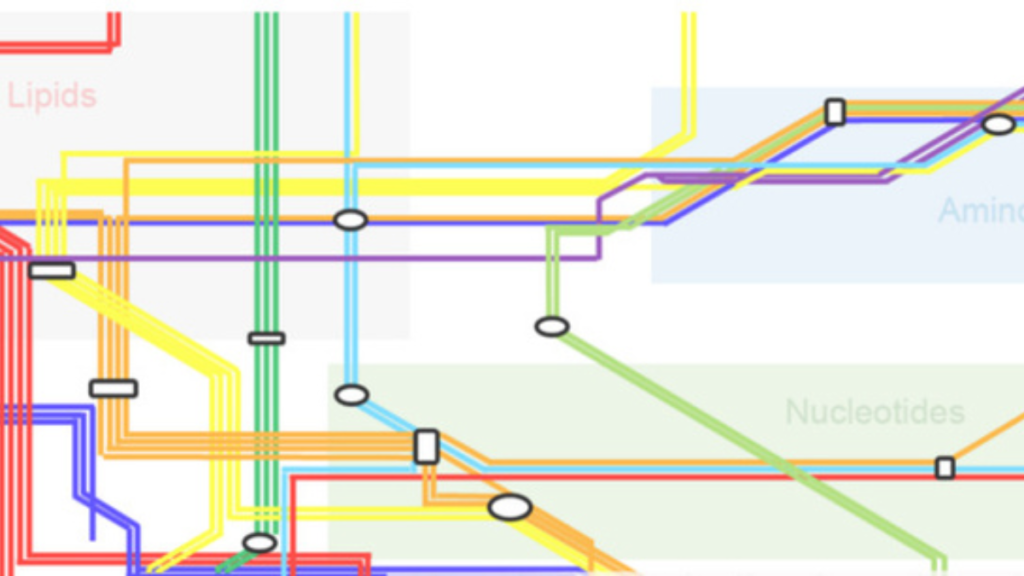
Cancer Metabolism and Signaling in the Tumor Microenvironment

April 17, 2024 | 8:30 AM – 5:25 PM ET

Scientists involved in basic, translational, and clinical cancer metabolism research are invited to attend a symposium hosted by the Academy in New York on April 17th. The event will focus on the intersection between cell signaling and metabolism in cancer. Topics include the intricate networks of metabolite-signaling in tumor progression, therapeutic targets, and translating findings into patient treatments. Plenary presentations, panel discussions, and networking opportunities will foster meaningful conversations among attendees and world-class speakers regarding tumor cell exploitation of cellular signaling and metabolic pathways for malignant growth.

Sponsor

Cancer Discussion Group Lead Supporter

Better Diets Mean Better Mental Health

Students interact between a piece of clear plastic during the COVID-19 era.

Winners of the Junior Academy Innovation Challenge Spring 2022: “Building Community to Support Student Mental Health”

Published August 21, 2023

By Nicole Pope

Sponsored by S&P Global

Team Members: Catherine L. (Team Lead) (China), Advika S. (India), Cara C. (United States), Snigdha S. (India), Shruthi D. (United States), Shivani D. (India)

Mentor: Katherine Wert (United States)

Many adolescents struggle with mental health issues and a conflicted relationship with food, brought on by a variety of psychological and social factors–including toxic beauty standards, pressure to be thin, stress and hormones. Eating disorders can have a devastating impact on young people’s mental and physical health.

A six-member international team of science-loving high school students were named the winning team in the Junior Academy challenge “Building Community to Support Student Mental Health” with the creation of Nutribona, a feature-rich app specifically aimed at 13- to 18-year-olds with food concerns.

After consulting with experts and conducting a survey among their peers which revealed a significant prevalence of food-related issues, team members designed this app to help users make better daily nutritional choices. In particular, they wanted to raise awareness of the gut-brain axis, the link between food intake/the consumption of specific nutrients and mood/psychological well-being.

“As I looked into the psychological aspects of Nutribona, I was able to understand the importance of dealing with such disorders at a young age,” says Snigdha. “I realized how big a role an online community has in our daily lives and I believe we were able to create a design that tackles physical and mental health head-on.”

What is Nutribona?

Nutribona offers several innovative features designed to address food-related disorders, such as healthful recipes– alongside several features addressing harmful behaviors such as excessive exercise, episodes of binge/purge, and binge eating. The app also offers access to anonymous chat spaces where users can share their problems with a supportive community and the ability to reach out to psychologists and nutritionists.

Nutribona promotes yoga, a gentle form of exercise that contributes to reducing stress and anxiety and building body strength and flexibility, rather than promoting weight loss. A personal page can be used to track progress. App users can also play games and take part in health-related challenges.

“My favorite part of the challenge is that it offered me a chance to go through a complete design process,” explains Catherine, the Team Lead. “The mindset of design thinking really helps me a lot in building solutions, from research, to interviews, to finally testing.”

Teamwork + Mentorship = Success

This ambitious project was the result of intense teamwork under the guidance of an encouraging mentor.

“Our team was able to work together and divide tasks equally amongst each other,” states Cara. “We collaboratively tested our ideas together and always asked for feedback to improve our work.”

While developing their project, the students felt they learned a lot from each other.

“Even now, as the project is over, I find it hard to believe that I was part of this journey, this incredible experience of learning and discovering and thinking and solving,” says Shivani. “I saw ideas form and evolve and turn into something spectacular.”

The six students are exploring ways to make their app available internationally, and are also considering how to make it commercially viable– eventually deciding that it should be supported by ads carefully selected to prevent a negative impact on users, while considering the necessity of charging a small fee later on.

“Eating difficulties are a major part of mental health. Eating guilt-free is something that everyone should be able to experience,” believes Shruthi. “Looking at our solution, I feel a sense of pride and achievement,” says Advika. “Together we have created a solution that is not only feasible but also viable in the real world.”

Tight Junctions and Their Proteins: Molecular Features and Functions in Health and Disease

Continuing a long-running collaboration between Ann NY Acad Sci and the community of scientists who specialize in tight junctions, this collection presents papers invited from participants at the 4th Tight Junction Conference in 2021. The virtual issue is edited by Michael Fromm, Jörg-Dieter Schulzke, Dorothee Günzel, and Rita Rosenthal. Several previous collections of papers have been published in Ann NY Acad Sci, including volumes 1405, 1397, 1258, 1257, and 1165.

See https://nyaspubs.onlinelibrary.wiley.com/doi/toc/10.1111/(ISSN)1749-6632.tight-junctions-proteins.

Calcium

In March and April 2021, the Nutrition Science Program of The New York Academy of Sciences in partnership with the Children’s Investment Fund Foundation, convened a Calcium Task Force and hosted two virtual meetings. The task force comprises experts in micronutrients, malnutrition, pediatrics, gynecology and obstetrics, biochemistry, public health and strategies for supplementation and fortification. The papers in this virtual issue derive from deliberations of the task force. See https://www.nyas.org/programs/addressing-global-calcium-deficiency/. Or click https://nyaspubs.onlinelibrary.wiley.com/doi/toc/10.1111/(ISSN)1749-6632.calcium.