Three weeks postpartum, I developed a painful, swollen lump in my breast–mastitis. Despite having breastfed all three of my children for over a year each, and now currently my fourth, I was still caught off guard by the physical toll. I spiked a fever, experienced intense chills, and felt utterly fatigued. I had to pile on two blankets just to stop shivering and spent two full days in bed, only getting up to breastfeed the baby. It was a stark reminder of how vulnerable the postpartum period can be, no matter how experienced you are.
My mastitis persisted for nearly a week. I required antibiotics and tried multiple strategies: warm and cold compresses, therapeutic massage, and nursing in awkward positions to relieve the blockage. On the third day, I sought out a lactation consultant who eventually referred me to a physician specializing in breastfeeding medicine (also known as lactation medicine), a field I wasn’t even aware of until I needed it.
The experience was eye-opening. The clinic provided comprehensive medical care tailored to the unique and complex needs of lactating mothers. Staffed by board-certified pediatricians and International Board-Certified Lactation Consultants, the practice offered deep expertise, careful evaluation, and timely follow-up. Services addressed not only mastitis but also challenges such as low or excess milk supply, painful latch, and breastfeeding after surgery.
Contributing to Therapeutic and Public Health Strategies
Over the years, I’ve experienced an oversupply of breast milk and have frequently donated to milk banks to support other families. During the first year of the COVID-19 pandemic in 2020, just after giving birth to my third child, I participated in a groundbreaking study at the Icahn School of Medicine at Mount Sinai, led by human milk immunologist Rebecca Powell, PhD. In April 2020, I tested positive for COVID-19. Shortly afterward, I joined a research effort examining whether breast milk from women who had recovered from COVID-19 and later, those who were vaccinated, contained protective antibodies that could be used therapeutically.
The study enrolled 1,600 lactating women, including 600 who, like me, had tested positive for COVID-19. Early findings revealed that 14 out of 15 donors had significant levels of virus-reactive antibodies in their milk. These antibodies, known as secretory immunoglobulins, are uniquely suited for mucosal surfaces like the lungs, where respiratory viruses such as SARS-CoV-2 initiate infection.
The idea that breast milk could not only nourish infants but also contribute to therapeutic and public health strategies was both humbling and profound. In a related piece published on the blog for the Harvard Kennedy School’s Belfer Center for Science and International Affairs, I argue how “profoundly alarming” it was when Health and Human Services Secretary Robert F. Kennedy, Jr. removed COVID-19 vaccines from the CDC’s immunization schedule for healthy pregnant women and children.
And yet, despite how vital lactation support is, it often ends the moment a mother is discharged from the hospital. While pediatric care continues seamlessly for the infant, mothers are frequently left to manage complex breastfeeding challenges on their own, with little clinical guidance or structured follow-up.
Safeguarding Health, Dignity, and Resilience
This gap in care is reflected in national data: while 84% of U.S. mothers initiate breastfeeding, only 59% continue at six months, and just 39% at one year. These numbers don’t reflect a lack of motivation–60% of mothers report that they stop breastfeeding earlier than they intended. Instead, they highlight systemic failures: challenges with latching and milk supply, concerns about medications, inadequate parental leave, unsupportive work environments, cultural pressures, and hospital practices that fall short. All of this unfolds during one of the most physically and emotionally demanding times in a mother’s life.
Mastitis alone affects up to 25% of breastfeeding women. It can lead to early weaning, chronic pain, or even hospitalization. Yet many mothers are unaware that medical treatment exists for these complications. Too often, they are left to trouble shoot on their own while exhausted, overwhelmed, and in pain.
The Fourth Trimester, the 12 weeks following childbirth, is a critical period of recovery and adjustment for both mother and baby. Yet it remains one of the most neglected phases in maternal healthcare. Mothers are typically discharged with minimal support and may not see a provider again for six weeks, even as their infants receive multiple well-child visits during that same period. This disparity in care must be addressed.
Whether navigating breastfeeding for the first time or the fourth, mothers should not have to go it alone. Breastfeeding medicine should be fully integrated into routine postpartum care, just as pediatric care is standard for newborns. Supporting mothers in this way isn’t just about helping them feed their babies, it’s about safeguarding the health, dignity, and resilience of families and communities.
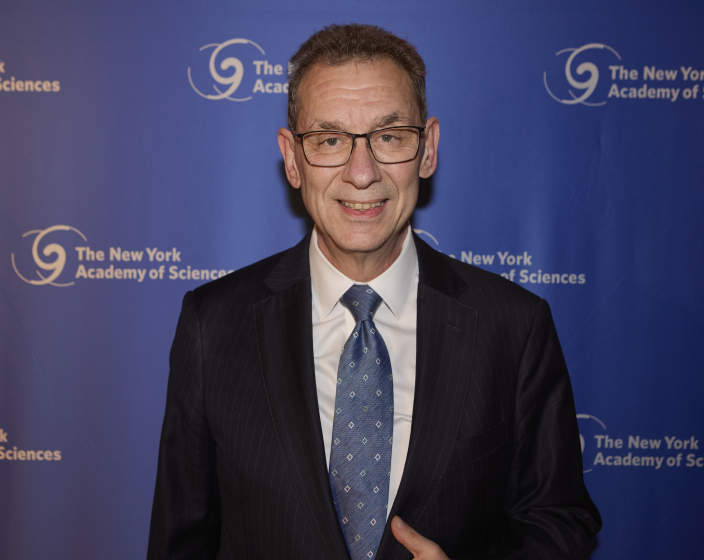
Albert Bourla, DVM, PhD, Chairman and CEO of Pfizer, was one of three Honorees recently recognized by The New York Academy of Sciences (the Academy) for outstanding contributions to science.
Published May 12, 2025
By Nick Fetty
Dr. Albert Bourla at the Soirée.
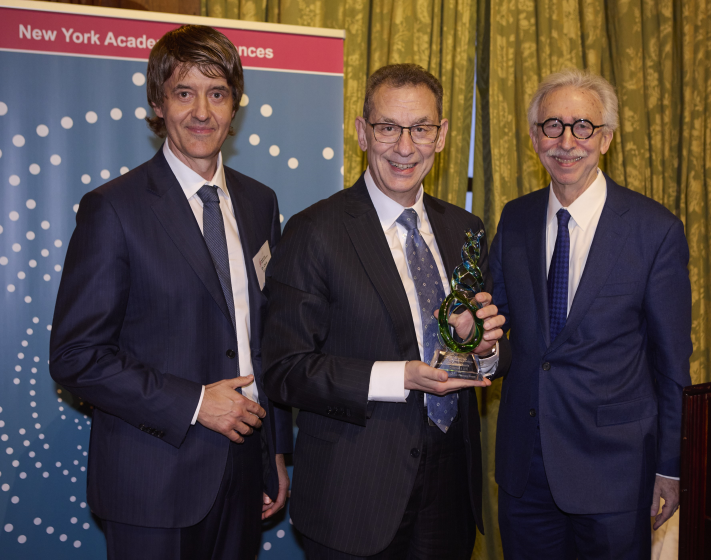
Dr. Bourla was presented with the inaugural Visionary Award in recognition for his “anything is possible attitude” which, in part, helped Pfizer develop a vaccine during the COVID-19 pandemic. The award was presented during the Academy’s recent 2025 Spring Soirée, hosted at the University Club of New York.
During the COVID-19 pandemic, Dr. Bourla led the development of a safe and effective vaccine. While this process can take up to 10 years, he inspired colleagues to expedite it to just eight months while maintaining quality and integrity. He authored a book about this experience, which went on to be a Wall Street Journal Best Seller, a Bronze Medalist in the 2023 Axiom Awards, and a Finalist for the National Jewish Book Awards.
From left: Dr. Chris Boshoff, Chief Scientific Officer and President, Research & Development for Pfizer; Dr. Albert Bourla, Chairman and CEO for Pfizer; and Prof. Nick Dirks, President and CEO for The New York Academy of Sciences.
Award-winning Work
A native of Greece, Dr. Bourla holds a PhD in the Biotechnology of Reproduction from the Veterinary School of Aristotle University in his home country. He’s been named CEO of the Year by CNN Business, a Most Transformative CEO by Business Insider, and an inductee into the Crain’s New York Business 2021 Hall of Fame. His work has also been recognized outside of the United States. He’s received the Golden Cross Order of the Redeemer, conferred by the President of Greece; the Order of Boyacá, conferred by the President of Colombia; and the Order of the Independence from the First Degree, conferred by His Majesty King Abdullah II of Jordan.
While Dr. Bourla has earned numerous awards throughout his distinguished and impactful career, he was sincerely appreciative of the recent recognition from the Academy, which highlights his dedicated efforts to advancing science for the public good.
“Science is the cornerstone of progress in our society. It is how we’ve eradicated diseases. It is how we’ve improved healthcare. It is how we’ve expanded life expectancy. It has enabled the discovery of penicillin. Put a man on the moon. And, yes, led us in developing a vaccine that was able to save millions of lives and return society to normalcy: the COVID vaccine,” said Dr. Bourla while accepting the award. “No other force has the same ability to strengthen society and human health as science.”
New study finds that loneliness is more likely to be associated with the use of specific media platforms, not social media in general.
New York, NY | May 12, 2025 – There has been increasing concern that overall time spent online is contributing to greater loneliness and other psychological harm in children and young adults. But a new study by a team of international researchers and published in Annals of the New York Academy of Sciences found that it is the type of social media platform that is associated with loneliness, more than the use of social media itself.
The study was conducted by an international group of researchers from the University of Greenwich, King’s College London, Duke University, University of Oslo, and University of California, Irvine. It investigated patterns of digital technology use and their associations with loneliness in a cohort of 1,632 young adults (mean age 26) in the United Kingdom who had been followed prospectively since childhood for the Environmental Risk Longitudinal Twin Study. Data were collected via an online survey in 2019–2020. The period of data collection allowed for comparing young adults before and during the COVID-19 pandemic.
The researchers reported that networking social media platforms such as Facebook, Instagram, and Twitter (now known as X) were not especially associated with above average levels of loneliness. However, those sites that promote passive consumption such as YouTube and Reddit, as well as some dating apps, were. The one app that stood out was WhatsApp, which was associated with lower levels of loneliness. These patterns between social media platforms and loneliness were the same before and during the COVID-19 pandemic. They also found that compulsive use of digital technology or experiences of online victimization were associated with higher levels of loneliness, suggesting that it is the nature of digital technology experiences that are associated with loneliness.
Much has been debated in policy circles regarding the effects of social media use on youth and how best to regulate it. This paper demonstrates that mental health issues, specifically loneliness, and its association with social media are nuanced and should not be treated as a homogenous category because of differences between platform types and how they are used.
This study will help to inform users, public health officials, and policy makers about more effective ways to use and regulate social media to optimize public health.
A copy of the study may be downloaded here: “Social media use, online experiences, and loneliness among young adults: A cohort study”.
Annals of the New York Academy of Sciences is an international science journal published monthly in many areas of science, though predominantly the biological sciences. Each issue presents original research articles and/or commissioned reviews, commentaries, and perspectives. Articles published online before print can be found here. In 2022, Ann NY Acad Sci began publishing a new front-half section of essays, book reviews/excerpts, commentaries, and perspectives in the spirit of The New York Academy of Sciences’ venerable general science magazine The Sciences (published 1960–2001). Ann NY Acad Sci is a hybrid (open access–subscription) journal available in 80+ countries worldwide, rigorously peer-reviewed, and ranked among the top multidisciplinary journals worldwide.
Douglas Braaten, PhD, EMBA, Chief Scientific Officer, Editor-in-Chief
Study Lead Author
Timothy Matthews, PhD, Lecturer in Psychology, University of Greenwich
Timothy Matthews, PhD, joined the University of Greenwich in February 2022 as a Lecturer in psychology. He completed his PhD at King’s College London in 2017, having developed a program of research into loneliness in young people. In 2019, he was awarded a British Academy Postdoctoral Fellowship to continue his work in this area. He is particularly interested in loneliness as a chronic problem and novel technologies to understand and combat loneliness.
Stacey Missmer, ScD, is a professor of obstetrics and gynecology at the University of Michigan, an adjunct professor of epidemiology at Harvard T.H. Chan School of Public Health, and a lecturer in pediatrics at Harvard Medical School. Prof. Missmer will serve as the keynote speaker for The New York Academy of Sciences’ upcoming event Endometriosis: A Look at Current Practices and Emerging Science.
Published May 9, 2025
By Megan Prescott, PhD
Stacey Missmer, ScD
You have been at the forefront of endometriosis research for many years—how has our scientific understanding of the disease evolved, and what are the most exciting discoveries from the past decade?
You’re spot on that there remain really fundamental questions still to answer about endometriosis. However, genuinely we have had a dramatic increase in discoveries in the last decade or so. It’s very different from when I first started researching endometriosis in 1998 when I started my doctoral dissertation. Where we are now from where we were then in many, many different aspects, from knowledge, from attention, from the types of questions that are being explored, it’s very different.
Back then, there had never been a longitudinal study of risk factors for endometriosis at all. With the exception of ovarian cancer, there had never been studies of conditions that are also common in women with endometriosis. There wasn’t a single study then that had focused on adolescents with endometriosis, nor exploring endometriosis in women after menopause. There was no exploration of informative phenotypes or diversity of endometriosis characteristics and presentation patients outside of the ASRM (The American Society for Reproductive Medicine) staging system.
We know now that the visualized endometriosis is not definitively correlated with the symptoms that patients experience. It’s not correlated with their treatment response for standard treatments. However, what is emerging—now that we have genetic discoveries and gene expression pathways and protein pathways and metabolome studies—is that differing presentations of endometriosis, whether it is cysts on the ovary or deep endometriosis or peritoneal lesions, whether it is cyclic pain symptoms, or pain around sexual intercourse or pain related to bowel movements or bladder pain, we know that those are emerging to be associated with different genes, and different protein pathways. It is in this new era of omics discovery that we’re understanding more and more differences among patients with endometriosis that we never even thought about before.
We also now, within the last decade or so, better understand that those with endometriosis have a higher risk of not just ovarian cancer, but also have hallmarks of different conditions related to immune dysregulation and autoimmune conditions, different dermatologic characteristics, different risk of cardiovascular and cerebrovascular conditions, different impacts on mental health, and life goal attainment. The areas that we’re researching and the speed at which we’re making discoveries is very different.
Your work has contributed to identifying genetic, hormonal, and environmental risk factors for endometriosis. What are some of the biggest remaining questions about what causes the disease?
We know for certain that like most—arguably all—complex conditions, there’s not a single cause, but multiple pathways. That is really important to understand. It maybe should have been obvious only in that we know that the experience of people with endometriosis is very diverse.
Some experience infertility: about one-third of those with endometriosis will have difficulty conceiving, but two-thirds don’t. We know that a large portion experienced pelvic pain, but that pelvic pain emerges at different ages. It has different levels of severity and manifests and different types of pain. We know that for what our standards of care are—excision surgery to remove the observed endometriosis lesions, hormone treatments, other pain focused or analgesic treatments, pelvic floor therapy treatments—that the success of those treatments varies from one patient to another.
One of the really exciting things is how can we determine what are the different causal pathways of endometriosis? Can we prevent endometriosis? Can we cure endometriosis based on those pathways? Do we need different diagnostic markers? One of the key things we’re searching for right now is noninvasive diagnostics. Will there be a diagnostic marker that applies to all patients with endometriosis?Or are there nuances? Where must there be differences based on this diversity of the condition?We need novel treatments, and those novel treatments will be outside of the hormonal and the surgical influences. What might those treatments be along immunologic or rheumatologic pathways?What might they be along pain pathways that have been successful in patients with other types of pain other than pelvic pain?The huge leap forward is not ignoring, but embracing that diversity of the endometriosis journey, what endometriosis patients experience, and the underlying biology.
You have led large cohort studies like the Nurses’ Health Study and worked with the World Endometriosis Research Foundation. How have these large-scale data resources helped shift the landscape of endometriosis research?
I am a data scientist by training. My lens and how I think about scientific questions are really driven by who we’re studying, what information we’re capturing about them, and what window in their journey we are capturing and exploring.
I learned from exceptional forward-thinking people in population science [like David Hunter and Susan Hankinson]. I came into that group when no one was thinking about endometriosis and endometriosis discovery.
We now know that it’s quite prevalent in the Nurses’ Health Study. Across the more than 20 years that I’ve been doing research within that group, we learned that a little more than 11% of the participants have been diagnosed with endometriosis, so it’s quite prevalent.
It has been quite impactful having access to these large data sets. In these large data sets—the details of endometriosis, the types of surgical phenotypes, but also the symptoms: pain symptoms, infertility—they’re not routinely recorded and documented. They’re not routinely focused on.
One example where we saw this was in the COVID pandemic. As the new vaccines were being developed, the trials did not ask about women’s menstrual characteristics. They did not ask about pelvic pain. They didn’t ask about female specific or gynecologically focused characteristics at all. Then it emerged that women started reporting on their own that they thought that the vaccinations were having an impact on their menstrual cycle. The population science field really scrambled to try to pull together ad hoc data to explore that answer. Had we intentionally included female specific characteristics in those data collections, we would have had more solid, faster, information.
That’s proving true for the really revolutionary research that’s being done using health systems data and medical record abstraction data, if things like a woman’s pelvic pain experience is not routinely documented in detail that is regimented, then when we go to pull that information from these large scale projects—unlike something like cancerous cardiovascular disease, asthma, for example, things that are regularly documented—we’re always a little bit behind. We’re trying to use data that we’re trying to fit into the questions we want to answer rather than having them readily available. We’re spending a lot of extra time trying to clean up data sets. So really the next revolution for endometriosis, pelvic pain, gynecologic specific conditions across the life course, is to make sure that they are prioritized, that we’re curious about them, and that we’re incorporating them routinely into these large datasets.
Despite being so common, endometriosis is still notoriously underdiagnosed. What advances are being made toward earlier, non-invasive diagnosis? And what still needs to happen?
I’m going to address the ‘notoriously underdiagnosed’ just broadly first. There have been important improvements over the last several years for knowledge of endometriosis and attention to it that really is attributable largely to women in social media and other spaces being brave and bold about sharing their lived experience. It’s been captured by documentarians such as Shannon Cohn and others who tried to shine a spotlight on this. Padma Lakshmi and Lena Dunham were very public about their experiences. That did not exist 20 years ago when I was first starting in this space. I was a teen with life impacting pelvic pain and had never heard the term endometriosis, so huge kudos to those who have been brave and bold and sharing their experiences.
Now, where that then leads to in terms of non-invasive diagnostics is despite improved awareness and attention, we know that still many experience an average of seven years delayed diagnosis. For some it’s upwards of 10 or more years. And there’s a few elements here. One is that we diminish, dismiss, normalize pelvic pain. We also know that only about 50% of those experiencing infertility ever engaged with healthcare around it and only a subset of those can access care.
Being intentionally better about, well, frankly, caring about women’s experiences with pelvic pain, with infertility, with symptoms, and with early age endometriosis matters. In terms of non-invasive diagnostics, there’s exciting things happening in the microarray space, the protein pathway space, the epigenetic space, in saliva, blood menstrual effluence (collections through specially designed tampons or cups)—those are all new and exciting areas.
We know that there is not a one-size-fits-all for patients with endometriosis. They have different biologic profiles. They express different symptoms. Also, we need to understand better the change across someone’s endometriosis journey. If you’re trying to measure things very early when they’re experiencing symptoms, those biomarkers may look different than if you’re measuring them the seven years in when they’re—by current standards—being successfully diagnosed. The [missing] foundational biologic and health systems information is impeding our discovery of noninvasive diagnostics. This is an area of lots of attention and hopefully we’re going to see large breakthroughs in the next few years.
But again, recognizing that it’s unlikely that there’s a one-size-fits-all, and that’s OK as long as we’re embracing those differences and making sure that the best test for the best patient is what’s being developed.
Much of your work emphasizes patient-reported outcomes and lived experiences. How do patient voices influence your research questions, study design, or the interpretation of results?
I love this question because this is everything. Coming from my own lived experience as a teenager who had life impacting pelvic pain and didn’t know what that meant. I really struggled to get treatments that helped and struggled to know what this would mean long term for my health. As an epidemiologist and population scientist, I spend most of my time thinking about—in our studies and in the evidence that I’m looking at to inform my research studies and those of my collaborators—who has been missed? Who are we still leaving out? How might their experience, characteristics, their biologic markers, how might those being included differ from those being excluded?
For example, in the infertility space we know that those who successfully achieve infertility treatments are healthier, wealthier, and have better access to care. How might that matter in ways that what we discover in those clinical settings can’t be applied to everyone? How might it matter that we’re often capturing patients years into their journey with these symptoms and life impacts versus if we’d been able to capture them when they were teenagers or very early in their journey?
I also think a lot about who is included and who is missed and how that is clouding our understanding or limiting it. But I also think a lot about who might be misrepresented. What gets documented routinely for a patient? What is missed in that documentation? What questions are we asking? What questions are we failing to ask? What questions are we asking of some patients and not others? And this really gets informed by listening to patient experiences, the outcomes that they care about.
I think of Andrew Horne, who was a senior clinician scientist at the University of Edinburgh. In 2017 he led a James Lind Alliance initiative that tried to designate and rank the points of discovery and the next key steps of science and clinical discovery as determined by scientists, clinicians, and medical systems professionals. They also looked at what the priorities were from patients experiencing endometriosis and patient advocates and then looked at the differences in those priority lists and tried to reconcile them. We need to always think about both making sure that we’re encouraging excitement and curiosity in this space, but also that we’re always embracing and prioritizing those patient experiences so that they’re informing the questions we’re asking and then how we’re trying to answer them.
What areas of endometriosis research do you think are most promising or in urgent need of attention over the next 5–10 years—from treatment innovations to public health interventions?
First and foremost, we really need to continue to and even more so embrace this diversity of patients—their experiences, their biology, their symptoms. We have to make sure that we’re developing, whether it’s through animal models or in vivo models, and engineering utilities and platforms to maximize our discovery. Improving what elements of the menstrual cycle, menstrual biology of the uterus, the smooth muscle realities, and the surface realities of the uterus and the peritoneal environment, making sure that we’re prioritizing getting those foundational things right. I think we should be dismayed that in 2025 we don’t have those tools about female specific biology, but that’s changing, and we need to embrace the change. That’s what the next 5 to 10 years has to do. We have to continue to and expand upon wooing those who are applying novel, advanced, really exciting new technologies in the more common areas of discovery—in cancer, cardiovascular disease, diabetes rheumatology—woo them to apply those exciting, new technologies and discoveries in the gynecologic health and the female dominant health space that’s starting to happen more and more. But we need interest from those who’ve never thought about gynecology before. We need funding to embrace that someone who’s spent their whole career in rheumatoid arthritis, for example, to be able to get funding and excitement to support an interest in the interface with endometriosis and the immune system realities of those with endometriosis.
We really have to push this need for curiosity about female bodies, female anatomy, female specific biology. There’s so much about the menstrual cycle we still don’t understand. There’s so much about menopause and menopausal transition that we don’t understand, and about menarche and pubertal changes that may be related to risk of endometriosis and how symptoms manifest. We are starting to understand more about the interface of hormones, immunology and pain, but the combination of those is essential. I’m quite optimistic that we will see revolutionary and paradigm shifting discoveries, but they will only happen if we keep people excited about how gynecologic characteristics fits in there. I come back to the COVID example. It’s fascinating. It’s not only something that should have been prioritized and included, but the fact that there can be an interface between vaccination and viral infection and the menstrual cycle is amazing, and everyone should be excited about things like that.
And then the last thing is really delving into models of and discovery around genetic predictors, transcriptomic predictors, protein pathway predictors around the experience of pain—when it is endometriosis specific, or when its related to centralized sensitization and pain—and how and what that means in the endometriosis journey. But also what that means for novel treatments and meeting patients where they are both in terms of their needs for relief and benefit. And also in their biology, shifting across time. There are so many questions to answer and the technologies are available, it’s just getting the collaboration, the attention, the foundational funding to keep moving forward.
The United States is facing a sharp and deeply concerning resurgence of pertussis, better known as whooping cough, a vaccine-preventable illness that was once nearly eliminated thanks to robust public health efforts.
To date in 2025, the Centers for Disease Control and Prevention (CDC) has reported over 8,000 cases of whooping cough, a more than two-fold increase from the same time last year. At the current rate, the nation could see up to 70,000 cases by year’s end, more than doubling last year’s total. If this trajectory continues, the United States may experience the highest number of infections since the introduction of the pertussis vaccine in 1948.
What Is Whooping Cough?
Whooping cough is a highly contagious respiratory illness caused by Bordetella pertussis. It spreads through respiratory droplets when an infected person coughs, sneezes, or breathes near others. Symptoms begin like a common cold, runny nose, low-grade fever, and mild cough but progress to violent coughing fits that can last for weeks. The characteristic “whoop” occurs as the patient gasps for air between spasms. In severe cases, the force of repeated coughing can lead to rib fractures, which may then result in lung collapse, or pneumothorax, a potentially life-threatening complication.
For infants and young children, pertussis can be life-threatening. Complications include pneumonia, seizures, encephalopathy, and even death. Health officials have reported three recent pediatric deaths linked to whooping cough, two infants in Louisiana and a child under 5 in Washington state who died in late 2024. Infants under one year of age face the highest risk of severe illness and death, as their immune systems are not yet fully developed, and this group consistently accounts for the highest rates of reported pertussis cases.
Why Are Cases Rising?
Several converging factors are driving this resurgence:
Declining Vaccination Rates: In 2024, the CDC reported that less than 93% of kindergarteners were vaccinated against pertussis, falling from 95% in 2019.
Vaccine Hesitancy and Misinformation: The rise in anti-vaccine sentiment has had a measurable impact on immunization rates. This includes increasing vaccine exemptions and a decline in timely childhood vaccinations. Social media disinformation, politicization of vaccines, and public figures promoting skepticism have all contributed to declining coverage, fueling the resurgence of pertussis.
Waning Immunity: The acellular pertussis vaccine introduced in the 1990s was designed to reduce side effects like fever and injection site reactions. However, it is less durable than the older whole-cell vaccine, with immunity diminishing over time.
Genetic Mutation of the Pathogen: Emerging evidence indicates that Bordetella pertussis is evolving in ways that may affect vaccine effectiveness. Studies from CDC surveillance and genetic sequencing are ongoing to understand the implications of these changes.
Treatment and Prevention
There is no treatment that effectively halts the hallmark coughing fits once they begin. The clinical manifestations of the disease are mediated by bacterial toxins which damage the delicate hairlike structures (cilia) on the cells that line our airways. The main function of cilia on respiratory tract cells, is to help with clearing mucus. Once the damage is done, administering antibiotics for treatment does not reverse it, nor does it speed up the recovery and repair of these cells. Antibiotics such as azithromycin are instead used to reduce transmission by eradicating the bacteria from the nasopharynx–prevention through timely vaccination remains the most effective tool.
The Vaccine: Safe, Effective, and Critically Underused
Pertussis vaccines have been in use for decades, are well studied, and significantly reduce the severity of illness and prevent hospitalizations and deaths. CDC-recommended vaccination and booster timing includes:
Vaccine
Target Group
Doses
Booster Needed
DTaP
Infants and children
2, 4, 6 months
Boosters at 15-18 months and 4-6 years
Tdap
Preteens and teens
Age 11 or 12
Every 10 years
Tdap
Pregnant individuals
Each pregnancy (27–36 weeks)
Protects infant via maternal antibodies
Tdap
Adults
If not previously vaccinated
Every 10 years thereafter
Tdap
Adults in close contact with infants under 1 year
One dose
To reduce risk of transmission to vulnerable infants
While no vaccine is perfect, vaccinated individuals are far less likely to experience life-threatening complications.
The event provided a collaborative platform among speakers and panelists across academia, industry, government, non-profits, and more to exchange knowledge on ethical responsibilities to improve equity within healthcare and biomedical research.
“We are living in a moment that desperately needs clarity of principle and deep moral courage.” And with that statement, Amy Ben Arieh, JD, MPH, executive director of the Fenway Institute, and nationally recognized authority on human research participant protection and inclusive research practices, opened the proceedings of a day-long conference that explored the pursuit of equity and ethical considerations in both healthcare delivery and research conduct.
The New York Academy of Sciences brought together researchers and healthcare professionals for discussions on identifying systemic barriers, sharing best practices and strategies to advance inclusivity, ensuring that healthcare and research benefit all members of society.
Staying the Course: Centering Ethics and Equity in Health Care and Health Research
Opening keynote speaker, Lisa Cooper, MD, MPH, James F. Fries Professor of Medicine and the Bloomberg Distinguished Professor of Equity in Health and Health Care at the Johns Hopkins University Schools of Medicine, Nursing, and Public Health, said: “Health equity means that everyone should have a fair opportunity to obtain their full health potential, and that no one should be disadvantaged from achieving this potential because of socially determined circumstances.” Dr. Cooper is the founder and director of the Johns Hopkins Center for Health Equity.
She went on to say that health disparities originate from social norms, institutional economic policies, and environmental living conditions. To address this, two approaches are required: relationship-centered care, which considers the personhood of everyone involved in healthcare, and structural competence, which involves acknowledging and breaking down barriers such as poverty and racism.
Dr. Cooper expressed the need for improvements in healthcare, such as patient-centered communication; community engagement, including a shift from outreach to shared leadership; workforce diversity, which involves establishing a culture of trust through equitable and inclusive treatment and attracting and retaining a diverse group of participants.
In her workplace experience, Dr. Cooper noted that diversity and inclusiveness lead to innovation and creativity as well as overall organizational excellence. Integrating these efforts into the part of the goals leads to success. As far as she is aware, no diversity, equity, and inclusion efforts have led to the marginalization of any group or worsening of health or well-being for any group.
Finally, Dr. Cooper addressed the stumbling blocks to achieving health equity, including the social and political climate, lack of resources, and current uncertainties. She encouraged attendees to transform these challenges into opportunities for growth and innovation. Quoting Dr. Martin Luther King: “Injustice anywhere is a threat to justice everywhere,” Dr. Cooper closed by noting that we need empathy, self-care, and creativity in order to navigate these obstacles.
Building Trust through Representation: Community Engagement and Research Practices
A panel, moderated by Carol R. Horowitz, MD, professor of population health science and policy at Icahn School of Medicine at Mount Sinai, brought together Carl Streed, MD, associate professor of medicine and research lead for the GenderCare Center at Boston University; Consuela Wilkins, MD, senior associate dean for equity at Vanderbilt University; Randi Woods, executive director of Sisters Together Reaching; and Anhtuh Huang, PhD, deputy director of We Act for Environmental Justice in Harlem.
The central theme of the panel was engaging the local community beyond transactional interactions. The panelists discussed how some institutions have historically perpetuated harm against marginalized communities, which explains why communities have a justified skepticism of institutions and research. However, as Dr. Wilkins pointed out, when we talk about trust and building trust, it can put the burden on the community—the people who have been disenfranchised and harmed. Instead, she recommends focusing on demonstrating trustworthiness.
To build trust, Randi Woods recommended collaborating with the community and including community perspectives in research priorities and design, as well as moving closer to shared leadership.
One way to establish relationships within the local community, Dr. Streed said, is through Institutional Review Boards (IRBs), which can require researchers to consider how the community informs the research or how the research benefits the community.
Dr. Huang noted the importance of community engagement, that considered other viewpoints, shared resources, and strategized partnerships, as well as a communications plan to navigate conflicts and challenges.
Building a Health Research Workforce that Centers Equity and Community
Brian Smedley, PhD, senior fellow in the health policy division at the Urban Institute, said that the current healthcare systems are designed to generate profit rather than health, which create structural inequities. He recommended increasing transparency throughout the research process and training professionals in community engaged practices. He stressed the importance of involving community members in every stage of research—from setting priorities and developing research questions to interpreting and disseminating results to rebuild trust in medical and public health institutions.
Ethical and Equitable Strategies for Diversifying the Biomedical Research Workforce
Emma Benn, DrPH, associate professor in the Center for Biostatistics and Department of Population Health Science and Policy at the Icahn School of Medicine at Mount Sinai, moderated a panel that included Philip Alberti, PhD, founding director of the Association of American Medical Colleges; Hila Berger, MPH, assistant vice president of research regulatory affairs at Rutgers Research; and Linda Pololi, MBBS, distinguished research scientist at the Institute for Economic and Racial Equity at Brandeis University and Director of the National Initiative on Gender, Culture and Leadership in Medicine at Brandeis. The overarching message was that diversifying the biomedical research workforce is critical for improving scientific innovation and healthcare outcomes.
Dr. Pololi noted that research shows that while many faculty believe in the importance of diversity, only a third think that race and ethnicity should be considered in hiring and promoting diverse candidates. Yet it was pointed out by Dr. Benn, that diverse teams lead to higher productivity and accelerated innovation.
The panelists stressed that diversifying the workforce isn’t just about representation, but about fundamentally changing institutional cultures. They shared examples of progress, such as creating community advisory boards for research protocols and bringing up diversity and inclusion in the hiring process. Additionally, they recommended measuring the value of outcomes that diverse research teams provide, encouraging accrediting bodies to influence institutional change, and creating systems to elevate diverse voices. Dr. Alberti and Hila Burger also suggested that K-12 education is an important place to create equal opportunity in the STEM pipeline by encouraging all young people to see themselves as having a place in STEM.
Is AI a Threat or a Solution for Equity, Engagement, and Inclusion?
Bernard Lo, MD, emeritus professor of medicine and director emeritus of the Program in Medical Ethics at University of California, San Francisco presented on the complex relationship between artificial intelligence and equity, highlighting AI’s potential to be both a threat and potential solution for improving diversity and inclusion.
He explained that AI systems can perpetuate existing biases when they are trained on historically skewed datasets. AI can discriminate in areas like hiring, the legal system, loan procurement, and healthcare by replicating biases embedded in training data.
However, he also outlined several ways generative AI could make positive changes by detecting bias in text, analyzing large data sets from healthcare records, improving patient communication, simplifying the process by which people access services for housing or financial insecurity, and developing easier-to-understand consent protocols in research. Dr. Lo noted that AI could also make certain healthcare screens cheaper and more accessible, like eye scans for diabetic retinopathy. Rather than allowing AI to perpetuate inequalities, he said that we need a collaborative, community-engaged approach for it to become a tool for empowerment.
Ensuring Equity and Ethical Practices in Clinical Trials
Giselle Corbie, MD, professor of social medicine at the University of North Carolina School of Medicine, moderated a panel exploring inclusive research practices, and emphasized the critical importance of trust and community engagement. Ebony Boulware, MD, dean of Wake Forest School of Medicine and health equity researcher; and Maggie Alegria, PhD, chief of the Disparities Research Unit at Mass General Hospital participated.
A fundamental problem, Dr. Corbie noted, is that previous poor treatment of minorities and women by institutions, may be why they are reluctant to participate in research. A solution is to engage marginalized communities and populations in the research design.
Drs. Boulware and Corbie suggested using recruitment tools that ensure that there is no discrimination in the selection of participants, such as AI screening of health records, which can increase diversity in clinical trials. Also, by ensuring racial, ethnic and linguistic concordance in research studies, Dr. Alegria said, it can make participants feel safe and heard.
The panelists stressed the importance of returning research results to communities, providing fair compensation, and making sure that interventions don’t end when a study is over. They also emphasized the need for institutional accountability and sensitivity on the part of researchers when it comes to previous historical inequities. They also highlighted the critical need for meeting with policymakers to help keep successful interventions going by involving communities and community-based organizations, as well as a commitment to creating research practices that are inclusive to diverse populations.
Looking to the Future: Ensuring a Healthier America for All
David Williams, PhD, professor of public health and professor of African and African-American studies at Harvard T.H. Chan School of Public Health, gave the closing keynote, highlighting that all Americans should have better health. The U.S. spends the most on medical care globally, but has an average lower life expectancy than more than 60 industrialized countries.
Dr. Williams noted that a recent study showed that because of racial disparities in health, 203 Black people die prematurely every day. This isn’t just a loss of life, he said, it is also $15.8 trillion in loss every year. And because of racial inequities in health, Black children are three times more likely to lose a mother by age 10, and Black adults are ten times more likely to lose a child by age 30.
Programs that create equity help everyone, he said, citing the example of the State of Delaware, which implemented colorectal cancer screening and treatment regardless of health insurance while combining it with outreach. The program eliminated racial inequities in screening and nearly eliminated the mortality difference for African-Americans. The initiative provided care to all, and a net savings of $1.5 million per year due to reduced incidence and earlier diagnosis.
Dr. Williams said that we need to reduce implicit bias in care. He explained that short anti-bias interventions don’t always reduce bias, according to the evidence. Dr. Patricia Divine, professor of psychology at the University of Wisconsin-Madison, developed a 12-week program that teaches providers multiple strategies and reduces bias. Initial research shows that it works.
Dr. Williams also emphasized the importance of diversifying the healthcare workforce. A study from Northern California gave African-American males a coupon to go to a nearby hospital for screening. Once at the hospital, they were randomly assigned to a doctor of their own race or another doctor. Men who saw a doctor of their own race were more likely to talk about other health problems, get screened for diabetes, receive the flu vaccine, and be screened for cholesterol. Additionally, studies show that when there are more Black primary care providers in a county, the higher the life expectancy for Black people in that area.
“Most Americans are unaware studies show that racial inequities in health even exist. We need to pay attention to how we talk and frame the policy solutions,” Dr. Williams said. “We cannot be silent…we need to redouble efforts to work together to build a healthier America for all.”
The general concept of eco-anxiety involves negative affective experiences due to climate change and other anthropogenic influences on the environment. The increasing severity of climate change has resulted in a rise in eco-anxiety. This collection of papers includes topics aiming to develop a clear conceptual understanding of eco-anxiety, how individuals respond to climate change, potential therapeutic interventions, as well as its neurobiological associations. The novel experimental findings, timely reviews, and unique perspectives will provide important contributions to address this new and expanding psychological problem. The virtual issue is edited by Elizabeth Marks (University of Bath).
This virtual issue, edited by Thomas Krendl Gilbert PhD (Hortus AI), frames the development of societal-scale digital platforms in terms of interlinked public health problems. Today’s digital technologies seem to exacerbate problematic social conditions, necessitating methods to measure, evaluate, and improve population well-being. More information can be found at https://www.nyas.org/ideas-insights/annals/digital-platforms-and-public-health.
Lynne Maquat and Alexander Varshavsky were recognized for theirfundamental discoveries in the regulated degradation of RNAs and proteins.
Published April 15, 2025
By Carina Storrs
Overview
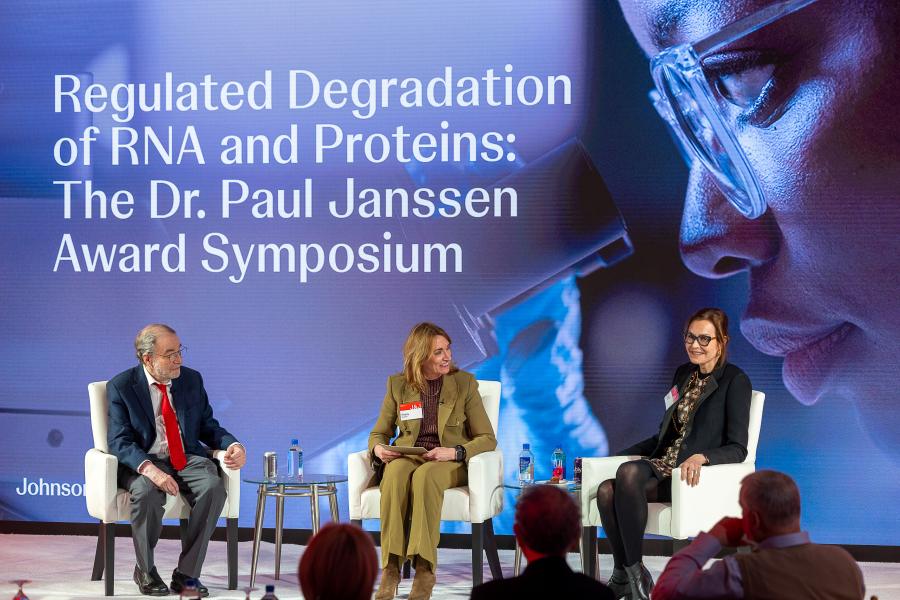
From left: Alex J. Varshavsky, PhD, Morgan Professor of Biology at the California Institute of Technology (Caltech); Penny Heaton, M.D., Global Head, Office of the Chief Medical Officer, Johnson & Johnson, and Lynne E. Maquat, PhD, J. Lowell Orbison Endowed Chair and professor of biochemistry & biophysics at the University of Rochester.
Degradation plays a fundamental role in eliminating abnormal RNA species and misfolded proteins. However, the nonsense-mediated mRNA decay (NMD) and ubiquitin pathways are also central to the regulation of countless cellular processes, from the cell cycle to differentiation and apoptosis.
Lynne Maquat, professor in the Department of Biochemistry and Biophysics at the University of Rochester and Alexander Varshavsky, Thomas Hunt Morgan Professor of Biology at the California Institute of Technology (Caltech), have focused their research careers on defining the molecular players and cellular functions of the NMD and ubiquitin pathways, respectively. Their discoveries have paved the way for new approaches in therapeutic drug development, and in particular methods for destroying proteins, and the messenger RNAs (mRNAs) that encode them, that drive disease states and that have so far been difficult to target.
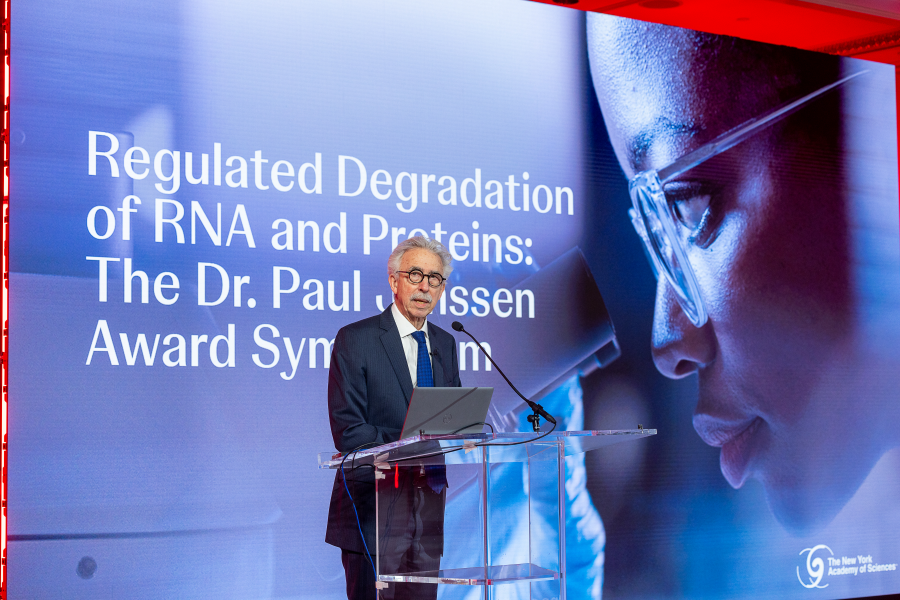
“Renowned for their groundbreaking contributions to the field of regulated RNA and protein degradation, Professor Maquat and Professor Varshavsky have redefined the frontiers of scientific discovery,” said Nicholas B. Dirks, President and CEO of The New York Academy of Sciences.
On January 30, 2025, leaders from academia and industry gathered at the JW Marriot Essex House in New York City to grant the 2024 Dr. Paul Janssen Award to Maquat and Varshavsky for their fundamental discoveries in the regulated degradation of RNAs and proteins. The award symposium featured award lectures from the honorees and a panel discussion about future directions for their research and drug development implications. It was co-presented by The New York Academy of Sciences and the Dr. Paul Janssen Award, with sponsorship by Johnson & Johnson.
Nicholas B. Dirks, President and CEO of The New York Academy of Sciences.
Through videos presented before the award lectures and during the panel discussion, Maquat and Varshavsky shared inspiring stories of how they became interested in science and persevered through challenges. Maquat is the first person in her family to go to college and said an undergrad cell biology class opened her eyes to the fascinating process of protein translation and experimental research. Although Varshavsky grew up surrounded by science, his father was a chemist, he had to defect from the Soviet Union to gain the freedom and resources to realize his potential.
Symposium Highlights
Nonsense mediated mRNA decay (NMD) plays multiple roles in the cell, including the degradation of both abnormal mRNAs and natural mRNA targets and regulation of cellular adaptive processes.
The position of introns in genes can modulate the activity of NMD to either enhance or suppress mRNA expression.
FMRP, the protein missing in Fragile X syndrome, interacts with a protein in the NMD complex and modulates the activity of NMD.
The ubiquitin system acts on almost every protein in the cell, adding a polyubiquitin chain to these protein substrates that results in their swift degradation by the 26S proteasome.
A wide range of amino acid residues in various positions can function as degrons, or signals for ubiquitin-mediated degradation.
Understanding degrons and the molecular components of the ubiquitin system has led to the development of PROTACs and other molecules that target undesirable proteins for destruction.
Nonsense-mediated RNA Decay (NMD)–Key Role in Eliminating Abnormal mRNAs
Lynne E. Maquat, PhD, J. Lowell Orbison Endowed Chair and professor of biochemistry & biophysics at the University of Rochester.
Maquat opened her talk by sharing the intricacies of nonsense-mediated RNA decay (NMD), which she and her lab have spent four decades teasing apart. NMD is a cellular pathway that selectively degrades abnormal messenger RNAs (mRNAs), preventing them from being translated into toxic proteins. It eliminates an estimated one third of mRNAs that acquire mistakes during transcription–specifically frameshift or nonsense mutations that cause premature translation termination and give rise to many diseases, Maquat noted.
As Maquat explained, NMD occurs when the ribosome that translates newly made mRNAs encounters a premature termination codon (PTC) upstream of the normal translation termination (stop) codon. The NMD machinery steps in and chops up the mRNAs. (Maquat noted that an alternative NMD pathway acts on both new and older mRNAs with long or structured 3’ untranslated regions (UTR).)
Many aspects of NMD were still a mystery when Maquat was beginning her career. For one, it was unclear how NMD distinguishes a PTC from a normal stop codon. To their surprise, Maquat and her lab discovered that the positions of introns in pre-mRNA, prior to splicing, signals the presence of a PTC in the processed, spliced mRNA.
Additional experiments allowed Maquat and her lab to describe this relationship at high resolution. They found that PTCs located 50-55 nucleotides or more upstream of the last splice junction trigger NMD, whereas those downstream of this cutoff point do not, in what is known as the “Maquat rule.”
“This is very useful for understanding human diseases. Diseases that are due to a PTC in [the upstream] region are generally recessively inherited, whereas those in the [downstream] region are generally dominantly inherited. This is important for personalized medicine,” Maquat said.
The finding also has important implications for biomedical research. Although putting an intron in a gene can drive up its expression, pharmaceutical companies were putting introns in the 3’ UTR. “We were able to tell them not to do that because you’re triggering NMD, which of course reduces the amount of message,” Maquat said. During the panel discussion that followed the talks, Maquat noted that industry labs embraced her advice, after they saw for themselves that moving introns into the coding regions of cloned genes achieved higher mRNA expression levels.
Another puzzle was that Maquat and her lab were studying the NMD pathway that eliminates mRNAs that are newly made and still associated with the nucleus, but the NMD process relies on translation, which occurs in the cytoplasm. Together with collaborators, Maquat and her lab carried out what she called “killer experiments” using cutting-edge microscopy techniques. By watching mRNAs undergo NMD, they determined that the process acts on mRNAs as they emerge from the nucleus into the cytoplasm. It is rapid, degrading target mRNAs within one minute of entering the cytoplasm. A fraction of NMD targets escape degradation and have a half-life similar to that of mRNAs that are not NMD targets.
Regulation of Stress Responses by NMD
In the second part of her talk, Maquat shared the work she has done to understand a separate, yet also important, function of NMD: cellular adaptation to environmental changes. In addition to abnormal mRNAs, NMD eliminates approximately five to ten percentage points of normal mRNAs, which are targeted due to features such as upstream open reading frames (ORFs) and long 3’ untranslated regions (UTRs).
In one series of experiments, Maquat and her lab treated cancer cells with chemotherapy to induce DNA damage. They found that this type of cellular stress partially suppressed NMD. As a result, pro-apoptotic mMRNAs that are normally targets of NMD could be translated at higher levels and trigger programmed cell death. They also found that treating cancer cells with an NMD inhibitor in addition to chemotherapy enhanced cell death. NMD is involved in the regulation of numerous other stress responses including hypoxia and skeletal muscle differentiation.
Relationship Between NMD and Fragile X Syndrome
In an unexpected turn, Maquat’s efforts to better understand normal cellular functions of NMD led her and her lab to discover that the pathway plays a key part in Fragile X syndrome (FXS), the most prevalent single-gene cause of intellectual disability and autism. “The way we got into this, like much of what my lab does, is not because we intended to study it, but because that’s where our results took us,” Maquat said.
It started because the lab was searching for molecules that help UPF1, a linchpin RNA-binding protein in the NMD machinery. They found that FMRP, the protein missing in FXS, binds to UPF1, and puts the brakes on NMD activity. Without FMRP, NMD is unleashed to degrade thousands of target mRNAs that are present in numerous brain regions, many involved in transmission between neuronal synapses.
Using a mouse model of FXS, in which the gene encoding FMRP is knocked out, Maquat and her lab found that NMD hyperactivity begins during embryogenesis and persists after birth. “We feel like, in mice as a test animal and also in humans, there might be a window of time to dampen the temporary hyperactivated NMD to alleviate some of the [FXS] phenotype,” Maquat said.
In support of this possibility, they observed, through experiments in neurons derived from induced pluripotent stem cells from FXS patients, that treatment with NMD inhibitors helped restore the normal cellular mRNA profile. Maquat and her collaborators are now pursuing drugs that could achieve this effect. (None of the NMD inhibitors they used in their experiments are currently drugs.)
Maquat and her collaborators are also characterizing the functions of FMRP itself, including how it binds to RNA–often at multiple sites, as she shared during the panel discussion–and stalls translation. What they have found bucks the current understanding about several FMRP mechanisms. For example, their experiments revealed that FMRP protects mRNAs from decay by binding their poly(A) tails, via direct binding between FMRP and the poly(A) binding protein PABPC1, along with nonspecific binding to GC-rich regions of mRNA coding sequences.
Pervasive Role of Ubiquitin System in Degradation of Cellular Proteins
Alex J. Varshavsky, PhD, Morgan Professor of Biology at the California Institute of Technology (Caltech).
When Varshavsky and his lab, then at the Massachusetts Institute of Technology (MIT), began to study the ubiquitin system in the 1980s, they had no idea of the fundamental cellular role it played, degrading proteins and controlling cellular processes. “But over the next several years, it became clear that the system is unprecedented in its diversity of functions,” Varshavsky said.
Varshavsky began his talk with an overview of the ubiquitin system basics. The pathway begins with the ATP-dependent activation of ubiquitin, a small 76 residue protein, by E1 ubiquitin-activating enzyme. Then ubiquitin is transferred to an E2 ubiquitin-conjugating enzyme. Finally, an E3 ubiquitin ligase transfers ubiquitin to a lysine residue in a substrate protein. “The striking thing is that…just about every single protein in the cell can in principle, and most likely in practice, become a substrate for this reaction,” Varshavsky noted.
The complexity of the ubiquitin system started to reveal itself as Varshavsky’s team found that substrates typically receive not just one ubiquitin molecule but a branched polyubiquitin chain with various topologies. Regardless of the shape they take, polyubiquitin chains direct substrates to the largest protease in the cell, called the 26S proteasome, which rapidly cleaves peptide bonds on proteins as they are threaded through its channel.
By 1986, Varshavsky and his lab identified the first degrons, which are sequences in proteins that tag them for degradation via the ubiquitin pathway. The discoveries kicked off a flurry of activity among pharmaceutical companies to develop PROTACS (proteolysis-targeting chimeras) and PROTAC-like compounds. PROTAC molecules feature a ligand that binds the target protein at one end and a ligand for E3 enzyme on the other end, ideally resulting in the ubiquitination and destabilization of any desired protein.
This research “promises all kinds of advances in medicine that previously were not available because it is very difficult to target proteins for degradation,” Varshavsky noted. Beyond PROTACs, there is a vast amount of research exploring the ubiquitin system, either directly or indirectly. Varshavsky estimates that it accounts for about a quarter of all biomedical research today.
Characterization of Degrons–Molecular Degradation Signals
Varshavsky dedicated much of his talk to a tour of degrons and their molecular pathways. The best understood are N-degrons. Remarkably, as Varshavsky explained, all 20 amino acids can function as a degron when they are the first (N-terminal) residue of a protein if they are positioned in a certain way. Specifically, the amino acid has to be exposed sterically, rather than hidden in a protein fold, and the protein has to harbor a lysine residue to which ubiquitin can be conjugated.
True to the complex nature of the ubiquitin system, there are several N-degron pathways that act on different combinations of N-terminal amino acids. They involve different enzymes that modify the amino acid so it can bind directly to one of various E3 ubiquitin-ligase enzymes, and ultimately undergo efficient degradation by the proteasome. It is a stepwise process that involves a multiprotein complex.
But Varshavsky noted that he and his lab have recently found, through experiments that are not yet published, that once a substrate binds to the complex, some of the downstream steps can be skipped to fast-track N-degron substrates for proteasomal degradation. Varshavsky refers to the phenomenon as superchanneling.
“If you design your N-degrons correctly, and by now we know how to design N-degrons correctly, you can fall from [a full protein] to short peptides in less than 30 seconds,” whether through normal or superchanneling, Varshavsky said.
Although Varshavsky and his lab characterized N-degron pathways over many years through experiments with yeast cells, the system is highly conserved–albeit even more complex–in mice and humans. For example, whereas one of the N-degron pathways in yeast directs substrates to an E3 ubiquitin-ligase enzyme called Ubr1, the counterpart pathway in higher eukaryotes involves Ubr1, Ubr2, Ubr4 and Ubr5. So far, only Ubr1 and Ubr2 have been well characterized. Varshavsky noted that the human genome encodes a total of 600 to 800 E3 enzymes. Moreover, mammalian N-degron pathways can direct substrates not just to proteasomal degradation but also autophagy-mediated destruction.
In addition to N-degrons, degrons inside the protein sequence called internal degrons and C-terminal degron residues or C-degrons can destine proteins for ubiquitin-mediated degradation. Varshavsky did not describe the molecular details of these other degron classes but hinted at their importance by noting that one of the N-degron pathways probably accounts for only 10% to 15% of the entire ubiquitin system.
Interplay Between Ubiquitin System and Countless Cellular Processes
The functions of the ubiquitin system are so widespread as to affect every single cellular pathway that involves proteins. These include controlling DNA replication, repair, transcription, meiosis, the cytoskeleton, cell differentiation and adaptive and innate immunity. “It kind of gets boring because you basically cite a cell biology textbook,” Varshavsky joked.
In one example, Varshavsky and his lab discovered that yeast cells use the N-degron pathway to regulate the uptake of di and tripeptide nutrients from the environment. When nutrients are scarce, yeast cells don’t waste their energy making high levels of PTR2, the transmembrane pump protein that imports nutrients. A protein called CUP9 blocks the transcription of PTR2, keeping its levels low. However, if peptides become more abundant in the environment, some make their way into the cell, and because they possess N-degrons, bind the E3 ligase UBR1. The association changes UBR1’s conformation and enhances its ability to degrade CUP9, which in turn boosts the level of PTR2 to uptake more nutrients.
Another critical cellular of the N-degron pathway is apoptosis. As cells enter the programmed cell death pathway, many proteins are cleaved by caspases and other enzymes and the remaining fragments are pro-apoptotic. Varshavsky and his lab found that these fragments are also N-degron substrates, and by rapidly degrading them, the N-degron pathway actually reins in apoptosis and keeps cells from dying too easily, such as to protect against neurodegeneration.
Panel Discussion: Where We Go from Here
Discoveries made by Maquat and Varshavsky and their labs have contributed to the development of therapeutic candidates that act on RNA and protein degradation pathways.
Future research should help define these pathways at a molecular level in order to help understand potential off-target effects and develop more specific drugs.
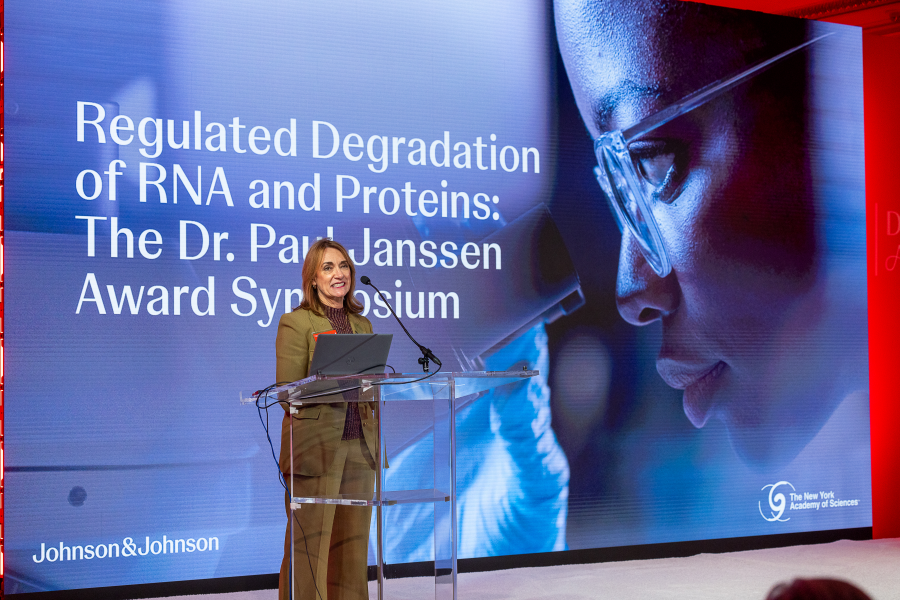
Penny Heaton, M.D., Global Head, Office of the Chief Medical Officer, Johnson & Johnson.
The day closed with a panel discussion in which Maquat and Varshavsky responded to questions from moderator Penny Heaton and the audience. The conversation spanned topics from therapeutic implications of the data that were presented to new research directions, approaches and technologies.
To help open the discussion, Heaton asked what each of the honorees would like to see happen next in their work. Maquat hopes to identify a small molecule drug to treat Fragile X syndrome. Toward this end, she and her lab are working with chemists and a pair of biotech companies to develop these compounds and test them in FXS mouse models. Maquat has funding from the FRAXA Research Foundation, and would like to move a small molecule into clinical studies. “It’s very rewarding to see companies enacting some of the work we’ve done in drug development,” Maquat said.
For his part, Varshavsky shared a question that has fascinated him since he was an undergrad student at Moscow University: why do we—and probably all eukaryotes—sleep? As he described, “sleep is a bad idea.” It makes an individual vulnerable to predation, attack, and other undesirable events. Varshavsky and his lab are pursuing experimentally the molecular reasons for sleep. He specifically wants to explore whether physical inactivity gives N-degron and other degradation pathways a chance to clear the many protein fragments that are constantly generated and thus help protein complexes dissociate and terminate a cell signaling pathway for example.
Audience members inquired about how to untangle the complexities of the protein and mRNA degradation pathways to advance development of drugs that manipulate these pathways. Varshavsky suggested that it may not be critical to understand all the details, such as the structures of polyubiquitin chain, because PROTAC and PROTAC-like compounds that are in development may be effective regardless of these structures.
Maquat mentioned approaches for targeting the mRNAs that encode undesirable proteins, rather than the protein itself. She mentioned work at biotech companies to develop small interfering RNAs (siRNAs) and antisense oligonucleotides (ASOs) that target structures in the mRNA of proteins like those involved in Huntington’s disease. Another approach is to target AKT, a kinase that Maquat and her team found phosphorylates UPF1 in a step that is critical for its NMD activity. An oral AKT inhibitor, capivasertib, is already on the market for patients with certain types of metastatic breast cancer.
The discussion touched on the issue of off-target effects. Maquat noted that AKT, along with other UPF1 phosphorylating kinases, have multiple functions in the cells. The risk of altering or losing these functions will have to be weighed against the benefit of eliminating an undesirable function. She also mentioned that NMD activity varies based on the mRNA species, cell type and development stage. For example, immunoglobulin genes produce NMD targets at high frequency, and pluripotent cells have more efficient NMD than differentiated ones.
Heaton inquired whether the honorees use generative AI and what role they see for this technology. In Maquat’s experience, it is not ready for primetime. She and her team have not been able to confirm interactions predicted by AI, although she still hopes for advances that will allow better prediction of RNA structures. Varshavsky noted that AI is in its infancy, and “we shouldn’t even bother to predict” what it will be capable of as it matures.
To conclude, the honorees each shared one change that would improve their collaborations with industry. Maquat suggested more simple material transfer agreements (MTAs)—a goal that Heaton noted Johnson & Johnson is working toward. Varshavsky would like to see industry provide more research grants.
For more information about the Dr. Paul Janssen Awards and to watch video featuring award winners visit: pauljanssenaward.com.
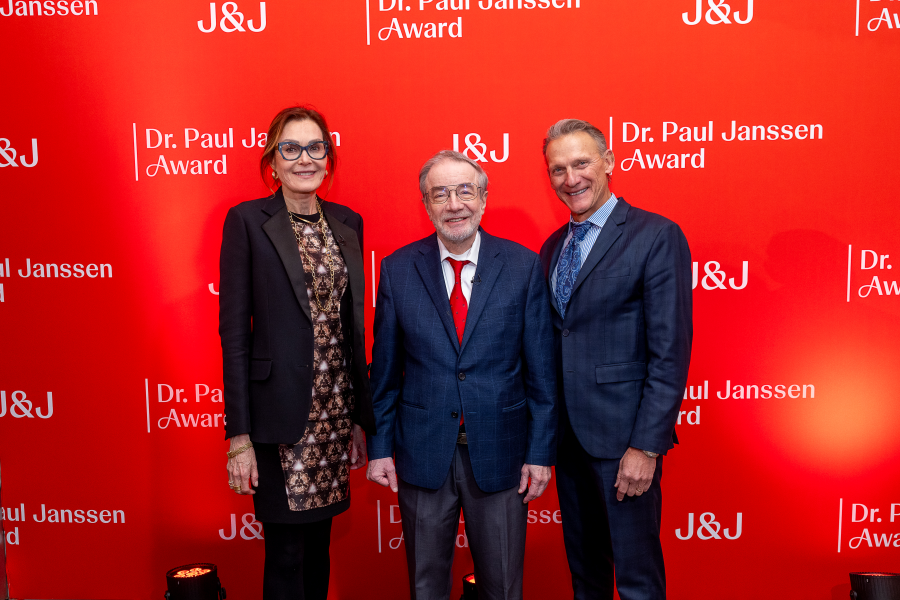
From left: Lynne E. Maquat, PhD, J. Lowell Orbison Endowed Chair and professor of biochemistry & biophysics at the University of Rochester; Alex J. Varshavsky, PhD, Morgan Professor of Biology at the California Institute of Technology (Caltech); and John C. Reed, MD, PhD, Executive Vice President, Innovative Medicine, R&D, Johnson & Johnson.
A conversation with Uganda’s outbreak commander as the African nation deals with the ramifications of the 2025 Sudan Ebola outbreak.
Published April 10, 2025
By Syra Madad, D.H.Sc., M.Sc., MCP, CHEP
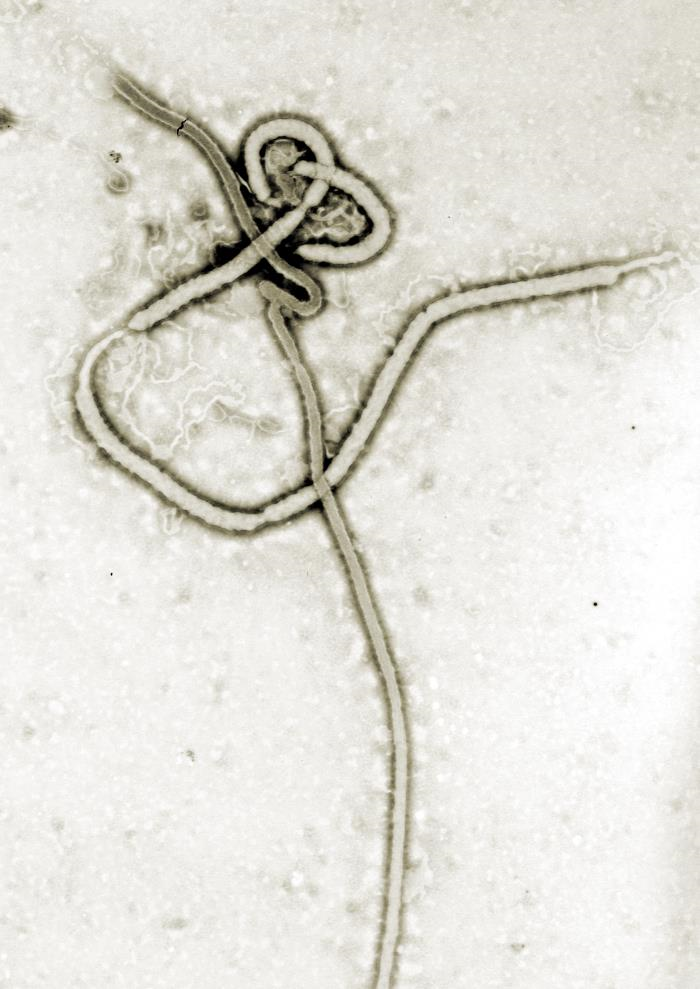
This transmission electron microscopic (TEM) image revealed some of the ultrastructural morphology displayed by an Ebola virus virion. Image courtesy of Dr. Frederick Murphy via CDC.
In a world confronted with a growing tide of infectious disease threats, the 2025 Sudan virus outbreak in Uganda serves as a stark reminder that epidemic intelligence must evolve from being reactive to anticipatory.
Increased human encroachment into wildlife habitats, and shifting global health funding landscapes, means that diseases like Ebola, once considered rare and geographically isolated, are emerging with greater frequency and unpredictability.
To better understand the shifting dynamics of this outbreak and its implications for the future of global health security, I spoke with Henry Kyobe Bosa, PhD, Uganda’s National Incident Commander for Epidemics. A distinguished public health leader, Colonel in the Uganda People’s Defense Forces, and seasoned epidemiologist, Dr. Kyobe has led responses to some of the most complex health emergencies in the region, including Uganda’s COVID-19 response and the current Sudan Ebola outbreak.
In this timely and sobering conversation, Dr. Kyobe shares firsthand insights into the evolving trajectory of this year’s Ebola outbreak, the innovations and tools Uganda is using to contain it, and the global lessons we must heed. Dr. Kyobe’s remarks have been lightly edited for clarity and length.
As Uganda’s National Ebola Incident Commander, can you walk us through the current state of the Sudan virus outbreak from its initial detection to the most urgent challenges your response teams are facing today?
The 2025 Sudan virus outbreak in Uganda is a unique phenomenon. Unlike all previous outbreaks (n=7), this one was first identified in the capital, Kampala, a metropolitan city of over 6 million inhabitants, with complex transnational and national travel routes. This created initial challenges, as the index case, a 34-year-old male nurse working in a children’s ward at the national referral hospital, was diagnosed with Ebola only after death.
Prior to his passing, he had seeded two clusters: an extended family cluster (involving his mother, brother, son, and housemaid), and a hospital cluster (three healthcare workers from a private facility where he had sought care).
Since then, another cluster, again a family cluster has emerged. Apart from a temporal relationship that suggests either a point source or common source transmission, there is no epidemiological link between the two transmission chains.
These two chains, though involving relatively few cases, quickly spread to three of Uganda’s ten cities, spanning from the eastern district of Mbale to the western district of Ntoroko, with contacts identified in over 15 districts. This early spread posed a significant threat of rapid outbreak expansion.
This all occurred amid an ongoing mpox outbreak, Uganda is currently the second most burdened country for mpox globally and at a time when the U.S. was revising funding support to many health systems in the country, some of which play complementary roles in Ebola response.
As of now, it has been over 10 days since the last confirmed case tested negative for Sudan virus and was discharged. The overall response infrastructure remains in place and will continue until after 42 days (two incubation cycles) before transitioning to another phase of optimum control. We are keenly monitoring and looking forward to this milestone.
Given that this is Uganda’s sixth outbreak of Sudan virus since 2000, what have these recurrent episodes taught us about the nature of Ebola and its persistence in animal reservoirs? Are these outbreaks becoming more frequent or harder to contain and if so, why?
The 2000 Sudan virus outbreak remains the largest in Uganda and the third largest Ebola virus outbreak globally. Since then, successive outbreaks have occurred in different regions of Uganda. Notably, no two successive outbreaks have originated from the same location, not even this one.
As with previous outbreaks, the natural reservoir of Sudan virus, the possible presence of transient hosts, and the mechanisms of spillover remain elusive. What is clear so far is that the virus continues to resurface under unpredictable conditions.
Many people associate Ebola with terrifying headlines from past outbreaks. For someone reading this from New York or Los Angeles, why should they care about an Ebola outbreak happening thousands of miles away in Uganda?
Ebola is a highly infectious disease with high mortality among those infected. We saw this in the 1970s and more recently, 11 years ago in West Africa, where over 11,000 people died in three countries in just two years, with nearly 24,000 total cases. The outbreaks also devastated the economies of those countries.
Any suboptimal response to Ebola anywhere is a threat to global health security. It increases the likelihood of disruptions to international trade and travel.
The negative impacts of Ebola have not changed much since the virus was first identified 50 years ago. What has changed, however, with successive outbreaks, is the growing efficiency of outbreak response. While traditional tools like contact tracing, quarantine, and movement restrictions remain important, new advancements have helped us slow transmission and reduce outbreak size. For instance, in this current outbreak, the rVSV ring vaccination trial was launched just four days after the outbreak was declared.
While there are currently no Ebola cases outside of Uganda, what should healthcare systems in the United States be doing right now to prepare for potential importation of cases? What’s your message to frontline clinicians and emergency managers across the U.S.?
The risk of cross-border transmission beyond Uganda is currently remote. We have identified all known contacts, placed them in institutional quarantine, and added them to no-fly lists in accordance with International Health Regulations guidelines to protect other countries.
That said, individuals presenting with persistent febrile illness, with or without hemorrhagic manifestations and recent travel from Africa should be evaluated for possible viral hemorrhagic fevers, not just Sudan virus.
As someone who led Uganda’s response to both COVID-19 and now this Ebola outbreak, what do you believe are the core lessons we must carry forward to build resilient, community-trusted public health systems both in Africa and globally?
For a long time, we’ve relied on traditional public health tools. They’ve been effective, but also costly for populations and often associated with prolonged outbreaks. We must increasingly rely on newer and more effective tools.
Today, we can use cellphone data to collect temporal geospatial information to understand individuals’ movements and interactions and identify contacts.
In this outbreak, we deployed remdesivir in real-time because we had a balanced stock from the 2022 outbreak, effectively a stockpile. We probably would not have saved all 10 patients who arrived alive at treatment centers without this stock. Stockpiling essential commodities is critical.
Modernizing surveillance systems and ensuring they are appropriately linked to effective laboratory networks is critical. In the current outbreak, an existing mortality surveillance system detected the outbreak just in time, as it had already spread to three cities and several districts. This early detection was timely; had we missed this case, the outbreak could have grown exponentially.
There’s a lot of mistrust in public health around the world right now, especially after COVID. How are you working with communities in Uganda to build trust, fight misinformation, and encourage people to seek care early?
Misinformation takes many forms. The most valuable asset a public health worker can have is the trust of the community they serve.
The best way to maintain that trust is to be reliable.
We must be truthful, reliable, and consistent even when evidence changes in the face of new information. Our public health predecessors succeeded because they remained honest.
To fight misinformation, we must get ahead of the curve and provide correct information in real time. Only then can we progressively rebuild public trust.
What does success look like to you in this outbreak response, not just in stopping the virus, but in what we build afterward?
Success means being able to document best practices from this outbreak and learning from the mistakes of the past.
Want to be part of an impactful network of scientists across the globe? Join the Academy’s International Science Reserve.