Russian Engineer Acquitted of Espionage Charges

While Aleksandr Nikitin has been temporarily acquitted on espionage charges, a higher court has appealed the case.

Published April 17, 2000

By Merle Spiegel

Image courtesy of Grispb via stock.adobe.com.

Nikitin says it was his wife, Tatyana, who made sure the world didn’t forget about him.

Tatyana Tchernova tried to maintain some human contact with the unannounced visitors. She offered them something to eat. It was the middle of the night, October 5, 1995, in her tiny apartment in St. Petersburg. The men were from the FSB, the Russian secret police, and were trying to find evidence that would put her husband, Aleksandr Nikitin, in jail or even have him executed.

That same morning Aleksandr Nikitin had returned from Moscow having learned that he would be issued visas from the Canadian embassy. Those visas would have allowed him to take his family to Toronto and start a new life. There had started to be friction between what he did for a living, his conscience, and his country.

Nikitin’s line of work was nuclear energy. Specifically, he knew about nuclear reactors on military submarines. He had been chief mechanic on a nuclear submarine in the Russian navy, and then a senior safety inspector. When Nikitin began talking about the danger of nuclear accidents in the northern fleet of submarines publicly expressing concerns about the future of 100 decommissioned vessels afloat in the North Sea and the growing threat presented by nuclear waste in the area, some began to see him as a threat. When he collaborated with the Norwegian environmental organization Bellona to tell the story and to ask for help from the international community in containing the environmental hazard, the FSB came to visit.

Psychological Warfare

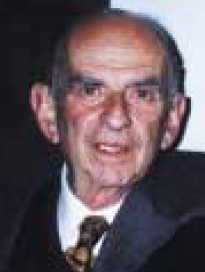
From left: Board of Governors Chair Bill Green, Russian engineer Aleksandr Nikitin, and Joseph L.Birman, chair of the Academy’s Committee on Human Rights of Scientists and Distinguished Professor of Physics at the City College of New York.

Nikitin was charged repeatedly with treason and with revealing state secrets. He spent 10 months in prison. “The first two months,” he says, “was an attempt to destroy me psychologically.” He and his family were harassed repeatedly. They were followed. Their tires were slashed. He was indicted eight times and tried twice, each trial leading to neither conviction nor acquittal. The prosecution was told to keep trying. “Prosecution turned into persecution on a human level,” says Irwin Cotler, a Montreal-based lawyer who has followed the case.

On December 29, 1999, Nikitin was acquitted on all charges by the St. Petersburg City Court. He barely had time to celebrate before the prosecution appealed the decision to the Russian Supreme Court. Nevertheless, observers hope that this last verdict will permanently deflate the prosecution’s case, and the verdict was celebrated as a major victory by The New York Academy of Sciences and by human rights and environmental organizations around the world.

The most dangerous point in Nikitin’s journey was probably those early days before the world had heard of his case – while he was still just one man against a machine rooted in Soviet-era police tactics. Nikitin says it was his wife, Tatyana, who made sure the world didn’t forget about him. “She was constantly doing something,” he says. “She made phone calls and found people everywhere. All the people who are standing by me now, she got them involved in my case.”

The Academy Fights for Nikitin’s Release

On April 17, 2000, Nikitin won the final victory in the four-year nightmarish espionage case against him. The Russian Supreme Court confirmed the December 1999 judgment of the St. Petersburg City Court to dismiss all charges against Nikitin. Although the prosecution has a year in which it can appeal the decision, in all likelihood this judgement brings Nikitin’s ordeal to a happy conclusion.

Working with The Bellona Foundation, the Sierra Club, and Amnesty International, the Academy mounted an intense lobbying effort in Washington, D.C. In addition, John Gillespie, Professor and Chair of the Department of Physics and Astronomy at Lehman College, City University of New York, and a member of the Academy’s Human Rights Committee, spent time in St. Petersburg as an observer during the trial.

This case was the result of Nikitin’s contributions to the Bellona report entitled “The Russian Northern Fleet: Sources of Radioactive Contamination.” The report described the dangers associated with Russia’s nuclear-powered vessels, the storage of spent nuclear fuel, and other radioactive waste generated by the vessels.

“There was no crime.”

For his efforts to expose this environmental threat to the Russian public, Nikitin was accused of espionage by the FSB, the successor to the Soviet-era KGB. He was imprisoned for several months and repeatedly placed on trial during the past four years. Nikitin consistently maintained that all information he contributed to the report was publicly available and that the world community needed to know about the dangerous storage practices of nuclear waste in the Russian navy. Therefore, he stated, such information could not be classified as secret under the Russian Constitution. This latest trial involved the eighth set of charges made against Nikitin since 1996.

“Of course there was no crime,” Nikitin explained. “The Bellona report just describes one of the main environmental challenges for Russia. Information about nuclear hazards, waste, and accidents onboard nuclear submarines is no threat to national security. It is the nuclear problems that constitute a threat to Russia.”

Speaking after the Supreme Court ruling, Nikitin said a lot of work needs to be done to turn this personal victory into one for the country.

“I’ll continue to work with my colleagues at Bellona and to work for safe handling of the radioactive waste stored in the Murmansk area. We also have to work to support other environmentalists in Russia who are facing FSB trouble-makers,” he said.

Nikitin is the director of Bellona St. Petersburg, one of the international affiliates of the Bellona Foundation. He also heads the Environmental Rights Center, an organization that protects the legal rights of citizens to due process and legal protection in environmental cases.

Also read: Academy Aids Effort to Release Political Prisoner

Exploring the Biology Behind the Music We Love

The Biological Foundations of Music conference will examine why and how the human brain has such an affinity for music.

Published March 1, 2000

By Merle Spiegel

Music is a part of all human cultures – and of almost every individual’s life, from infancy to death. We are uniquely able to produce and respond to music. It’s time we took it seriously.

This spring, the Academy will host a conference on the Biological Foundations of Music that should help us begin to understand why and how the human brain has such an affinity for music as well as an ability to process its language.

“There seems to be some kind of innate predisposition that our species has to produce music,” says Robert Zatorre of the Montreal Neurological Institute, who co-organized the conference along with Isabelle Peretz of the Department of Psychology at the University of Montreal. “Small children are able to do fairly sophisticated things musically, without any training. We tend to overlook this because it’s so simple for us,” he adds. “Our brains do an excellent job of encoding complex patterns. It’s the converse of what computers are good at.”

Computers are still lumbering buffoons at the simple act of recognizing a tune, however, and Zatorre believes that looking at how the brain processes music can provide a unique avenue for understanding brain function. “There are many aspects of brain function that we still don’t understand,” he says. “If you want to know what’s unique about the human brain, you have to look at those functions that distinguish us from other species. In the world of sound processing, the perception of speech and the perception of musical sounds are the two that distinguish us from every other species. We talk to each other and we play music.”

Music, Biology, and the Brain

The Biological Foundations of Music Conference rewards many years of lonely work by a relatively small group of researchers. Both Zatorre and Peretz combined science and music in graduate school when few others considered the field a respectable line of inquiry. “I thought I was the only one on earth doing it,” Peretz says of her early years in graduate school in Belgium.

Nevertheless, both she and Zatorre stuck with their interests, and over the course of the past 10 years the field has begun to be seen as a respectable line of inquiry and to gather serious attention. The upcoming conference, which will be held at The Rockefeller University in New York City, May 20-22, is “the first serious conference on music and the brain anywhere in the world,” according to Rashid Shaikh, Director of Science and Technology Meetings for the Academy.

More than 20 presentations and discussions will be included on topics such as the origins of music, the question of music as an evolutionary adaption, neural processing of complex sounds, electrophysiology of pitch, the history of neurology and music, tonal processing, brain plasticity and musical training, music and emotion, and music and other cognitive functions such as the “Mozart effect.”

Also read: Music on the Mind: A Neurologist’s Take

Exploring New Frontiers in Canopy Ecology

Exploring the science of canopy ecology, some of which takes place 120 feet off the ground.

Published March 1, 2000

By Merle Spiegel

Image courtesy of jittawit.21 via stock.adobe.com.

After millennia on the ground, we’re headed back to the treetops. That’s what Bruce Rinker would like, anyway. Rinker, an avowed acrophobe, has shinnied his way into the tops of trees from Africa to New York, from Central and South America to Florida. The science of canopy ecology is a new frontier, he says. And the view will knock your socks off.

“The U.S. and Europe spent a lot of time and money training ecologists to go into the tropics,” says Rinker. “And we learned about all these new species and new processes in the upper canopy. It didn’t take us long to ask: ‘If this is going on here, what’s going on back home?’”

Rinker and other canopy ecologists are starting to get answers to that question. On December 16, Rinker spoke to The New York Academy of Sciences’ (the Academy’s) Engineering Section about some of the findings of this new science. “Neotropical migrants—warblers and tanagers—stratify as they move through the forest,” he says. “Some never come out of the treetops.”

Rinker was introduced to the science of canopy ecology in 1991 when he was part of the U.S. team of an expedition into the treetops in Cameroon, Africa. Enthralled by the possibilities of these new techniques, he brought the technology home to the Millbrook School in New York, where he is Chairman of the Science Department and Project Director of the Forest Canopy Walkway. Built in 1995, this is one of only five such canopy research facilities in the United States.

An Amazing Miricle of Color and Noise

Rinker lights up when asked to describe the reactions of animals to his presence 120 feet off the ground. “One cold, overcast, and breezy Sunday, we no sooner got into the treetops when we could hear a swarm of neotropical migrants coming toward us. Within moments we were completely enveloped in this flock like a swarm of bees. They were literally walking on us black-throated blue warblers walking on my chest, on my shoes. There were grosbeaks and tanagers everywhere. It was the most amazing miracle of color and noise I’ve ever witnessed. It seemed as though they were oblivious to our presence. Then, in a couple of minutes, it was all over.”

Rinker is convinced of the utility of this new science and technology, but he would like to broaden its reach. “Traditionally the word canopy has referred to the upper layer of vegetation in the forest,” he explains. “We’re redefining the word, and it has upset some people. The problem is that there are all sorts of nooks and crannies and valleys and troughs. We’re redefining the word canopy to mean the entire forest system, from ground up. This means that not only can forests have canopies, but you can have sugar cane fields with canopies. You can have a golf course lawn with canopies. A kelp forest with canopies. Even the stromatolites of Australia define a canopy.

”Who knows what kind of insects and microclimate differences we will find,” he concludes.” This is all brand new.”

Also read:A Case for Going to Bat for the Bats

The Tremendous Impact of Immigration on NYC’s Economy

The Statue of Liberty is in the foreground, while the Freedom Tower and lower Manhattan is in the background.

Immigrants play a vital role in supporting the tri-state region’s science and engineering industries and contributing to the broader economy.

Published March 1, 2000

By Frank B. Hicks, Ph.D. and Susan U. Raymond, Ph.D.

Image courtesy of THANANIT via stock.adobe.com.

The Tri-State region has always been a magnet for immigrants. And nothing diversifies like diversity. The region’s bountiful collage of cultures and accessibility to global transportation continues to attract the largest portion of the nation’s immigrants. From 1994 to 1996, the region accounted for 24.7% of all legal, permanent immigrants, surpassing even California’s 23.6%.

That total influx to the region included 10,000 scientists and engineers (S&E), providing an important source of skilled personnel for both academic and industrial institutions. The vast majority of these S&E immigrants, 89%, settled in the 25-county area surrounding New York City.

The three counties with the most S&E immigrants were New York City’s Queens, Kings, and New York counties. However, the concentration of S&E immigrants within the overall immigration pattern is higher outside of New York City. While only 42% of all new immigrants to the Tri-State region settled outside New York City between 1994 and 1996, 64% of the S&E immigrants did. Communities in northern and central New Jersey, in fact, attracted only 22% of the region’s total immigration, but reeled in a whopping 38% of scientists and engineers.

Outside NYC Metro: Immigration and Concentration

Outside the 25-county area surrounding New York City there are still strong pockets of S&E immigrants, but the concentration is striking. Five counties account for 62% of the scientists and engineer flow outside the NYC Metro area. The five dominant counties are home either to academic and corporate S&E powerhouses (like Rochester with its academic, medical, and technology complex) or to industrial headquarters requiring significant technology and information systems input (like Hartford).

Immigrant Workforce Bolsters Region’s Skill Base

During the past twenty years, foreign-born workers have come to represent a steadily increasing share of the workforce of the Tri-State region. Immigration to the U.S. in the 1990s rivaled the peak period of the early twentieth century, and the Tri-State region is no exception. Between 1990 and 1998, the region’s foreign-born population grew from 14% to 18% of the total population.

Where They Come From

Spanish-speaking countries accounted for about a third of the Tri-State region’s immigrants. In contrast, in the Los Angeles area (the other major magnet for immigrants to the U.S.), Spanish-speaking countries together account for more than half of all new immigrants. In New York City, immigration from the former Soviet republics had by 1995 begun to surpass immigration from the Dominican Republic, the previous leader.

The Tri-State region’s immigrants arrive with occupations as diverse as their origins. Immigration is not only a significant source of highly trained scientists and engineers, but immigration is also a substantial contributor to the blue-collar and service and support workforces.

The 10,000 scientists and engineers, who made up about 5% of the region’s working legal immigrants from 1994-96, were joined by 2,400 college and university professors and instructors, 6,800 workers in various technical occupations, and 13,400 health care workers, including physicians.

The Importance of H1 Visas

Permanent residents are not the only new arrivals to the Tri-State region who contribute to the technology workforce. There are people admitted for a variety of temporary reasons as well. Among those admitted on a temporary basis are people who hold H1 visas. These are for workers whose entry into the U.S. is authorized because they possess specific skills, the demand for which cannot readily be met from domestic sources. A popular recent example has been computer programmers. Applicants for these visas must be sponsored by employers committed to hiring them, and the visas typically last from three to six years.

Between 1994 and 1996, 12,500 new entrants with H1 visas settled in the New York City metropolitan area. They represented only 2.1% of the area’s new arrivals—a reflection of national immigration policy that heavily emphasizes family, individual and political reasons for immigration, and traditionally has given less emphasis to employers’ workforce needs. Nearly 38% of the 1996 H1 workers held jobs in New York City, but just like the scientist and engineer immigrants, a larger fraction, 48%, were located in northern and central New Jersey.

Also read: Good News and Bad News in Closing the Gaps

Sources

  • Source: Data on the cover and Page 2 are from an analysis and report based on Immigration and Naturalization Service (INS) Public Use Microdata Series, FY1994-96, prepared for Tri-State Trends by Hugh O’Neill and Anthony Townsend of Appleseed, a consultancy. Occupation and residence data are based on information reported to the INS at the time of entry into the U.S., and so may not reflect the occupation or place of residence now.
  • Analysis and report based on INS Public Use Microdata Series, FY1994-96, prepared for Tri-State Trends by Hugh O’Neill and Anthony Townsend of Appleseed, a consultancy.

A New Case for More Equity in STEM Outcomes

A shot of students clustered together at a graduation ceremony, wearing graduation caps and gowns.

Trends and data on graduates from traditionally underrepresented groups, the “digital divide,” college preparation, and foreign STEM investment.

Published March 1, 2000

By Frank B. Hicks, PhD, and Susan U. Raymond, PhD

Image courtesy of methaphum via stock.adobe.com.

Graduates from Traditionally Underrepresented Groups

TREND: More Grad Students in Science and Engineering from Traditionally Underrepresented Groups

Nationally and regionally, Blacks and Hispanics (who make up about one fifth of the national and one quarter of the regional population) have comprised a growing share of the students pursuing advanced degrees in science and engineering. In the region, the overall fraction rose from 5.8% in 1982 to 12.3% in 1998.

UPSHOT: Progress, But Much Room for Improvement

More students mean more degrees—4.6% of the region’s students receiving science and engineering (S&E) Ph.D.s in 1997 were Blacks and Hispanics, compared to only 2.3% twenty years earlier. While the region as a whole runs on a par with the nation in its share of graduate students, it trails in its annual share of S&E Ph.D. recipients.

The “Digital Divide”

TREND: Lower Computer Exposure

Nationally, about half of White households, but only a quarter of Black and Hispanic households, own at least one computer. And there is no simple explanation: income and education level are factors, but not the only ones. In the Tri-State region, New Jersey leads in narrowing the gap.

UPSHOT: Missing Which Skills?

Does having a home computer build academic skills or just Pac-Man scores? Access to computers is certainly important for acquiring the skills necessary to build a well-prepared workforce, but with computers increasingly available in libraries, schools, and activity centers, the importance of home ownership is unclear.

The Pre-College Years

TREND: Gaps in Math Skills

White children in the fourth grade are about twice as likely as their Black and Hispanic peers to have at least basic math skills, according to national mathematics testing. The gaps typically run above 40 percentage points both nationally and in the region, and the disparity tends to grow as the children get older.

UPSHOT: A Missing Foundation

Unlike the digital divide data, there is little question that lower math scores imply missing skills. The gaps at grade four continue, rippling on into grades eight and twelve. While underrepresented students are making progress at advanced levels (like in S&E graduate school), work needs to be done to ensure that all students leave high school with at least basic skills.

Foreign Investment Shows Strong International Ties in the Tri-State Region

The Tri-State region is home to 118 stand-alone research facilities owned by foreign parent companies. California, the region’s closest competition, leads the entire nation with 188 facilities (about a quarter of the U.S. total), but New Jersey clinches second with its 67 facilities, New York (33 facilities) claims seventh, and Connecticut (18 facilities) is tenth nationally.

New Jersey’s balanced success draws nearly equally from its electronics, instrumentation, biotech, and chemical industries. When it comes to the total value of plant, property, and equipment of all foreign-owned affiliates (including non-technical businesses), the region tops even California, with nearly $93 billion of plants and equipment in place. This wealth of physical plant is the result of long and fruitful international cooperation within the region.

Also read: Science and Engineering Immigrants Advance Region’s Economics

Sources

  • National Science Foundation WebCASPAR Database System.
  • U.S. Census Bureau, Current Population Survey, December 1998 Supplement.
  • National Center for Education Statistics, NAEP 1996 Mathematics Report Card for the Nation and States.
  • “Globalizing Industrial Research and Development,” Office of Technology Policy, U.S. Department of Commerce, 1999; International Accounts Data, Bureau of Economic Analysis, U.S. Department of Commerce.

From the Front Lines of the Japanese Scientific World

A hand-drawn illustration of a man walking over a bridge in Japan.

A scientific researcher, writer, and translator, Academy member Toshiyuki Esaki plays a critical role in promoting and advancing science in service of the public good.

Published March 1, 2000

By Fred Moreno, Anne de León, and Jennifer Tang

Toshiyuki Esaki, a member of The New York Academy of Sciences (the Academy), doesn’t have much time for leisure travel, having been only to London (once) and Honolulu (twice) — with the purpose of each trip being “to participate in scientific meetings,” he says.

But even without leaving his native Japan, Esaki says he keeps informed about the latest scientific developments in his field by logging into the Academy’s online meetings, as well as reading the Annals, Academy Update, and The Sciences. A researcher who specializes in computer-aided design of bioactive molecules, Esaki also teaches the elementary course on information technology at Chukyo University in Nagoya. He also works as an abstractor of scientific journals and translates academic books into Japanese.

Eskai grew up in Nagoya and studied pharmaceutical sciences at Kyoto University. He says his interest in drug action at the electronic level was sparked by a lecture on quantum mechanics by one of the collaborators of Prof. Hideki Yukawa, the first Nobel Laureate in Japan. His current project is to develop a computer system to predict biological activities of molecules on the basis of their 3D chemical structures. “I am particularly interested in the theoretical elucidation of drug action at the sub-molecular level,” he says.

Raising his Consciousness as a Scientist

Esaki joined the Academy in 1994. “When I received the invitation to become a member of the Academy, I felt it was an honor to join this advanced scientific society,” he says.

He prizes the Annals, especially its series of pharmacological titles. He finds the online information at the Academy web site invaluable and also enjoys communicating with other scientists via e-mail. “I have used my membership as a source for research themes and topics in my work,” he notes, adding that Academy ideas and activities are “the compass” for his work and “raise my consciousness as a scientist.”

Esaki has published books on molecular modeling and has a forthcoming book on chemical pharmacology. He has worked for over twenty years as a translator. This year, Esaki received the Longtime Cooperator Award from Japan’s Science and Technology Corporation in recognition of his work translating reports on medicinal chemistry, pharmaceutical sciences and pharmacology that had been published in the U.S. and Western Europe.

“I feel my work in translation is the best way I can contribute to the front lines of the Japanese scientific world,” he says.

Also read: A Global Giver Lends Support from Japan

A New Ethical Framework to Urban Archeology

A hand-drawn illustration of a woman with a map of lower Manhattan and an arrowhead.

Anthropologist Anne-Marie Cantwell explores the ethical dilemmas that those in her field face and provides guidance for acknowledging past injustices.

Published March 1, 2000

By Fred Moreno, Anne de León, and Jennifer Tang

When you think of archaeology, you don’t normally think of New York City.

But Anne-Marie Cantwell, a professor at Rutgers University-Newark, exemplifies that combination to a “T.” She’s one of America’s most prominent archaeologists and New York City is one of her main areas of fieldwork. But her research interests extend beyond urban archaeology to include Hopewellian societies, complex hunter-gatherers, mortuary systems, trade networks, the anthropology of death, and contact between Native American and European societies.

In her work, Cantwell has underscored the ethical dilemmas faced by anthropologists as their relationship to the indigenous peoples they study has undergone changes reflecting pre- and post-colonialist attitudes, the emergence of civil and human rights and the “modern social identities” created by globalization. It is these dilemmas that prompted a conference that she helped organize at The New York Academy of Sciences (the Academy) and the Annals volume she co-edited (with Eva Friedlander and Madelaine Tramm) on its deliberations, Ethics in Anthropology.

Topics of Concern for Anthropologists

The Academy volume followed shortly after the release of a controversial book on the Amazon’s Yanomami Indians, which raised accusations and allegations of misconduct among researchers.

“Many of the ethical issues highlighted by the Yanomami uproar have long been topics of concern for anthropologists,” she says. “This concern is reflected in ongoing discussions at regional and national meetings, codes of ethics, dialogues in professional journals, newsletters, and in innumerable collegial conversations around the world.”

Professor Cantwell’s essay in the Annals volume focuses on the repatriation of human remains to indigenous peoples in Australia and the U.S. and the role anthropologists play in the construction of past, present, and future identities for contemporary indigenous peoples. She believes that anthropologists are “increasingly involved in the witting and unwitting reproduction of indigenous social orders,” due to the combination of heritage/cultural resource management legislation, government regulations, and changing professional ethics.

A vocal supporter of human rights for indigenous peoples, Cantwell suggests the possibility of a new kind of future “if archaeologists work collaboratively with indigenous peoples to acknowledge past injustices and common ground.”

Making Science More Accessible to the Public

A hand-drawn illustration of a man with birds.

One of the most popular writers and lecturers on scientific topics, Stephen Jay Gould aims to make science more accessible to the public.

Published March 1, 2000

By Fred Moreno, Anne de León, and Jennifer Tang

When he was five years old, Stephen Jay Gould took the short trip from Queens to the American Museum of Natural History in Manhattan with his father. That visit sparked an interest in paleontology that blossomed throughout his boyhood and teenage years in New York City’s public schools.

Today, some 50-plus years later, Gould has become one of the most popular writers and lecturers on scientific topics. His 20 books and hundreds of essays, reviews, and articles have contributed immeasurably to building bridges between science and society. Since 1994, his essays, “On Common Ground,” have appeared regularly in The New York Academy of Sciences’ (the Academy’s) magazine, The Sciences, helping fulfill one of the Academy’s prime missions: advancing the understanding of science and technology. His essays in The Sciences reflect Gould’s view of scientific writing as a critical, rather than purely instructional or educational, genre.

“I believe my kind of writing is part of a humanistic tradition, sort of what Galileo did when he wrote his books as Italian dialogues and not as Latin treatises,” he says. “Even the conceptually most complex material can be written for general audiences without dumbing it down.”

Inspiring Critical Debate

But Gould is much more than just a popular author of accessible essays and books. A productive scholar (currently on the faculty at Harvard), his ideas on the theory of evolution and the interpretation of fossil evidence have inspired critical debates among biological and geological scientists. His insights into the importance of statistical reasoning and the meaning of variation are also significant and have more personal connotations: they were derived as a long-term survivor of abdominal mesothelioma, a rare form of cancer that was usually fatal at the time of his diagnosis in 1982.

“My statistical training taught me that the ‘median mortality of eight months’ for mesothelioma was not necessarily a prediction about me,” he says. “I decided that I was going to be in the half that lives longer.”

Gould has said that one of his goals is to make people “less scared” of science. His essays in The Sciences are playing a role in doing just that.

The Immeasurable Value of Advancing Science

A colorful diagram depicting the human brain and nervous system.

For members like Carolyn Foster, The New York Academy of Sciences offers a “neutral ground” where academics and industrial scientists can come together to advance a common goal.

Published March 1, 2000

By Fred Moreno, Anne de León, and Jennifer Tang

Nearly 30 years ago, Carolyn Foster attended a mini-symposium sponsored by The New York Academy of Sciences (the Academy) that had a profound effect on her life. “It made me go back to study biochemical pharmacology”—a career path that had not been part of her plans.

Now a senior principal scientist in the central nervous system and cardiovascular pharmacology division at the Schering-Plough Institute, Foster’s participation in Academy activities has continued unabated. Indeed, in part through Foster’s leadership as the president of the Biochemical Pharmacology Discussion Group, the organizing arm of the Academy’s Biochemistry Section, the discussion group has evolved into an international forum that is about to celebrate its 35th anniversary.

“The Academy provides a unique ‘neutral ground’ where the drug industry and academe can meet,” explains Foster, a collegial place to exchange notes in cutting-edge research in the continuing effort to develop therapies for such diseases as Alzheimer’s. “It’s all about education and opening up communication.”

A Value Beyond Calculation

Foster has vivid memories of particularly instructive meetings, including one at which Parkinson’s patients shared their experiences and observations and raised good questions. The value of this exchange to academics and industrial scientists, she recalls, was beyond calculation.

When Foster is not immersed in her scientific research or her activities at the Academy (which includes service on its Conference Committee), she is involved in science education efforts, such as the Kean College Women in Science Technology project.

Her tireless advancement of the work of the Academy was recognized recently. She was one of 15 scientists named an Academy Fellow, honored for “a lifetime of scientific achievement and service.”

Also read: A New Model for a Career in Industry

The Catalyst to the Revolution in Life Sciences

A shot of a lecture hall full of attendees.

From the physical and life sciences to tackling diseases and discovering the root of health disparities, the Academy’s programming is diverse and impactful.

Published January 1, 2000

By Merle Spiegel

Image courtesy of Souvik via stock.adobe.com.

Just as research of the past century gave the world remarkable advances in many areas of science and engineering, the future promises even more stunning progress. The life sciences exemplify the prospects. It is not just a glib headline to claim that research will unravel the function of genes. Yet we remain uneasy about lingering health inequalities and resurgent diseases. The New York Academy of Sciences (the Academy) excels at gathering diverse expertise to solve stubborn problems. Does music provide a window into understanding the brain? How are seemingly separate instruments such as psychology, physics, biology, and the social sciences coming together as an orchestra?

These illustrate questions the Academy asks through cutting-edge, multidisciplinary conferences. Our organization combines the insights of science with the drive to tackle emerging questions that affect our daily lives.

Linking the Physical and the Life Sciences

When biologists began to collaborate with chemists and physicists on techniques to understand the structure and function of molecules, the field of structural biology was born. The Academy was early to recognize the value of cross-fertilization between the physical and life sciences, starting one of the first Discussion Groups that brought together scientists from disparate fields to focus their expertise on the structural underpinnings of living systems. This outstanding group – comprising representatives of industry and academe became so large that it outgrew the Academy’s facility and now meets regularly at The Rockefeller University. With the Academy’s help, it is a renowned component of the research culture of New York City.

Tackling Disease

Understanding disease has historically been one of the goals of biomedical science and an area where science and society share an imperative. The Academy provides strong leadership through conferences and publications that gather and disseminate the scientific community’s most recent advances. The first scientific conference to focus on AIDS, for example, was held by the Academy in 1983. In 1999, we sponsored a conference in Montreal on pediatric AIDS to probe the transmission factors and known treatments for the disease and to chart clinical trials and research targets.

Studying the Roots of Health Disparities

How does social position affect health? Is there a scientific explanation for the observation that “poverty is the worst toxin”? A 1999 Academy conference on “Socioeconomic Status and Health in Industrialized Nations” examined the effects of social ordering on health in humans and animals. “Social class…is one of the most powerful predictors of health, more powerful than genetics, exposure to carcinogens, even smoking,” wrote The New York Times in its coverage of this seminal conference.

Learn more about the Academy’s conferences and events.