Making Science More Accessible to the Public

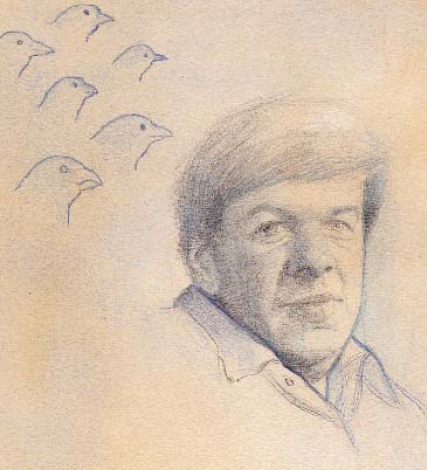
A hand-drawn illustration of a man with birds.

One of the most popular writers and lecturers on scientific topics, Stephen Jay Gould aims to make science more accessible to the public.

Published March 1, 2000

By Fred Moreno, Anne de León, and Jennifer Tang

When he was five years old, Stephen Jay Gould took the short trip from Queens to the American Museum of Natural History in Manhattan with his father. That visit sparked an interest in paleontology that blossomed throughout his boyhood and teenage years in New York City’s public schools.

Today, some 50-plus years later, Gould has become one of the most popular writers and lecturers on scientific topics. His 20 books and hundreds of essays, reviews, and articles have contributed immeasurably to building bridges between science and society. Since 1994, his essays, “On Common Ground,” have appeared regularly in The New York Academy of Sciences’ (the Academy’s) magazine, The Sciences, helping fulfill one of the Academy’s prime missions: advancing the understanding of science and technology. His essays in The Sciences reflect Gould’s view of scientific writing as a critical, rather than purely instructional or educational, genre.

“I believe my kind of writing is part of a humanistic tradition, sort of what Galileo did when he wrote his books as Italian dialogues and not as Latin treatises,” he says. “Even the conceptually most complex material can be written for general audiences without dumbing it down.”

Inspiring Critical Debate

But Gould is much more than just a popular author of accessible essays and books. A productive scholar (currently on the faculty at Harvard), his ideas on the theory of evolution and the interpretation of fossil evidence have inspired critical debates among biological and geological scientists. His insights into the importance of statistical reasoning and the meaning of variation are also significant and have more personal connotations: they were derived as a long-term survivor of abdominal mesothelioma, a rare form of cancer that was usually fatal at the time of his diagnosis in 1982.

“My statistical training taught me that the ‘median mortality of eight months’ for mesothelioma was not necessarily a prediction about me,” he says. “I decided that I was going to be in the half that lives longer.”

Gould has said that one of his goals is to make people “less scared” of science. His essays in The Sciences are playing a role in doing just that.

The Immeasurable Value of Advancing Science

A colorful diagram depicting the human brain and nervous system.

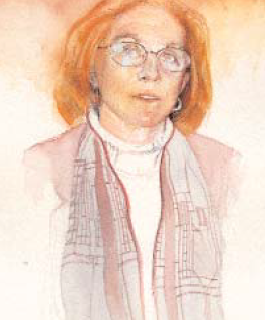
For members like Carolyn Foster, The New York Academy of Sciences offers a “neutral ground” where academics and industrial scientists can come together to advance a common goal.

Published March 1, 2000

By Fred Moreno, Anne de León, and Jennifer Tang

Nearly 30 years ago, Carolyn Foster attended a mini-symposium sponsored by The New York Academy of Sciences (the Academy) that had a profound effect on her life. “It made me go back to study biochemical pharmacology”—a career path that had not been part of her plans.

Now a senior principal scientist in the central nervous system and cardiovascular pharmacology division at the Schering-Plough Institute, Foster’s participation in Academy activities has continued unabated. Indeed, in part through Foster’s leadership as the president of the Biochemical Pharmacology Discussion Group, the organizing arm of the Academy’s Biochemistry Section, the discussion group has evolved into an international forum that is about to celebrate its 35th anniversary.

“The Academy provides a unique ‘neutral ground’ where the drug industry and academe can meet,” explains Foster, a collegial place to exchange notes in cutting-edge research in the continuing effort to develop therapies for such diseases as Alzheimer’s. “It’s all about education and opening up communication.”

A Value Beyond Calculation

Foster has vivid memories of particularly instructive meetings, including one at which Parkinson’s patients shared their experiences and observations and raised good questions. The value of this exchange to academics and industrial scientists, she recalls, was beyond calculation.

When Foster is not immersed in her scientific research or her activities at the Academy (which includes service on its Conference Committee), she is involved in science education efforts, such as the Kean College Women in Science Technology project.

Her tireless advancement of the work of the Academy was recognized recently. She was one of 15 scientists named an Academy Fellow, honored for “a lifetime of scientific achievement and service.”

Also read: A New Model for a Career in Industry

The Catalyst to the Revolution in Life Sciences

A shot of a lecture hall full of attendees.

From the physical and life sciences to tackling diseases and discovering the root of health disparities, the Academy’s programming is diverse and impactful.

Published January 1, 2000

By Merle Spiegel

Image courtesy of Souvik via stock.adobe.com.

Just as research of the past century gave the world remarkable advances in many areas of science and engineering, the future promises even more stunning progress. The life sciences exemplify the prospects. It is not just a glib headline to claim that research will unravel the function of genes. Yet we remain uneasy about lingering health inequalities and resurgent diseases. The New York Academy of Sciences (the Academy) excels at gathering diverse expertise to solve stubborn problems. Does music provide a window into understanding the brain? How are seemingly separate instruments such as psychology, physics, biology, and the social sciences coming together as an orchestra?

These illustrate questions the Academy asks through cutting-edge, multidisciplinary conferences. Our organization combines the insights of science with the drive to tackle emerging questions that affect our daily lives.

Linking the Physical and the Life Sciences

When biologists began to collaborate with chemists and physicists on techniques to understand the structure and function of molecules, the field of structural biology was born. The Academy was early to recognize the value of cross-fertilization between the physical and life sciences, starting one of the first Discussion Groups that brought together scientists from disparate fields to focus their expertise on the structural underpinnings of living systems. This outstanding group – comprising representatives of industry and academe became so large that it outgrew the Academy’s facility and now meets regularly at The Rockefeller University. With the Academy’s help, it is a renowned component of the research culture of New York City.

Tackling Disease

Understanding disease has historically been one of the goals of biomedical science and an area where science and society share an imperative. The Academy provides strong leadership through conferences and publications that gather and disseminate the scientific community’s most recent advances. The first scientific conference to focus on AIDS, for example, was held by the Academy in 1983. In 1999, we sponsored a conference in Montreal on pediatric AIDS to probe the transmission factors and known treatments for the disease and to chart clinical trials and research targets.

Studying the Roots of Health Disparities

How does social position affect health? Is there a scientific explanation for the observation that “poverty is the worst toxin”? A 1999 Academy conference on “Socioeconomic Status and Health in Industrialized Nations” examined the effects of social ordering on health in humans and animals. “Social class…is one of the most powerful predictors of health, more powerful than genetics, exposure to carcinogens, even smoking,” wrote The New York Times in its coverage of this seminal conference.

Learn more about the Academy’s conferences and events.