The Ross Prize in Molecular Medicine was established in conjunction with the Feinstein Institutes for Medical Research and Molecular Medicine to recognize biomedical scientists whose discoveries have transformed how medicine is practiced.
The awardees are mid-career researchers who have significantly impacted the understanding of human disease pathogenesis and/or treatment. Moreover, it is anticipated that they will continue to make profound advances in the general field of molecular medicine.
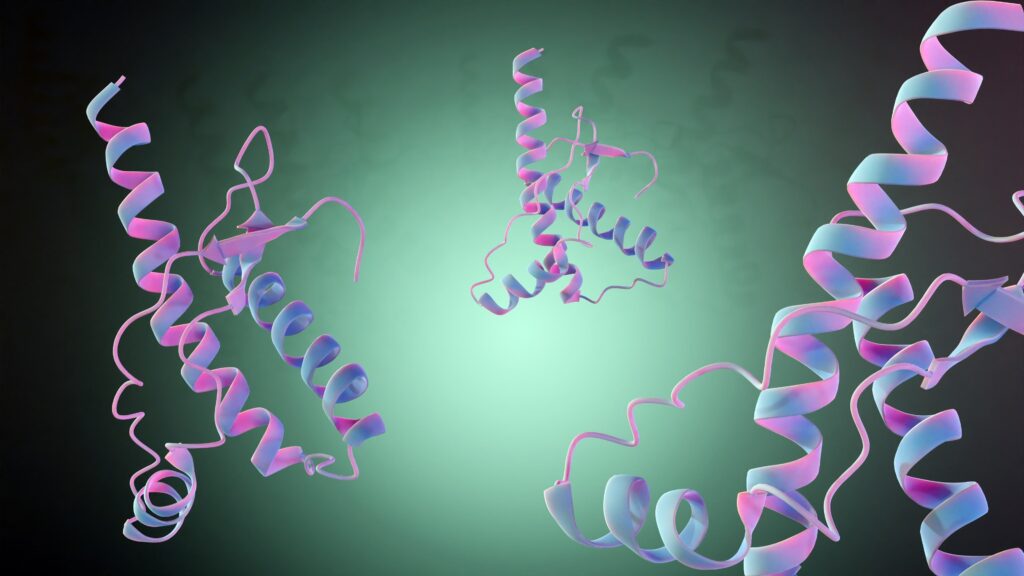
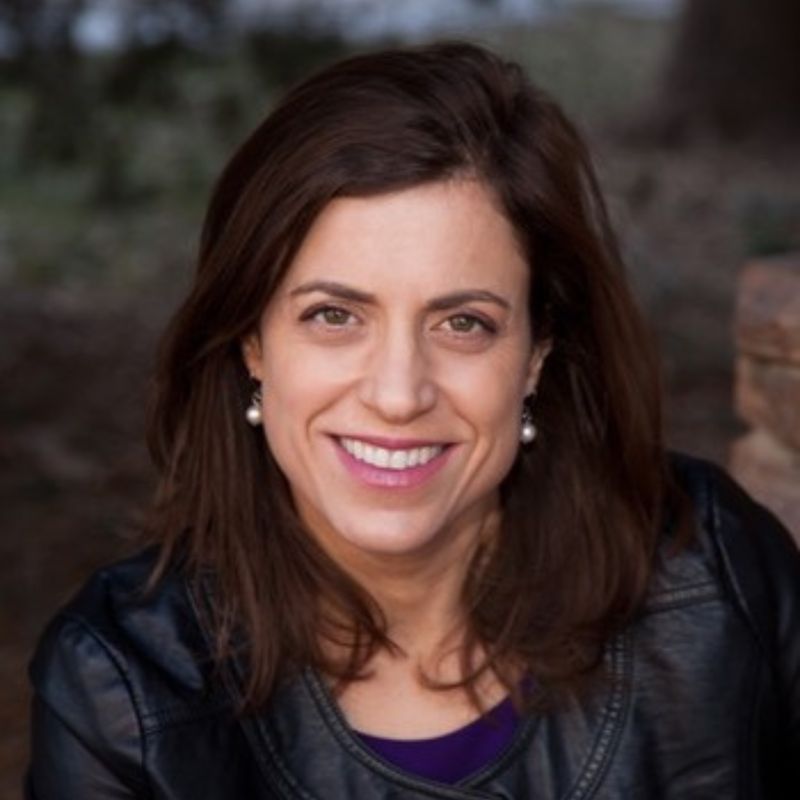
The 2025 Ross Prize in Molecular Medicine will be awarded to Dr. Jeffrey W. Kelly, PhD for his contributions to the science of protein misfolding and aggregation in disease. His pioneering research has illuminated how proteins fold, misfold and clump in toxic quantities in the body, leading to progressive damage in the nervous and cardiovascular systems.
Dr. Kelly has translated basic understanding of protein folding to create therapeutics designed to prevent disease-causing protein aggregation, including the discovery of the first-in-class small molecule drug called tafamidis.. The Kelly lab is currently developing novel therapeutic strategies for degenerative diseases including Alzheimer’s and Parkinson’s diseases, and for loss-of-function diseases such as lysosomal storage diseases.
Join us in celebrating Dr. Kelly’s innovative, award-winning research on June 4th. The symposium will include an exciting presentation from Dr. Kelly on the integral facets of his work, other exciting lectures, and in-person networking opportunities. Register today to participate in this incredible celebration of scientific innovation.
Sponsors
This symposium is made possible by the generosity of Jack and Robin Ross with support from:
Three remarkable Laureates and six Finalists were recognized for their groundbreaking scientific discoveries during a gala at The Orangery, Kensington Palace, in London
Published April 3, 2025
By Kamala Murthy
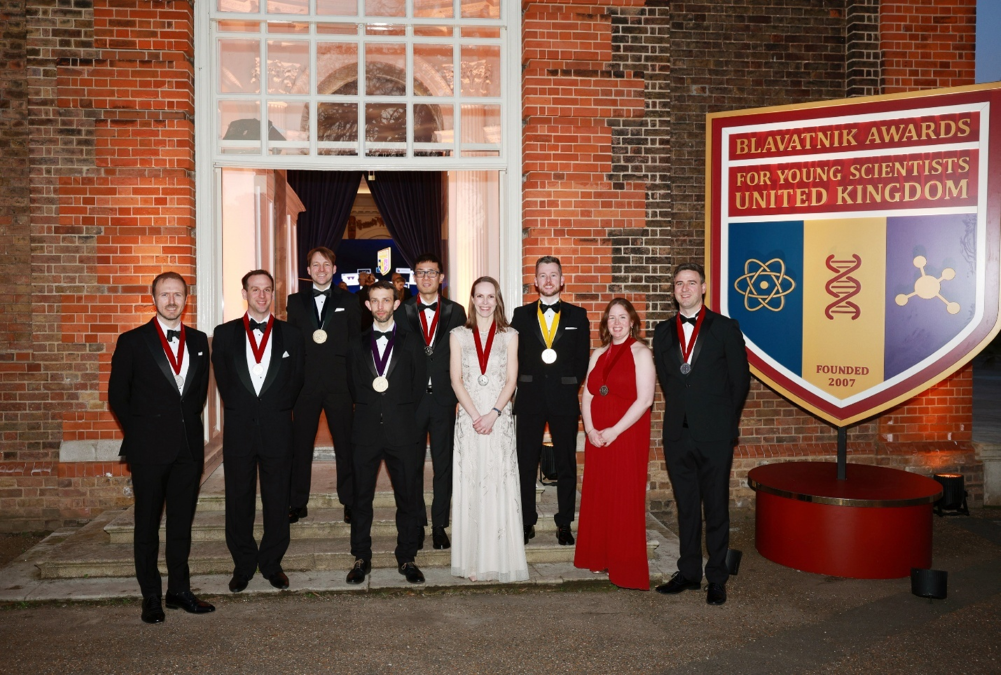
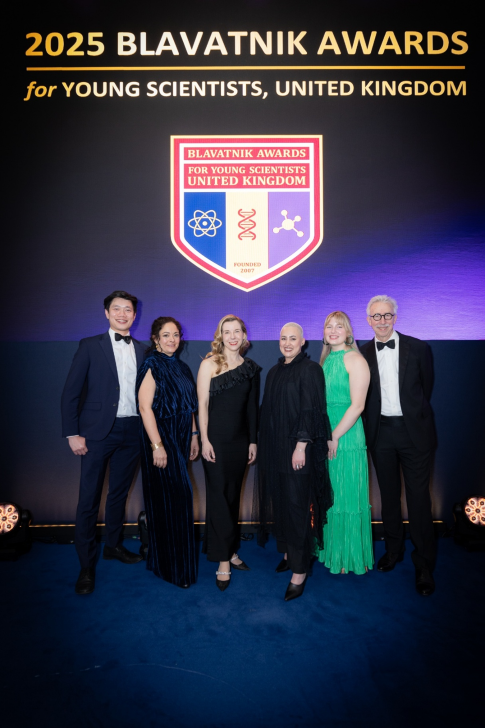
The 2025 Honorees of the Blavatnik Awards in the UK standing outside The Orangery at Kensington Palace.
Each year, the Blavatnik Awards for Young Scientists in the United Kingdom celebrate the brightest young scientific minds across the UK. In 2025, three remarkable Laureates and six Finalists were recognized for their groundbreaking contributions to Life Sciences, Chemical Sciences, and Physical Sciences & Engineering. Their achievements were celebrated at a black-tie gala on March 4, 2025, at The Orangery, Kensington Palace, in London.
Honoring Scientific Excellence
The awards, established by the Blavatnik Family Foundation and The New York Academy of Sciences, are the largest unrestricted prizes for UK scientists under 42. This year’s Laureates, each receiving £100,000 ($130,000) in funding, were selected from a distinguished group of nine finalists. Six Finalists each received £30,000 ($38,800). These visionary scientists are tackling some of the world’s most urgent challenges, from infant mortality to sustainable manufacturing and climate change prediction.
A Night of Celebration and Inspiration
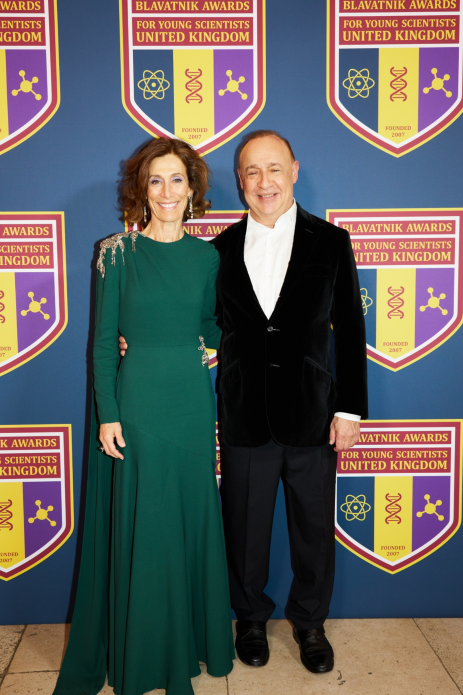
The prestigious gala, hosted by Sir Leonard and Lady Emily Blavatnik, was attended by luminaries in research, academia, business, and the arts. Opening the ceremony, Prof. Shitij Kapur, Vice-Chancellor and President of King’s College London, reminded the honorees of their power to change the world, “As pioneers in your fields – your voices count.” Citing Bishop Desmond Tutu’s words: “‘you can change the world.’”
Nicholas B. Dirks, President and CEO of The New York Academy of Sciences, reflected on the impact of the awards: “Over these 18 years, the Blavatnik Awards have recognized 540 scientists from 120 research institutions [across the US, UK and Israel] a testament to the program’s growing international reach.”
The Legacy of the Blavatnik Awards
Since their inception, the Blavatnik Awards have provided more than £3.1 million (US$4 million) to UK research, supporting over 70 scientists from more than 100 institutions. With honorees founding over 50 companies – six of which are now publicly traded – the impact of the awards extends far beyond academia, influencing industries and economies worldwide.
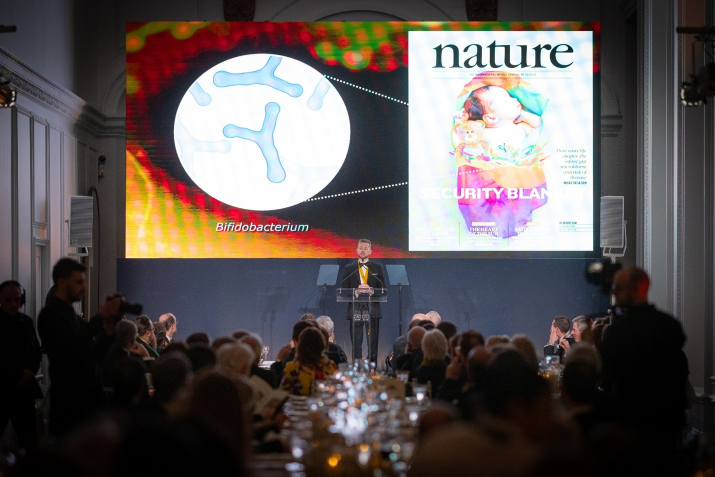
Prof. Stewart’s research is revolutionizing neonatal care with microbiome-based therapies to combat preterm infant mortality. His work sheds light on the critical role of human breast milk in shaping the gut microbiome of premature babies, leading to groundbreaking advancements in infant health worldwide.
Chemical Sciences: Liam T. Ball, PhD (University of Nottingham)
Prof. Ball is transforming chemical synthesis by developing safer, greener pharmaceutical and agrochemical production methods. His innovative use of bismuth has paved the way for more sustainable industrial manufacturing, reducing environmental impact while enhancing efficiency.
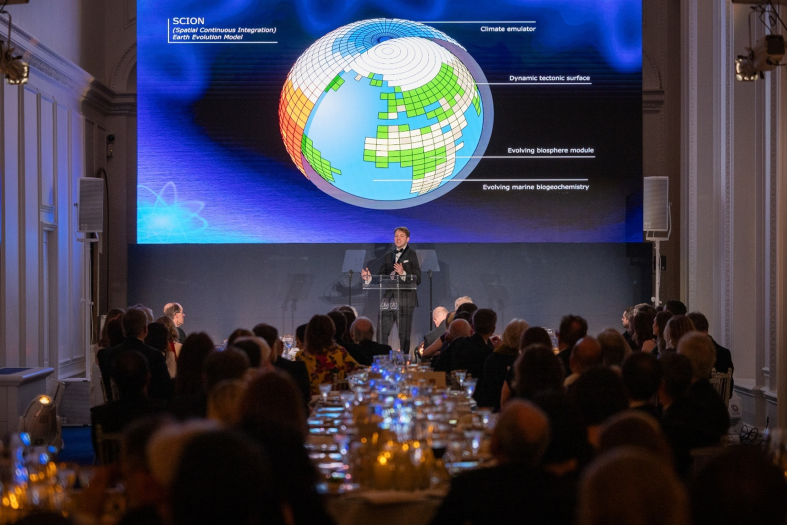
Physical Sciences & Engineering: Benjamin J.W. Mills, PhD (University of Leeds)
Prof. Mills is pioneering Earth Evolution Modeling, enabling scientists to simulate climate changes over billions of years. His work not only deepens our understanding of Earth’s past but also informs the search for habitable exoplanets, advancing both climate science and space exploration.
Meet the 2025 Finalists
Nicholas R. Casewell, PhD (Liverpool School of Tropical Medicine) – A toxinologist studying snake venom to develop better treatments for snakebite, a neglected tropical disease.
Brianna R. Heazlewood, PhD (University of Liverpool) – A physical chemist designing tools to study extreme-temperature chemical reactions, shedding light on space chemistry.
Hannah Price, PhD (University of Birmingham) – A theoretical physicist exploring extra dimensions through innovative experiments, deepening our understanding of higher-dimensional physics.
Filip Rindler, DPhil (The University of Warwick) – A mathematician creating new theories on how metals deform at a microscopic level, impacting materials science.
Andrew M. Saxe, PhD (UCL) – A neuroscientist using math to uncover how artificial and biological systems learn, advancing AI and memory disorder research.
Chunxiao Song, PhD (University of Oxford) – A chemical biologist developing advanced sequencing methods to detect DNA and RNA changes, aiding early cancer detection.
Looking to the Future
The day after the ceremony, the 2025 Laureates and Finalists presented their research to the public at the Blavatnik Science Symposium “Imagining the Impossible: UK Scientists Changing Our World,” held at the Royal Society of Medicine. This event offered science enthusiasts of all ages an opportunity to engage with these pioneering researchers and learn how their work is shaping the future.
The Blavatnik Awards continue to empower young scientists, fostering discoveries that redefine our understanding of the world and beyond. Stay connected and follow their journey at www.blavatnikawards.org.
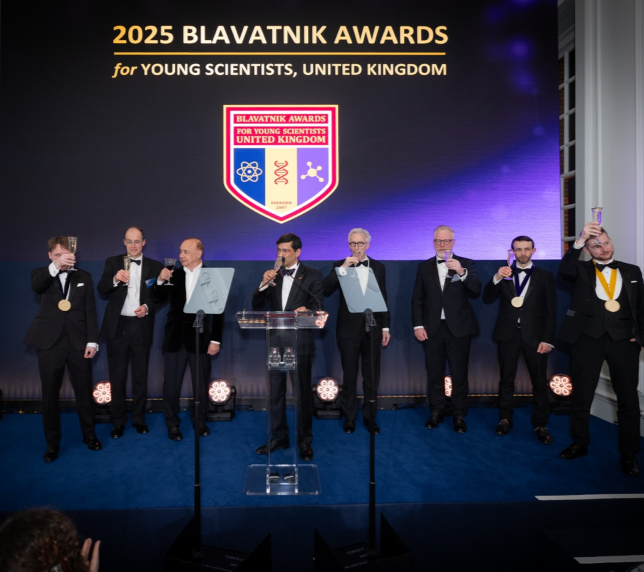
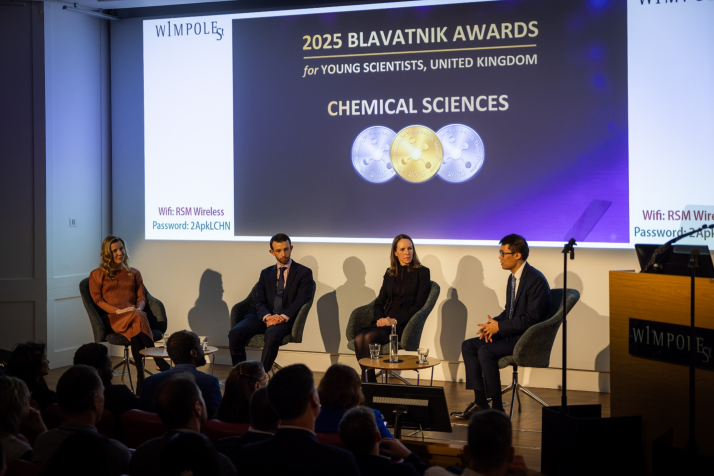
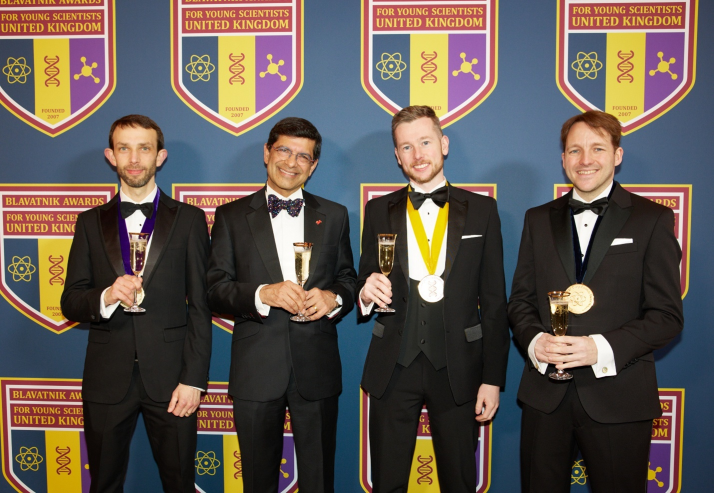
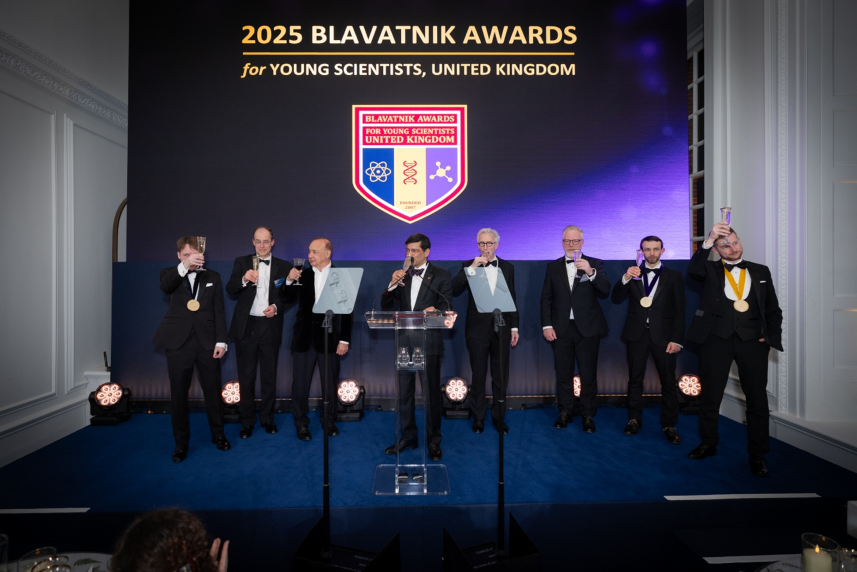
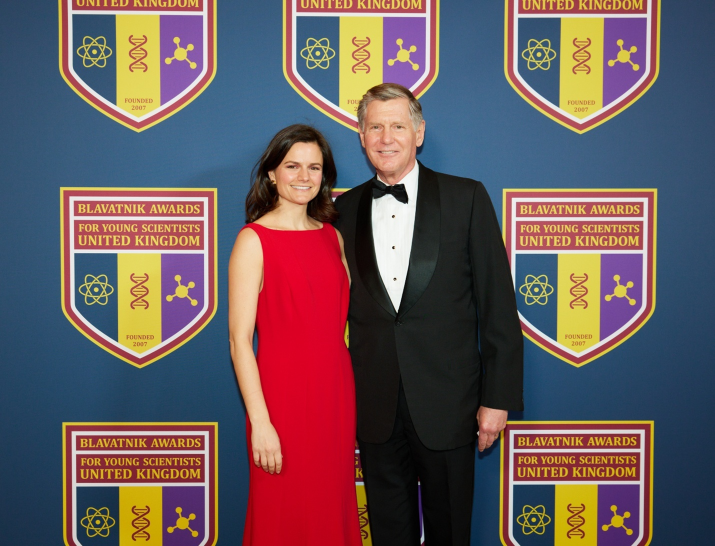
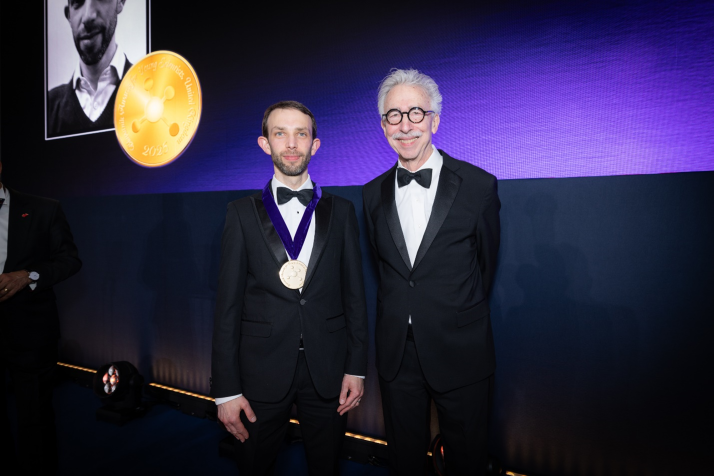
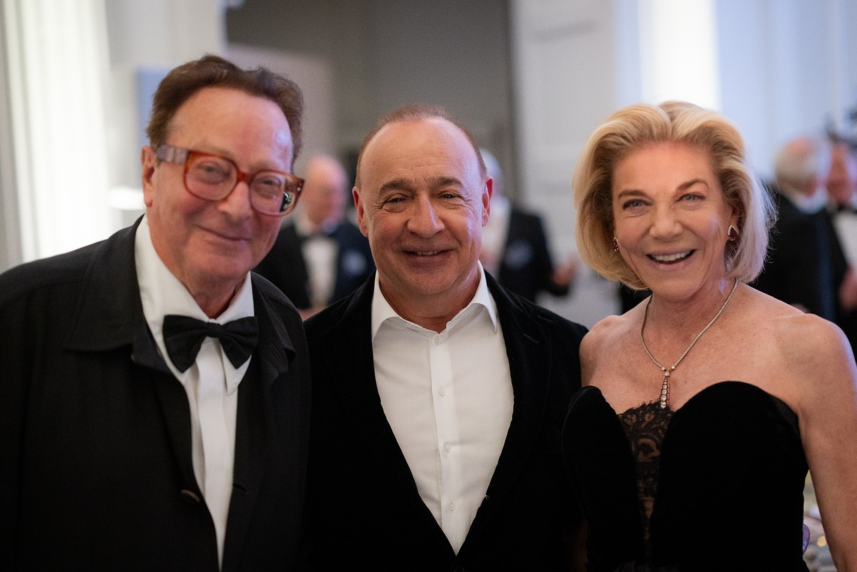
Dr. Sonya Dougal leads the Chemical Sciences panel at the Blavatnik Science Symposium.The 2025 Laureates with Prof. Shitij Kapur, Vice-Chancellor and President of King’s College London.2025 Toast to Science.Laura Thorén Podesta with Peter Thorén of Access Industries, the Blavatnik Family Foundation and member of the Academy’s Board of Governors.Physical Sciences & Engineering Laureate, Prof. Benjamin Mills, presents his research on Earth Evolution Modeling.Chemical Sciences Laureate, Prof. Liam Ball from the University of Nottingham receives his medal from Academy President & CEO, Nicholas B. Dirks.Life Sciences Laureate, Prof. Christopher Stewart from Newcastle University presents his research on human breast milk and the infant microbiome.(Left to Right) Lord Maurice Saatchi, Sir Leonard Blavatnik, Lady Lynn Forester de Rothschild.The Academy’s Blavatnik Awards UK Team (Left to Right) Edison Huynh, Kamala Murthy, Dr. Sonya Dougal, Dr. Nina R. Montoya, Gabrielle Sirois, Prof. Nicholas B. Dirks.The evening’s hosts, Lady Emily and Sir Leonard Blavatnik.
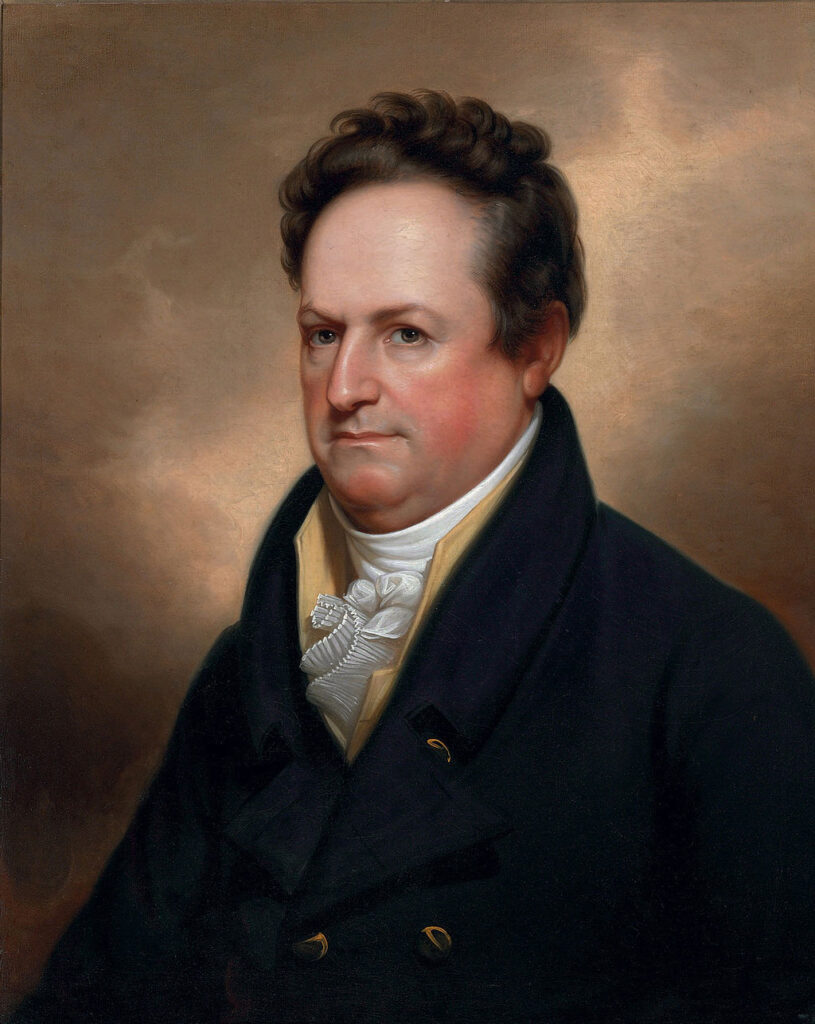
DeWitt Clinton, one of The New York Academy of Sciences’ earliest Honorary Members, had a significant political, economic and social impact on New York City and state, though his contributions reverberated across the country.
Clinton was born in Ulster County, New York in 1769 to a father who served as a general during the Revolutionary War. He attended King’s College (now Columbia University) and upon graduation pursued a brief career in law. He eventually shifted his focus to politics.
Practicing Politics
Despite his first two political campaigns ending in defeat, Clinton persisted and was eventually elected to a seat in the New York State Assembly, the lower chamber in the state’s bicameral legislature. He moved up to the New York State Senate (the upper chamber) before being elected to the U.S. Senate, though this appointment was short-lived because months later he was elected mayor of New York City.
Clinton’s political ambitions were strong but his attempt at reaching the highest office in the land, the presidency, fell short. Running on the “Fusion” party ticket, Clinton was defeated by James Madison 128 electoral votes to 89 electoral votes in the 1812 election. Much of Clinton’s support came from antiwar states in the North.
His Lasting Legacy
Perhaps the most impactful part of Clinton’s legacy was the role he played in the development of the Erie Canal. When construction on the canal began in 1817, the United States was relatively young. The transcontinental railroad had not yet been completed and much of the Midwest was considered the frontier.
The 363-mile canal route traversed from the New York Harbor up the Hudson River to Albany and then west to Buffalo. From there, ships could navigate through the Great Lakes, using a series of locks and dams, eventually reaching Chicago at the westernmost terminus. The canal was completed in 1825.
The Erie Canal was considered an engineering marvel and had an immeasurable economic impact on the burgeoning United States. It enabled development of the sparsely populated states in the Midwest and allowed crops and natural resources from the heartland to be transported faster and more efficiently than over land.
Much of the land was cleared with a combination of manpower, beasts of burden, and gun powder. The original canal was roughly four feet deep and 40 feet wide. Today, tourism is the main source of boat traffic along the canal.
An Appreciation for the Arts and Sciences
In addition to his involvement with the Erie Canal project, Clinton was also known for having a deep appreciation for the arts, sciences, and other educational matters. He led efforts to combat the spread of yellow fever and supported organizations like the Free School Society (which later became the city’s public school system), the American Academy of Fine Arts, the New-York Historical Society, and the Literary and Philosophical Society.
During his lifetime he “published many articles that were well received.” He was elected a fellow of the American Academy of Arts and Sciences in 1816 and was named an Honorary Member of The New York Academy of Sciences in the early 19th century.
During her more than half century career, May Chinn, MD, MPH, advanced access to medical care for low-income residents in Harlem, with many of her contributions directly impacting healthcare for women and other disenfranchised populations.
Published March 19, 2025
By Brooke Elliott
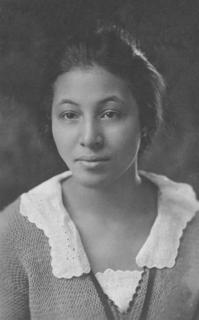
May Edward Chinn during her years at Teacher’s College, ca. 1917. Image courtesy of George B. Davis Ph.D./E.F. Foley via NIH.
May Edward Chinn was the first woman to graduate from the Bellevue Hospital Medical College, the first African American woman to intern at the Harlem Hospital, and the first woman of any race to ride with an ambulance crew. A trailblazer in cancer research and a member of The New York Academy of Sciences (the Academy), she also helped to develop the pap smear test to detect cervical cancer in women. Much of her success can be attributed to her upbringing and her tenacity at a time when women in general and particularly of color weren’t always afforded the opportunity for a career in STEM
From Daughter of a Slave to Suffragette
Born in 1896 in Great Barrington, Massachusetts, she moved to New York City at three years old. Her father, William Lafayette Chin, was a former slave who escaped from the Chinn plantation in Virginia in 1864 at eleven years old. May’s mother, Lulu Ann, was half African American and half Native American, and was raised on a Chickahominy reservation. When she was sixteen, she met the forty-year-old Chinn, and soon after the pair was married, they had their only child, May.
Lulu’s hard work and resilience afforded May many educational opportunities. After contracting osteomyelitis in her lower right jaw, May left boarding school and lived on the estate of Charles Tiffany on the upper east side, where her mother was a live-in cook. The Tiffany family, the namesake for the prominent jewelry company, took her to Broadway shows on Sundays and inspired her with a lifelong appreciation for music.
When Charles died in 1902, the family left the estate and moved around the city for the next decade. Despite the lack of stability, Lulu always sought to make educational opportunities available to her daughter. Though May never received her high school diploma, a friend convinced her to take the entrance examination for the Teacher’s College at Columbia. Her outstanding score granted her admission as a full-time student. When William refused to pay her tuition, it was revealed that Lulu had started a savings fund. The family moved to Harlem so she could walk to her classes.
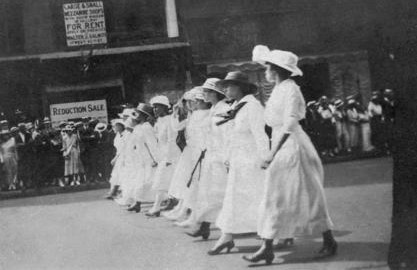
May Edward Chinn (second from right) marching in a suffrage parade on 5th Avenue, 1919. Image courtesy of George B. Davis, Ph.D., via NIH.
It was at this time that May joined the growing suffragette movement, marching in parades and advocating for the Nineteenth Amendment. Once certified in 1920, this granted women the right to vote.
The Harlem Renaissance
As a student at Columbia, May encountered many of the faces of the Harlem Renaissance. From Langston Hughes to Zora Neale Hurston, she was surrounded by prominent creatives, who often advocated for civil rights for African Americans. A musician herself, she often played the piano accompaniment to Paul Robeson, the esteemed musician and All-American football player from Rutgers.
Music was her first love, but her dreams of being a concert pianist were shattered when a professor at Columbia told her a Black woman could not be a serious musician. May changed her major to science, inspired by her childhood illness and the doctors who saved her life. At the time of her decision, only 65 Black women in the country were doctors.
May was the first African American woman to graduate from the Bellevue Hospital Medical College with a medical degree, earning her the title of “Doctor.” Despite these accomplishments, the primarily white, male doctors made her race and her gender an obstacle at every turn.
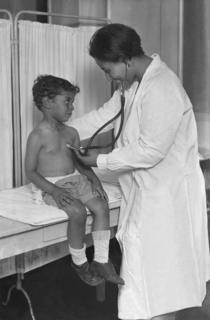
May Edward Chinn examining a young patient, 1930. Image courtesy of George B. Davis, Ph.D., via NIH.
In 1928, Dr. Chinn opened her own practice at the Edgecombe Sanatorium. The male doctors of Harlem were soon taking advantage of her commitment to the Hippocratic Oath, sending their own families to receive her medical care while actively taking away paying clients. With time, though, word of her excellence spread.
She found private patients among the white people she had previously attended at Harlem Hospital. Harlem was also home to a colony of Mohawk American Indians. The women of the tribe went to May to mix their tribal remedies with her modern medicine.
While attending Columbia for a second time to get her master’s in public health, Dr. Chinn set her sights on cancer research. Her parents passed away in the late 1930s, leading her to devote all her energies to the disease, at times sneaking into Memorial Hospital to conduct her research. In 1944 she was offered a staff position at Strang Clinic, one of the top facilities in the country for detecting cancer at its earliest stages. Dr. Chinn worked at the clinic for 26 years until her retirement in 1974.
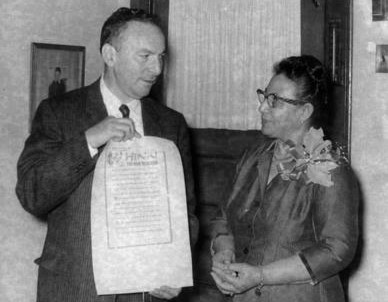
May Edward Chinn receiving the Our Lady of the Year award from Harriet Beecher Stowe Junior High School, New York City, 1960. Image courtesy of George B. Davis, Ph.D., via NIH.
Though she never married, May was engaged several times throughout her life, and was godmother to 19 children. One of her many godchildren was Franklin H. William, former United States Ambassador to Ghana and President of the Phelps-Stokes Fund. In 1979, he appointed the 82-year-old as medical consultant to a hundred refugees from southern Africa who were in the United States for college. She passed away on December 1st, 1980, at the age of 84. Perhaps a testament to her career of selflessness, she passed away while attending a reception for a friend at Columbia University.
Academy President and CEO Nicholas B. Dirks highlights some of the ways higher education and science in the United States are under threat during the second Trump Administration.
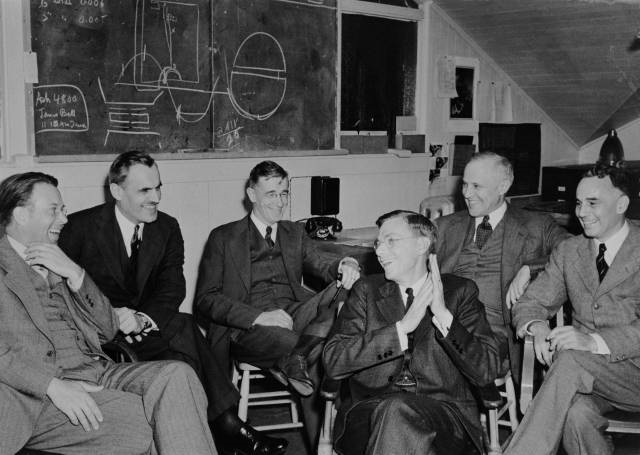
A 1940 Group photo of E. O. Lawrence, A. H. Compton, V. Bush, J. B. Conant, K. Compton, and A. Loomis. Image courtesy of the U.S. Department of Energy/Lawrence Berkeley Laboratory via Wikimedia Commons.
There was little direct federal support for US scientific research until the National Defense Research Committee was convened in 1940. But on the back of the committee’s key role in developing radar, sonar and the nuclear bomb, its instigator, former MIT vice-president Vannevar Bush, wrote a report, The Endless Frontier, laying out a vision for the creation of a post-war National Science Foundation.
Established in 1950, the NSF provided unprecedented funding for fundamental research, conducted principally in America’s universities by faculty researchers whose projects were evaluated by scientific peers. The National Institutes of Health (NIH), which dates back to the late 19th century, also grew dramatically in the post-war years. And, together, the two agencies turned institutions that had previously struggled to support science into the gold standard for research universities globally.
Science may still be the “endless frontier”, but the federal funding that came as a result of Bush’s influential report may not be.
By 1964, government funding for research and development hit 1.9 per cent of US GDP, amid bipartisan support. But in recent decades it has fallen back to 0.7 per cent. The real growth in support over that period has come from the private sector, but, important though that is, it is too often confined to applied and proprietary research. Real progress, by contrast, is critically dependent on the open, global scientific ecosystem of fundamental research.
The 2023 State of Science in America report by the Science and Technology Action Committee (a non-partisan alliance of non-profit, academic, foundation and business leaders) strongly endorsed the importance of dramatically increasing federal support for science. The justifications voiced in surveys conducted across multiple sectors, including as many self-identified Republicans as Democrats, included a belief that science powers both the economy and national security and a concern that China was spending a much higher percentage of its GDP on research.
But then along came the second Trump administration.
While the effort to dismantle DEI in government offices, corporations and universities was announced in advance, the abrupt halt of NIH and NSF funding took universities by surprise. And even as some funding resumed, programmes presumed to have any connection to DEI “policies” or “preferences” (a far broader interpretation of DEI than had been expected) were peremptorily cancelled, along with other research programmes connected to concerns about climate change.
At the same time, a new – extremely low – cap on overhead rates was set at 15 per cent, abruptly withdrawing support for necessary scientific equipment, infrastructure and other real costs of research. Meanwhile, programme officers and other administrators have been fired, and elaborate protocols for granting and administering funding have been disrupted in ways no one seems yet able to grasp fully.
The consequences of all this are likely to be dire. Scientific research not only helps to drive the economy: it is the core reason why US technological innovation has exceeded that of any other nation. And while it may be commonly overlooked, federally funded research really is the bedrock of that dynamic.
For example, there is a popular myth that Steve Jobs and his team at Apple invented the iPhone. They did package an array of technologies in a single device with nifty design features, to be sure. But, as Mariana Mazzucato has shown in her 2011 book The Entrepreneurial State, those technologies – including the internet, GPS, touchscreen displays and voice-activated Siri – derived from federally supported research.
There are many reasons for the populist scepticism, distrust and downright dislike of science and research universities. Some of these reasons are doubtless our own fault. But it should not only be those directly affected who are upset by the prospect of dismantling the research apparatus of “elite” universities – where the bulk of non-profit scientific research in the US is conducted.
It will also do irreparable harm to the world’s entire scientific, technological and biomedical enterprise, not to mention US prosperity, security and health. University leaders may be correct to be cautious in voicing their alarm, but they would not be wrong to panic. Along with all the rest of us.
This special issue features papers describing various aspects of chromatin dynamics during early development, including how 3D genome structure is established and repressive chromatin is rebuilt during early zygotic development. Other topics include the role of retrotransposons in zygotic genome activation and how chromatin-associated condensates could serve as inspiration for the construction of DNA-based computers. The guest editor for this special issue is Daria Onichtchouk (University of Freiburg).
One of The New York Academy of Sciences early Fellows advanced anthropological understandings of Native tribes. Her social sciences background also extended into feminism and broader societal critiques.
Elsie Clews Parsons was born to a prominent New York family in 1875. She earned a BA from the recently established Barnard College prior to completing her PhD in sociology from Columbia University in 1899. The following year she married Herbert Parsons, a New York City lawyer also involved with politics, furthering her access to “the wealthy, social, and generally conservative circles of New York City.”
While she could have spent her life as an elite socialite, she instead pursued a rigorous career in the social sciences, and later in life championed feminism and pacificism that may have run counter to those conservative, social networks.
Early Sociological Works
After completing her PhD, Parsons returned to Barnard where she served as a sociology lecturer and a Hartley House Fellow. However, her time on the Barnard faculty was relatively short-lived as in 1905 the family moved to Washington D.C.
She published her first major work, The Family: An Ethnographical and Historical Outline, in 1906. This was a textbook for freshman sociology students that taught them the basic sociology of familial matters from “The Meaning of the Family in Evolution” to the economic and ethical dynamics amongst kin. It included a robust discussion about “trial marriage” which at the time was considered provocative, but likely played a part in the book’s successful sales.
It was during this time that she was elected a fellow of The New York Academy of Sciences (the Academy), meaning that she was selected by active members for her scientific achievement.
Parsons contributed to the intellectual discourse up until her death, serving as associate editor for the Journal of American Folklore between 1918 and 1941. She was president of the American Folklore Society (1918-1920), the American Ethnological Association (1923-1925), and the American Anthropological Association (1940-1941). Parson passed away in 1941 at the age of 66. Her Journal of a Feminist was published posthumously.
In the 1960s, the American Ethnological Society (AES) established the Elsie Clews Parsons Prize to not only recognize “the best graduate-student paper that engages with AES’s core commitments to combining innovative fieldwork with rich theoretical critique,” but to also carry on the legacy of this trailblazing scientist.
During an emergency, social media is flooded with misinformation, often spreading false rumors and undermining the work of government officials and disaster response workers. In efforts to fight back against false information and save lives, scientists play an important role given they are highly trusted within society. Scientists, in fact, rank higher in trust levels worldwide compared to government leaders, journalists, and CEOs. Join the International Science Reserve for a discussion with leading experts in the fields of misinformation, technology, and communication to discuss the important role scientists play in communication clarity and facts during a crisis. We will learn about examples of success stories in combatting misinformation online during a crisis.
Presented By
Speakers
Dr. Lisa Fazio is an Associate Professor of Psychology at Vanderbilt University. Her research focuses on how children and adults learn true and false information from the world around them, and on how to correct errors in people’s knowledge. She received the Early Career Impact Award from the Federation of Associations in Behavioral & Brain Sciences in 2020 and the Frank Research Prize in Public Interest Communications in 2017. She is also a member of the National Academies’ committee on Science Misinformation. Her research is currently supported by major grants from both NSF and the Mercury Project focusing on why people believe false information and testing the effectiveness of interventions aimed at reducing the spread of and belief in misinformation.
Dr. Yotam Ophir co-authored the book, “Democracy amid Crises: Polarization, Pandemic, Protests, & Persuasion” was published in 2022 by Oxford University Press. His sole-authored book “Misinformation & Society” is expected to be published in 2025. Dr. Ophir is the head of the Media Effects, Misinformation, and Extremism (MEME) lab, is a member of University of Buffalo’s Center for Information Integrity, and is a distinguished fellow at the Annenberg Public Policy Center at the University of Pennsylvania. In 2023, he received the “Exceptional Scholar: Young Investigator Award” from University at Buffalo.
Dr. Leysia Palen is a 2022 Distinguished Professor of Computer Science and Information Science at the University of Colorado Boulder, USA. She was the founding chair of the Department of Information Science, which launched in 2015. She helped found the field of research called “crisis informatics” which is a multidisciplinary field of science that combines social science with information science to understand how people respond to disaster. She brings her training in human-computer interaction (HCI), computer-supported cooperative work and social computing to bear on understanding and advancing socio-technical issues of societal import.
Because of the 9/11 terrorist events, our federal, state and local governments have instituted many improvements for the safety and security of the United States. This presentation will discuss these changes and explain how all citizens of the United States (as well as citizens worldwide) are safer and have improved travel safety.
Most of these improvements have been the result of the published “9/11 Committee Report” (July 2004). Almost all the recommendations of the report were implemented, including the formation of the Department of Homeland Security and the Transportation Security Administration. While there have been no US aircraft hijacked or destroyed since 2001, hundreds of guns are captured from passengers each year at US airports. These security measures will be with us forever.
Main Presentation: 12:45 PM to 2:30 PM
Ferroptosis and Cuproptosis: Cell Death Mechanisms in Pathogenesis and Therapeutics
Clif Hotvedt
Numerous mechanisms have been identified as participating in programmed cell death, including apoptosis, necroptosis, pyroptosis, and autophagy. (They will be summarized.) Two recently characterized mechanisms—ferroptosis and cuproptosis—iron and copper-related forms of cell death, respectively—have been associated with disease causation, e.g., neurodegenerative diseases such as epilepsy, Alzheimer’s disease, Parkinson’s disease and amylotrophic lateral sclerosis (ALS, Lou Gherig’s disease) and disease therapy (e.g., rheumatoid arthritis, various cancers). This presentation will address both aspects of these mechanisms as well as the rationale for possible therapeutic approaches.
Speakers
Clif Hotvedt’s diverse scientific background reflects his experience in the pharmaceutical industry, as a medical writer in the regulatory and clinical affairs departments of Ives Laboratories and at leading public relations firms including Robert Marston & Associates, Manning Selvage & Lee, and Ketchum, where he served as vice president and global director of medical & scientific affairs. For 46 years, he has counseled companies on over 100 small molecule drugs, biologicals and devices for indications including cardiovascular disease, rheumatology, metabolic disease, dermatology, central nervous system disease, vaccines, infectious disease, and cancer.
A New Mexico State University graduate in secondary education and journalism, Clif continues to use his teaching background to develop and present courses on the FDA approval process, pharmacokinetics, pharmacodynamics, and biostatistics among other topics for coworkers and clients. Clif is a member of the Lyceum Society and has been a frequent presenter at our meetings. His previous topics have included: “The FDA Drug Approval Process”(November 2015); “How the new PCSK9 Cholesterol-Lowering Drugs work” (May 2016); “How to read a Drug Label” (April 2017); “Biosimilars: the New ‘Generics’?(June 2018); “The Human Microbiome” (May 2019); “Drug Pricing” (June 2020); “Artificial Intelligence (AI) and Health Care” (October 2020); “Drug Pricing Revisited” (November 2020); and “The Nobel Prize in Physiology or Medicine 2022” (December 2022).
David Haas received his BA in Physics and PhD in Biophysics in protein crystallography and molecular biology at the State University of NY at Buffalo. For the next five years, he performed basic research in protein crystallography at several institutions in Europe, Israel and the United States. In 1970, he joined Philips Electronic Instruments in Mt Vernon NY as Principal Scientist for X-ray systems, working on analytical instruments and designing some of the first airport security X-ray systems that were used worldwide during the 1970s. Conceiving the idea of a self-expiring security ID (Visitor badge), David and his wife, Sandra, formed Temtec Inc. which developed and manufactured high-tech visitor and temporary IDs for more than 20 years under the brand name TEMPbadge. Temtec Inc. was sold to Brady Worldwide Corporation in 2002. David & Sandra Haas have more than 100 patents to their credit as well as many technical and scientific publications.
Dr. Haas has published a book by ASIS International entitled: “Personal Identification – Its Modern Development and Security Implications.” It reviews the history and reasons for modern personal identification documents such as Passports, National Identity Cards, etc. Dr. Haas has also published a monograph on the development of Electronic Security Screening for Aviation Passenger Screening between 1968-1973.
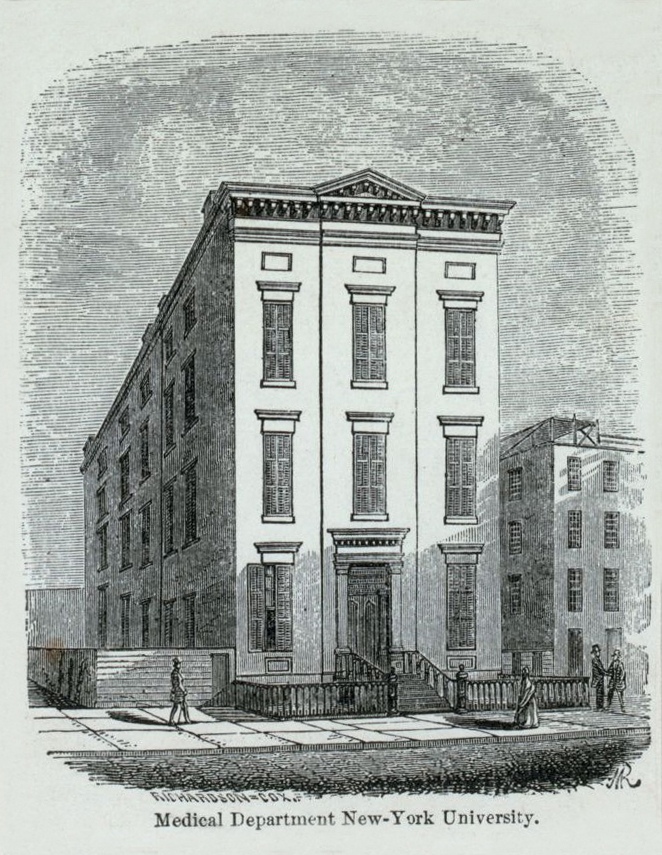
The Lyceum of Natural History in the City of New York’s (the Lyceum’s) next home was in the newly constructed NYU Medical School at the intersection of E. 14th Street and 3rd Avenue.
The Lyceum was offered meeting space in the new facility but had to store most of its collection in the building’s cellar, while the library was deposited with the Mercantile Library Association. Unfortunately, the era in the NYU Medical School building would end with a devastating setback for the Lyceum.