Confronting Imposter Syndrome in STEM

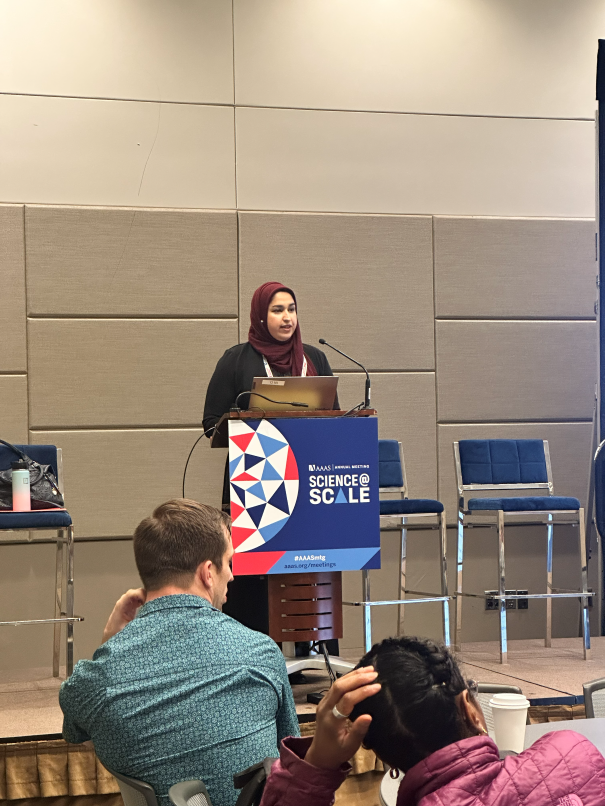
A lecturer stands at a podium and delivers an address.

Imposter Syndrome affects STEM professionals, yet it isn’t always acknowledged. Addressing it openly can build confidence, strengthen communities, and unlock scientific potential.

Published April 1, 2026

By Zamara Choudhary

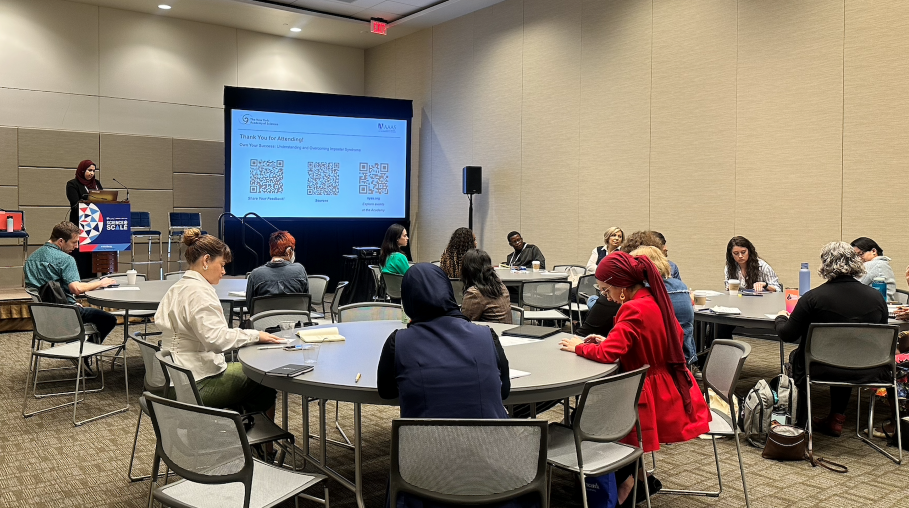
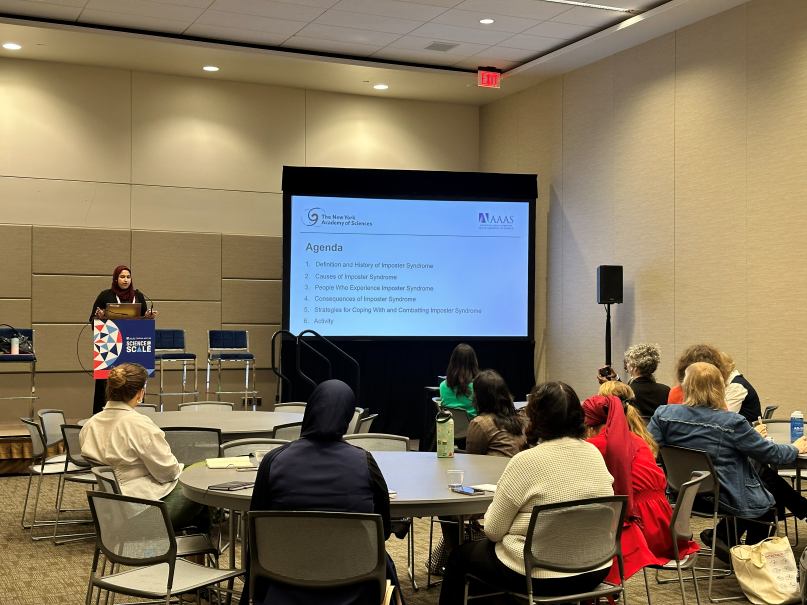
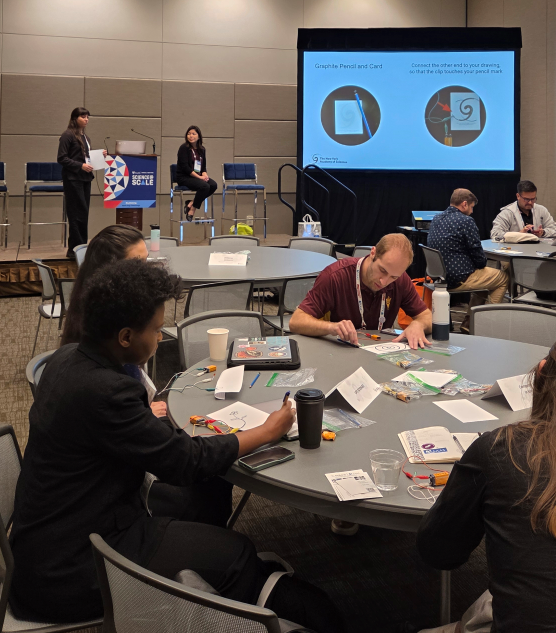
Zamara Choudhary presenting a workshop on Imposter Syndrome at the 2026 AAAS Annual Meeting.

Even the most accomplished people can feel like frauds.

In competitive environments, success is often parceled with pressure. Even the people we admire most can quietly question whether they truly belong, despite clear evidence of their abilities.

This pattern is popularly called Imposter Syndrome. And it is far more common than we may realize.

Understanding Imposter Syndrome and Why It Persists

Psychologists Pauline Clance and Suzanne Imes coined the term “imposter phenomenon” in 1978 to describe feelings of inadequacy brought on by self-doubt, even when presented with clear evidence of the talents behind success. Despite not being medically classified as a “disorder” or “syndrome,” this behavior is now commonly known as Imposter Syndrome. Today, up to 82% of individuals experience feelings of Imposter Syndrome, exerting reverberating effects on their lives.

At its core, Imposter Syndrome is a disconnect between achievement and self-perception. It is rooted in what Clance and Imes called the “imposter cycle,” where an individual is given a task and then either overprepares or procrastinates in response to anxiety and self-doubt. They eventually complete the task, but attribute their feat to luck, timing, or external help rather than their own competence. Any positive feedback they receive is dismissed. Essentially, there is a failure to internalize success because it is thought of as a product of either working harder than everyone else because of a deficiency or last-minute lucky decisions. Over time, this mindset erodes confidence and distorts how success is interpreted.

Why STEM Environments Amplify Self-Doubt

Highly competitive environments like STEM fields can intensify Imposter Syndrome. They include consistent evaluation and reward excellence but often lack clear benchmarks for success. This uncertainty fuels comparison, causing individuals to measure themselves against equally high-achieving peers, leading to feelings of inadequacy.

In STEM environments, access to opportunities may depend on institutional prestige, networks, or resources. This culture of gatekeeping exacerbates feelings of Imposter Syndrome, where someone may doubt their credentials by comparing them to what a field may deem as the most desirable.

The result is that many individuals privately doubt themselves but assume others feel confident. This phenomenon, known as pluralistic ignorance, creates a false perception of isolation. However, in reality, many people share the same internal struggles.

Who Experiences Imposter Syndrome?

Since Imposter Syndrome is a product of highly competitive environments, the phenomenon is especially prevalent amongst high-achieving individuals who often strongly identify with their professional roles. When our expertise grows and we become more cognizant of what we do not know, this awareness can fuel self-doubt. Imposter syndrome is actually less common in people who are genuinely unskilled, because they lack the insight to doubt themselves.

Individuals from backgrounds underrepresented in STEM are also more likely to experience feelings of Imposter Syndrome. Clance and Imes first coined the term and observed the “imposter phenomenon” amongst women in STEM, who are still underrepresented within these fields in the United States. When someone does not see people who look like them or share their formative experiences, it reinforces the perception they do not belong.

In sum, competence and confidence do not always align.

The Consequences of Imposter Syndrome

Unchecked, Imposter Syndrome can have serious consequences. It affects both individuals and the broader STEM ecosystem.

What often begins as stress and anxiety can snowball into feelings that have a tremendous impact on mental health and well-being. Self-doubt can limit career growth – individuals may avoid applying for grants, promotions, or leadership roles because they feel they are not worthy of or ready for these opportunities. Relationships can also suffer because perfectionism and overwork reduces time and energy for connection.

The result is cognitive overload – and ultimately, burnout. When someone obsessively self-monitors, they are draining valuable mental resources that could otherwise be spent on more beneficial pursuits. And with burnout, when talented individuals disengage or leave STEM altogether, the field loses valuable perspectives. Since Imposter Syndrome is especially common amongst individuals from underrepresented groups, we risk losing out on perspectives that have a particular propensity to fuel innovation.

Addressing Imposter Syndrome: Transforming Self-Doubt into Self-Trust

Addressing Imposter Syndrome begins with awareness. Naming the experience helps normalize it and combats feelings of isolation. Structured reflection tools, such as the Clance Imposter Phenomenon Scale, can help individuals recognize and assess their experiences. In addition, open conversations amongst trusted community members and colleagues can reduce stigma and foster connection. Similarly, trusted advisors or mentors can help individuals interpret challenges more accurately and healthily. These actions support reframing thoughts of self-doubt into phrases that acknowledge and then negate the feeling of fraudulence.

Shifting from perfectionism to a growth mindset is equally important. This can be especially challenging for scientists, who are rewarded for rigor and polish. However, mistakes are part of learning, not evidence of failure. They allow us to improve and recognize progress. This concept is actually foundational to the scientific method, where structured trial and error allow researchers to strategically explore the most complex questions.

Setting realistic goals based on a growth mindset supports sustainable progress. And celebrating milestones, even modest ones, builds confidence over time.

Owning Success as a Practice and Building a Stronger STEM Community

Imposter Syndrome may not disappear entirely. However, it can be managed.

Confidence is not a fixed trait. It is a practice built through reflection, community, and action. By recognizing achievements and challenging self-doubt, individuals can reshape how they see themselves.

Addressing Imposter Syndrome is not just about self-help – it is a catalyst for building a more compassionate, inclusive, and stronger STEM community. When scientists own their success, they expand what is possible for themselves and others. And in doing so, they help build a more resilient, innovative, and inclusive STEM community, scaling knowledge and building confidence in our ability to harness STEM for the public good.

Interested in learning more? Join us at The New York Academy of Sciences for the workshop, Own Your Success: Understanding and Overcoming Imposter Syndrome. Learn more and register here.

Own Your Success: Understanding and Overcoming Imposter Syndrome

A graphic of the silhouette of a face.

June 16, 2026 | 1:00 PM – 2:00 PM ET

In the high-achieving, high-pressure world of STEM, even the most accomplished scientists can quietly ask themselves: Was that success really earned—or just luck? When will people around me realize I am not nearly as smart or skilled as they think I am? Do I even deserve success? If these questions resonate, you are not alone. 

Imposter Syndrome is a behavioral pattern in which an individual doubts their skills, talents, or accomplishments despite clear evidence of their competence or success. Today, up to 82% of individuals report experiencing these feelings at some point in their lives. These feelings can be especially pervasive in STEM fields, where narrow definitions of success, constant evaluation, and underrepresentation can intensify pressure.

This interactive workshop, titled “Own Your Success: Understanding and Overcoming Imposter Syndrome,” is designed specifically to help students, researchers, and faculty engaged in STEM fields understand the nuances behind Imposter Syndrome and learn about ways to address it. In a supportive and welcoming environment, participants will:

  • Explore the definition, history, and root causes of Imposter Syndrome
  • Take the Clance Imposter Phenomenon Test and debrief results together—normalizing the experience in real time
  • Learn about who is more likely to experience Imposter Syndrome
  • Examine the consequences of Imposter Syndrome
  • Explore and practice evidence-based coping strategies, including an interactive reframing exercise

By addressing Imposter Syndrome openly, the workshop is intended to foster emotional intelligence, strengthen peer connections, and help create a culture where advocating for ourselves and others becomes the norm—not the exception. When we learn to recognize and own our accomplishments, we strengthen not only ourselves, but the broader scientific enterprise.

This interactive workshop will be conducted via Zoom meeting. Participants will be invited to engage in discussions and activities at a level that aligns with their individual comfort and preferences.

Academy Education Experts Lead K–12 Workshop

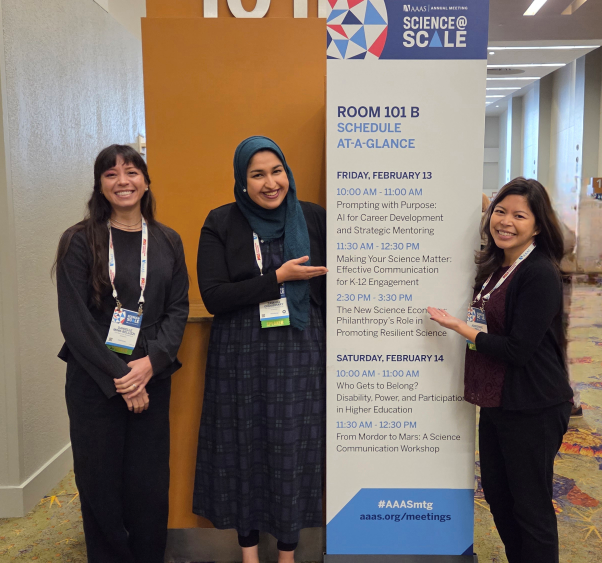
Three women pose in front of a sign.

Scientific literacy begins with curiosity. At the American Association for the Advancement of Science Annual Meeting, educators from The New York Academy of Sciences showed scientists how hands-on experiences can bring complex research to life for K–12 students.

Published March 13, 2026

By Zamara Choudhary, Adrienne Umali, and Danielle Mink-Bellizzi

Making science matter starts with making it matter to young people.

In Making Your Science Matter: Effective Communication for K–12 Engagement, we invited scientists to rethink how they share their work beyond the lab and university classroom. At a time of mounting misinformation, declining public trust, and uneven access to quality STEM education, the session underscored a simple but urgent truth: scientists themselves are powerful catalysts for building scientific literacy.

The Academy engages more than 16,000 K–12 students annually through mentorship and hands-on programming. Yet, nearly half of young people lack a clear understanding of what STEM careers look like. Furthermore, 79% of students entering Academy programs report never having met a scientist before. That first interaction between student and scientist can be transformative.

We began the workshop by grounding it in why scientist engagement with K-12 students is of utmost importance. We explained the “opportunity gap” in STEM is not about ability, but access. By equipping scientists to engage effectively with diverse K–12 audiences, we aim to multiply points of contact between young people and scientists of various backgrounds. Representation matters. When students see scientists who remind them of themselves, understanding scientific concepts and pursuing a career in STEM become more approachable and attainable.

Scientists also stand to benefit immensely from interacting with K-12 students. Communicating science to young audiences strengthens public engagement skills and provides concrete teaching experience—an increasingly important asset in a competitive and evolving job market. As more researchers consider roles in education, policy, and community engagement, the ability to translate complex ideas into accessible, meaningful experiences is no longer optional.

The Proven Impact of Hands-on Engagement

We then guided participants through an interactive activity that illustrated key principles necessary for turning complex ideas into discovery-driven experiences. Participants built simple circuits using a battery, an LED, and their own graphite drawing. When they saw the LED flicker to life through their drawing, the excitement in the room was palpable. Simple activities like these spark curiosity. Through trial and error, participants learned that failure is data. Failure, reframed as information, then becomes a powerful teaching tool.

The workshop culminated with a design challenge, where participants worked together in discipline-based groups to create a physical model explaining a scientific concept to a specific age category. They were asked to consider: what must a student understand before the model makes sense? How can I connect that idea to something they already know? Each group then presented their model to other groups, who took on the role of students in that specific age category. A final discussion prompted participants to reflect on what they learned throughout the workshop and how they might apply activity-based learning to cultivating curiosity of and knowledge of science with young people.

Data from the Academy’s programs reinforce what participants experienced firsthand: sustained, hands-on engagement with scientists increases students’ understanding of what scientists do and how science affects everyday life. By helping researchers design experiences that spark curiosity and belonging, workshops like this one remind us that effective science communication is not about simplifying facts or “dumbing down” information. It is about building bridges—across ages, disciplines, and communities—so that the next generation is ready to ask, and answer, the questions that matter most.

Interested in learning more about the Academy’s Education programs and applying these strategies to your own work? Learn more here.

Spring Speed Networking Game Night

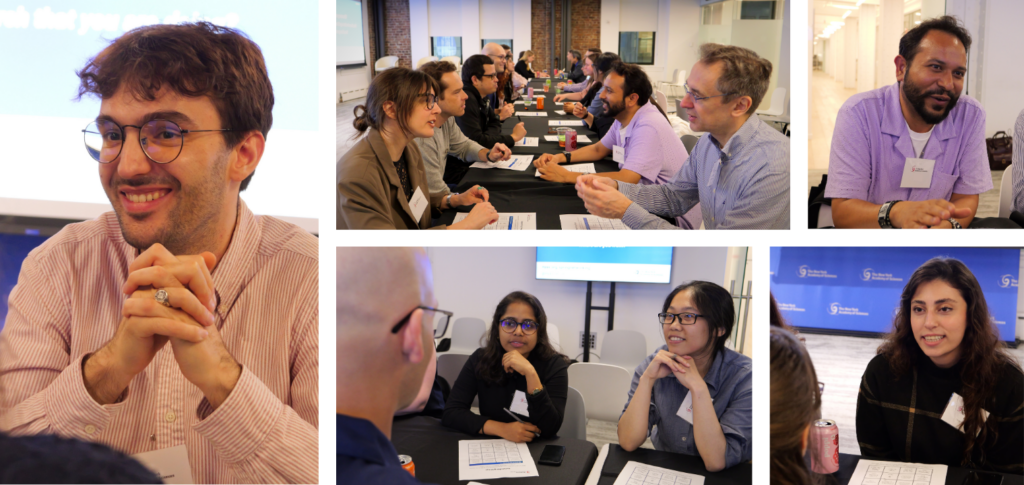
A collage of shots from a previous networking event.

May 14, 2026 | 6:00 PM – 8:00 PM ET | In-Person Event

115 Broadway, 8th Floor, New York, NY 10006

Join The New York Academy of Sciences for an evening of high-energy connection, friendly competition, and community building at our Spring Speed Networking Game Night!

Designed for STEM graduate students, postdocs, and early career researchers and professionals across academia, industry, and the nonprofit sector, this interactive event combines structured networking with fast-paced trivia and team challenges to spark meaningful connections. It offers a welcoming space to connect, compete, and celebrate innovation together in a vibrant STEM community.

All participants will be invited to submit their information to a participant directory, so the information can be centralized and made available to everyone.

Agenda

6:00 – 6:35 PM

Meet the Contestants: Speed Networking Elevator Pitch Round

Participants will fill out their “Contestant Card” with their name, field, affiliation, and career level. They will then pair up for a series of five-minute rounds, delivering a 60-second elevator pitch to each new connection. Each round will feature a creative prompt, challenging participants to adjust their pitch to incorporate their answer to the question.


6:35 – 7:30 PM

The Competition: Trivia and Team Challenges

Next, participants will form teams of 4–6 and compete in STEM-themed trivia rounds with interactive challenges. These games are intended to cultivate a welcoming and dynamic environment where connections can be formed through shared experiences. It is also an opportunity to showcase knowledge and skills outside of a traditional academic setting.


7:30 – 8:00 PM

Open Networking Reception

The evening will conclude with an open networking reception with refreshments. Participants will have the opportunity to reconnect with all the people they met as well as meet others.

Pricing

Member: Free

Nonmember: $30.00

Engaging with the Media: Essential Tools for Scientists

April 1, 2026 | 10:00 AM – 12:00 PM ET

115 Broadway, 8th Floor, New York, NY 10006

Professional collaboration and communication between scientists and journalists combats misinformation and promotes public access to scientific knowledge. This hands-on interactive workshop for scientists and researchers will introduce participants to the process of engaging in media interviews about scientific research from start to finish. 

Participants will learn:

  • How to promote their visibility to reporters 
  • How to decide whether to accept an interview 
  • What different types of reporters are seeking from scientist sources
  • How to choose language effectively, with particular focus on reducing the chances of being misunderstood or misquoted

Through presentations, discussions, and activities, participants will boost their knowledge and skills and become empowered to engage with the media strategically and confidently.

The workshop is designed and delivered by SciLine, which enhances the amount and quality of scientific evidence in news stories. SciLine is an affiliate of the American Association for the Advancement of Science, the world’s largest multidisciplinary scientific society. 

This training will be held in-person at the Academy’s space on 115 Broadway, 8th Floor, New York, NY 10006. Space is limited. Attendees are encouraged to register early.

Speakers

Headshot of Tori Espensen
Tori Espensen, PhD

Media Training Manager

Tori leads SciLine’s training programs, which help both scientists and journalists learn to work better together to bring accurate, engaging scientific evidence to general audiences through news stories. Her role includes developing curricula, facilitating workshops and webinars, and finding creative ways to make teaching science and communication skills dynamic and interactive. Tori’s PhD in biological psychopathology and postdoctoral fellowship in psychiatry, both from the University of Minnesota, allow her to connect with the scientists she trains and share her deep understanding of scientific skills and concepts with journalists.

Pricing

Member: Free

Nonmember: $50

Reflecting on 50 Years of Academy Membership

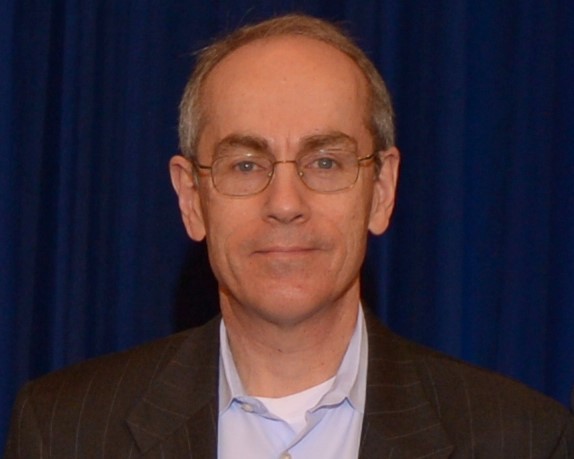
A man in suit and glasses poses for the camera.

Tom Golway first joined The New York Academy of Sciences as an undergraduate student. He remains active half a century later.

Published January 27, 2026

By Nick Fetty

Tom Golway

Tom Golway grew up in Staten Island “at a time when much of the area was still semi-rural.” He remembers exploring the untouched forests, observing the plants, trees, and other natural patterns around him. He and his family took cross-country, summer camping trips, including to national parks, which further piqued his interest in the outdoors.

Unbeknownst to him at the time, these early nature excursions would serve as the basis for what would become a successful career and a lifelong interest in science, technology, engineering, and mathematics (STEM). The local library became his “anchor” as he read books and other materials to better understand what he was observing during his nature excursions. Then came his school trip to New York’s renowned American Museum of Natural History (which served as the Academy’s home between 1904 and 1949).

“After that visit I used the money I earned delivering newspapers to become a member of the museum and I’ve remained one ever since,” says Golway. “That early exposure to discovery, exploration, and scientific wonder has shaped my path ever since.”

Golway first learned about the Academy through “a series of remarkable mentors” he had in high school. These mentors instilled in him a genuine curiosity across all areas of STEM. They encouraged him to develop depth in a specific field while staying open to the broader scientific landscape.

A Foundation for Success

After high school, Golway attended St. John’s University in Queens, where he majored in mathematics and computer science. Several of his professors were Academy members and they encouraged him to attend events outside of his own discipline. He heeded this advice and discovered that “the Academy offered a rare space where ideas flowed freely across fields.” Golway found that at the Academy, developing a broad scientific perspective wasn’t just encouraged, it was expected.

“The support and intellectual generosity I encountered from Academy members early in my career had a profound impact on me,” says Golway, who formally joined the Academy in 1976. “It shaped how I thought about interdisciplinary work and helped me recognize the responsibility, and opportunity, to contribute to the next generation of STEM professionals.”

Part of what attracted Golway to the field of mathematics is that it allowed him to understand how systems operate at a foundational level: how things work, how they break, and how they can be improved. He says this foundation has allowed him to fluidly move between fields, to see patterns others might miss, and to approach complex problems with both rigor and creativity.

Early in his career he joined the MIT Lincoln Laboratory where he worked on data‑flow computing at a time when the ideas behind parallelism and distributed systems were still emerging. He helped to maintain the lab’s node for ARPANET, a U.S. Department of Defense project that led to the creation of what we call the commercial Internet today. Later, he had the opportunity to contribute to some of the earliest cloud‑computing architectures and to help shape the first intelligent‑city frameworks. These projects blended technology, infrastructure, and human‑centered design long before those ideas became mainstream.

“But when I think about what I’m most proud of, it isn’t a specific technology or project. It’s the people. I’ve had the privilege of mentoring many talented individuals over the years and seeing them grow, professionally and personally, has been incredibly rewarding,” Golway says.

From Mentee to Mentor

Influenced by and appreciative of the great mentors he had, Golway takes his role as a mentor seriously. He encourages aspiring STEM professionals to cultivate breadth as intentionally as they cultivate depth. Important insights can be gleaned from fields outside of STEM. Golway feels that having a framework in areas like philosophy, ethics, and sociology, for example, enables scientists to expand their imagination and strengthen their judgement.

“I also encourage students to explore ideas like Areté, the pursuit of excellence in both character and craft. And Ikigai, the alignment of what you’re good at, what you love, what the world needs, and what sustains you. These concepts help anchor a career in purpose rather than just achievement,” Golway says.

As a vociferous reader himself, he encourages aspiring professionals to read “not only for professional development but for pleasure.” Having an understanding of fiction, history, poetry, and other elements of culture enables one to stretch their minds in ways that technical work alone cannot.

Lastly, he advises mentees to approach STEM as a “community endeavor.” He feels that as one grows throughout their career, they should find ways to give back. This might include mentoring, contributing to open‑science initiatives, or supporting others in their own learning journeys.

“I’ve found that the most meaningful mentoring happens when the person I’m working with takes an active role in the process. When both sides engage fully, the experience becomes collaborative, empowering, and often transformative.”

A Combination of Community, Rigor, and Intellectual Openness

Part of why Golway has remained active with the Academy for more than 50 years now is because it has “provided a genuine intellectual community.” He appreciates that interdisciplinary exchange happens naturally at the Academy. A place where “an informal conversation can shift the direction of your work.”

While Golway has attended dozens of Academy events, a few moments stand out. He recalled the first Academy event he attended when he was about 19 years old. He remembers asking what were “probably very naïve questions,” but was taken aback by the more veteran members who appreciated his curiosity and answered his questions with respect.

“That experience made it clear that the Academy was a place where curiosity was welcomed, regardless of age or background,” he says.

He also remembers a 1977 event focused on the then-novel concept of chaos theory. He had the chance to be in the room with pioneering scholars like Edward Lorenz, David Ruelle, Robert May, and James Yorke. His takeaways from the event would influence his work in generative dynamics.

In addition to the Academy, Golway is also a member of the International Science Reserve. Established in 2022 in partnership with the Academy, the ISR is a global network “working together to accelerate research to address complex global crises.” For Golway, the ISR represents the next step in what the Academy has always stood for: “bringing diverse scientific communities together to solve problems that no single field or organization can address alone.”

“What has kept me engaged is that the Academy consistently creates spaces—both in person and through its publications—where curiosity is rewarded, boundaries between fields dissolve, and new ways of thinking emerge,” says Golway. “That combination of community, rigor, and intellectual openness is rare. It’s why I’ve stayed connected for so long.”

A Man of Many Interests

Golway retains the same appreciation he had in nature as a boy. He says that being outside grounds him and reconnects him to “the intellectual curiosity” that first pulled him to science. He’s an avid reader of everything from fantasy and science fiction to biographies and classic novels. Similarly, his musical tastes range from classical to heavy metal, “depending on the day and the task.” Golway is equally as open-minded with his approach to trying different cuisines and finds that “food is one of the most immediate ways to experience another place or perspective.” His work has enabled him to travel to five continents, exploring everything from urban centers to rural backroads, which he said has given him a more optimistic view of the world.

He’s also a lifelong sports fan. Though he no longer plays (he was a member of the tennis and golf teams as an undergraduate at St. John’s and played extracurricular soccer and ice hockey) he enjoys being a spectator. He’s a lifelong Yankees fan as well as a supporter of the national soccer teams for Ireland and England. He says following sports gives him “a different kind of rhythm and focus” while allowing him to exercise the more cerebral parts of his brain.

A longtime researcher, Golway continues to write. While he admits he only occasionally publishes his work on his blog and on Good Reads, the writing process itself gives him the chance to “think, reflect, and explore new ideas.” As he reflects on his life and career, he often thinks about a personal mantra that he has for his approach to science and the world more broadly.

“Science looks to define observable truths building on current measurable knowledge. As knowledge is expanded, we find that not all ‘truths’ are immutable. The willingness to revise them is the essence of science.”

Not a member of this inclusive and impactful community? Join the Academy today.

The Night Science Train-the-Trainer Workshop: Learn How to Teach the Creative Scientific Process

April 24, 2026 | 8:30 AM – 6:00 PM ET

115 Broadway, 8th Floor, New York, NY 10006

Traditional descriptions of the scientific method explain how to test hypotheses but often leave unanswered how those hypotheses arise in the first place. Drawing on ideas articulated by François Jacob and further developed by Drs. Itai Yanai and Martin Lercher, “Night Science” refers to the creative, generative side of scientific inquiry, where new questions are formed, intuition is exercised, and novel associations are explored before formal hypotheses are defined. In contrast to “Day Science,” which emphasizes rigorous hypothesis testing and validation, Night Science highlights interdisciplinary thinking, ambiguity, and openness to unexpected connections as essential drivers of discovery.

The Night Science framework emerged from researchers’ lived experience of encountering conceptual dead ends and later recognizing that, like many experienced scientists, they had developed informal but powerful thinking tools to move forward. Night Science makes these essential creative practices visible, teachable, and shareable so that scientists can engage them intentionally from the start.

Join us to gain the tools needed to foster creative scientific thinking within your research community.

This training will be held in-person at the Academy’s space on 115 Broadway, 8th Floor, New York, NY 10006. Space is limited. Attendees are encouraged to register early.

Download the Agenda

About the Workshop

The Night Science Train-the-Trainer Workshop is a one-day, in-person program where scientists are trained to teach the Night Science Workshop on the Creative Scientific Process (CSP).

Workshop Focus and Activities

Participants in this program will:

  • Engage deeply with the Night Science framework and its intellectual foundations;
  • Explore and practice core thinking tools of the creative scientific process, including improvisational discussion, interdisciplinarity, the use of metaphor, question-generation techniques, and puzzle switching—strategically shifting between research questions to support creative breakthroughs;
  • Learn effective instructional strategies for leading reflection, group dialogue, and hands-on exercises;
  • Develop personalized narrative examples that model authentic engagement with scientific creativity;
  • Examine the role of artificial intelligence (AI) as a support for creative scientific thinking, including how AI can function as a collaborative partner – prompting new ideas, challenging assumptions, and enabling the transfer of conceptual approaches across distinct fields;
  • Receive guidance on adapting the workshop for different audiences, disciplines, and research environments.

What Participants Receive

Participants who complete the training will receive:

  • Full curricular materials for delivering the Night Science Workshop on the Creative Scientific Process;
  • A formal certificate of completion from the Night Science Institute;
  • A verifiable Credly digital badge from the Night Science Institute, acknowledging their expertise;
  • Ongoing support and connection through the Night Science Institute’s online community.

Institutions Where the Night Science Workshop Has Been Delivered

The Night Science Workshop and related courses have been delivered across institutions worldwide, with participants reporting strong value in applying these tools. Representative host institutions include EMBL, EMBO, Harvard Medical School, Karolinska Institutet, Memorial Sloan Kettering Cancer Center, the Pasteur Institute, Princeton University, and the U.S. National Institutes of Health. Together, these engagements demonstrate the workshop’s relevance across diverse research environments.

Speakers

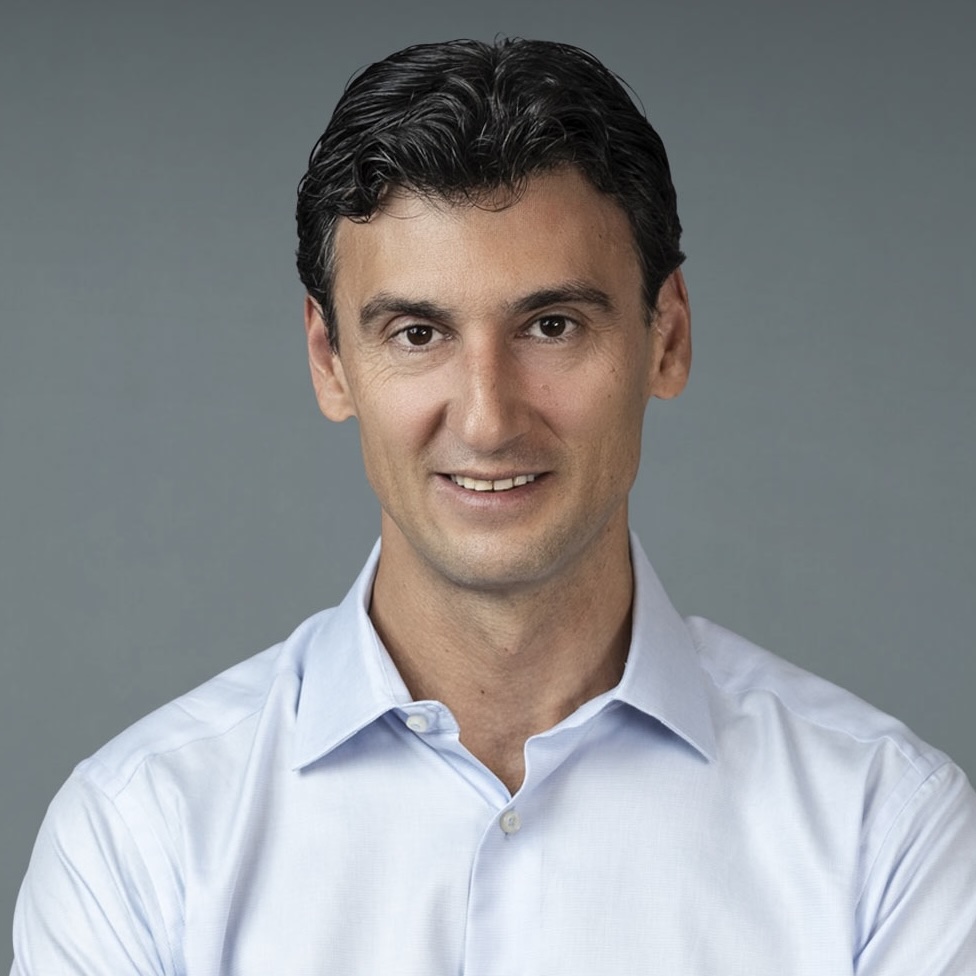
Itai Yanai, PhD

Co-Founder, The Night Science Institute
Scientific Director, Applied Bioinformatics Laboratories
Professor, New York University Grossman School of Medicine

Itai Yanai is a Professor at the New York University Grossman School of Medicine. He received his undergraduate degrees in Computer Engineering and the Philosophy of Science and his PhD in Bioinformatics from Boston University. After postdoctoral fellowships at Harvard University and the Weizmann Institute of Science, Yanai set up his independent lab at the Technion – Israel Institute of Technology, which became a pioneer of the single-cell RNA-Seq approach and its application to the study of evolution and development. The Yanai lab moved to NYU in 2016 and since then has been using computational and experimental approaches to make contributions to understanding cellular plasticity in the fields of tumor progression, cancer drug resistance, host-pathogen interactions and bacterial genome regulation. Together with Martin Lercher, Yanai has also co-authored a popular science book, entitled “The Society of Genes” and has co-founded the Night Science Institute which champions a cultural shift in science by training researchers to embrace the creative Night Science process as an essential complement to rigorous hypothesis testing.

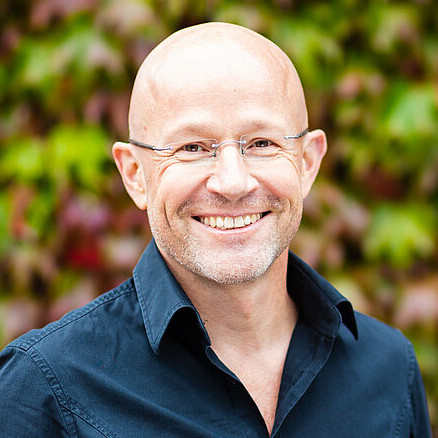
Martin Lercher, PhD

Co-Founder, The Night Science Institute
Professor, Heinrich Heine University Düsseldorf

Martin Lercher is a Professor at Heinrich Heine University Düsseldorf, Germany, with joint affiliations in the Institute for Computer Science and the Department of Biology. He received his undergraduate training in Physics from the University of Cologne and earned a PhD in Mathematical Physics from Cambridge University. After a successful stint in management, he conducted postdoctoral work in evolutionary genomics as a Royal Society University Research Fellow at the University of Bath, UK, and as a Heisenberg Fellow at the European Molecular Biology Laboratory (EMBL) in Heidelberg. In Düsseldorf, he established an interdisciplinary research program that develops mechanistic, physics-based models of biological systems, with a particular emphasis on thermodynamics and metabolism. His work spans bacterial cells and whole plants and combines mathematical modeling, genomics, and deep learning to understand how biological systems function and evolve in different environments. Lercher is also deeply engaged in scientific education, leading the development of a novel bachelor’s program in Quantitative Biology at his university. Together with Itai Yanai, he has co-authored the popular science book “The Society of Genes” and co-founded the Night Science Institute with the mission to transform the culture of science toward the appreciation and the explicit teaching of the creative part of the scientific process.

Sponsor

Research Theory logo

Break the Ice: Virtual Winter Networking

February 5, 2026 | 12:30 PM – 2:00 PM ET

Join The New York Academy of Sciences for an afternoon of virtual networking designed to spark meaningful conversations, foster professional connections, and deepen your knowledge across dynamic fields. Participants will have the opportunity to engage in themed breakout rooms, each guided by a domain expert, who will lead the discussion and encourage cross-disciplinary exchange.

The themed networking rooms are:

AI and Data Science

Dive into conversations about the applications of AI technology and emerging trends in the growing field.

Biotech and Entrepreneurship

Connect with innovators, founders, and biotech enthusiasts. Explore pathways from research to startup, funding strategies, and biotech product development.

Engineering and Robotics

Discuss mechanical, electrical, and software engineering topics—from automation and robotic systems to design challenges and career pathways in engineering fields.

Science Communication and Community Outreach

Share strategies for effectively fostering dialogue around scientific concepts with various audiences to support building trust in science.

Life Sciences and Research

Engage in conversations about building a career in scientific research, within and beyond academia.

All participants will return as a group at the end of the program to share insights, highlights, and key takeaways.

Pricing

Member: Free

Nonmember: $10

Making Your Science Matter: Effective Communication for K-12 Engagement

February 25, 2026 | 6:00 PM – 7:30 PM ET

115 Broadway, 8th Floor, New York, NY 10006

The strategic applications of scientific knowledge are indispensable for the discovery and development of meaningful solutions to society’s challenges. Given the current funding environment around STEM and waning public trust in science, scientists have an increasingly critical role to play in transforming how the next generation understands, engages with, and trusts science.

This interactive workshop will provide the fundamentals for exposing scientists to youth-centered science communication. Through discourse and two hands-on activities, participants will explore practical ways they can activate their research and engage with K-12 students inside and outside of the classroom. Participants can leverage the workshop to build acumen in science communication, gain a basic understanding of how to engage with youth of different ages, and include their experience in critical application materials, such as cover letters for industry positions and teaching statements for academic roles.

By the end of the program, participants will gain a better understanding of how to communicate scientific concepts and their research to K-12 audiences through developing activities that are meaningful and approachable, ultimately helping foster public engagement with science and with scientists.

This training will be held in-person at the Academy’s space on 115 Broadway, 8th Floor, New York, NY 10006. Space is limited. Attendees are encouraged to register early. Refreshments will be served.

Speakers

Adrienne Umali

Associate Director, Education,
The New York Academy of Sciences

Adrienne Umali is Associate Director of Education at The New York Academy of Sciences, where she leads K–12 enrichment programs designed to spark curiosity and inspire a lifelong love of science through mentorship and hands-on learning. She is passionate about making STEM accessible and engaging for all students, and brings experience as both a neurobiology researcher and a middle/high school science teacher in the Bronx. Adrienne holds a BS in Psychology from Brown University, a Master’s in Biomedical Science from the Icahn School of Medicine at Mount Sinai, and a Master’s in Education from CUNY Lehman College.

Danielle Mink-Bellizzi

Program Manager, Education,
The New York Academy of Sciences

Danielle Mink-Bellizzi is a Program Manager on the Education team at The New York Academy of Sciences, where she leads STEM mentorship programs that connect scientists with K–12 students through hands-on, inquiry-driven learning. Driven by a commitment to expanding access to meaningful STEM experiences, she oversees the Afterschool STEM Mentoring Program and Family Science Nights, fostering inclusive partnerships across NYC. Before joining the Academy, Danielle spent over a decade in informal education across museums and schools, developing art and science programming. She also brings experience in geospatial technologies and remote sensing, having led teacher workshops and served as a STEM specialist with the KIPP Charter network. She holds a BA with the School of the Art Institute of Chicago and a BS in Coastal Environmental Studies from Stony Brook University.

Zamara Choudhary

Program Manager, Education,
The New York Academy of Sciences

Zamara Choudhary oversees a portfolio of professional learning programming at The New York Academy of Sciences designed to accelerate career advancement for scientists, students, STEM professionals, educators, and adult learners. She leads the Leon Levy Scholarship in Neuroscience’s Mentorship Program, the Academy’s Internship Program, and alumni engagement for the Stevens Initiative. Passionate about democratizing knowledge across disciplines and continents, Zamara spent a decade in cultural institutions building expertise in international program design and management, teaching, fundraising, research, and public engagement. She holds a Master’s in Arts Administration from Columbia University and a Bachelor’s in History, English, and Arabic Studies from the CUNY Macaulay Honors College at Hunter College.

Pricing

Member: Free

Nonmember: $35

Creatively Navigating Your Job Search: A Workshop for STEM Postdocs

March 17, 2026 | 1:00 PM – 2:30 PM ET

Navigating the job market as a postdoc can be challenging given the many options (academia, government, industry, and non-profits) and unwritten rules for success. This workshop provides practical and evidence-based strategies to help postdocs navigate the job search process across diverse sectors and prepare compelling applications. Participants will learn how to effectively search for and analyze job ads, how to apply effective storytelling to tailor applications, approach interviews, and highlight relevant achievements for different career paths. By the end of the workshop, participants will leave with actionable tools and greater confidence in navigating the STEM job market.

Speaker

Headshot of Sonali Majumdar
Sonali Majumdar, PhD

Assistant Dean for Professional Development,
Princeton University

Sonali Majumdar, PhD is Assistant Dean for professional development in the Graduate School of Princeton University and founder of the Graduate Career Consortium’s International Community of Practice. A scientist by training, she builds innovative professional development programs and partnerships to help empower PhDs to solve complex socio-technical problems through dynamic careers. She developed two innovative and field-leading PhD-level professional development programs, PhD Plus at University of Virginia and GradFUTURES at Princeton University. Her book, Thriving as an International Scientist, is the first career guide specifically tailored to the unique needs of international STEM PhDs.

Pricing

Member: Free

Nonmember: $20