Mentoring Reignites Chemist’s Love of Teaching

A chalkboard with mathematical formulas.

Spreading the love of science and promoting the importance of curiosity are just two of the reasons Dessy Natalia is passionate about teaching high school chemistry.

Published March 27, 2019

By Marie Gentile, Robert Birchard, and Mandy Carr

Dessy Natalia has lived in a lot of places. Originally from Paradise Island in Bali, Dessy received her undergraduate degree in Indonesia, her masters degree in Belgium, and her chemistry PhD in Germany. After moving to the U.S. following her PhD studies, Dr. Natalia was looking for a way to get out of the lab and volunteer. That’s when she learned about the Academy’s Afterschool STEM Mentoring Program. Though she didn’t have formal teaching experience at that point, she had served as a research assistant during her studies and had also served as a mentor, loving every minute of it.

 Serving as an afterschool STEM mentor for the Academy helped reignite Dr. Natalia’s love for teaching, so much so that she now teaches chemistry to high school students at Urban Action Academy in Brooklyn.

Why did you choose to teach chemistry?

I’ve loved chemistry since high school. Chemistry is a fascinating subject with a good balance between theory and application, as well as conceptual and math skills. Once I started conducting experiments, I loved it even more.

What was it like being a mentor in the Afterschool STEM Mentoring Program?

I was mentoring a class of fourth and fifth graders in forensic science at Public School 19 in New York City and it was an amazing experience. I was paired with another mentor, a researcher from Mount Sinai, and we had the students identifying patterns left from shoes at a faux crime scene, as well as looking at hair structures using microscopes. The kids loved the activities and were very engaged.

How did the program inspire you to become a teacher?

The program reminded me that I love to teach. Seeing those curious eyes and how eager they were to investigate while we did science activities inspired me. They make me believe that I can be a good teacher and they make me want to be a better teacher every day.

What do you love about teaching?

I love spreading the love of science, the importance of curiosity, and the scientific method. I love to see the awe in the students’ eyes when they learn something new.

Learn more about mentoring opportunities available through the Academy.

Promoting International Collaboration and Mentorship

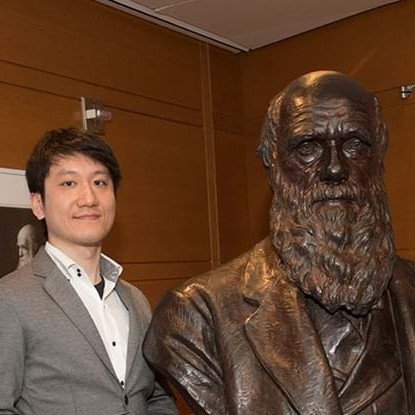
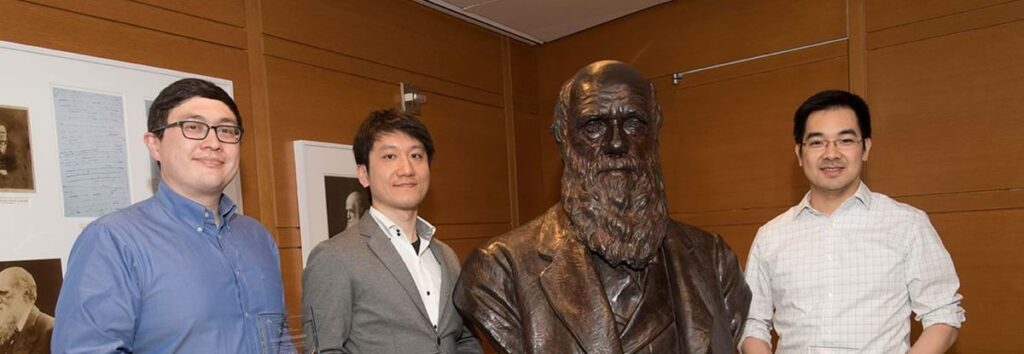
A man poses with a bronze bust of Charles Darwin.

Participants in The New York Academy of Sciences’ Interstellar Initiative discuss their work in the program, the power of effective mentors, and the need for cross-discipline collaboration.

Published February 28, 2019

By Marie Gentile, Mandy Carr, and Richard Birchard

Mentors take part in the Academy tradition of posing next to the bronze bust of Charles Darwin.

A radiation oncologist, an immunologist, and a mechanical engineer walk into a room to consult with a brain tumor specialist. This may sound like the inauspicious start to a bad joke, but at the Interstellar Initiative—a mentoring workshop series presented by the Academy and The Japan Agency for Medical Research and Development—the payoff is a potential treatment for pancreatic cancer.

We recently sat down with a team of Interstellar participants to discuss how the Initiative’s emphasis on international collaboration and mentorship is helping to pave the way for innovative research. We caught up with them just as they were finalizing a grant proposal, developed over the course of two workshops with the guidance of their team mentor Noriyuki Kasahara, PhD.

What is your grant proposal’s focus?

Michael Pacold, MD, PhD, New York University: We’re studying pancreatic cancer—a nasty cancer with a five-year survival rate less than five percent. We’re interested in defining metabolic features of the pancreatic cancer environment that render these tumors insensitive to multiple therapies, including immune therapy. During preliminary experiments, we found that our initial proposal wouldn’t have worked.

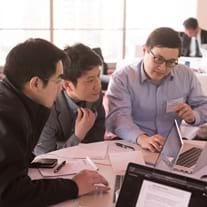
From left to right Edmond Young, Taisuke Kondo, and Michael Pacold work on their grant presentation.

Taisuke Kondo, PhD, Keio University: The therapy we were proposing was potentially very dangerous because of adverse effects for normal lung tissues.

MP: With this knowledge, we’re now focused on what metabolites are in the microenvironment of pancreatic cancer.

Edmond Young, PhD, University of Toronto: This new approach makes for a more focused grant. We’re answering a basic question that could have major impact across the board in basic science. This Initiative has been very helpful. The first workshop was a meet and greet, shaking hands and getting to know one another. Six months later we have met again to parse out further details and receive mentored feedback.

Why should senior scientists mentor their younger colleagues?

Noriyuki Kasahara, MD, PhD, University of California, San Francisco: There’s an earnest desire to ensure young, promising junior faculty do not make the same mistakes that we made, and that they benefit from our experiences. Also an experienced scientist can explain how to think about grant proposals in the way that critical reviewers think about them.

Why is mentorship for early career investigators important?

EY: Because it’s easy to make mistakes (as an early career investigator). Mistakes happen often, and sometimes they take a long time to fix. Having a mentor helps to avoid traps. PhD students have been trained to do good bench science, and they know how to design an experiment, but writing a grant is a new game.

MP: In science and medicine, the successful generally function at a level above where they actually are. Good graduate students act like postdocs, good postdocs act like primary investigators. Good junior faculty act like senior faculty and so forth. Mentors help you get there, if only by imitation.

Why is international collaboration in the sciences important?

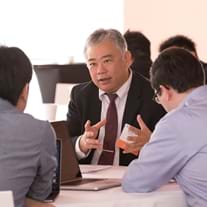
Noriyuki Kasahara consults with the team on their proposal.

EY: When you’re doing science at a university surrounded by familiar people, you get siloed. Scientists need to step outside of their local environment once in a while. Hearing other people’s thoughts, getting their input, and having a global eye towards problems is extremely helpful.

MP: The beauty of science is that it should be true and reproducible. You should be able to do the same experiment in New York as you can in Tokyo, as you can in Toronto.

NK: I think that’s one of the wonderful aspects of science. Also, it’s a universal kind of language. Physical laws are universal and it doesn’t matter what your nation of origin is, or your ethnicity. They apply equally to everybody.

TK: This program is a great opportunity for young investigators to participate in international collaborations.

What advice do you have for young researchers?

MP: In science you have to be comfortable with the realization that you will be wrong. Often. Don’t be afraid of being wrong, look at what the data is telling you and adjust accordingly.

EY: Question everything, because a skeptical scientist is always a good scientist.

TK: Enjoy both success and failure. Positive and negative data are both useful.

NY: Being in science can be very immersive, very consuming. You think about your hypotheses and your experiments all the time. But don’t always let it consume you. Live your life and see your family.

Overcoming Doubts with Help from Role Models

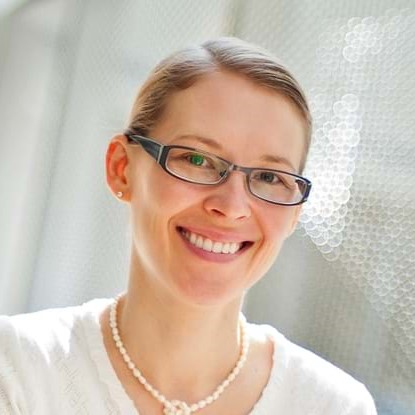
A woman smiles for the camera.

It was a life-changing physics teacher and her own ability to overcome doubt that played a significant role in the nanotechnology adventure of Alexandra Boltasseva.

Published February 1, 2019

By Alexandra Boltasseva, PhD

Alexandra Boltasseva, PhD

I was born in Kanash, a small town on the Southern route of the famous Trans-Siberian Railway in modern day Russia. Being from a small town in the middle of nowhere, one of the first questions I’m often asked is how I got into science. I have often repeated the same answer: “I have always been fascinated by technology and devices.” But the truth is that I have always been fascinated by a much simpler thing – the world around me.

All my life I was blessed to have the most devoted and inspirational people around me. As every child, I loved to come to my parents’ work. Both engineers, my parents worked for railway-related organizations. My mom has a degree in applied mathematics and was on the team who installed the very first computer at the local train repair plant. My dad was the head of a small radio communications laboratory that controlled train communication lines between two of the nearest cities – Nizhnyi Novgorod and Kazan. At his lab, I loved playing with colorful resistors and wondered what they actually did while flipping through Rudolf Svoren’ book Electronics: Step by Step.

A Life-changing Teacher

In middle school, my life changed because of my physics teacher Valery V. Gorbenko. His true love for physics and devotion to his students opened up a world beyond my small-town school. I joined his after-school physics classes, and soon after participated and won the physics Olympics in our republic. Being a girl meant you were outnumbered at physics competitions, but I never asked myself whether I should do it, I just joined in. I wanted to make my teacher proud.

It was never a question whether anyone in my family should get a college degree. Everyone knew that doors open when you get a degree. While I was interested in particle physics in high school, soon after I started at the Moscow Institute of Physics and Technology, I became interested in applied physics. I wanted to do something that would make a difference now instead of decades into the future. I had amazing advisors during my bachelor and masters projects at the Lebedev Physical Institute of the Russian Academy of Sciences who introduced me to an emerging area of quantum-well lasers, and who taught me how to manage my time.

My nanotechnology adventures started at the Technical University of Denmark where I did my PhD studies working in one of the very first Scandinavian Cleanrooms learning about nanofabrication. Focusing on how to bring light down to nanoscale, I was very fortunate to have great role models such as Ursula Keller and my university advisor, Sergey Bozhevolnyi (with whom I still collaborate very actively today).

Motivated by Doubt

I don’t think I ever felt “out of place” in the male-dominated college or research communities. For me, it was not about being female, it was about being insecure (though I admit these two things are connected). During the earlier stages of my career, I had difficulty convincing myself that I was suited for academic work. Sometimes I wanted to quit science and open a flower shop.

Once during my postdoctoral work, I felt particularly blue and seriously doubted whether I should stay in academia. In that moment, I spoke with my former PhD advisor who is a very well-known, established professor. I told him I wasn’t good enough at what I do and that I was filled with doubts. His reply surprised me: “Same here – I still have doubts about whether I am doing what I am good at.” He added that only ignorant people would ever think that they are great at something. In that moment, I realized having doubts and accepting that you don’t know everything is what motivates people to learn and explore. I am still learning to believe in myself, but the biggest reward is to share what I do know and feel passionate about.


About the Author

2018 Blavatnik National Awards Finalist, Alexandra Boltasseva, PhD, is a professor of Electrical and Computer Engineering at Purdue University working in the areas of optics and nanotechnology. She is also a mom of three and lives with her family in West Lafayette, Indiana.

Five Ways Mentoring Can Benefit Your Own Career

A post-it note with the text "Mentoring for Success"

It’s no secret that encouragement from a mentor can be critical to success, particularly for early-career STEM professionals. But what’s in it for the mentor?

Published January 28, 2019

By Rosanna Volchok

We posed this question to a few of the scientists participating in the Academy’s Member-to-Member Mentoring program, and here’s what they had to say:

1) Mentoring Helps You Become a More Effective Leader

“My mentoring experience helped me develop my own leadership skills which I use to advise, coach, and develop my current staff.”
– Paul-André Genest, PhD, Senior Publishing Editor at Wiley and Adjunct Professor at Stanford University

2) Think Your Experiences Are Ordinary? Think Again

“Participating in the Member-to-Member Mentoring program taught me that my experiences, no matter how ordinary they may seem to me, can be helpful to young people coming up in my profession.”
– Katie Slade, VMD, Emergency Doctor at the Veterinary Specialty Center of Delaware

3) Mentoring Hones Your Transferable Skill-set

“I am happy that I could contribute to my mentee’s goals as an academician. Her expertise was somewhat familiar to me, but not completely. However, we managed to work together on general principles and I feel we succeeded. This program has further taught me how to accommodate others’ ways of thinking and working.”
– Mirjana Maletic-Savatic, MD, PhD, Associate Professor, Department of Pediatrics at Baylor College of Medicine

4) Mentoring Gets You Out of Your Comfort Zone (and That’s a Good Thing)

“I learned how to assist somebody beyond academia and give advice on future work perspectives. This gives you the chance to get out of your comfort zone and use your expertise in other areas. The main skill I improved was listening. Listening and giving advice beyond instructing is key.”
– Santiago Sole Domenech, PhD, Research Associate, Maxfield Lab and Leon Levy Research Fellow, Feil Family Brain and Mind Research Institute, both at Weill Cornell Medicine

5) The Rewards of a Mentoring Partnership Flow Both Ways

“I learned that I don’t have to be in the exact same discipline or area of science to be helpful to the mentee and I also learned that mentees have a lot to offer the mentor—it is a two way street.”
– Gwendolyn Quinn, Vice Chair of Research and Professor (OB-GYN) at NYU School of Medicine

Also read: The Important Role of Mentors and Networking

How to Succeed during Informational Interviews

A woman reviews a man's resume during a job interview.

No matter what your goal, informational interviews can help you achieve it. These tips can help you to shine during your next informational interview

Published January 18, 2019

By Alexis Clements

Image courtesy of wutzkoh via stock.adobe.com.

Are you about to graduate but not sure what exactly you want to do? Are you already working but thinking about pivoting to something new? Looking to build your network? No matter what your goal, informational interviews can help you achieve it.

Unlike a traditional job interview, informational interviews are informal meetings between you and someone working in a field or at a company where you might want to work. It’s a great way to explore your career options in order to determine where you might best fit.

Here are four things to keep in mind when seeking out informational interviews:

1. Choosing the Right Person

Start by tapping into your own network. Who are you connected with on LinkedIn, and who are they connected with? Look for people who work for companies you admire or who hold positions that sound interesting to you. You want to try to meet with people who have diverse perspectives and who are at different levels of seniority in order to get a more complete view of the field.

2. Timing is Everything

Generally speaking, you can request an informational interview at any time but try to avoid asking for one when you’re looking for a job. These meetings are meant to be exploratory rather than for a specific position, that way there’s less pressure on you and the person with whom you’re speaking.

3. Making the Connection

Ideally, you want to make connections in person first, such as introducing yourself at an event. Another great way to connect is through someone you both know. This makes it more likely the person will give you 30 minutes of their time. When reaching out to someone you have no direct connections with, start by researching them, their company, and their current role. When you email someone: make sure to use the correct name and title; include one or two sentences about yourself; and be specific about why you want to talk. Here’s an example: “I saw the recent news about your company’s new focus on bioengineering. I would love to hear more about this and the role you’ve been playing in this change. Can we meet for coffee sometime soon?”

4. Come Prepared

Be sure to go to interviews with a list of specific questions. Asking someone to tell you about their career path won’t cut it—you can find that by looking at their LinkedIn profile. You want to show the person that you have some familiarity with what they and their company do, so you can get a better understanding of the particulars. At the end of your conversation, ask if there’s anything you can do for them in return. And always send a thank you note, either via email or snail mail (or both), within a week.

Also read: Five Tips to be a More Effective Mentor

Immunology, Atomic Structures, and the Origin of Life

Three award winning scientists pose for the camera.

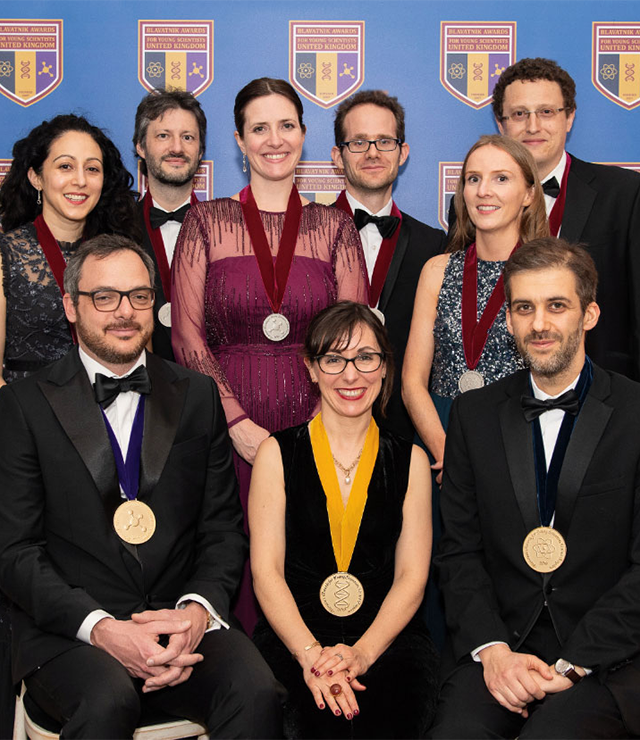
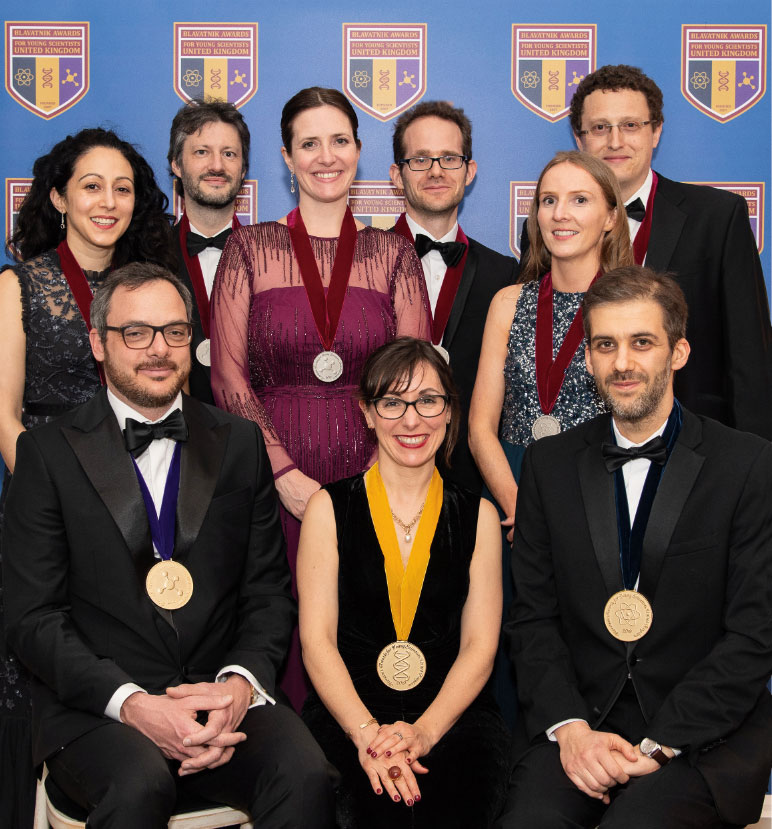
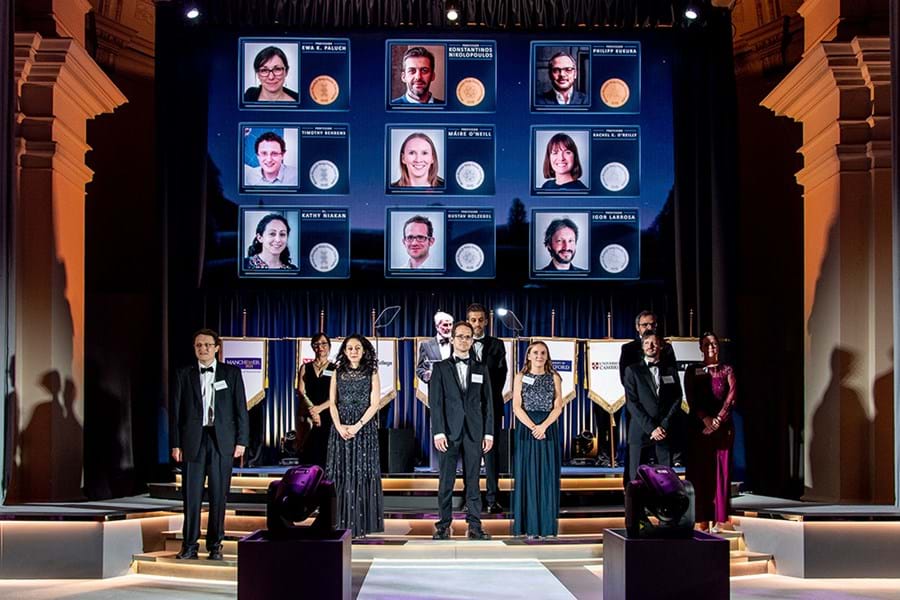
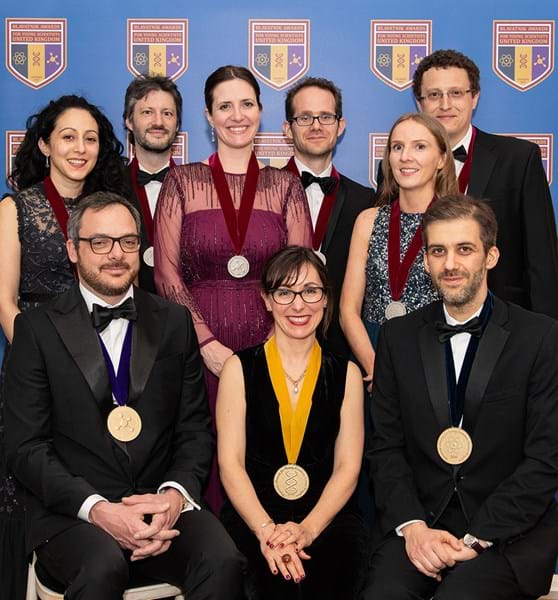
Meet the inspiring young 2018 Blavatnik Award laureates being recognized for their work in the areas of Life Sciences, Chemistry and Physical Sciences & Engineering.

Published October 1, 2018

By Anni Griswold

Life Sciences Laureate: Janelle Ayres, PhD, The Salk Institution for Biological Studies

An Unexpected Truce in the War on Pathogens

Much of immunology’s past has focused on defense: Generations of grad students have untangled host strategies for detecting and eliminating biologic threats.

Legions of labs have designed antibiotics to stock the host’s arsenal. But the field may have an altogether different future, says Janelle Ayres, PhD, the Helen McLoraine Developmental Chair of the NOMIS Center for Immunobiology and Microbial Pathogenesis at the Salk Institute.

“The traditional assumption was that you just had to be able to kill the pathogen — that’s all it took to survive an infection,” Ayres says. “That didn’t make sense to me because of the physiological damage that can happen. During an infection, the host immune response is doing far more damage than the microbe.”

More than a decade ago, while other graduate students traced signaling pathways of the innate immune system, Ayres — then a doctoral student in David Schneider’s laboratory at Stanford — pursued an idea gleaned from plant biology literature: What if humans, like plants, express genes that boost fitness and allow them to coexist with pathogens until they can safely ride out an infection?

Cooperation and Survival Over Death and Destruction

In the years since, Ayres has uncovered an accomplice to the traditional immune system. The “cooperative defense” system, as she calls it, is less focused on death and destruction and more on cooperation and survival.

“Often, a patient’s immune system is fully capable of killing an infection, but the patient dies from the pathology before they’re able to kill the infection,” Ayres says.

Or, in other cases, the pathogen produces toxic compounds or disrupts physiological functions. By engaging the patient’s cooperative defense system, the patient can remain healthy enough for the immune system to come in and clear the infection. Her discovery has inspired a new branch of immunology and earned Ayres the 2018 Blavatnik National Award for Young Scientists.

In a groundbreaking paper published on September 20th 2018 in Cell, Ayres described the system in action. Mice infected with the diarrheal pathogen Citrobacter, a close relative of the pathogenic Escherichia coli strains, remain symptom-free by consuming iron-supplemented chow for two weeks.

“We can promote co-operative defenses by giving a short course of dietary iron, which induces an acute state of insulin resistance,” she says. “This reduces the amount of glucose absorbed from the gut and suppresses expression of the pathogen’s virulence program.”

The mice resumed their normal diet after treatment and are still alive a year later.

“They’re perfectly healthy,” Ayres says.

Therapies that Engage Cooperative Defenses

The microbe remains in the mouse gut, but no longer causes symptoms — even when that microbe is isolated and injected into naïve mice.

“We’re not only able to treat the infection, but we also turn the microbe into a commensal and we drive the selection for strains that lose their virulence genes,” she says.

Therapies that engage cooperative defenses could help humans gain an advantage in the war on drug-resistant microbes.

“We are essentially in a pre-antibiotic era, meaning we’re running out of antibiotics that used to be our last resort. Many are no longer effective,” says Ayres. “We’re basically in as bad shape now as we were before we even developed antibiotics.”

While the oft-touted solution is to develop newer, stronger antibiotics, Ayres champions a more farsighted approach.

“We need to develop novel classes of antibiotics, but we also need to acknowledge that by focusing on methods that kill microbes, we’re driving the global crisis of antimicrobial resistance. We can’t solely think about treating infections from this antagonistic perspective,” she says.

Therapies that engage the body’s cooperative defenses will drive human survival rather than microbial demise. As such, those therapies will likely be “evolution-proof,” meaning they won’t further the problem of drug resistance. Ayres’ findings suggest the war against pathogens can’t be won with defense alone. “And so,” she says, “we’re taking a completely different perspective.”

Chemistry Laureate: Neal K. Devaraj, PhD, The University of California, San Diego

When Molecules Become Life

The smallest unit of life — the cell — has fascinated and bewildered scientists for ages.

The prospect of producing a synthetic cell from scratch is particularly tantalizing, given the practical applications for diagnosing and treating disease. But to achieve that feat, scientists must address the simplest, most profound questions.

“It’s almost philosophical: What is life? What is the chemistry from which life can emerge? Quite literally, when does chemistry become biology?” says Neal K. Devaraj, PhD, a professor of chemistry and biochemistry at the University of California, San Diego, and a winner of the 2018 Blavatnik National Award for Young Scientists.

“I’m constantly reminded that life can come about from nothing. But if you really dive into it, it’s a black box. We really have no idea how this occurred,” he says. “What’s truly exciting, from a scientist’s perspective, is the unknown.”

Though scientists haven’t yet produced a living cell from synthetic materials, Devaraj and others have come close. Chemistry-minded teams tend to tackle this goal from the bottom up, recreating reactions that spawned the first cell.

The Interface Between Chemistry and Biology

Biology-minded teams work from the top down, stripping cells to their bare essentials in hopes of revealing the minimum requirements for life. Devaraj’s team takes a hybrid approach, examining the interface between chemistry and biology.

“We’re not so concerned about the origin of life,” he says. “We’re more concerned about understanding how one creates materials that mimic cellular form and function, in a lab, using anything at our disposal.”

His team uses chemical tools to parse biological questions, like the significance of a cell’s lipid coating. After dissecting the fatty compounds’ function, his lab introduced synthetic cells that can reproduce in perpetuity once encased in lipid shells and fed a proper diet. This has revolutionized strategies for diagnosing and treating lipid-related disorders.

“These cells are far from being as sophisticated and complex as modern cells. They don’t contain DNA. They don’t undergo Darwinian evolution. But looking back at how cells may have evolved billions of years ago, who knows? Maybe the first cells did start off simply, like this,” he says.

A Longstanding Curiosity About the Origins of Life

Devaraj’s longstanding curiosity about the origins of life burgeoned during his undergrad years at MIT, where he pursued a double major in chemistry and biology. During his doctoral studies at Stanford, he was tasked with writing a mock proposal for a faculty research position.

“I was imagining what I could work on that would remain really exciting and difficult for decades,” he recalls. “And I was inspired by this idea of trying to mimic life.”

One of his doctoral advisors, James Collman, specialized in biomimetic chemistry: creating compounds that mimic enzyme function. “If you think about it, the natural progression of biomimetic science is to mimic life itself, to mimic cells,” he says. “I was inspired to take it a bit further by exploring the minimal chemistry from which life can emerge.”

Though his research is gratifying, Devaraj says his collaborations with students and postdocs are even more so.

“What really gets me up every morning are the conversations about new data, new ways of thinking. It’s a very collaborative effort,” he says, adding that early on, he staffed his lab with post docs and students that came from diverse backgrounds. “Some of my first postdocs had a thorough training in synthetic organic chemistry, much more so than I had. By working together, we were able to achieve something that neither of us on our own could have achieved.”

Physical Sciences & Engineering Laureate: Sergei V. Kalinin, PhD, Oak Ridge National Laboratory

Sculpting Materials from the Finest Matter

Sergei V. Kalinin is an architect of the most peculiar sort. His blueprints are atomic structures; his pencil an electron beam.

Whereas other architects build cathedrals brick by brick, Kalinin aims to build nanomaterials, atom by atom. His tailored materials could form the groundwork for tomorrow’s microchips, transistors, quantum computers and medical devices. If successful, Kalinin’s advances promise to revolutionize human health, space flight and the computer-brain interface.

“Science rarely develops along a straight trajectory,” says Kalinin, director of the Institute for Functional Imaging of Materials at the Oak Ridge National Laboratory.

Contributions in Microscopy

His contributions to scanning transmission electron microscopy and scanning probe microscopy, recognized with the 2018 Blavatnik National Award for Young Scientists, are no exception. Like many innovations, Kalinin’s craft came about serendipitously. His tools for building atomic-scale structures stem from a flaw in electron microscopy, a powerful method for observing a material’s crystal structure.

Scientists have long known that the microscope’s electron beam can inadvertently jostle atoms out of position. In a 2015 paper in the journal Small, Kalinin and colleagues fashioned this flaw into a precise, powerful tool for sculpting atomic matter in 3-D.

“The assumption was that if you see atoms, you will understand them. But that’s not enough,” he says. “You can image atoms, but the question is what can you learn from it? Eventually you need to read the blueprints of nature to understand how an atomic configuration achieves a certain functionality. Then you can learn how to make your own blueprints, and use electron beams to build your own configurations.”

The Beginning of Nanotechnology

His interest in the field burgeoned three decades ago, when the scientific literature buzzed with papers describing scanning tunneling microscopy. In 1990, the renowned physicist Don Eigler used a scanning tunneling microscope to form individual atoms of xenon into the letters I-B-M.

“That was essentially the beginning of nanotechnology,” Kalinin recalls. “In a sense, the fields of nanotechnology and quantum computing are predicated on the ability to put the atoms where we want them and to characterize the properties of these structures. But even more, we need to control and shape the matter’s electronic properties and find ways to combine these materials with existing semiconductor technologies.”

To achieve those goals, Kalinin’s lab uses smart approaches — artificial intelligence, big data and machine learning — to understand how atoms can be positioned in a way that achieves a desired function. Working with Stephen Jesse, an expert in the real-time big data behind scanning probe and electron microcopy, Andy Lupini, an original inventor of aberration correctors in STEM, and Rama Vasudevan and Maxim Ziatdinov, experts in deep learning applications and physics extraction from atomically resolved data, they aim to design nanoscale and mesoscale materials for use in energy storage, information technology, medicine and other applications.

“If we talk about grand ideas like exploring the solar system, we need to make devices and machines that are light, versatile and can interact with surrounding materials of any form and action,” he says. “To achieve that, you need to move from imaging to understanding to atomic-level control.”

Overcoming Imposter Syndrome to Empower Women in STEM

A woman transfers liquid into a test tube inside a science lab.

As a guest lecturer, Dr. Huba Zoghbi, recipient of the 2018 Ross Prize in Molecular Medicine observed “imposter syndrome” more often in women, compared to men. Here’s how we can change that.

Published October 1, 2018

By Kari Fischer, PhD

Dr. Huda Zoghbi, with Hsiao-Tuan Chao, MD, PhD, previously a graduate student in the lab who recently completed a child Neurology residency and was named winner of the NIH DP5 award.

Huda Zoghbi, MD, is a highly decorated scientist, with multiple awards garnered for her work unveiling the genetic mutations underlying two rare neurodegenerative diseases: Rett syndrome and spinocerebellar ataxia.

After receiving the sixth annual Ross Prize in Molecular Medicine (2018), she confessed that she could not appreciate her success until well into her 50s. This is far too late for a woman in science, when many leave research careers before they even begin.

While traveling as a guest lecturer, meeting hundreds of young researchers, Dr. Zoghbi observed this same distrust in one’s own accomplishments, otherwise known as “imposter syndrome,” in women, but not in men.

“Many women doubted if they could be good enough; that they could move on to the next step of their careers.”

Fixing the “Leaky Pipeline”

These women are manifestations of the “leaky pipeline” — in 2015, only 35 percent of tenured biology professors were women, though they represented over half of the PhD candidates. Their career misgivings are one among many challenges women face, including an overlap in timing between postdoctoral fellowships, seeking tenure, and starting a family; potential psychiatric disorders and depression (one-third of PhDs are at risk); and pervasive gender discrimination. An understandably difficult path.

“I see the drive, the intellect, the value they bring to science, and it troubles me when I see them going on a job interview, not walking out of the lab with the same confidence as a man,” Dr. Zoghbi said in describing her own trainees.

Dr. Zoghbi’s approach for countering self-doubt is simple, and easy to apply while other barriers await institutional change. She uses the best tool a scientist has: evidence.

“Whenever a woman in my lab would tell me, ‘I just don’t know if I can make it,’ I would pull out my CV and show them where I was at their stage, and highlight how much more impressive they are.” She share shares her experience to effectively tell them “If I can do it you can do it” … “I think that simple act helped me keep many women in science.”

Balancing a STEM Career with Motherhood

She models her actions on the women who supported her own career. While crediting her scientific mentors for her success, Dr. Zoghbi also recognizes the importance of her “life mentors,” and the little moments that were impactful.

Upon returning to her neuropathology rotation, with a two-month-old daughter at home, she experienced the associated anxiety of a working mother who might be missing out.

While seated at a teaching microscope with Dr. Dawna Armstrong, former Professor of Pathology at Baylor, she remembered, “We were not even looking at each other, and she could sense my tension … We’re looking at brain section after brain section, and in the midst of that she said, ‘You know they sleep all the time at this age, you’re not missing much’.”

Just one reassuring sentence brought her instant relief, though this style of mentoring may not come naturally for everyone.

“I don’t expect every mentor to be super nurturing, and that’s okay…give your trainees an opportunity to find other mentors to help them in areas where you don’t feel qualified,” Dr. Zoghbi said, cautioning that in the same way small gestures can bolster a career, a few words can also derail one, even if that was not the intention.

“Women have shared with me, ‘I dropped out of science because my mentor said ‘X’, and that made me believe I can’t do it,’” she said. “What you say can have a lasting impact on your trainees.”

The Lasting Impact of the Ross Prize

On a larger scale, scientific prizes like the Ross Prize are another way to extend a message of affirmation to women.

“I get embarrassed by the attention,” Dr. Zoghbi admits. “[But] so many young girls emailed me, and told me that after watching the videos of [an acceptance] speech, now they want to be a scientist and they believe they can do it.”

The approbation and visibility female scientists receive from these awards galvanizes the next generation. With more mentors like Dr. Zoghbi, their biggest challenge will not be themselves, but the science itself — which is as it should be.

The Ross Prize in Molecular Medicine was established in conjunction with the Feinstein Institute for Medical Research and Molecular Medicine.


Sign up today to be a mentor so you can inspire tomorrow’s changemakers!

And read more about the Ross Prize and past awardees:

The Complicated Ecosystem of the Final Frontier

An illustration of a satellite over planet Earth.

It won’t be long before space becomes home to an assortment of commercial, industrial and scientific outposts.

Published October 1, 2018

By Charles Cooper

Jeff Bezos

Space may indeed be the final frontier, but it’s also becoming increasingly crowded.

Not today. And perhaps not tomorrow. But it won’t be long before space becomes home to an assortment of commercial, industrial and scientific outposts. In fact, about 900 satellites already circle in low Earth orbit (LEO), most notably the International Space Station (ISS) and the Iridium network of communication satellites. They’re about to have company.

A startup made headlines earlier this year with plans to build a luxury hotel by 2022 that would host 12-day stays in space.  Russia’s space agency is reportedly working on a project to add private suites to the ISS, complete with big windows, exercise equipment and, of course, Wi-Fi. Elsewhere, shorter space tourism ventures are being worked on by the likes of Jeff Bezos’ Blue Origin and Virgin Galactic’s suborbital SpaceShip.

But space tourism is just a sideshow to the main event: A future in which humans are able to live safely beyond the Earth for extended, even indefinite, periods of time — and do it sustainably. However, before any of those futuristic scenarios materialize, governments and organizations back on Earth need to come to an agreement on rules to manage the emergence of what will be a complicated ecosystem shared by public and private entities.

Setting Up a Space Traffic Control System

William Ailor

Prior to World War II, the air traffic control system was established to coordinate and track flights. Could something similar work for LEO? In theory, yes, but with a few tweaks.

“Each country has air traffic control responsibilities over their own territory, [but] space is different,” said Dr. William Ailor, the principal engineer for the Center for Orbital and Reentry Debris Studies at The Aerospace Corporation. “For things that are in orbit, there is no way to control that; a satellite goes over all of our countries.”

Any system would need to track a constellation of constantly moving satellites and platforms, requiring feeding continual streams of data to operators to move their spacecraft when needed. It would also require acceptance at the international level, which raises its own set of challenges.

What form would a space traffic management system take and who would pay for it? And how to ensure it remains in operation regardless of what’s happening on Earth.

“If there’s a war going on, the satellites are still up there and so you still need to protect them,” said Ailor, adding that despite the challenges, there’s general acceptance of the need to provide space traffic management and space situational services.

“It’s a dynamic situation but I think it’s agreed that space is a common domain and that we all have to work together to bring together the best data possible to be able to provide warnings. There are large constellations of satellites being proposed for LEO. I think the operators of these satellites know they will need assistance … [so] it’s important to pursue this.”

Thinking about a Post-ISS Future

Since Apollo 17’s final moon mission in 1972, NASA hasn’t pursued human exploration beyond LEO.

The agency’s focus subsequently shifted to building and operating the Space Shuttle and the ISS for testing and research. It’s been a successful tenure and the ISS, which services a number of participating partner nations, has demonstrated the viability of putting installations into LEO for extended stretches. The next step would be the commercialization of LEO with platform services as well as a fleet of smaller, space stations and other installations to pursue various commercial endeavors.

For example, Elon Musk’s SpaceX is considering the deployment of a 4,000 satellite constellation to offer global Internet service worldwide. Companies like SpaceX, United Launch Alliance — a partnership between Boeing and Lockheed Martin — and others, have all sprung up to provide cargo and commercial transportation services for the space station. Stratolaunch, the space company of billionaire Microsoft co-founder Paul Allen, is also getting into the market, with plans to develop medium-lift rockets and a reusable space cargo plane that would carry cargo to and from Earth with a follow-on variant that could carry people.

Christian Maender

“At the end of the day, the government wants to be a minority customer of those services,” says Christian Maender, who serves as the Director of In-Space Manufacturing and Research at Axiom Space.

The Development of a Space Economy

Maender envisions the development of a space economy in which government no longer takes the lead, but instead buys a myriad of space services, just as it would for terrestrial purposes.

Relieved of the need to provide the infrastructure, space-faring nations like the U.S. will be looking for a place to fly its astronauts to train in LEO in advance of missions to the moon and Mars. They’ll also have an interest in continuing some baseline level of microgravity research to answer questions relevant to exploration and basic science investigation.

“As long as the government’s needs are being met by a platform, they are happy to see the private sector design a space station that addresses their needs as well as the market demand from the commercial sector,” says Maender.

Perhaps no issue is more crucial to the future settlement of LEO than safety. Unfortunately, more than 20,000 metric tons of debris has been sent into orbit over the last five decades. While some of this flotsam has returned to Earth, most of it remains in orbit and is likely to remain so, possibly for millions of years.

If LEO does eventually host tens of thousands of people, companies specializing in removing debris from orbit will have incentive to help clean it up. Until then, however, any space platforms or habitations will need to be equipped with collision avoidance systems to reduce accident risk.

Space Manufacturing Becomes a Reality

Scientists envision a future in which certain manufacturing processes wind up getting transferred from the Earth, a move that would both save money and make it easier to send other craft to explore deep space.

Indeed, LEO may also offer manufacturing opportunities to build superior products. Microgravity offers a unique environment that provides an almost near-perfect vacuum and excellent conditions for the manufacture of many products. A fiber optic that’s uniformly pure when made in microgravity would drastically reduce the number of repeaters needed to run a signal. Indeed, the signal would extend without attenuation for hundreds of kilometers longer than you would find on Earth. New alloys could be combined to produce better single crystal turbine blades or other types of products — the result being stronger and lighter parts for aircraft.

Nowadays, spacecraft are built to survive fairly violent liftoffs from their launch pads on Earth. But if you can build a spacecraft in LEO, the process would require much less material since you’re sending less mass into orbit. Deep space missions won’t require rockets to be weighed down with extra shielding to protect crews against radiation. Or, as Maender puts it, “you can essentially build butterfly wings instead of building buttresses for launch.”

What’s more, there’s the possibility of a space gift for Mother Earth. Looking into the future — perhaps in another century or two — scientists say it’s possible to imagine scenarios in which some of the most environmentally damaging manufacturing processes get moved off the Earth. At that point, many pollutants currently produced on Earth either will be processed differently or left in the vacuum of space.

Also read: Conservation on the Final Frontier


About the Author

Charles Cooper is a Silicon-valley based technology writer and former Executive Editor of CNET.

A Mentor’s Advice: Focus on Your Mentee’s Goals

Two women smile for the camera.

Even as a busy graduate student, Jacqualyn Schulman finds time to mentor. Not only does she often learn from her mentees but in many ways they also inspire her.

Published September 10, 2018

By Alexis Clements

When Jacqualyn Schulman was in high school, she was interested in science but had no idea of the career possibilities out there in the STEM fields. That’s one of the reasons that today, as a pharmacology graduate student at SUNY Upstate Medical University, she devotes a significant portion of her time to mentoring high school students through the Academy’s various mentoring programs. “I love encouraging the younger generation to get involved in STEM fields and teaching them about all the possibilities,” she says.

Jacqualyn’s latest mentoring experience was through United Technologies STEM U, where Jacqualyn was matched with Jodie Guthrie, 17, from Saltcoats, Scotland. The STEM U mentoring program matches students ages 13 to 18 years old from around the globe with STEM professionals. The students complete course work on 21st century skills, including communications, leadership and college readiness.

One reason Jacqualyn has been such a great mentor to many young people is that she makes sure to touch on what’s currently going on in their lives and what their personal goals are.

“My mentor helped and guided me by discussing university and career ideas and what skills I should develop and grow to get to where I want to be,” Jodie says. “These discussions helped me decide what course to do at university—I start in September!”

Learning from the Students

As Jodie completed the college readiness course, she and Jacqualyn met regularly through Skype to discuss what topics Jodie was most interested in at school and what majors might align best with those interests. They also talked about the pros and cons of various universities Jodie was considering.

The great news? Jodie got into Strathclyde University in Glasgow, and plans to study Forensic and Analytical Chemistry.

“I’ve learned and advanced things like study skills, determination, finance organization and confidence, which are all crucial for university life,” Jodie said of her time working with Jacqualyn.

As for Jacqualyn, she couldn’t be prouder of Jodie. And she noted how much she learns each time she mentors a student.

Though she’s still a graduate student herself, Jacqualyn is a veteran mentor who has advice for anyone thinking about mentoring: “There is no better day to start. You have so much to offer a young person—it doesn’t matter where you are in your career, you have experience to share.”

She also noted that all of the mentors in the program are a community. “If your mentee has a question and you’re unsure of the best answer, you can reach out to your fellow mentors to get their opinions.”

“My mentees inspire me and I know they’re going to make amazing changes for this world!”

Also read: Empowerment Enables More Women to Succeed in STEM

10 Things To Do at Every Scientific Conference

A conference attendee raises their hand to ask the presenter a question.

Published August 23, 2018

By Marie Gentile, Mandy Carr, and Richard Birchard

If you’re a STEM professional, or an aspiring one, then scientific conferences are going to be an important part of your career, whether you work in academia, industry, or government. But figuring out how to get the most out of these events isn’t always obvious, particularly for those new to the experience. So we polled some of our Members and staff for their recommendations on the top ten things everyone, at any stage of their career, should do at a scientific conference.

1. Submit a Poster or Talk Abstract

There’s no better way to get your work out into the world and get instant feedback from your peers and colleagues than to present your work live at a conference. In fact, that’s the whole reason scientific conferences exist. You never know where those next crucial insights are going to come from, but you’ll significantly increase your chances of gaining them by sharing your work.

2. Dress Professionally

Everyone in the room at a conference is a potential colleague, business partner, or employer. And if you’re meeting that person for the first time, you’re making an impression that’s going to stick. Make sure it’s a good impression. Plus, how you dress can have a big impact on your self-esteem and confidence. If you dress in a way that makes you look like you’re at the top of your game, you’re more likely to feel that way too.

3. Bring Business Cards

Even in the age of digital devices, being able to quickly give someone all your relevant contact info on a single card helps ensure not only that they can easily get in touch with you, but also that they’ll remember you at the end of the conference. Even if you don’t have an official business card yet, you can make your own at home or order them through inexpensive online printing companies.

4. Download and Use the Event App

These days, more and more conference organizers are going digital when it comes to program booklets and conference materials by using smartphone apps for their events (the Academy uses an app for all of our events). But another benefit of event apps is the networking opportunities embedded within them. For instance, you can often view a list of attendees and request their contact info directly in event apps.

5. Arrive When Registration Opens

Many conferences host breakfast receptions during morning registration periods. This is an under-appreciated time to network. It’s also a great time to get a sense of who else is at the conference and who you might want to connect with during the day. An added bonus if you’re at the conference on your own is that you might meet people to compare notes with throughout the conference.

6. Sit Near the Front

Not only will you have the best line of sight to the speakers and their slides, you’ll also be closer to the speaker at the end of the talk if it’s someone you’d really like to chat with.

7. Take Notes

Conferences can sometimes feel a bit daunting when there are lots of different ideas being discussed. A great way to stay focused is by jotting down notes during the talks you attend. After the conference they can also help jog your memory, when you want to remember some of the most important things that were said.

8. Ask Questions

Many times it can feel like everyone in the room is nodding along in complete agreement through an entire talk, but often that’s more perception than reality. Science today is inherently complex and there’s a lot that attendees don’t know, or nuances that speakers don’t explore. Make a point of asking at least a couple of questions at every conference you attend. And when you ask your question, start by stating your name, saying where you work or attend school, and then ask your question. This gives people an easy way to follow up with you if they’re interested in the question you asked.

9. Post to Social Media

Not only does posting to social help the friends and colleagues following you gain insights from the conference you’re attending, it also gives you a chance to build connections. Posting, liking, and sharing on social at a conference is a great way to network, often giving you access to people you might not otherwise meet. Just make sure to use the conference hashtag so people can find your posts easily.

10. Attend the Networking Reception

Time and time again, we hear from our Members that they’ve met business partners or research collaborators during our conferences, and it’s inevitably because they stuck around to have those face-to-face conversations at the end of the day. Struggling with where to start the conversation? Did someone in the crowd ask a provocative question that interested you? Follow up there. Or strike up a conversation with those next to you in line for food or drinks. Where did they travel from? What brought them to the conference? Once you break the ice, things get a lot easier, and you’ll be surprised how much less intimidating these events can be once you’ve done it a few times.

Now that you’re ready to get the most out of your next scientific conference, check out our list of upcoming events, so you can put these suggestions to use.