“This initiative encourages kids from diverse backgrounds to become involved in science and promotes diversity in STEM fields in an effort to impact positive change in the world.”
Published June 9, 2017
By Marie Gentile and Robert Birchard
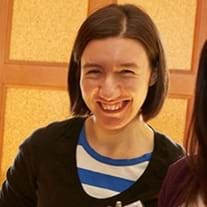
Alexandra Bausch
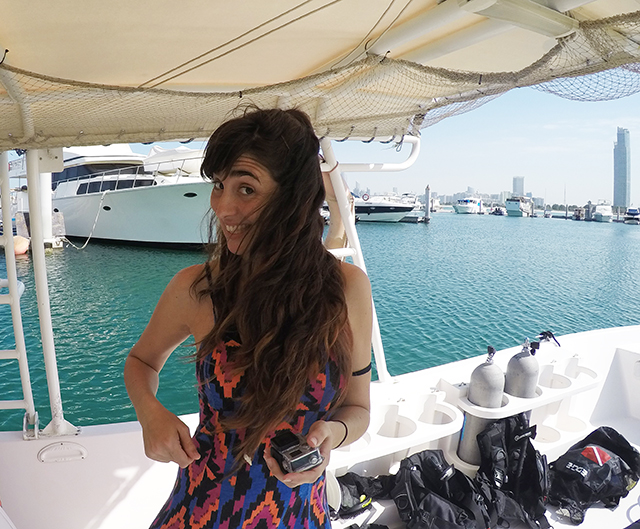
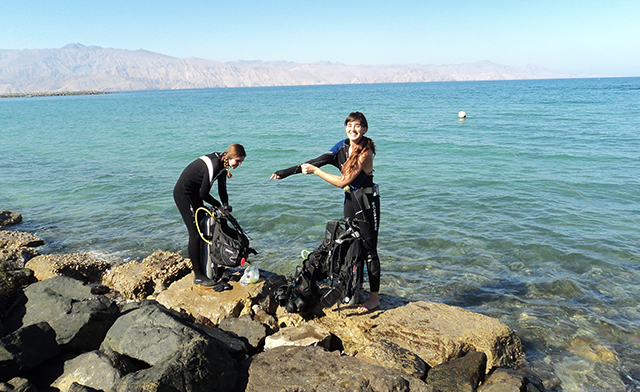
Alexandra “Ali” Bausch grew up in Bethlehem, Pennsylvania. She earned her bachelor’s degree in chemistry with a concentration in biochemistry from Villanova University. As an undergraduate student, she conducted laboratory research in analytical chemistry, performed field research at the Barrow Arctic Science Consortium in Alaska, and participated in and led numerous community service projects.
Following graduation, she was awarded a Fulbright Student Fellowship in Environmental Chemistry at the University of Stavanger in Norway. While there, she earned a Norwegian Marshall Fund Scholarship and went on to complete her master’s degree in Environmental Engineering with a focus in water science and technology. Before she began her PhD, she conducted research at both NASA Goddard Institute for Space Studies and Lamont-Doherty Earth Observatory in New York.
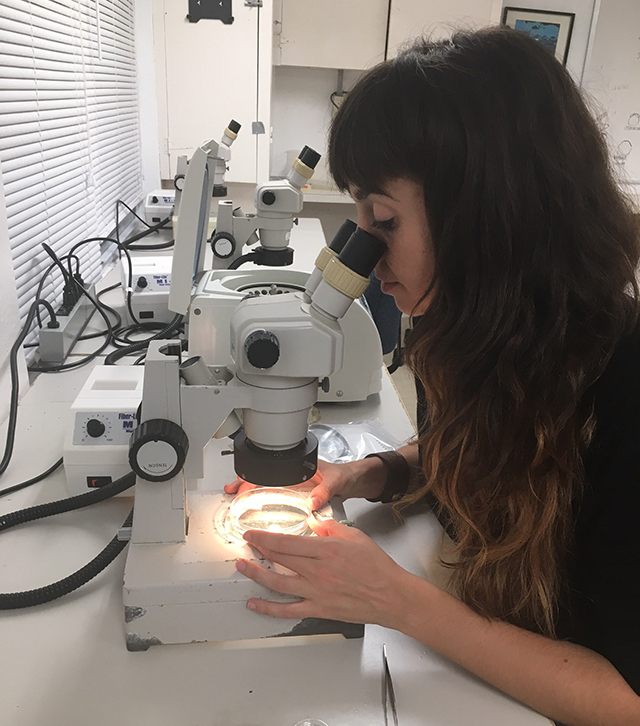
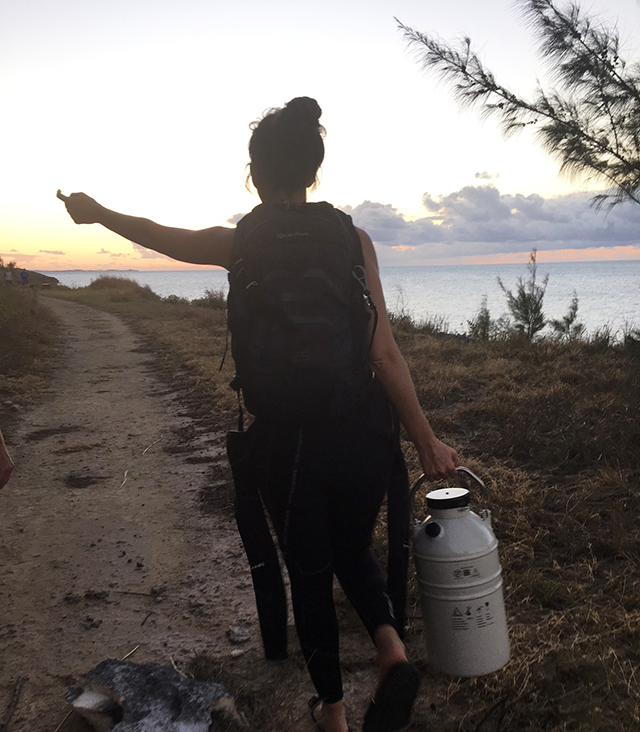
Ali is currently a third-year Ph.D. student in the Department of Earth and Environmental Sciences at Columbia University, conducting research at the interface of biological and chemical oceanography. Her graduate research project, funded by a NASA Earth and Space Science Fellowship, addresses the impacts of climate change on the base of the marine food web in the Arabian Sea ecosystem.
Why and how are STEM education and the Global STEM Alliance important to you?
STEM education initiatives help shape the next generation of scientists. The Global STEM Alliance not only engages students in the excitement of hands-on science experiments, it motivates and encourages girls and boys from diverse backgrounds to pursue lifelong involvement in STEM. This involvement is vital to the STEM community because diversity enriches science and helps deepen our understanding of the world.
What are/were your goals for participation in the Global STEM Alliance?
I would like to devote my life to research and to the education of future generations of scientists. Throughout my participation in the Global STEM Alliance, I hope to spread my passion for science, to teach young girls and boys to love science as much as I do. I hope that this valuable mentoring and teaching opportunity will help make me a better instructor. And I hope to encourage students in my local community to grow up to make our planet a little bit better.
What is the most important benefit you feel the Global STEM Alliance provides?
The most important benefit of the Global STEM Alliance is the encouragement and support it provides to budding science enthusiasts. This initiative encourages kids from diverse backgrounds to become involved in science and promotes diversity in STEM fields in an effort to impact positive change in the world.
“By connecting young people with successful STEM professionals, the Global STEM Alliance provides a network of support for students who might otherwise feel isolated or disconnected from their discipline.”
Published June 9, 2017
By Marie Gentile and Robert Birchard
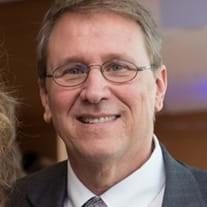
Giovanna Collu, PhD
Giovanna Collu, PhD, is a researcher, communicator, and mentor with a drive to encourage the next generation of scientists to overcome challenges they face in STEM fields. For the last 12 years, Collu has been investigating how cells communicate with each other to produce fully formed adult organisms.
Throughout her career, Collu has engaged with several outreach groups to promote equitable access to the benefits of STEM education. At the University of Manchester, she worked with the Manchester Access Programme to support underrepresented minority students transitioning to college, and with a Wellcome Trust-funded initiative to bring local underserved students into a university research environment to discover science firsthand and participate in fun, science-based activities. Collu also taught on the Manchester Leadership Programme, a course that framed leadership issues in a social and ethical context for the next generation of leaders.
Here in the US, she has worked with The New York Academy of Sciences (the Academy) to engage middle-school pupils with forensic science in an afterschool program in Harlem, in association with Cold Spring Harbor Laboratory’s DNA Learning Center. Collu continues to promote women in STEM through mentoring summer students and has participated in the NeXXt Scholars Program since 2013.
Why and how are STEM education and the Global STEM Alliance important to you?
Initiatives such as the Afterschool Mentoring and NeXXt Scholars Programs promote equity in STEM education, which in turn creates much-needed diversity in STEM professions. These programs are an opportunity not only to reach individual young scientists but also to make a positive impact in making society more equitable as a whole. The Academy’s STEM education programs are a vital tool if we are to level the playing field for underserved communities. It is an honor to support young people from backgrounds that are currently underrepresented in STEM fields to pursue their passion and curiosity.
What are/were your goals for participation in the Global STEM Alliance?
My goals were to inspire individual students and to gain an understanding of the challenges faced by this generation of STEM students. Having benefited from mentoring opportunities myself, I am keen to join the community of researchers encouraging younger generations to follow their curiosity and enter STEM fields.
What is the most important benefit you feel the Global STEM Alliance provides?
The Alliance gives young people from diverse backgrounds the access to mentoring that they would not otherwise have. Mentoring and exposure to positive role models are vital for realizing potential and raising aspirations in young people. By connecting young people with successful STEM professionals, the Global STEM Alliance provides a network of support for students who might otherwise feel isolated or disconnected from their discipline. The Alliance guides young people as they are finding their own path into STEM fields and reveals a whole realm of career possibilities.
Postdoctoral Fellow, Developmental and Regenerative Biology, Icahn School of Medicine at Mount Sinai
Academy Affiliation: NeXXt Scholars Program, Afterschool STEM Mentoring Program
Honors: Recipient of Biotechnology and Biological Sciences Research Council PhD studentship, Medical Research Council Masters Studentship, and King’s College bursaries for undergraduate research
Degrees: PhD and MRes in Developmental Biology, University of Manchester, UK; MA and BA (Hons.) in Natural Sciences, University of Cambridge, UK
“I think the key thing here is that these kids are in a class by themselves. World class. Not just smart, but motivated, eager, and most important invested.“
Published June 9, 2017
By Marie Gentile and Robert Birchard
Ron Fritz, PhD
Ron Fritz, PhD, works for PepsiCo and also serves as a mentor for the Junior Academy at The New York Academy of Sciences. He talks about his experience mentoring and the encouraging growth he sees from his students.
What are your students working on?
Food Loss and Waste: Transportation and Logistics. Specifically, they came up with an ingenious use of evaporative cooling; designing, building, and testing a non-electric ‘fridge’ (based on ‘zeer pot’ technology) made of recycled materials.
What surprised you about your students?
I knew they would be smart and clever, but what surprised me was their incredible focus and tenacity in going after solutions to design problems encountered. They didn’t back off or quit when a challenge emerged but rather relished the opportunity to overcome it.
What surprised you about your mentoring experience?
The student’s ‘relentless’ engagement made it great fun for me and I think for the team as a whole. There’s nothing better than being part of a team working like failure is not an option. It was exhilarating because of the awesome work ethic the students employed and the leadership that evolved among them. To be honest, just prior to the kickoff of the challenge I was considering dropping out due to increased business demands on my schedule. I am so glad I didn’t. Even though those demands did not diminish, these kids’ efforts were inspiring and kept me going.
What kind of growth did you see in your students?
With some of the students it was leadership, in others “followership” – with all it was ‘hey, we’ve got a great team, great ideas and great talents that can make a difference!’ That attitude energized everyone, including myself. Perhaps the correct word is ‘devoted’ to finishing the team’s mission. I think the type of camaraderie experienced was a first for some of the students. Also, the level of talent brought together. As a youth sports coach over the years, this was like realizing you have something really special going on with a particular collection of kids.
Anything else you’d like to share?
Yes. I think the key thing here is that these kids are in a class by themselves. World class. Not just smart, but motivated, eager, and most important invested. This makes mentoring in this venue a unique experience, truly providing an opportunity to accomplish something of significance with ‘no holds barred’, ‘blue sky’ thinkers.
Over the past nine months, Erin Barta has been diligently working to implement the Academy’s Scientist-in-Residence Program (SiR) in Syracuse, New York. While this is a first for Barta after graduating in 2014 from Clark University’s Master’s Program in International Development and Social Change, it is also a first for the Academy. Syracuse’s SiR Program is the first expansion of the program outside of New York City.
The guiding principle behind SiR is that students who are exposed to science through inquiry-based learning techniques are more likely to succeed in—and be engaged with—science. SiR matches a scientist with a public school teacher and the teacher’s students, and advises them on developing a science project that follows the scientific method. The scientist will act as a mentor to both teacher and students and share their insights on the scientific method, project design and presentation of results.
A Crash Course in Program Management
Barta’s work is primarily concerned with building and supporting these budding partnerships. She collaborates with the scientists and staff at the SUNY College of Environmental Science & Forestry, and with the dedicated teachers and administrators in the Syracuse public school system, to ensure that students are learning the techniques that will allow them to thrive in the STEM fields.
“Adapting the SiR program to Syracuse has been a crash course in program management. I have a front row seat to what it means to build a program from the ground up,” said Barta. “As the academic year draws to a close so will this year’s program. After celebrating our participants’ efforts and successes, the upcoming months will be spent exploring ways to make SiR even more rewarding for students.”
Paying it Forward
Erin Barta
Barta believes in SiR because she understands the importance of a mentor. As a college student she was inspired by faculty who were generous with their time and feedback. According to Barta, a good mentor can help a person, “gain a better sense of self, and radically reframe notions of our own capabilities. In my case, I was emboldened to pursue scholarships, internships and graduate school opportunities that I previously thought were out of my reach.”
According to Barta, mentorship provides a model for, “existing and engaging” in the world. A good mentor can provide an example of how to navigate all the competing factors between personal goals and obligations, versus those of the professional career. “Mentorship makes us privy to the experience of wisdom of those who have gone before us, which reconfigures our vision of what is possible.”
Barta and SiR are a well-made match. SiR seeks to encourage high school students to pursue their scientific interests in an academically rigorous manner, while providing their teachers with a resource to help their students succeed.
When she completes her VISTA service in September, Barta will continue to build her experience in project management and development in the nonprofit sector in Syracuse.
Learn more about the Academy’s Scientist-in-Residence program.
Blavatnik Awardees advance the breakthroughs in science and technology that will define how our world will look tomorrow.
Chris Chang presents at the Blavatnik Science Symposium
Published May 1, 2017
By Victoria Cleave, PhD
The scientific equivalent of magic can happen when you put outstanding researchers together in a room. At the 2016 Blavatnik Science Symposium, a neuroscientist met a physicist, and they realized that the tool the neuroscientist needed to further his work was being developed within the physicist’s lab. Both were Blavatnik honorees, and they might never have met had it not been for the Blavatnik Awards for Young Scientists.
The Blavatnik Science Symposium is just one aspect of this distinctive awards program, established with the vision of Len Blavatnik, founder and Chairman of Access Industries and head of the Blavatnik Family Foundation, now celebrating its tenth anniversary.
The New York Academy of Sciences has administered the Awards since their inception, when they focused on the New York, New Jersey and Connecticut tri-state area. The basic tenets of the awards are simple: find brilliant researchers age 42 or under in chemistry, physical sciences and engineering, and life sciences, and award them financial support and exposure for their work.
“The Future of Scientific Thought”
Len Blavatnik explained the significance of that vision, “Young scientists represent the future of scientific thought. By honoring these young individuals and their achievements we are helping to promote the breakthroughs in science and technology that will define how our world will look in 20, 50, 100 years.”
In 2014, the Foundation supported the expansion from a regional to a national program, recognizing academic researchers across the United States every year with awards of $250,000, one of the largest unrestricted prizes ever created for researchers under the age of 42.
After seeing the success of the current Awards the Foundation was keen to support even more young innovators, so the program will expand with two new sets of Awards in the United Kingdom and Israel in early 2017. The Academy is delighted to be partnering with the Israel Academy of Sciences and Humanities to manage the Awards in Israel. Nominations for both new Awards will open in May 2017 and the first Blavatnik UK and Israel laureates will be honored in early 2018.
Amit Singer and Deborah Silver listen to a presentation during the 2016 Blavatnik Science Symposium
“World-Changing Discoveries”
“We know that this kind of recognition is particularly important because of the focus on scientists at the crucial juncture of their career when they are transitioning from trainee to independent researcher,” said Ellis Rubinstein, President and Chief Executive Officer at The New York Academy of Sciences. “Such recognition not only rewards past successes, it directly enables continued research—the kind of research that leads to world-changing discoveries.”
During the Awards’ first decade, more than 2,000 scientists and engineers were nominated from more than 200 institutions, with prizes totaling more than $4 million.
Michal Lipson, 2010 Blavatnik Awards Faculty winner and Given Foundation Professor at Cornell University, explained: “There are a few awards for young scientists, but almost all of them are based on proposals that you submit, and not on the actual work that you do as a young scientist. The Blavatnik Awards program is true recognition of the work of young scientists; it is unique in that sense. There is no equivalent.”
But it is the honorees themselves that are the most remarkable part of the Blavatnik Awards for Young Scientists. Chosen for both their achievements to date and the potential of what’s yet to come in their careers, the Awards aim to recognize truly outstanding scientists and engineers forging creative paths in research.
Trailblazing Science
Yueh Lynn Loo enjoying a networking break at the 2016 Blavatnik Science Symposium
Beyond accolades, these brilliant young men and women carry out their trailblazing science across the breadth of the Awards categories. From deciphering how memories are formed and stored in the brain, to targeting genetic mutations that drive the growth of aggressive cancers. They have probed the complex physics of dark matter pulling galaxies apart, and designed nano-devices that can purify water or detect disease in low-resource settings.
The downstream impact of supporting such exceptional honorees is clear. As Anthony Guiseppi-Elie, Professor and Division Director at Texas A&M University, who serves on the jury for the Awards, said, “We are, in fact, just touching the lives of a few, but those few have the capacity to influence whole new vistas of enquiry, and so the ripple effect is quite substantial.”
Indeed, some immediate effects of the awards have arisen thanks to the generosity of two of the inaugural Blavatnik National Awards Laureates, who chose to donate part of their prize winnings to support even younger scientists: Adam Cohen and Marin Soljačić have established prizes of their own for talented students at Hunter College and high-schoolers in Croatia, respectively.
An Environment for Ideas and Collaborations
And of course, the Blavatnik Science Symposium has proven to be a fertile environment for ideas and collaborations, with almost 200 scientists and engineers in the Blavatnik community, and many nationalities represented.
“There are too few opportunities for scientists to actually come together and share the really big ideas. One of the really great things that we get out of the annual Blavatnik Symposium is that you have this community of young scientists that come together in many different fields,” said David Charbonneau, 2016 Blavatnik National Laureate and Professor of Astronomy at Harvard University.
“The best scientific research is collaborative and we want our Blavatnik Scholars to be able to tap into the best talent around the world,” said Len Blavatnik. “I look forward to the next ten years of finding and supporting exceptional young researchers and helping to promote transformative scientific discoveries.
Despite being actively discoursed from pursuing a PhD, Myrna M. Weissman went against her era’s conventions and forged a successful career at Yale University.
Published March 1, 2017
By Marie Gentile and Robert Birchard
Harkness Tower from Old Campus, Yale University, New Haven, CT. Image courtesy of Carol M. Highsmith Archive/Library of Congress via Wikimedia Commons.
“I tell them research can be very exciting and they should do it if they have a passion for it. It’s not going to be easy, but we try not to discourage them.” These words for young scientists are from Myrna M. Weissman, PhD. An innovative epidemiologist and researcher, Dr. Weissman’s advice to the next generation of scientists differs greatly from the advice she received at the start of her own career.
Upon graduating from college with honors, Weissman was discouraged from getting a PhD and told to, “go to social work school or into teaching.” That, and, of course, “get married.” Dr. Weissman went on to earn her Master’s in social work. By the late 1960s, Dr. Weissman’s husband accepted a position at Yale University and the family moved to New Haven.
“I looked for a part-time job as a social worker because I had four children, all under the age of seven—a lot to handle. But I got a job [at Yale] on the first clinical trial of psychotherapy and depression and it was fantastic!” It was in this laboratory that she and her mentor Gerald Klerman, MD developed a manual on Interpersonal Psychotherapy (IPT), which became a landmark empirically-supported treatment for depression.
The Rest is History
By 1970, Dr. Weissman decided to pursue her PhD in epidemiology. “The first thing I was asked when I applied was, ‘Who’s going to take care of your children?’ My answer? ‘Who takes care of yours?’ But [our work] was so interesting that I didn’t let this bother me. So I went to Yale, got a PhD, and I loved it. The rest is history.” Dr. Weissman was the first woman to secure tenure in Yale’s psychiatry department and among the first to examine the epidemiology of psychiatric disorders using clinical criteria by first looking at rates of depression in the New Haven community. This small collaborative study was the basis for the first epidemiologic study of psychiatric disorders in the US.
Myrna M. Weissman, PhD
The IPT manual she developed early in her career has been translated into numerous languages, tested in nearly 100 clinical trials, and has been used to treat different populations worldwide. It has been tested in several low-income countries with Lena Verdeli, PhD and investigators from Johns Hopkins University, and the World Health Organization launched a simpler version for health workers for worldwide distribution in October 2016.
Past Discoveries, New Insights
Currently, Dr. Weissman is the Diane Goldman Kemper Family Professor of Epidemiology in Psychiatry at Columbia University’s College of Physicians and Surgeons and Chief of the Division of Epidemiology at the New York State Psychiatric Institute. She has won numerous awards for her research and was elected to the National Academy of Medicine. Her study, in collaboration with investigators at Columbia and elsewhere, of families at high and low risk for depression, now in its 30th year, spans three generations. She incorporated neuroimaging and genetic components in order to better understand mechanisms underlying depression.
While the field has changed, the dynamism and collaboration inherent in the sciences keeps her work interesting, “Let me emphasize that I have had the good fortune of collaborating with some brilliant people over the years, none of this work is done solo. It is vital to collaborate with people who are at the forefront of novel methods including, in this case, neuroimaging, genetics and neuroscience. “You cannot be stuck in the past in science, otherwise new findings end. Science builds on past discoveries even when you refute them with new insights.”
Meet the first African-American woman to receive a PhD in Chemistry in the US.
Published January 1, 2017
By Marie Gentile and Robert Birchard
The first African-American woman to receive a PhD in Chemistry in the US, Marie Maynard Daly, PhD, had a distinguished career in biochemistry and was an Academy Member, as well as a Member of the Academy’s Board of Governors in the 1970s.
Daly was born in 1921, in the Corona neighborhood of Queens in New York City, to a father who immigrated to the US from the West Indies and a mother born in Washington, DC. She went on to earn her doctorate from Columbia University and helped make important contributions to our understanding of the links between cholesterol and heart attacks.
Who was her biggest science inspiration?
While we can’t say for sure, many of the available biographies of Daly speak about the influence of her father, Ivan C. Daly, on her early decision to study chemistry.
Ivan attended Cornell University as a young man and hoped to complete a degree in chemistry there but had to leave school before finishing because of a lack of funds. As a young woman, both her father and mother, along with her maternal grandfather, encouraged Daly to pursue a career in the sciences.
It was on a visit to her grandparents’ house in Washington, DC, where she discovered Paul de Kruif’s 1926 book The Microbe Hunters, which is also said to have been an important inspiration to her. However, the clue that seems to reveal just how important her father was to her comes later in her life, when she established a scholarship fund in his name for African-American students studying science at her undergraduate alma mater, Queens College.
Did she have a science mentor?
During her doctoral studies at Columbia University, Daly’s doctoral advisor was Mary Letitia Caldwell, PhD. Caldwell was the first and only female senior faculty member at Columbia for a number of years and spent the bulk of her career working to isolate the enzyme amylase.
Caldwell is credited in a couple of the available biographies with encouraging Daly to focus on studying aspects of digestion, and the title of Daly’s dissertation reflects Caldwell’s intellectual influence: “A Study of the Products Formed by the Action of Pancreatic Amylase on Corn Starch.” We can only speculate about the other early influences that Caldwell might have provided Daly, both of whom are remembered for being important “first” women in their fields.
What was one of her biggest career accomplishments?
In the mid-1950s, Marie began working with Quentin B. Deming, MD, first at the College of Physicians and Surgeons of Columbia University, and later at Albert Einstein College of Medicine at Yeshiva University. The work they did together helped to lay important groundwork for our understanding of the relationship between heart attacks and cholesterol, along with other blockages in the arteries.
Eunice Thomas Miner played a significant role in growing the Academy’s membership in the 20th century.
Published January 1, 2017
By Marie Gentile and Robert Birchard
When Eunice Thomas Miner became involved with the New York Academy of Sciences in 1932, the Academy was in a state of great flux. Its records showed just $6,000 in assets and double that amount in unpaid bills. And its Membership numbers were dire.
“We had the grand total of exactly one active Member,” Miner later recalled in an interview, noting that while 317 people were listed on the books, only one was recorded as having paid dues.
But the worst part, in Miner’s view, was the general apathy about the Academy’s proceedings. She recalled a geology paper presentation attracting a total of four participants: “the section head, my husband, myself, and a janitor.” Miner, at the time a young research assistant in the American Museum of Natural History’s Zoology Department — the Academy’s offices were housed within the museum in those days — felt something had to be done to turn things around.
Bringing the Academy “Back to Life”
She decided to “bring the Academy back to life.” Her goal was more idealistic than merely increasing participation and reviving publications. Miner wanted to create a place for scientific debate, where researchers could share their work, present recent discoveries and argue new ideas.
“I felt the Academy, if it could be rejuvenated, would provide a true forum, a unique institution that scientists could call their own,” she later said.
Miner took the Academy’s future not only into her own hands, but also into her own apartment. To draw more participants, she and her husband, Roy Waldo Miner, hosted paper presentations at their own dinners. That earned the Academy 72 Members within a year.
A Goal of 100 New Members Each Year
Miner promised to hit 100 new people annually, with a total goal of 1,000 Members. That required significant time and energy, so she left her research position at the museum and fully devoted herself to the Academy’s needs.
Miner’s Membership drives, which she began running in 1936, exceeded all expectations. She recruited 110 new Members the first year, more than doubled that amount the next year, and by 1940 reached her 1,000 Member goal — much sooner than planned.
Given her successes, the Scientific Council of the Academy appointed her as the organization’s Executive Secretary. By the time Miner retired from her role as Executive Director of the Academy in 1967, after serving in a number of positions, the Academy counted over 26,000 Members across the world. Among her many impactful achievements was securing the organization a new home, through a gift from wealthy philanthropist Norman Woolworth, who donated his mansion to the Academy.
The Role of the Academy
However, Miner’s vision for the Academy and the sciences it represented was far more than a permanent home and stable financing. She saw the organization playing a key role in fostering scientific collaborations and educating the public about scientific progress.
“The time has long since passed when the scientist could afford to isolate himself in his laboratory or think of his discipline as a world unto itself,” Miner said in one of her later interviews. “Today, more than any other time in history, disciplines interact with each other and are dependent upon each other, both in a research and social sense.”
Moreover, Miner wanted scientists to build public awareness of what was developing in their respective fields; to involve them in the inspiring process of discovery.
“More than ever, the public needs to be informed about science,” she said, emphasizing the critical role of research in modern society.
Miner envisioned the Academy as an enabler and disseminator of the scientific progress, and, a half-century later, the Academy still upholds this vital tradition.
How a cancer researcher in the 1950s persevered when others were skeptical about her hypothesis — and ultimately changed the scientistic mindset.
Published January 1, 2017
By Marie Gentile and Robert Birchard
It was the early 1950s and two female scientists at Sloan Kettering were peering into a new electron microscope when they saw something unusual.
Both of them, Charlotte Friend and her co-worker Cecily Selby, had already earned their PhDs in bacteriology and were conducting further research on Ehrlich ascites carcinoma, a type of mouse tumor often used in cancer studies. Suddenly, the women noticed that the arrangements of particles in the tumor cells looked similar to cells infected with certain types of viruses. Could this point to a possible link between viruses and cancers?
At the time, the hypothesis that viruses can cause cancer was in its infancy — a few researchers had pondered the idea, but most scientists viewed it as illogical. To make researchers consider this seemingly absurd concept required a major shift in scientific mindset. But Friend, who would go on to become the first female President of the New York Academy of Sciences, was not the type of person to give up easily.
Growing Up
A daughter of Jewish immigrants, she was born in New York City in 1921 in Lower Manhattan, and developed her interest in medicine early — possibly because her father died from a heart infection when she was three.
After the stock market crash of 1929, her family was forced to go on public assistance, but despite growing up poor Friend was very focused on school and education. At ten, she had already mapped a scientific path for herself, detailing it in her school essay “Why I Want to Become a Bacteriologist.” She studied at Hunter College, received her Ph.D. at Yale, and continued her research as an associate professor in a program run jointly by Sloan Kettering and Cornell University.
Friend spent several years testing the viral-cancer-link hypothesis on mice. After multiple attempts, she showed that it was possible to transmit leukemia from one rodent to another, by injecting one mouse with tissue taken from another.
Overcoming Skepticism and Ridicule
Conducting research proved easier than presenting its results. When Friend first spoke about her findings at the American Academy of Cancer Research, she was met with such strong skepticism and ridicule that the memory stuck with her for the rest of her life. Twenty years later she described that experience in her presidential address to the American Academy of Cancer Research: “By no stretch of the imagination could the violent storm of controversy that erupted after the presentation have been anticipated.”
She bravely submitted to the barrage of questions despite the emotional turmoil, but didn’t necessarily manage to convince the attendees of her theory. Despite the cold shower of skepticism, Friend remained convinced of her idea, and continued to pursue it.
In 1957 she published her controversial findings in the Journal of Experimental Medicine. Shortly after, well-known researcher Jacob Furth replicated her results. Other scientists began pondering similar hypotheses, and the idea that cancer can be caused by a virus started to take hold. The scientific mindset was changing, finally.
An Overdue Recognition
By the 1960s Friend’s work was receiving its due academic recognition. In 1962 she became a recipient of the Alfred P. Sloan Award for Cancer Research. She helped establish the concept of the oncovirus, a virus that causes cancer. Her research is now used in developing HIV vaccines, and the leukemia virus she discovered, which was named after her, serves as the model for viral leukemogenesis studies.
But Friend wasn’t finished. In 1966 she began working at the new medical school at Mount Sinai Hospital, directing their Center for Experimental Cell Biology. While there, she made another crucial oncological discovery: cancer cells can be stopped from multiplying and revert to being normal cells through a chemical treatment by a compound called dimethyl sulfoxide. Such treatment could lead to new ways of fighting cancer, different from the traditional chemotherapy that works by killing tumor cells.
In the 1970s, Friend finally received the recognition she deserved. She was asked to serve as President of the Harvey Society and the American Association for Cancer Research. In 1976, she was elected into the National Academy of Sciences, which was a great scientific honor. Only a year later, she was serving as the New York Academy of Science’s Chair of the Fellowship and Honorary Life Membership committee, charged with reviewing nominations from Academy Members.
The Impact of the Academy’s First Female President
Within another year, Friend became the first female President of the Academy. The appointment was well-deserved for such a visionary pioneer of the sciences, as the Academy’s newsletter noted: “The more than one hundred papers she has published have been in such fields as viral oncology, regulation of cell growth and differentiation, virus/host-cell relationships, immunology and molecular biology.”
While working as the Academy’s President, Friend continued her scientific quests, all the while serving as a role model for young female researchers who pursued a science career at a time when few women were able to choose that path.
Kirthi Shanmugam, a participant in The New York Academy of Sciences’ VISTA Program, talks about her earliest memories of science, her most impactful mentors, and her career goals.
Published December 14, 2016
By Diana Friedman
Kirthi Shanmugam
Kirthi Shanmugam has had a love for science her entire life. From watching plants grow in her parents’ garden in southeast Pennsylvania as a child to eventually pursuing a STEM major in college, Shanmugam always knew she would be involved in a scientific field. Shanmugamgraduated from Tulane University in the May of 2016, where she was a double major in ecology and evolutionary biology as well as classics.
During Shanmugam’s time at Tulane, she developed a strong interest in ecological conservation. As an undergrad, she worked in Dr. Richards-Zawacki’s amphibian lab and the Tulane Herbarium. Kirthi also worked as a volunteer group leader for GIST (Girls in STEM at Tulane) where she worked with elementary and middle school girls to give them hands on experience with various scientific projects.
Most recently Shanmugam has been working with the Academy as part of the VISTA Program.
What is your relationship to science?
My earliest memory of science was in elementary school – third grade to be exact. My classmates and I were each responsible for another life. Our eight year-old-selves were mimicking Gregor Mendel in our pursuit of raising pea plants. I had seen my parents’ garden. And when I mean seen, I mean I see squash and tomatoes on our kitchen counter every other week or so.
I thought this would be a piece of cake. At first, my pea kept up with the others’. Every day, I monitored the height of its little green stem and counted every bud. At a point, my spirit grew competitive and I wanted it to be the tallest one in the class. I watered it more than my teacher had advised. Of course, my over-zealous self eventually drowned the plant before it ever had a chance. It took a little while to get over my disappointment but, I started gaining an interest in botany as well as the scientific process.
After asking myself why my plant died, I became more methodical in my scientific pursuits and was able to eventually grow my own pea plant (and watermelon for that matter). At that point, I realized that the natural world is always consistent and accessible. While most of it remains a mystery, with a little effort and persistence, its secrets reveal themselves.
Tell us a bit about your experience with AmeriCorps VISTA program at the academy.
For the past four months, I have been working with the Academy’s education team to support science outreach in underserved schools across New York City. I only realized in college how important it was to have mentors that both inspired and represented their students. I help maintain the Afterschool STEM Mentoring Program, where I match a diverse group of college students in both discipline and background to serve as mentors for middle-schoolers. I also help run Family Science Nights where parents, students, and teachers participate in quick fun experiments. In the upcoming months, I hope to bring more science opportunities related to ecology to students and encourage enthusiasm for the environment.
How did mentors and people around you shape your interest in science?
I had limited exposure to the science of ecology while growing up. So, majoring in ecology and evolutionary biology for my undergraduate degree was both explorative and rewarding. I was extremely fortunate to be in a department that was home to many successful female scientists, both in academia and research. I personally would not have discovered an interest for birding or conservation of amphibians if I had not worked with mentors that were both accessible to me and sincerely dedicated to their work. As I had not seen many South Asian women in my undergraduate field of study, I hope to serve as a model for young women by answering global environmental challenges in the future.
What’s next for you?
My eventual goal is to go into environmental policy and international development. I specifically want to focus on developing countries, where I believe that economic growth and preservation of natural resources can go hand-in-hand. I would like to focus my efforts on increasing education on sustainability to motivate people to protect our beautiful Earth.