Supporting Graduate Science Education at the Academy

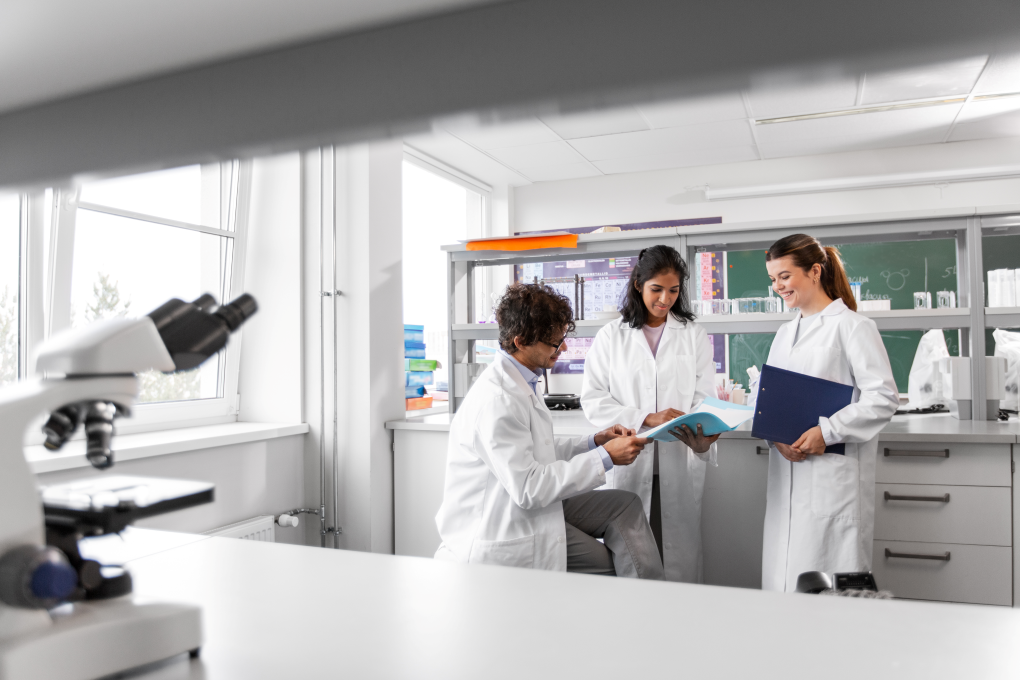
A shot of scientists working together inside a research lab.

Academy conferences not only provide graduate students and post-doctoral associates an opportunity to network and share their research, they can also provide an alternative perspective on the duties of scientists.

Published December 1, 2010

By Adrienne J. Burke

For nearly five years, The New York Academy of Sciences (the Academy) has been nurturing the next generation of scientists with a special program that provides professional development opportunities for graduate students and post-doctoral fellows. The Science Alliance is a consortium of more than 35 universities, teaching hospitals, and independent research facilities committed to advancing the careers of students and postdocs in science, technology, engineering, and mathematics.

Serving more than 6,500 junior scientists worldwide, the Alliance provides programs and services focused on career education, development, and training. In addition to giving students access to all of the traditional benefits of Academy membership, Science Alliance offers exclusive live events, webinars, and a dedicated website as well as unparalleled opportunities for students to learn and network with individuals across institutions and disciplines, including many highly accomplished members.

Now, two Academy programs for physicists and chemists are also getting students involved in all aspects of planning, hosting, and presenting scientific meetings. The meetings are designed to provide graduate students and postdocs in the field of condensed matter physics a chance to forge new research collaborations.

One program is the “Gotham-Metro Condensed Matter Meeting.” An inaugural event held in April 2009, and a second one held in November that drew 130 participants for a full day of lectures and poster presentations, were entirely run by graduate students and post-docs. A council of faculty-nominated graduate students from New York area universities developed content, invited speakers, and hosted the meeting at the Academy. The meetings will now be held once per semester.

An Alternative Perspective

Rebecca Flint, 28, a sixth-year hard-condensed-matter theory graduate student at Rutgers University, was handpicked by her advisor, Academy member Piers Coleman, to sit on the student steering committee for the Gotham-Metro group. She says her involvement in meetings planning has given her an alternate perspective on the duties of a professor. “As a graduate student you mostly do research; I’m not even teaching. You get a view of just one side of what it’s like to be a professor,” says Flint, who aspires to run her own lab after completing her PhD next year. “It’s interesting to see what else you need to think about, and it’s nice to get a view of something other than research.”

Another way the Academy is nurturing graduate students is through involving them as members of a student steering committee for the Academy’s Soft Materials Discussion Group. The group, headed by a faculty steering committee, regularly convenes investigators in the New York region with an interest in soft materials research and development, and provides a forum for exchanging ideas and news of recent advances among scientists, engineers, and other key stakeholders working in academia, industry, and non-for-profit entities. Now, six graduate students from City College, New York University, Queens College, Columbia University, and the College of Staten Island have joined with a faculty committee to select topics and choose speakers for meetings.

“The idea is to empower graduate students—provide them with opportunities for professional development and a chance to critically judge their own contributions and those of their peers,” says Heidi Perry, the Academy’s Program Manager for Physical Sciences, Engineering & Sustainability Initiatives.

Also read: Non-STEM Skills Give an Edge to STEM Professionals

Advancing Science Education in New York City

A science teacher gives a demonstration to older elementary school aged students.

With support from donors as well as public entities, The New York Academy of Sciences is launching a new initiative to improve science education in the city, and beyond.

Published December 1, 2010

By Adrienne J. Burke

Image courtesy of Drazen via stock.adobe.com.

With the support of several generous and committed members and in partnership with the New York City Department of Education, The New York Academy of Sciences (the Academy) in November launched an initiative to serve science teachers in New York and beyond.

The Academy’s New York City Science Education Initiative was unveiled on the heels of President Obama’s announcement of a federal campaign to improve the participation and performance of America’s students in science, technology, engineering, and mathematics (STEM). The Academy initiative aims to forge a community of science education professionals and provide a forum where they can convene, learn, and collaborate about science education policy, curriculum, and classroom best practices.

The initiative will also facilitate connections between education professionals and Academy members from the broader scientific research community. Seed funding of $130,000 from the Pamela B. and Thomas C. Jackson Fund and from Drs. Gabrielle Reem and Herbert Kayden will underwrite Academy memberships for as many as 1,300 high school teachers and cover the expenses for the Academy to host science educators’ events. Another $20,000 from the Alfred P. Sloan Foundation will support development of a dedicated educators’ Website and underwrite Academy memberships for teachers in schools recognized for educational excellence by the Sloan Foundation.

“It’s critical that science teachers have access to up-to-date resources and research in order to inform and inspire their students,” says Kiryn Hoffman, the Academy’s director of development who spearheaded fundraising for the new initiative. “They are challenged to stay at the forefront not only of scientific trends and breakthroughs, but also of the best methods to shape learning goals and strategies to actively engage students.”

Serving the Needs of New York Teachers and Students

In September 2009, 28 New York City science education stakeholders gathered in the Academy’s boardroom. Among the group was New York’s Deputy Mayor for Education, Dennis Walcott. From the lively discussion emerged a proposal for how the Academy could serve the needs of New York’s teachers and students.

Fernand Brunschwig

Fernand Brunschwig, a professor of science education at Empire State College, SUNY, is chairing the new initiative. Brunschwig says that from the time he was first introduced to the Academy many years ago by Don Cook, professor of science education at Bank Street College and a past chair of the Academy’s Science Education Section, he has seen great potential for advancing science education through the Academy. The stakeholders’ meeting presented a diversity of ideas, and, he adds “all in attendance agreed that it’s a good time to make this effort.”

Benefits of Academy Membership for Educators

Brunschwig led a steering committee meeting in November that brought several science educators together. The group agreed that science teachers could best be served by events that address classroom teaching issues specific to science teachers. “We’re going to be guided by teachers—by those on the committee and others, as well as by the Department of Education, in trying to make events valuable and attractive,” Brunschwig says. By virtue of being members of the Academy, teachers will also gain free admission throughout the year to more than 100 professional events in various scientific disciplines where they can build relationships with practicing research scientists.

The new initiative will also produce webinars and eBriefings targeted at science teachers, as well as online social networking and an online calendar that tracks events, workshops, and other programs elsewhere in the New York region specifically of interest to science education professionals. Brunschwig envisions the initiative providing unique opportunities for educators to meet, interact, and collaborate with others from outside their school, institution, or region.

Also read: Science Education: The Why Behind the What

Teaching the Cutting Edge: Martin Chalfie

A specimen under a microscope.

The Nobel Prize-winning Columbia University professor offers guidance on how to be a more effective science teacher.

Published September 27, 2010

By Adrienne J. Burke

Caenorhabditis elegans, adult hermaphrodite. Image courtesy of Bob Goldstein/UNC at Chapel Hill via Wikimedia Commons. Licensed via Creative Commons Attribution 3.0 Unported license. No changes made.

On September 22, 2010, Martin Chalfie kicked off the Academy’s Teaching the Cutting Edge series, designed to connect top scientific researchers to science teachers. Chalfie outlined how his research on nerve cell development in the model organism C. elegans, a small translucent nematode, led to his Nobel Prize-winning discovery on the use of green fluorescent protein (GFP). This now standard technique in biology classrooms revolutionized our ability to see and explore the inner workings of cells.

Chalfie’s life’s work explores nerve cell development using C. elegans. Chalfie and his team investigate how mutations in the worms’ genomes can lead to varying degrees of touch sensitivity in the worms’ simple nervous systems. Prior to the use of GFP, only a few highly flawed methods existed for understanding gene and protein expression, but Chalfie saw promise in the combination of the gene for a glow-in-the-dark protein and a translucent worm.

Studying Touch Sensitivity

The GFP gene could be used to show which cells express a particular worm gene by using the worm gene’s regulatory sequence to direct GFP production. Thus the fluorescing protein would appear in all the places in the worm’s body where the gene’s products would ordinarily have appeared. Chalfie used this method to study touch sensitivity, identifying the neurons that expressed the genes involved in touch sensation and examining where in the cell the gene products were located. Identifying where these genes were active was the necessary first step to discovering the molecules that allow the cells to respond to touch.

In addition to describing the scientific process that led to the discovery and use of GFP, Chalfie outlined myths that are often taught to children about science and scientists, providing teachers with an excellent resource to explore the Nature of Science and the truth about those who practice it. Chalfie framed the process of science not as a lone genius in a sterile room, but as a network of hard-working, creative, and clever scientists putting the pieces together over time.

Collaboration and the Scientific Process

Chalfie is the William R. Kenan Jr. Professor of Biological Sciences at Columbia University and former Chair of the Biological Sciences Department. He shared the 2008 Nobel Prize in Chemistry with Osamu Shimomura and Roger Y. Tsien for the “discovery and development of green fluorescent protein.” Shimomura first isolated GFP from a jellyfish and discovered that the protein glowed bright green under ultraviolet light.

Chalfie showed that GFP could be produced in other organisms and be fluorescent without any added cofactor. His findings meant that GFP could be used to light up proteins, cells, and organisms. And Tsien extended the color palette, giving scientists the ability to tag various proteins and cells with different colors and study several different biological processes at the same time. Chalfie, Shimomura, and Tsien all contributed to the success and durability of each other’s work—their collaborations, intentional and not, were crucial to their scientific process.

This content is aimed at high school level biology and chemistry teachers and focuses on the following concepts:

  • Cells and cellular structures with an emphasis on nerve cell development
  • Genetics and genetic expression with an emphasis on mutations and genetic engineering
  • Chemical reactions and configurations of atoms, specifically proteins
  • Technologies that allow us to better visualize scientific phenomena and how those advances can lead to revolutions in a scientific field
  • The Nature of Science and how scientific questions and collaborations guide the development of new techniques and advances
  • Non-traditional career paths in science

While Chalfie’s talk was aimed at teachers, it was also very much enjoyed by the high school and college students and members of the general public in the audience.

Also read: Good Teachers Yield Promising Returns for Confident Students

Spreading Science Knowledge Far and Wide

Seven Science 2.0 pioneers offer their perspectives on science, information sharing, collaboration, and the role of technology going forward.

Published May 1, 2010

By Adrienne J. Burke

Surely you’ve noticed: The scientific community is undergoing a research-and-data-sharing sea change. Perhaps slower to take to Web-based dissemination than some professions, science—the endeavor for which the World Wide Web was developed—has gradually been adopting new online methods for distributing knowledge. Some say the changes could accelerate scientific progress.

From open-access journals to research-review blogs, from collaboration by wiki to epidemiology by Blackberry, networked knowledge has made more science more accessible more quickly and to more people around the globe than could have been imagined 20 years ago.

And it’s not just new media businesses that are pioneering the Science 2.0 movement. Traditional scientific journals are part of this social evolution too, innovating ways to engage scientists online and enable global collaboration and conversation. Even the 187-year-old Annals of the New York Academy of Sciences has joined the digital age. The Academy now permits free public access to selected online content and has digitized every volume dating back to 1823.

That wider, freer, faster access to scientific data and research results will benefit the world is, to many, intuitively obvious. “We work on the assumption that the reason we publish is to keep science moving forward,” says Public Library of Science founder Harold Varmus. “If everybody can see the work that we do, and new work is built on what’s come before, science moves faster.”

Varmus is among a cadre of iconoclasts calling for immediate open access to scientific papers. They’re impatient for colleagues to give up their allegiance to the conventional process that they say keeps new research under wraps for too long. And they’re eager for publishers to break out of business models that require a paid subscription to read the most current publications.

To be sure, some changes are easier advocated than adopted. The most esteemed peer-review journals have taken great leaps toward openness in the last decade. Some now help readers network with each other online or enable posting on their Web sites of commentary and conversations about scientific publications. Many make papers openly accessible after a certain time. But how to sustain a business that publishes peer-vetted, high-quality content without requiring payment for access remains a hotly debated question.

As Varmus himself points out, the essential importance of the scientific paper has a lot to do with why it’s not just for-profit publishers, but scientists themselves who are moving toward open access with such caution. “Publication is not an addendum to, but the heart of the career of scientists,” he says. “The way you’ve built a legacy is through your publication—it’s the most important thing you do.” To give up the emotional reward of seeing their research published in a distinguished journal is a lot to ask of scientists raised in this tradition.

Seed Media Group CEO Adam Bly hints at how the up-and-coming generation of scientists—the so-called “digital natives” who’ve never known a world without the Internet—might move science past the paid-access paper. Says Bly, “In a Seed research study, one scientist said to us, ‘The soul of your identity is on the Web, because it is your most direct form of communication out into the wide world. You have a great degree of control over how you present yourself, your ideas, and your findings, and it’s fast, and it’s free.’”

For help considering whether the desire for open access contradicts the value of peer evaluation and envisioning what the future of science publishing could look like, The New York Academy of Sciences spoke with Varmus, Bly, and five other pioneers at the forefront of the Science 2.0 movement. These experts in Web technology, publishing, law, and science have the vision and passion to change the future of the way you work. As Bly says, “Open science is not this maverick idea; it’s becoming reality.”

Harold Varmus: Co-founder and Chairman of the Board, Public Library of Science

This story originally appeared in the Spring 2010 edition of The New York Academy of Sciences Magazine.

Harold Varmus, a Nobel Laureate, President and CEO of Memorial Sloan-Kettering Cancer Center, and member of the Academy’s President’s Council, led the team of biomedical scientists who set out in October 2000 to liberate access to scientific research in their field by petitioning publishers to post peer-reviewed papers in free, public online archives.

Varmus and his cohorts ultimately launched a nonprofit open-access publishing venture, which achieved financial sustainability this year. The Public Library of Science journals—there are now seven of them at www.plos.org—make scientific papers immediately available online, with no charges for access and no restrictions on subsequent redistribution or use, as long as the authors and source are cited, as specified by the Creative Commons Attribution License.

Would you define what you mean by “open access.”

Some people think that if their content is online it’s “open access.” That’s not the case. “Public access” is what the National Institutes of Health now operates under; if your work is supported by the NIH, then you must be sure that it’s available in less than a year on a public database like PubMed Central. That was a big victory for us, but it’s not anywhere near the goal.

True “open access” is different from “public access.” It means that the author holds the copyrights, that the journal places the work immediately and freely in the public domain under a Creative Common license or something equivalent to it, and that the work is in public libraries and available for all kinds of reasonable use, as long as attribution is maintained.

Have scientists been slow to embrace submitting their work to open access journals?

There’s now pretty wide acceptance of Public Library of Science journals, but most of my colleagues are still tormented by the need to publish in Nature, Cell, and Science, which are not open access journals. This is about much more than just publishing; it’s about values in the scientific academic community. Biomedical trainees are completely obsessed with the idea that they can’t get a job unless they publish papers in Nature, Cell, and Science. This is unfortunate, because those journals are going to be the last to go completely open access.

PLoS is now publishing far more research than any of those journals, isn’t it?

Yes. We publish over 600 articles a month. The only way you really can change the culture is to take on those top journals, so we decided we would publish two journals, PLoS Medicine and PLoS Biology, to compete with the very best.

We’ve achieved a high level of credibility for PLoS Medicine and PLoS Biology. They’re so-called high-impact journals. But to do that means rejecting a lot of articles, which gets expensive because of the costs of reviewing articles that do not get published. We afford those two journals because we make very modest amounts of money from other higher volume journals and we cover the cost of the whole enterprise by balancing things out.

What about the importance of the impact factor in scientific publishing?

The impact factor is a completely flawed metric and it’s a source of a lot of unhappiness in the scientific community. Evaluating someone’s scientific productivity by looking at the number of papers they published in journals with impact factors over a certain level is poisonous to the system. A couple of folks are acting as gatekeepers to the distribution of information, and this is a very bad system. It really slows progress by keeping ideas and experiments out of the public domain until reviewers have been satisfied and authors are allowed to get their paper into the journal that they feel will advance their career.

What are some ways PLoS is taking knowledge-sharing to the next level?

One of the most important developments is not particular to open access journals, and that is the addition of online commentary. Here’s our opportunity to make every article an occasion for conversation and a way to have another kind of evaluation. I can imagine search and promotion committees of the future spending more time looking at the kind of commentary that a paper has elicited than calculating impact-factor scores.

We’ve tried another experiment in the last few months called PLoS Currents. We’ve done this with one subject so far—influenza, a topic of great interest with a need for rapid publication. We invite people to post in PLoS Currents anything that can be looked at by a board of curators in 24 hours. The point is to get an article or an idea or a single result into the public domain quickly so people can build on it.

Look at PLoS Currents: Influenza on our Web site and you’ll see it’s been quite a nice experiment. Some postings look like full-fledged articles, others look much more primitive, but most have anywhere from a few to 10 or 20 commentaries attached to them. This is a way for scientists to get others to comment while they’re still working.

Information can also be aggregated and put together in very useful ways on sites that we’ve been calling Hubs, a project still in development. The idea is to try to wrest deeper ideas out of aggregated material without violation of copyright. We hope to create communities that migrate to these sites every day and then use them as platforms for fostering their field. This is another way to make science more energized.

What would be one technical fix you’d wish for right now to enable more sharing of science?

We have problems about sharing in our community that are not very technical, and it’s important to keep those in mind. Getting people to share their reagents, their mice, their plasmids—there’s a problem. People seem to forget that they were paid by the government or by some charitable agency or an institution to do this work and that they don’t own it. Say you made a new transgenic mouse 10 years ago or even two years ago and somebody else wants it.

You ought to give it to them, and you don’t need cloud computing to do that. Before we make all sharing digital, let’s remember that there are some simple things that reflect community values that we don’t subscribe to with the kind of enthusiasm we should. Of course, we’d also like to see everyone publishing more papers in open-access journals, especially at PLoS!

Adam Bly: Founder & CEO, Seed Media Group

After a three-year stint researching cancer at Canada’s National Research Council while still a teenager, Adam Bly set out to launch a magazine to cover “the 21st century scientific renaissance.” Five years later, his Seed Media Group has expanded beyond its glossy print flagship, Seed, to launch several online products serving science, including: ScienceBlogs.com, a social media site reaching more than 2.5 million readers; ResearchBlogging.org, which aggregates and feeds to relevant journals blog conversations about the peer-reviewed research that they publish; and ScienceWide, a platform that aims to drive advertising dollars to support open-access science publications and other innovative online science tools. Bly’s company’s mantra: “We are inspired by the potential of science to improve the state of the world, and we make media and technology to help realize that potential.” 

What do you mean when you say that science publishing needs to adopt a digital core?

Science has gone digital. Open science is not this maverick idea; it’s becoming reality. About 35 percent of scientists are using things like blogs to consume and produce content. There is an explosion of online tools and platforms available to scientists, ranging from Web 2.0 tools modified or created for the scientific world to Web sites that are doing amazing things with video, lab notebooks, and social networking.

There are thousands of scientific software programs freely available online and tens of millions of science, technology, and math journal articles online. What’s missing is the vision and infrastructure to bring together all of the various changes and new players across this Science 2.0 landscape so that it’s simple, scalable, and sustainable—so that it makes research better.

How will that happen?

To affect this kind of change is a grand challenge and will take the participation of many stakeholders—from government agencies to funding bodies to scientists themselves. The next generation of PIs is already establishing new behaviors. They feel comfortable blogging, using social media tools, and using wikis to advance their research. It will take the big institutions to support open-access journals, for example. And it will take technological innovation in the form of software that is purpose-built for this unique community and its set of challenges.

The culture of science resists change to science itself, and it’s important that it does. Part of that is practical: nobody sets rules for all of science. So it might take 10 or 20 years or more to effect a complete transformation. We’re talking about something as fundamental and important as modernizing the architecture of science.

What are some ways your company is contributing to this transformation?

We’re listening to scientists and introducing software and digital and social media platforms to help spur and support this transformation. Any scientist who blogs anywhere can now go onto ResearchBlogging.org and download free software that we’ve built that allows them to easily affix to a post the digital object identifier (DOI) of the scientific paper they’re blogging about along with some metadata.

We’re aggregating all of the conversations that are happening around that specific paper, and, through ResearchBlogging Connect, feeding the conversations back to scientists and journals in the form of widgets and RSS feeds. Now, when you’re reading the paper online, you see a feed of blog posts associated with that paper coming from across the Web. So in this example, we’re tackling post-publication peer-review and working to connect analog to digital in a way that’s seamless and useful to the scientist.

It sounds like you could have a new way of measuring a paper’s impact.

There are a lot of people trying to bring forth some new ideas about how to create more dynamic indicators. There are people merging scientometrics with data visualization, and there’s amazing work being done at universities around the world to develop new ways of measuring scientific progress. One thing we’re really interested in at Seed is whether blogs and the conversations we’re now organizing can serve in any way as an indicator of the momentum of scientific ideas. Technology can afford us more dynamic intelligence and useful knowledge.

James Boyle: Founding Member, Board of Directors, Creative Commons

James Boyle is a widely published leader of the global discussion about the ways that current copyright, patent, and trademark laws stand in the way of innovation by interfering with access to information that is in the public domain. He was one of the original board members of Creative Commons, which works to facilitate the free availability of art, scholarship, and cultural materials by developing licenses that individuals and institutions can attach to their work.

And he was a co-founder of Science Commons, which aims to expand the Creative Commons mission into the realm of scientific and technical data. In 2000 he joined the faculty at Duke University, where he is William Neal Reynolds Professor of Law and co-founder of the Center for the Study of the Public Domain. He is also a board member of the Public Library of Science.

What do you see as the current problem with access to science knowledge?

Science knowledge generation has gone digital, but our method of knowledge processing is still analog. Most scientific literature is behind pay walls. You may be able to find it with Google, but you probably can’t read it. That’s Science 1.0: You don’t have access unless you’re sitting in a great research university where it’s free, and you certainly can’t send a robot to crawl the literature to create a mini index of all the articles, and cross index them and see whether, for example, a particular gene known by multiple names is referenced by them.

Is the prestige attached to publishing with closed journals part of the problem?

Right now, if your article gets into Nature or Science it’s a big help in getting tenure and grants and retaining grad students. That’s important—we should encourage people to publish. But perhaps we could refine the incentives so that you get more of a bump for publishing openly. I would like to see people’s resumes say when their database has been downloaded more than 1,000 times. You want the prestige economy to reward the prosocial behavior, not the anti-social behavior.

So, how can incentives be changed?

When you’ve got centrally funded science, it should be a pretty easy cascade to start. The funders get much more bang for their buck if they do this. You’re actually saving the public money and increasing the yield of every research dollar. 

Once the idea can be explained to people, it makes an enormous amount of sense. I tell scientists, “There are a billion people connected to the Web. At least one of them has a smarter idea about what to do with your data than you do.”

Their first take, though, is “Oh, great. You’re going to force me to annotate my data and put everything out there. You’re going to troll it and publish ahead of me. I’m going to get no credit, I’m not going to get tenure, and I’m going to end up living under a dumpster. And you’re going to win the Nobel Prize.” That mindset is the big obstacle.   

We need funders to say that a condition for the funding is data deposit in an open, accessible format. That’s beginning to happen—the public-access mandate from NIH is beginning to make the literature openly available. But we’re just at the beginning.

Beyond social/cultural issues, what else needs to change?

Nobody ever wants to fund infrastructure because it’s boring, but enabling Science 2.0 is the Eisenhower freeway system of the mind. And then we need to get past the legal restrictions so that we can have technologies that troll for data, make sense of it, and import it mechanically.

How is Science Commons addressing those issues?

We’re sort of the public interest lawyer to the sciences. Say you want to use a database which was generated in Europe. We come up with a data protocol, a legal tool, which says “this gets your data free to the greatest extent possible in every jurisdiction in the world that we have lawyers in” (and we have lawyers pretty much everywhere, because a lot of really smart lawyers have volunteered to produce this high-quality tool).

We’re also attempting to show people what it might look like if you could wire together all this open stuff. We have a project called the Neuro Commons which is putting all the publicly available neurological literature and open databases together in a vast, open network that anyone can download, use, or build upon.

We’ve had high-throughput arrays, robotization, in silico studies, genetic sequencing, and the personal genome. All of these were supposed to catapult us off into a scientific revolution but didn’t. It reminds me of what people were saying about the personal computer in 1985: “This thing’s just a paperweight. What does it do for me?” The answer was, “Nothing until it’s wired together with all of the other ones.” Then suddenly you can’t imagine being without it.

Anurag Acharya: Founding Engineer, Google Scholar

Computer scientist Anurag Acharya and colleague Alex Verstak were onto something big when they took a break from building the Google Web index to focus on improving the rankings of scholarly articles within Google searches. The result of their sabbatical was Google Scholar beta. The specialized section of the larger Google search engine, which was launched in late 2004 and is now managed by a team of four people, has been transformational for enabling people to get their hands on all the world’s scholarly publications from their desktop. Acharya says the goal of Google Scholar is simple: a resource for anyone to find all scholarly literature across all disciplines, languages, and time periods.

Did your interest in creating Google Scholar stem from a need you saw in your own academic experience?

It was an experience I had as an undergraduate back in India. I grew up on the Indian Institute of Technology campus in Kharagpur. My uncle was a faculty member, and doing research was what the cool people did, at least in my head. I thought you did some work, and you wrote it up and you sent it for publication, because that’s what people do. You go to the library, you look up citations, you follow references, and you learn what you can.

If the papers don’t exist in your library, you write letters to people—this is 1985—and some fraction of them send you back their reprints. You send your own paper out for publication, and the reviews from the U.S. come back saying, “This is all very smart stuff, but you’re making this key assumption that is four years out of date.” So you’ve gone through all this effort and ultimately what you have done is not relevant because you didn’t know what was already being done.

With Google Scholar, first and foremost we make it possible for you to find the literature. Whether you can read it is a more complicated problem, but if you don’t know it exists, you have no hope.

Has it been difficult to persuade publishers to permit you to index their paid-subscription content?

Oh, yes. I started talking to publishers in 2001. We’re now indexing all the major publications, publishers, and societies, but it was a slow process. Initially the scholarly publishers didn’t believe that scholars used a lowly thing like a search engine. I’m serious. I had to convince people that researchers do use this. It was a mindset that search engines are used for casual things and not for real research. The attitudes really have changed.

If you could have some problem solved immediately, what would that be?

If I had one silver bullet I would apply it to translation. We index papers in every language that has any significant number of papers. We have a feature that allows you to find related articles, and relatedness can jump across language. All of this is trying to facilitate discovery.

A Google group has been working on a translation feature for many years now. There are groups that are using it to point to open-access journals and outside the English-speaking countries to make it possible for people to read papers that are not originally in English. Translation could open up the space to a population that previously we have not had an opportunity to reach.

Timo Hannay: Publishing Director, Web Publishing, Nature Publishing Group

A doctor of neurophysiology based in London, Timo Hannay manages Nature.com, Naturejobs.com, Natureevents.com, Nature Methods and Nature Protocols. He is organizer of Science Foo Camp, an annual interdisciplinary scientific “unconference” at Google headquarters. And he was a contributor to The Fourth Paradigm: Data Intensive Scientific Discovery, a collection of essays that envision the future of discovery based on data-intensive science. In the “interests” fi eld on his Nature Network profile, Hannay lists just one: “Making the most of the Web in scientific communication.”

You have called the Web “the ultimate global collaborative medium” and science “the ultimate global collaborative pursuit.”

Yes, that’s one of the reasons why I decided to work on the Web in science. Tim Berners-Lee originally considered the Web a scientific communication means. But ironically it hasn’t been scientists and the research community pushing the Web to its limits. It’s my job to try and make the Web more useful as a scientific communication medium. 

The volume of data is important and has profound implications, but an even more profound change will be if it’s all linked together. It’s going to be messy. We’re going to be using tags and microformats and ontologies and links and all sorts of strategies. But one way or another we’re integrating this data more and more. It’s not the volume of data, it’s the interconnectedness of it that’s critical in my mind.

Some would say that one of the obstacles to connecting scientific data is the traditional method of scientific publishing that doesn’t permit open access to research.

The fundamental issue is that the unit of contribution to the scientific knowledge base has become the paper. Journals grew up as a means for scientists to be able to share their discoveries and ideas. The incentive for doing so was that by publishing in journals their contributions would be recognized by citation and other means. So, you have this pact: be open with your ideas and share them through journals and you will get credit. 

Publishing in peer-review journals is no bad thing. I work for a company whose main business is publishing peer-review journals. They’re useful. However, we need to move beyond the view that peer-review publications are the only kinds of significant contributions that scientists make to the research process. A classic example would be genome sequences.

Large teams of scientists put enormous amounts of effort into providing genome sequences. Fundamentally, their contribution is making that data available to other scientists to draw insights from it. They can also provide reagents and materials to other scientists, or they can provide software and code and algorithms.

There are all kinds of ways in which scientists can contribute to the global endeavor. And yet one type of contribution, the peer-reviewed publication, has priority over all the others in the way that it’s measured and in the way that credit is assigned. The incentive structure has not caught up with what we really want scientists to do. We do want them to be able to share their ideas and their data and their reagents and so forth as well as publish traditional peer-review research reports. 

At Nature Publishing Group we try to be open to new ideas and try them out. From making tagging of scientific information possible to things like Nature Network and Nature Precedings which are venues for scientists to be able to share information with one another more informally and more immediately than they could through a scientific journal. Some things worked well and some didn’t, but that’s the nature of trying to understand a new medium and how it can be harnessed to best effect. I think the only way to effect change is by the funders, publishers, the scientists all working together.

John Wilbanks: Executive Director, Science Commons

John Wilbanks was named one of “50 visionaries who are changing your world” by the Utne Reader, and a “Revolutionary Mind of 2008” by Seed Magazine. He writes the Common Knowledge blog on Science Blogs and is known simply as Wilbanks on Twitter. As VP for Science at Creative Commons, he runs Science Commons from an office at MIT. Wilbanks joined Creative Commons from a Fellowship at the World Wide Web Consortium in Semantic Web for Life Sciences. Previously, he founded and led to acquisition the bioinformatics company Incellico.

How is Science Commons different from Creative Commons?

The primary way that we convey scientific knowledge is to compress it down into text and distribute that through a journal. But with the Internet we can now distribute a lot of the tools, data, stem cells, and so forth that used to simply be described in the paper. Making data useful to people who didn’t generate it is the most important problem, and it requires an enormous investment of time, infrastructure, curation, data standards, standard formats, and giant computers that can store it. If you add the law to that complexity, you have what we would call an NP-hard problem. Unsolvable.

When we got into this, we thought that the way we license software or literature was going to be the solution—that a Creative Commons license would take care of the problem. But data is much more foundational than literature or software and it’s more like the Web than it is like software. In other words, we all take software and run it, but the human genome is the knowledge equivalent of the Internet—it’s the common language of biotech, and if that foundational architecture imposed down-stream restrictions it would really screw things up.

The genome being in the public domain was much better than the genome being licensed. Imagine if every time a distributed annotation server ran across the genome it had to attribute whoever put that piece of genome online?

What we use instead of the law there is citation. You know that if someone published the first paper about that piece of the genome, when you write your paper you should add a citation to it. Citation norms scaled much better than the legal aspect of licensing. So, we stopped working on licensing for data and we started working on public domain pools for data. We worked on a tool called CC0—Creative Commons zero—which is a legal tool that achieves a legal status that is similar to the public domain. The idea is to waive the rights that are associated with data.

Let’s say you and I try to generate something like the genome now. If we had the money, we could sequence both of our genomes in a couple of days. But there are little bits of copyright that stick around data when you put them into a database in the U.S. They attach not to the data itself, but to the look and feel and the structure of the database. It’s unclear to many people where those rights stop and start, so the first thing CC0 does is waive those elements. 

If we want to have that data be interoperable with the public genome, we have to get rid of the database rights and the copyrightable pieces of it. The second thing CC0 does is get rid of those database rights. If we can make things legally interoperable, then the only problems we leave are the monstrously complicated technical and semantic ones. 

So, we wrote the Science Commons Protocol for Implementing Open Access Data. The first two requirements are: waive your intellectual property rights to the extent they exist, and don’t put a contract on your data. The third requirement is to request behavior through norms, not through the law. That’s about using citation, not attribution. In science, citation scales in a way that attribution doesn’t, because attribution is tied to this very old way of thinking about copyrightable object as opposed to massive data structures.

What would be one change you’d put at the top of your wish list?

It would be for the various funding agencies to put meaningful requirements or evaluation systems in place for sharing data and tools, not just papers. Right now, there’s no incentive to go through the effort of curating, annotating, and posting your data. The biggest thing the NIH could do would be to begin looking at a two-pronged mandate, similar to the open-access literature mandate, and provide minimum requirements for sharing data that you generate.

That would create incentives for researchers to get their data online and share their tools and it would create an environment where some of the startups can have success. In the absence of putting some teeth behind those requirements, all we’re going to see is an increase in the number of PDFs deposited, and I don’t think that revolutionizes scholarly communication.

Stewart Wills: Online Editor, Science

On his Twitter profile, Stewart Wills describes himself as the “aging online editor of a scientific journal, trying to stay young in 140 characters or less.” An earlier adopter than many a “digital native,” he’s been Tweeting diligently, usually several times a day, since June 2008 about all things science and media. In 2000, when he completed a PhD in geological sciences at Columbia University, Wills joined Science. His principal goal at present, he says (via his Linked In profile), is, “Keeping the Science site moving forward, to provide the best possible value and utility to users, the scientific community, and the public.”

How is your publication responding to the move of science onto the Web?

At Science we pay a lot of attention to how the digital natives are changing everything. We have a set of users with new expectations, new assumptions, new ways of learning that we in publishing need to figure out how to address. As an editor working with a scientific publication, I have an interest in making our content as available as possible and serving the community as well as possible. Whatever the business models we’re dealing with, we have to find a way to serve the community on this.

Moreso than the general population, scientists are do-it-yourselfers. If there’s a tool available, they figure out how to use it. The Web is one huge, highly flexible tool. Certain groups of scientists are in there using open notebook science and open wetware and various things like that to do their jobs. They are exploring new ways of doing science. For that reason, we increasingly hear the community’s need not just for open access but for open science—for open data.

How are you changing the way Science makes research and data available? 

The data supporting the papers has always been free on our Web site, and Science has had full text on the Web since 1996. Now we’re doing some of the more obvious things to improve the syndication of research results—RSS feeds, Twitter, and Facebook. We’re active on these social channels because that’s where the users are having conversations. It’s a way to capture some of the conversation around our content. And we are experimenting with adding different kinds of content, such as a pilot with the Journal of Visualized Experiments to create video methods to go along with certain papers. 

Would you say that scientists who aren’t on Facebook or following Twitter are at a competitive disadvantage?

That’s an interesting question and I’ll answer it this way: It’s going to depend on the network that you’re following. I heard Cameron Neylon, a senior scientist with the U.K.’s Science and Technology Facilities Council, speak at a conference recently. He filters his content through a tool called FriendFeed. It’s the most sophisticated use of tools like Twitter or Facebook to deal with the information glut: a collection of friends he trusts helps him with discovery by filtering papers that are of interest to him. It’s a certain kind of peer review.

How Math is Like a Ladder to the Moon

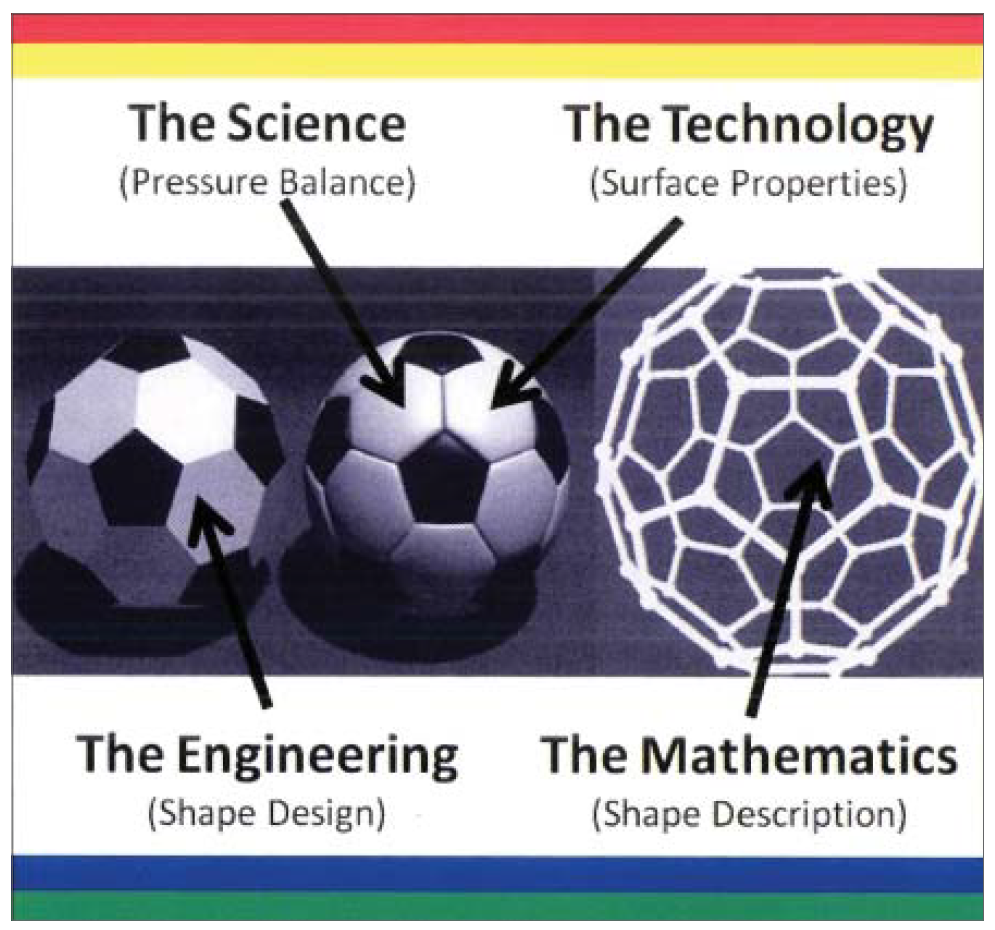
For unsolved time-dependent processes like the motion of fluids, I want to try to find a few important parameters and then successively add information to build up a better and better picture—and all of this using the methods of algebraic topology.”

Published May 1, 2010

By Dennis Sullivan, as told to Abigail Jeffries

Image courtesy of Scott P. Moore.

My interest in mathematics began when I was nine or ten years old. I liked to think about ideas and do math puzzles, and I noticed there was some structure of prediction. Later on, I came to know this was called statistics, related to chance events. This ability to predict amazed me. I was a late bloomer academically in the sense that I didn’t have any pressure to study when I was growing up. In college I got back into academics again and made a fresh start. I was able to attend Rice University in Houston, which at the time was like a scaled-down Caltech. I rediscovered my academic self there after being a quasi-juvenile-delinquent, running around working on hotrods!

There’s an interesting theory that, among mathematicians for example, a person may discover they like mathematics and have a strong aptitude. They get so involved in it that their personality development is arrested at that point. They just stop caring about the finer points of their finishing, you might say. I’ve seen this in every one of my six children. They’re like little mathematicians or little scientists, then for some reason that usually washes out. They get interested in other things. For some of us, like me, it didn’t wash out.

After receiving my BA from Rice in 1963, I received my doctorate in 1966 from Princeton, where I wrote my thesis on triangulating homotopy equivalences. This work became part of surgery theory, which describes a way of manipulating mathematical spaces called manifolds.

Analyzing Mathematical Concepts

Almost everywhere you look, when you start to analyze a mathematical concept, it’s as if there’s this tightly woven Oriental rug covered by dried leaves. You sweep away the leaves, and you start finding out about it, and everywhere you look the beautiful tapestry is there to be uncovered. You can sweep anywhere and find it underneath, with all sorts of fantastic structure.

I was a member of the Institut des Hautes Études Scientifiques in France from 1974 until 1997. IHES was modeled after the Institute for Advanced Study in Princeton. It was a wonderful place for people like me who like to work on math all the time. I had no duties. I was given an office and a research environment with a library and a secretary. My colleagues were the best in the world, and I enjoyed the steady flow of visitors. I just worked on math. It was paradise.

While at IHES, I did some mentoring of people who had recently received their PhDs or who were on sabbatical and focusing on their research. The atmosphere was wonderfully collegial. Our lunches would start at one o’clock and we’d sometimes still be sitting there until tea at four o’clock, writing ideas on the backs of napkins.

During that time, and due to the six-month academic year in France, I was able to take advantage of an offer for the Einstein Chair at the City University of New York Graduate Center in 1981. So, I split my time between IHES and CUNY until 1997. I would move to each place for about six months. When my fourth child was in first grade, the back-and-forth schedule wasn’t tenable, so I substituted my current position as professor at SUNY Stony Brook for the position at IHES.

Receiving the National Medal of Science

The awards I have received have all meant a great deal, but the National Medal of Science in 2004 was special. At the White House we met George Lucas (which thrilled my 11-year-old son); the developer of the liver transplant which had saved the life of a relative one year before; and the inventor of the first computer games, Simon and Pong. All of us were receiving either science or technical awards from President Bush.

The Wolf Prize in Mathematics this year was for Shing-Tung Yau’s work on curved spaces and for my work in algebraic topology and conformal dynamics. Topology is an approach that allows one to ask scientific questions that are more qualitative in nature, such as whether or not a system would evolve and then come back to its original configuration, or whether there are cycles, and if so how many.

These are questions that can be expressed in words, without formulae, and they often involve integers or whole numbers or counting. By moving from formulaic considerations, which turn out to be very complicated, to a place where you try to define things in such a way that they can be counted, a problem becomes easier to understand.

You can study complicated spaces of many dimensions using algebraic topology. Think of the three-dimensional space we live in as a large hotel full of rooms, little boxes next to each other that fill up the entire space. Algebraic topology breaks down the hotel space we might otherwise think of as being continuous into all these little boxes put together.

Discrete Mathematical Descriptions

You can list these boxes on a computer or in your mind and give them names, and you can record how pairs of boxes relate to each other. If you give me the names of all the boxes and you tell me their relationships, then I can assign a purely algebraic description to each box and start applying algebraic topology to reconstruct many of the properties of the overall space.

We need discrete mathematical descriptions like these that can be inserted into a computer computation in an efficient way. Even though computers are very fast, it’s easy to generate problems that are much too big for them. If you’re trying to apply computers to study the flow of blood around the heart in the human body, this process is happening in space with a lot of little particles moving around. You cannot input an accurate assemblage of points and the way they all interact and ask a computer to compute that; it’s overwhelming.

In my work with conformal dynamics, I consider dynamical systems (processes that evolve in time) in small dimensions to make them more manageable. Some processes are reversible, meaning that they can run backward and forward, but others, such as a fire, are not. These non-reversible processes are more complex, but you can study them in very small dimensions. They can be studied in discrete time to reveal a very interesting structure that’s beautiful and that can also be analyzed. In the world of conformal geometry, you see the amazing fractal patterns of the Mandelbrot set, for example. It’s extremely interesting mathematically, and the incredible intricacy has an explanation via conformal dynamics.

Technology to Prove Math Theorems

I started studying this around 1980. There were primitive computers then that could draw figures, and you could plot this out and see all sorts of fantastic patterns. Then, we started trying to prove things about them. You could observe them, but to prove them as math theorems required technology, new ideas, and research.

That’s what I was working on at IHES. To draw a comparison to music, this structure is as breathtaking as if you had only known rhythmic drums and suddenly I show you Mozart. It was totally unexpected that such an incredibly beautiful structure should be there in such a simple problem.

Math is actually a very robust field. There are a lot of new ideas coming forth, and a lot of progress is being made. Yet in many ways we’re still at the beginning. Sometimes you use a problem as a North Star to guide you.

You don’t actually solve it because it’s often not that tractable yet, but the first steps you take to solve it lead you to other steps. You find other things, other structures. It’s like building a ladder to the moon: you have to build the steps of the ladder, always moving out and up.

The Next 15 Years

I expect many new developments in the next 15 years. Complex data will be attacked with all of the tools available, and we will see ideas from physics gain in influence. New technological developments have already impacted my work. The conformal dynamics used computer computations to find out what to prove. This was not really possible before 1980.

We still need ways to do fluid simulation, and this was pointed out at the White House event by George Lucas’ animators. For unsolved time-dependent processes like the motion of fluids, I want to try to find a few important parameters and then successively add information to build up a better and better picture—and all of this using the methods of algebraic topology.

I want to keep working on this algebraic model of space and its geometry. That’s my goal in a nutshell, and I hope my work will be useful in the sense that people can apply it.

A New Science Partnership with the Univ of Nigeria

A birds-eye view of a city in Nigeria.

The partnership is an effort to boost learning and provide world-class resources to students in Nigeria.

Published April 23, 2010

By Adrienne J. Burke

Aerial view of Marina commercial business district Lagos Island Nigeria. Image courtesy of
Terver via stock.adobe.com.

The University of Nigeria, Nsukka, signed an agreement in February to enroll 300 faculty and 500 postgraduate students as members of the Academy’s Science Alliance program in an effort to boost learning and provide world-class resources. Noting that lecturers in many Nigerian universities lack access to international scholarly publications and resources due to funding constraints, Chima Nwanguma, a professor in the University of Nigeria’s Department of Biochemistry, says the agreement is significant because, “as many staff as possible will get the opportunity of unrestricted access to the online resources and archival materials of the Academy dating back 100 years. In this age, it is important to have international linkages and to be abreast of developments across the world of scholarship.”

The agreement was borne of the University of Nigeria’s interest in having access to the Academy’s content such as eBriefings, Annals volumes online, and conference Webinars for use in the classroom setting. With this agreement now signed, the Nigerian students will begin benefiting right away from the privileges of Academy membership.

Not a member of our inclusive and impactful community? Join today!.

New Insights into Science Teaching as a Profession

An empty and clean science lab at either a high school or college.

Data suggests that science comprehension among American high school students is middle of the pack compared to peer countries. Here are some tips for teachers to improve comprehension.

Published April 9, 2010

By Erica Nofi

Image courtesy of Khunatorn via stock.adobe.com.

The second event presented by the New York Science Education Initiative brought together more than 150 secondary science teachers, research scientists, and other educators to discuss the future of science teaching as a profession and the roles that scientists can play in improving education.

Sheila Tobias, a writer focused on math and science learning, presented the initial results of the Science Teaching as a Profession project, which she co-directs. Tobias and her colleague Anne Baffert conducted their research through their web site and in personal interviews with science teachers and science chairs. Beginning with the question: “Does your work life make you feel like a professional?” the team surveyed hundreds of secondary science teachers about the status of teaching, what it would take to retain teachers in this high-attrition field, and many other issues.

Improvement Needed in Science Comprehension

Although the research was opportunistic—depending on individual teachers to volunteer their opinions through online participation—rather than systematic, it provides valuable insight to the current state of careers in science teaching. The project led to a book of the same title, co-authored with Baffert and published by the National Science Teachers Association.

Tobias argued that the trend toward test-based assessment and teacher accountability has eroded the professionalism and status of teaching as a career, to the detriment of science education. She compared teaching to other professions, such as medicine and law, whose practitioners are highly-trained, self-policing, and place service over personal gain. Tobias outlined these and other identifiers of professionalism, and used teacher interview results to illustrate how returning the qualities of professionalism to teaching would improve teacher job satisfaction and retention, as well as overall educational quality.

Tobias concluded by noting that the U.S. was recently rated by the Organisation for Economic Cooperation and Development (OECD) as 29th out of 57 countries in high school students’ science comprehension. While this statistic is upsetting, Tobias claimed it offers an opportunity to make a serious change in the teaching of science in this country, one that will give our students an advantage in the technology-centric markets of the future. The participation of practicing scientists in this process is vital both to the content and status of science education.

Challenges and Successes in the Science Classroom

Following Tobias’s talk, the audience broke out into small discussion groups, each of which included a scientist and a staff member from The New York Academy of Sciences (the Academy) as facilitator. The groups discussed their experiences teaching science and the potential of collaborating with scientists to improve science education.

Teachers, discussing their successes and challenges in the classroom, found that topics that relate directly to students and their lives were most engaging. Teachers reported that students responded best when the material was related to:

  • Their bodies
  • The immediate environment
  • Their futures and careers
  • Their idealism and ability to influence the world

The “Wow Factor” is also a tool to increase engagement:

  • Surprising demonstrations, a.k.a. discrepant events
  • Explosions
  • Extremes and awe, such as in Astronomy or Paleontology
  • Real materials, such as dissections, or extremely detailed models

Teachers presented extensive tool chests of engagement techniques, but when it came to challenges, two central topics quickly emerged: scientific thinking and math. Additionally, it was pointed out that sometimes it can be difficult to tell whether a student is struggling with a conceptual misunderstanding or a math difficulty. Teachers also shared that the best way to make math understandable is to provide context, whether by relating the math to the students’ lives, or by teaching the math through the science concepts.

Creativity and Thinking About Science

It was agreed that the key to teaching scientific thinking is the reintroduction of creativity to the classroom, a proposition that can be difficult when students expect test-based teaching methods. Some teachers said that by the time students have reached high school, they have already been trained to think of science as a subject of rote memorization.

Despite this challenge, many teachers have found success by placing students in the role of primary investigators rather than having them follow lab instructions. For example, one teacher had the students present their findings from unguided experiments at a mock conference.

What Scientists Can Bring to Classrooms

Teachers generally agreed that outside visitors can inspire extra interest and attention. Bringing scientists into the classroom can give students a real, relatable connection to the practice of science, as well as the opportunity to see themselves in the role of a scientist. Hearing scientists discuss the process they use in their labs can also help students understand scientific thinking.

In addition to directly relating their experiences in the lab, visiting scientists can also give students the chance to see their classroom teachers as ongoing learners, and scientists as former students. Seeing parallels between their learning process and the learning processes of teachers and scientists can also inspire investment in science learning.

What Teachers Can Learn from Scientists

Given the opportunity to interact directly with scientists, teachers suggested that they would use it both to improve their own understanding of science and to learn techniques to reach students. Many teachers mentioned that learning more cutting-edge science to bring to the classroom would help them engage students. They also wanted to gain a deeper understanding of the topics they are already teaching, and learn new ways of teaching them, including new demos or experiments to do with supplies already on hand. Particular interest was also expressed in discovering ways to integrate more scientific thinking, experiments, or current science into standards.

Scientists Can Also Learn from Teachers and Classrooms

Scientists at the event pointed out that they also have a lot to learn from classroom situations. Many scientists want to learn how to express the concepts in their work more clearly to general audiences, and graduate students in particular need experience, outreach, and teaching on their resumes.

While agreeing that bringing scientists into the classroom was a positive experience for all involved, both scientists and teachers shared some cautionary comments about the process. The outlook of the scientist is geared toward rigor, while a teacher is interested in the excitement of science—the two viewpoints may be difficult to reconcile, but have much to offer one another. Teachers also noted that both students and scientists need to be prepared for classroom interaction: students should prepare questions, while scientists should be briefed on the students’ level of understanding.

How to Connect Scientists with Classrooms

Scientists at the event overwhelmingly indicated that their colleagues are interested in becoming involved with K-12 education and value their experiences in schools. However, both teachers and researchers have difficulty making contact with willing partners—several individuals related bad experiences when looking for laboratories or classrooms with which to partner. Another complaint was that most scientists participate in “high-end” competitions, events, or programs, rather than in schools where improvement is most needed.

Many participants were interested in an online network or listing of schools and laboratories interested in partnerships, visiting speakers, mentors, and internships—the Academy’s ability to build communities may be an answer to this need. Scientists suggested that schools institute semi-formalized “lecture series” to attract graduate student speakers looking for experience. Another possibility is for research institutions to systematically encourage their faculty and staff to participate in school efforts.

How Can Scientists Support Teachers

The most important theme that arose in this final discussion was the need for mutual respect. Science teachers need the respect of the entire community, and if scientists are to help increase the effectiveness of science education, they must respect science teachers and demonstrate that respect. The support of scientists would be influential in the attempt to return professionalism to science teaching.

There are several ways for scientists to help engage the public in science education, beyond speaking in classrooms. Teachers at the event suggested that scientists could help involve parents and impress upon them the value and importance of science education—possibly through speaking to parents groups or giving evening demonstrations for parents. Scientists can also speak with or write to media outlets like newspapers, radio shows, and web sites, and encourage other scientists to participate.

Also read: Supporting Science Education for the Good of Society and Advancing Science Education in New York City

Developing Drugs for the Benefit of Society

A woman smiles for the camera.

Having nurtured her own strong scientific curiosity as a child growing up in New Orleans, Toni Hoover wants to help the next generation find what motivates them.

Published March 1, 2010

By Adam Ludwig

Toni Hoover.

Long before Toni Hoover became a senior vice president at Pfizer, she honed an interest in psychology by keeping an eye on the street life in her hometown of New Orleans.

The odd behavior of some of the local denizens fascinated her as a teenager, even if it was largely indulged as harmless eccentricity or regional flair. Today, she acknowledges that much of what captured her interest was in fact psychopathology.

Hoover took her early passion for understanding the underlying causes of abnormal behavior to Harvard, where she earned a BA, MA, and PhD in psychology. Early work as a clinical scientist in the neurosciences area at Warner-Lambert/Parke-Davis in Ann Arbor, Mich., led to a project standardizing clinical assessment outcome measures to be used in clinical trials of treatments for Alzheimer’s patients. She went on to lead central nervous system drug development at Parke-Davis, overseeing the development of several medications, including Pfizer’s Lyrica, and has now worked for Pfizer and its legacy companies for 23 years.

Since 2006, Hoover has been site director of Pfizer’s Groton/ New London Laboratories, the company’s largest research and development facility. Her focus is on creating a vibrant, innovative, and productive environment for discovering and developing new medicines. In addition to making sure that the needs of the R&D colleagues are met, Hoover is responsible for the site’s compliance with state regulations, serving as the public face of Pfizer in dealing with legislative, public policy, and community relations.

An Invaluable Partnership

Three years ago, she was tapped to reassess Pfizer’s relationship with The New York Academy of Sciences (the Academy), and set out to identify new ways in which Pfizer R&D could get “more bang for its sponsorship buck.” Encouraged by discussions with Academy leadership, which yielded new strategies for rejuvenating the relationship, Hoover made the case to Pfizer’s worldwide president of R&D to continue major sponsorship of the Academy.

Given the location of Pfizer’s corporate headquarters in New York City and the close proximity of its large R&D site in southeastern Connecticut, she argued that the visibility of Pfizer as a corporate sponsor of the Academy was invaluable, making support of high-profile Academy initiatives a natural fit. Upon approval of Hoover’s proposal, Pfizer renewed its support of the Academy as a Mission Partner.

Subsequently, she was asked to consider joining the Academy’s board. She accepted the invitation, and in 2009 became a member of the Board of Governors. Meanwhile, she has stepped up her own investment in the Academy by directing her personal contribution towards programs focused on advancing women and people of color in the sciences. She says these mirror similar educational outreach efforts by Pfizer in Connecticut to “support, spark, and delight” young people about scientific careers. Hoover takes special delight in witnessing the first green shoots of youthful inquiry, remarking, “You can see the ‘Aha!’ moment as they watch hands-on demos of the wonders of science.”

Encouraging Scientific Curiosity

At the college level, Pfizer offers summer internships aimed at getting undergrads interested in discovering and developing new medicines. Some of Pfizer’s collaborations with university science departments focus specifically on increasing the diversity of the pipeline of new talent, and Hoover believes that the Academy can further such efforts by developing skills among women and ethnic minorities, and by working to facilitate networking among scientists from those groups.

Hoover’s growing personal investment in the Academy capitalizes on the Pfizer Foundation Matching Gift program, which allows her to double her impact. And since Pfizer renewed its sponsorship three years ago, the number of Pfizer scientists who have joined the Academy has increased from 20 in 2005 to more than 366 today. This represents the largest number of scientists from any company and from any single corporate sponsor.

Just as Hoover has watched young people from Pfizer’s student programs go on to become working scientists—sometimes as researchers at her Groton/New London laboratories—she hopes to see the Academy raise its own crop of scholars and scientists. Scientific curiosity came naturally to Hoover as she was growing up in New Orleans, but she knows that it doesn’t grow on trees.

Also read: How Science Can Keep America Globally Competitive


About the Author

Adam Ludwig is a writer in New York City.

The Life of a Nobel Laureate Neuroscientist

A video camera.

New film explores Eric Kandel’s life, from escaping Nazi-occupied Vienna to becoming a Nobel Laureate.

Published October 16, 2009

By Adrienne J. Burke

Imagine Science Films will screen the feature film In Search of Memory this evening in Tribeca. The film, directed by German documentary filmmaker Petra Seeger, blends autobiography and history to recount the life of Academy President’s Council member Eric Kandel, widely considered one of the most important neuroscientists of the 20th century. Based on Kandel’s autobiography of the same name, the story illuminates scientific developments in humankind’s understanding of the brain’s role in recording and preserving memory.

In addition to archival footage and dramatic re-creations of Kandel’s childhood experiences in Nazi-occupied Vienna and his formative years as an emigrant in New York, the film features discussions with Kandel, friends, and family. Footage from Kandel’s public lectures in Vienna and New York, which explore both his professional and personal life, are also included.

Kandel, a professor of physiology and cell biology at Columbia University, was awarded the 2000 Nobel Prize in Medicine for his groundbreaking research on the physiology of the brain’s storage of memories.

Also read: A Neuroscientist’s Search for Memory

A Doctor’s Journey: From Studio 54 to the Academy

A woman smiles for the camera.

Academy Life Governor Karen Burke is known for finding what’s exciting in NYC, crossing paths with everyone from Andy Warhol to Ralph Steinman.

Published September 1, 2009

By Adrienne J. Burke

Karen Burke

When Karen Burke reflects on her path to a career as a research scientist and medical doctor, she credits her mentors and supporters—inorganic chemist Michell Sienko at Cornell University who inspired her to pursue science; Harold Scheraga, then chairman of the Cornell Chemistry Department who became her PhD advisor; Ralph Steinman at The Rockefeller University, whose discovery of dendritic cells sparked her interest in dermatology; and her close friend in Manhattan, the artist Andy Warhol, who encouraged her to go to medical school and even brought her dinner during her grueling residency hours at Bellevue Hospital.

Today, Burke sees her long-time support of The New York Academy of Sciences (the Academy) as a way of returning the favor to the scientific community. She has been on the Academy’s President’s Council since 1998, served actively on the Academy’s Board of Governors for nine years, and will be appointed this year as a Life Governor.

She has passionately supported the Academy’s Committee on Human Rights of Scientists and was an early supporter of the Academy’s Scientists Without Borders program. She gives the gift of Academy membership annually to friends and family, including the science teachers at her sons’ schools. And her generous contribution to the Academy’s Comprehensive Campaign will help enable the Academy to continue promoting science literacy, building scientific communities, and disseminating new science and technology knowledge.

From Architecture to Chemistry to Medicine

Burke, who was raised in Swarthmore, Pa., had an interest in architecture when she won a scholarship to Cornell University. But her chemistry professors there encouraged her aptitude in science, and she graduated with a major in chemistry.

With her PhD advisor Scheraga at Cornell, Burke conducted theoretical quantum mechanical studies of protein folding as well as measurement of conformational parameters of amino acids in synthesized “sandwich” copolymers. After completing her PhD thesis at Cornell plus a nine-month stay at the Weizmann Institute in Israel, she returned to New York for postdoctoral research in cellular immunology at Rockefeller. “Ralph Steinman had just discovered dendritic cells in the liver and spleen.

Similar dendritic cells had been recently discovered in the skin, so I was stimulated to specialize in dermatology to investigate these so-called Langerhans cells,” she says. Burke continued research during her dermatology residency at New York University Medical School by studying clinically, and at cellular and molecular levels, the use of soft tissue implants (particularly various collagens) to treat indented scars and wrinkles and to stimulate wound healing. She also investigated immune reactions after treatment of skin cancer.

She now has a private practice for medical and cosmetic dermatology and dermatologic surgery and is on the faculty of the Department of Dermatology at Mt. Sinai Medical Center where she studies topical and oral antioxidants to reverse photoaging of the skin and to decrease the incidence of skin cancer. Burke has also been appointed to the US Food and Drug Administration General and Plastic Surgery Device Advisory Panel and is founder and president of the Karen E. Burke Research Foundation and of Longévité, Ltd.

“The Most Exciting Science Lectures in New York”

Burke also wrote four books on staying “fit for life” with dietary recommendations based on the science of insulin regulation and hormone interactions and a concentrated, 12-minute isometric stretching routine inspired by ballet and yoga. Her book Great Skin for Life describes a daily skin care regimen based on the science of maintaining and regenerating healthy, youthful skin.

Of Warhol’s influence, Burke says, “He, more than anyone, encouraged me to go to medical school. He said education becomes a part of you, and is something no one can ever take away.” And Warhol’s “Factory” crowd kept hours that let her have some social life outside of her studies. “I could sometimes work late and still go to the end of a ballet or a dinner or to Studio 54. I felt like I was seeing part of the ‘scene’ in New York,” she says.

Starting with the Committee on Human Rights of Scientists, Burke has expanded her involvement with the Academy and become a loyal attendee of professional meetings on emerging scientific topics as well as Science & the City public events. She says she especially enjoyed the “Science of the Five Senses” series last year that featured scientists paired with cultural figures: “These lectures are incredibly interesting and so much fun. I always take guests, and I’ve never had anyone disappointed,” she says. “They are truly among the most exciting science lectures in New York.”

Read more about Dr. Burke.