Green Chemistry? He Invented the Term

“I hope that my work will highlight the power and potential molecular scientists have to help the world even more dramatically than we thought.

Published May 1, 2009

By Paul Anastas, as told to Abigail Jeffries

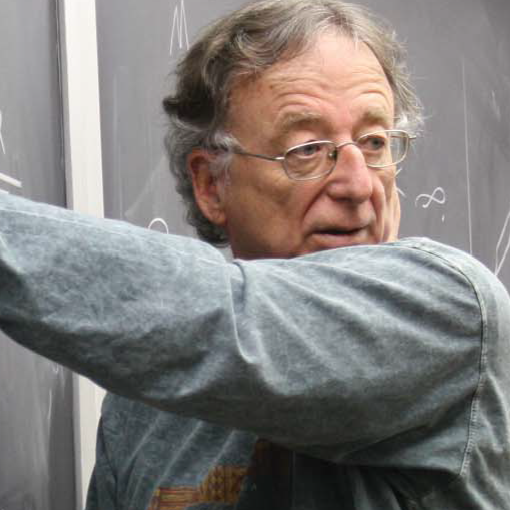
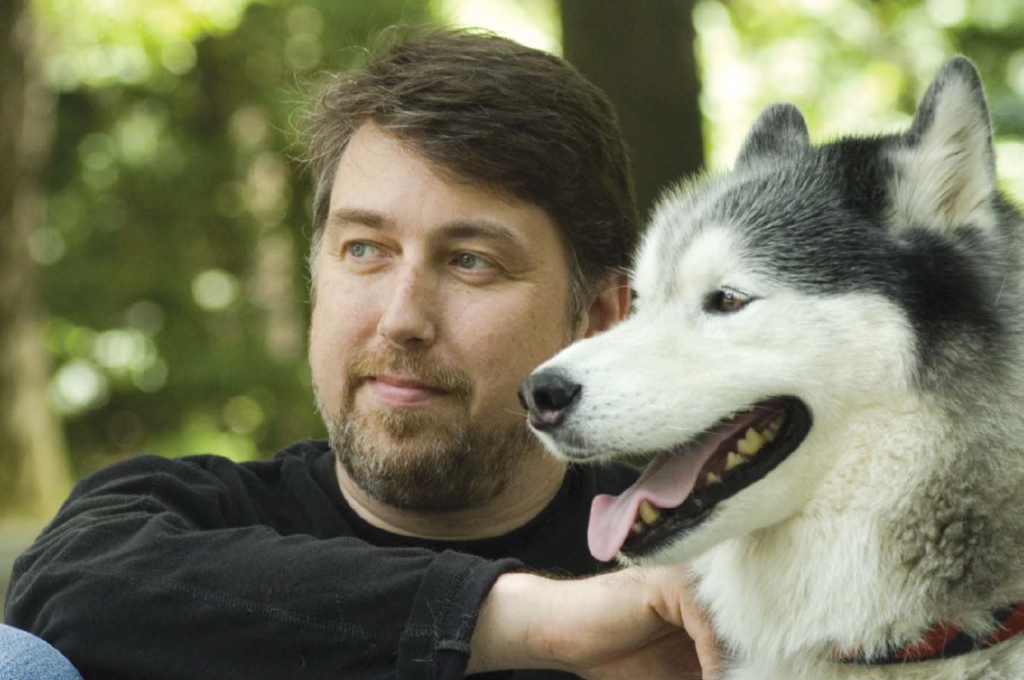
Image courtesy of Jim Harrison/Heinz Awards.

I grew up in the small town of Quincy, Mass., where I lived on a hill overlooking one of the most beautiful coastal wetlands imaginable. When I was ten years old, the bulldozers rolled in. This upset me so much that I tried to fight it in the usual way by circulating petitions around the neighborhood.

Today perhaps two percent of the wetland still exists; the rest is a business park. My father who was a biology teacher said to me at the time that if you really care about something you have to understand it deeply in order to protect it. More than anything else, that set me on track to become a scientist.

After earning a BS in chemistry, I went on to graduate school where I focused on the total synthesis of natural products to make anti-cancer compounds. This research eventually became personally difficult because so many good people I knew were being diagnosed with and dying of cancer.

Roger Garrett, the founding chief of the Environmental Protection Agency’s Industrial Chemistry Branch, had followed my work on structure activity relationships. In 1989 he offered me a position at EPA where, instead of trying to treat or cure cancer by making new molecules, I was able to think about how molecules could be created so that they never cause cancer in the first place.

In 1991 I coined the term “green chemistry” and developed and launched the US EPA Green Chemistry Program. The concept expanded rapidly. Green chemistry wasn’t just about cancer-causing molecules; it was about toxicity from the point of synthesis through all phases of the chemical life cycle.

Meeting Economic and Enivronmental Needs

In 1997 I was awarded the EPA Silver Medal for designing and developing the program, which is currently based in the Office of Pollution Prevention and Toxic Substances and is best known for administering the Presidential Green Chemistry Challenge Awards. The achievements of the award winners, excluding nominees, account for removing or preventing the generation of enough hazardous substances to fill a train of boxcars 200 miles long. And this has occurred while maintaining or increasing commercial profitability. Above all, the field of green chemistry has shown that economic and environmental needs can be met simultaneously.

After establishing the US EPA Green Chemistry Program, I served during the Clinton and Bush administrations as Assistant Director for the Environment in the White House Office of Science and Technology, Policy Chief of the Industrial Chemistry Branch and as the Director of the US Green Chemistry Program. During those years I focused on writing about and promoting green chemistry principles.

I was astonished when Teresa Heinz delivered the news that I had won the Heinz award for environment in 2006. This moved me tremendously. Senator Heinz was a visionary, and Teresa Heinz is an environmental movement legend. When I received the phone call from her, she asked if I was aware of the Heinz awards, and at that moment I was certain she was going to ask me if I would serve on the judging panel. When she delivered the news I was speechless. I was so proud to be in the company of the other winners.

Science-Informed Decisions

Although science will not be the only element in any government decision, it should be a part of every decision. So far President Obama’s administration has demonstrated an early recognition that science is a fundamental building block of policy and that it needs to be a piece of the wide range of policy decisions a government makes.

Many of our attempts at environmental regulation have been mandates for technological bandages that didn’t always foster innovation. Though some accomplished the desired goals, the approaches were often costly and inefficient. The next generation of actions taken by government in concert with NGOs and industry needs to be far more about innovation and thoughtful design.

Green chemistry uses the same talents, creativity, and expertise as traditional chemistry and engineering but from a new perspective. The research I do in my current position at Yale is focused on achieving increased understanding of the molecular basis of sustainability so that chemists—molecular architects—can learn to design substances to have these critical properties. The green chemistry imperative says that because we now understand the molecular basis of hazard, we have an obligation to design molecules so they don’t cause harm to humans or the environment.

A Path for Changemakers

Unfortunately, human and institutional inertia can be obstacles to living by the imperative. For instance, students are intensely eager to learn about and apply the principles of green chemistry but may not have access to instruction until graduate school. We can do a better job of showing students that science and technology offer a path for those who want to change the world.

There is a real understanding that green chemistry is the way people want to go, but we need to figure out how to facilitate the necessary shift in our molecular infrastructure. We are currently getting tremendous performance from chemicals, but at a great cost. The only way to address the overwhelming challenges we face is to address them at the most fundamental level. This means considering feedstocks and the way they are manufactured, and then biodegradability at the end of the product life cycle. I hope that my work will highlight the power and potential molecular scientists have to help the world even more dramatically than we thought.


About the Author

Abigail Jeffries is a freelance health and science reporter based in Tolland, CT.

Legendary Labs: Secrets for Scientific Excellence

From management styles to creating the right culture, learn the secrets of academic researchers who produce impactful science and diligent scientists.

Published December 30, 2008

By Adrienne J. Burke

Image courtesy of Microgen via stock.adobe.com.

Phil Sharp, who won the 1993 Nobel Prize in Medicine and trained a scientist who won the same award 13 years later, says he learned from his first mentors how to nurture budding talent. While Sharp was still a grad student in chemistry at the University of Illinois, Victor Bloomfield gave his career a boost by telling other scientists about his work and by sending him to scientific meetings. And his postdoctoral advisor, National Medal of Science recipient Norman Davidson, encouraged Sharp to pursue his own research and engage with other faculty at Caltech.

As he continued his studies under 1962 Nobel Laureate James Watson at Cold Spring Harbor Laboratory, Sharp learned that “if you surround yourself with very exciting people and research projects in an environment where ideas are always percolating and you can add your own perspective, then it’s easy to do cutting-edge research.”

Sharp certainly makes it seem that way. Progeny of the MIT lab, where 30 years ago he discovered the split gene structure of higher organisms, now populate faculty posts at nearly every major university in the country. Sharp Lab alumni include Howard Hughes Medical Institute investigators, National Academy of Sciences members, and Andy Fire, who won a Nobel in 2006 at age 47. As a group, so-called Sharpies share such fond memories of their days under his tutelage that they organized 20- and 30-year reunions at the lab. Sharp counts them among the happiest days of his life.

Good Scientific Citizenship

Academic scientists such as Phil Sharp, who are as well known for producing excellent science as they are for developing following generations of top-flight scientists, are a unique breed. Within a system that gives recognition, money, and tenure for scientific achievement, good scientific citizenship generally goes unrewarded. Those who conscientiously nurture their successors’ careers are motivated by pure altruism.

And they are largely self-taught. Unlike in industry, where scientists in supervisory roles are typically immersed in management training, few universities offer even basic leadership instruction to newly minted principal investigators.

John Inglis is president of Cold Spring Harbor Laboratory Press, which publishes books on scientific management. He, says, “Postdocs who not so long ago did something really great and are given a lot of money and have to set about building a group are immediately faced with all kinds of challenges. Very seldom has anybody talked to them about how to do this leadership thing and how to cope with all the human situations that science throws up when you’re dealing with a creative endeavor.”

It’s no surprise then that the iniquitous university workplace—where senior investigators take credit for students’ work, schedule lab meetings on holidays, or provoke postdocs to hoard supplies and lock up their data by pitting them against one another—is no mere myth.

Carl Cohen, president of Scientific Management Associates in Boston and author of Lab Dynamics: Management Skills for Scientists, says lousy leadership is rampant in science. “Scientific projects get destroyed, interactions go astray, and students flounder, not because the science itself is wrong, but because scientists are not attuned to personal dynamics,” he says.

Searching for the Right Fit

Maryrose Franko, senior program officer for graduate science education at Howard Hughes Medical Institute, advises students against pursuing postdoc appointments based only on the principal investigator’s scientific accomplishments. Franko says many graduate students resolve to put up with whatever misery they must for the chance to work in a prestigious scientist’s lab. But, she warns, that strategy can backfire.

One promising young postdoc Franko knows signed on wittingly to the lab of a less-than-supportive P.I. “I warned her, ‘He’s a shark’,” says Franko. “But she said, ‘I don’t care, he’s the best in the field.'” Now, three years later, the senior investigator has prohibited the postdoc from taking her research to her first faculty appointment. She’s dependent entirely on a referral from him to get anywhere.

Kathy Barker, author of the popular lab management advice book, At the Helm, says that people frequently tell her that they wish their P.I. had taken a course or read a book about how to run a lab. “One in three people I talk to have had bad PhD experiences,” she says.

But does it matter? “The fact is that very great science can come out of groups that are disasters in terms of human relationships,” says Inglis. “A certain amount of money was spent, a certain number of people left science because they were so disillusioned about how the research enterprise works. But does any of that matter if the end result was a significant advance in our understanding of how a cancer cell works?”

Training First, Science Second

David Baltimore, past president of Caltech and Rockefeller University, would say it does matter. “I want to do great science, but that’s not the primary thing. The primary thing is the training, because that’s what’s going to last,” he says. To scientists like him, the advancement of the research ecosystem is more important than any single scientific discovery. And, as Barker points out, providing a future P.I. with an excellent experience can have far-ranging results: “Once you’ve been in a wonderful lab, you want to make your lab like that.”

Just what makes a lab wonderful? Even the most highly acclaimed leaders aren’t sure of the keys to establishing an excellent research culture. Says Sharp, “It’s sort of like cooking. You can follow a recipe, but you only know it works when it works.”

Asked to explain his secret to having trained nearly 100 accomplished scientists, including department chairs at Columbia, Duke, Harvard, and MIT, David Botstein says, “It’s a reasonable question, but I don’t know.” Botstein, who taught at MIT and Stanford before becoming director of the Lewis-Sigler Institute for Integrative Genomics at Princeton, says he sees it as his job to produce great students. But he has no formula. “I can only tell you what seems to work for me.”

Indeed, conversations with a dozen P.I.s widely recognized as great mentors reveal that few have any scripted approach to mentoring.

A More Guide than a Boss

George Church, director of the Center for Computational Genetics at Harvard Medical School, has launched some of the most promising young systems biologists in the country. Princeton Associate Professor Saeed Tavazoie, who zoomed from PhD thesis to tenure in just five years. So did Jay Shendure, an assistant professor of genome sciences at the University of Washington who was named to Technology Review magazine’s TR35 list in 2006 for a remarkable genome sequencing technology he developed in Church’s lab. But like most of his peers, Church candidly reports that he has never studied management or even thought much about it.

Nevertheless, these senior investigators have gleaned and put into practice a certain amount of lab management wisdom over the years. The advice they impart comes down to four simple maxims:

  • Hire well;
  • Be more guide than boss;
  • Do your best to foster an open, congenial, collaborative culture; and,
  • Put teaching and your underlings’ careers first, your research second.

While great lab leaders unanimously disdain micromanagement, hiring is one function they control carefully. “When you try to appear to run a laissez faire lab, you have few leverage points,” says Church. “The big one is whom you select. That affects tone, ambiance, and subject matters, so you need to exert quite a bit of certitude.”

Surprisingly, brilliance isn’t necessarily the first trait they seek in postdocs. “I don’t look for people who are very smart,” says Church. “If you got into grad school at Harvard or MIT, I don’t have to worry if you’re smart. I’m mainly looking for people who are nice.” Church says he is careful to not let his lab revolve around him, and he also shuns candidates who seem most concerned about their own success.

“Immersed” in Science

Phil Sharp looks for postdocs with a track record: “They’ve advanced a problem, can articulate what the problem is, and they have a view of the world that is developed and sometimes different,” he says of ideal hires. In grad students, he seeks those clearly “immersed” in science. “They read, they talk science, they work in the lab with a lot of commitment, and they go to lectures and come back with ideas.”

Bob Weinberg, a Whitehead Institute founding member and cancer research pioneer who has trained more than 100 scientists in his MIT lab, says his top criterion for selecting grad students and postdocs is that they be able to get along well with others. “I ask about that before I ask about scientific mettle,” he says. “How generous are they with their colleagues? How often do they share? I have turned down an applicant not because they weren’t brilliant, but because I’d heard they weren’t the most pleasant to have around.”

In fact, Weinberg makes it a point to survey candidates’ past mentors and labmates before making an offer. “You often have a postdoc around for three, four, five, six years. It’s kooky not to invest time in that detective work,” he says. “I don’t want people in my lab all to be in love, but I would like them to get along and share.”

Janet Thornton, director of the European Bioinformatics Institute in Cambridge, UK, goes a step further to have “a group of people who get on well together,” she says. She asks existing staff to screen incoming candidates, and takes their reviews seriously. When the feedback was, ‘if you recruit this person, the whole group will resign,’ she quickly rejected the applicant.

Pride and Ownership

“True grit” is what HHMI investigator Pippa Marrack looks for as “one of the best predictors of future success.” What’s true grit? “It’s about being brave enough to go for the core of the problem, and being persistent and not giving up when something looks like it’s going wrong,” says Marrack, who has run a lab at the National Jewish Medical & Research Center in Denver with her husband John Kappler for nearly 30 years. “It’s being able to persevere when the reviewers say your paper is crap.” Marrack says a one-day interview “can occasionally reveal when someone has done something in their lives that lets you see they have courage.”

Independence is another sought-after characteristic, especially among senior leaders with multiple responsibilities and busy calendars. “As my own life became more complicated running universities, increasingly over the years I have made independence a very important part of the equation,” says Baltimore. “The worst thing I can do is accept people who can’t handle independence.”

In fact, the freedom to pursue independent research is what most of these accomplished scientists say they most valued about their own training. “Dulbecco was a hands-off mentor, so I was given as much freedom to do what I wanted to and that made an impression on me,” says Bob Weinberg. Everybody in his lab has their own project, and knows up front that when they leave they can take it with them. That way, he says, “They can take pride and ownership in what they’re doing.”

Controlled Freedom

David Baltimore recalls that Richard Franklin at Rockefeller University “was a wonderful mentor because he gave me the freedom to do what I wanted to within the context of working on problems in virology.” Baltimore says the experience taught him the “tremendous importance of allowing young people to find their own way.” Over time, he says, “I’ve just developed great respect for what trainees can do if you support them and provide critical intelligence while letting them define as best they can where they want to go.”

Janet Rowley, the 1998 Lasker Award winner, famed for having identified a specific genetic translocation in leukemia, was mentored by 1966 Nobel Laureate Charles Huggins. She says that when she started up her lab at the University of Chicago in 1969 she approached lab management the same way she did child rearing. “You give people a lot of freedom, you’re there to help them if they need it, and you let them go,” she says. Rowley also says she prefers flexibility to rules and regulations: “You don’t know where creativity is going to come from, and as lab director you have to be open to it coming from an unusual direction.”

George Church’s lab is so free of rules that he compares it to an artists’ colony. “I couldn’t be in a cookie cutter mold where the lab was real production-oriented like a factory, or so hung up on dogma and protocol that you couldn’t think outside of the box,” he says. Having been trained in a research environment that rewarded creativity and interdisciplinary effort, Church says he has adopted the same system.

Equality for People and Ideas

Church is also a fan of equality for people and ideas. “I try to treat everybody as a peer. The lab isn’t entirely without hierarchy, but it’s historically been pretty flat.” As a result, it operates like a free-market system. “If I want to get something done, I have to sell my idea down the line. If it doesn’t sell, I realize there’s something wrong with my message or it’s a bad idea,” Church says.

While all of the scientists interviewed for this article talk about the importance of being supportive to their trainees, they also all see value in letting people flounder and learn from their own mistakes. Church says there’s a fine line between maintaining a nurturing environment and one that promotes critical thinking. “You don’t want to be so supportive that you can’t tell someone something is a bad idea, but you don’t want to be so critical that they think all their ideas are flawed or that all good ideas come from one person.”

Joan Steitz, James Watson’s first female graduate student at Harvard, has run a molecular biology lab at Yale since 1970 and been an HHMI investigator since 1986. She says surprising things can happen when a P.I. steps back and lets postdocs work on problems they’ve developed independently.

Shobha Vasudevan, a PhD who joined Steitz’s lab from the University of Medicine & Dentistry of New Jersey, came along with what Steitz thought was a rather dull research project on protein binding. But when Vasudevan started finding proteins associated with microRNAs and showed that microRNAs can activate genes depending on the cell cycle, Steitz says the project “went off in the most amazing direction.” Vasudevan’s paper, which Steitz calls “very important,” was scheduled to appear in Science before the end of 2007.

Creating a Congenial Culture

Across the board, successful leaders abhor the idea of promoting competition among scientists inside the lab as a way to stimulate discovery, saying collaborative, open environments are the most productive. “Most of the truly original ideas that have come from people in my lab come from frequent conversations with their peers,” says Weinberg. “I want them to be talking incessantly. I want that to be part of their style—to be talking to people outside of my lab.”

In that vein, Pippa Marrack says her training at the renowned MRC labs in Cambridge taught her the simple importance of eating in the cafeteria to learn about others’ work. “Everybody, all the Nobel Laureates and the janitors, ate in the same cafeteria at large tables there,” she says. Marrack set up her students’ offices to promote conversation. “We keep our postdocs and grad students in two large offices without cubicle walls to encourage them to talk to each other and come up with ideas together. They do sit around talking, and it’s not always about fantasy football,” she jokes.

Weinberg says he has spent years trying to make sure the limits of his students’ universe are not the walls of his lab. “We’ve been having floor meetings since 1970 with six or seven groups where we all share our research findings. I want people in my group to talk openly about their successes and failures so they can benefit from others’ insights. They may have to go much further afield than me to get input. I want them to develop this habit rather than leading hermit-like existences.”

The Road to Experimental Research

Phil Sharp says he chose MIT as the home for his research because it offered that opportunity for interaction with other scientists. “I’ve been at MIT 33 years, and on the fifth floor of the cancer center all that time,” he says. The laboratories of Weinberg as well as David Housman, Michael Yaffe, and David Sabatini are all nearby. “We live in a group,” Sharp says. “We share a noon Wednesday seminar, we have a party every Friday afternoon, and we have science talks together. My lab is immersed in a group of about 100 people, and in that group are some of the best people in the country in every age group. It elevates us all.”

Another reason a congenial culture is important: the road of experimental research is a rocky one. “More often than not, things don’t work,” Weinberg says. “How do you maintain morale when things aren’t working? I’m not saying I’m the personification of morale maintenance,” he says, “but I think I’ve created an environment where people can help each other through the scientific rough times, if not the personal ones.”

While networking is seen as a benefit, thoughtful mentors tend also to keep their own labs small enough that they can contribute to the success of each person in it. In the late 1980s and early ’90s when funding was at its peak, Rowley says she had as many as 16 lab members. “That’s really as much or more than I could carefully manage. When a lab is 40 or 50 postdocs, I question whether a senior investigator can really counsel that large a number of postdocs carefully, creatively, effectively. I look on very, very large labs with a certain amount of skepticism,” she says.

Produce People First, Science Second

David Botstein says that he has always considered his profession as a geneticist to be not simply research, but a hybrid of teaching and research. “My goal with students and postdocs was in part, of course, to do research that would be of general interest, but also to choose problems and methods that would maximize the students’ learning,” he says.

Botstein argues that putting teaching first is a key not just to generating better scientists, but to producing better science. “The time I spend teaching—up to half my time—makes my research better,” he says.

Rowley agrees. Supporting a young scientist’s success reflects well on a senior scientist, she says. “If you keep asking yourself, ‘What am I getting out of this?’ you reduce your effectiveness. You have to really think about what is going to help the other person be more successful.”

Phil Sharp’s method for helping students develop their careers is to get them to take ownership of an idea and then to plan and execute a series of experiments that advance the understanding of science in that area. “It works best if that interest aligns with my interest in the lab. Occasionally it will align to something only distantly related, but I’ve always found it most important to put the person’s development at top.”

Let Them Taste Success

Church steers postdocs in directions that are most likely to let them taste success. “It’s a soft touch,” he says. “It’s amazing how little it takes to steer, but you don’t want any of your postdocs doing something that is so impossible that there won’t be milestones or they won’t get any credit.”

Even before coaching his postdocs on the problems they chose to tackle, Bob Weinberg sees an important role for himself in influencing their thinking. “I want to impart to them a taste for working on problems that are important and will be thought to forge new conceptual paradigms.”

In discussions over lunch at least twice a week, and in a journal club where they analyze recent scientific publications, Weinberg teaches his people to think critically about research questions. “Is this an interesting question?” he challenges. “Have they focused on something important, or is it trivial in terms of its heuristic value? Are the data really that interesting? Or are they just filling holes in a brick wall?” He says these questions train people to think about whether or not a topic is worth the investment of time.

The Hardest Thing in Science

Baltimore considers “framing the right question” to be “the hardest thing in science.” He says questions have to be audacious enough to be interesting and yet experimentally tractable. “Finding that balance of interest and do-ability is something you only develop with experience and with trying things that are too hard or doing things that are not interesting enough,” he says. “I try to help people find that sweet spot. And when we’re successful, they do wonderful things and they develop a lot of self-confidence, and when they leave my lab they’re ready to establish their own labs and be successful.”

Contrary to the supervisor of the hapless postdoc who has no rights to the data she produced, Weinberg makes it a point to ensure that the research his postdocs do in his lab will help launch their careers. He says, “Some labs have rules that when they train grad students or postdocs, the project stays in the lab. When my lab continues in an area of research, I try to stay out of the way of the person who has gone away so they’re not being undermined by my lab.” To do otherwise, he says, would be very unfortunate. “I’m interested in their soaring, not sinking,” he says.

Also read: Grant Rejection Could Be the Best Thing for Your Career and 10 Things To Do at Every Scientific Conference

Expanding the Immunology Frontier in Medicine

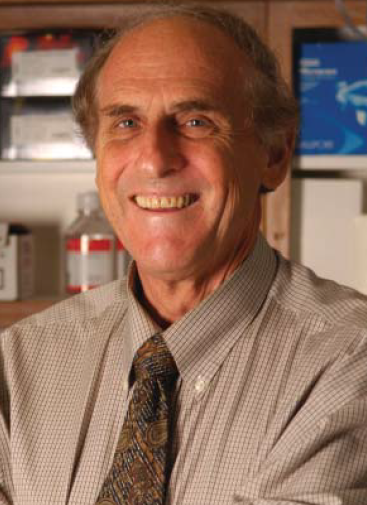
A man smiles for the camera inside a science lab.

Academy member Ralph Steinman tells the story of his life journey being raised in a nonscientific household to going to medical school and studying the immune system.

Published September 1, 2008

By Ralph Steinman

Ralph Steinman

I wasn’t raised in a scientific family and I didn’t have a focus on science early on. In high school I took a vocational test and it concluded that I could be anything. I was interested in everything and I had absolutely no focus until I went to university at McGill. That’s when I first took biology. I really became interested in physiology and medicine, though I took almost every other course in the university. I knew I loved research, but I also liked the practice of medicine a lot. As I went through medical school I became more and more focused on biology and medicine.

All along, at every educational institution, I had great teachers. They did what mentors are supposed to: they provided knowledge, support, and criticism. We always need mentors, not just when we’re starting out.

My key mentors were the ones that I worked with in the lab—Orville Denstedt, professor of biochemistry at McGill, and then cell biologists Betty Hay and Jean Paul Revel at Harvard Medical School. For my postdoctoral work, I wanted to come to Rockefeller and work with Zanvil Cohn and James Hirsh. I had no second choice, in part because they were the only people taking cell-biological approaches to the immune system at the time. I learned immunology sitting right in this very room. We just read papers and that’s how I learned. Working with them led me to the discovery of dendritic cells in my third year at the lab.

The Role of the Immune System

I feel that many people don’t recognize that the immune system is involved in so many important conditions. The vast majority of people may have never heard of the word immunology. Even if they’re taking an antibody that’s making them well, they may have no idea this came from immunology.

The major sacrifice you make as a research scientist is that you don’t get to spend enough time with your family. The other thing one gives up is time outside the lab making science understandable to the community. I do a little public speaking, but I definitely would have liked to have had more time to get out and explain what we’re doing. Not only because it’s fun being with people, but it really is important.

I don’t like superlatives, but if I had to try to describe my most important accomplishment, it was to discover a new dendritic cell lineage of white blood cells and to show that it initiates and controls immunity. It was quite a struggle to get there, but those discoveries in 1973 and 1978 convinced us we were on the path to something new and important, and it opened up the field. Dendritic cells help you to understand how this remarkable immune system is involved in many diseases, and what you might do to prevent or treat diseases.

Focused on AIDS and Cancer

AIDS is our lab’s main target, cancer is another, but we also want to learn to silence or tolerize the immune system in transplantation and many other settings like autoimmune diabetes. And we want to discover vaccines for many more diseases. Some people would say the major application is to use dendritic cells in immune therapy for cancer.

There is plenty of promise, but immunology in cancer is very underdeveloped. I estimate that immunology is less than five percent of the effort at the National Cancer Institute and very little of that five percent deals with cancer in patients—it’s people like me doing models outside of the patient. That’s one of the things I’m trying to change, but it’s going very, very slowly. We need people to see this as an omission in the war on cancer that must be overcome once and for all.

When you list the properties of tumor cells, it is fair to say that one is to evade the immune system. But the immune system also knows how to reject cancer cells. We have a cancer death rate in this country of more than a half million every year and we have 22,000 cancer patients in drug trials, but hardly any are immunologic.

It’s a huge gap that we’re not looking after. A number of immunologists who think this way have gotten together and, with help from various sources, come up with a proposal which we call a cancer immunotherapy network—a mechanism whereby scientists will work together to design the best immune-based studies in cancer patients and make them accessible to patients.

Just Tackling a Problem

I often wonder what I’d be doing if I didn’t take my biology course, but certainly if I had to do it over again I would do the same thing. Undoubtedly, I love a lot of things about my work, including being able to work on a special campus like this and in New York City. I love discovery and the way it happens. I love tackling what I believe to be a big problem.

And I love the scientific profession, its internationalism and the many terrific people who are responsible for one major advance after another. I’m getting old, but because everybody in the lab is so young, I feel like one of them, you know, just tackling a problem.

Also read: Dispatches from the Democratization of Science


About the Author

Ralph M. Steinman is the Henry G. Kunkel Professor and a senior Physician in the Laboratory of Cellular Physiology and Immunology at The Rockefeller University. He earned his M.D. from Harvard Medical School and has been an Academy member since 2002.

Recent awards include the Gairdner Foundation International Award (2003); the New York City Mayor’s Award for Scientific Excellence (2004); the Albert Lasker Award for Basic Medical Research (2007); the Albany Medical Center Prize (2009). In his free time, he enjoys ballroom dancing with wife Claudia, spending times with granddaughters Isla and Syla, and architecture.

Industry Strategies for Enabling Innovation

Tech experts and entrepreneurs provide their insight on what drives innovation in the digital era, and what you can do to thrive.

Published May 1, 2008

By Leslie Taylor and Adreinne Burke

Every second year since 2004, Finland’s President has presented the $1.5 million Millennium Technology Prize to an individual whose innovation “improves the quality of human life and promotes sustainability in many ways.” World Wide Web developer Tim Berners-Lee and Shuji Nakamura, inventor of the MOCVD technique for manufacturing energy-efficient light, are past winners. And in April, an audience gathered at The New York Academy of Sciences as four finalists for the 2008 prize were announced.

Finland’s “tribute to life-enhancing technological innovations,” is just one, albeit the grandest, in an exploding field of awards, books, conventions, fairs, and symposia celebrating innovative science.

Magazines including Business Week, Fast Company, and Wired publish annual lists of the world’s most innovative companies, and MIT’s Technology Review crowns the year’s Top 100 Innovators. The FIRST Robotics Competition, Tech Challenge, and LEGO Leagues established by Dean Kamen—himself the innovator of several important medical technologies—inspires more than 150,000 youths in 38 countries to innovate and “dream of becoming science and technology heroes.”

Through his Innovation 25 Strategy Council, Kiyoshi Kurokawa, science advisor to the Prime Minister of Japan, urges his compatriots to undertake creative technology endeavors. And, as Academy President Ellis Rubinstein notes, leaders of cities the world over are competing for the unofficial title of Idea Capital. Even The New York Academy of Sciences is developing its own Industry Innovation Awards program.

To be sure, definitions for innovation abound. Depending on whom you ask, innovation is lifealtering, process changing, disruptive, sustainable, earthshattering, or breathtaking. Google Engineering Director Alan Warren says innovation is about “taking a set of tools or capabilities and coming up with a new way of putting them together that is going to provide value for the users.” Dean Kamen argues, “it’s not clever widgets and inventions, but it is the wheel, fire, and moveable type.” An innovative technology, Kamen says, “is something so profound that it changes the way people live, work, or play.”

Regardless of how it’s defined, most people know innovation when they see it, and few would disagree with the choice of Tim Berners-Lee or Shuji Nakamura as world-class innovators.

What seems harder to agree on than what defines innovation is what enables it to happen. Are certain conditions necessary to create an environment that breeds innovation? Is innovation most reliant on brilliant people, plentiful resources, or an ideal work culture? Is it about having the perfect combination of those factors, or something else entirely? And how do some companies, such as Google or DEKA, manage to generate one life-altering tool or technology after another?

We asked the leaders of those and three other organizations to tell us what they believe is the key to scientific innovation in industry. We didn’t get the same answer twice.

XEROX: Realize the Customer’s Dream

Raised by a painter-poet mother and an engineer father, Academy member Sophie Vandebroek might seem to have been destined to be an innovative scientist. But her definition of innovation isn’t so heavy on free-thinking and creativity. “You innovate when you make a significant difference to the customers—when they benefit from the product or service that you provide,” says the Chief Technology Officer for Xerox.

Over the company’s lifespan, Xerox has been issued more than 55,000 patents worldwide and continues to win more than 10 every week. But inventing is just half of the innovation equation, according to Vandebroek, who is also president of the Xerox Innovation Group. Her formula? Innovation = invention + entrepreneurship.

An invention can be cool, but it might not change the business process, make a significant impact, improve efficiency, or create new markets, Vandebroek says. “Innovation is a practical and successful application of a breakthrough invention,” she explains, adding that, at Xerox, “the way we innovate starts and ends with the customer.”

To really grasp Xerox customers’ needs and address their “pain points,” Vandebroek instituted a practice by which Xerox researchers host “dreaming sessions” with about 2,000 customers each year. For instance, when Xerox acquired the litigation document management company Amici in 2006, Xerox staff sought out meetings with potential customers of its products—the chief information officers of several top law firms.

Amici offered software to enable lawyers to automatically pull data for trial from among reams of documents containing millions of pieces of evidence. But in Vandebroek’s conversations with CIOs, she discovered that legal professionals need to sift through evidence by hand to decide if it is relevant to a case or if it needs to be kept secure—a tedious and error-prone process. “It was a pain point,” Vandebroek says, but to automate the process and eliminate human intervention was no solution.

Instead, Xerox developed smart document software that used machine learning and linguistics to process and analyze content for attorneys, find facts in documents, and filter private information. Vandebroek says the dreaming sessions enabled her staff to more effectively apply their expertise to the customers’ problems.

In another example of how dreaming sessions contribute to innovation, Vandebroek says a team of anthropologists from Xerox’s Palo Alto Research Center spent six months conducting on-site observations of some of the company’s large enterprise customers. They noticed that nearly 45 percent of what people print winds up in the recycling bin within 24 hours—an expensive and environmentally unsound habit. Meanwhile, at a Xerox research facility in Canada, materials scientists and chemists had developed a temporary printing system that could make type disappear from a page 24 hours after being printed.

Vandebroek says going on site to experience the customers’ operation is a key to innovation. “If I simply ask my customers what they want, they might not be familiar with the state-of-the-art that allows you to do such things.” She adds, “As Henry Ford said, ‘If I gave my customers what they wanted, it would have been a faster horse.’”

IMAGINATIK: Harness the Wisdom of Crowds

In a world where competition is global and corporations can be as populous as small cities, it’s too risky to rely on a few people to come up with all your good ideas, says Mark Turrell, CEO of Imaginatik, a Boston and Winchester, UK-based company that makes enterprise software for collaborative innovation and idea management. Problems can better be solved when you tap into the brains of tens, hundreds, thousands, tens of thousands of people, he says.

“Let’s say you ask for input from 500 people. Even if 400 can’t be bothered to respond, 100 participate. Of those, 30 will have 38 ideas, of which 10 to 15 percent will be good,” says Turrell. “Because you are working at volume, you’re bound to get one brilliant answer. Always.”

While working on a PhD in the Information Management Department of Cass Business School in London, Turrell studied critical mass and diffusion theory of collaborative technologies, how they spread through organizations, and how people adopt and use them. Based on what he learned, Turrell created a methodology and Web-based software for collaborative problem solving that has been used more than 4,000 times to address a variety of problems.

Hewlett-Packard employed his system as a brainstorming device to solicit ideas for meaningful projects the company could undertake as part of an Earth Day celebration. And Pfizer used it to tap into its own institutional wisdom: To expand its drug pipeline, the pharma want-ed to dig up compounds that the company once had under development but did not finish developing for some business reason, such as lack of interest in a certain drug market.

The company used Imaginatik software to engage the help of 15,000 employees in finding an existing drug ready for phase 3. Compounds that had made it that far along in the pipeline, Pfizer reasoned, have approximately $100 million net present value. They found one within a week.

Turrell says there are tricks that can encourage people to use a collaborative system. A narrow focus and a short time frame will get 30 times better participation than any long-term program, he says. People are always busy, and they procrastinate, he explains, so it’s important to encourage them to do today what they’d prefer to put off until tomorrow. Plus, people are more likely to come up with great ideas in response to a specific query than to a general invitation for suggestions. Asking, “How can we reduce bureaucracy or reduce our energy consumption?” prompts more useful and creative responses than just requesting suggestions on how to improve company performance.

Many of the great ideas that became some of the most successful products, or even whole industries, were developed at the grassroots level, Turrell points out. But leadership—to set goals and identify and provide support for the best ideas—is also critical. Turrell’s favorite recipe for promoting innovation? “Openness to using the thousand eyes, ears, and brains everywhere, but at the same time having a focus and direction.”

GOOGLE: Hire the Best, Then Get Out of Their Way

Google Engineering Director Alan Warren, whose employer is the poster child for 21st century innovation, says it has become so by hiring the right people and fostering a culture where they thrive.

Recent innovations out of Google’s New York City office, such as Google Spreadsheets, which transformed a traditionally desktop-bound application into a collaborative workspace, are the products of the company’s hands-off approach to management.

“You can’t make someone an innovator if they don’t have a curiosity and desire to make things better, to do something new and useful. And you can’t put someone like that in the wrong environment and expect good things to pop out,” Warren says.

Google seeks new hires with what Warren calls “serious horsepower”—people who are not just super smart, but who also have a creative bent. “We ask ourselves, ‘Has a candidate just taken a problem that’s been handed to them by a thesis advisor and worked their way through it, or have they taken [a problem], spun it out this way, figured out how it applies to that, and then come up with this over here?’ We look for that kind of spark,” he says.

Another question Warren asks a hiring committee is to consider is : “Would you like this person sitting in the cube next to you and working on your project with you?”

“We won’t bring someone in just because of horsepower if we don’t think they’ll add to the environment,” he says. He wants people who are happy to let others bounce ideas off of them and who will participate in offsite teambuilding outings such as the recent company-wide ski trip.

That’s because Google developers usually attack projects in small teams. “The natural number that our developers tend to organically subdivide into is three,” he says, adding that it’s “a group size that minimizes the overhead from over-organizing and coordinating.”

The Google philosophy also holds that an overly hierarchical management structure can obstruct innovation. Micromanagement is strongly discouraged. As a manager, Warren believes his job is to bring smart people together then take a step back. “I don’t manage or direct in the traditional sense,” he says. “My job is to help communicate to employees what the company priorities are, what I see as the important challenges and needs out there, and to give them some ideas and directions to go in.”

But it is the job of the engineers to figure out just what needs to get done, he explains. “I manage them by reviewing what they are planning to do, rather than by figuring out what they should do and telling them to do it.”

DEKA: Celebrate Failure, and Move on Fast

Perhaps best known for his electric “human transporter,” the Segway, inventor and entrepreneur Dean Kamen holds 400 patents and is responsible for creating life-transforming technologies such as the mobile peritoneal dialysis machine (140 million shipped), the iBOT Mobility System—which enables people typically confined to a wheelchair to maneuver stairs and rough terrain, reach high shelves, and greet a standing person at eye-level—and, still under development, a robotic prosthetic arm, designed especially for amputee soldiers returning from Iraq.

Kamen says he fosters innovation at his Manchester, NH, company, DEKA Research & Development, by embracing failure. “In most companies the penalty for failure is substantially disproportionate to the reward for success, which causes rational people to be risk averse,” Kamen says. “DEKA is a place that embraces change and a place that celebrates failure in a weird way.”

When an idea doesn’t pan out, Kamen says it’s important to view the project, not the person or the company, as the failure. “Let it fail quickly, learn, recover, laugh, and move on,” he says. “At the end of any day I’d like to see guys running around yelling ‘Eureka!’ or else I’d like to see smoke and a ball of flames. Spectacular death is better than the warm death of mediocrity.”

Asked whether brilliant people, the right resources, or a strong culture is most important to an innovative workplace, Kamen responds, “You need the right people, resources, and culture. And mostly you need to be able to work really hard.” Modern culture suggests that life is about instant gratification, Kamen complains. “The jingles kids see say, ‘Life is short. Play hard.’ My motto is ‘Life is short. Work hard.’ I don’t think there’s a shortcut to innovation,” says the man who claims to have never had a job or collected a paycheck in his life.

Kamen also suggests that a small company like DEKA, with about 200 employees, is better suited to innovate than behemoths. “Big organizations are good at doing certain things that are important for the world to have, like consistency and quality. Good management is about consistency and never being surprised. But that’s contrary to what innovation is,” he says.

So, what is innovation? “People are comfortable with the way things are,” Kamen explains. “Innovation is therefore so rare it only occurs when some idea or technology is so profoundly better than what existed before that people are willing to change.”

How does he know when DEKA has produced something that meets his definition of innovative? “When you deliver the first one that actually works—something that you think is a big idea and you show it to someone and their deep analytic response is, ‘Wow!’ Then you know you’re on to something.”

NYSERNET: If You Build It, They Will Come and Be Brillant

Academy member Timothy Lance believes that great infrastructure is the key to enabling scientific innovation. Scientists around New York State who are relying on his organization’s vast computing network are the proof of his point.

“Suppose you’ve got a computational model that has some-thing to do with protein folding,” begins Lance, president and chairman of the board of NYSERNet, a private not-for-profit corporation that has delivered state-of-the-art Internet services to New York State’s research and education community for more than 20 years.

Now, he says, “Suppose you’ve got a very good lab scientist who knows a lot about proteins and the way they behave. Once upon a time he might have said, ‘To run the model is going to take a week and then it will take another two days to download the results.’”

But, Lance asks, what if you put this incredibly fast computer and network at his disposal so that the model can be run in two seconds? “He might see the results and say ‘That’s interesting, but hey I wonder, what if x is different? Let’s tweak this and see what happens.’ [This experiment] is quantitatively different but it’s also qualitatively different because it’s so quick that you’ve got this brilliant mind able to turn multiple things over and come up with an idea.”

Founded in 1985 by a consortium of institutions grappling with lack of access to high-performance computing, NYSERNet counts among its members New York State’s leading universities, colleges, museums, healthcare facilities, primary and secondary schools, and research institutions. In 1987, NYSERNet deployed a regional Internet Protocol network—the first use of the technology outside the U.S. Department of Defense, and the first statewide implementation.

In the days before the public Internet, scientists couldn’t quickly share data or exchange ideas, Lance notes. And before NYSERNet, research institutions paid for dialup so their investigators could call in to the nearest supercomputing center. By providing them with access to the computational and connectivity tools they need, NYSERNet has advanced research and educational initiatives, and thereby innovation, in New York State.

Over the past three years, in order to end its dependence on carrier-provided circuits, NYSERNet has deployed or acquired a vast network of fiber optic cable—over 1,500 miles of fiber in New York City. When the Large Hadron Collider comes online in Switzerland this year, all data flowing from it to the Americas will be routed through NYSERNet’s primary collocation site at 32 Avenue of the Americas in Manhattan, Lance says.

“Now the networks are so powerful that we can look at harder problems and bigger datasets, bigger transfers, and more computational cycles,” says Lance. “Of course, there can be innovation by having breathtaking ideas that don’t require any computers and I sometimes kid around that what we’re doing with these supercomputers is enabling ordinary men to do what Gauss would do in his head overnight. But in fact, to visualize some problems requires so much data or computation or tools that the infrastructure becomes an absolutely critical tool forgetting an idea of what’s going on.”

A Shared Life of Advancing Science

A couple pose together for the camera inside the study of their home.

From their honeymoon through retirement, Herbert J. Kayden and Gabrielle H. Reem reflect on their commitment to advancing science in New York and across the globe.

Published September 1, 2007

By Adrienne J. Burke

Image courtesy of Don Hamerman via Update magazine.

Herbert Kayden is known for his research on the genetic disorders of lipid metabolism. In the 1960s he published the first definitive studies on the metabolic pathways of vitamin E and its role in humans. His wife of five decades, Gabrielle Reem, made her mark on science with studies of purine biosynthesis and the mode of action of immunosuppressive drugs.

If you’ve attended a meeting at The New York Academy of Sciences (the Academy) in the past year, you’re already familiar with them: The Herbert and Gabrielle Reem Kayden Auditorium was named to honor the couple’s generous ongoing support of the Academy. And if you’re a longtime Academy member, you’ve likely rubbed elbows with one or both of them. Kayden joined the Academy in 1949, presided over the board for one year, and continued to serve on it for another five. Reem, who jokes that she was an “Academy widow” for that period, has been an Academy fellow for more than 20 years.

The Backstory

Born in Manhattan and educated at George Washington High School, Kayden enrolled at Columbia College with plans to pursue a career in medicine. On the advice of the school’s dean, the mathematician Herbert Hawkes, who believed that no student of science should graduate without a good dose of liberal arts, Kayden balanced his pre-med schooling with humanities studies. “I took only the science that was required to get into medical school,” he says. His course load included literature with the distinguished professor Lionel Trilling and cultural history with the Columbia cynosure Jacques Barzun.

After graduating from NYU Medical School, Kayden served overseas as a Navy ship’s doctor until 1946 before beginning a career in cardiology research at Goldwater Memorial Hospital on Roosevelt Island. At the time, the elite research hospital treated the city’s chronically ill, hosted clinical wards for NYU and Columbia, and was world renowned for anti-malaria research. “It’s hard to reconstruct the intensity of those sessions and the seminars and the grand rounds,” says Kayden, who was the hospital’s chief resident. “It was an extraordinary group of physicians—the most enthusiastic, bang-up, conscientious group I’ve ever seen.”

The group included Reem, who had landed there as a research fellow after medical studies in Jerusalem, Beirut, Geneva, Basel, and the Mount Desert Island Biological Laboratory in Maine. When Kayden later took a position at NYU Medical Center, Reem went on to become an associate at the Sloan Kettering Institute for Cancer Research, where she worked in clinical medicine. Later, she was appointed professor of pharmacology at NYU, where she studied de novo purine biosynthesis, the mode of action of immunosuppressive drugs, and the regulation of human prolactin expression in lymphocytes.

Elected President of the Academy’s Board of Governors

When he became president of the Academy’s Board of Governors in 1977, Kayden appealed to Bill Golden, formerly President Truman’s science advisor (and now a Life Governor of the Academy), for advice on restructuring the organization. Kayden extended the Academy’s activities into New York City with programs to mentor high school students and host events with the New York Hall of Science.

He also hired NYU Provost Sidney Borowitz to be the Academy’s paid director. “We revised the constitution to cut the size of the board and imposed proper governance,” Kayden says. His influence so many years ago set the stage for the Academy to evolve into an organization that he now praises as one that enables scientists to share their wisdom, knowledge, and teaching with the world.

As Reem recalls her husband’s commitment to the Academy, Kayden remembers his wife’s focus on research being so intense that he once asked the campus police to check on her in her lab late at night. Asked what drove them, Kayden and Reem reveal a mutual enthusiasm for science so strong that they visited a research lab in Sweden during their honeymoon; this obsession has lasted throughout their union. Says Reem, “Science became our passion. Pursuing our research was very exciting, and whatever we touched was new.” These sentiments make it all the more fitting that their names now crown the Academy’s brand new auditorium, with its view of all of Manhattan.

Also read: In Memoriam: President Emeritus Herbert Kayden

The Evolution of an Environmental Scientist

A woman smiles for the camera.

Rosina M. Bierbaum was always mindful of pollution and other environmental matters growing up in Pennsylvania, so perhaps it’s no surprise that she made a career of it.

Published September 1, 2007

By Rosina M. Bierbaum, as told to Abigail Jeffries

Rosina M. Bierbaum, PhD

I grew up in Bethlehem, Pennsylvania, a steel town, as the middle of five children. We lived only two blocks from the main steel plant, so I was exposed to air pollution issues from a very early age. Particulates in the air coated our cars and windowsills every day, so my siblings and I were constantly dusting! This was before the Clean Air Act.

At age 11 my interest in the environment blossomed when I read Rachel Carson’s other book, The Sea Around Us. I became very concerned about the preservation of aquatic and marine ecosystems. My father’s boat store afforded me many opportunities to study the Pocono Mountain lakes, and increasing signs of pollution worried me.

My ninth grade biology teacher was my first mentor, and a real gem. She arranged for students to work in local college labs on weekends. We studied Drosophila genetics, synthesized aspirin, and tried not to explode things; I really got hooked on science.

After taking an ecology summer course at LaSalle College at age 14, I entered—and won!—local and national science fairs with projects examining how irradiation affected the interaction of algae and bacteria. Using a meat sterilization lamp in my grandfather’s butcher store, I discovered that there were some antibiotic properties in the algae Chlorella that were destroyed by ultraviolet radiation. I went on to major in both biology and English at Boston College and pursued a PhD in ecology and evolutionary biology at SUNY, Stony Brook.

A Shift to the Science-Policy World

By then, my career goal was to conduct research on marine invertebrates in a beautiful coastal setting for the rest of my life. But one of my many mentors, Dr. Bentley Glass, admonished me to participate in the science-policy world. Since I didn’t even read a daily newspaper then, he essentially embarrassed me into applying for a Congressional fellowship, which I, somewhat unhappily at the time, won. So, I left the ivory tower, but what an epiphany awaited!

In those 20 subsequent years working for the Congress and then the White House, I learned that science is not the loudest voice, that civic scientists must be ready to translate the relevance of technical information to whatever policy issue is urgent, and that one must ensure scientists are at the table when decisions about budgets, treaties, policies, and regulations are made. Economists and lawyers were routinely consulted, but it took some persistence to ensure scientists became part of the group of usual suspects.

I left my position as acting director of the White House Science Office in 2001 to return to academia to train the next generation of environmental leaders in the way I wish I had been educated when I went to DC— not just to know a narrow slice of science but to be able to speak the languages of economics, policy, law, engineering, and negotiation.

That’s my mission now, to combine social sciences, natural sciences, and design in an integrated education to enable tomorrow’s leaders to achieve a sustainable planet.

Also read: The Environmental Impact of ‘Silent Spring’


About the Authors

Rosina M. Bierbaum is the Dean of the School of Natural Resources and Environment at the University of Michigan. She holds a Ph.D. in Ecology and Evolution from the State University of New York, Stony Brook and has been a member of the Academy since 2000.

Abigail Jeffries is a freelance science and health reporter living in Tolland, CT.

Academy Inspires Future with Young Einsteins Program

This summer, the program tackled the energy crisis, terrorism, and how pigeon waste can be used as a biological weapon.

Published July 28, 2006

By Jennifer Tang

Image courtesy of Sensay via stock.adobe.com.

Can pigeon waste be used to spread a dangerous fungus affecting millions of people? How can carbon dioxide, the greenhouse gas linked to global warming, be used to extract a natural gas, methane, to help curb our energy crisis? How can we protect New Yorks computers from hackers and terrorism?

These are just some of the cutting-edge scientific topics being tackled by 55 students in the Academy’s Science Research Training Program (SRTP). Now in its 30th year, the eight-week summer program has prepared thousands of high school students for careers in the sciences by training them to do hands-on, scientific research with leading scientists from institutions such as Columbia University, Burke Rehabilitation Center, New York Medical College, NYU School of Medicine, and Cold Spring Harbor Laboratory.

Each spring, hundreds of students from public and private schools located in New York City, Westchester, Long Island, New Jersey and Connecticut apply to get into this competitive program, which is open only to newcomers. Students choose their favorite category (i.e., biology, chemistry, computer science) and are assigned a mentor. After working Monday to Thursday, students supplement their lab experiences by attending special Friday workshops held at the Academy.

The workshops examine the responsibilities of a scientist from a multiplicity of perspectives and discuss issues such as writing and presenting scientific papers. Last week, the Academy held a panel discussion on alterative science careers featuring The New York Times reporter Andrew Revkin, astrophysicist Garret Schneider and lawyer and chemist Mary Jane O’Connell.

Cell Phones and Pigeons

Working with her mentor, Dr. Jason Nieh from Columbia University, Janice Escobar, a fifteen-year-old student from Manhattan’s Chapin School, has embarked on a project not likely to be found in a typical high school science textbook – mapping cell phone networks in order to prevent new acts of terrorism. “Recently, terrorists in Iraq have been using cell phones to detonate bombs,” she observed. “Perhaps our research could ultimately help prevent events like that from happening in Manhattan. We’re also mapping out the number of open access points in the city. Where there is an open access point, Internet hackers could do a number of harmful things: break into private files, download illegal programs, and create viruses.”

Another student, Steven Mieses from the Bronx’s High School of American Studies at Lehman College, is spending his summer studying pigeons but from the perspective of a lab bench rather than that of a park. “Cryptoccoccus neoformansis a fungus commonly found in pigeon waste and affects people who are immunocompromised,” he says. “New York City is heavily populated with pigeons, putting people with HIV, or people who have undergone immuno-suppressive therapy such as chemotherapy, at risk of contracting this deadly pathogenic fungus.”

Working with his mentor, Dr. Arturo Casadevall at the Albert Einstein College of Medicine, Steven studies Crypotoccoccus neoformans cells under a microscope and tests for antibodies. “By helping to make these antibodies for GalXM, we can possibly eliminate one of the many opportunistic infections in the world and save thousands of lives,” he says. “This is why science is my favorite subject – in the lab, I never know if the day will end in failure or success. What I do know is that the day is going to have many surprises.”

Excitement of the Unknown

Unexpected discoveries and surprising results are true to the experience of real scientists, says Matthew Kelly, the Program’s Coordinator. “The purpose of the program is to give students a taste of what real-life scientific research is all about,” he says.

Students thrive on satisfying their curiosity. Yena Jun, a student from New Jersey’s Academy for the Advancement of Science and Technology, stresses that’s why she became a SRTP student.

“At my school, the results of the lab experiments are often known before the experiments actually take place,” she says. “In the SRTP, we don’t know what the results will be.”

Yena and Zeke Miller, a student from Davis Renov Stahler Yeshiva High School for Boys in Woodmere, New York, are studying how methane gas might be extracted and used as an alterative fuel, a project that would help today’s energy crisis.

“Gas hydrates, which are found in huge quantities in marine and Arctic sediments, contain twice the amount of carbon found in all other fossil fuels and make them a significant energy source in the future,” she observes. “However, extracting methane hydrates from sediments in the ocean floor may cause landslides or lead to further climate change. We’re looking at how carbon dioxide might be used to replace methane, an intriguing concept that would kill two birds with one stone – use methane as a fuel and reduce the level of carbon dioxide in the atmosphere, a cause of global warming.”

Hooked on Science

It’s challenging subjects like these and their potential to make an impact on today’s society that has SRTP students hooked on science. “I hope that my research will help speed up progress in curbing dependence upon foreign oil – with methane in such abundant supply, this would be a potential solution to the world’s energy problems,” Zeke says.

Despite the hot weather, most SRTP students say they don’t regret spending their summers in labs or libraries rather than tossing volleyballs on the beach. “Being in the program makes you more aware of the roles politics, economics, ethics and society play in scientific findings, and overall you become aware of the issues that we are faced with now,” says Janice.

Steven adds, “Unlike a vacation that ends once the summer is over, the information I learn here will be with me forever, and I can take it wherever I go.”

Do you know a young, inspiring scientist? Encourage them to check out the Academy’s educational programming.

High Temps Call for High-Tech Edutainment

From clunky kinetoscopes to cutting-edge video games, communication is cool at the Sony Wonder Technology lab.

Published July 24, 2006

By Adelle Caravanos

Image courtesy of miglagoa via stock.adobe.com.

Sidewalks that sizzle, subway seats that stick to your skin, and smells that are, well, unsavory at best. Summertime in New York City can be a drag. But on a sweltering day, students of all ages can ease their overheating heads — and feed their minds — on a visit to the Sony Wonder Technology Lab.

Swarms of day campers, families, and technophiles find solace at the four-story, 14,000-square foot center, located at the corner of 56th Street and Madison Avenue. The Lab’s exhibitions and programs explore the technology and history of media and communication, from the development of television and telephones, to computer processors, programs, and video games. Touch-screen monitors and personalized learning stations, designed for kids aged 8 to 14, allow visitors to experience, first-hand, the technology that enables us to talk to each other, to record and preserve the moments that are important to us, and to make life easier and more enjoyable.

On any given weekday, expect to see small scientists and emerging engineers — many in matching camp couture — as 1,000 or more visitors explore the Lab each day. From Harlem to Park Slope, Flushing to Riverdale, campers, kids, and parents (yes, they’re invited, too) flock from all areas to explore this free expo of hands-on science and technology, opened in 1994 and funded by the Sony Corporation of America.

The first-stop at the Lab: a log-in station that records your name, photo, and voice sample to connect with a bar-coded ID card. Swiping the card at various stations as you wander throughout the Lab lets you log in as the “media trainee” and projects your image onto exhibit screens as you pass by.

Learning the History of Communications

Visitors begin their tour of the Lab with a lesson on the history of communications, taught via video monitors along the Communications Bridge, a walkway to the hands-on stations. Images from the clunky kinetoscopes of the 1890s lead into those of the early days of silent films; these give way to the iconic scenes of movies such as From Here to Eternity, and end at high-definition television shots so crisp it appears that the screen is the only thing keeping the picture inside the monitor.

The Communications Bridge leads visitors into the modern age, and into the Technology Workshop, a set of exhibits that allow trainees to explore basic mechanisms of communication — creating audio and visual samples, and transmitting and receiving these samples as signals via satellites. Kids can view and magnify the inner electronics of computers, video recorders, monitors, and other pieces of equipment.

In one exhibit, trainees must record representative samples of American music for a NASA capsule that will be sent into space. While choosing which music to send may seem difficult (Public Enemy, Johnny Cash, and Billie Holiday are among the choices), the real challenge is deciding the correct sampling rate so the music stays withing the 100 megabyte limit, while being careful to preserve sound quality.

The next series of exhibits focuses on the abundant ways communication technology is used in professional settings — from operating rooms to factories, from the National Weather Service to the sound stage of a children’s TV show.

Entertain Your Brain

At one station, visitors learn about the technology behind the ultrasound instruments that doctors use to examine pregnant women; nearby, you can program a robotic arm to pick up a metal ball and move it to its destination. At the Environmental Research Command Center, trainees track the progress of a hurricane approaching the East coast, and make recommendations to local governments about the deployment of the National Guard. And at the movie studio, aspiring directors, producers, and editors use a full size television camera to tape and edit a broadcast.

For gamers in your group, the Lab has an entire section devoted to how video game developers create the challenging trials for Playstation and other systems. Trainees can make their own car racing game, and then play out the results — a very popular area of the Lab.

In addition to the exhibits, the Lab also screens high-definition films all day, and hosts free or low-cost classes and special events for kids of all ages. So before you let the heat halt your family’s learning for the summer, stop in to the Sony Wonder Technology Lab and entertain your brains.

Do you know a young, inspiring scientist? Encourage them to check out the Academy’s educational programming.

A Laboratory for Science Education in NYC

A high school student inside a science lab holds up a test tube with an orange liquid.

With an alumni association reads like a dream science team from Fantasy University, Stuyvesant High School proves itself as one of the best in the nation.

Published July 1, 2006

By David Cohn

Image courtesy of Emi Suzuki

The principal’s office at Stuyvesant High School is lined with trophies of many shapes, but only one size: big. A few of the prizes are for sports, such as swimming, but most are for cerebral pursuits such as science, math, and chess. In one corner of the room looms a giant check from the Intel Science Talent Search, which awards $1000 to a school when its student is chosen as one of 300 semifinalists in the annual nationwide contest. Stuyvesant’s check for this year is made out for $8000, but that’s nothing unusual.

With a strong focus in math and science, Stuyvesant, located on the Hudson River at Chambers Street in Battery Park City, is recognized as one of the best public high schools in the country. The school has produced four Nobel laureates, and the membership of the 30,000-strong alumni association reads like a dream science team for a game of Fantasy University.

Members of The New York Academy of Sciences (the Academy) who are Stuyvesant grads are too numerous to list here, but they include Brian Greene of Columbia University, a leading authority on superstring theory; Eric Lander of MIT, the genomics pioneer; and physicist Nicholas Samios, director of the Brookhaven National Laboratory. Joshua Lederberg, who won the Nobel Prize for Medicine in 1958 for discovering the mechanisms of genetic recombination in bacteria, is a Stuyvesant grad, class of 1941. He recalls bright young students bouncing ideas off each other and “arguing the merits of going into science,” an atmosphere not too different from today’s.

The Top Achievers

Image courtesy of Emi Suzuki

Stuyvesant’s 800 incoming students represent the top achievers from the 25,000 children who take the Specialized High School Admissions Test, the SAT-like exam that determines who can attend one of New York’s special science and technology public high schools. “If I walked into the 9th grade assembly and said ‘Will everyone who was valedictorian and salutatorian last year in their junior high please stand up,’ about two-thirds would stand,” says principal Stanley Teitel.

Once accepted, students can choose from a varied curriculum that includes ten language choices, tough basic science classes, and advanced science courses in fields including oceanography, molecular biology, and psychology. Students leave Stuyvesant “prepared for the next level,” says Teitel, which is often a top-tier college or Ivy League university. In fact, Stuyvesant has limited the number of colleges to which students can apply to seven, to reduce overlap.

From All-Male to All-Star

The formerly all-male school became coed in 1969, and moved in 1992 from East 15th St. to its new campus in Lower Manhattan, a stone’s throw away from Rockefeller and other Battery Park City parks where students go to relax, eat, and take in majestic Hudson River views. The school’s remarkable labs, which specialize in everything from earth sciences to robotics engineering, “really capture the energy and enthusiasm of the school,” says Robert Sherwood, president of the Alumni Association, which donates most of the money to fund the facilities.

Image courtesy of Emi Suzuki

The location, only a few blocks from most major subway lines, makes it convenient for students who come from all five boroughs. The location also opens young minds. “Coming from Queens, I didn’t have much interaction with Manhattan,” says Emi Suzuki, president of ARISTA, a national honors society and Stuyvesant’s largest club. “So when I started at Stuyvesant, commuting really exposed me to all kinds of different people.”

Suzuki, like many of her classmates, has already had time in a professional lab. With the help of an internship advisor, she was able to spend last summer at the Memorial Sloan-Kettering Cancer Center under the mentorship of Dr. Harold Varmus, 1989 recipient of the Nobel Prize. Suzuki cultured cells, and produced and purified immunoadhesion-marker proteins. Others in her class interned at prestigious laboratories at Columbia, NYU, or Cornell.

“Stuyvesant absolutely does not give us internships on a silver platter,” Suzuki says, “but I do think that our school’s reputation helps.”

Learn more about educational programming at the Academy.

The Missing Person in Science Inquiry Starts with “I”

A woman examines different photos as part of an art installation.

While art and science are at times seen as diametric opposites, there are also ways in which art can inform the scientific process.

Published May 8, 2006

By Cecily Cannan Selby

Science seldom proceeds in the straightforward logical manner imagined by outsiders. Instead, its steps forward (and sometimes backward) are often very human events in which personalities and cultural traditions play major roles.
– James Watson (1968)

A work of art reflects the perceptions of its creator, while a work of science reflects the characteristics of nature. A work of art is a personal expression of the artist, while a work of science must be a shared expression among scientists. An artist creates an original work and does not want another artist to reproduce it. A scientist gets validation when other scientists reproduce her results. These are useful ways to distinguish between art and science.

But the whole truth must include how art and science can be partners. We recognize this most dramatically when we find beauty in science’s products. Less well recognized is that art can also be a part of science’s processes. [17] Richard Buckminster Fuller described this pithily: “When I’m working on a problem, I never think about beauty. I think only how to solve the problem. But when I have finished, if the solution is not beautiful, I know it is wrong.”

I believe that the public discourse about science has been missing a vital message that, if understood and promoted, could profoundly improve student, adult, and societal engagement with science: Aesthetic and humanistic, as well as scientific, perspectives can legitimately influence the choices made in a scientific inquiry.

Public Perception of Science

Unfortunately, public perceptions of science too often thwart this message. Physicist and historian Gerald Holton has explained that misperceptions of science can arise because the scientist’s “private process of creation” is largely shielded from public view. Only the “public process of validation” is reported in professional journals and monographs. What scientists actually do, their “nascent moment of discovery” and personal scientific activity—what Holton calls “private science”—are not. Francois Jacob, the physiologist and Nobel laureate, captured this difference when he compared his “night” science of private scientific activity to the “day” science of formal public reporting.

The writings of scientists, philosophers, and historians are our partners in the examination of “private” science—what scientists say they do, and how and why they do it. They illuminate how personal and cultural perspectives can influence, and add value to, scientific investigations. [17]

The Process and the Person

The cutting edge of science is not about the completely unknown. It is found where we understand just enough to ask the right question or build the right instrument. [7]
– David Goodstein

Scientists say that their inquiry starts with a question, and their first task is to design an inquiry that makes it soluble. Questioning, observing, experimenting, and hypothesis testing are commonly used to find solutions. None of these processes, however, is unique to science. If, as Albert Einstein wrote, “the whole of science is nothing more than a refinement of everyday thinking,” what refinement is unique to science? The answer is scientific evidence. The refinement that early scientists brought to human problem solving is the evidence to which scientists pay attention.

Evidence. In school, most of us learned that scientific evidence must be verifiable. The 20th-century British philosopher Karl Popper argued that falsifiability is a more appropriate criterion, since there is always the possibility that “some new fact or discovery will come along that does not verify the proposition.” To be scientific, an observation or proposition must be open to disproof.

If scientific evidence must be falsifiable by others, then the processes of a scientist’s inquiry must be transparent to others. This is where “public science” demonstrates its value. If everyone is to agree on scientific evidence, its identification must be independent of everyone’s personal characteristics. Scientific evidence must be testable and relevant to the problem under study. The requirement of falsifiability opens the processes of scientific inquiry to public scrutiny.

The Role of Theology

Theology or faith cannot be proven wrong. A sculpture, a ballet, or a poem is not falsifiable. Each is subject to likes and dislikes, to disagreements of taste and style, to failed technique. The proponents of creationism say it cannot be proven wrong because it is a matter of faith. But if it is not open to disproof, it cannot be science. One can like or dislike intelligent design. However, one cannot like or dislike the evidence supporting Mendel’s laws of inherited characteristics—or age estimates from the carbon dating of ancient trees or bones—until and unless new evidence arises to falsify these data.

Observing

Popper wrote that “to look for a black hat in a black room, you have to believe that it is there.” His wonderful line reminds us that all scientific inquiry is based on the assumption that explanations of natural phenomena are accessible to human minds and senses. Modern scholars now declare that the idea that science proceeds through collecting observations without prejudice is false.

As a former professor of mine, Philipp Frank, explained, without a theory, a question, and a context we do not even know what to observe. He quoted Auguste Comte, writing in 1858: “Chance observations usually do not lend themselves to any generalization.” Contemporary philosophers agree. [8] In a scientific inquiry, it is the inquirer’s input that makes human sense of the observation.

Experimenting

Experimenting can be described as “a form of thinking as well as a practical expression of thought.” [11] The contributions of those with “genius in their fingertips” are too often neglected. Nobel laureate Joshua Lederberg once told me that the high-school subjects most useful to his later work were shop and technical drawing. He could learn the “school” science by himself, but not the skills needed to design and build experiments.

To separate tiny quantities of radium from huge, 20-kg batches of pitchblende, Marie Curie learned that she needed brawn as well as brain to do her work. To attract and retain more students in science, the brawn versus brain dichotomy long separating academic from technical skills needs reevaluation. [16]

In Teaching

I often quote the following, for which I cannot now find the source: “Science is an interrogation of nature, but nature can respond only in the way the question is asked.” Doesn’t this say it all?

Experimental design, technical skill, and a critical spirit are all needed to coax new information and new data out of nature. Nature can only answer questions that are asked or provide observations for experiments designed to reveal them.

Luckily for science, there are astute observers who pay attention when something unexpected appears. Fleming discovered penicillin by noticing that the mold contaminating his culture of Staphylococcus bacteria had left a halo where no bacteria grew. Barbara McClintock discovered wandering genes by noticing “unexpected segregants exhibiting bizarre phenotypes” in her maize seedlings. Margaret Mead wisely emphasized the “position of the experimenter” as the “point of reference from which we define a field of observation.”

In science, “the achievements of one generation represent something won from Nature, which remains as definite gain and definite progress: an experiment properly carried out remains for all time.” [1] Great experiments, like those of Meselson and Stahl are a scientist’s sculpture, symphony, and choreography.

Hypothesis Testing

In business and politics, in architecture and economics, dreaming up hypotheses and figuring out how to test them can be the most fun, and the most creative, part of problem solving. Some years ago, at a Rockefeller University meeting honoring Andrei Sakharov for peace work, I heard Popper say, “When scientists fight, their hypotheses die in their stead.” He recognized scientific hypotheses as scientists’ personal creations and possessions.

Hypotheses are educated guesses about what the answer might be. They can be useful throughout an inquiry and tested in many different ways. Different hypotheses can be posited and tested to address new questions as they arise. If the test validates the guess, the hypothesis becomes a conclusion. If it does not, then the scientist makes the critical decision whether to give up a favorite conviction or go “back to the drawing board.”

During my years in cancer research, while scanning cancer cells with the newly powerful electron microscope, I once saw slices of hexagonally packed particles in cells that my colleague, Charlotte Friend (later president of The New York Academy of Sciences), had given me for technical experiments. This chance observation could not, of course, yield any conclusions until she and I put our prior knowledge and experience together to ask two questions: Are they viruses and, if so, have they any relation to cancer?

Hypothesizing yes answers to these questions, we designed experiments to test them. Finding supporting evidence, we reported that we had discovered “virus-like” particles in some mouse cancer cells. Continuing to study the strain of mice from which the observed cells had come, Friend identified them as mouse leukemic viruses.

Who Does Science and How They Do It

The notion that personal perspectives are embedded in scientific inquiry is not new. In 1934, Albert Einstein wrote: Science as something existing and complete is the most objective thing known to man. But science in the making, as an end to be pursued, is as subjective and psychologically conditioned as any other branch of human endeavor—so much so that the question, “what is the purpose and meaning of science,” receives quite different answers at different times and from different sorts of people.

Human judgment, taste, and style are actively involved throughout a scientific inquiry. Different scientists may sense differently, question differently, and hypothesize differently. Those who love order best will find order, and those intrigued by ambiguity will find it. Michael Polanyi has described “personal knowledge” as the ingredient of scientific inquiry that fuses the personal and objective.

In their autobiographies, scientists tell us that they participate personally, even passionately, in their acts of understanding. In school, we learned that scientists must be objective, but we cannot help notice how our colleagues’ personal characteristics influence their work. Scientific reports reveal again and again that combining the perspectives of different scientists entices more secrets from nature. Should not students be taught early how and why their personal characteristics matter to science—and that science benefits from different people asking and answering questions in their own ways?

What Kind of Science to Do?

His extensive historical studies led Holton to develop categories for the types of science scientists choose to do. (I am extremely grateful to Professor Holton for suggesting that I use this information from his unpublished work.) Some choose to challenge a prevailing scientific model or exemplar, to reach principle-oriented conclusions, or to focus on a synthesis of previously unconnected theories and findings. Some look for areas of basic scientific ignorance in the realm of social or national interest, or want to emphasize the applicability of already known science and engineering to technical and social problems.

Holton also noted how some reject “androcentric” or “western” science and technology and seek alternatives to it. And some are most interested in the potential for wide dissemination, recognition, and reward subsequent to the publication of scientific findings.

Scientists can differ dramatically in how they work. Do they choose to work alone or in groups, in a laboratory, under the ocean, in caves or in spaceships, or at home with a computer? Those choosing fieldwork, whether in the Antarctic or the Amazon, tell of their particular taste for nature and of its emotional and physical, as well as intellectual, challenges. [6]

Choices may be constrained by what a mentor, a professor, or other superior advises. Today, they are increasingly constrained by available resources. In a review of the personnel and productivity of five German chemistry laboratories from 1870 to 1930, the chemist Joseph Fruton discovered a powerful finding about the impact of scientific styles [5]: The scientific productivity of the laboratories led by scientists with broad views of their field, and great interest in encouraging their junior associates, was significantly greater than the output of laboratories with autocratic, dictatorial leaders who treated students as disciples rather than as independent scientists.

Beliefs About Science

Political and economic power influence what science gets done by allocating resources for research and for technological applications. It is important for nonscientists to recognize that not all scientists view science’s potential power the same way.

At a memorable 1978 conference on “The Limits of Scientific Inquiry” [2] [15] natural and social scientists were unable to agree on the topic. Nobel laureate and university president David Baltimore argued that scientific knowledge is humanity’s highest purpose, and thus there should be no attempts to limit or direct the search for knowledge. Sissela Bok articulated an alternative perspective: There are even higher values than the acquisition of knowledge, and thus science should join with other forms of knowledge in supporting such values. The beliefs expressed reflected each scientist’s presumption about science.

Half a century earlier, Popper, too, addressed the presumptions of science, suggesting that the practice of science could be encompassed by three doctrines:

1) The scientist aims at finding a true theory or description of the world which shall also be an explanation of the observable facts.

2) The scientist can succeed in finally establishing the truth of such theories beyond all reasonable doubt.

3) The best, the truly scientific theories, describe the “essences” or the “essential natures” of things—the realities which lie behind appearances.

Science and the “Essence” of Things

Those who believe that science can answer questions not just about phenomena, but also about the “essence” of things (doctrine 3) will value science’s mode of inquiry above all others and believe human reason can solve all problems. Edward Teller and Jonas Salk expressed this view. Those who believe that science’s power is limited to explaining natural phenomena (doctrines 1 and 2) support equal opportunity for all modes of human inquiry and exhibit collaborative rather than autocratic scientific styles. Albert Einstein, Rachel Carson, and most modern scientists whose writings I have cited fit well into this category.

There is ample evidence that most students and adults turn away from science when they perceive it as inaccessible, abstruse, mathematical, impersonal, divorced from the arts and humanities—and only for “brainy” males. Would they not be more attracted, and would not teaching be more effective, if science was understood as first and foremost a process of personal inquiry, usable by and transparent to all?

Scientists, teachers, and professors are well known to get satisfaction from belonging to an “elite” group who can “do science.” This is, too often, conveyed to students. I well remember my pride as a young woman, wearing my white lab coat and carrying my special slide rule (yes, before computers and now found only on eBay). But can we not retain pride in our skills and successes, and still open scientific inquiry to all? Should not understanding the difference between scientific and nonscientific evidence be central to scientific literacy? And would not societal problem solving be improved if problem solvers from the arts, humanities, industry, and government collaboratively combined their different kinds of evidence in addressing complex societal problems?

One Size Does NOT Fit All

Students need to know that one size does not fit all scientists. They need to know that science needs and welcomes inquirers with different personal and cultural interests, styles, and experiences, all united through shared rigorous, objective criteria for scientific evidence. They need to know that different approaches, but shared evidence, can entice more “secrets” from nature. Both science and society need scientists and leaders whose perspectives reflect the diverse needs and interests of the taxpayers supporting and applying their work. It follows that the scientific value added by the participation and leadership of women—as well as members of other groups now underrepresented in science—is essential to an open and democratic society.

Also read: Innovative New Art Exhibit Showcases the Importance of Coral Reefs

References

1. Andrade, E. N. 1952. Classics in Science: A Course of Selected Reading by Authorities. International University Society, Nottingham, U.K.

2. Daedalus. 1978. The Limits of Scientific Inquiry (spring).

3. Einstein, A. 1950. Out of My Later Years. Philosophical Library, New York, p. 256.

4. Einstein, A. 1934. The World as I See It. Covici, Friede, New York, p. 290.

5. Fruton, J. F. 1990. Contrasts in Scientific Style: Research Groups in the Chemical and Biochemical Sciences. Memoirs series, vol. 191, J. Stewart., Ed. American Philosophical Library, Philadelphia, p. 473.

6. Gladfelter, E. 2002. Agassiz’s Legacy: Scientists’ Reflections on the Value of Field Experience. Oxford University Press, New York, p. 437.

7. Goodstein, D. 2001. New York Times Book Review.

8. Hempel, C. 1966. Philosophy of Natural Science. Foundations of Philosophy series, E. & M. Beardsley, Eds. Prentice Hall, Upper Saddle River, NJ.

9. Holton, G. 1978. The Scientific Imagination: Case Studies. Cambridge University Press, Cambridge, U.K, p. 382.

10. Jacob, F. 2001. Of Flies, Mice and Men. Harvard University Press, Cambridge, MA.

11. Medawar, P. 1979. Advice to a Young Scientist. Harper & Row, New York.

12. Polanyi, M. 1958. Personal Knowledge: Towards a Post-Critical Philosophy. University of Chicago Press, Chicago.

13. Popper, K. 1964. Conjectures and Refutations: The Growth of Scientific Knowledge. Routledge & Kegan Paul, London.

14. Popper, K. 1983. Realism and the Aim of Science, Postscript to the Logic of Scientific Discovery. Rowman & Littlefield, Lanham, MD.

15. Root-Bernstein, R. 1988. Setting the stage for discovery: breakthroughs depend on more than luck. The Sciences (May/June) 26-34.

16. Selby, C. C. 1993. Technology: from myths to realities. Phi Delta Kappan (May): 684-689.

17. Selby, C. C. 2006. Journal of College Science Teaching (July/August).


About the Author

Cecily Cannan Selby is an affiliated scholar of the Steinhardt School of Education at New York University and a fellow of the New York Academy of Sciences. Her professional career has spanned more than five decades, including positions as a research biophysicist at MIT, Sloan Kettering, and Weill-Cornell Medical College. As an educator, she has been founding dean of the North Carolina School of Science and Mathematics and chair of the department of mathematics, statistics, and science education at New York University. She is also the founding chair of the Council of the New York Hall of Science.