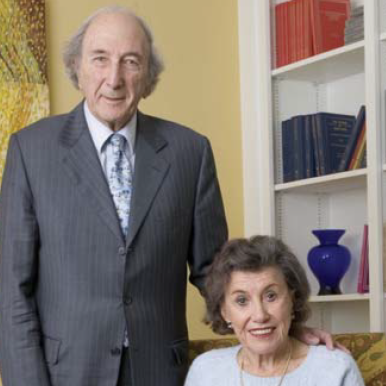
The Abel Prize-winning mathematician talks about his life and career, from emigrating to the United States from Hungary to what he calls the “paradox of education.”
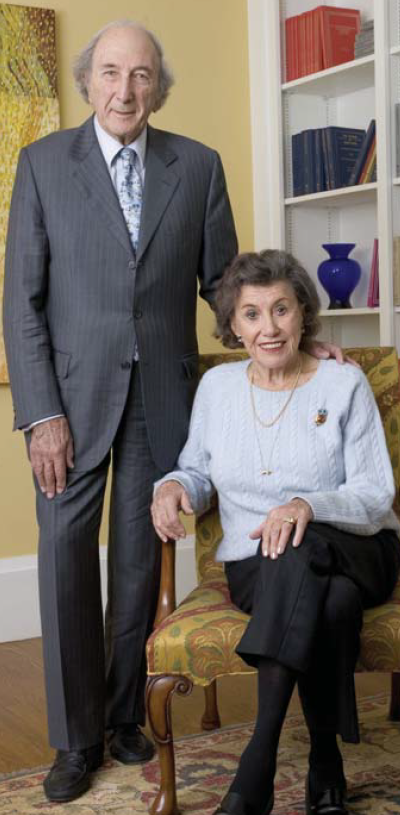
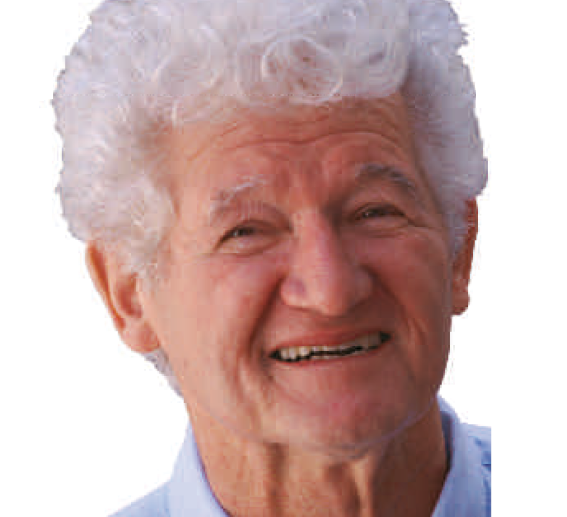
Peter D. Lax is professor in the Mathematics Department at the Courant Institute of Mathematical Sciences, New York University. At age 15 he traveled to the United States from Hungary with his family. His career at Courant began in 1950, and has been interspersed with work at Los Alamos National Laboratory. Dr. Lax’s efforts have concentrated in the area of partial differential equations, and he is recognized for significant contributions to nonlinear equations of hyperbolic systems and for the Lax Equivalence Theorem, among other contributions. He is a member of the National Academy of Sciences and the recipient of many honors and awards, most recently the 2005 Abel Prize, often referred to as the “Nobel Prize of Mathematics.”
Was coming to the U.S. a difficult transition?
I didn’t know much English at first. My parents chose NYU because of Courant, who had the reputation of being very good with young people. At 18 I was drafted into the Army and, thanks to Courant, sent to Los Alamos. I spent a fantastic year there. After finishing my Ph.D. in ‘49, I went back to Los Alamos for a year and thereafter almost every summer into the sixties. That’s where I got involved with computing.
One advisor was John von Neumann. He realized that you couldn’t design nuclear weapons by trial and error – you had to calculate to make sure the design worked. He understood that traditional tools of applied mathematics wouldn’t work; there had to be massive computation. Being von Neumann, he realized this would work for other big engineering designs and for scientific understanding.
You must’ve met a lot of characters there.
I knew Richard Feynman during the war. He was maybe 25, but already legendary. I met Teller and Hans Bethe, who was a wonderful man and a spokesman for science. Feynman could have become that, but he had this terrible illness and died. Others who did very important work were Niels Bohr and Leo Szilard. Szilard liked to operate behind the scenes, but was extremely intelligent and could foresee the future.
How did you end up choosing the path of partial differential equations?
My teachers had done studies in that field. It’s very broad. The word partial just means that it deals with functions of many variables. Most physical theories are expressed as differential equations, like the propagation of sound, flow of fluids, and the way elastic material bends.
Did you approach the problems through mathematics or think about the applications first?
When I was at Los Alamos I thought about the applications, but back here I follow the mathematics.
What is the work you’ve done that you’re most proud of and has been your most important?
I’ve worked on five or six different things. I couldn’t say which one is my favorite. The work on dispersive equations I like very much. The work on shock waves and in scattering worked out very well. I’ve done something very interesting in what can be called harmonic analysis. I did lots of things in functional analysis.
You work in applied and pure mathematics. Is there usually a pretty clear-cut line between the two?
No, everybody mingles. You have to have a balance. Mathematics is taught to children in a way that is very numbers oriented.
Shouldn’t there be a better way to get kids engaged and show the relevance and beauty of math?
Peter D. Lax
Many people think that mathematics theorems are something you memorize. One of the first things to impress on them is that mathematics is thinking. You don’t have to know anything; you can figure it out. Later you have to know a lot, but to get into it you can just figure it out in your head. I think once they get that, they lose their fear. There’s something I like to call the paradox of education: Science and mathematics evolve by leaps and bounds. But does that mean that what we teach in college and high school falls behind by leaps and bounds? The answer is not necessarily. New advances often simplify things tremendously, and whole branches of mathematics can be replaced by something much simpler.
What do you feel will be the most interesting or important areas of mathematics in the near future?
It’s hard to predict. Dispersive systems didn’t look so interesting until there was an astonishing discovery that nobody could have foreseen. Biologists are begging mathematicians to come in. The problems they have are somewhat different from the kinds that mathematicians have been working on before.
Is mathematics following other fields, in that the biological areas are booming?
Yes. I wish mathematics and computer science would move closer. It would be good for both.
On the connection between physics and mathematics: Was it Wigner who wrote the famous paper?
“The Unreasonable Effectiveness of Mathematics in the Natural Sciences.” It was a lecture held here, part of a series of lectures in honor of Courant. One could make a biological point: Why is our brain capable of doing mathematics? Being able to recognize saber-toothed tigers is an evolutionary advantage. But formulating and solving differential equations? These are big questions that evolution isn’t yet ready to answer.
Has winning the Abel Prize changed your life in any way?
It brings interviews, and I get more email about it than about cheap pharmaceuticals. I’ll be happy to go back to my life. Life is mathematics; it’s wonderful
Adequate financial support for students early in their learning journey, particularly the preschool level, can help us create a more equitable education system.
This is the era in which no child is supposed to be left behind. As Jeanne Brooks-Bunn illustrated in her Nov. 15, 2004 talk at The New York Academy of Sciences (the academy), however, the trail of kids bringing up the rear is long, poor and unfairly weighted with students of color. Her talk drew on the themes of “School Readiness: Closing Racial and Ethnic Gaps,” the upcoming spring issue of the Future of Children (volume 15, no. 1), which was edited by Brooks-Gunn, Cecilia Elena Rouse, professor of economics and public affairs at Princeton University, and Sara McLanahan, professor of sociology and public affairs at Princeton.
Recent education policy has focused on test score differences, and significant political capital is being spent to ensure that all kids stay at grade level. Yet, while the test score gap between white and nonwhite students has narrowed, it is still large when you look at 12th grade achievement in reading, according to the 2002 National Assessment of Educational Progress. While 42% of white students read at grade level, only 16% of black students and 22% of Hispanic students do, and there are similar gaps in other subjects, despite the high-profile No Child Left Behind Act.
The Differences that Matter
The problem is that policymakers are barking up the wrong tree, according to Brooks-Gunn, the Virginia and Leonard Marx Professor of Child Development at Teachers College and the College of Physicians and Surgeons at Columbia University, and director of the National Center for Children and Families and the Institute for Child and Family Policy at Columbia. Her research suggests that policymakers should be thinking in terms of racial and ethnic gaps in school readiness, not in school achievement.
While most education research and public policy dollars are devoted to academic skills, a national sample of 3,500 kindergarten teachers, queried in the late 1990s, said that 46% of kids reach school missing the basic skills required to learn, such as impulse control and being able to follow directions and work with a group. Brooks-Gunn maintained that putting more resources towards very young children will pay bigger dividends in the long run than simply funding school programs.
Brooks-Gunn’s research shows that racial test-score gaps begin by age three to four, as soon as children can take vocabulary tests – and the gaps are large. On vocabulary tests, the difference between black and white 3-, 4- and 5-year-olds is a full standard deviation (with black kids falling 15 points below the mean of 100), while the differences in early reading and counting are 60% of a standard deviation, or 8 to 9 points.
“These differences matter,” said Brooks-Gunn. Researchers estimate that 50% of the test score gap seen at 12th grade already exists by age five. Not only are kids who score poorly as preschoolers less likely to graduate, they also are more likely to become teen mothers or engage in juvenile delinquency. “It’s a hard trajectory to change once you’re on it,” she insisted.
Poverty: A Black-and-White Issue
The unifying principle behind these discrepancies is poverty. Almost 18% of American kids – 12.9 million – are poor, according to the 2003 federal poverty threshold of living in a family with an annual income of $18,810 for a family of four. Because this is what Brooks-Gunn called an “impossibly low living standard,” the percentage of poor kids is actually much higher.
And, because blacks and Hispanics are two to three times more likely than whites to be poor, Brooks-Gunn said her work is about racial inequality as well as poverty. “The argument against looking at racial gaps is that we need to help all kids,” she said. “This is certainly true, but our group wants to highlight the fact that current policies are leaving a group behind. We do live in a divided society that does not meet America’s purported value of equity, and the stark differences between white and black children growing up in America must be addressed.”
The litany of travails faced by children in these economic circumstances is long and hard. Compared to children who aren’t poor, they are more likely to have a depressed mother, a teenage mother, a mother with no job or a job with low socioeconomic status (SES), or a mother who dropped out of high school. These children also are more likely to be born with low birth weight, be punished by spanking, and have three or more siblings. Thirty percent of poor or near-poor children have no books in their homes.
Links Between Socioeconomic Status and Achievement
Brooks-Gunn’s work with economist Greg Duncan, Edwina S. Tarry Professor of Education at Northwestern University, examined the links between SES and achievement. Persistent and deep poverty has a bigger effect than any other factor, even when controlling for maternal cognition, number of siblings and other family differences. They also found that early childhood poverty is more impairing than poverty in mid- or late-childhood. “Living in poverty dampens achievement by many routes, including less access to high quality child care, parenting differences and parental mental health differences,” said Brooks-Gunn.
What happens to test score gaps in young children when you control for parental income and education? The achievement gap is significantly reduced. The gap in picture vocabulary and IQ is cut in half, from about one standard deviation to one-half of one. The gap in school readiness skills (pre-reading and math skills at the beginning of kindergarten) drops from about three-fifths of a standard deviation to one-fifth or less of a standard deviation. “The huge difference that controlling for SES makes in terms of reducing the achievement gap suggests that interventions can make a difference,” argued Brooks-Gunn.
She has made several suggestions, starting with income supplements for the poor. Welfare reform studies show that programs that include supplemental income for mothers improved achievement test scores in children, while there was no effect if the reform simply meant, “mom goes back to work.” An annual gain of $1,000 translates into an achievement increase of almost one point. The problem with such a strategy is that the income gap between the average white and black families at the mean is $30,000 – too big a differential for society to easily make up. Alternatively, the earned-income tax credit is a “stealth program for helping poor kids,” according to Brooks-Gunn.
The Economics Support Early Education
On average, this tax break gives up to $4,200 to low-income, working families, and 19 million families claim it. In 1997, the earned-income tax credit raised single mothers’ incomes by an average of 9%, helping lift two million kids out of poverty.
“Parenting programs also make a difference,” said Brooks-Gunn. Research shows you can change parenting behavior to boost literacy in the home, so that there is more reading and language stimulation, and can reduce achievement gaps as well. Home intervention alone does not help with school readiness, however. What works is center-based intervention that includes a parenting component, such as literacy programs that feature reading with both parents and teachers.
Five studies of early childhood education found that weekly home visits coupled with early childhood intervention at daycare centers boosted IQ by 5 points at age 3 – a difference that was sustained through age 18. Early Head Start, which runs from pregnancy to age 3, features both home- and center-based intervention.
The bottom line, concluded Brooks-Gunn, is that the school readiness gap in pre-reading and math skills between black and white children could be narrowed significantly with high-quality early childhood education for all poor children. The kinds of programs she envisions don’t come cheap, of course. But she argues that the pay-off is enormous – and that economists back her up.
Nobel laureate Jim Heckman, the Henry Schultz Distinguished Service Professor in Economics at the University of Chicago, maintains that the nation should invest the bulk of its education funds on preschoolers, because investment at that age pays a far greater return for both individuals and society than money spent on elementary or high school. As Brooks-Gunn noted, “It’s a huge step to have economists arguing for early education dollars.”
A playwright and mathematician turned tutor came to realize that a relatively simple pedagogical approach was most effective when engaging his students.
It was billed as “two imaginative minds in conversation.” Brian Greene, author of The Elegant Universe and The Fabric of the Cosmos, is probably the world’s best explainer of string theory – the latest theory of the “physics of everything.” John Mighton is a talented Canadian playwright, mathematician, and researcher who built a second career teaching math to elementary students in Toronto.
Two Minds and a Quartet
Moderating the evening, at the City University of New York, was Robert Krulwich, the New York ABC-TV correspondent with a bent for scientific subjects. It was all part the CUNY series Science & the Arts, designed as a bridge between two worlds.
What made the evening particularly promising is that Greene and Mighton are collaborating on a play that will attempt to take the concepts of string theory and turn them into a dramatic narrative – with musical accompaniment, no less. “We got together with the director and kicked around how the science might inform the narrative and intertwine with certain musical themes,” said Greene. “Then John goes back and writes up various snippets of scenes and we have actors read them to see how they feel and sound. Then John initiates another roundtable discussion and we go at it again. We’ll have the first full script by November.”
Greene also described another recent project, Strings and Strings, with the Emerson Quartet. “It’s sponsored by the Guggenheim,” he explained. “I talk about the physics in scientific terms, and then I shift into metaphorical language that can apply as well to music. The quartet then takes over and elaborates on that metaphor. People take in the concepts, not just through their heads, but as a full-body experience.”
Taking It Step by Step
All this held promise for some future evenings’ entertainment. But to the delight of some – and the disappointment of others – this night’s discussion revolved almost completely around Mighton’s experiences in tutoring elementary students in Toronto.
“I was completely broke as a playwright and looking for a part-time job,” Mighton recounted. “One day I saw a sign for math tutors. I had taken a calculus course in college and managed to convince the woman that this qualified me for the job. I didn’t tell her my grade.”
Mighton’s first student was a 15-year old boy. “His teacher had told him he was the stupidest kid he ever saw. Having struggled with math myself, I decided to reserve judgment. I worked with him for five years and he turned out to be an ideal student. He’s now doing his doctoral work in math at the University of Toronto.”
Since beginning tutoring 10 years ago, Mighton has founded JUMP – Junior Undiscovered Math Prodigies – an educational charity that provides free math tutoring to elementary-level students in Toronto. He also has written a book, The Myth of Ability: Nurturing Mathematical Talent in Every Child, which outlines his philosophy.
Mighton has two basic strategies. First, he presents math in a simple, step-by-step approach that allows mastery of one stage before moving on to the next. Second, he gives the children plenty of encouragement in order to build their confidence.
JUMP-Starting Math
“I started JUMP in my apartment with a couple of my actor friends, many of whom didn’t know much math,” he said. “We asked the local school to send over some children who needed to learn fractions. Somehow they misunderstood and sent over a remedial class.” The experience was daunting. “My first student could barely count to 10. She had never heard of multiplication. She was absolutely terrified. When presented with the simplest concepts, she kept saying, `I don’t understand what you’re saying.’ “
Mighton says he panicked. “I asked her to count to 10 on her fingers. She couldn’t do it at first but gradually relaxed. Then we began skip-counting by twos and threes. Pretty soon she got the hang of it. I told her she was brilliant. Her mother told me the next day that she had a nightmare that she wouldn’t be allowed to return to tutoring.”
After three years his student had moved back into mainstream classes. She is now working a year ahead of her grade on some subjects.
Mighton’s methods involve lots of guided exercise in the early stages of the program, which puts him at odds with most of the educational schools. “When I wrote this book, I didn’t realize I’d stepped into these math wars,” he said.
“I’m not advocating a swing back to rote learning. What’s happening today, however, is that they expect kids to discover whole concepts. In grade four they now expect kids to discover their own algorithm for division.
“In eight centuries Roman Civilization never discovered an efficient division algorithm. It’s a bit unrealistic to expect children to discover it in one morning.”
Every Child a Prodigy
Greene weighed in on behalf of rote learning. “When people learn some advanced concept in mathematics or physics, they don’t usually swallow it whole,” he said.
“Oftentimes they pick it apart bit by bit. By rote, by calculating, by imbedding yourself into the details and doing it over and over, somehow you get it. The process of rote has gotten a bad reputation, but it is a very, very powerful tool in the service of education.”
“It’s like Ted Williams and these hitters who you assume just have great ability,” said Krulwich, the moderator. “But when they get into the batting cage, they hit and hit and hit and hit and hit.” Mighton added the words of one of the century’s greatest mathematicians, John Von Neumann: “Math is a matter of getting used to things.”
NYC Mayor Michael Bloomberg has proclaimed October 13 as “Science & the City Day” in an effort to both celebrate and advance science for the public good.
Published October 2, 2004
By Jennifer Tang and Fred Moreno
To celebrate New York City as one of the world’s great centers for science, The New York Academy of Sciences is inaugurating an annual parade of events designed to enhance New York’s economic competitiveness and to contribute to science literacy.
This year’s celebration, on Wednesday, October 13, will include:
the presentation of the annual Mayor’s Awards for Excellence in Science & Technology
a gala dinner providing a unique opportunity for leaders in science, medicine, business, finance, philanthropy, and government to meet one another in order to stimulate the city’s entrepreneurial potential
a venture capitalist showcase promoting science and entrepreneurship
a landmark gathering of prominent women scientists discussing issues such as career advancement and advocacy
NYC: A Science Capital
New York City Mayor Michael Bloomberg has declared October 13 “Science & the City Day” in honor of the festivities.
“New York produces and attracts more scientific and medical leaders than any other city on earth,” said Academy President Ellis Rubinstein, “and no city provides better health care for more people than New York. ‘Science & the City Day’ will not only make plain to the world New York’s contributions to science and technology, it will work to expand New York’s role as an engine for scientific advances.”
He added that the New York area hosts more institutions devoted to improving global health than any other metropolitan region and that New York drives the business of science to a degree never really appreciated.
“Our goal, with ‘Science & the City Day,’ is to demonstrate New York’s preeminent position as a science capital, to contribute to the creation of a more entrepreneurial science culture in New York, and to shine a spotlight on science reform planned for the city’s school system.”
Science & the City Day will feature the following events.
Mayor’s Awards for Excellence in Science and Technology
Mayor Bloomberg will announce the winners of the annual Mayor’s Awards for Excellence in Science & Technology. The awards ceremony recognizes the important role that members of the science and engineering communities play in the success of New York City. Past winners have included:
AIDS researcher David Ho
award-winning author and scientist Lewis Thomas
and Nobel Laureates Günter Blobel, Eric Kandel, Joshua Lederberg, and Horst Stormer
This year’s ceremonies will include, for the first time, a Science Educator Award to a teacher in the New York City school system, and special recognition for three outstanding high school students. Also being instituted this year is a new Science and Society Award, to honor an individual or organization that has made use of current science and technological development to benefit the city. Other winners will be named for contributions to the biological and medical sciences; for achievements in the mathematical, physical, and engineering sciences; and for improving the public understanding of science. Junior Investigator awards to honor outstanding researchers under the age of 40 are also planned.
Women Investigators Network Panel Discussion
The Academy has long been committed to addressing issues faced by women scientists and sponsored a landmark conference on this topic in 1973. To continue this dialogue and to create continuous and endemic change, the Academy has formed a Women Investigators Network, whose kick-off event will be part of Science & the City Day. A panel of leading women scientists will focus on career development, advocacy, and self-empowerment for women in the sciences. Panelists will include:
Vita Rabinowitz, co-Director of the Gender Equity Project
Barbara Gerolimatos, Director of Scientific Affairs, Pfizer Women’s Health
Paula Olsiewski, Program Director, Alfred P. Sloan Foundation
J. Lynn Rutkowski, Director of Neuroscience, Wyeth Research
Tasha Sims, Postdoctoral Student, New York University School of Medicine, and Co-Founder, Future Science Educators
A networking reception will follow the panel discussion.
Venture Capitalists Panel and Showcase
Sponsored by the Academy, The National Venture Capital Association, Vital Venture Networks, and an elite consortium of leading U.S. life science venture capital firms, the goal of this event is to forge contacts between life-science venture investors and worthy university-based science teams in order to promote early-stage investment in the life sciences. A “Venture Showcase” for university science teams and early-stage spinout companies will follow the panel discussion. The panelists will include:
Janet Woodcock, Deputy Acting Director, Food and Drug Administration
Michael Zasloff, Senior Distinguished Scientist, University of Pennsylvania School of Medicine, and former Dean, Translational Research, Georgetown University School of Medicine
After the panel, eight to ten company/science teams will offer presentations from universities and laboratories to an independent jury composed of some of the nation’s leading life science venture investors.
Gala “Science & the City Day” Dinner
Leaders from the scientific, corporate, academic, and government communities will come together to network, seek entrepreneurial opportunities, and promote New York as a world capital of science. One of the evening’s themes will be to emphasize the under-recognized strengths of New York science and medicine, as well as highlight the city’s efforts in reforming its school science program.
Nobel Laureate Rod MacKinnon and financial leader and philanthropist William T. Golden will be receiving special awards for their contributions to science in New York. The winners of the Mayor’s Awards for Excellence in Science and Technology will also be recognized.
Chairs for the gala dinner are:
Henry A. McKinnell, Jr., chairman and CEO, Pfizer Inc.
Torsten Wiesel, Nobel Laureate and chairman, New York Academy of Sciences Board of Governors
Russell L. Carson, General Partner, Welsh, Carson, Anderson & Stowe and co-chairman, New York City Investment Fund
Maurice Greenberg, CEO, AIG, and chairman, Starr Foundation.
Other Highlights
The daylong series of events will also serve to highlight a broad series of initiatives at the Academy that advance New York and its special place in the sciences, including:
The New York Science Alliance for Graduate Students and Postdocs is a consortium of 16 universities, teaching hospitals and research institutions in New York that have joined in partnership with the Academy to provide membership to nearly 6,000 young investigators. The Alliance provides unparalleled career and professional development mentoring through a series of seminars and meetings as well as a dedicated web portal, and also gives New York a unique recruiting tool for attracting scientific talent.
The Frontiers of Science and Science Without Borders Programs are initiatives that have brought together many of the leading scientists form various New York institutions in support of a novel program of cutting-edge seminars that are disseminated via electronic briefings on the Academy’s Web site. Ten discussion groups (in such areas as biochemical pharmacology, emerging infectious diseases, and genomic medicine) are already underway with more planned—all part of an effort to advance science through forums that explore topics at the frontiers of science.
The Academy’s new” Science & the City” portal aggregates the incredible richness of scientific activities in scores of institutions throughout New York City. The site includes a remarkable calendar—the only one of its kind in the United States—that itemizes on a daily basis such activities as academic and public lectures, family events, education programs, art and science exhibits, and cultural activities. By emphasizing New York’s rich scientific milieu, the site demonstrates the city’s status as a great global science center.
From sitting on the lap of Einstein as a child to making significant advances in aerospace and materials engineering as an adult, Pamela Kay Strong has done it all.
“Many, many times I’ve been the only woman in the room,” commented Pamela Kay Strong, a member of The New York Academy of Sciences (the Academy) from Huntington Beach, Calif. Her distinguished career in science and engineering was recently recognized when she was named a Fellow of the Society for the Advancement of Material and Process Engineering (SAMPE). “I think it’s made me a stronger person.”
A chemist and engineer whose career spans more than 30 years in the aerospace industry – including technical leadership positions at Hughes Aircraft Co., General Electric Co., Northrop Corp. and, since 1987, The Boeing Co. – Dr. Strong is just the third female among the 93 individuals to be so honored by SAMPE.
Strong’s identification with science began as a young child. Her father, W. T. Strong, worked in the missile and space division of Goodyear at Holloman Air Force Base and often hosted visiting scientists, who were introduced to her as “uncle” or “aunt” in the family home. “I was an aerospace brat,” Strong said with a chuckle during a recent interview. She added that she can recall sitting on Albert Einstein’s lap and, at age 5, building a wooden rocket with the help of Wernher von Braun.
Shooting for the Stars
She then reiterated an anecdote that was published earlier this year in S&T, the science and technology newsletter of her alma mater, Bryn Mawr College. When “Uncle Wernher” asked her how the launch of her wooden rocket had gone, she responded: “It didn’t go to the moon.” Strong said he then asked, “Well, did you get it off the ground?”
Her reply was, “Yes, it went as high as a tree.” To that response von Braun retorted: “Then it was a success! I can’t get mine off the ground.”
Strong’s interest in science had also taken off. In 1972 she earned a BS in organic chemistry from the Philadelphia College of Pharmacy and Science, and two years later her MS and PhD equivalent, also in organic chemistry, from Bryn Mawr. She soon followed in her father’s footsteps, entering the male-dominated aircraft industry.
“In the beginning it was ‘what’s this woman doing here?’” Strong recalled. “But after six months it became come out and join us – in the softball game or whatever it was they were doing. I’ve always tried to get along, and I quickly became one of the boys.”
At the same time, she was equally committed to “doing the best possible job that you can.” At GE in the mid-1980s she was an important member of the team that established the parameters needed to consistently manufacture commercial parts from polyimide (PMR-15) and other aircraft structural composites – an advance that led to significant improvements in aircraft performance.
Continue Fighting the Glass Ceiling
Pamela Kay Strong receives Fellows award from SAMPE International President Clark Johnson.
Strong’s title is currently “Principal Engineer/Scientist 5/Technical Specialist” in the Materials and Process Engineering Department of Boeing’s Integrated Defense Systems business unit in Long Beach. She and her team provide technical and design support for nonmetallic manufacturing processes and material parameters used in aircraft, rockets and the B-1B Bomber. In receiving the SAMPE recognition, she was cited for her contributions to the advancement of such diverse material technologies as composites, low observables and ablative materials.
“It’s unfortunate that women have to work 10 times as hard as men,” Strong said, then displayed her tongue-in-cheek sense of humor, “but it’s good that it’s so easy for us to do that.”
Her advice to young women seeking a career in science and engineering is much the same as for those already engaged in technical careers. “Find a mentor as fast as you can and hang on for dear life – don’t burn any bridges along your way.”
“And continue fighting the glass ceiling,” Strong concluded, “but don’t forget to bring your diamond glass cutting etcher with you.”
Not a member of this impactful and inclusive science community? Sign up today!
Dr. Cindy Jo Arrigo discusses her decision to become a research scientist, why she got involved with the National Postdoctoral Association, challenges facing female scientists, solutions to this challenge and more.
What/who influenced your decision to become a research scientist?
I’ve been looking under rocks since I was a little kid. Discovering new things, following leads, and learning about how things work has always thrilled me, so science and then research were natural choices. What influenced me to actually go into science were my experiences as an undergraduate student. At New Jersey City University, where I studied, I didn’t learn how to do research. Instead, I learned about science, how to think and how to go after what I wanted. Science was what I wanted and the rigorous undergraduate training I got there and at graduate school allowed the rest to happen.
It was also during my time as an undergraduate that I had my first “celebrity scientist” experience: I met Dr. Richard Smalley of Rice University at an American Chemical Society meeting. Smalley, who later went on to win the Noble Prize in Chemistry for his work, was the first to describe a new form of carbon. His “buckyballs” and stories stayed with me long after the memories of the banquet had faded. My most recent inspiring “celebrity scientist” moment took place in the halls of The New York Academy of Sciences, where I got a chance to talk with the Academy Chair and Nobel Laureate Dr. Torsten Wiesel.
Can you tell us about your story?
I was born in the Great Midwest to parents who would eventually carry their children all around the world following military directives, my father being a non-commissioned officer in the United States Air Force. Following my father’s lead I joined the Air Force, where I met my husband. We later settled in New Jersey to begin our family.
There was never a question about whether one of us would stay at home with our children – the only question was which one of us. I won and was a stay-at-home parent until our two, now college-aged children were in school fulltime. The idea was that there would be plenty of time to “catch up,” but very little time for the children to be young. Catch up I did, first with a BS, a significant milestone since I am the first person in my family to graduate from college, then with a PhD, the entrée into the academic research world.
Very quickly I was able to secure an individual postdoctoral National Research Award Training Fellowship from the National Institute of General Medical Sciences (NIGMS). Since that time I have worked with Dr. Michael B. Mathews, professor and chair of the Department of Biochemistry and Molecular Biology at New Jersey Medical School, on a project that combines viral research with proteomics technologies.
Emerging technologies are essential drivers for scientific progress, and the coupling of proteomics to virology has the very real potential to open up new avenues of understanding about not only viral progression, but also the innate antiviral response. At the University of Medicine and Dentistry of New Jersey (UMDNJ) and in the Mathews lab we share a rich scientific and mentored environment. My own experiences in science have been all that I would have asked for and more.
How did you become involved in the National Postdoctoral Association?
UMDNJ, where I am a postdoctoral appointee, was progressive about postdoctoral issues very early on. Dr. Henry Brezenoff, dean of the Graduate School of Biomedical Sciences and director of the UMDNJ Office of Postdoctoral Affairs, was eager to facilitate grassroots postdoctoral association efforts on our campus. He had distributed promotional material on the 2003 National Postdoctoral Association Inaugural meeting in Berkeley, California. He also sent along best wishes and the promise of matching funds for any successful NPA travel award recipient. I received the travel award and UMDNJ finally got its postdoctoral association.
What moved me though to become active in the NPA was the climate for national change that was evident at the Berkeley meeting. I joined the NPA Policy Committee and helped author the NPA White Papers to the NIH – a milestone document containing the NPA’s recommendations for national postdoctoral policy. The NIH listened and, if the Advisory Committee to the Director meeting that I recently attended in Bethesda is any indication, it’s a great time both to be doing science, and to be a postdoctoral scientist.
The NPA 2004 Annual Meeting in Washington, D.C., April 16th-17th, promises to be as exciting and momentous as was the Berkeley meeting. Naturally, all postdoctoral scientists, their allies and even their foes are invited to participate in Envisioning and Creating the 21st Century Postdoctoral Experience. Who knows, a travel award might even launch the next future NPA leader.
Torsten Wiesel (left) and Cindy Jo Arrigo.
What are the biggest challenges facing female scientists?
The biggest challenge facing many new scientists, regardless of gender, is how to respect accelerating family commitments at the time when, as a scientist, the greatest is also expected. Balancing career and family has never been easy, but the demands on research scientists in the early part of their careers make it especially challenging. For the biomedical postdoctoral scientist the issue is more nuanced since our field has, in the recent past at least, been characterized by very, very long training periods often spent in low-pay and insufficient-benefits situations. Women, especially, may well ask, “How long are we supposed to wait to start a family?”
Another important and historical challenge has been to find appropriate mentors at all levels for female scientists. We know that those claiming to have been mentored fair far better than those who say they did not have any mentoring. The bottom line is that mentoring is essential for all new scientists and may be especially important for women scientists in academic research, a place where gender inequity is often strikingly marked.
Any solutions in mind?
Transitioning to independence is a huge feat and one that must happen more quickly than it has in the recent past if the U.S. research enterprise is to remain able to attract and retain the best and brightest new talent. Real progress in this area has already begun: Funding institutions are smartening-up their existing transitions awards and crafting new ones that will more effectively ease the transition to independence. Shortening graduate and postdoctoral training periods, providing respectable salary and benefits (including decent health care and retirement), and offering part-time postdoctoral options are strategies that also may keep new scientists from having to make the choice: family or independent science.
Significant disparities exist in the quality and quantity of mentoring within the sciences in general – we already know this. Real solutions are to train faculty not only to be good researchers, but also good mentors, and to supply opportunities for institutions and renowned scientific societies to participate in the mentoring process. Case in point: the Academy’s Science Alliance. When mentoring is valued at the national and institutional levels it shows. And as for more women mentors in science at all levels: We are getting there, one postdoctoral scientist, one faculty, one department chair and one university president at a time.
Where do you want to go from here?
There are still a lot more rocks to explore. I intend to continue to make good use of my postdoctoral experience and the investment that NIGMS and UMDNJ have made in me; to hone my research skills and to make my mark. Only time will tell if I am selected to stay in the game of research science – but in my case at least, time has always been on my side.
The United States may be the world’s only superpower, but on the science and mathematics literacy front the U.S. remains very much a nation at risk, according to recent reports issued by the Office of Science Education of the National Institutes of Health (NIH), the National Commission on Excellence in Education, and the National Research Council. Each of these organizations cites an alarming gap between the state of science education in the U.S. and the stunning challenges the nation faces – hurdles that cannot be overcome by scholars and experts alone, but that require an educated citizenry.
In addition, the Organization for Economic Cooperation and Development (OECD) reports that grade-school students in the U.S. have fallen behind their counterparts in a number of other economically advanced countries. Meanwhile, the percentage of science majors at U.S. colleges and universities continues to dwindle. Asked why they shy away from science and math, many students reply that these subjects are simply “too hard.”
It is true that the sciences are more “content-heavy” than some other disciplines, but every student should be able to experience and understand science, at least up to a point, said Francine J. Wald, a speaker at the first of three meetings this spring entitled “Why Inquiry? New Models of College Teaching Science,” administered by The New York Academy of Sciences (the Academy). Wald, a physicist on the faculty of New York University’s School of Education, believes the onus for widespread science illiteracy is not on students but on science educators, who tend to privilege memorization over experiential learning.
No Misconceptions, Only Explanations
Dewey I. Dykstra, Jr., professor of physics at Boise State University and a fellow panelist at the March 21 meeting, seconded Wald’s argument: “It’s not about imparting knowledge and supplying the right answers, but inducing students to examine and reconstruct new, more effective understandings of their world.” In his view, there are no misconceptions, only explanations that don’t fit experience.
Fernand Brunschwig
Barbara Williams, an astrophysicist on the faculty of the University of Delaware, and Fernand Brunschwig, a physics “mentor” at New York City’s Empire State College, further explained that although the inquiry approach isn’t a panacea, it represents an advance over orthodox methods in its ability to stimulate critical thinking.
The essence of inquiry can be summed up as a process that aims at understanding the “why” behind the “what.”
An audience of physics teachers received a crash course in the method when asked to observe a demonstration, discuss their ideas with others at their table, and come up with possible answers to several pointed questions.
First, an old gooseneck lamp was placed on a surface. The lamp’s 40-watt bulb housed a five-sided filament with one side open. Then, Dykstra placed a lens between the lamp and the wall and turned on the light. The resulting projected image was clearly inverted.
Fifty percent of those present believed some property of the lens had caused the image to invert. In just 15 minutes, however, some of the meeting’s participants homed in on a working explanation for the inversion, which occurs as a natural consequence of many light rays going out in all directions from each point on the filament.
Simple, Hands-On Exercises
If they had been Dykstra’s students, they would have had more time to explore the limits of the ray theory and find their way to the wave, versus particle, theory of light and to the laws of refraction, diffraction, interference and reflection that were first postulated in the 17th century. In this way, a simple, hands-on exercise can become a window into a host of contending theories, including those of Huygens, Newton, and Einstein.
Moreover, inquiry is driven by student understanding. The teacher’s role is to engage students in a process of examining the world around them in ways that challenge their existing ideas.
Small groups of proactive students are another distinguishing feature in inquiry-based classrooms. So is the use of technology – especially for math teachers in their efforts to help students make the connection between mathematics and real-world experiences. The inquiry-based math classroom resembles a workshop, where students learn by doing, then reflect on what they’ve done.
At the Academy’s second inquiry meeting, held on April 2, Nancy Baxter Hastings, professor of mathematics at Dickinson College, projected a graph onto a large screen and used a motion detector to demonstrate the nature of functions. The x-axis was labeled “time,” and the y-axis represented “distance.”
After hitting the requisite button on the instructor’s laptop, an audience member was asked to move forward and backward several times, making the blue line on the graph depicting the relationship between time and distance rise and fall with each movement. Technology can make the study of mathematics engaging, relevant, and fun, said Baxter Hastings, especially for students who believe they lack mathematical ability.
Quantitative Reasoning
Frank Cerreto
To broaden and deepen the learning experience, said Stockton College’s Frank Cerreto, it’s important to show students how quantitative reasoning infuses virtually every discipline. “Students take a calculus class, then a business class where they study compound interest, and then a biology class where they study bacterial population growth, but they don’t realize that the latter two are about the same thing as calculus,” he said.
Judith McVarish, assistant professor at the Steinhardt School of Education at NYU, agreed with Cerreto’s emphasis on interdisciplinary learning as a way of encouraging students to think creatively. “School is usually about getting the right answers, not asking questions,” she said. The inquiry-oriented math teacher’s task, therefore, is to design activities that will help students think like mathematicians – that is, to explore, guess, learn from their errors, and share their ideas with peers. The aim is to nurture a community of learners, as opposed to an atomized group of students who are alternately bored, anxious, or simply going through the motions: a familiar state of affairs captured by the phrase, “Do we have to know that?”
If the word “science” provokes fear, boredom and dread in the hearts of young people, there’s something wrong with their perception – and with the origins of that perception in how science teachers teach. This was the core message of the Academy’s third session, held on May 12.
Merle S. Bruno, professor of biology at Hampshire College, embraces the inquiry approach as pivotal in changing student attitudes and educational outcomes: “We want students to be wowed and energized by science,” she said.
Innovations in Teaching Human Biology
At Hampshire, Bruno was instrumental in introducing an innovative human biology course using actual medical cases to guide students through human anatomy and physiology. “We give the students a little information about a case and let them go from there,” she said. Working in small groups of four or five, students develop three categories of questions:
– First, what do we know about the person?
– Second, what do we suspect?
– Third, what do we need to know?
Each student in the group takes responsibility for one piece of research, and after several rounds of what doctors call “differential diagnosis” – ruling out what is not happening – a diagnosis is reached. And it usually turns out to be the right one.
The Academy’s audience of science teachers had a chance to think together about a medical case, develop the three types of questions specified above, and take a shot at diagnosing the problem. It turned out to be celiac disease, a digestive condition triggered by an allergy to gluten.
Practical Problem-Solving
Along with her like-thinking colleagues in physics and mathematics, Bruno believes practical problem-solving helps students learn by upping their motivation and building self-confidence. Jeannie Drew, who heads the Science Department at Riverdale Country School in Riverdale, New York, is pioneering similar strategies in a grade-school setting. This year, her 7th-graders created a mock crime-scene lab and tested “urine” samples for excess sugar – a sure-fire way of identifying a criminal known to have diabetes.
It all sounds like great fun, skeptics may say, but is it science? Proponents of the inquiry approach respond to this query with an enthusiastic, if qualified, “yes.” They admit that the workshop-based classroom has its disadvantages. “Content always gets sacrificed,” said Drew. “Because thought and discovery come first, we spend a longer time on projects, which means we often can’t cover enough material to compete well on national tests.” But when it comes to long-term understanding and critical thinking, this approach can’t be beat.
It’s science when students learn to read studies, evaluate data, design experiments and think like scientists and mathematicians. That’s precisely what students do in an inquiry-based classroom, where a new foundation for an educated citizenry is being laid, one inquiring student at a time.
Women with science backgrounds are beginning to take more leadership positions in academia than ever before. These pioneers offer their tips for success.
Princeton. Rensselaer. Ohio State. What do they have in common? In addition to being among the nation’s most respected universities, they are all led by women with a common background: science.
As college presidents, women from science are in the minority. Of the 2,594 college and university presidents profiled by the American Council on Education (ACE) in their 2002 report The American College President, just 21 percent of them are women. But that’s also good news: that number has more than doubled since 1986, when 9.5 percent of presidents were women.
Moreover, very few college presidents have their highest awarded degree in the sciences. Just 3.2 percent have an advanced degree in the physical/natural sciences, while 2.1 percent have their highest degree in biological sciences. Those numbers pale in comparison to the 44 percent of college presidents whose highest degree is in education.
So what makes these women different, and what drives them? We asked three of them: Shirley Ann Jackson, president of Rensselaer Polytechnic Institute in Troy, New York, who assumed her post in July 1999; Shirley M. Tilghman, who became president of Princeton University in June 2001; and Karen A. Holbrook, who took the helm of The Ohio State University in July 2002.
To be sure, all three women have strong backgrounds in education, having spent many years teaching students both in the laboratory as well as the classroom and assuming major university faculty positions. But all began their careers in one place: the laboratory. And that’s where they believe they acquired some of the most important traits that now make them excellent university presidents.
Shirley Ann Jackson
Shirley Ann Jackson
For Shirley Ann Jackson, a theoretical physicist from Washington, D.C., her career path began at the Massachusetts Institute of Technology, where she earned a bachelor’s degree in physics in 1968. In 1973 she became one of the first two African-American women in the U.S. to earn a doctorate in physics, and the first African-American to receive a doctorate from M.I.T. in any subject. Over the course of the next two decades, she conducted research in theoretical, solid state, quantum, and optical physics at AT&T Bell Laboratories in New Jersey.
She became a professor of physics at Rutgers University, where she taught from 1991 to 1995 while continuing to conduct her research. In 1995, President Clinton appointed her chair of the U.S. Nuclear Regulatory Commission – a post she held until 1999. Even in her early days in the lab, did she have her eye on such significant leadership?
“I’ve always been interested in science, technology, and public policy,” she explains. “I think there’s a natural evolution as one goes from doing research oneself, particularly as a theoretical physicist, to building a research group, having others work with one on one’s ideas and their ideas, and to teaching. Being a university president is a natural evolutionary point, because part of what a president does is enable others to learn and do research.”
Shirley Tilghman
Shirley Tilghman
Shirley Tilghman had no plans to lead an Ivy League university when she began her career as a developmental biologist. A native of Canada, she received an Honors BSc in chemistry from Queen’s University in Kingston, Ontario in 1968, and a PhD in biochemistry from Temple University. During post-doctoral studies at the National Institutes of Health, she participated in cloning the first mammalian gene.
She later led a lab as an independent investigator at the Institute for Cancer Research in Philadelphia, and taught human genetics, biochemistry, and biophysics at the University of Pennsylvania. In 1986 she joined the Princeton faculty as a professor in the life sciences, continuing her laboratory research and also directing Princeton’s Lewis-Sigler Institute of Integrative Genomics.
“Until I was about 45, I thought I wouldn’t do anything except science,” she recalls. “I thought it was the most interesting thing a person could possibly do. But as you become more senior in a field, you begin to assume more responsibilities, and you’re gradually weaned from the bench. As I started taking on these new roles, I found I enjoyed them. Rather than being annoying distractions from science, they were something I looked forward to. That was the beginning of my recognition that I might someday do something other than be a working scientist.”
Karen Holbrook
Karen Holbrook
Karen Holbrook recalls splitting her time between research and administration from the beginning of her days as a cell biologist. After receiving BS and MS degrees in zoology from the University of Wisconsin, Madison, she later earned a PhD in biological structure at the University of Washington School of Medicine in 1972. She stayed at Washington through 1993, running her laboratory in the morning, where she studied fetal skin development and genetic skin disease. Her afternoons were devoted to administrative responsibilities as the associate dean for Scientific Affairs.
“In both places, my job was to facilitate the goals of other people in science,” she says. “In my lab, I tried to do it through mentoring, working side-by-side with post docs and students. And my role in the Dean’s Office was to do the same thing – to facilitate programs and to bring people together to meet their goals and move forward in their scientific areas.” She continued in academic administration, moving to the University of Florida in 1993 to become vice president for Research and dean of the Graduate School. From 1998 to 2002, she served as provost at the University of Georgia, and then went to Ohio State to assume her current post.
The Scientific Method
To no one’s surprise, the ACE survey reported that university presidents face significant challenges. Relations with faculty, legislators, governing boards and alumni top the list. Planning, fundraising, budget issues and personnel issues occupy the most significant amount of a presidents’ time.
Jackson, Holbrook and Tilghman unanimously agreed that experience using the scientific method has made their jobs easier. “As a scientist, one is educated to attack complex problems, to think about the right questions that lead to solutions,” says Jackson. “In many ways, as a university president, one is always confronting complex issues that one needs to approach in a certain way.”
“In planning and in problem-solving – both in trying to understand what has happened in the past and what should happen going forward – it is helpful to have a science background, to be able to figure out what kind of data you want to gather, to know how to analyze it, and to know how to use it effectively,” adds Tilghman. “That’s been very helpful for me as a university president.”
Collaboration is Key
Collaboration is also an essential part of the scientific process. Likewise, a college president needs to know how to work with diverse personality types. Indeed, the ACE report noted that “the imperative of rapidly changing economic, demographic, and political conditions suggest the need for adaptability and diversity in education institutions and their leaders.” “In science, you build and value networks of people. Nobody does anything alone,” contends Holbrook. “Scientists also learn to work with diverse groups of people. When I left my own lab, I had people there from Turkey, Australia, Korea and China, all united by the love of the same thing: the science we were doing.”
Holbrook also likens the grant-writing process to the fundraising duties of university presidents. “You need to build a case and a story for what it is you want to accomplish,” she says, “and sell it to somebody whom you want to believe it and support it.”
Roadblocks to Success?
Is there a glass ceiling in science? In education? If there is, these three women broke through it. Jackson notes a few obstacles early in her career that she says were “rooted in the obstacles to women becoming senior scientists and having senior positions in academia and other places.” The wheels of her career were really set in motion once she became a tenured professor at Rutgers, she recalls.
While Holbrook says she didn’t see a lot of roadblocks in her way, she did feel she had to prove herself repeatedly. “As a woman we don’t always have the kinds of doors that are open just by the normal ways through which men typically interact,” she believes. “I do think you always have to sell yourself a little bit more as a woman. But I must say, I didn’t have huge obstacles.”
When it comes to obstacles, Shirley Tilghman claims she had blinders on. “I was never in a position where I felt that either my superiors or my colleagues were treating me differently than they treated their male colleagues,” she says. “As I’ve gotten older, I’ve come to believe that some of that was tunnel vision on my part. And I actually think that is one of the most important ingredients to succeeding in science – to be able to ignore or be unconscious of what could be perceived, and what may be intended to be slights and ways of putting you down because you’re a woman. If they happened, I didn’t see them.”
Do What You Love, Love What You Do
Today’s female college presidents stand as role models for all women in science. They advise young women to challenge themselves, find something they love, and pursue it fervently. “If you have a real passion for your science and what you do, do the very best you can. Get in, enjoy it, and don’t worry about the next step,” advises Holbrook. “The next steps come naturally if you’re doing something you enjoy and are absolutely committed to. There will be lots of doors that are opened.”
“My major advice these days is, ‘Don’t let anybody make you into a victim,’” says Tilghman. “Just don’t let it happen. If you don’t think of yourself as a victim, you won’t be a victim.”
“Scientific careers are full, rich, and challenging. They allow a person to use her intellect at the highest level,” adds Jackson. “I think there still are some obstacles, but the very fact that you now have women scientists in leadership positions at the highest levels in academia and in senior positions at other places should itself let young women know what is possible.”
The Future of Leadership
Will we see more women and more scientists ascend to university presidencies? There are certainly plenty of programs in place to make that happen. The American Council on Education has an Office of Women in Higher Education that provides national direction for women’s leadership development and career advancement through a variety of programs. For example, they sponsor national leadership forums to identify and promote women for senior-level positions, especially presidencies. Some 200 of the 1,000 women who have attended these forums have become college or university presidents.
Bryn Mawr College hosts a Summer Institute for Women in Higher Education, offering intensive training in education administration pertinent to the management and governance of colleges and universities. And the national Executive Leadership in Academic Medicine program offers executive training to expand the number of qualified women for leadership positions in academic medicine and dentistry. “These programs are preparing women just marvelously for leadership roles, and giving them the confidence and tools they may not have,” notes Holbrook. “The fact that they’re booked tells you that there are women who are interested in this as a career route.”
Taking the Lead
Tilghman hopes to see not only more women, but more scientists taking the lead at universities and colleges. She credits Bruce Alberts, president of the National Academy of Sciences and a scientist himself, with a sea change in which biologists are increasingly engaging in public affairs. “He set a tone that said a scientific career for people who want to do this can include public service,” she explains. “I’m hoping that the next generation will see these kinds of jobs not just as service – as in ‘Oh, it’s my turn to pay back’ – but as really enjoyable jobs.”
“The very fact that women have ascended to the presidencies of some of the major institutions in this country, and among those are women who happen to be scientists, I think hopefully portents some open doors that haven’t been,” concludes Jackson. “It certainly shows what women are capable of doing. And I think that’s the real message.”
Noble Prize winner and long-time Academy member Raymond Davis, Jr., PhD shares his advice to find success as a scientist.
Published January 1, 2003
By Dan Van Atta
Raymond Davis, Jr. receives the Medal of Science from President Bush, with Office of Science and Technology Policy Director John “Jack” Marburger looking on. Image courtesy of the National Science Foundation.
Curiosity, a keen focus, teamwork, and the tenacity to never stop searching for solutions: These are among the qualities that Raymond Davis, Jr., Ph.D., credits with contributing to his long and highly successful career as a physical chemist.
A long-time member of The New York Academy of Sciences (the Academy) and contributor to the Annals of the New York Academy of Sciences, Davis was awarded the Nobel Prize in Physics last month for detecting solar neutrinos – ghostlike particles produced in the nuclear reactions that power the sun. He shares the prize with Masatoshi Koshiba of Japan and Riccardo Giacconi of the United States.
“Neutrinos are fascinating particles, so tiny and fast that they can pass straight through everything, even the earth itself, without even slowing down,” said Davis.
“I’ve been interested in studying neutrinos since 1948, when I first read about them in a review article by physicist H.R. Crane. Back then, it was a brand-new field of study. It has captivated me for more than a half-century.”
After receiving his BS and MS from the University of Maryland, Davis earned a PhD in physical chemistry from Yale University in 1942. After his 1942-46 years of service in the U.S. Army Air Force and two years at Monsanto Chemical Company, he joined the Brookhaven National Laboratory’s Chemistry Department in 1948. He received tenure in 1956 and was named senior chemist in 1964.
The Neutrino Detector
Davis is recognized for devising a method to detect solar neutrinos based on the theory that the elusive particles produce radioactive argon when they interact with a chlorine nucleus. He constructed his first solar neutrino detector in 1961, 2,300 feet below ground in a limestone mine in Ohio. Later, he mounted a full-scale experiment 4,800 feet underground, at the Homestake Gold Mine in South Dakota.
In research that spanned from 1967 to 1985, Davis consistently found only one-third of the neutrinos that standard theories predicted. His results threw the field of astrophysics into an uproar and, for nearly three decades, physicists tried to resolve the so-called “solar neutrino puzzle.”
Experiments in the 1990s using different detectors around the world eventually confirmed the solar neutrino discrepancy. Davis’ lower-than-expected neutrino detection rate is now accepted by the international science community as evidence that neutrinos have the ability to change from one of the three known neutrino forms into another. This characteristic, called neutrino oscillation, implies that the neutrino has mass, a property that is not included in the current standard model of elementary particles. (In contrast, particles of light, called photons, have zero mass.) Davis’ detector was sensitive to only one form of the neutrino, so he observed less than the expected number of solar neutrinos.
‘A Lot of Fun’
“I had a lot of fun doing the work,” Davis said, adding that he was “very surprised” when he learned it had earned him the Nobel Prize. “I could never have done it,” he hastened to add, “without the aid of colleagues all over the world.”
Davis said he is especially indebted to colleagues at Brookhaven, where he retired in 1984, but has an appointment in Brookhaven’s Chemistry Department as a research collaborator, and at the University of Pennsylvania. Davis moved to Penn in 1985 to continue experiments at the Homestake Gold Mine with Professor Kenneth Lande, and continues his association there as a research professor of Physics.
A member of the National Academy of Sciences and the American Academy of Arts and Sciences, Davis has won numerous scientific awards. Among them, most recently, are the 2000 Wolf Prize in Physics, which he shared with Masatoshi Koshiba, of the University of Tokyo, and the 2002 National Medal of Science.
Asked to what singular factor he attributes his remarkable success, Davis responded: “People say I’m tenacious. But I’d also have to say that the atmosphere at Brookhaven gave me the freedom to focus on research that really intrigued me.”
What advice would the accomplished researcher have for today’s generation of young scientists? “I would tell aspiring students and young scientists to find a research topic that really interests them,” Davis said. “When I began my work I was intrigued by the idea of learning something new. The interesting thing about doing new experiments is that you never know what the answer is going to be.”
Sara Lee Schupf, the woman for whom Sara Lee Bakery is named, credits her father, Charles Lubin, for her personal interest in advancing science. “My father was dedicated to supporting science and he encouraged me to do the same,” Schupf explained. “He loved the Weizmann Institute in Israel and asked if I would continue his interests in Weizmann, when he was no longer able to do so.”
At the time her father died in 1988, Schupf was enrolled in the University Without Walls program at Skidmore College, majoring in Women’s Studies. Her final paper was on “Women in Science and Their Relationship to Their Fathers.” She quickly became aware of the obstacles women scientists face, which motivated her to strengthen her commitment to helping women succeed in science. “I soon realized that, as a woman with a name that could open doors, I had a responsibility to get those doors opened, and that I needed to focus my energies on women and girls in science and technology,” she said.
Advancing Women Participation in Science
Like her father, who engineered a long series of technological innovations that revolutionized bakeries and the frozen foods industry, Schupf also is a pioneer in initiating programs and projects that are helping to increase the participation of women in science. Her major accomplishments include establishing the Weizmann Women and Science Award, the first-ever national award that recognizes an outstanding woman scientist who can serve as a role model and encourage other women in science. At the same institution, she also initiated the first Women and Science Lecture Series.
Another first was her endowment of the first academic chair for a woman scientist at Skidmore College. To make role models and mentors more visible for pre-college women, she has endowed a teaching science internship at the Emma Willard School, a private secondary school. In May 2000, she chaired the Girls Claiming Science Symposium there.
Supporting Women in Science — Sara Lee Schupf (left), Mildred Dresselhaus, Donna Shalala and Carla Shatz at the 2000 Weizmann Women and Science Award Ceremony.
Active in many science and women’s organizations, Schupf is Chair Emerita of the American Committee for the Weizmann Institute of Science, a trustee of The New York Academy of Sciences (the Academy), Skidmore College, the New York Hall of Science, and a member of the President’s Circle of the National Academy of Sciences. In addition, Schupf has contributed to major scientific organizations.
Supporting Science Communications
Recently, Schupf made a serious contribution to the Academy, specifically for the SciEduNet web site. Schupf believes the SciEduNet site “is of a great value to the community and I hope that it will serve as a model for others around the country. SciEduNet provides information about programs and resources available in science. In addition, SciEduNet is a perfect vehicle to initiate collaborations between partners as diverse as public service organizations, parents, teachers, students, universities and other academies and museums,” she said.
Her commitment to SciEduNet reflects her dedication to encouraging more people to have an interest in science, especially women and girls. SciEduNet is one way to bring science to the people if the people do not know how to come to science. “I have learned that one person cannot do it alone. In order to have women take ownership of science, we must all join forces, and understand and use the important associations. We will see progress only when those who have the means or ability collaborate and work effectively together, be it mothers, scientists, philanthropists, businesswomen or teachers,” she said.