Carbon Sequestration on the Great Plains

A bison grazes on a grassy hill with white clouds and blue sky in the background.

While the concept of carbon sequestration might seem like a magic trick, researchers continue to advance its environmental and financial feasibility.

Published June 1, 2004

By Christine Van Lenten

Image courtesy of Tom via stock.adobe.com.

Carbon dioxide emission dwarf in quantity all other greenhouse gases (GHGs) and exacerbate the impacts of climate change. But CO2 emissions are difficult to reduce. Chemically scrubbing them from smokestacks isn’t generally practicable, and many sources are mobile, small, and/or dispersed. Rather, achieving reductions requires adopting energy-efficient measures, converting to renewable energy sources or other sources that contain less or no carbon, or attempting to sequester the CO2 after it’s been emitted – that is, removing it from the atmosphere and storing it.

Various carbon sequestration schemes are being pursued. Exploiting soil’s capacity to store carbon is the one advocated by Dr. Patrick Zimmerman, who directs the Institute of Atmospheric Sciences at the South Dakota School of Mines and Technology. And Zimmerman has a specific carbon storehouse in mind.

While the world struggles to devise policies, practices, and technologies that can slow global warming, the Great Plains region of the United States, says Zimmerman, continues to serve as a vast “carbon sink,” silently sucking CO2 out of the atmosphere. At a March 23, 2004, event co-sponsored by The New York Academy of Sciences’ (the Academy’s) Environmental Sciences Section and the Third Annual Green Trading Summit, Zimmerman, the featured speaker, contended that croplands and rangelands can store much more carbon. And, he stated, the science needed to quantify sequestered carbon and a system for bringing credits for it to market are available right now.

Markets are Emerging

Setting the stage for Zimmerman’s talk was Peter C. Fusaro, an organizer of the Trading Summit and chairman of Global Change Associates. Fusaro said the Kyoto Protocol, the international community’s attempt to reduce GHG emissions by specifying national targets and a timetable for meeting them – yet to be endorsed by the United States – is flawed and won’t work.

But markets for trading GHG credits are emerging, he reported. They’re modeled on existing pollution-trading markets, like the successful market for sulfur dioxide run by the U.S. Environmental Protection Agency’s Acid Rain Program. SO2 emissions are capped by federal regulation; parties reducing their emissions below regulatory limits can claim credits for reductions and sell them to parties that haven’t met their targets. The overall goal of reducing emissions is served.

In the United States, CO2 emissions aren’t capped by the federal government, but various state and regional initiatives are under way, and leadership for forming GHG markets is coming from state policy makers, Fusaro observed, through bipartisan efforts that are creating the conditions necessary for markets to succeed: “simplicity, replication, and common standards.”

Why Buy Credits?

Why buy credits for reducing CO2 emissions? Anticipation of regulatory schemes is one reason; good corporate PR is another; simple good practice, yet another. And demand generates supply.

California’s Climate Action Registry for voluntary reporting of GHG emissions is the nation’s first. At the invitation of New York’s Governor Pataki, nine northeastern and mid-Atlantic states are collaborating to create a registry and formulate a model rule that states can adapt for capping and trading carbon emissions; two other states and several Canadian provinces are participating as observers. The Chicago Climate Exchange is a new, voluntary pilot market focused on North America. Some major corporations are already trading carbon credits.

Large, existing exchanges will enter the market soon, Fusaro predicted. New York City is the “environmental finance center,” and New York State will be “the template for world trade in carbon. We will have cap-and-trade markets in New York next year.”

CERCs, Cycles, and Soils

In the world of carbon trading, the unit of exchange is the carbon emission reduction credit (CERC), equivalent to one metric ton of CO2. Trading CERCs for CO2 that’s been snatched from the air and stored in the soil may sound like a magic trick. And indeed, scientists are only beginning to understand the intricate and complex feedback loops among climate, atmospheric composition, and terrestrial ecosystems that govern this form of sequestration.

Zimmerman framed the science by explaining that Earth’s carbon inventory cycles among reservoirs – the atmosphere, lithosphere, hydrosphere, and biosphere. The reservoirs vary dramatically in size; so do carbon fluxes between them. Because fluxes between terrestrial ecosystems and the atmosphere are large, over time small changes in them can produce large changes in how much carbon accumulates in the atmosphere.

Zooming in on the molecular level helps illuminate the huge potential of the carbon sequestration scheme that Zimmerman is advocating. During the growing season, green plants absorb solar energy and remove CO2 from the atmosphere, producing carbohydrates. Because these compounds contain less oxygen for each carbon atom than CO2 does, “surplus” oxygen is released; carbon is stored.

Plants also respire, taking in oxygen to metabolize carbon compounds and release energy needed for cellular processes, and producing water and CO2. When the growing season ends, photosynthesis and plant respiration cease, and organic matter, rich in carbon, decomposes, primarily because organisms in the soil feast on the carbon, metabolize it, and return CO2 to the atmosphere. When soil containing organic matter is broken up – for example, by tillage – more organic matter is exposed to this oxidizing process, accelerating release of CO2 and depletion of soil’s carbon bank.

The “Missing Sink”

If you want to prolong sequestration of carbon in soil, the crucial question becomes this: What conditions hinder decomposition of organic matter in soil, slowing down the release of CO2 back into the atmosphere?

Vegetation growing at high latitudes, Zimmerman said, fits the bill. At high latitudes, plants grow quickly in the summer, and about half the growth is underground. In winter, freezing slows the metabolic processes that oxidize carbon, trapping it within the soil in the form of organic material that’s not completely decomposed. By contrast, Zimmerman noted, “it’s really tough to store organic matter in tropical soils.”

High-latitude efficiencies in storing carbon also offer one answer to the mystery of the “missing sink.” Scientists calculate that quantities of CO2 produced by burning fossil fuels and resulting from deforestation and other land-use practices are greater than quantities taken up by the atmosphere and oceans. Where’s the balance? Seasonal variations in rising concentrations of atmospheric CO2 point to a slight net carbon sink that’s land-based, in the northern hemisphere, in North America, said Zimmerman. And the Great Plains, a high-latitude region, appears to be that “missing sink.” Analysis of carbon and oxygen in atmospheric CO2 samples collected from air masses as they traverse North America appears to confirm this.

Adapting Land-Use Practices

The Great Plains, he added, can store still more carbon, through alteration of land-use practices – for example, converting high-tillage cropland to low-till or no-till, or to pasture or grassland. Zimmerman, who grew up on a wheat farm, pointed out that organic matter also increases ecosystem productivity and resilience to stress.

Sequestering carbon in the Great Plains can significantly offset emissions elsewhere, he contended. For the purpose of slowing global warming, what matters is that CO2 is sequestered; not where. Thus, cropland and rangeland in the Great Plains can serve as generators of tradable CERCs and a brake on global warming.

But how can you tell how many metric tons of CO2 an acre of land is sequestering? As described by Zimmerman, the science is fiercely complex. His team of meteorologists, ecologists, plant physiologists, GIS experts, analytical chemists, computer scientists, and remote-sensing specialists virtually swarm all over the landscape – working from the molecular level, to individual leaf, to grass canopy, to atmosphere – gathering data on a host of processes and factors.

Equipment ranges from plastic bags placed over plants, to towers, tether balloons, an airplane equipped with a digital imaging system, and satellites. Measurements include variations in temperature, humidity, rainfall, snowfall, and solar radiation; quantities of water vapor, volatile organics, and CO2 emitted from vegetation, and the fluxes to vegetation; and leaf area indexes. Data on land use history, vegetation and crop dynamics, and feedback between carbon, phosphorous, nitrogen, and sulfur cycles are gathered, too.

Models Built on Data

Data are used to build numerical models of physical, chemical, and biological processes; these models are then linked, to model ecosystem carbon cycling and atmospheric chemistry, and extrapolated to landscape and regional scales. Regional modeling is essential, Zimmerman emphasized, “because that’s where the impacts are felt – where you live.” He termed the Black Hills (in South Dakota and Wyoming) “a great outdoor laboratory” that lends itself to the measurements needed to constrain regional models. His team is now establishing a network of field monitoring stations.

Determining how to link models constituted of algorithms based on physics and chemistry, across orders of magnitude that span spatial and temporal scales, is, Zimmerman observed, like trying to assemble an elephant from a box of molecules without the benefit of knowing what an elephant looks like. The work is iterative and time-consuming. And modeling rangeland to quantify incremental carbon storage poses special difficulties.

But while this science is still far from precise, it’s plenty good enough to get CERC markets going and “to make a difference,” he contends. Farmers can adapt their land use to sequester CO2 now, while we develop better technologies – and the socio-political will – to cut emissions.

And how can what Zimmerman termed “enhanced ecological carbon storage” be capitalized? For a market to be viable, he’s concluded, six conditions must be met:

(1) The business-as-usual baseline must be established.

(2) The additional CO2 each landowner sequesters must be quantified.

(3) How long CO2 will remain sequestered must be forecast.

(4) No unintended, offsetting releases can be generated; for example, converting cropland to pasture and introducing cows, which emit methane, every ton of which is equivalent to 20 tons of CO2 in its effects on global warming.

(5) Ownership of CERCs must be documented.

(6) CO2 sequestration must be verified.

Satisfying All Six Conditions

Zimmerman and his colleagues have designed a system, C-Lock (patent pending), that he said satisfies all six conditions. Internet- and GIS-based, it creates, certifies, standardizes, and verifies CERCs for specific land parcels, by integrating data on slope, climate, soil, historical land-use variables, and other factors. Farmers can access it directly online; no middlemen are required.

To create economies of scale, so benefits exceed transaction costs, C-Lock aggregates CERCs for many small landowners. Monte Carlo analysis is used to quantify uncertainty and normalize CERCs so they have universal currency. A reserve pool of CERCs with higher uncertainty values and correspondingly lower market values can be tapped to offset fluctuations in actual soil performance. The system’s transparency facilitates four levels of verification and “audits” that employ a variety of databases and scientific tools.

And because the carbon-storage capacity of tilled soil isn’t saturated, C-Lock quantifies only changes in amounts of soil carbon. Trying to quantify absolute amounts would pose daunting soil-sampling problems. Data on land-use history are key here. Quantification needn’t be precise for each individual land parcel; just reproducible and transparent. But it must be reasonably accurate in aggregate, and the uncertainty (financial risk) should be quantified to achieve maximum value.

Launching the System

C-Lock is now equipped with GIS for South Dakota, and a trade is in the works; trades in Idaho, Montana, Wyoming, and North Dakota will follow, Zimmerman predicted, adding that C-Lock can accommodate other GHG emissions and forms of sequestration, anywhere in the world.

What’s needed for it to succeed? A pilot phase, cap-and-trade policies, and policies that define soil sequestration’s role in the GHG reduction strategy, he said. But his biggest concern is that huge environmental advantages will be lost if USDA incorporates carbon sequestration into conventional farm subsidy programs. We have an obligation to make a difference, he insisted, and we can: markets can work, benefiting farmers, ranchers, and the environment.

As measures to slow global warming develop, what role is the Academy playing? Its Environmental Sciences Section is stepping up to the plate: Chair Michael Bobker says it’s creating “a dialogue around greenhouse gases and emission trading issues, as well as carbon reduction and sequestration projects” – an initiative squarely in keeping with the Academy’s historical role as a forum for exploring and debating the scientific issues that matter most, and advancing science for the public good.

Also read: The Promise and Limitations of Carbon Capture

Sprawling Cities Can Coexist with Thriving Ecosystems

A rooftop garden with tall city buildings in the background.

Many major urban areas are constrained with the amount of green space they can provide to residents. Encouragingly, building rooftops have emerged as a solution to fill this shortfall of urban green space.

Published January 1, 2004

By Peter Coles

Jacob K. Javits Center – New York City. Image courtesy of demerzel21 via stock.adobe.com.

The common image of cities as hot spots of crime and grime may need updating. They also can be havens of natural and cultural diversity – and could hold the keys to sustainable development in the 21st century.

While some 3.2 billion people – half the world’s population – are now estimated to live in towns and cities, with a growing number of poor, “urban” is by no means incompatible with “nature,” even in a major city like New York. Once rare, peregrine falcons now nest on Manhattan bridges, while a survey carried out by the Brooklyn Botanic Gardens found over 3,000 species of plants in a 30-mile radius of the city – far more than in the vast cornfields of the Midwest.

The Need for Preservation

And, while the presence of man has driven some species of plant and animal close to extinction, cities may now be the only places they are still found. Paradoxically, they will no longer survive without human intervention to preserve them.

These topsy-turvy ideas emerged during a meeting at The New York Academy of Sciences (the Academy) in October 2003, entitled “Urban Biosphere and Society: Partnership of Cities,” co-organized with CUBES (Columbia University-UNESCO Joint Program on Biosphere and Society) and UN Habitat.

For many people, the built-up environment is the antithesis of nature, as Rutherford Platt, of the Ecological Cities Project at the University of Amherst, pointed out. “Nature” is somewhere else, outside the city, in a national park or some remote wilderness. But, recalling Lewis Mumford, champion of the green belt, he emphasized that not only can nature be part of a city, but cities themselves can be as much a part of nature as an anthill or a beaver colony.

Creating New Types of Habitat

Ecologists are now appreciating that cities, as well as preserving rare patches of ancient flora and fauna in parks and settler cemeteries, also present challenging new habitats, with their own adapted plants. “We are creating types of habitat that have never been seen before,” said Charles Peters, Kate E. Tode Curator of Economic Botany at the New York Botanical Garden, “like a vacant lot with 35 minutes of sunlight a day. It’s an interesting niche.”

Peters, who has been studying a 40-acre swathe of ancient oak and hickory forest in the Botanical Garden for several years, also defended the invasive species that are settling there, filling niches left by native species that have failed to adapt to an urbanized habitat. “The most important thing is that these plants continue to function, whether they’re from China or Siberia. We can’t put the forest back the way it was 200 years ago. To do that, we’d have to put the Bronx back the way it was 200 years ago. Forests are continually changing. What’s important is that the new species are controlling erosion, providing nutrients for the soil, recycling the air.”

Others argue that intact, native ecosystems, like the remnants of oak woodlands and prairies in Chicago, have a far richer biodiversity than those colonized by invasive species, and are more sustainable. Since 1996, Chicago Wilderness, a loosely-structured coalition that today comprises over 165 associations, institutions and organizations, has been working to restore biodiversity in the Windy City, which is visited by some 6 million neo-tropical birds every year on their way to and from Canada.

Retaining Residents

Chicago’s city fathers, explained John Rogner, Chicago Field Supervisor of the Fish and Wildlife Service of the Department of the Interior, bought patches of oak woodland and prairie to prevent them being developed. Their argument was that a beautiful environment, with access to nature, would stop residents – the city’s life force – from moving away.

After three years of research, including “bio blitzes” in which local residents and children help scientists count species, Chicago Wilderness established a “biodiversity recovery plan.” With a wide range of projects, such as ridding the oak woodlands of tenacious, but non-native buckthorn, the consortium is also helping to restore brown-field sites, like Calumet, south of the city, which ironically contains several endangered and critical species of bird, surviving amid the derelict steel plants and toxic waste dumps.

Mark Wigley, interim dean of the Graduate School of Architecture at Columbia University, suggested that for most people “old cities are the heroes, and new cities are the villains.” But this idealized image leaves out the crime, open sewerage, disease and overcrowding characteristic of city life in the Middle Ages.

For Robert Pirani, director of environmental programs for the New York Regional Plan Association, the “villain” today is not so much the post-industrial downtown as it is suburban sprawl. In the past 10 years, he said, land use in the New York area has expanded by 100%, while population has increased by less than 10%.

Sprawling Cities

This means “thousands of homes surrounded by lawns, and shopping malls surrounded by parking lots,” he said. According to Rutherford Platt, this trend can be seen across the U.S., where suburban population has increased fourfold since 1950, compared to an 85% increase in population. And, he added, car ownership in the U.S. has risen by 100% since 1970, while population increased by 40%. In Atlanta, which has been dubbed “sprawl city,” drivers spend an average of 72 hours a year in gridlock, he said.

If sprawl is a middle-class phenomenon in developed countries, however, it is associated with poverty in much of the south. While 82% of Brazil’s population live in cities, said Rodrigo Victor, of the São Paulo Biosphere Reserve, some 23% of the population of São Paulo live in shanty towns, mostly on the edge of the Green Belt Biosphere Reserve that surrounds the city, a part of the Atlantic Forest Biosphere Reserve.

With a global trend towards urban living – two-thirds of world population in 2030 will live in cities – the challenge is to find sustainable solutions to urban growth. One approach, according to freelance journalist Helen Epstein, is through architecture itself.

A new generation of high performance buildings attempt to behave more like natural systems, with water management on site, passive solar energy production, natural lighting and ventilation reducing their “footprint,” or impact on limited natural resources. An example is the Solaire housing development in Battery Park City, Manhattan. But, as architect Ernie Davis, mayor of Mount Vernon, New York, pointed out, these buildings are not usually for the poor, whereas project housing, which is designed to look as though it’s for the disadvantaged, does not have advanced design features.

Green Rooftops in South Korea

Green rooftops also offer a solution, as Kwi-Gon Kim, professor of landscape architecture at Seoul National University, South Korea, demonstrated. With 42% of Seoul covered by buildings, landscaping rooftops could add an estimated 200 square kilometers of green space to the city, about 30% of the Seoul area. In an experimental green roof project on top of UNESCO’s downtown Seoul office, just five months after its construction the 75 species of plant introduced at the outset had been joined by an additional 39 species, presumably from surrounding green belt areas, while 37 species of insect had colonized the site.

Seoul was one of 11 cities invited by CUBES to prepare case studies to see whether, and how, the UNESCO “biosphere” model could be applied to urban areas. This model, designed 30 years ago, has since been applied in 440 UNESCO Man and the Biosphere (MAB) sites in 97 countries. These are areas of terrestrial and coastal ecosystems that promote the conservation of biodiversity with its sustainable use.

They are internationally recognized, nominated by governments, and remain under the sovereign jurisdiction of the states in which they are located. Usually, they consist of a “core” area that has minimum human impact, surrounded by a “buffer zone” and a “transition” area, with increasing levels of social and economic activity, respectively. But, while some of the sites adjoin cities (like São Paulo), to date there is no urban biosphere site as such.

A Future Urban Biosphere Site

Cape Town, South Africa, which is already surrounded by three natural biosphere reserves, gives some clues as to what a future urban biosphere site might look like, although it is just a theoretical case study at this stage. As Ruida Stanvliet, of the Western Cape Nature Conservation Board illustrated, the nine provinces in the region house 3.5 million people, some of them affluent and white, living in suburbs, while much of the black population lives in extreme poverty, in temporary housing and with a high incidence of HIV/AIDS. Nonetheless, the area boasts a rich biodiversity, with some 9,000 plant species.

“Environment conservation is crucial for poverty alleviation,” said Stanvliet. “It connects people to their sustainable resource base.” And in Cape Flats, one area in the Cape Town urban biosphere case study, over 20% of the people live in sprawling, informal settlements. In some communities, 70% live with less than $1 a day, and only 36% of adults are in paid employment.

The windswept mosaic of dunes and wetlands of Cape Flats is where victims of apartheid were relocated. Now, in a pilot initiative, the City of Cape Town has joined with the Botanical Society of South Africa, the National Botanical Institute and the Table Mountain Fund, to form Cape Flats Nature. This project focuses on conservation and restoration of biodiversity in several sites, enlisting the participation of local people through educational programs.

The Cape Flats Nature project has a certain resonance with the Chicago Wilderness brown-field development in Calumet, half way across the globe from Cape Town. This linking of cities, at least informally, was one of the ambitions of the Academy/CUBES meeting.

As Many Questions as Answers

The meeting raised as many questions as it answered, but that was another of its ambitions. In a city like New York, where would the “core” of a biosphere site be? For William Solecki, of the Department of Geography at Hunter College, City University of New York, it could be the harbor and estuary area, which is historically the focus of human activity in the city, while pockets of intact wetland survive in adjacent Jamaica Bay.

And the “buffer zone” might be the watershed in the Catskills that feeds the “core.” Indeed, as Christopher Ward, commissioner of the New York City Department of the Environment explained, New York was able to avoid spending millions of dollars on a new water treatment plant by investing in protection of the watershed.

This inclusion of more distant areas in the biosphere of a city like New York is a way to acknowledge that its “footprint,” unlike that of an equivalent natural area, can even extend thousands of miles. The coffee consumed in New York has a direct impact on plantations as far away as Bolivia, which, incidentally, is where some of the migrant warblers come from that feed in Central Park every May and October. Food for thought.

Also read:  The Impact of Climate Change on Urban Environments


About the Author

Dr. Peter Coles is a freelance science writer and photographer living in Paris, France.

A New Blueprint for Effective Green Architecture

Engineers crunch numbers on a calculator as they go over blueprints on a project.

From local sourcing of materials to utilizing renewable energy, the sustainable building design revolution has transformed the way that architects and engineers approach construction.

Published November 1, 2003

By Jeffrey Penn

Image courtesy of ArLawKa via stock.adobe.com.

As environmental awareness spreads around the globe, the so-called “greening” of architecture has ignited a revolution in the design and construction of buildings, according to one of the nation’s leading experts in the field.

“The concept of sustainable building design has led to a new architectural vocabulary – known as ‘green buildings’ – that is transforming the way we act and think about the environment and the buildings we construct,” said Hillary Brown. Titled “Visioning Green: Advances in High-Performance Sustainable Building Design,” Brown spoke at a August 26 2003, meeting, cosponsored by The New York Academy of Sciences (the Academy) and the Bard Center for Environmental Policy.

Former director of Sustainable Design for the New York City Department of Design and Construction, Brown now heads her own firm, New Civic Works, which specializes in helping local government, universities and the nonprofit sector incorporate sustainable design practices into their policies, programs, and operations.

“These new practices are beginning to catalyze not only the construction industry, but also the wider society” as people learn about the issues at stake, Brown said. “All sectors are mobilizing around sustainable building design.”

Paying Attention to Nature

“The increased recognition that buildings can contribute directly toward a healthy environment in which to live and work,” Brown said, provides the context for the architectural revolution.

Brown presented a blueprint for “green principles” in new buildings, including climate-responsive designs and an understanding of the relationship between the building and its location. “In this view, water, vegetation and climate are taken into account in the design of the building, with special attention paid to how the building’s infrastructure affects its surroundings,” she said.

“Nature and natural processes should be made visible in green buildings,” Brown added, noting that the form and shape of the building should take into account the interactions between the occupants and the building itself.

“Technology often displaces our connection to the natural world,” Brown contended. Green buildings, she pointed out, “help to improve a sense of health and well being as occupants are put in touch with their natural surroundings.”

According to Brown, studies show that “people are more comfortable in green buildings than conventional buildings.” She asserted that four factors have a substantive impact on performance and mood inside buildings: air quality, thermal comfort, amount of natural light, and appropriate acoustics.

Minimizing Waste of Resources

In addition to aesthetics and comfort, green buildings respond to ecological concerns by “minimizing the impact of human activity in lowering the levels of pollution during both the construction and maintenance of the building,” Brown said.

“Conventional methods of building design and construction leads to depletion of natural resources,” she added, “especially because carbon-based fuels are used extensively during construction and in the operation of the buildings’ infrastructure after completion. Green buildings attempt to minimize the waste of water, energy, and building materials,” Brown said. Within the construction industry, architects and builders have set goals to substantially reduce emission of carbon dioxide during construction and operation of buildings.

Brown noted that green buildings employ the use of daylight in combination with high-efficiency lighting. Use of horizontal “light shelves” and other well-designed building apertures, for example, can reflect daylight deeper into buildings, displacing the need for artificial lighting. Other passive comfort-control techniques include the use of natural ventilation and an improved building envelope to reduce dependence on mechanical systems. Still other green buildings are cooled/heated by utilizing the constant ground temperatures of the earth as a heat source or heat sink.

Designers of green buildings also seek to reduce or eliminate construction materials that contain unstable chemical compounds that, as they cure over time, are released into the environment – such as adhesives, sealants and artificial surfaces. “We need to think about eliminating these noxious chemicals from the building palette,” Brown said.

In addition, Brown said that architects are paying more attention to recycled and local materials in construction. “The selection of local and regional materials means a lower consumption of transportation energy during construction,” she noted. Brown also encouraged the increased use of renewable materials, woods – such as bamboo – or other wood products that are “certified” grown in renewable forests.

Improving Public Spaces

Although architects and builders have been slow to integrate “green principles” into most residential blueprints, Brown cited their incorporation into public buildings such as courthouses, libraries, and performance spaces and schools.

She cited a study from California that revealed elementary students in classrooms with the most daylight showed a 21% improvement in learning rates when compared to students with the least amount of daylight in their classrooms.

For businesses, Brown said improved air quality would likely result in reduced absenteeism from asthma and other respiratory diseases, may lower other health-related costs, and generally help to improve productivity in the workplace. Although she acknowledged that the average well-designed green building might have a slightly higher initial construction cost, up to 3%, she stressed that the long-term savings in operating expenditures can be as much as 33% or higher.

Brown also said urban streetscapes should employ sustainable design practices, including efforts to reduce the “heat-island affect” with increased planting of trees and use of light- or heat-reflective materials in sidewalks, streets, and roofing membranes. In addition, she cited opportunities for improved water resource management by recycling once-used tap water from sinks for irrigation and cleaning, and by installing green roofs or other systems that harvest usable storm water from the roofs of buildings.

‘Civic Environmentalism’

Brown said that although there are still some barriers to incorporating green principles in construction – such as increased costs, the difficulties of apportioning savings to both tenant and developer, and various regulatory disincentives – she noted that the federal government, several states, and many municipalities are beginning to demand or incentivize green buildings. She predicted that building and zoning codes would eventually more adequately reflect the interest in green buildings as society embraces what she called, “civic environmentalism.”

Also read: Green Buildings and Water Infrastructure

A Scientific Roadmap to the Hydrogen Economy

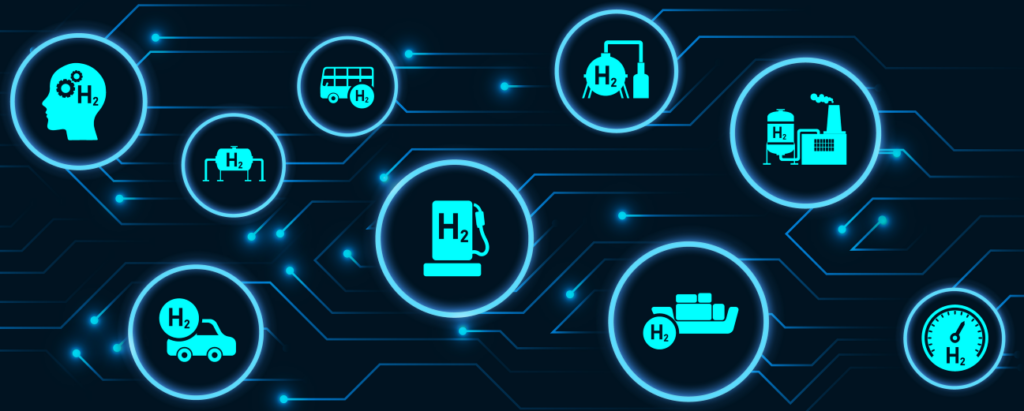
A colorful graphic depicting various uses for hydrogen,

With advances in hydrogen technology, including hydrogen-powered vehicles, we can potentially lessen our reliance on carbon-based fossil fuels.

Published November 1, 2003

By Dan Van Atta

Image courtesy of Pongsakorn via stock.adobe.com.

Picture a world economy built around the profitable production of non-polluting and endlessly renewable energy supplies – a global society freed from the shackles of dependence on oil, coal and other carbon-based fossil fuels.

Such a scenario has long been the vision, or dream to skeptics, of Dr. Amory B. Lovins, co-founder and CEO of the Rocky Mountain Institute (RMI), whose widely published views on environmental and energy-related topics have gained him global recognition for more than three decades. Lovins described his “Roadmap to the Hydrogen Economy” to a crowded meeting room of both skeptics and believers at the Environmental Science Forum held September 4, 2003 at The New York Academy of Sciences (the Academy.)

Hypercar® vehicles – ultralight, ultra-low-drag, and originally based on hybrid gasoline-electric designs – were invented at RMI in 1991 and are the most attention-getting route to energy efficiency on Lovins’s roadmap. At that time, hybrid-electric propulsion, invented by Dr. Ferdinand Porsche in 1900, was still thought to be decades away, but Honda introduced the hybrid Insight in the United States in 1999, and Toyota debuted its hybrid Prius in the U.S. in 2000. DaimlerChrysler, Ford Motor Company, and General Motors have all announced hybrid vehicles for release in the next year or two.

Eliminating the Need for Internal Combustion Engines
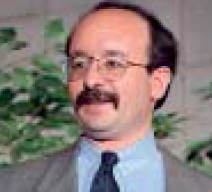
Dr. Amory B. Lovins

Today, Lovins told the gathering, hydrogen could be used in combination with advanced fuel-cell technology to eliminate the internal combustion engine altogether, powering a new generation of ultra-high-efficiency hypercar-class vehicles. And, he added, hydrogen-powered fuel cells that can provide economical on-site electricity to business and residential buildings can set the hydrogen economy in motion – greatly accelerating the hydrogen transition that has led Honda and Toyota already to market early (and correspondingly expensive) hydrogen-fuel-cell cars, with three more automakers set to follow suit by 2005 and another six by 2010.

“U.S. energy needs can be met from North American energy sources, including local ones,” he said, “providing greater security.” Hydrogen production just from available windy lands in the Dakotas, he said, could fuel all U.S. highway vehicles at hypercar-like levels of efficiency.

Along with a more secure domestic energy supply, moreover, Lovins said the transition from a fossil fuel-based to a hydrogen-based economy would offer a “cleaner, safer and cheaper fuel choice” that could be very profitable for both the oil and auto industries. “Hydrogen-ready vehicles can revitalize Detroit,” Lovins said.

Molecular hydrogen (H2) – a transparent, colorless, odorless and nontoxic gas – is the lightest-weight element and molecule. One kilogram of H2 packs the same energy content as a gallon of gasoline weighing almost three times as much. It’s far bulkier, too, but that may be acceptable in uses where weight matters more than bulk, such as efficient cars.

And hydrogen is in abundant supply as it may be readily derived from water, as well as from natural gas or other forms of energy.

An Energy Carrier, Not an Energy Source

Unlike crude oil or coal, however, hydrogen is not an energy source. Rather, it is an energy carrier, like electricity and gasoline, which is derived from an energy source – and then can be transported.

“Hydrogen is the most versatile energy carrier,” Lovins said. “It can be made from practically anything and used for any service. And it can be readily stored in large amounts.”

Hydrogen is almost never found in isolation, however, but must be liberated – from water by electrolysis, which requires electricity; from hydrocarbons or carbohydrates using thermos-catalytic reformers (which typically extract part of the hydrogen from water); or by other currently experimental methods.

About 8% of the natural gas produced in the U.S. is now used to make 95% of America’s industrial H2, Lovins said. Only 1% is made by electrolysis, because that’s uneconomic unless the electricity is extremely cheap. And less than 1% of hydrogen is delivered in super-cold liquid form, mainly for space rockets, because liquefaction too is very costly. But, Lovins noted, there’s already a major global H2 industry, making one-fourth as much annual volume of H2 gas as the natural-gas industry produces, and already demonstrating safe, economical production, distribution and use.

Proper Handling of a “Hazardous Material”

A highly concentrated energy carrier, hydrogen is by definition a hazardous material. But because H2 burns in “a turbulent diffusion flame – it won’t explode in free air,” Lovins said the gas consumes itself rapidly when it ignites, rising up away from people on the ground because it’s extremely buoyant and diffusive. Its clear flame, unlike hydrocarbon flames, can’t sear victims at a distance by radiated infrared.

As a result, he said, nobody aboard the Hindenburg (a hydrogen dirigible whose 1937 flammable-canopy and diesel-oil fire killed 35% of those aboard) was killed by the hydrogen fire. The modern view, he reported, is that hydrogen is either comparable to or less hazardous than common existing fuels, such as gasoline, bottled gas and natural gas.

News media interest in the potential of hydrogen-fueled electric vehicles run by emission-free fuel cells was piqued after President George W. Bush mentioned the technology in his State of the Union address this year. But Lovins noted that evaluating the technology requires an understanding of unfamiliar terms and concepts that cut across disciplines, often confusing both supporters and critics.

To explain the fuel cell, Lovins referred to the common electrolysis experiment that many students remember from their high school chemistry class. An electric current is passed through water in a test tube, splitting the water into bubbles of hydrogen and oxygen.

The proton-exchange membrane (PEM) fuel cell does the same thing in reverse: It uses a platinum-dusted plastic membrane to combine oxygen (typically supplied as air) with hydrogen to form electricity. The only by-product is pure hot water. The reaction is electrochemical, takes place at about 80 degrees Celsius, and there’s no combustion.

No Carbon Dioxide Emissions

Conventional electric generating plants make power by burning carbon-based fossil fuels (coal, oil or natural gas), or by means of costly nuclear fission, to heat water and turn large steam-turbine generators. (Hydroelectric plants use water to turn the turbines.) While fuel cells do not release carbon dioxide and other emissions, they are not yet economically competitive with fossil fuels for large, centralized electricity generation. However, Lovins said, at the point of actual use, such as the light or heat delivered in a building or the traction delivered to the wheels of an electrically propelled vehicle, mass-produced fuel cells can offer a highly competitive alternative to conventional technology.

“A fuel cell is two to three times as efficient as a gasoline engine in converting fuel energy into motion in a well-designed car” Lovins said. “Therefore, even if hydrogen costs twice as much per unit of energy, it will still cost the same or less per mile – which is typically what you care about.”

“If you buy gasoline for $1 a gallon, pre-tax, and use it in a 20-mile-a-gallon vehicle, that’s a nickel a mile,” Lovins continued. “If you reform natural gas at a rather high cost of $6 per million BTU in a miniature natural gas reformer, you get $2.50 per kilogram hydrogen, which has an energy content equivalent to $2.50 a gallon gasoline.”

That sounds expensive. But used in an ultralight and hence quintupled-efficiency hydrogen-fuel-cell powered hypercar vehicle, he added, that translates to a cost of 2.5 cents a mile. Or more conventionally, Lovins reported, in Toyota’s target for a fuel-cell car – 3.5 times more fuel efficient than a standard gasoline car – the same hydrogen would yield an operating cost of 3.3 cents per mile, still well under today’s gasoline cost.

Peak Aerodynamic Efficiency

Designed for peak aerodynamic efficiency, cutting air drag by 40% to 60% from that of today’s vehicles, hypercar vehicles would be constructed using molded carbon-fiber composites that can be stronger than steel, but more than halve the car’s weight – the key to its efficiency. Such vehicles could use any fuel and propulsion system, but would need only one-third the normal amount of drive-power, making them especially well-suited for direct-hydrogen fuel cells.

That’s because the three-times-smaller fuel cell can tolerate three-times-higher initial prices (so fuels can be adopted many years sooner), and the three-times-smaller compressed-hydrogen fuel tanks can fit conveniently, leaving lots of room for people and cargo. Replacing internal combustion engines – and related transmissions, drive-shafts, exhaust systems, etc. — with a much lighter, simpler, and more efficient fuel cell amplifies the savings in weight and cost.

Carbon-fiber composite crush structures can absorb up to five times as much crash energy per pound as steel, Lovins said, as has been validated by industry-standard simulations and crash tests. The carbon-fiber composite bodies also make possible a much stiffer (hence sportier) vehicle, Lovins said, adding: “It doesn’t fatigue, doesn’t rust, and doesn’t dent in 6-mph collisions. So I guess we’ll have to rename fender-benders ‘fender-bouncers.’”

The main obstacle to making ordinary cars out of carbon-fiber composites – now confined to racecars and million-dollar handmade street-licensed versions – has so far been their high cost. But Lovins said Hypercar, Inc.’s Fiberforge™ process is expected to offset the costlier materials with cheap manufacturing “that eliminates the body shop and optionally the paint shop – the two biggest costs in automaking. This could make possible cost-competitive mid-volume production of carbon-composite auto-bodies, unlocking the potential of hypercar designs.”

Making the Transition

Some 156 fuel-cell concept cars have been announced. In mass production, Lovins added, investment requirements, assembly effort and space, and parts counts would be “perhaps an order-of-magnitude less” than conventional manufacturing. With aggressive investment and licensing, initial production of the first hypercar vehicles could “start ramping up as soon as 2007 or 2008.”

Lovins acknowledged that transitioning to a hydrogen economy creates something of a “chicken and egg” conundrum. How can you ramp up mass production of hydrogen-fueled cars in the absence of ubiquitous fuel supplies? And who will invest in building that refueling system before the market for it exists?

Fuels cells used to provide electricity for offices and residential buildings, Lovins said, can hold the answer. “You start with either gas or electricity, whichever is cheaper (usually gas), and use it to make hydrogen initially for fuel cells in buildings, where you can reuse the ‘waste’ heat for heating and cooling and where digital loads need the ultra-reliable power. Buildings use two-thirds of the electricity in the country,” he added, “so you don’t need to capture very much of this market to sell a lot of fuel cells.” Tellingly, the fuel-cell-powered police station in Central Park kept going right through the recent New York blackout, he noted.

Leasing hydrogen-fueled cars to people who already work or live in buildings that house fuel cells would create a perfect fit, Lovins suggested. For a modest extra investment, the excess hydrogen not needed for the building’s fuel-cell generators could be channeled to parking areas and used to re-fuel the fuel-cell cars. This would permit a novel value proposition for car owners, whose second-biggest household asset sits 96% idle: Lovins said the hydrogen-powered fuel-cell cars could constitute a fleet of “power plants on wheels.”

A Need for More Durable Fuel Cells

During working hours, when demand for electricity peaks, he said the fuel cells in parked cars could be plugged in, “selling power back to the electric grid at the time and place that they’re most valuable, thus earning back most or all of the cost of owning the car: the garage owner could even pay you to park there.”

While today’s PEM fuel cells can be “better than 60 percent efficient,” Lovins acknowledged that more durable fuel cells are needed, and that mass-production is needed to bring down their cost. Eventually, he added, efficient decentralized reformers could be placed conveniently around cities and towns, mainly at filling stations.

No technological breakthroughs are needed, Lovins said, to reach the hydrogen economy at the end of his roadmap. “The hydrogen economy is within reach” – if we do the right things in the right order, so the transition becomes profitable at each step, starting now.

“[Sir Winston] Churchill once said you can always rely on the Americans to do the right thing,” Lovins concluded, “once they’ve exhausted all the alternatives.” We’re certainly, he wryly added, “working our way well down the list. But, as Churchill also said, ‘Sometimes one must do what is necessary.’”

Dr. Klaus S. Lackner

Adding fuel to the discussion, Dr. Klaus S. Lackner, the Ewing Worzel Professor of Physics in the Department of Earth and Environmental Engineering, The Earth Institute at Columbia University, briefly responded with some thoughts on Lovins’s proposals.

Other Points of View

After agreeing that “things will have to change, business as usual will not work,” due mainly to the need to curb carbon dioxide emissions, Lackner raised a number of issues he believes proponents of the hydrogen economy should consider.

For example, Lackner said off-peak power costs should not be used to calculate the cost of producing hydrogen fuel from electricity, as the hydrogen-generation industry will “destroy” the structure of off-peak pricing. “There may be a benefit to the electricity market in that power generation profiles become flatter, but this will be a benefit to people running air conditioners at 4 p.m., not to the hydrogen economy.”

“Hydrogen will be made from fossil fuels,” Lackner stated, “because it is much cheaper than by any other route.” He also noted that fuel cells and hydrogen are not synonymous. “Hydrogen can work without fuel cells, and fuel cells can work without hydrogen.” Although Lovins’s vision emphasizes PEM fuel cells, Lackner added that “some fuel cells run on methane. You can use any hydrocarbon you like; we can debate which is the best fuel.”

Many Competing Options

It’s also important to remember that hydrogen is an energy carrier, like electricity, not an energy source. “One needs to compare the advantages of hydrogen as an energy carrier with those of other energy carriers,” Lackner said.

Regarding Lovins’s designs for ultralight hypercar vehicles, Lackner said there  are many competing options for changing the internal combustion engine. “It’s not fair to compare old fashioned conventional cars, on the one side, with the new, fancy cars on the other side. We need to compare each of the potential energy carriers side by side, and not assume that the competition stands still.”

Lovins largely agreed with these comments, but felt that they didn’t affect the validity of his recommendations.

Also read: Better Batteries for Electric Cars
The Promise and Limitations of Carbon Capture

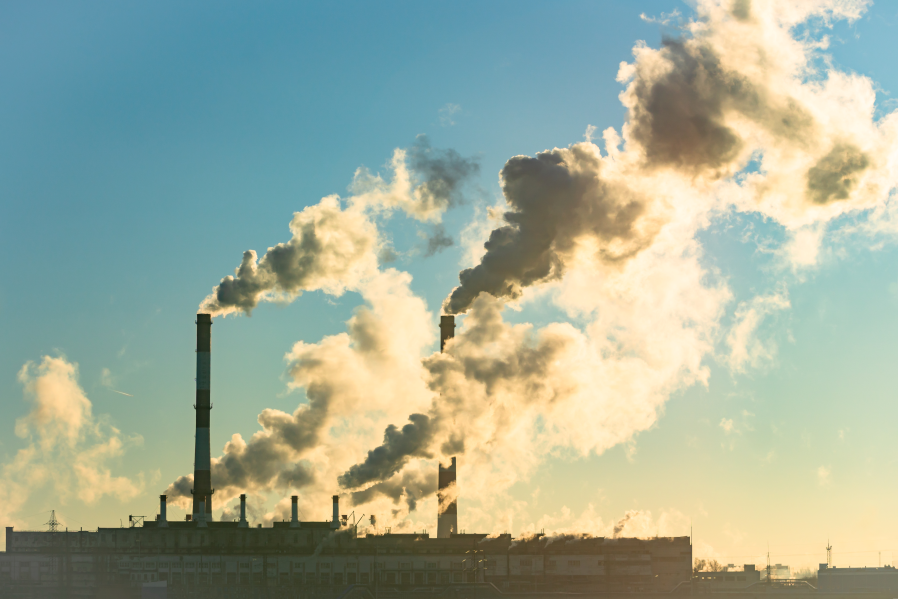
A shot of tall industrial smokestacks emitting smoke or steam.

Advances in a new technique known as carbon capture will be critical as carbon-based energy supplies continue to be used around the world.

Published June 1, 2003

By Chris Michaud

Image courtesy of Leonid via stock.adobe.com.

How long can earth’s carbon-based energy supplies be sustained in the face of rising global demand? Can the environmental challenges that such energy sources pose be effectively mitigated?

To address these questions, Columbia University Professor Klaus S. Lackner told an April 17, 2003, Environmental Sciences Section gathering at The New York Academy of Sciences (the Academy) it is necessary “to destroy some preconceived notions.”

“Our problem is not that we are running out of energy,” Lackner told the audience. Rather, he posited that the problem lies in finding environmentally acceptable means of utilizing existing carbon resources to meet the world’s rising energy requirements. “Whether we like it or not,” he said, “we will have to look at carbon as a resource, see whether we have enough of it, and use that for the foreseeable future – in an environmentally acceptable manner.”

Now the Ewing-Worzel Professor of Geophysics at Columbia’s Earth Institute, Lackner’s opinion is based on 18 years of research at the Los Alamos National Laboratory, in New Mexico, where he worked on finding environmentally acceptable technologies for the use of fossil fuels. Fossil fuels provide 85 percent of all energy used in the world today. Contrary to common popular belief, Lackner said carbon-based resources continue to be both plentiful and relatively inexpensive.

Noting that the level of atmospheric carbon dioxide has risen from about 315 parts per million in 1958 to about 370 parts per million today, Lackner said the dilemma lies in the fact that “fossil carbon has caused environmental problems that need to be fixed,” adding that “we really cannot go on like that indefinitely.”

Demand for New Energy Innovations

Nevertheless, he noted that the continuing global desire for economic growth and development demands new energy innovations. Displaying a series of detailed charts and graphs showing historical energy consumption and GDP (gross domestic product) projections for the coming decades, Lackner said, “we are clearly creating an enormous shortage” by removing fossil carbon energy sources from the energy picture.

Due to increasing evidence of global climate change, Lackner said many people now believe the world must reduce its reliance on carbon energy sources. Adding credence to this argument is the “common wisdom,” which holds that “these are finite resources and we are bound to run out – it’s just a question of time.” Although “strong arguments have been made that we might run out of oil,” Lackner said, “that is not the same as running out of carbon,” and noted that coal reserves are plentiful.

The ultimate answer, Lackner said, lies in capturing carbon dioxide and utilizing the carbon resource without allowing excess carbon to escape into the atmosphere where it stays for about 100 years, possibly driving climate change.

The current challenge, he added, is “the technology issue of capturing carbon dioxide and putting it away, if for no other reason than there’s a huge resource sitting out there, and even if we try to be good about it and not use it, the temptation will be there until the day when we find another energy option that is even cheaper.”

Solutions

Prof. Klaus S. Lackner

Using the world’s oceans for carbon deposits is not feasible, Lackner added, because carbon dioxide, an acid, changes the oceans’ pH level. And energy conservation, while laudable and helpful, is not going to solve the energy problem alone. In addition, it is difficult and expensive to collect carbon dioxide emitted by mobile sources, such as cars and airplanes, which generate a significant proportion of it. “We have a gap,” Lackner said, and new ideas and technologies are needed soon – within the next two decades.

Lackner proposed a couple of solutions: one is an artificial tree, a giant carbon-capturing device that he amusingly described as looking like a goal post covered with Venetian blinds; the other one is designed as a huge cooling tower. While the designs are still in an “early exploratory stage,” with various versions looking vastly different from each other, he said they all essentially aim to collect carbon dioxide directly from the air using wind as the transport agent.

Capture from air is rarely considered a viable option because carbon dioxide in the air is very dilute, a seemingly huge obstacle, but Lackner believes the technologies capable of capturing more dilute substances can be developed. He hopes for a pilot demonstration of one of the devices, which could lead to its commercial manufacture and implementation.

A Radical Alternative

Carbon dioxide capture from the air would provide a radical alternative to currently debated options for mitigating climate change, Lackner said. He estimated that about 250,000 of the artificial trees would be needed to take care of all of the world’s carbon dioxide emissions. But time, he added, is of the essence. International accords such as the Kyoto Protocol are also key to the effort.

“We need to do it soon,” so that the carbon capturing devices could be put into use by about 2020. “The building blocks are all working now,” he said. “But we are under severe time pressure. There is enormous demand for growth in developing countries. And we are kidding ourselves if we think we can get carbon dioxide emissions to go down over the next 20 years…Sometime around 2050 we will hit a brick wall, effectively having doubled the CO2 in the atmosphere…People will be aware of that by 2020,” he predicted.

Also read: How One Mozambican Researcher Hopes to Mitigate the Climate Crisis through Coffee

Environmental Catastrophe or New Global Ecology?

A shot of a crowded city street with people walking shoulder to shoulder.

With the population of urban areas expected to grow substantially in coming decades, researchers are pondering ways to plan with climate change in mind.

Published November 1, 2002

By Margaret W. Crane

Image courtesy of .shock via stock.adobe.com.

In 2007, for the first time in history, the number of people living in cities will equal the number of rural dwellers, according to the most recent report of the United Nations Population Division of the Department of Economic and Social Affairs. Virtually all of the world’s anticipated population growth during the next 30 years will be concentrated in urban areas. And almost all of that growth will take place in less-developed regions.

The urbanization of early 19th-century Europe begins to look like a modest blip compared to the unplanned, unchecked growth of cities in the developing world today. Between 2000 and 2010, cities in Africa will have grown by another 100 million people, while those in Asia will have swelled by 340 million. Taken together, that’s the equivalent of adding another Hong Kong, Teheran, Chicago or Bangkok every two months.

Concerned about the coming dominance of urban areas over the world’s environment, a small but growing number of scientists have begun to focus on the city itself as simultaneous driver and subject of environmental change. In their view, the sheer quantity of people piling into cities calls for a shift of focus away from issues related to the physical environment alone and toward a more integrated approach to the broad question of urban ecology.

A New Vocabulary and Conceptual Framework

Roberta Balstad Miller, PhD, director of Columbia University’s Center for International Earth Science Information Network (CIESIN), believes scientists need a new vocabulary and a new conceptual framework to tackle the complex dialectic between physical environmental change, mushrooming cities, poverty, and rising human expectations across the globe.

“We already know a great deal about each discrete sector in the urban environmental mix,” said Miller. “Beyond atmospheres, oceans and the natural historical origins of environmental change, scientists also have investigated the interlocking issues of clean water, waste disposal, energy and land use. What we haven’t done is connect the dots that will allow us to respond to the big picture: How can cities become less vulnerable to environmental stressors? What can we learn from the environmental successes as well as the environmental problems of the great 20th-century metropolises?”

These questions form the backdrop of a new research project at the Earth Institute of Columbia University – provisionally called the Twenty-First Century Cities Project – that will examine environment and sustainable development issues in major cities worldwide. The project will focus initially on four cities: Fortaleza, Brazil; Accra, Ghana; Chennai, India; and New York, United States.

“We’re keeping New York in the mix,” said Dr. Balstad Miller, “because it affords an opportunity to study the impact of rapid urban growth over a long period of time, and also because there is so much research on the environment of New York under way at Columbia.”

Toward Sustainable Cities

The Brundtland report (Our Common Future, 1987) defined sustainable development, the theme of this summer’s Johannesburg Summit, as development that meets the needs of the present without compromising the ability to satisfy the requirements of future generations.

It’s a concept most governments agree on in principle. But with cities expanding at the rate of 10 percent per year, largely owing to massive migration fueled by poverty and conflicts in rural areas, sustainability can look like a remote ideal instead of a real-world possibility. In Johannesburg, 100 world leaders and nearly 50,000 delegates turned their energies to the challenge of bringing sustainable development back down to earth.

The Summit’s participants queried the model of urban development based on automobile-driven sprawl. They asked themselves whether it is possible for new cities laboring under a chronic shortage of resources to develop sewage and waste disposal systems in time to prevent serious outbreaks of communicable disease. They looked at the plight of unemployed urban youth and the need to find ways to cool down the social tinderbox of frustration and poverty. And they discussed the strengthening of governance – the management of society – to help smooth the expansion of cities and check chaos.

In a speech to the Megacities Foundation, British architect Lord Richard Rogers said that, above all, cities must be a vehicle for social inclusion. “This is no utopian vision,” he said. “Cities that are beautiful, safe and equitable are within our grasp.”

The Role of Sustainability

Utopian or not, the question of sustainability colors Balstad Miller’s research, and is the ultimate motivation behind the Twenty-First Century Cities Project. “Ecosystems are being bisected by highways,” she said. “Forests, wetlands and prime agricultural lands are being lost to urban development. Less land is available for indigenous animal and plant populations, whose genetic diversity is at risk. And yet we can’t halt urban growth. We need to develop sustainable approaches to a process that’s not about to go away.”

Balstad Miller, an urban historian, studies cities at three levels: The environment of the city itself, exemplified by the quality of its air, water and sanitation systems; the environment of the region, such as the city’s impact on regional weather patterns and its surrounding forested and agricultural areas; and global networks of cities as the nexus of decision-making, economic integration, and growth.

Oddly enough, she added, the real demographic story isn’t taking place in megacities like Tokyo, Mexico City, Mumbai and Sao Paulo. The number of cities with 1 million or more inhabitants grew from 80 in 1950 to more than 300 by 1990, and is projected to reach 500 by 2010. Most of the world’s urban population actually lives in the 40,000-50,000 urban centers with fewer than 1 million inhabitants, according to the United Nations Centre for Human Settlements. These urban agglomerations are a relatively new subject for those who study the complex relationship between environment and urban development. What these scientists learn may be crucial for our common future.

Also read:The Impact of Climate Change on Urban Environments


About Dr. Roberta Balstad Miller

Roberta Balstad Miller, PhD, is a senior research scientist at Columbia University and director of the University’s Center for International Earth Science Information Network (CIESIN). Dr. Miller has published extensively on science policy, information technology and scientific research, and the role of the social sciences in understanding global environmental change.

As chair of the National Research Council’s Steering Committee on Space Applications and Commercialization, she recently completed two book-length reports on public-private partnerships in remote sensing and on government use of this new technology. In addition to her many research interests, she is a published translator of the poetry of Jorge Luis Borges and N.P. van Wyck Louw. Dr. Miller was recently elected a Fellow of The New York Academy of Sciences.

The Impact of Climate Change on Urban Environments

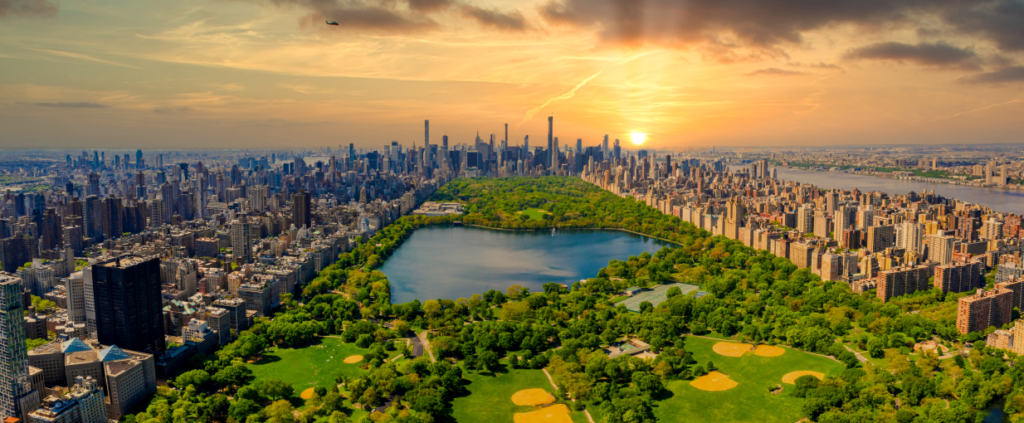
An overhead shot of NYC's Central Park, looking south/toward downtown, with a sunset over New Jersey in the background.

New York City and the tri-state region provide a unique case study for examining the impact of climate change within the context of an urban environment.

Published November 1, 2002

By Margaret W. Crane

In Alaska the average temperature has risen by 5.4 degrees Fahrenheit over the past 30 years, and entire villages are being forced to move inland because of rising sea levels. El Niño – a disruption of the ocean-atmosphere system in the tropical Pacific – has been linked with multiple epidemics of dengue fever, malaria and cholera. Flowers in the northern hemisphere are blooming in January. Greenland’s glaciers are melting. The world’s ecosystems are in the throes of rapid transformation. And large, coastal cities are among the most vulnerable of all.

Global by definition, climate change has already begun to reshape the earth’s environment from pole to pole and from tundra to rainforest. But until recently few scientists had studied its impact on cities. Cynthia Rosenzweig, PhD, the lead author of a recent report titled Climate Change and a Global City, is among the first to look at cities – specifically New York and its environs – as distinct ecosystems that are being remodeled by global warming as relentlessly as are distant oceans, islands, forests and farmlands.

At the Forefront of Vulnerability to Climate Change

Rosenzweig and co-author William D. Solecki place global cities like New York, Sao Paulo, London and Tokyo at the forefront of vulnerability to climate change. As such, the world’s largest cities are charged with finding ways to adapt to changes that have already occurred and simultaneously reduce the greenhouse gases that are a major factor in heating up the globe in the first place.

“Global warming is on the cusp of becoming a mainstream issue,” said Rosenzweig, “an issue that’s being integrated into the day-to-day life of citizens.” This mainstreaming is emerging in tandem with a stronger-than-ever consensus among scientists that climate change has arrived and has two faces: an overall warming trend, and more frequent and severe droughts and floods. Moreover, instead of hypothesizing about global warming, researchers are now studying its effects and developing models to project the course and intensity of future changes.

To map the trajectory of projected climate change, scientists are using global climate models (GCMs), mathematical formulations of the processes – such as radiation, energy transfer by winds, cloud formation, evaporation and precipitation, and transport of heat by ocean currents – that comprise the climate system. These equations are then solved for the atmosphere, land surface, and oceans over the entire globe.

Because GCMs take into account increasing feedbacks from greenhouse gases, they project more dramatic temperature changes than do predictions based on current warming trends alone. New York’s GCM-projected temperature in the 2080s, therefore, will be from 4.4 to 10.2 degrees Fahrenheit higher. Rosenzweig and Solecki predict a more modest 2.5 F rise by the 2080s, based on current temperature trends alone minus any multiplier effect associated with greenhouse gases.

Interchange Between Scientists and Decision-Makers

The Climate Change report draws on a range of GCMs, but it also benefits from a rich interchange between scientists and decision-makers. In grappling with the complexity of the urban ecosystem, the two groups developed an innovative conceptual framework comprising three basic, intersecting elements: People, Place, and Pulse. These three P’s correspond to socio-economic conditions, physical and ecological systems, and decision-making and economic activities. “Pulse, a term we coined, is really about what makes a city a city,” said Rosenzweig. “In the past few years, I’ve gotten on familiar terms with New York’s pulse, defined roughly as the whole matrix of relationships that makes it run and hum.”

Rosenzweig’s focus on the New York region began when she was chosen to head up the Metropolitan East Coast (MEC) Regional Assessment, part of a national effort to assess the potential consequences of growing climatic instability and the engine behind the Climate Change report.

The New York metropolitan region is unique, Rosenzweig said, due to the extraordinary density and diversity of its population. Comprised of five boroughs and 26 adjacent counties in New York, New Jersey and Connecticut, it is home to a complex web of environmental problems and pressures. The area’s high demand for energy and clean water, along with its poor air quality, toxic waste dumps and threatened wetlands, are all interconnected, according to the Assessment, and call for a many-sided response.

Rising Seas Levels and Floods

For instance, New York will likely need to build higher seawalls and raise airport runways to protect against rising sea levels and increasingly severe and frequent floods. City and regional governments will be called upon to increase support for the poor and elderly, who suffer disproportionately from heat stress and respiratory ailments due to the effects of air pollution. Developers will be encouraged to disinvest from highly vulnerable coastal sites. Policymakers will need to think longer-term and learn to cooperate at the regional level. And they’ll have to get serious about reducing greenhouse gas emissions.

But it is New York’s greatest virtue – its diversity – that turns out to be its political stumbling block. The 20 million people who inhabit the area’s boroughs and neighboring counties often represent conflicting agendas. Rosenzweig believes it will take education, training and a good dose of political will to take on global warming.

In recent decades, the MEC region has experienced a marked increase in floods, droughts, heat waves, mild winters and early springs. Its annual average temperature has risen by nearly 2 degrees Fahrenheit, and precipitation levels have gone up slightly. The current rate of sea-level rise is about 0.1 inch per year, a number that is expected to increase with the further melting of glacial ice and the warming of the upper layers of the ocean. The study found that in many scenarios, the sea level is expected to rise faster than the accretion rate of wetlands, further accelerating their disappearance.

Growing Hydrologic Variability

Growing hydrologic variability is another expression of the climate change that has already begun to be felt in the region. This century, the New York area will be subject to more severe flooding during hurricanes and nor’easters. Some scientists have estimated that by the 2080s, as a worst-case scenario, a major coastal storm could occur every three to four years, compared with every 100 years in the past, while a 500-year flooding event could hit every 50 years.

It has long been the region’s default policy to place transportation and other necessary but unappealing infrastructure across and along the edges of wetlands, bays and estuaries. For example, the Hackensack Meadowlands in northern New Jersey, a low-elevation, degraded wetland, is home to an airport, port facilities, pipelines and highways. The region will need to move infrastructure inland – a matter of double urgency, Rosenzweig contends, for the sake both of the infrastructure itself and the vulnerable lands that are the first casualty of violent storms.

Climate change is, however, a bipolar phenomenon. During the summer of 1999, an intense summer drought may have contributed to the fatal outbreak of West Nile virus. More conspicuously, water conservation campaigns have become a regular feature of New York life. While the New York City water supply system – the largest in the region and one of the largest in the world – should accommodate expected hydrologic extremes, the report warns that smaller systems within the MEC region might buckle under stress. Increasingly, water distribution must be addressed intra- and inter-regionally, said Rosenzweig. Future protocols might include diverting Delaware River water from the west to reduce the impact of drought in the New York area, and vice versa.

Multiplicity of Environmental Problems

Demand for electricity also is expected to rise along with mounting temperature. No less than clean and abundant water, the area’s population requires a consistent supply of energy. But the distribution of energy continues to be far from equal. During the intense succession of heat waves over the past several summers, blackouts and brownouts plagued many of New York’s poorer neighborhoods, meaning a loss of air conditioning just when it was most critically needed.

With 27 days of temperatures above 90 degrees Fahrenheit in the summer of 1999 and 28 days over 90 degrees F (including two in September) in the summer of 2002, New Yorkers have had a recent foretaste of what’s in store. According to most climate change scenarios, the average number of days exceeding 90 degrees F (13 days in our present climate) will increase by two to three times by the 2050s.

Despite their multiplicity of environmental problems, Rosenzweig believes cities have an important role to play in shaping the earth’s future. “New York has an opportunity to rethink itself as an urban ecosystem,” she said. “For example, we can start to design buildings that are more energy-efficient. We’ll need to find ways to help people stay cooler as they adapt to a warmer environment and to reduce greenhouse gas emissions at the same time.”

The Missing Link

Although scientists haven’t yet been able to establish to an absolute certainty the causal link between human activity – especially the burning of fossil fuels – and climate change, they are largely in agreement that such change is under way. The Intergovernmental Panel on Climate Change has concluded that “there is a discernible anthropogenic signal in the climate,” and that this signal is growing. There are, however, many remaining uncertainties surrounding the rate and ultimate magnitude of the change.

By assessing its nature and extent, monitoring its trajectory, and forecasting its future impact on cities, scientists like Rosenzweig are informing a new public discussion that is just getting off the ground. But there’s no time to waste, she said: “The political and social responses to the global climate issue in cities should begin at once.”

Also read: Tales in New Urban Sustainability


About Dr. Cynthia Rosenzweig

Dr. Cynthia Rosenzweig is a research scientist at the Goddard Institute for Space Studies, where she is the leader of the Climate Impacts Group. She is an adjunct senior research scientist at the Columbia University Earth Institute and an adjunct professor at Barnard College. A recipient of a 2001 Guggenheim Fellowship, Dr. Rosenzweig led the Metropolitan East Coast Region for the U.S. National Assessment of the Potential Consequences of Climate Variability and Change.

She is a lead author of the Intergovernmental Panel on Climate Change Working Group II Third Assessment Report, and has worked on international assessments of climate change impacts, adaptation and vulnerability. Her research focuses on the impacts of environmental change, including increasing carbon dioxide, global warming, and the El Niño-Southern Oscillation, on regional, national and global scales.

Reducing Mercury Pollution in NY Harbor

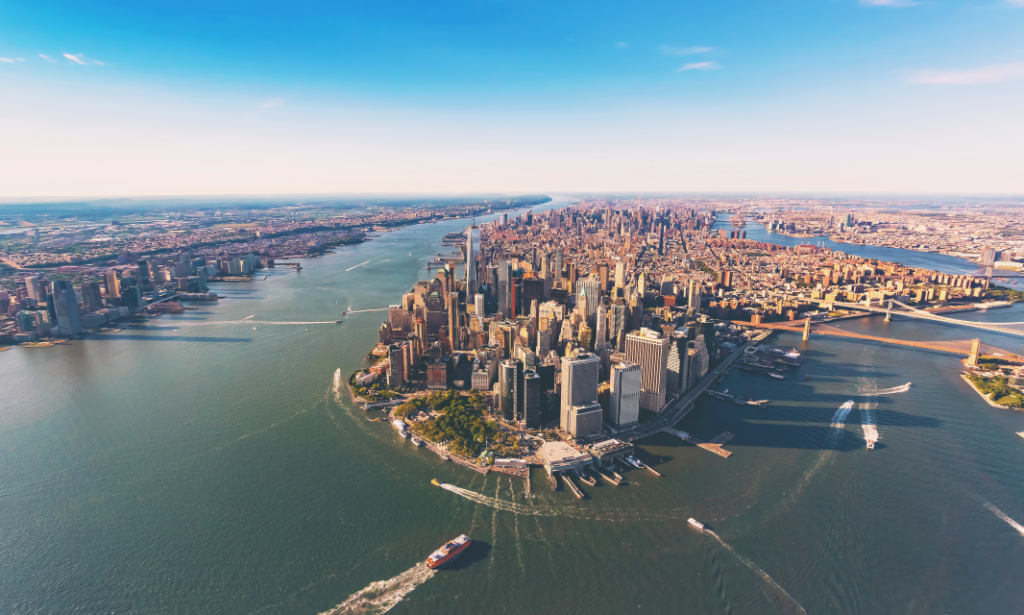
A shot of lower Manhattan looking north.

The Academy and a handful of local and federal entities have teamed up on a multi-year effort to lessen pollution in this vital natural asset.

Published August 1, 2002

By Fred Moreno, Dan Van Atta, Jill Stolarik, and Jennifer Tang

Image courtesy of Tierney via stock.adobe.com.

New York harbor is a vital natural asset whose ecological health has been threatened by contamination from a host of sources since the dawn of the urban/industrial era. Despite substantial water quality improvements following environmental laws enacted over the past four decades and decreased industrial activity, much remains to be done.

The New York Academy of Sciences’ (the Academy) on-going Harbor Project was commissioned by the U.S. Environmental Protection Agency (USEPA) in 1998. Its goal is to identify practical solutions to the difficult issues that continue to plague this precious watershed. Called “Industrial Ecology, Pollution Prevention and the NY/NJ Harbor,” the project is focused on finding environmentally sound, economically feasible and realistically achievable strategies for combating specific contaminants that are polluting the harbor.

Mercury was identified as the first pollutant for study. Results of this study are now available in a recently published monograph entitled “Pollution Prevention and Management Strategies for Mercury in the NY/NJ Harbor.”

Conducted by scientists with particular knowledge of mercury in this watershed, the results were analyzed and synthesized by the Academy staff and reviewed and endorsed by the NY/NJ Harbor Consortium, a coalition of interested business, regulatory, labor, academic and environmental organizations that was launched in January 2000. Professor Charles W. Powers, chair of the Harbor Consortium, characterized the mercury study as “audacious in scope, rigorous in its scientific and analytic conclusions, and bold in its recommendations affecting a wide variety of institutional interests and practices.”

Health Sector Identified

The report’s recommendations, made public at a June 25 press conference in New York, contain a number of specific measures intended to prevent further pollution of the harbor. Primary emphasis was put on actions needed in the health care sector – especially dental facilities, hospitals and laboratories – to prevent mercury releases to the watershed.

Although contamination from atmospheric deposition and solid waste sources, such as landfills, also were analyzed and assessed, the Harbor Consortium chose wastewater strategies as its first priority. That’s because wastewater is both the largest direct source of mercury and the most significant source of methyl mercury in the NY/NJ Harbor. Landfills and wastewater treatment facilities provide ideal conditions for methylation – the process that chemically transforms inorganic mercury into methyl mercury under the right environmental conditions.

Specifically, the Academy report recommended that:

– Dentists and dental facilities implement a two-tiered approach that, first, institutes filtration, collection and recycling in the short term and, second, moves toward replacement of amalgams with safe, durable and cost-effective alternatives.

– Hospitals substitute non-mercury alternatives for mercury-containing products, like thermometers and blood pressure gauges, and that they prevent breakage of existing mercury-containing products through proper maintenance.

– Laboratories substitute non-mercury alternatives for mercury-containing products, and take steps to prevent mercury discharges to sewers. In addition, the report provided specific strategies for implementing its recommendations. One strategy suggested for the dental sector, for example, called for development of programs to promote economically feasible filtration technologies and encourage the collection and recycling of mercury in amalgam.

Laboratories are advised to implement a non-mercury purchasing policy and to install filter systems to reduce mercury discharges or capture all discharge solutions for recycling or treatment. The report also recommended phasing out the sale of all mercury thermometers, expanding educational campaigns to inform the public about the health risks associated with spills from broken thermometers and other devices, and implementing collection and take-back programs.

The Best of Science

Dr. Rashid Shaikh, director of Programs for the Academy, noted that one of the novel aspects of this project has been the involvement and commitment of participants from a wide variety of institutions and a wide range of backgrounds and experiences.

“The Academy has a long history of helping to illuminate environmental issues by bringing together the best of science to bear on analyses of solutions,” Shaikh said. “We believe this report adds significantly to the work being done to prevent further pollution of our Harbor through measures that are appropriate environmentally, economically and technologically.”

Evaluation and Risk Management

The project enables a group of experts – including scientists studying problems associated with mercury, regulatory agencies responsible for protecting the Harbor, and representatives from the industries and businesses whose livelihoods depend on the use of mercury – to discuss the issues and possible solutions in an open forum.

Referring to this process, Dr. Powers, who also heads a multi-university environmental research effort and is professor of Environmental and Community Medicine at the University of Medicine and Dentistry of New Jersey – Robert Wood Johnson Medical Center, called the report “a rare synthesis of evaluation and risk management.”

Funding for the mercury study was provided by the USEPA, the Port Authority of New York and New Jersey, the Abby R. Mauzé Trust, AT&T Foundation, The Commonwealth Fund, and J.P. Morgan. The 113-page document was written by Marta Panero and Susan Boehme, of the Academy staff, and Allison de Cerreño, previous director of the Harbor Project and currently co-director of the Rudin Center for Transportation at New York University.

Also read: The Environmental Impact of ‘Silent Spring’

Proven Pollution Prevention Strategies in the Harbor

A hand-drawn illustration of a man wearing classes.

It will take a concerted combination of engineering, ecology, environmental science, chemistry, materials sciences, economics, and sociology to effectively clean up the NY/NJ Harbor.

Published March 1, 2000

By Fred Moreno, Anne de León, and Jennifer Tang

“The New York harbor is like a bathtub,” says Reid J. Lifset, a member of the Science Task Group of The New York Academy of Sciences’ (the Academy’s) Harbor Consortium. Formed in January 2000, the Consortium includes 30 representatives from industry, academe, local and state government, nonprofit and community action organizations.  They are all stakeholders in the Academy’s Harbor Project, a five-year effort to define and recommend pollution prevention strategies in the New York-New Jersey Harbor’s modernization for shipping in the 21st century.

Lifset elaborates on his disarmingly simple bathtub metaphor. He explains that just as the amount of water entering a bathtub ultimately adds up to the amount draining out plus the quantity pooled in the tub, so do the contaminants flowing from a variety of sources into the Harbor accumulate, after which they either settle as sediments or are removed.

Of course, the modest task of removing even the most stubborn bathtub scum pales when compared to the extraordinary challenge of removing the vast amounts of muddy, contaminated sediments in the waters of the NY/NJ Harbor. “Daunting  quantities of sewage and toxic chemicals are part of the scenery,” observes Lifset, as well as “fragile ecosystems where egrets and cormorants nest.” The consequences for the environment are considerable, as are possible adverse affects on the health and well-being of the more than 20 million people who reside in or visit the Harbor area every year.

Formidable Expertise Meets Abiding Passion

Lifset brings to the Harbor enterprise both formidable expertise and an abiding passion for his work. He is associate director of the Industrial Environment Management Program and associate research scholar at the Yale School of Forestry and Environmental Studies, and is editor-in-chief of the Journal of Industrial Ecology.

Utterance of the words “industrial ecology,” a framework for environmental analysis and management, adopted by the Academy’s Harbor Consortium, triggers another metaphorical response from Lifset. “If industrial ecology were an art form,” he says, “it would be landscape painting.” The aim of industrial ecology is “to consider the big picture and avoid narrow, partial views,” he observes, while “conventional environmental analysis, by contrast, is more like portraiture,” which focuses on the details of a single subject.

Industrial ecology, which first emerged as a field in 1989, is a “systems” approach to the prevention of pollution and the assessment of environmental threats. Multidisciplinary, it borrows from engineering, ecology and environmental science, chemistry, materials science, economics and sociology. The goal of industrial ecology is “to examine the environmental impacts of modern industrial society,” says Lifset, and “to discover new methods of production and consumption that will lead to fewer harmful side effects.”

As a member of the Harbor Consortium’s Science Task Group, Lifset is an active participant in assessing existing data and data needs relating to the five toxicants slated for research and in framing the general approach to the study of each. In 2000, the Academy’s Consortium completed preliminary research on mercury, extended its research efforts to methyl mercury and cadmium, and began to explore the economics of the port in the region’s transportation system.

Also read: Reducing Mercury Pollution in NY Harbor

What is the Habor Project and Why is it Important?

A shot of lower Manhattan looking north.

The overall purpose of the project is to define new ways to promote pollution prevention in the New York /New Jersey Harbor area by incorporating the analytical tools of industrial ecology. This project also emphasizes outreach and communication to arrive at concerted solutions and promotes a course of action agreed upon by a wide base of participants. 

Published January 1, 2000

By Merle Spiegel

Image courtesy of Tierney via stock.adobe.com.

What is the overall purpose of the Harbor Project?

The overall purpose of the current project is to define new ways to promote pollution prevention in the New York /New Jersey Harbor area, especially with respect to a proposed harbor dredging plan. Dredging will release toxicants currently lodged on the Harbor’s floor. To address this problem, the pollution prevention endeavor incorporates the analytical tools of industrial ecology. This project emphasizes outreach and communication to arrive at concerted solutions and promotes a course of action agreed upon by a wide base of participants.

How will this be accomplished?

The New York Academy of Sciences is creating a regional Consortium (the Harbor Consortium) that employs a stakeholder process and uses industrial ecology to define the needed pollution prevention strategies. The consortium will produce, publish, and promote specific pollution prevention plans for various toxicants, using analytical techniques derived from industrial ecology.

What is Industrial Ecology?

Industrial ecology (IE) is the multidisciplinary field that focuses on the study of industrial and economic systems and their linkages with fundamental natural systems. IE is a new “systems” approach to pollution prevention and assessment of toxicants. It helps analyze specific toxin cycles and attempts to define mass balance for each toxicant. 

Why is it important?

The regional economic and environmental well being depend on defining better ways to reduce pollution of the New York/ New Jersey Harbor. Continued levels and flows of contaminants into the harbor represent a threat to ecological systems, public health and economic development.

Also read: Reducing Mercury Pollution in NY Harbor