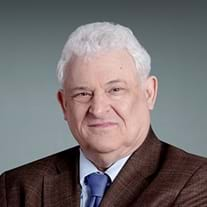
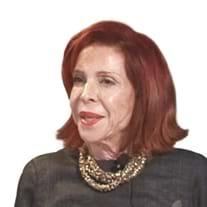
The New York Academy of Sciences is deeply saddened by the passing of Steven S. Gross, PhD, a longtime member, colleague, and friend who contributed immeasurably to our community and to the broader scientific world.
Prof. Gross became a member of The New York Academy of Sciences in 2004 and for nearly two decades served as a guiding force within the Biochemical Pharmacology Discussion Group Steering Committee, helping to shape and strengthen countless scientific conferences. He was also a founding member of the Academy’s Cancer Metabolism and Signaling conference series, which for more than a decade has convened leading voices to advance research at the interface of cancer biology and metabolism.
Beyond his contributions to the Academy, Prof. Gross made pioneering advances in the field of nitric oxide (NO) biology. As Professor of Pharmacology and Director of the Mass Spectrometry Core Facility at Weill Cornell Medicine, his groundbreaking research established that L-arginine is the precursor of NO in blood vessels and that inhibiting nitric oxide synthase (NOS) elevates blood pressure in animals—work that illuminated NO’s central physiological role in vascular health. His career was devoted to unraveling the mechanisms regulating NO synthesis, with discoveries that laid the foundation for therapeutic innovation, including the creation of ArgiNOx Inc., a biotechnology company developing NO-based drugs.
Prof. Gross authored or coauthored more than 90 research publications and 40 book chapters, reviews, and books on NO biology. His leadership extended to service on NIH Study Sections and to the founding of the Nitric Oxide Society, where he also served as Board Director, fostering global collaboration and advancing the field through major international conferences and a dedicated peer-reviewed journal. He earned his Ph.D. in Biomedical Science from the Mount Sinai School of Medicine in New York City.
He is remembered not only for his brilliant scientific contributions but also for his generosity, collegiality, and infectious enthusiasm for discovery. His legacy endures in the science he advanced, the communities he nurtured, and the many colleagues, students, and friends who were fortunate to learn from and alongside him.
Prof. Gross was more than a member of the Academy, a steering committee leader, or a scientific organizing committee member—he was a true champion of science. Alongside his own impactful research at Weill Cornell Medicine, he generously gave his time to the Academy community and rarely missed an evening event, driven by his deep curiosity and love of learning across all areas of science. He was also a joy to be around—warm, engaging, and fun. In Prof. Gross, we have lost someone truly extraordinary.
“[C]onflict of interest is about more than money….it can come from political pressures and ideological pressures.”
Published February 18, 2021
By Melanie Brickman Borchard, PhD, MSc
Arthur Caplan, PhD Professor, NYU Grossman School of Medicine
Arthur Caplan, PhD, says scientists, physicians, and their employers, must be on guard to ensure that quality research and good patient care remain front-and-center in a healthcare system rife with rewards for bias. Dr. Caplan is a professor of medical ethics at the NYU Grossman School of Medicine. He advises presidents, government agencies, patient groups, and international organizations on bioethics.
He is a prolific researcher and author. We spoke with Dr. Caplan recently, and he shared five things doctors and medical researchers should keep in mind to help guard against bias in their work.
1) Demand transparency and be transparent.
As an employer or administrator, there are steps you can take to guard against bias in members of your staff. You can reward behavior that reduces opportunities for conflicts of interest.
There are a number of things we can do to manage conflict of interest. One is to demand transparency. Make sure that people tell us what their jobs are, what their responsibilities are, so you can assess whether they’re overworked or not doing enough of what they’re supposed to be doing. Many schools require those disclosures. Some prohibit taking a second job, some don’t let doctors moonlight, because they think it makes them too tired or it distracts them from their primary responsibilities.
In other situations, you can simply rule out certain relationships and say, ‘look, if you have a relationship with a company or a startup, and you think you’re making a useful medicine or vaccine, then you shouldn’t study whether it works or not. Farm that out to a third party.’ The process will be more independent and objective. If possible, you shouldn’t study what you own.
2) Recognize that transparency about ties to industry is important, now more than ever.
You can’t do anything with vaccines unless you’re talking to industry. They have the manufacturing capabilities. Plus, most of the basic science gets done in areas like vaccines with industry support, not through public or academic grants, or the work of academic institutions. So, in some sectors, there is no escaping the industry tie. You have to be transparent about that. You have to teach people how to manage that. You have to make sure that scientists and doctors understand they are going to be evaluated on the legitimacy of their work, not telling happy news to their funders. I think also we need more oversight. There should be more systematic review and challenging questioning by administrators, for more accountability. And you’ve got to beef up peer review. It is your best weapon against subtle, unconscious bias or deliberately fudging things to make them look good for increasing your salary or enhancing equity.
3) And speaking about peer review…. strengthening it must be a priority.
We need to bolster peer review. Peer review is getting weak. People don’t spend enough time teaching junior academics how to do it. The amount of resources and reward that come from doing peer review is somewhere between non-existent and nothing. But peer review is biomedicine and science’s best protection in looking at whether studies, evidence and information can be trusted. But if it’s just done pro forma, or people pass it off to ill prepared, overworked graduate students, or no one actually rewards you in terms of promotion for getting involved with it, then the best protection we have to verify evidence and verify that claims being made are true, is weakened significantly. And I do worry that the peer review system is not doing the job anymore to control for bias because it’s under-resourced.
4) Be cognizant of small favors, and factors other than money. As a doctor or scientist, don’t kid yourself about susceptibility to bias resulting from small incentives. And be aware that conflict is not always about money.
You have situations where doctors are prescribing medicine, and they say, ‘well, I prescribe the best medicine. I don’t believe that just because people take me to lunch, I’m going to start prescribing their medicine.’ But in fact, study after study shows that, subtly, small gifts, free lunches, free gas, and tickets to sporting or cultural events, have influence that really drive behavior. So, we may deny that small gifts can influence us, but time and again, psychology and behavioral science proves that they do.
Also, conflict of interest is about more than money. I know we ‘follow the money’ in thinking about conflict of interest and we tend to see people saying, ‘well, it’s money that generates conflict of interest problems.’ But I think it can come from other forces, too. I think it can come from political pressures and ideological pressures. I think we can see conflicts generated in the drive to succeed, the drive to be first, the drive for fame and honors. These things can create conflicts, too. So, in managing conflict of interest, it isn’t just figuring out where the money’s going, although that’s probably 85% of it. There are other forces we need to pay attention to as well.
5) Help the public understand how science works, with better science communication and with better teaching.
I think people will be more alert for conflicts of interest if they understand how science works. They won’t necessarily just say, ‘okay, I trust what you were telling me.’ They may want to get more than one opinion. They may want to go to more independent and trustworthy sources, and not just accept the views of somebody who’s trying to sell them a particular potion or nostrum.
There needs to be more effort made in the medical and scientific communities to train people to be communicators, and if you are good at it, you should be encouraged and make that part of your career. And we’ve got to get better science teaching into our schools. We need elementary and secondary school teachers who can communicate effectively about science. The public is not going to make good decisions about how to weigh opinion and evidence if we don’t have good communicators in the classroom.
Dr. Krainer’s research examines anti-sense therapy and its application to spinal muscular atrophy.
Published December 15, 2020
By Melanie Brickman Borchard, PhD, MSc
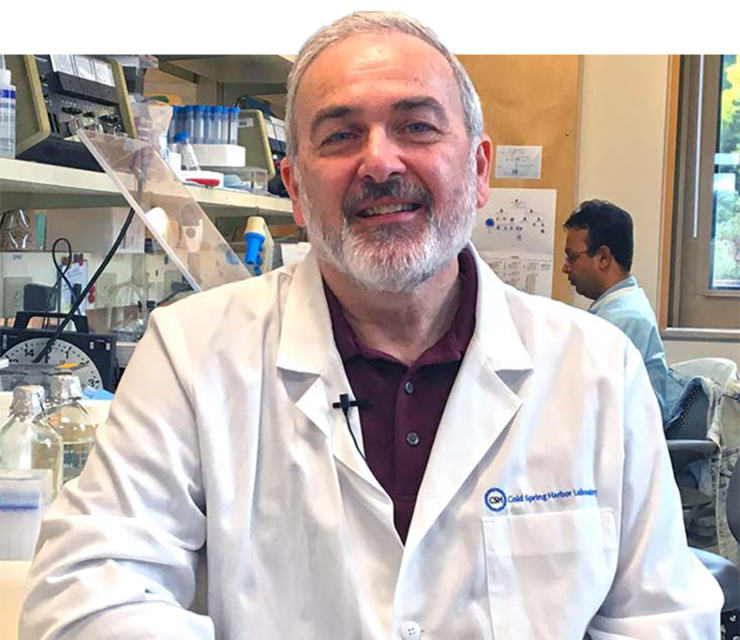
Adrian R. Krainer, Ph.D., St. Giles Foundation Professor at Cold Spring Harbor Laboratory Photo credit: Cold Spring Harbor Laboratory
Adrian R. Krainer, PhD, St. Giles Foundation Professor at Cold Spring Harbor Laboratory, was awarded the 2020 Ross Prize in Molecular Medicine by the Feinstein Institutes for Medical Research and Molecular Medicine for his pioneering work in introducing anti-sense therapy into clinical use and for its successful application to spinal muscular atrophy (SMA), an illness that has been the leading genetic cause of infant death.
“I was surprised to win the Ross Prize and really appreciate it,” remarked Krainer. “I view it as recognition of not just what I have done but of my whole team, which is the people currently in the lab and the ones that preceded them, plus our collaborators. It’s been a collective effort.”
Krainer emigrated from his native Uruguay to the United States in the late 1970s. He studied biochemistry and genetics at Columbia University. Later, during his graduate studies at Harvard, he became excited by a cutting-edge area of research—RNA splicing, a process that removes introns from precursor messenger RNA and joins the exons to enable translation of mRNA into a protein.
After working on the biochemistry of human RNA splicing, he was recruited to the Cold Spring Harbor Fellows Program upon graduation, where he focused on addressing basic mechanisms and regulation of splicing, what he referred to as, “curiosity-driven research, where we were just trying to learn something about how this process works and its natural regulation.”
Advancing Research on Spinal Muscular Atrophy
After spending fifteen years leading studies on the basic mechanisms and regulation of RNA splicing, in 1999 Krainer attended an invitation-only NIH symposium focused on SMA. This symposium was the catalyst for a revolutionary shift in the direction of his work. There, Krainer saw an opportunity to further elucidate the mechanisms he was already working on. He wanted to use this knowledge to find a potential therapy for SMA patients.
“Meetings are hugely important. Because of that meeting a little light bulb went off [related to the intersection of my work and SMA]. Not that I knew how we would solve the problem, but there was a realization that this problem fits really well with things we have been doing and is very worthwhile,” said Krainer.
A year later Krainer made a commitment to study SMA and by 2004 he entered into a partnership with Ionis Pharmaceuticals to focus on the development of Spinraza (generic name Nusinersen), the first FDA-approved drug to treat SMA associated with mutations in the SMN1 gene (approved in 2016). Since then, more than 11,000 people have been treated with this groundbreaking therapy.
“This is the best one can hope for as a researcher. It is really a dream come true that the basic research is translated into an actual drug that saves lives and is changing the quality of life for so many patients and families.”
Krainer added that the success of Spinraza has the potential to spiral outwards.
“It transcends this one disease, because it’s an example of what can be done with the antisense platform, now it can be used again and again for other neurological diseases and beyond.”
Reflecting on His Work
Today, Krainer continues to pursue the basic science aspects of splicing in his lab. Additionally, he seeks to refine the understanding of the complex machinery used for this process. Among other activities, his lab also focuses on antisense technology to develop therapies for other diseases caused by splicing defects and on understanding how splicing factors and dysregulated alternative splicing promote cancer progression.
Krainer sees being a scientist as a “privilege” and very much a collaborative effort wherein “everyone is doing something that they love.” Even so, he recognizes there are many bumps in the road for scientific discovery.
“One has to be very persistent,” he said. “I think that failure along the way comes with the territory. There’s a lot of troubleshooting and persistence required. If something doesn’t work, you try again or try in a different way. So, it’s a constant challenge and that’s part of the fun of the whole thing.”
The Ross Prize in Molecular Medicine was established in conjunction with the Feinstein Institutes for Medical Research and the Springer Nature journal Molecular Medicine.
The New York Academy of Sciences and Aspen Brain Institute celebrate a decade of collaboration.
Published May 1, 2020
By Melanie Brickman Borchard, PhD, MSc
Glenda Greenwald President and Founder, Aspen Brain Institute
Bringing together some of the world’s greatest thinkers is no small accomplishment. But a decade ago, a seemingly chance meeting in Aspen led to a partnership that would bring some of the world’s leading figures from science, politics and entertainment to landmark events in the field of neuroscience, early childhood development and STEM education.
Such innovators as Edward Boyden (MIT), George Church (Harvard), Christof Koch (Allen Institute for Brain Science), Philip Low (NeuroVigil), Helen Mayberg (Emory University), Andrew Schwartz (University of Pittsburgh), Nora Volkow (NIH) as well as former Secretary of State Hillary Rodham Clinton, former Congressman Patrick Kennedy, First Lady of New York City Chirlane McCray, and iconic film star Goldie Hawn, Founder, The Goldie Hawn Foundation, have all been guest speakers at programs developed by the New York Academy of Sciences and the Aspen Brain Institute.
Teaming Up to Advance Brain Research
The partnership began when President Emeritus of the New York Academy of Sciences, Mr. Ellis Rubinstein, attended a dinner hosted by Aspen Brain Institute Founder and President, Glenda Greenwald at her Aspen home in the spring of 2009. They quickly discovered their mutual passion for bringing scientific knowledge to the wider community, so when Mrs. Greenwald asked President Rubinstein if he would like to partner on a global brain research conference, he promptly said yes and a partnership was born.
Since that meeting the New York Academy of Sciences and Aspen Brain Institute have brought together the most innovative, important and inspiring individuals together to discuss topics on the cutting edge of science.
“The seeds were planted between the Aspen Brain Institute (ABI) and the New York Academy of Sciences at that dinner,” said Glenda Greenwald, “and the partnership is still very much blossoming and bearing fruit.”
The Most Important Advancements in Science
In the years that followed, the two organizations developed scores of scientific symposia, public programs, podcasts, and e-Briefing multimedia reports that highlighted the most important advancements in science.
“Thanks to Glenda Greenwald’s personal participation as well as the generous support of the Aspen Brain Institute, we jointly convened a number of significant conferences that engaged some of the greatest innovators in science today,” said Ellis Rubinstein.
These joint symposia have focused on such notable topics as:
Cracking the Neural Code: Exploring how the activity of individual neurons and neuronal circuits gives rise to higher order cognition and behavior, with talks on areas like mapping neural networks;
Accelerating Translational Neurotechnology: Exploring innovative scientific, clinical, and organizational models for advancing the translation of neuroscience research into technologies for neurological and psychiatric disease;
Shaping the Developing Brain: Exploring the latest discoveries from cognitive neuroscience and experimental psychology regarding typical and atypical development of human learning and memory, emotion, and social behavior in early life; and
The Enhanced Human — Risks and Opportunities: Exploring existing and emerging enhancement technologies, with a focus on gene editing and artificial intelligence as examples of technologies with broad capabilities and ethical concerns.
“These conferences and public programs were not only scientifically outstanding, but also often awe-inspiring,” Rubinstein commented. “For me, the most moving moment was in the Bionic Skeletons and Beyond program. Watching Amanda Boxtel — a long-time paraplegic — walk across the stage thanks to a wearable bionic exoskeleton, was truly remarkable.”
Part of the Academy’s Global STEM Alliance
In 2017 the ABI began supporting the Academy’s Global STEM Alliance (GSA), a coalition of more than 250 organizations united in their commitment to increase the number and diversity of students in the STEM pipeline. For two years, the ABI sponsored a Social Impact Challenge for young, high-achieving STEM students from around the world.
“I fell in love with the GSA concept of a global, online peer network of high school students collaborating on solving world problems,” said Greenwald. “The global aspect, the STEM aspect, and the brilliant innovation of the kids were all phenomenal.”
“In working with The New York Academy of Sciences, I have appreciated their wide open vision — the ability of the organization to stay topical and timely so that we could highlight the most current and exciting research, as well as bring in the highest level scientists at our conferences,” said Greenwald.
Both organizations anticipate that their decade-long partnership will extend well into the future, with many more years of progressive and collaborative programs to come.