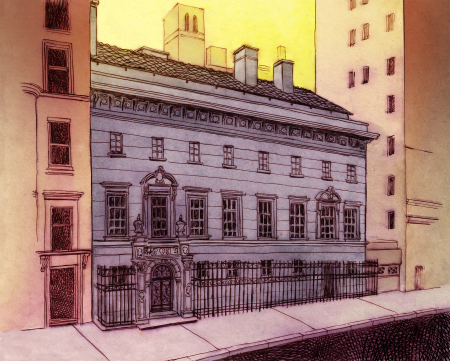
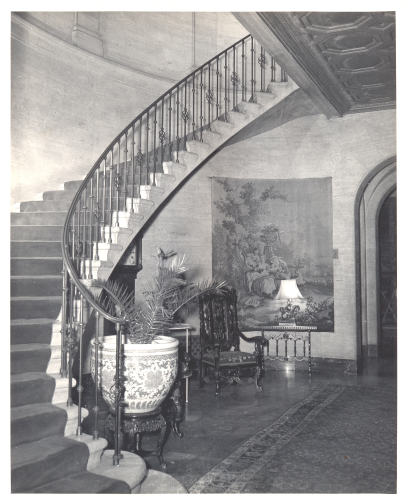
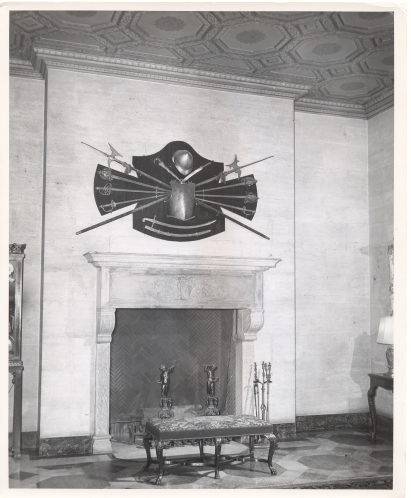
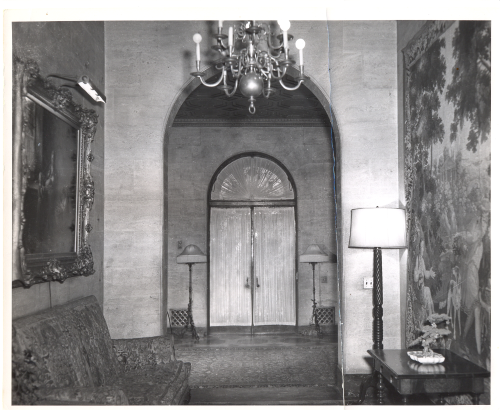
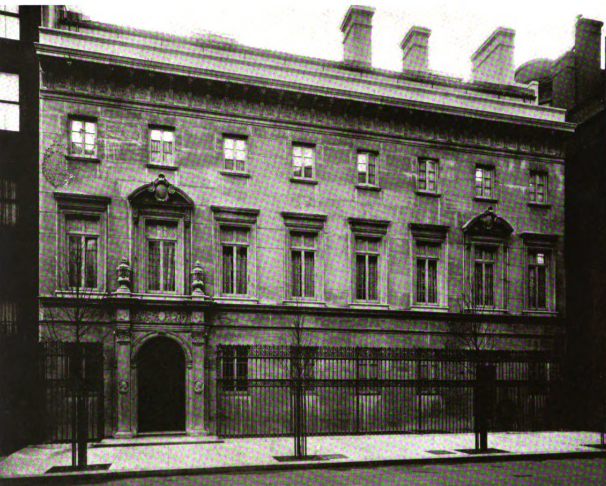
The New York Academy of Sciences found its current home with a move to 115 Broadway in May 2023. The building has its own unique history dating back more than a century.
Published March 23, 2026
By Nick Fetty
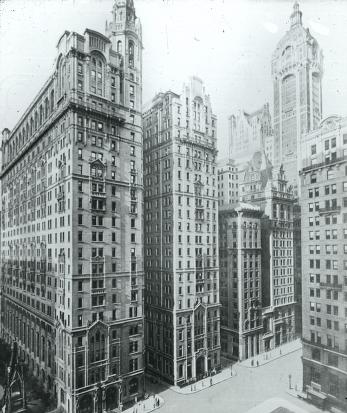
A 1906 shot of the Trinity and U.S. Realty Buildings. Image via University of Michigan Library Digital Collections.
The United States Realty Building | 115 Broadway | 2023-Present
The site of The New York Academy of Sciences’ current home at 115 Broadway has an intriguing history dating to the American Revolution.
Construction on the U.S. Realty Building (115 Broadway) was finished in 1907, two years after completion of the nearly identical Trinity Building (111 Broadway) directly to the south. The 21-story, steel-framed, Indiana limestone, Gothic-revival buildings were considered early examples of New York City skyscrapers. The two buildings were designed to complement the aesthetic of Trinity Church, immediately to the south.
Some accounts, such as from The New York Times’ Christopher Gray, dubbed the two buildings as the original “twin towers.” These buildings, which graced the city skyline during an era when the tallest structures were concentrated in Lower Manhattan, were designated New York City landmarks in 1988.
Both buildings were designed by Francis Kimball, the famous New York architect with projects such as the still standing Empire Building, 71 Broadway, (not to be confused with the Empire State Building), and the now-defunct Casino Theatre, 1404 Broadway and West 39th Street, to his name. An American by birth, Kimball was inspired by Gothic revival architecture while visiting London in the 1870s. He was dubbed “The Father of the Skyscraper” by The New York Times in 1917, two years prior to his death. Many of Kimball’s skyscrapers utilized a then-new engineering development known as “caissons,” which are retaining structures used when building bridges and the base of large buildings.
The two buildings include several impressive architectural features such as limestone gargoyles and brass dragons perched around the exteriors as well as double height basket-arched windows at the base of each. Each building has an entryway adorned with Sienna Marble and white statuary marble imported from Italy. The entryway’s high, arched ceilings and stained glass interior windows give the feel of a “European house of worship” while gilded grotesques – some smiling, some frowning – peer down on building tenants and guests as they wait for the elevator.
The History of the Site
The U.S. Realty Building is located approximately six blocks south of the Academy’s first home near Barclay and Broadway during the 19th century. At this time (1817), the City Hotel stood approximately where the U.S. Realty Building stands today. It was among the grandest hotels in the city during this era with more than “one hundred large and small parlours and lodging-rooms” as well as a concert/banquet hall.
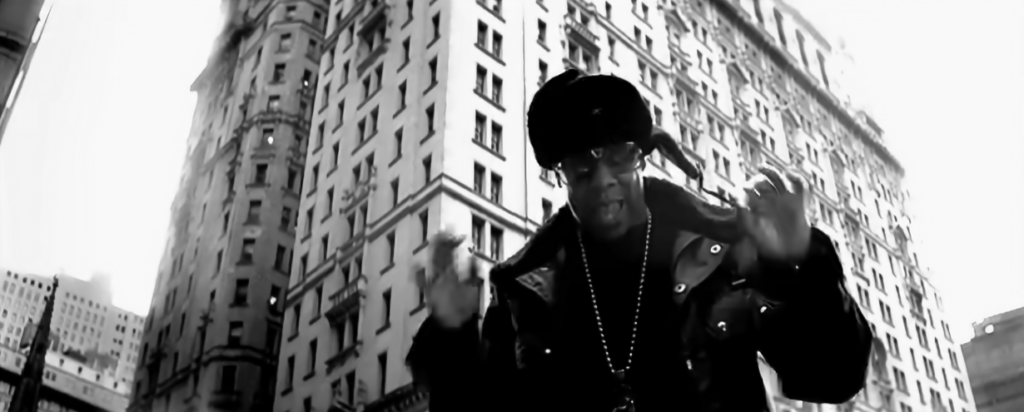
Prior to City Hotel, the site was home to a tavern that served as a meeting spot for the Sons of Liberty in 1765 as they planned a resistance to the British Stamp Act. It was also the location for George Washington’s 1789 inaugural ball. Fast-forward two centuries, and the building makes an appearance in the music video for Jay-Z and Alicia Keys’s 2009 anthem “Empire State of Mind.”
The U.S. Realty Building, the Trinity Building, and the spire of Trinity Church can be seen around the 1:41 mark in the music video of “Empire State of Mind.” Screenshot via S. Carter Enterprises/YouTube.
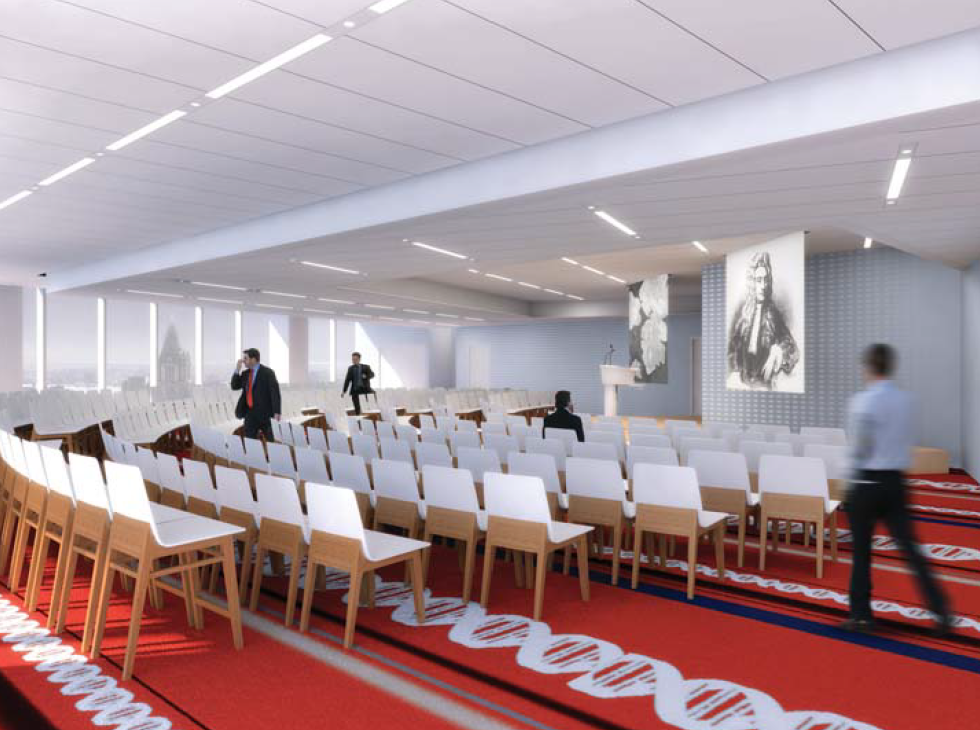
The Academy moved into its new facility in May 2023. An Open House reception was hosted on Sept. 14, at which 200 scientists and science enthusiasts had the opportunity to tour the space. The Academy’s new home hosts dozens of Academy events (hybrid and in-person) throughout the year and is available for rent by the public.
“My hope is that we become not only the virtual go-to space but we actually become the physical go-to space where people think ‘this is the place where I can hang out, I can interact with really interesting, smart people, I can engage in conversations that reflect the Academy’s fundamental purpose,’” Academy President and CEO Nick Dirks said during the 2023 open house.
This is the final piece in an eleven-part series exploring the Academy’s past homes. Read:
Actors, a past president, and even a “world champion” racer. Here are six famous non-scientists with ties to The New York Academy of Sciences.
Published March 19, 2026
By Nick Fetty
For more than 200 years, the academy has prided itself on its egalitarian and democratic roots. Anyone with an interest, even curiosity, in science could become a member. This includes celebrities as well as those who wouldn’t be considered scientists in the traditional sense.
Here are six non-scientists with ties to the Academy, listed alphabetically.
Fernando Alonso, Formula One Racer
It’s not every day that a “world champion” visits the Academy. But that’s exactly what happened when two-time Formula One titlist Fernando Alonso visited in 2012.
Alonso gave a speech to motorheads and other attendees during an event at the Academy’s former office on the 40th floor of 7 World Trade Center. At this point in his career he was racing for Ferrari, the Italian luxury sports car manufacturer that dominates the world of F1 racing. Appropriate for a talk at the Academy, Alonso focused on the STEM aspects of racing and automotive performance.
“I think there is never enough technology,” he said, according to reporting from the London-based Daily Telegraph. “Technology is our motivation and the main goal for engineers and designers.”
The Spaniard won the world titles in 2005 and 2006 while racing for French-based Renault. He has since joined the Aston Martin Aramco Formula One Team and is geared up for the start of the 2026 race season. He’s driving a new car designed by British engineer Adrian Newey, “the most successful car designer in F1 history.”
The 2026 race season got underway earlier this month with the Qatar Airways Australian Grand Prix.
Salvador Dalí, Artist
Fellow Spaniard, artist Salvador Dalí, also has an Academy connection.
Part of the surrealistic art movement of the 20th century, Dalí was known for his “eccentric behavior and his eerie paintings.” His 1931 painting The Persistence of Memory depicts a realistic landscape with surreal melting clocks, a scene that a brain under the influence of hallucinogens might conjure up (see Aldous Huxley section below.)
The late Adnan Waly, PhD, a German-born nuclear physicist and longtime Academy member, recalled when the Spanish surrealist made a surprise appearance at an Academy event.
“I was at the Academy attending a lecture of the Nuclear Section. I found a seat in an empty row because not too many people were interested in nuclear physics at the time. The door opened, and in came a gentleman flanked by two gorgeous women. It was Salvadore Dalí with his moustache and his cane. He sat in my row with the ladies, and he put his cane up, two hands on the cane and his chin resting on it, as was his habit. He looked at the pictures that were presented,” Dr. Waly recalled.
“One of the pictures was of a cloud chamber — a photograph of particles moving apart from a center,” Dr. Waly continued. “Some time afterwards I saw a television program where Dalí was interviewed, and his latest painting was exactly what he had seen at the Academy, with tracks coming out from the center. ‘You don’t know what this is?’ Dalí said to the interviewer. ‘These are pimmesons.’ The lecture had been on the π meson.”
Dalí passed away in 1989 at the age of 84. Today the Academy continues its long, proud history of combining the arts and the sciences. This includes events with artists and providing space for works to be exhibited.
Michael J. Fox, Actor
Known for starring roles in 1980s classics like Back to the Future and Family Ties, Michael J. Fox’s acting career was forever changed by his Parkinson’s disease (PD) diagnosis at the age of 29.
Instead of sitting on the sidelines, Fox took an active role in advocating for the disease. In 2000, shortly after going public with his diagnosis, he founded the Michael J. Fox Foundation for Parkinson’s Research. To date, the organization has raised more than $2.5 billion to support research.
In addition to his advocacy and despite his condition, Fox continued to act. He voiced lead roles in multiple movies and has made various guest appearances on television. His appearance on HBO’s Curb Your Enthusiasm served as a chance to use humor to teach viewers about PD.
“It has long been recognized that humor can help those suffering from chronic conditions better cope with their diseases, and any chance to increase awareness of Parkinson’s disease among the general public is important,” Dr. Cheryl Waters of the Neurological Institute at Columbia University Medical Center told ABC News in 2011.
Though his condition has worsened to the point that he is now officially retired from acting, Fox remains optimistic that with adequately funded science a cure is possible.
“I know we’ve done a lot, but we haven’t cured Parkinson’s,” Fox told TIME magazine earlier this year. “I’m always pushing and never happy until we get this done. We’ve changed the way people think about the disease, and we know there’s an end, and we’ll find it.”
Aldous Huxley, Author
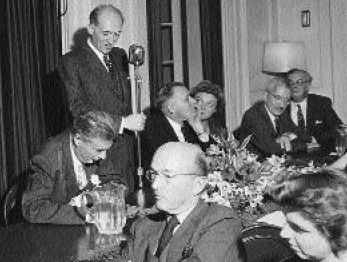
Aldous Huxley (seated, left) during a 1956 conference at the Academy.
The English-born writer and philosopher is perhaps best known for works like Brave New World (1932) and The Doors of Perception (1963). Though less known, Aldous Huxley is also tied to what’s believed to be the first public utterance of the term psychedelic.
Huxley befriended Humphry Osmond, a psychiatrist researching the therapeutic potential of substances like LSD in the 1950s. He was known to supply Huxley with hallucinogens like LSD and mescaline.
“Meanwhile, all that one can predict with any degree of certainty is that it will be necessary to reconsider and re-evaluate many of our traditional notions about ethics and religion, and many of our current views about the nature of the mind, in the context of the pharmacological revolution,” Huxley concluded. “It will be extremely disturbing; but it will also be enormous fun.”
Huxley passed away on November 4, 1963, the same day as fellow British writer C.S. Lewis, author of The Chronicles of Narnia (1950-1956). Both deaths were overshadowed by the assassination of U.S. president John F. Kennedy.
Appropriate for the man co-credited with coining the term psychedelic, Huxley had one dying wish. “At his request,” New York Magazine reported, “his wife shot him up with LSD a couple of hours before his end, and he tripped his way out of the world.”
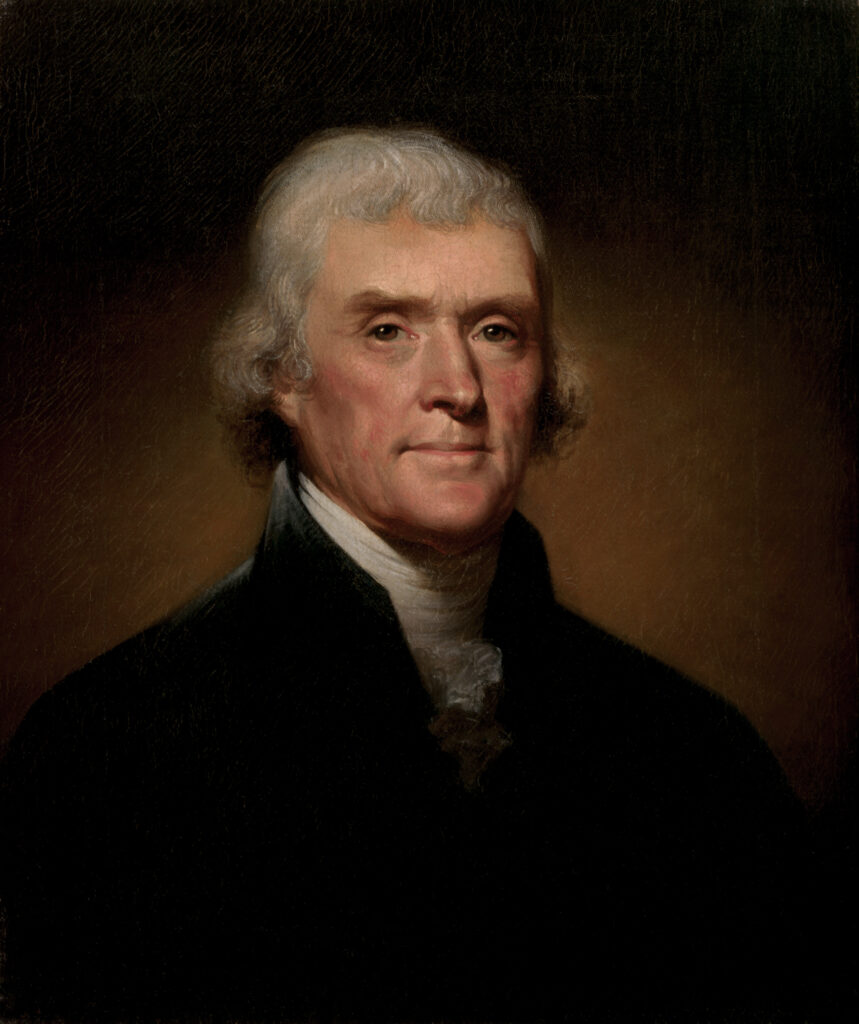
Thomas Jefferson, 3rd President of the United States
Thomas Jefferson was a Founding Father and the third president of the United States.
“The botany of America is far from exhausted, its mineralogy is untouched, and its zoology totally mistaken. We have spent the prime of our lives in procuring your students the precious blessing of liberty. Let them spend theirs in showing that it is the great parent of science and of virtue, and that a nation will be great in both ways in proportion as it is free,” Jefferson wrote in a letter to the Harvard University president in the early 19th century.
While some of Jefferson’s views and actions would without doubt be considered insensitive (to put it mildly) today, he nonetheless played a significant role in shaping the United States, the Academy, and science broadly.
Christohpher Reeve, Actor
Like fellow actor Michael J. Fox, Christopher Reeve’s career began on the silver screen before he became a science advocate.
Born in NYC, Reeve studied at Cornell University and Julliard, before getting his breakthrough as Superman in the eponymous 1978 film. He went on to play the red-and-blue-decked DC Comics superhero in the three subsequent films in the 1980s.
At six-foot-four with an athletic build, Reeve physically embodied the part of a superhero. He even “performed many of his [own] stunts, including dangerous ‘flying’ exercises,” according to a 2004 CNN article. But Reeve’s life took a drastic and unexpected turn when a 1995 horse-riding accident paralyzed him from the neck down.
Following the accident, Reeve required a wheelchair to move and a respirator to breathe. Around this era, stem cells and cloning were emerging as potential, albeit ethically controversial in some circles, methods for repairing damaged tissues and organs. The conservative George W. Bush administration at this time opposed federal funding for embryonic stem cell research.
During an event at the Academy in May 2002, Reeve, an advocate of stem cell research, debated James Kelly, who presented an apprehensive take on the new treatment. Kelly, who was paralyzed in a car accident, felt that “using human eggs to treat injury and disease is too far in the future, too costly, and would divert funding from more promising research,” according to a 2002 article from the Knight Ridder news service.
Reeve retorted that “therapeutic cloning is different from reproductive cloning.” He suggested that U.S. policy around the matter should take a “strictly regulated” approach like England. Despite the at-times contentious debate, events like this highlight the need for earnest discussions from various viewpoints, to advance science.
Christopher Reeve passed away just two years after the event, at the age of 54.
While artificial intelligence (AI) is currently experiencing a revolution, The New York Academy of Sciences has been at the forefront of pre-AI technologies since at least the 1960s.
Published March 4, 2026
By Nick Fetty
Computers and smartphones are a ubiquitous part of our lives, but the early ancestors of this technology would be hardly recognizable today.
Some of the earliest electronic computers in the middle of the 20th century were mammoth machines that took up entire rooms and crunched numbers for national defense purposes. Today, handheld smartphones can deliver us everything from live sports to dinner…literally. Similarly, the earliest forms of AI would be considered primitive based on our understanding today. But these technological precursors nonetheless played a significant role in the development and adaptation of today’s popular AI tools like ChatGPT and Google Gemini.
Here are five times when the Academy was ahead of its time with efforts to promote and advance what can be considered pre-AI technologies.
Computers Making Decisions (1960)
During a 1960 conference at the Academy, MIT researcher Warren S. McCulloch, MD, discussed a new “thinking machine” known as Leo. Leo was being used by managers at a British restaurant chain to operate more efficiently. As Dr. McCulloch pointed out during the event, this showed that machines were “moving in on the last realm of [humankind’s] sovereignty—making decisions.”
A psychologist by training with expertise in neurophysiology, psychiatry, and cybernetics, Dr. McCulloch was blunt in his assessment of the then-new technology’s potential.
“I don’t think brains are such marvelous things at all,” he says, according to reporting by Associated Press science writer John Barbour. “Man is a slow computer. He is prone to error.”
Dr. McCulloch further explained that human brains can process about “25 bits of information” per second, while “at least a million times as much can flow along the wires of a machine.” Unbeknownst at the time, this was a bit of foreshadowing.
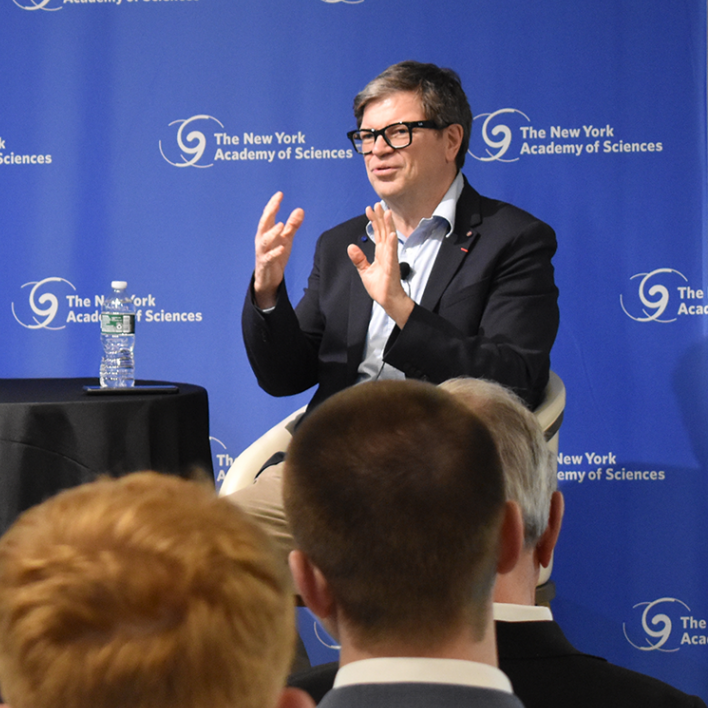
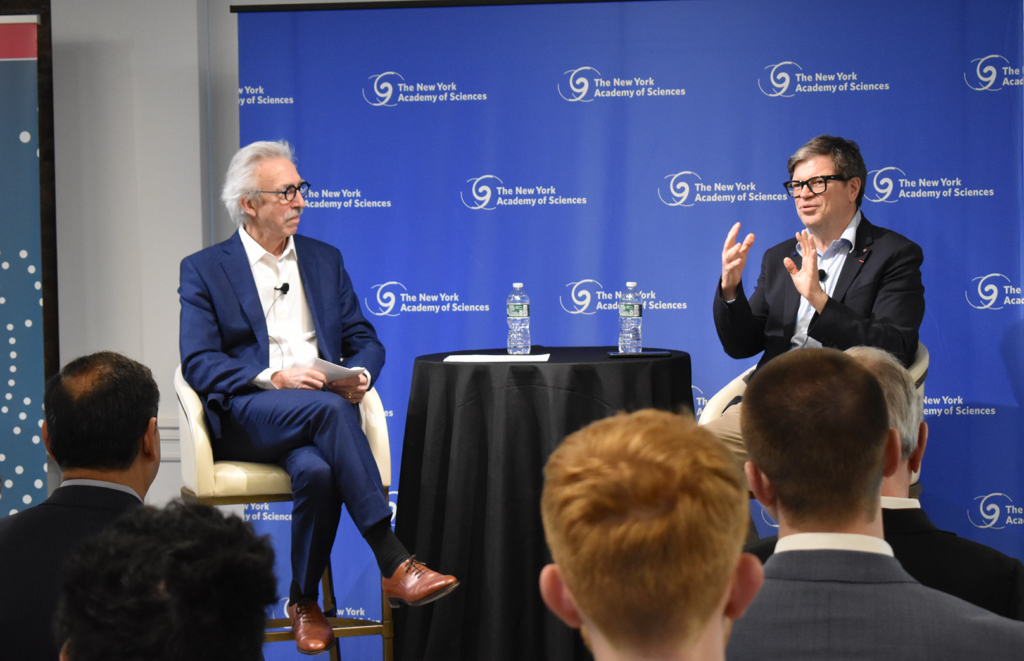
Yann LeCun (right) during an event at the Academy on March 14, 2024. Photo by Nick Fetty/The New York Academy of Sciences.
Modern AI expert Yann LeCun would echo a similar sentiment during a 2024 Academy event. LeCun made the case that with modern AI technology, sensory, as opposed to language, inputs were superior for developing more efficient AI. He pointed out that while reading text or digesting language, the human brain processes information at about 12 bytes per second. This is compared to sensory inputs, such as from observations and interactions, which the brain processes at about 20 megabytes per second.
“To build truly intelligent systems, they’d need to understand the physical world, be able to reason, plan, remember and retrieve. The architecture of future systems that will be capable of doing this will be very different from current large language models,” LeCun says.
During his 1960 talk Dr. McCulloch predicted that properly built machines would eventually replace humans in the workplace.
Multiplying Human Capacity (1967)
The concept of machines replacing humans has been a theme of science fiction and other parts of popular culture for decades. However, this concept appeared to be less in the realm of fiction when it was brought up during the Academy’s 150th anniversary meeting in 1967.
Simon Ramo, PhD, an American physicist, engineer, and business leader, asserted that a robot society was inevitable, though he was optimistic about a more technologically based future. He pointed out that machines can do instantaneously what it takes the human brain months or even years to do. Instead of competing with humans, he saw machines as being a tool to multiply human capacity.
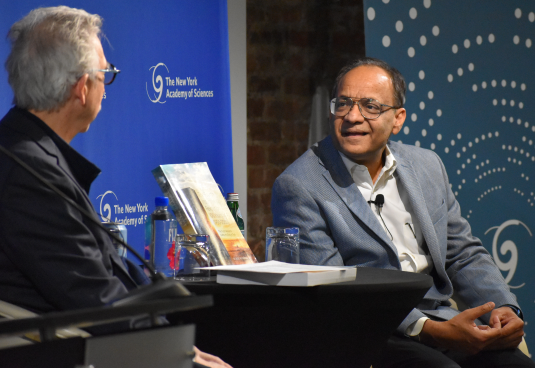
Alok Aggarwal (right) during an event at the Academy on December 5, 2024. Photo by Nick Fetty/The New York Academy of Sciences.
Alok Aggarwal, PhD, CEO and Chief Data Scientist at Scry AI, visited the Academy in 2024 to give a talk on his recently published book The Fourth Industrial Revolution & 100 Years of AI (1950-2050). Dr. Aggarwal would likely agree with Dr. Ramo about the utility of technology that improves human productivity. During his talk, Dr. Aggarwal pointed out that “AI can be applied to laborious, mundane activities, where humans are prone to making mistakes like sifting through invoices to reconcile financial records or submitting the proper documentation for a mortgage loan.”
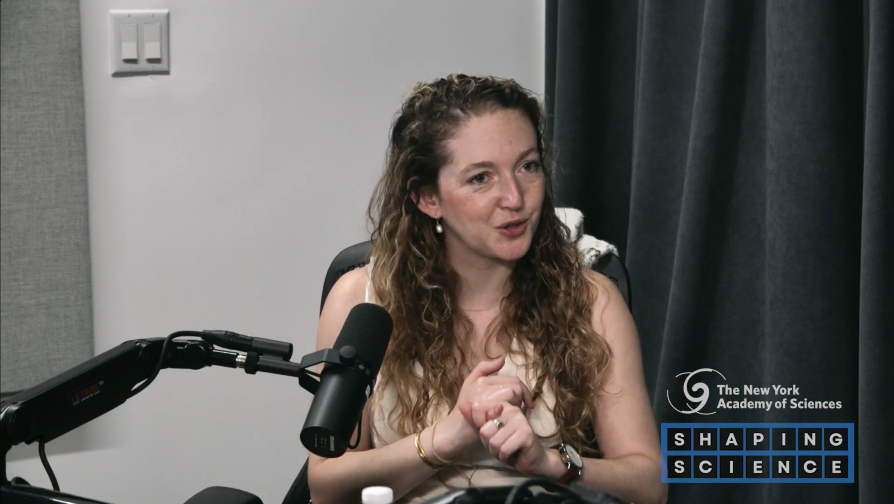
However, not all predictions come to fruition. In 1967, Dr. Ramo suggested that machines could contribute to “instant democracy,” envisioning a future “where every home had an electronic voting machine, enabling all to participate in day-to-day decisions.” While political campaigns can use modern tools like social media, algorithms, targeted marketing, mobile games (such as the one developed by Shaping Science podcast guest Ian Bogost, PhD) and more in their attempt to win elections, it may be a while before voters are casting a ballot over their smartphones.
Voice Activated Commands (1971)
While movies like 2001: A Space Odyssey and shows like Star Trek depicted primitive concepts of human-computer interfaces as early as the late 1960s, the practicality of this technology wasn’t as farfetched as it might have seemed at that time.
During this era, New Jersey-based Bell Labs was developing “a device that dials telephone numbers when it ‘hears’ spoken commands,” as reported by The Sciences magazine. The Sciences was an award-winning magazine focused on scientific news and research published by The New York Academy of Sciences between 1961 and 2001.
This then-new technology was being developed for individuals with physical impairments who would otherwise struggle with dialing a phone number. Focusing on the technical aspects of how the device functioned, The Sciences reported: “Integrated circuitry converts sound waves into electrical pulses that open and close the electromechanical switches necessary for obtaining dial tone, dialing and terminating a call.”
While the technology started off as a tool to help those with physical impairments, its applications today are much broader. From Amazon’s Alexa to Apple’s Siri and everything in between, voice-assisted devices are now used to make relatively mundane daily tasks more efficient. Voice-to-text capabilities enable us to do everything from safely sending text messages while driving to dictating notes that once needed to be manually transcribed.
The jury is still out whether the future of voice-assisted technology will follow the helpful and supportive path of the beloved Computer from Star Trek or whether it exhibits the troubling agentic and rogue properties of something like HAL 9000 from 2001: A Space Odyssey.
Computers and Consciousness (1985)
As computers continued to develop into the late 20th century, the idea that the technology could gain its own consciousness became an ethical and philosophical concern. This was addressed directly in a 1985 article published in The Sciences magazine.
In the article, senior editor Robert Wright pondered whether a computer or robot could be programmed in a way “that it will be aware of its calculations, and perhaps even be capable of experiencing anger, fear, or sympathy.” A growing number of what Wright called “scientific materialists” or “mechanics” feel that humans and other forms of life are “entirely explicable in terms of engineering.”
“Every aspect of behavior, sensation, and thought, they maintain, is a product of the way information is processed and transmitted; so presumably, it is possible, by controlling the flow of information, to replicate human experience with precision,” Wright wrote.
These “mechanics” felt that with the correct hardware and software, coupled with sufficient time, they could “create computers flushed with pride, riddled with doubt, or alienated by the rapid pace of technological and social change.” If or when computers develop emotions, feelings, and thoughts, the optimistic “mechanics” feel it will be “additional proof that science can conquer all.”
Wright did point out that the optimism of the “mechanics” could be misguided. He wrote “If computers do someday evince a subjective life, the mechanics’ view of consciousness will have been undermined; if computers don’t show signs of consciousness, this silence will be an annoying reminder that the mechanics can never know for sure whether they are right about what consciousness is.”
While the technology has developed immensely in the 40 years since the article was published, philosophical and ethical concerns around computers gaining consciousness continues to be a hot topic today.
Nobody Knows You’re a Dog (1995)
While AI technologies like ChatGPT have helped to usher in the modern era of “chatbots,” the precursors to these virtual beings have existed since the commercial Internet’s early days in the 1990s.
Sherry Turkle, PhD, an MIT sociologist and psychologist, touched on this in a 1995 article in The Sciences, which was later adapted for her book Life on the Screen: Identity in the Age of the Internet. Prof. Turkle wrote about her travails in “multi-user domains/multi-user dungeons” known as MUDs, which were like early forms of chatrooms or social media. She described a bot known as Julia, developed at Carnegie Mellon University, which interacted with users so realistically, many struggled to tell if “she” was real or fake.
“As the boundaries erode between the real and the virtual, the animate and the inanimate, the unitary and the multiple self, the question becomes: Are we living life on the screen or in the screen?” Prof. Turkle writes.
In yet another instance of scientific prescience, English mathematician Alan Turing foresaw in the 1950s issues people would eventually have differentiating autonomous beings from fellow humans. To combat this, he developed the Turing test. Nitin Verma, PhD, a former AI and Society Fellow currently at the University of Illinois Urbana-Champaign, analyzed the relevance of the Turing test in the modern AI era.
“Passing a challenging test can be seen as a marker of progress. But would we truly rejoice in having our AI pass the Turing test, or some other benchmark of human–machine indistinguishability?” Prof. Verma ponders in a 2024 blog post.
Whether it’s life imitating art or art imitating life, The New Yorker really was on to something with their 1993 cartoon, that has since become a meme, in which Peter Steiner declared “On the Internet, nobody knows you’re a dog.”
Well before it was embraced by the likes of Timothy Leary, Ken Kesey, and the Grateful Dead, Max Rinkel (perhaps unbeknownst to him) was laying the groundwork for what would become the psychedelic movement in the United States.
Rinkel was born in Germany at the end of the 19th century. He earned a medical degree from Christian Albrecht University in Kiel before emigrating to the United States. Early in his career he studied the use of Benzedrine in treating alcohol addiction. But by the 1960s, misuse of this amphetamine led to it falling out of favor with the medical community.
He also studied the use of Pervitin, another amphetamine, as a “truth serum” for treating patients with psychiatric disorders. Pervitin was used by the Nazis during World War II. It enabled “soldiers to march and fight for days at a stretch without needing to rest or eat” while giving the user feelings of optimism and euphoria. Similar to Benzedrine, the potential for misuse led to Pervitin losing credibility within the medical community.
Dr. Rinkel’s big break came in the late 1940s, when he began studying the use of another substance, discovered in a Swiss lab roughly a decade prior, for dealing with psychiatric disorders.
Turn On, Tune In, and Study
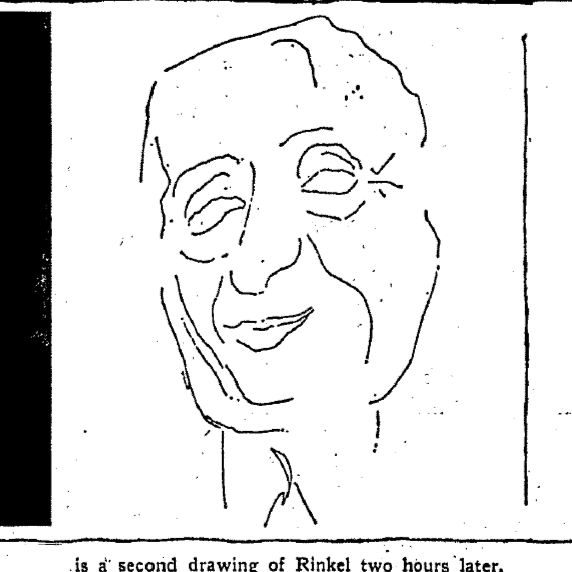
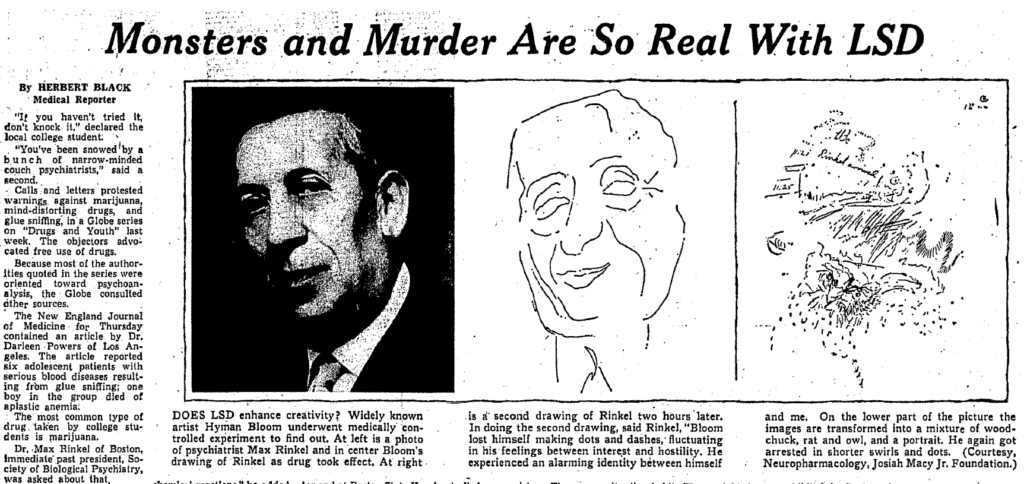
The Harvard Crimson cites Dr. Rinkel as “the first doctor in North America to work with LSD,” when he supervised his research partner who in 1949 ingested the substance and experienced “the first acid trip in the West.” (“Acid” is used as an informal or street term for LSD.) In a related experiment that same year, Dr. Rinkel administered LSD to modern American painter Hyman Bloom, who reported that it heightened his awareness.
“It was really a great experience for me,” Bloom told The New York Times. “On the other hand, it was more difficult to draw. My control was reduced, or lacking. I was interested, however, in the philosophic aspects of LSD as a religious experience.”
This sentiment was echoed by Dr. Rinkel who observed a positive change in Bloom’s mood, but not in his artistic ability, while under the influence of LSD.
“There is no doubt that the drug put him in ecstasy,” Dr. Rinkel said as reported by the Associated Press. “But the drawings he produced were mainly unformed, and when formed were monstrous creatures.”
Dr. Rinkel, who at least once dropped acid himself in a controlled environment and stated “the experience was not always pleasant,” shared one challenge he encountered with his research subjects during the 1951 American Psychological Association Convention in Cincinnati.
“In the LSD test situation,” he stated, “subjects appeared more interested in their own feelings and inner experiences than in interacting with the examiner, confirming behaviorally the test results, which indicated increasing self-centeredness.”
An Evenhanded, Scientific Approach
This early work predated Timothy Leary, PhD, a fellow Bostonian, who would advocate for LSD beyond just its medicinal properties, in the 1960s. However, unlike Dr. Leary, who was an advocate, Dr. Rinkel was more objective and scientific in his assessment of LSD’s potential.
In 1965, Dr. Rinkel studied the aftereffects of LSD on students in Boston who were dealing with anguish, anxiety, and pain. Part of his conclusion was that unregulated, black-market LSD taken outside of controlled settings can be dangerous for users because of variations in the drug’s purity and dosage. During this era, students in his study reported that LSD could easily be obtained from street dealers on Harvard Square for about $5 per dose. Furthermore, Dr. Rinkel found that LSD’s effects can exacerbate problems for individuals who have neurotic and latent psychotic tendencies.
However, despite these cautions, Dr. Rinkel saw immense potential for LSD when administered within a controlled environment. With illicit use on the rise, states began prohibiting possession of LSD in 1966. By 1970 President Richard Nixon (who once called Dr. Leary “the most dangerous man in America”) signed the Controlled Substances Act, which prohibited psychedelics at the federal level. While Dr. Rinkel was sensitive to these abuses, he also felt controlled research was necessary to better understand LSD’s properties and to avoid future abuses.
“An Excellent Tool for Research in Biological Psychiatry”
“It has proved an effective tool for research, and has stimulated widespread investigations into the possible biological causes of mental illness,” Dr. Rinkel told the Boston Globe in 1965. “It has been proposed as a cure for alcoholism, and a therapeutic aid in narcotic addicts. It is being used in the study of autistic (self-centered) schizophrenia [sic] in children. It is being studied for possible use in easing intractable pain in terminal cancer cases.”
He further reiterated this position in a paper published a year before his death.
“Responsible research with LSD and similar substances by ‘qualified’ physicians and scientists is, however, vital and must go on,” Dr. Rinkel concluded in a 1965 article published in The Proceedings of the Twentieth Annual Convention and Scientific Program of the Society of Biological Psychiatry. “Uncontrolled and uncritical experimentation should not be allowed to create an [sic] hysterical attitude which would further hinder or obstruct legitimate experimentation with LSD, an excellent tool for research in biological psychiatry.”
Though historical records do not provide a precise date, Dr. Rinkel attained the rank of Fellow with The New York Academy of Sciences. At this time, Fellows were selected by sustaining and active members for the virtue of their scientific achievement. Dr. Rinkel passed away in 1966 at the age of 71.
A Long, Strange History
While Dr. Rinkel might be the earliest connection, the Academy has a history with research around LSD and other psychedelics with therapeutic potential. Psychiatrist Humphrey Osmond and author Aldous Huxley put their heads together to come up with a term that described the effects of LSD. It was during a meeting at The New York Academy of Sciences in 1957 that the term “psychedelic” was believed to be first used in a public setting.
Having laid the groundwork, Dr. Rinkel might be proud of the current state of research and even legislation on psychedelics in the United States. Nicolas Langlitz, MD, PhD, who oversees the Psychedelic Humanities Lab at The New School, contextualized the current state of psychedelics research on a recent episode of the Academy’s Shaping Science podcast. In an effort to appease both sides of the political aisle, Dr. Langlitz, who similar to Dr. Rinkel was born in Germany and earned a medical degree, pointed out that researchers and lobbyists deliberately moved away from the counterculture element. Instead, they focused on using psychedelics to treat post-traumatic stress disorder (PTSD), which often impacts veterans and law enforcement officers.
“The interesting part about the psychedelics renaissance is that in this hyperpolarized political environment, psychedelics were one of the very few topics that received several bipartisan bills in Congress,” Dr. Langlitz said.
The Academy returned to its roots in Lower Manhattan when it moved into a brand new, state-of-the-art skyscraper at 7 World Trade Center.
Published December 19, 2025
By Nick Fetty
7 World Trade Center | 2006-2023
As Lower Manhattan was rebuilt after the devastating attacks of September 11, 2001, the Academy had the opportunity to return to its roots in Lower Manhattan.
The first tenant of 7 World Trade Center after construction was completed in 2006, the Academy moved into the 40th floor of the 52-story, 1.7 million-square-foot skyscraper. The $700 million building was the first building to come back online after the trade center campus was destroyed.
7 World Trade Center was “a model of environmental and operational efficiency in high-rise construction” and was dubbed Manhattan’s “greenest” building by the U.S. Green Building Council (USGBC), according to the Academy’s 2005-06 Annual Report. The building achieved gold status under USGBC’s Leading in Energy and Environmental Design (LEED) rating system, the first office building in NYC to attain this status. Additional accolades included the Municipal Art Society of New York’s 2006 award for Best New Building, and the 2006 Merit Award for Architecture from the American Institute of Architects New York Chapter.
“Returning to the area of New York where we were born seems only fitting in light of our approaching bicentennial,” former Academy President Ellis Rubinstein wrote in the 2005-06 Annual Report. “And being the first tenants to have leased space in the first building to rise at the Trade Center site since September 11, 2001 reaffirms our commitment, as a New York City-based institution, to the rebirth of its historic downtown heart.”
Advancing the Mission of Science for the Public Good
During this time the Academy continued its longtime scientific programs, including publication of Annals of the New York Academy of Sciences; the Frontiers of Science Program, which provides a platform to interdisciplinary discussion groups led by prominent researchers working in some of the most applicable and popular areas of science; and public outreach, particularly with area K-12 schools. The Academy also developed new, innovative initiatives such as Science & The City, a program focused on public engagement with scientific activities in NYC—including many sponsored by the Academy—as well as podcasts and other resources.
The onset and devastating impact of COVID-19 throughout the world necessitated the Academy to move to more online, virtual programs. No different from most other organizations, the Academy had to adapt. In 2023, the Academy moved to a smaller headquarters just a few blocks away from 7 WTC.
This is the tenth piece in an eleven-part series exploring the Academy’s past homes. Read:
The Academy would spend more than half a century in its next home, which was located on the city’s Upper East Side.
Published August 28, 2025
By Nick Fetty
Ziegler-Woolworth Mansion | 2 E. 63rd Street | 1949-2005
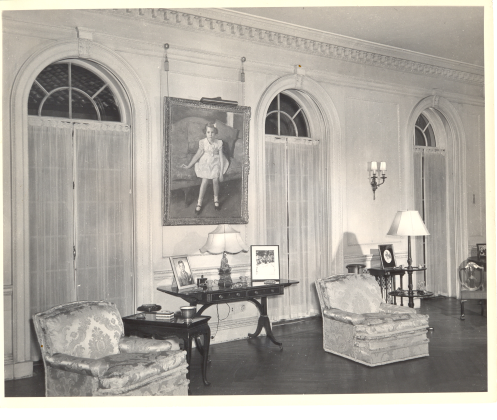
When the Academy moved into the Ziegler-Woolworth Mansion on East 63rd Street it once again had its own standalone facility. The mansion served as the Academy’s home into the 21st century.
The Academy’s procurement of this space can be directly attributed to Eunice Miner, the Academy’s leader as Executive Director for three decades, from 1939 to 1967. Among her many accomplishments, Miner played a significant role in growing the Academy’s membership through the middle of the 20th century. She also directly inspired Norman Woolworth to gift his mansion to the Academy after hearing a talk she gave about the need for a permanent home.
The 32-room mansion, designed by Frederick Sterners and constructed in 1921, first served as a home for William Ziegler, Jr., the Iowa-born, adopted nephew of William Ziegler, Sr., who made his fortune as a co-founder of the Royal Baking Powder Company. Junior, and his first wife, lived in the mansion for barely a year before their marriage ended in divorce. Though plans were initially discussed to convert the building into an actors’ hospital, the mansion was instead purchased by Norman Woolworth in 1929, where he would reside with his family before giving it to the Academy.
Because of its elegant architecture, the building was often rented out for weddings and other events, providing the Academy a source of revenue. To move its headquarters to 7 World Trade Center, the Academy sold the mansion in 2005. While it has since undergone renovation and a name change to the Academy Mansion, it retains many of its original features.
The Academy was now ready to return to its roots with its move back to lower Manhattan.
This is the ninth piece in an eleven-part series exploring the Academy’s past homes. Read:
After an interim few years, The New York Academy of Sciences’ (the Academy’s) next substantive home was in a small room at the American Museum of Natural History.
Published May 22, 2025
By Nick Fetty
American Museum of Natural History | 200 Central Park West | 1904-1949
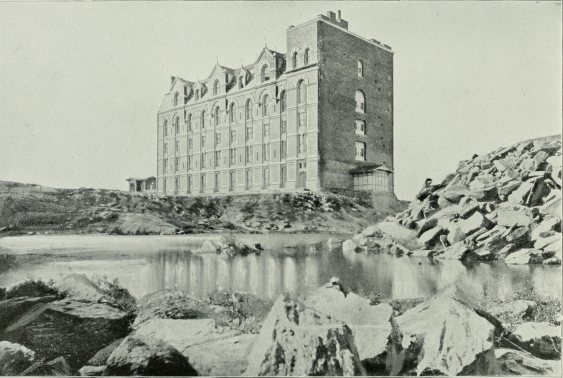
The first cornerstone for the American Museum of Natural History’s (AMNH) 77th Street building was laid by U.S. President Ulysses S. Grant in 1874. Three years later President Rutherford B. Hayes presided over a public ceremony of the building’s grand opening. In May 1878, the Academy deposited its library in AMNH; several years later, in 1904, it would move into a relatively small room there, although the collaborative relationship with the museum was significant.
The five story, red brick and stone, Victorian Gothic structure was designed by architects Calvert Vaux and Jacob Wrey Mould, both of whom also played a role in the development of the adjacent Central Park. An addition in the late 19th century added a 77th Street-facing façade consisting of “smooth and rock-faced Vermont pink granite with steep sloping red slate roofs”. In the following years, various other additions would be built until it became the towering, castle-like structure that exists today. The building was designated a landmark in 1966.
The Academy enjoyed “unprecedented prosperity” in the final decades of the 19th century. In 1887, the American Association for the Advancement of Science held its annual meeting in New York City and the Academy served as the host. During the conference, Albert A. Michelson and Edward W. Morley presented their research disproving the existence of an “ether” through which light was thought to travel in the form of waves. The findings were awe-inspiring to those in attendance and preceded Albert Einstein’s theory of special relativity.
The Original Science Alliance and the Puerto Rico Survey
In 1891, under the leadership of Nathaniel Lord Britton, the Academy launched the original Science Alliance (in the late 20th century, the Academy started a very different program with the same name), an organization that united New York’s scientific clubs and societies. The original Science Alliance also published a bulletin to announce meetings and foster collaboration among member groups.
The 19th century Science Alliance included the Academy, the Torrey Botanical Club, the New-York Microscopical Society, the Linnaean of New-York, the New-York Mineralogical Club, the New-York Mathematical Society, and the New-York Section of the American Chemical Society. Though in existence only 13 years, the Science Alliance convened several times at the AMNH and considered a permanent home at the old City Hall, in part because of its 1200-seat auditorium.
In 1913, the Academy embarked on one of its most impactful contributions in natural history: An extensive survey of Puerto Rico and the Virgin Islands. Spearheaded by Britton and other Academy Members, the survey would eventually last over 30 years and comprise a comprehensive report of 19 volumes of findings in geology, meteorology, oceanography, archaeology, anthropology, botany, and zoology. The survey was a landmark scientific undertaking with a multifaceted and enduring impact.
Sciences Become More Specialized
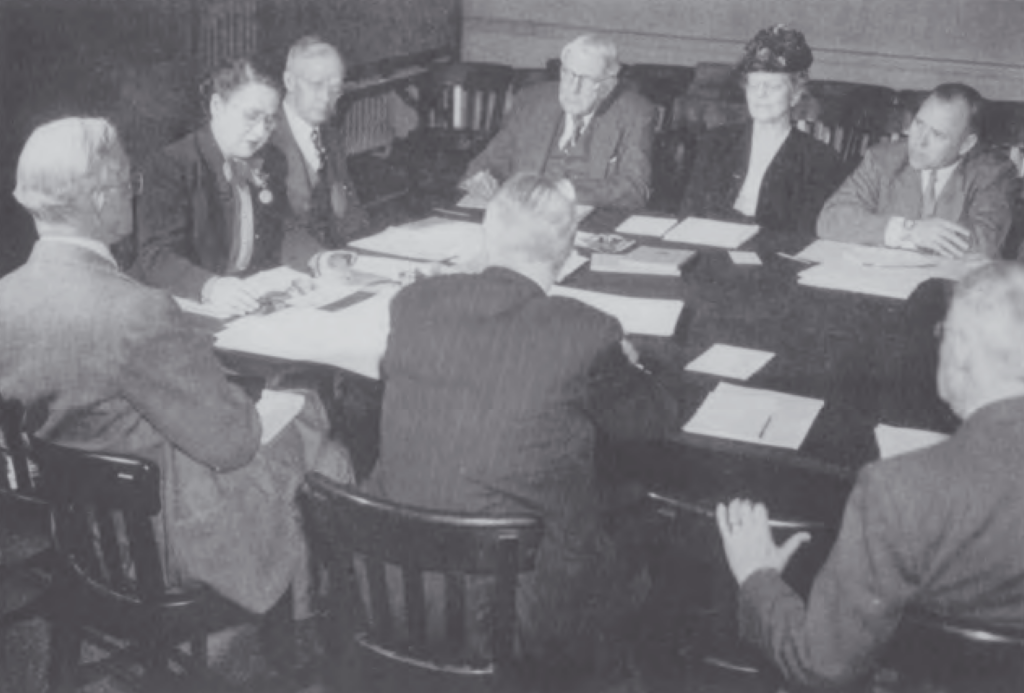
A 1948 meeting of the Council of The New York Academy of Sciences. Eunice Thomas Miner sits at the head of the table.
During the early 20th century, the Academy hosted a range of lectures and other programming, which reflected the broader trend of science branching into more specialized disciplines. A 1915 Academy talk focused on the then-novel practice of skin grafting for burn victims. By the late 1920s, the Academy was supporting research to examine the potential of solar energy. A 1932 event explored the mystery of hypnosis, while a 1938 session examined the potential health benefits of coffee. A chimpanzee, that had been trained to “eat soup noiselessly” and ride a tricycle, even served as guest of honor during an Academy dinner.
In 1942, the Academy published the book Balinese Character: A Photographic Analysis by anthropologists Margaret Mead (who would become Academy vice-president) and Gregory Bateson that explored “the role of culture in personality formation” in Bali, Indonesia. In 1946, two years after streptomycin was discovered, the Academy hosted the first large scientific conference on antibiotics.
The Academy’s nearly 50-year residence at the AMNH was its longest time at a single place. And owing to significant growth during this period, in large part because of efforts led by Eunice Thomas Miner, the Academy once again found itself in need of a larger, standalone space. Miner’s unique talents and unflagging efforts would, in 1949, lead to Norman Bailey Woolworth gifting to the Academy the Ziegler-Woolworth Mansion on East 63rd Street.
This is the eighth piece in an eleven-part series exploring the Academy’s past homes. Read:
The Lyceum of Natural History in the City of New York was renamed The New York Academy of Sciences (the Academy) in 1876 to better encapsulate the work and mission of the organization during this era of broad scientific discovery.
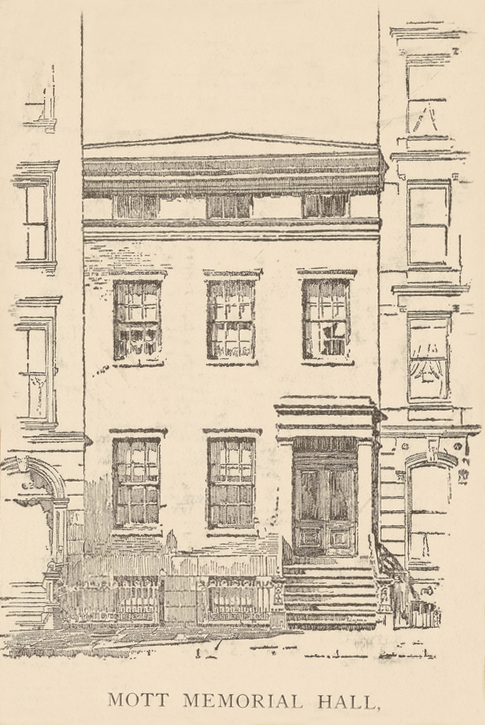
Mott Memorial Hall | 64 Madison Avenue | 1867-1878
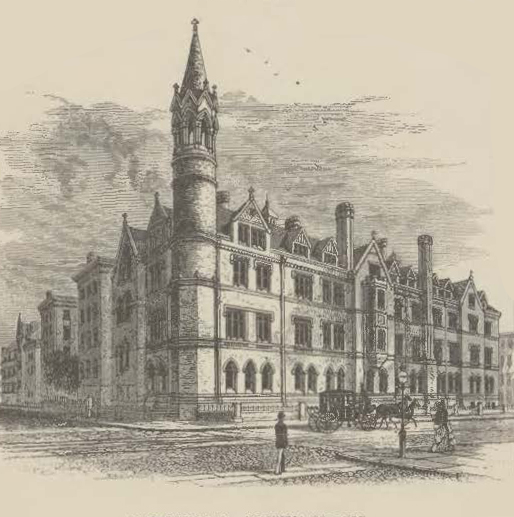
The Lyceum of Natural History in the City of New York (the Lyceum), and its library, moved into Mott Memorial Hall at 64 Madison Avenue in 1867.
During this time, visions of what would become the American Museum of Natural History developed by Lyceum members and associates and other prominent members of the city, including American financier and investment banker J. P. Morgan as well as Theodore Roosevelt, Sr., the father of the future American president. The loss of the Lyceum’s priceless collection in the fire of 1866 added significant impetus for establishing a world-class history museum within the city.
As multiple stakeholders for the natural history museum competed for its design and scope, Lyceum members could refocus their efforts, such as “with keeping the organization intact.” In relatively short order, the museum organizers planned for the new institution to be located adjacent to and on the west side of the newly constructed Central Park, in addition to an art museum on the east side of the park (which would become the Metropolitan Museum of Art), a botanical garden, observatory, and zoo.
An Era of Broad Scientific Discovery
It was in 1876 that the institution’s name was changed from “The Lyceum of Natural History in the City of New York” to “The New York Academy of Sciences” (the Academy). Leading members felt that the term “sciences” better encapsulated the work and mission of the organization during this era of broad scientific discovery beyond natural history. This same year, the Academy voted to allow women to attend meetings and become members, keeping with its founding, egalitarian principles (though much later than by today’s expectations).
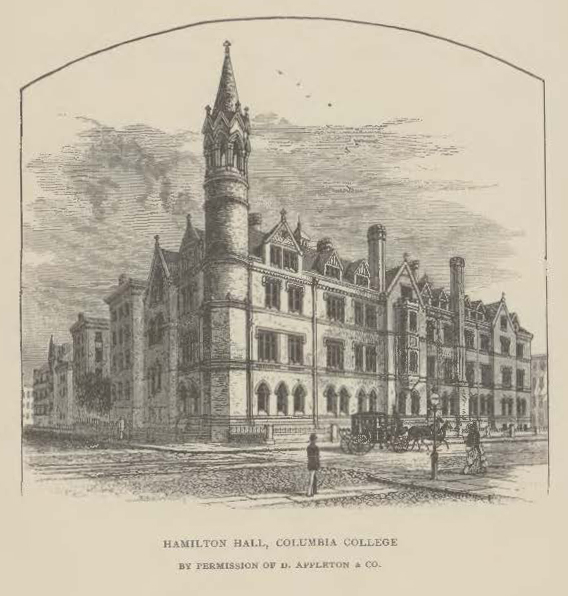
Hamilton Hall.
Historical records provide relatively little information about Mott Memorial Hall, though it was used by both The New York Genealogical and Biographical Society and the New York State Medical Association. According to the 1886 history account written by Lyceum Recording Secretary Herman Le Roy Fairchild, after ten years in Mott Memorial Hall, the Academy shared space in the New York Academy of Medicine’s West 31st Street facility and then moved to Columbia College’s Hamilton Hall.
A centennial history, penned by John Hendley Barnhart from the New York Botanical Garden and published in The Scientific Monthly in 1917, adds that the Academy also briefly utilized space in Columbia’s old library building, Columbia’s Schermerhorn Hall, in Cooper Union, at the American Society of Mechanical Engineers’ facility on West 31st Street, and in the Chemist Club’s assembly room on West 55th Street. In 1906, the Academy moved to the American Museum of Natural History, where it found a home for the next 44 years.
This is the seventh piece in an eleven-part series exploring the Academy’s past homes. Read:
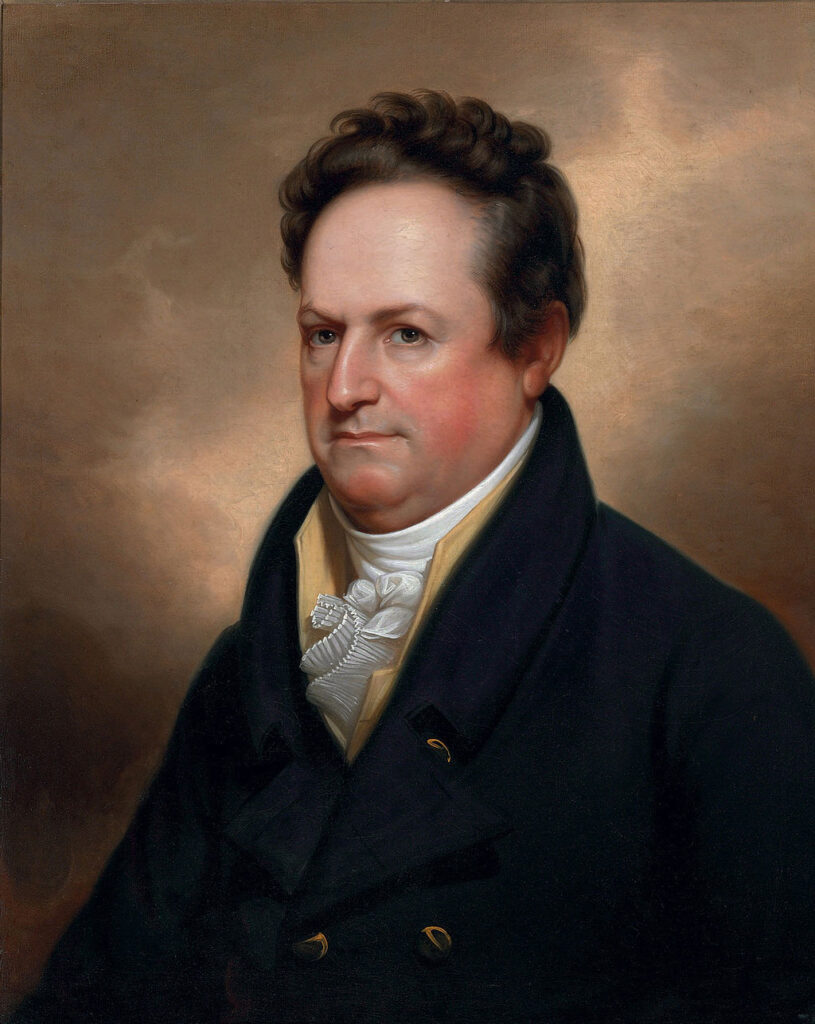
DeWitt Clinton, one of The New York Academy of Sciences’ earliest Honorary Members, had a significant political, economic and social impact on New York City and state, though his contributions reverberated across the country.
Clinton was born in Ulster County, New York in 1769 to a father who served as a general during the Revolutionary War. He attended King’s College (now Columbia University) and upon graduation pursued a brief career in law. He eventually shifted his focus to politics.
Practicing Politics
Despite his first two political campaigns ending in defeat, Clinton persisted and was eventually elected to a seat in the New York State Assembly, the lower chamber in the state’s bicameral legislature. He moved up to the New York State Senate (the upper chamber) before being elected to the U.S. Senate, though this appointment was short-lived because months later he was elected mayor of New York City.
Clinton’s political ambitions were strong but his attempt at reaching the highest office in the land, the presidency, fell short. Running on the “Fusion” party ticket, Clinton was defeated by James Madison 128 electoral votes to 89 electoral votes in the 1812 election. Much of Clinton’s support came from antiwar states in the North.
His Lasting Legacy
Perhaps the most impactful part of Clinton’s legacy was the role he played in the development of the Erie Canal. When construction on the canal began in 1817, the United States was relatively young. The transcontinental railroad had not yet been completed and much of the Midwest was considered the frontier.
The 363-mile canal route traversed from the New York Harbor up the Hudson River to Albany and then west to Buffalo. From there, ships could navigate through the Great Lakes, using a series of locks and dams, eventually reaching Chicago at the westernmost terminus. The canal was completed in 1825.
The Erie Canal was considered an engineering marvel and had an immeasurable economic impact on the burgeoning United States. It enabled development of the sparsely populated states in the Midwest and allowed crops and natural resources from the heartland to be transported faster and more efficiently than over land.
Much of the land was cleared with a combination of manpower, beasts of burden, and gun powder. The original canal was roughly four feet deep and 40 feet wide. Today, tourism is the main source of boat traffic along the canal.
An Appreciation for the Arts and Sciences
In addition to his involvement with the Erie Canal project, Clinton was also known for having a deep appreciation for the arts, sciences, and other educational matters. He led efforts to combat the spread of yellow fever and supported organizations like the Free School Society (which later became the city’s public school system), the American Academy of Fine Arts, the New-York Historical Society, and the Literary and Philosophical Society.
During his lifetime he “published many articles that were well received.” He was elected a fellow of the American Academy of Arts and Sciences in 1816 and was named an Honorary Member of The New York Academy of Sciences in the early 19th century.
One of the Academy’s early members realized through his brief career as an engineer that those who worked outside needed more durable gear. He combined his engineering experience with his entrepreneurial instinct to establish a company that has become a lasting brand in the fashion industry.
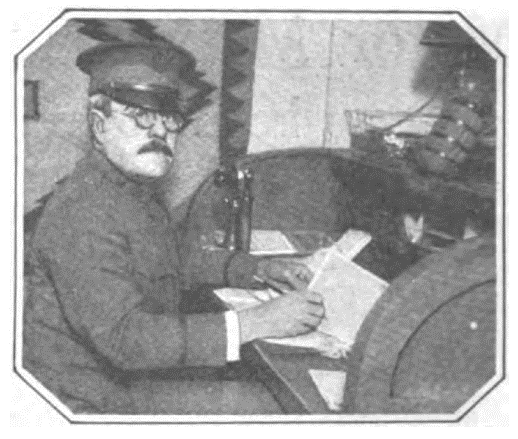
David T. Abercrombie was an engineer, outdoorsman, entrepreneur, and member of The New York Academy of Sciences (the Academy) who lived from 1867 to 1931. After a medical condition sidelined his engineering career, he applied his experience working on the railroads to the field of outdoor outfitting and eventually the war effort.
Early Career
Abercrombie was born in Baltimore in 1867. He graduated from Baltimore City College, prior to enrolling at Maryland Institute, School for Art and Design (known today as the Maryland Institute College of Art) where he studied engineering. This was during an era when engineering as a profession and field of study was in its relative infancy.
Upon graduation, Abercrombie worked as a surveyor and civil engineer for various railroad companies. He mapped previously unexplored areas of Appalachia from North Carolina to Kentucky. To handle the rough terrain and unpredictable elements, Abercrombie fashioned gear for his crew that would be able to stand up to these rough conditions.
Poor vision sidelined Abercrombie’s engineering career when he was just 25, but despite this setback, Abercrombie did have a clear vision of what his next steps would be.
Abercrombie established the Abercrombie Company in 1898 and operated “a small waterfront store on South Street in Lower Manhattan.” He sold firearms, outdoor clothing, fishing gear, and camping supplies. His own designs were featured in some of his products.
The company quickly found success with prominent clients such as explorer Robert Peary, author Ernest Hemmingway, and aviator Charles Lindbergh. This client base even included two American presidents. Theodore Roosevelt and his Rough Riders were outfitted with Abercrombie gear during the Spanish-American War, while John F. Kennedy was a fan of the company’s chinos-style pants.
A lawyer named Ezra Finch was also a fan of the rising brand, so much so that he left his practice to run the company with Abercrombie. In 1904 the company’s name was changed to Abercrombie & Fitch. However, the two men quickly found out that they had different visions for the company’s future. Finch wanted a more generalized store that would appeal to a wider customer base, while Abercrombie insisted focusing on their core product of high-quality outdoor gear. This rift led to Abercrombie leaving the company in 1907.
Abercrombie’s Next Endeavor
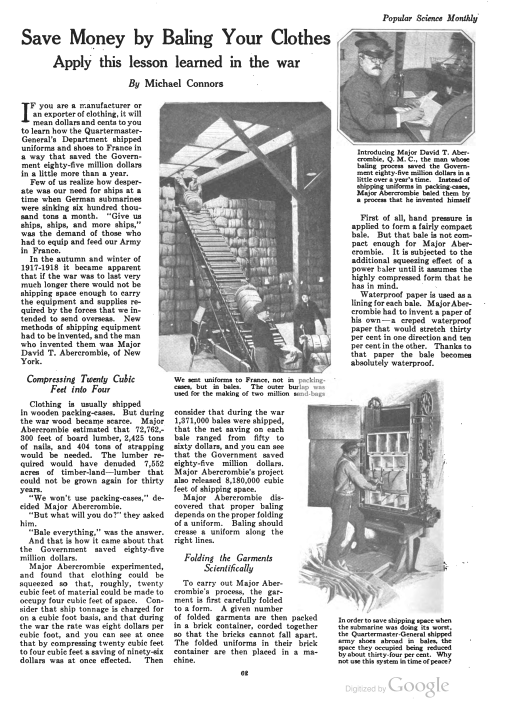
With the United States’ involvement in World War I becoming an inevitability, the U.S. Army recruited Abercrombie for the war effort. Abercrombie served as a Major in the Quarter Master Reserves where he led a team of civilians in producing military uniforms. According to the July 1919 issue of Popular Science Monthly, Abercrombie’s ingenious packaging and folding processes saved the U.S. military nearly $85 million. His technique not only protected clothing from water damage, but it also enabled gear to be packed tightly, compressing twenty cubic feet into four, according to Popular Science Monthly. He was discharged from the Army with the rank of Lieutenant Colonel.
By the mid-1920s Abercrombie was semi-retired and became active with several scientific and scholarly organizations, which included active membership in the Academy. During this time he also constructed a 25-room castle-like mansion located on a 22-acre property overlooking the Hudson River in Westchester County, roughly 40 miles north of the city. The mansion was named ELDA, an acronym for the Abercrombie’s four children: Elizabeth, Lucy, David, and Abbot.
Abercrombie died in 1937 after succumbing to rheumatic fever. He was 64 years old.