The Science Behind a Tsunami’s Destructiveness

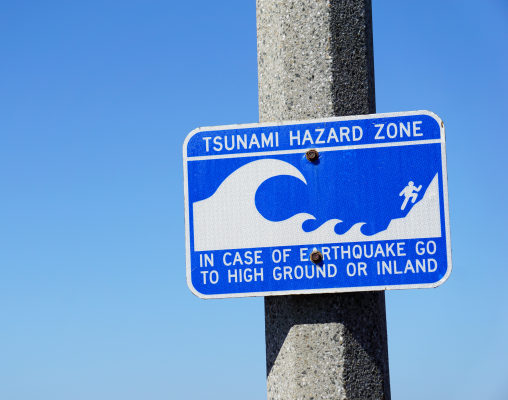
A blue and white sign warning: Tsunami Hazard Zone - in case of earthquake go to high ground or inland.

In the aftermath of the 2004 tsunamis, and with tectonic plates continuing to shift beneath the Indian Ocean, scientists are seeking answers to handle the next natural disaster.

Published June 1, 2005

By Sheri Fink, MD, PhD

Image courtesy of jdoms via stock.adobe.com.

Stunning images of devastation and soaring body counts dominated news coverage of last December’s tsunami, leaving one of the most important questions about the disaster barely addressed: Why did so many people die? With tectonic plates still shifting beneath the Indian Ocean, setting off new earthquakes almost daily, finding answers to this question is urgent.

Lareef Zubair is an associate research scientist at Columbia University’s Earth Institute and founder of the Sri Lanka Meteorology, Oceanography and Hydrology Network. He studies why disasters in some parts of the world tend to carry a much higher human, as opposed to financial, toll than disasters in other places – compare the thousands who die in a typical cyclone in Bangladesh with the 123 deaths caused by last year’s four hurricanes in Florida.

Zubair recently spoke at The New York Academy of Sciences (the Academy) on a panel organized by Science Writers in New York (SWINY), an affiliate of the National Association of Science Writers, to discuss untold stories of the tsunami.

Disasters: Unequal Opportunity Killers

Destructive acts of nature impact human populations to varying degrees. “People who study disasters sort of separate out three aspects of disasters,” said Zubair. “One is the hazards, which is something like a flood, or lightening strike, or a tsunami, which is the physical or biophysical event itself. And then there is the exposure, the degree to which people are exposed to the hazard. The third thing is how vulnerable you are to that event.”

In Zubair’s home country of Sri Lanka, the tsunami restricted its wrath to the first several hundred meters adjacent to the water’s edge. The destruction coincided with areas of high population density. Not only those who eked out a living on the sea lived in close proximity to it, but also traders and farmers, despite regulations stipulating that construction within 300 meters of the shoreline be reviewed by the government. One reason people are drawn to the coast is that infrastructure such as roads, telephones, hospitals and schools have been developed there.

“The seashore has to be protected,” said Zubair. “Cyclones and flooding and storm surges happen at the seashore…every 10, 20, 30 years, and everybody knows this. But somehow that did not translate into the desired action of having people live in safer areas.”

Not only were people living along the seashore exposed to natural disasters, Zubair said, but because of the area’s depressed economy and 20-year history of civil war, they also were highly vulnerable to them. “Vulnerability…is grossly related [to] the distribution of wealth,” Zubair said. “How good are your houses, how good is the infrastructure, how good are the hospitals that are around so that you can get treatment? How good is the road system?” The answers in the tsunami-hit areas of Sri Lanka were, in most cases, “poor.”

A Failure of Prevention

On December 26, 2004, Sri Lanka’s National Disaster Management Center did not jump into action to mitigate the tsunami’s destructive effects. The country’s “Sunday Times” newspaper summed up the problem in a headline: “Only three phones, staff of 10, and never on a Sunday.” The tsunami had the bad manners to hit on the Sunday after Christmas. “How on earth [can you] have a national disaster management center that does not work on public holidays?” Zubair asked.

An hour elapsed between the tsunami’s first deadly landfall on the island’s eastern coast and its last lashing in the country’s northwest. In that time, an estimated 20,000 additional people died. Zubair believes that had a warning been broadcast to the rest of the country soon after the tsunami began hitting the coast – roughly one and a half hours after the earthquake – lives would have been saved.

“That should have happened,” said Zubair. “Any middle school student could see [that] if you have an earthquake hazard in the middle of the ocean, there is going to be a tsunami risk. You don’t need sophisticated scientists to come and tell you this. Why did people fail? And, why did people fail in Sri Lanka? Why did people fail in India? Lastly, why did people fail here? I don’t think we should push these questions under the carpet, as scientists.”

An Early Warning System

Zubair said he made his way to the “plush” part of Colombo to visit the disaster management center several times in the year prior to the tsunami, seeking to discuss early warning systems. He was offered tea, but never an audience with anyone willing to talk about technical issues. An early warning system had indeed been proposed after Sri Lanka’s 1978 cyclone. Plans were made, reports were written, money was disbursed, but the ideas were never implemented by the center. “They exist, with a name-board and a plaque, for donors,” he said, concluding that a “perverse incentive system” exists for those involved in disaster management and related fields.

“Every time there’s a disaster, they get rewarded with larger and larger amount of funds,” he said. “In countries such as Sri Lanka, fields like disaster management and energy conservation are seen as fields in which you can get foreign funds, opportunities for scholarships and maybe some sort of benefit. There’s no integration of the disaster management system itself into the internal networks of science, into the internal networks of education, into the internal networks of governments itself and disaster management.”

High Price of Neglecting Science

Sri Lanka’s Geological Survey and Mines Bureau possessed both a functioning seismograph and a 100-year scientific pedigree, but on December 26th it had no one working on site to analyze the seismic measurements. Data were sent instead to the Scripps Institute in San Diego. “The question is, why is it that you’re sitting on probably the most important piece of scientific data Sri Lanka ever recorded or needed and you just ship it off?”

The answer is controversial. Zubair traced it to the pressures of mounting foreign debt, which forced the bureau to shift its focus away from science to supporting commercial mining interests. “Because of the fact that the country is dependent…services that look after the safety of the population got converted into a service that helps repay debt,” he said. Hewing to World Bank and Sri Lanka’s central bank guidelines, the bureau did not have the authority to spend the roughly $2,000 needed to hire someone to monitor the seismograph.

In fact, $2,000 is the government’s entire yearly grant to Sri Lanka’s Academy of Sciences. “The investment of the Sri Lankan government in science is about .18% of GDP. It’s just miniscule. You should at least have 1% or 2%, because what you’re doing is investing in people, you’re investing in safety, in the future.”

Empowering Humanity

Zubair concluded that the death toll from the tsunami was in great part a function of unmitigated exposure and vulnerability of the population – factors he laid at the doorstep of a government that neglects science and technology, and international donor organizations that offer a shower of funds for emergency relief, but turn off the spigot for prevention efforts.

“The basic message here is we really should be talking about disaster preparedness and risk management,” he said. The goal is to integrate modern scientific and technological advancements with emergency preparedness and public education. “You can have policy, but there must be implementation and there must be good governance…governance that looks after the welfare of the people.”

Despite the failures, Zubair recalled that when he visited Sri Lanka a week after the disaster he came away with hope as well as frustration. At a time when the government and international agencies had not yet swung into action, he saw the local inhabitants themselves saving lives. “Church groups, community groups, temples, mosques, workplaces. It was like 9/11 here – extraordinary mobilization. It’s not a poor country in that sense.” The key, he says, is to support the “huge capacity of people.” Chief among them? The scientists.

Also read: Tsunami Relief Efforts: A Personal Account

A New Look at an Ancient Pain Remedy

A closeup shot of the bud of an indoor cannabis plant.

Despite legal restrictions in some states, cannabis has reemerged for its medical benefits in recent years, though its history dates back centuries.

Published April 1, 2005

By Alan Dove, PhD

Image courtesy of aon168 via stock.adobe.com.

While some researchers are pursuing genomic strategies to understand the causes of chronic pain, others are reversing the problem, starting with an ancient painkiller and trying to understand how it works.

Cannabis sativa and its close cousin Cannabis indica, better known as marijuana, have been used as medicinal herbs for centuries, and many patients suffering from chronic pain still use this herbal remedy today, despite its obvious drawbacks. To provide the painkilling benefits of marijuana without the side effects and legal troubles, pharmaceutical companies are now searching for more selective drugs that will use the same molecular targets.

On Oct. 26, 2004, Roger Pertwee, professor of neuropharmacology at the University of Aberdeen and an expert on pharmaceutically useful cannabinoids, gave the Academy’s Biochemical Pharmacology Discussion Group a briefing on the state of the science in this field. Marijuana contains more than 60 different cannabinoid compounds, and most are still poorly understood. These cannabinoids tap into a natural signaling system involving the body’s own endocannabinoids, which appear to control a wide range of physiological and pathological processes.

Early studies focused on a single cannabinoid, delta-9 tetrahydrocannabinol (THC), the main psychotropic ingredient of marijuana. Simple THC preparations are now prescribed to suppress nausea and stimulate appetite in cancer and HIV patients, but they are only moderately effective. A major breakthrough came in the early 1990s, with the discovery of CB1 and CB2, the receptors that bind cannabinoids in humans.

Popular in New Drug Development

CB1 and CB2 proteins are woven into the cell membrane, leaving loops of receptor protein hanging into the cell and the extracellular space. The structure is typical of receptors that act through multipurpose signaling molecules, called G proteins. G protein coupled receptors, including CB1 and CB2, are involved in a huge range of cellular responses. They also are among the most popular targets for new drug development.

CB1 is found on neurons, and stimulating it inhibits the release of neurotransmitters that communicate nerve impulses. In contrast, CB2 is seen primarily on cells of the immune system, and appears to modulate the release of cytokines that direct the immune response. Chemists have developed selective agonists that can stimulate either or both receptors.

Besides the agonists that stimulate CB1 and CB2, researchers have developed compounds that have the opposite effect. The most famous of these is Rimonabant, also known as Acomplia, a CB1-targeting drug currently being developed by Sanofi-Aventis for a variety of indications.

While the opposite of an agonist is usually called an antagonist, the story is more complicated in the cannabinoid system. A receptor antagonist blocks activation of the receptor. Rimonabant and related compounds go a step further.

“Their pharmacology is somewhat complicated,” says Pertwee. “They don’t just block. They produce effects themselves, and those effects are opposite to what you get with an agonist.”

For example, while CB1 receptor agonists inhibit neurotransmitter release, inverse agonists specifically stimulate neurotransmitter release from neurons. In animals, cannabinoid agonists act as painkillers, while Rimonabant actually amplifies pain responses. Rimonabant also exacerbates tremors and spasticity in a mouse model of multiple sclerosis (MS), whereas cannabinoid agonists reduce those symptoms.

Numerous Applications

Targeting the cannabinoid system could have numerous applications, as the investors buzzing about Rimonabant have already realized. Pertwee focuses on cannabinoid analogs’ potential uses as painkillers and as treatments for MS.

In animal models, CB1 agonists reduce acute and inflammatory pain, as well as the difficult-to-treat neuropathic pain that is untouched by traditional opioids. This aligns nicely with the patterns of CB1 expression in the nervous system, where it appears in areas of the brain and peripheral nerves involved in pain perception.

CB1 also is in the brain regions responsible for controlling movement. Satisfyingly, CB1 agonists reduce tremors and spasticity, and may even reverse the demyelination process in animal models of MS. CB2 agonists also reduce pain, including neuropathic pain. This is surprising, because CB2 is not known to be expressed on neurons.

Drug developers are now pursuing many strategies to improve the benefit-to-risk ratio for cannabinoid receptor activation in the clinic. These include targeting CB1 receptors outside the central nervous system, selectively activating CB2 receptors, and elevating endocannabinoid levels by delaying their removal from their sites of action.

Still another approach is to enhance the response of CB1 receptors to endogenously released endocannabinoids, by activating an allosteric site that Pertwee and his colleagues recently discovered on the CB1 receptor.

Meanwhile, patients suffering from chronic pain or MS continue to use marijuana and THC-containing extracts. Though this is less than ideal, Pertwee points out that when subjective reports from patients are taken into account, “My own view is that the benefits outweigh the risks.”

Also read: New Age Therapeutics: Cannabis and CBD

Hollywood Hysteria or Scientific Reality?

An ice burg with a sunset/sunrise in the background.

Much hype is made about the impact of climate change from both sides of the ideological spectrum. But what does the actual science say? These NASA researchers break it down.

Published March 1, 2005

By Sheri Fink

Image courtesy of PaulShlykov via stock.adobe.com.

From the cover stories of popular science magazines to the content of popular Hollywood movies, the possibility of abrupt, catastrophic climate change has stirred the public imagination. But how real is the threat? At NASA’s Goddard Institute for Space Studies, Gavin A. Schmidt and Ronald L. Miller are attempting to answer that question by creating climate models, testing them against evidence from historical climate records, and then using the models in an effort to predict the climate of the future.

The Greenland ice core offers clues to the history of climate change. Calcium content and methane levels correlate with the sharp temperature changes during abrupt climate changes. “You can count the layers in these ice cores. It’s like tree rings; you can see one year after another,” says Schmidt.

The idea that abrupt climate change is even a possibility in our relatively climatically stable Holocene era comes by way of a single example. Recorded in the Greenland ice core, it dates to the very end of the last ice age, roughly 12,000 years ago.

“This is the poster child for abrupt climate change,” says Schmidt, “extremely cold going to extremely warm very, very quickly. When this was first discussed, people had no idea that the climate could change so rapidly.”

The period was named the Younger Dryas because of its reflection in European Dryas flower pollen records. Various other climate records also show the event – from caves in East China to sediments in Santa Barbara and Cariacao Basins to ice cores in the Andes to cave deposits around the Mediterranean.

Flow and Flux in the North Atlantic

“You can see a clear signature of this event almost everywhere in the globe,” says Schmidt. However, the effect is largest near the North Atlantic. “That kind of points you to something that’s happening in the North Atlantic as a possible cause or trigger for what’s going on,” he says.

The circulation of the ocean is driven not only by wind, but also by the water’s salt content and density. The two factors interact in a complex way.

Schmidt sums up the ocean’s overturning circulation – also known as thermohaline circulation – as “warm water that rises along the surface and cold salty water that remains underneath. That transport makes it much warmer in the North Atlantic than it is for instance in the North Pacific.”

The process is self-sustaining. “It’s warm in the North Atlantic because those currents also bring up salt. That salt is heavy, which causes water to sink, and this motion causes the water to release heat.”

He points out that the system also has the potential for different states, however. If for some reason the currents ceased, then the water would not be as salty. It would not sink, and the surroundings would stay cold.

Researchers recently developed a paleoclimate measure that correlates with the residence time of water in the North Atlantic. “In the Younger Dryas,” says Schmidt, “there was a big dip in how much water was being exported – or the residence time of water in the North Atlantic.” This indicates that the North Atlantic overturning circulation was much reduced at the time of that rapid climate change.

An Explanation for Abrupt Climate Change?

The last ice age was characterized by many examples of rapid climate change. Changes in ocean circulation provide a possible explanation.

“We have reasons to believe that ice sheets aren’t particularly stale,” says Schmidt. “Every so often, if they get too big, they start melting at the base.”

An iceberg calving that landed in the ocean and melted would produce a large freshwater pulse. “As you make the ocean fresher and fresher and fresher, then you get less and less formation of that deep water. As that reduces, then there’s less salt being brought up from the lower latitudes,” he explained.

“At one point it’s just too fresh, and then nothing’s being brought up anymore.” In that case, the only stable solution, Schmidt says, is the slowing of the thermohaline circulation.

Could a reduced overturning actually cause abrupt climate change? The answer isn’t clear yet, but there is a correlation. “When we have a weak circulation, it seems like the climate in a lot of cases is very cold,” says Ron Miller.

Why Worry Now?

On top of this instability, humans have dramatically changed the atmosphere’s composition over the past 150 years. And that’s cause for some concern. The energy absorbed by greenhouse gases is balanced by evaporation, which should lead to an increase in rainfall.

“It’s predicted by every climate model,” says Miller. That rainfall could be a source of just enough fresh water to tip the scales, stilling the ocean and, perhaps, making the atmosphere colder. Indeed, a study of ocean salinity shows that in the past decades, the ocean has gained extra fresh water. “The question is, how much cooling do we get?” asks Miller. “Where is this cooling happening? Is it global, and how important is it compared with the warming caused by greenhouse gasses?”

Miller and Schmidt are using a general circulation model to predict the answers to these questions. First, the model was tested to see how well it could predict climatic occurrences of the past century. A rough grid was superimposed on the planet, and within each grid cell, the changes in water vapor, liquid water, momentum, energy, and other factors were observed.

Next, positive and negative forcings – the atmospheric conditions expected to warm or cool the planet, such as solar irradiance and tropospheric and stratospheric aerosols – were calculated or estimated and added to the model. “It’s tracking the observed global average temperature surprisingly well, and we’re really quite proud of this,” says Miller.

Miller admits to a few kinks in regional predictions. Still, he says, “we have a lot of confidence that the model is good at reproducing 20th century climate trends. That gives us some confidence that we can actually make predictions in the future.”

No Cause for Alarm, Yet

After estimating the atmospheric conditions of the next century – no easy task in and of itself – the researchers took the model out for a spin to see what could be expected over the next 100 years. The results indeed predict a slowing of the thermohaline circulation corresponding to a cooling in some areas. “But it’s swamped globally by the warming expected from the greenhouse gases,” says Miller. “So clearly there’s no evidence for any sort of ice age.”

Other researchers have created their own models. All of these point to various drops in the freshwater ocean circulation, but all agree with Miller and Schmidt’s conclusions. “The models give no indication we’re going to see any climate surprises or ice ages in the next 100 years or so,” says Miller.

The terrible tsunami of Dec. 26, 2004 has left no one to doubt the power of oceanic change, in this case due to an undersea earthquake. Still, those kept awake at night by the imagined catastrophic aftermath of thermohaline circulation slowing, as depicted in the film The Day After Tomorrow, may rest easier. Meanwhile, the scientists are continuing to refine their models and studying other factors that may have led to rapid climactic change in the past.

Also read: Climate Change: A Slow-Motion Tsunami


About the Author

Sheri Fink, M.D., Ph.D, is a freelance journalist. Her award-winning book War Hospital: A True Story of Surgery and Survival (PublicAffairs, 2003) was published in paperback in December 2004.

The Solution to Address Education Equity

A child uses his fingers to do the math equation 4 minus 1.

Adequate financial support for students early in their learning journey, particularly the preschool level, can help us create a more equitable education system.

Published March 1, 2005

By Mary Crowley

This is the era in which no child is supposed to be left behind. As Jeanne Brooks-Bunn illustrated in her Nov. 15, 2004 talk at The New York Academy of Sciences (the academy), however, the trail of kids bringing up the rear is long, poor and unfairly weighted with students of color. Her talk drew on the themes of “School Readiness: Closing Racial and Ethnic Gaps,” the upcoming spring issue of the Future of Children (volume 15, no. 1), which was edited by Brooks-Gunn, Cecilia Elena Rouse, professor of economics and public affairs at Princeton University, and Sara McLanahan, professor of sociology and public affairs at Princeton.

Recent education policy has focused on test score differences, and significant political capital is being spent to ensure that all kids stay at grade level. Yet, while the test score gap between white and nonwhite students has narrowed, it is still large when you look at 12th grade achievement in reading, according to the 2002 National Assessment of Educational Progress. While 42% of white students read at grade level, only 16% of black students and 22% of Hispanic students do, and there are similar gaps in other subjects, despite the high-profile No Child Left Behind Act.

The Differences that Matter

The problem is that policymakers are barking up the wrong tree, according to Brooks-Gunn, the Virginia and Leonard Marx Professor of Child Development at Teachers College and the College of Physicians and Surgeons at Columbia University, and director of the National Center for Children and Families and the Institute for Child and Family Policy at Columbia. Her research suggests that policymakers should be thinking in terms of racial and ethnic gaps in school readiness, not in school achievement.

While most education research and public policy dollars are devoted to academic skills, a national sample of 3,500 kindergarten teachers, queried in the late 1990s, said that 46% of kids reach school missing the basic skills required to learn, such as impulse control and being able to follow directions and work with a group. Brooks-Gunn maintained that putting more resources towards very young children will pay bigger dividends in the long run than simply funding school programs.

Brooks-Gunn’s research shows that racial test-score gaps begin by age three to four, as soon as children can take vocabulary tests – and the gaps are large. On vocabulary tests, the difference between black and white 3-, 4- and 5-year-olds is a full standard deviation (with black kids falling 15 points below the mean of 100), while the differences in early reading and counting are 60% of a standard deviation, or 8 to 9 points.

“These differences matter,” said Brooks-Gunn. Researchers estimate that 50% of the test score gap seen at 12th grade already exists by age five. Not only are kids who score poorly as preschoolers less likely to graduate, they also are more likely to become teen mothers or engage in juvenile delinquency. “It’s a hard trajectory to change once you’re on it,” she insisted.

Poverty: A Black-and-White Issue

The unifying principle behind these discrepancies is poverty. Almost 18% of American kids – 12.9 million – are poor, according to the 2003 federal poverty threshold of living in a family with an annual income of $18,810 for a family of four. Because this is what Brooks-Gunn called an “impossibly low living standard,” the percentage of poor kids is actually much higher.

And, because blacks and Hispanics are two to three times more likely than whites to be poor, Brooks-Gunn said her work is about racial inequality as well as poverty. “The argument against looking at racial gaps is that we need to help all kids,” she said. “This is certainly true, but our group wants to highlight the fact that current policies are leaving a group behind. We do live in a divided society that does not meet America’s purported value of equity, and the stark differences between white and black children growing up in America must be addressed.”

The litany of travails faced by children in these economic circumstances is long and hard. Compared to children who aren’t poor, they are more likely to have a depressed mother, a teenage mother, a mother with no job or a job with low socioeconomic status (SES), or a mother who dropped out of high school. These children also are more likely to be born with low birth weight, be punished by spanking, and have three or more siblings. Thirty percent of poor or near-poor children have no books in their homes.

Links Between Socioeconomic Status and Achievement

Brooks-Gunn’s work with economist Greg Duncan, Edwina S. Tarry Professor of Education at Northwestern University, examined the links between SES and achievement. Persistent and deep poverty has a bigger effect than any other factor, even when controlling for maternal cognition, number of siblings and other family differences. They also found that early childhood poverty is more impairing than poverty in mid- or late-childhood. “Living in poverty dampens achievement by many routes, including less access to high quality child care, parenting differences and parental mental health differences,” said Brooks-Gunn.

What happens to test score gaps in young children when you control for parental income and education? The achievement gap is significantly reduced. The gap in picture vocabulary and IQ is cut in half, from about one standard deviation to one-half of one. The gap in school readiness skills (pre-reading and math skills at the beginning of kindergarten) drops from about three-fifths of a standard deviation to one-fifth or less of a standard deviation. “The huge difference that controlling for SES makes in terms of reducing the achievement gap suggests that interventions can make a difference,” argued Brooks-Gunn.

She has made several suggestions, starting with income supplements for the poor. Welfare reform studies show that programs that include supplemental income for mothers improved achievement test scores in children, while there was no effect if the reform simply meant, “mom goes back to work.” An annual gain of $1,000 translates into an achievement increase of almost one point. The problem with such a strategy is that the income gap between the average white and black families at the mean is $30,000 – too big a differential for society to easily make up. Alternatively, the earned-income tax credit is a “stealth program for helping poor kids,” according to Brooks-Gunn.

The Economics Support Early Education

On average, this tax break gives up to $4,200 to low-income, working families, and 19 million families claim it. In 1997, the earned-income tax credit raised single mothers’ incomes by an average of 9%, helping lift two million kids out of poverty.

“Parenting programs also make a difference,” said Brooks-Gunn. Research shows you can change parenting behavior to boost literacy in the home, so that there is more reading and language stimulation, and can reduce achievement gaps as well. Home intervention alone does not help with school readiness, however. What works is center-based intervention that includes a parenting component, such as literacy programs that feature reading with both parents and teachers.

Five studies of early childhood education found that weekly home visits coupled with early childhood intervention at daycare centers boosted IQ by 5 points at age 3 – a difference that was sustained through age 18. Early Head Start, which runs from pregnancy to age 3, features both home- and center-based intervention.

The bottom line, concluded Brooks-Gunn, is that the school readiness gap in pre-reading and math skills between black and white children could be narrowed significantly with high-quality early childhood education for all poor children. The kinds of programs she envisions don’t come cheap, of course. But she argues that the pay-off is enormous – and that economists back her up.

Nobel laureate Jim Heckman, the Henry Schultz Distinguished Service Professor in Economics at the University of Chicago, maintains that the nation should invest the bulk of its education funds on preschoolers, because investment at that age pays a far greater return for both individuals and society than money spent on elementary or high school. As Brooks-Gunn noted, “It’s a huge step to have economists arguing for early education dollars.”

Also read: A New Report on the “Global STEM Paradox”

Teaching the Elegance of the Universe

A young girl with pig tails writes math equations on a whiteboard.

A playwright and mathematician turned tutor came to realize that a relatively simple pedagogical approach was most effective when engaging his students.

Published March 1, 2005

By William Tucker

Image courtesy of Vitalii via stock.adobe.com.

It was billed as “two imaginative minds in conversation.” Brian Greene, author of The Elegant Universe and The Fabric of the Cosmos, is probably the world’s best explainer of string theory – the latest theory of the “physics of everything.” John Mighton is a talented Canadian playwright, mathematician, and researcher who built a second career teaching math to elementary students in Toronto.

Two Minds and a Quartet

Moderating the evening, at the City University of New York, was Robert Krulwich, the New York ABC-TV correspondent with a bent for scientific subjects. It was all part the CUNY series Science & the Arts, designed as a bridge between two worlds.

What made the evening particularly promising is that Greene and Mighton are collaborating on a play that will attempt to take the concepts of string theory and turn them into a dramatic narrative – with musical accompaniment, no less. “We got together with the director and kicked around how the science might inform the narrative and intertwine with certain musical themes,” said Greene. “Then John goes back and writes up various snippets of scenes and we have actors read them to see how they feel and sound. Then John initiates another roundtable discussion and we go at it again. We’ll have the first full script by November.”

Greene also described another recent project, Strings and Strings, with the Emerson Quartet. “It’s sponsored by the Guggenheim,” he explained. “I talk about the physics in scientific terms, and then I shift into metaphorical language that can apply as well to music. The quartet then takes over and elaborates on that metaphor. People take in the concepts, not just through their heads, but as a full-body experience.”

Taking It Step by Step

All this held promise for some future evenings’ entertainment. But to the delight of some – and the disappointment of others – this night’s discussion revolved almost completely around Mighton’s experiences in tutoring elementary students in Toronto.

“I was completely broke as a playwright and looking for a part-time job,” Mighton recounted. “One day I saw a sign for math tutors. I had taken a calculus course in college and managed to convince the woman that this qualified me for the job. I didn’t tell her my grade.”

Mighton’s first student was a 15-year old boy. “His teacher had told him he was the stupidest kid he ever saw. Having struggled with math myself, I decided to reserve judgment. I worked with him for five years and he turned out to be an ideal student. He’s now doing his doctoral work in math at the University of Toronto.”

Since beginning tutoring 10 years ago, Mighton has founded JUMP – Junior Undiscovered Math Prodigies – an educational charity that provides free math tutoring to elementary-level students in Toronto. He also has written a book, The Myth of Ability: Nurturing Mathematical Talent in Every Child, which outlines his philosophy.

Mighton has two basic strategies. First, he presents math in a simple, step-by-step approach that allows mastery of one stage before moving on to the next. Second, he gives the children plenty of encouragement in order to build their confidence.

JUMP-Starting Math

“I started JUMP in my apartment with a couple of my actor friends, many of whom didn’t know much math,” he said. “We asked the local school to send over some children who needed to learn fractions. Somehow they misunderstood and sent over a remedial class.” The experience was daunting. “My first student could barely count to 10. She had never heard of multiplication. She was absolutely terrified. When presented with the simplest concepts, she kept saying, `I don’t understand what you’re saying.’ “

Mighton says he panicked. “I asked her to count to 10 on her fingers. She couldn’t do it at first but gradually relaxed. Then we began skip-counting by twos and threes. Pretty soon she got the hang of it. I told her she was brilliant. Her mother told me the next day that she had a nightmare that she wouldn’t be allowed to return to tutoring.”

After three years his student had moved back into mainstream classes. She is now working a year ahead of her grade on some subjects.

Mighton’s methods involve lots of guided exercise in the early stages of the program, which puts him at odds with most of the educational schools. “When I wrote this book, I didn’t realize I’d stepped into these math wars,” he said.

“I’m not advocating a swing back to rote learning. What’s happening today, however, is that they expect kids to discover whole concepts. In grade four they now expect kids to discover their own algorithm for division.

“In eight centuries Roman Civilization never discovered an efficient division algorithm. It’s a bit unrealistic to expect children to discover it in one morning.”

Every Child a Prodigy

Greene weighed in on behalf of rote learning. “When people learn some advanced concept in mathematics or physics, they don’t usually swallow it whole,” he said.

“Oftentimes they pick it apart bit by bit. By rote, by calculating, by imbedding yourself into the details and doing it over and over, somehow you get it. The process of rote has gotten a bad reputation, but it is a very, very powerful tool in the service of education.”

“It’s like Ted Williams and these hitters who you assume just have great ability,” said Krulwich, the moderator. “But when they get into the batting cage, they hit and hit and hit and hit and hit.” Mighton added the words of one of the century’s greatest mathematicians, John Von Neumann: “Math is a matter of getting used to things.”

Also read: The Chaos of Celestial Physics and Astrodynamics

The Chaos of Celestial Physics and Astrodynamics

A starry night sky with the outline of mountains in the foreground.

For mathematician Edward Belbruno, by embracing “chaos” he was better able to understand the three-body problem of celestial physics. His notion of chaos describes motion that defies precise long-term predictions.

Published January 1, 2005

By William Tucker

In 1990, Edward Belbruno was packing his belongings, getting ready to leave the Jet Propulsion Laboratories in Pasadena. His five-year effort to interest NASA in low-energy trajectories for spaceflight had failed.

A graduate of the Courant Institute of Mathematics in New York, Belbruno had long been playing with the idea of charting very precise flight paths through the sky or into space. He wanted to allow space probes to slip into orbit around a moon or planet without the use of powerful, fuel-consuming retrorockets. His task was made immensely complicated – if not impossible – by the three-body problem of celestial physics.

When first formulating the laws of gravity, Isaac Newton had calculated the interaction of two bodies. They could be a stone falling to Earth, a spacecraft in orbit, or the Earth itself on its trajectory about the Sun. In each case, the two bodies both revolve around the center of mass – a point somewhere between their two centers, like the balancing point of a see-saw.

The interaction of three bodies, however, is immensely more difficult. In fact, in the late 1950s, V. Arnold, a Russian mathematician, and J. Moser, a German, independently proved that the three-body problem could not be solved at all. The proof came from solving the more general problem of chaos in nearly periodic motion, as outlined by Arnold’s teacher, A. N. Kolmogorov, in the 1920s. It is now known as the Kolmogorov-Arnold-Moser (KAM) theorem.

Order in Chaos

The obstacle to finding a solution is that the three-body problem leads, literally, to chaos. To a mathematician, that does not mean a dark abyss or a mad frenzy. Rather, chaos describes motion that defies precise long-term predictions.

However, mathematics offers tools even for dealing with the unknowable. Using the mathematics of chaos, Belbruno felt that he could fudge the three-body problem enough to create a proper trajectory. The difficulty was that his slow dance to the Moon would take two years, whereas conventional rockets can make the trip in three days. NASA lost interest, and Belbruno was shown the door.

Then a miracle happened. The Japanese had launched a two-part Moon probe, Muses A, the size of a desk, and Muses B, the size of a grapefruit. The two had separated while in Earth orbit and the grapefruit headed for the Moon. Upon arrival, however, Muses B’s radio failed, and the probe was lost. Now Muses A was circling the Earth with very little fuel and nothing to do. A JPL engineer remembered Belbruno’s work. Suddenly Belbruno had an audience. Could he help? Belbruno said he could.

“In the same instant, I realized that I could add the Sun’s gravitational field to the equation,” Belbruno says. Ten months later, Muses A – now rechristened Hiten, after a Buddhist angel – fired half its remaining fuel and, guided by Belbruno’s equations, glided into a 2-million-mile itinerary beyond the Moon and back again. It was like flicking a paper airplane into space, hoping it would eventually settle into a trajectory where its momentum perfectly matches the Moon’s gravity.

The Angel of Chaos

Belbruno’s formulas worked, and the mission was saved. “They used it again for the Genesis probe of the Sun and the European Space Agency mission SMARTONE,” says Belbruno. “NASA now takes my work a lot more seriously.”

So seriously that Belbruno was commissioned to call a conference at the University of Maryland in 2003 to investigate astrodynamics and chaos. Also under study were formation flying, navigation and control of unmanned spacecraft, orbital dynamics, mission proposals, and possible propulsion methods for pushing probes deep into the solar system. The results have been collected as Astrodynamics, Space Mission, and Chaos, Volume 1017 in Annals of the New York Academy of Sciences.

Although Belbruno and his fellow authors could not know it, space probes were about to be brought back front and center by President George W. Bush’s announcement of a mission to Mars, somewhere around 2020. “The cost for delivering cargo to the Moon is now $1 million per pound,” says Belbruno. “Every pound of fuel we can save is another pound of payload that can be delivered.

“I don’t agree with everything the president does, but I think he has shown great vision on this initiative,” he adds. “The idea of going step by step to the Moon, building a base, and then moving on to Mars and back is very practical. I think there’s a good possibility we’ll succeed.”

Also read: Exploring the Ethics of Human Settlement in Space

Merging Modern and Ancient Medicines

A wooden mortar and pestle with various herbs.

An Interview with Albert Y. Leung, a pharmacologist who uses modern medical science to study the mechanisms—or active components—of herbs.

Published September 30, 2004

By Dan Van Atta

Image courtesy of iMarzi via stock.adobe.com.

To Albert Y. Leung, the benefits of Western medicine and those of medicinal herbs and other “natural” remedies are by no means mutually exclusive. Born and raised in Hong Kong, Leung grew up experiencing the power of traditional approaches to medicine used for centuries in China.

“My great grandfather on my mother’s side was a local doctor in his little village,” recalls Leung, a member of The New York Academy of Sciences since 1976. “While, I never knew him, my grandmother knew a lot about herbs. I grew up taking herbs.”

“I grew up taking herbs, but no one really understood why they worked.”

For three decades, Leung has used the tools and knowledge of modern medical science to study the mechanisms—or active components—of herbs. He is helping to understand what makes them effective in reducing certain aches and pains, as well as alleviating other symptoms of illness.

“I knew that for certain problems herbs were effective,” Leung said, “but then no one really understood why they worked. Now we know that many herbs contain active ingredients that are antioxidant or anti-inflammatory agents.”

Leung obtained a BS degree in pharmacy at the National Taiwan University before coming to the United States in 1962. He earned his MS and PhD in pharmacognosy at the University of Michigan, in Ann Arbor.

Part Scientist, Part Entrepreneur

Moving to Glen Rock, New Jersey, in the late 1970s, Leung created AYSL Corp., an information company. AYSL “probably holds the most extensive collection of Chinese journals in a single location outside of China” covering traditional Chinese medicine. He also edited the Encyclopedia of Common Natural Ingredients Used in Food, Drugs, and Cosmetics. Hailed as the most authoritative reference for natural ingredients in commercial use, it is now entering its third edition.

In the past 30 years dietary supplements and “health foods” based on “natural” ingredients have become a major industry. Leung said he is concerned about the safety and efficacy of many products sold as herbal extracts.

“The major problem is that everyone claims their product is the best,” he said, “but there is no real science behind it, no real controls. To say that a product is standardized doesn’t mean much when, for many of these products, the active ingredient is not known.”

In 1996, Leung founded a second company, Phyto-Technologies, Inc., to specialize in herb research. Phyto-Technologies manufactures and custom formulates Chinese herbal products for private-label distribution. With facilities in Glen Rock, New Jersey, and Woodbine, Iowa, the company now has 20 employees. Leung serves as president and chief executive officer.

“My approach is to provide the quality control needed to make the extracts the way they are supposed to be made,” Leung explained. “Certain herbs have to be extracted by traditional methods, such as boiling in water or soaking in alcohol. In the past four or five years we’ve developed some more technical aspects, but our approach is to combine appropriate science with the traditional methods necessary to retain the total benefits of traditional Chinese herbs.”

A Major Headache

Leung is currently engaged in the third year of a research study of the herb feverfew (Tanacetum parthenium Schultz Bip.) for use in migraine prevention. His company has been awarded a Small Business Innovation Research grant by the National Center for Complementary and Alternative Medicine to conduct the study, for which he is the principal investigator.

This second year of the phase II grant, “Reproducible Feverfew Preparations for Migraine Trials,” is fully funded, with $690,337. Dennis V. C. Awang, of MediPlant, Inc., an expert in the chemistry of feverfew, is the co-principal investigator. Funding for both phases of the three-year project comes to about $1.4 million.

Leung’s main objective is to characterize and to standardize feverfew preparations that have the greatest potential for use in human clinical trials for relief of migraine. During the past 20 years four clinical trials have yielded positive results in migraine prevention. Three of the trials used dried feverfew leaf powder, and one used a CO2 supercritical fluid extract (SFE). However, another trial—using a 90% ethanolic extract (by prolonged extraction), containing high levels of parthenolide (0.35%)—produced negative results.

“These results indicated that parthenolide is not the active principle of feverfew in migraine prevention, as previously assumed,” Leung said. The researchers then used chromatographic and spectrophotometric profiling and bioassay and gene expression assay techniques to define and isolate the potentially active components present in the dried leaf and the SFE, but absent in the prolonged extract.

Further studies are now in progress to characterize potential active components, Leung said. “Pilot batches of materials standardized to contents and physicochemical profiles of these components will be prepared and further subjected to activity verification by bioassay and gene expression assay,” he added.

The Researcher as Communicator

These materials “will then be subjected to clinical trials.” If all goes well, Leung said, the work would result in a safe, effective over-the-counter drug for migraine.

In the meantime, Leung continues to see his role as one of communicator as well as researcher. In 1995 he published another book, Better Health with (Mostly) Chinese Herbs & Foods. He also serves as an advisor to the Modernizing Chinese Medicine International Association, headquartered in Hong Kong. In addition to conducting research and writing books about herbal medicine, Leung produces a newsletter on the subject as well.

“There are a lot of aspects of modern medicine that are superior,” commented Leung, “but there are many common ailments that modern medicine still does not understand and is unable to treat. And there are herbs that work to reduce aches and pains—even though we may not know the active ingredients that make them work. I think the two forms of medicine should be used side by side.”

Also read: A New Look at an Ancient Pain Remedy

Scientists and War: An Ethical Dilemma

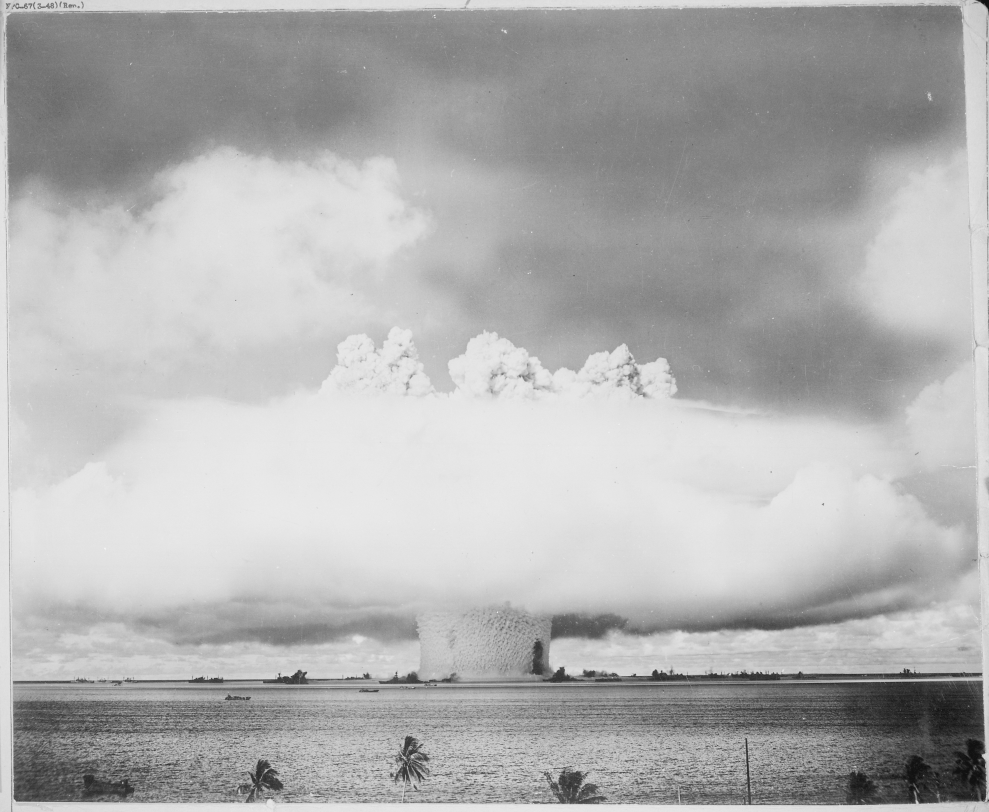
A black and white photo of an atomic bomb test, showing a massive mushroom cloud.

Major advances were made in the development of chemical weapons between World War I and the Cold War. This would present scientists with a moral dilemma.

Published August 1, 2004

By Mary Crowley

Atomic cloud during Baker Day blast at Bikini atoll. Image courtesy of National Archives Catalog. Public domain.

“Of arms I sing, and the man,” man,” began the Aeneid, Virgil’s epic poem on war and heroism, written in the first century BCE. Battle and humankind’s relationship to it is a timeless theme.

But war and weaponry took on new meaning in the 20th century, when nuclear arms created the potential to eliminate entire cities and even civilization. From the chemists who manufactured gas in World War I to the physicists who designed the atom bomb in World War II, scientists were at the fulcrum of a world literally in the balance.

And they are still there now, in the post-9/11 era, this time with molecular biologists facing off against the shadowy enemy of bioterrorism. Hopefully, they have gleaned some insights from their forebears, particularly physicist J. Robert Oppenheimer, who has come to represent the ethical dilemma that scientists face when called on to use their skills to defend their nation.

“The association of scientist, arms and the state is fraught with troublesome questions, many centering on whether the scientist’s obligation to the state requires deploying his or her expertise to hazardous, potentially destructive purposes and/or defending against them,” said Daniel J. Kevles, Ph.D., Stanley Woodward Professor of History at Yale University. Oppenheimer continues to fascinate us, prompting books, plays and even a coming opera because of the “vexing vitality of these issues,” he said at a recent meeting of The New York Academy of Sciences’ (the Academy’s) History and Philosophy of Science Section.

Chemists at War

The Hague Conventions of 1899 and 1907 condemned the development of chemical weapons (despite objections from the Americans and the British). The ban, instituted because of fears that chemical weapons like gas could be used against cities and civilians, demonstrated “the widely supported belief, even in military circles at the time, that at the opening of the 20th century civilian populations should not be fair game in warfare among the advanced civilized nations,” said Kevles.

But by the outbreak of World War I in August 1914, the Institute of Chemistry in Germany was trying to produce nitric acid for munitions. The Institute was headed by Fritz Haber, the “father of chemical warfare,” who with Carl Bosch won a Nobel Prize in 1918 for devising a method to fix nitrogen from the air. As Haber envisioned it, gas released from cylinders got around The Hague Convention’s prohibition against delivering it via projectiles. Indeed, Haber himself led the first gas attack at Ypres, in Belgium, in April 1915.

Public Opposition to Chemical Weapons

Daniel J. Kevles, Ph.D.

In response, the Allies quickly implemented their own programs. When the United States joined the battle in 1917, it established the Chemical Warfare Service, involving some 700 chemists and more than 20 academic institutions. Quite rapidly, the letter of The Hague Convention was ignored, as well as its spirit, as the French began using gas shells to better disperse the noxious agent. By war’s end, there were an estimated 560,000 gas casualties.

Artists and writers depicted the horrors of gas attacks. A poll of Americans showed such overwhelming opposition to chemical weapons that a government advisory committee noted, “The conscience of the American people has been profoundly shocked by the savage use of scientific discoveries for destruction rather than for construction.”

Nonetheless, as the Allies were poised for victory in 1918, “gas was hailed as a triumph of Allied industry,” said Kevles. Should the war have continued, the U.S. and Britain had plans to aerially assault cities with chemical bombs, despite vehement opposition from many military officers, including General John J. Pershing. Chemical weapons were seen as a necessary evil. At hearings on Capitol Hill, General Amos A. Fries argued that the more deadly the weapons, “the sooner…we will quit all fighting.”

In part through lobbying by the gas industry and in part through support of veterans who counted gas a “humane weapon” that ended the war sooner, the Chemical Weapons Service received generous research funding. And American gas chemists “displayed no moral anguish about their wartime role,” according to Kevles. They agreed with Haber, who said that gas was “a higher form of killing.”

Physicists at War

Physicists played the starring role in World War II science. Early on, it was clear that this war would be “an unprecedented technological conflict,” one that would require physicists to enjoin the battle for more powerful weaponry, explained Kevles.

They were eager to do so. The Blitzkrieg in 1940 and other early assaults “established a new imperative for the social responsibility of science: Do whatever possible to meet the technological threat from fascist aggressors by forging an all out technological response in the democracies,” said Kevles. With the memory of Germany’s World War I surprise gas attack still raw, the Allies had no plans to be caught unaware. “The willingness to develop an atomic bomb, a dramatically unconventional innovation that promised to wipe out entire cities, was to prevent being beaten to the punch by the Nazis,” according to Kevles.

But the bomb never went off against its preferred target. By the time Fat Man and Little Boy were completed, the Germans had surrendered. The bombs were used instead against civilians in Hiroshima and Nagasaki, even as Japan was on the brink of surrender.

The Oppenheimer Paradox

Robert Oppenheimer

By the time the atom bomb was dropped, “moral sensibilities about bombing civilians had been almost completely shattered, among scientists as well as policy and opinion makers,” said Kevles. J. Robert Oppenheimer’s experiences during World War II and the postwar years poignantly capture the inherent ethical dilemmas of scientists at war.

World War II transformed Oppenheimer from “an otherworldly theoretical physicist into the internationally renowned creator and sage of American nuclear strength,” who was then humiliated and destroyed by “the vicious and bare-knuckled politics of national security,” described Kevles.

Oppenheimer entered the war years eager to apply his physicist’s craft against the Nazis. He was the research head of the Manhattan Project at Los Alamos, New Mexico, feverishly working to develop an atom bomb before the Germans did. In 1945 he wrote, “We recognize our obligation to our nation to use the weapons to help save American lives [and] we can see no acceptable alternative to military use.”

That the bomb was used against Japanese civilians horrified Oppenheimer. He publicly stated in 1947, “Physicists felt a particularly intimate responsibility for suggesting, for supporting, and in the end, in large measure, for achieving the realization of atomic weapons. Nor can we forget that these weapons, as they were in fact used, dramatized so mercilessly the inhumanity and evil of modern war. In some sort of crude sense which no vulgarity, no humor, no overstatement can quite extinguish, the physicists have known sin; and this is a knowledge which they cannot lose.”

A Dutiful Soldier of Science

Despite these reservations, he remained a “dutiful soldier of science” during the early Cold War years, when intense investment into the machines of war was considered essential for national security. Oppenheimer signed on to the plan for creating an H-bomb, and served on various government advisory boards on national defense, until he lost his security clearance in 1953. Most significantly, he was chair of the General Advisory Committee of the just-formed Atomic Energy Commission, which he claimed was supposed to “provide atomic weapons and good atomic weapons and many atomic weapons.”

“Oppenheimer is something of a paradox, embodying at one and the same time a sense of sin associated with the forging of nuclear weapons and a commitment to improving and multiplying those weapons for the sake of national security, a task that could lead to further sin,” contended Kevles. “Yet the power of nuclear weapons, the reach of new delivery systems, the utter vulnerability of cities, and the potential combustibility of the Cold War forced Oppenheimer and his fellow scientists to embrace their paradox, to accept both the anguish of their sin and the continuing responsibilities of national security.”

Biologists at War

The science warriors of our era – the biologists who are at the forefront of research that can be turned to new types of weaponry – face a similar paradox. “The horrendous events of September 11, 2001 placed bioterrorism high on the national security agenda,” noted Kevles. Biomedical researchers are confronted with a new dilemma: Much of their research can serve both the beneficent needs of health and the nefarious needs of terrorism.

Due to the contemporary global nature of biology, with thousands of journals easily accessible, the information is highly transparent – and the key agents of bioterrorism require relatively small-scale investments. Meantime, the funding stream for biology is rich. The National Institutes of Health earmarked $1.7 billion for bioterrorism research in fiscal 2003.

How biologists contend with this challenge is history waiting to be written. “The challenge posed by bioterrorism is unprecedented in the history of science, arms and the state,” concluded Kevles. “To deal with it, one would like from the country’s biomedical leadership the kind of courage, tenacity and vision that Robert Oppenheimer provided – an engagement with the problems of arms and the state that offers, to paraphrase the majority report on the hydrogen bomb, some limitation upon the totality of war, some cap to fear, some reassurance for mankind.”

Also read: National Security, Neuroscience and Bioethics

Paul Ehrlich: Can We Avert a Global ‘Nineveh’?

A shot of the plant earth.

Due to human impacts on the planet, our species and the broader ecosystem may be “racing toward a miserable future.” Paul Ehrlich says we shouldn’t over-rely on technology to correct this troubling trend.

Published August 1, 2004

By Christine Van Lenten

Our “triumphant” species may be partying on toward the first collapse of a global civilization. By accelerating depletion of our natural capital, the interrelated trends of population growth, rampaging consumption, and worsening political and economic inequality have put us on a collision course with nature and eroded our ability to create a sustainable future.

The sources of these trends and how they can be altered is the subject of Paul and Anne Ehrlich’s new book, One with Nineveh, which Paul Ehrlich discussed at The New York Academy of Sciences (the Academy) this spring, at the invitation of the Environmental Sciences Section and the Science Alliance.

That title refers to the seat of the ancient Assyrian empire, which, you may have noticed, is no longer flourishing. Its demise was hastened by self-inflicted environmental damage – a cautionary tale.

Today, Ehrlich’s name is more widely recognized than Nineveh’s. Author of the 1968 bestseller The Population Bomb, he is Bing Professor of Population Studies at Stanford and has published extensively, won many awards, and been a forceful scientist-citizen spokesman on vital issues for decades.

Grave and Worsening

The issues he’s grappling with now are grave and worsening, and Ehrlich did not disguise his frustration with the problem that dismays him most. The human race has radically reshaped the planet; scientists understand all too well that we’re racing toward a miserable future; what must be done is all too clear; for years, scientists have been urgently trying to make this understood. But the mass media carry little science news, and too many citizens and policymakers remain blithely unconcerned. Magical beliefs that technology will solve all problems, quickly, contribute to this syndrome. Leadership is essential, but, Ehrlich believes, the Bush administration is making matters worse.

Scientists must do a better job of getting their story out, he insisted. One with Nineveh is a heroic, plain-English attempt to do this.

The Ehrlichs’ agenda for achieving needed change is proportional to the problems: that’s to say, it’s staggering in scope. One initiative would squarely tackle the challenge of modifying nothing less than human behavior itself. “Remember,” Ehrlich said, “we’re a small-group species, both genetically and culturally. For most of our 5-million-year history…we lived in groups that averaged below 200 people, and almost everybody within those groups was related. Now, evolutionarily in an eye blink of time, we’re trying to live in a global civilization of 6.3 billion people.” We must figure out how to do this better. And individuals’ rights become part of environmental problems, because we can’t tackle problems “if we’re at each other’s throats.”

A millennium assessment of human behavior, he suggested, would examine issues on the “population-environment-resource-ethics-power” spectrum, including the fundamental question of “what people are for.” Ethical issues – including our obligations to the world’s poorest people, to future generations, and to nature – would be central.

Potential for Change

This initiative may seem fanciful, but a partial precedent is enjoying impressive success: the Intergovernmental Panel on Climate Change involves scientists from many countries and disciplines in tackling an unprecedented global problem. Its work is regarded as authoritative. The UN is a cosponsor, and while Ehrlich believes the UN must be radically restructured to reflect 21st century realities, he views it as “the only game in town.”

Another promising precedent is the Millennium Ecosystem Assessment, an international scientific collaboration that will support local, national, and international decision making about ecosystem management.

But can human behavior change, and change quickly enough? Ethical standards have been evolving, Ehrlich reflected. For example, it’s no longer OK to beat your horse to death in the street; becoming a despot is no longer considered a good career move. And societies can change dramatically and rapidly: after President Truman desegregated the military, race relations in the United States changed quickly, though not enough; the Soviet Union collapsed suddenly.

Ehrlich sees the potential for similar change in how we treat each other and the environment, and it is in this that he places his hope. “When the time is ripe, people will begin to realize that the only realistic solutions today are ones we thought were idealistic yesterday. What I hope all of you will do is everything you possibly can to ripen the time.”

Also read: Sustainable Development for a Better Tomorrow

Flying High and Cutting through the Glass Ceiling

A large jet zips by with blue skies and white clouds in the background.

From sitting on the lap of Einstein as a child to making significant advances in aerospace and materials engineering as an adult, Pamela Kay Strong has done it all.

Published August 1, 2004

By Dan Van Atta

“Many, many times I’ve been the only woman in the room,” commented Pamela Kay Strong, a member of The New York Academy of Sciences (the Academy) from Huntington Beach, Calif. Her distinguished career in science and engineering was recently recognized when she was named a Fellow of the Society for the Advancement of Material and Process Engineering (SAMPE). “I think it’s made me a stronger person.”

A chemist and engineer whose career spans more than 30 years in the aerospace industry – including technical leadership positions at Hughes Aircraft Co., General Electric Co., Northrop Corp. and, since 1987, The Boeing Co. – Dr. Strong is just the third female among the 93 individuals to be so honored by SAMPE.

Strong’s identification with science began as a young child. Her father, W. T. Strong, worked in the missile and space division of Goodyear at Holloman Air Force Base and often hosted visiting scientists, who were introduced to her as “uncle” or “aunt” in the family home. “I was an aerospace brat,” Strong said with a chuckle during a recent interview. She added that she can recall sitting on Albert Einstein’s lap and, at age 5, building a wooden rocket with the help of Wernher von Braun.

Shooting for the Stars

She then reiterated an anecdote that was published earlier this year in S&T, the science and technology newsletter of her alma mater, Bryn Mawr College. When “Uncle Wernher” asked her how the launch of her wooden rocket had gone, she responded: “It didn’t go to the moon.” Strong said he then asked, “Well, did you get it off the ground?”

Her reply was, “Yes, it went as high as a tree.” To that response von Braun retorted: “Then it was a success! I can’t get mine off the ground.”

Strong’s interest in science had also taken off. In 1972 she earned a BS in organic chemistry from the Philadelphia College of Pharmacy and Science, and two years later her MS and PhD equivalent, also in organic chemistry, from Bryn Mawr. She soon followed in her father’s footsteps, entering the male-dominated aircraft industry.

“In the beginning it was ‘what’s this woman doing here?’” Strong recalled. “But after six months it became come out and join us – in the softball game or whatever it was they were doing. I’ve always tried to get along, and I quickly became one of the boys.”

At the same time, she was equally committed to “doing the best possible job that you can.” At GE in the mid-1980s she was an important member of the team that established the parameters needed to consistently manufacture commercial parts from polyimide (PMR-15) and other aircraft structural composites – an advance that led to significant improvements in aircraft performance.

Continue Fighting the Glass Ceiling

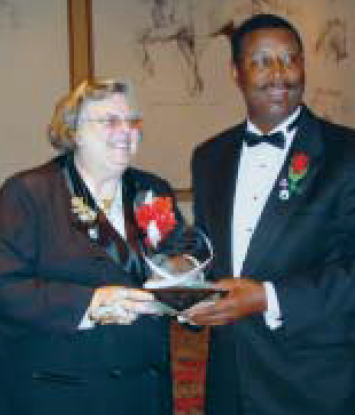
Pamela Kay Strong receives Fellows award from SAMPE International President Clark Johnson.

Strong’s title is currently “Principal Engineer/Scientist 5/Technical Specialist” in the Materials and Process Engineering Department of Boeing’s Integrated Defense Systems business unit in Long Beach. She and her team provide technical and design support for nonmetallic manufacturing processes and material parameters used in aircraft, rockets and the B-1B Bomber. In receiving the SAMPE recognition, she was cited for her contributions to the advancement of such diverse material technologies as composites, low observables and ablative materials.

“It’s unfortunate that women have to work 10 times as hard as men,” Strong said, then displayed her tongue-in-cheek sense of humor, “but it’s good that it’s so easy for us to do that.”

Her advice to young women seeking a career in science and engineering is much the same as for those already engaged in technical careers. “Find a mentor as fast as you can and hang on for dear life – don’t burn any bridges along your way.”

“And continue fighting the glass ceiling,” Strong concluded, “but don’t forget to bring your diamond glass cutting etcher with you.”

Not a member of this impactful and inclusive science community? Sign up today!