A Vital Part of a Teacher’s Professional Development

A hand-drawn illustration of a woman holding a pencil.

The Academy’s Authentic Science Research program, supported by NSF and SUNY-Albany, empowers teachers with the tools to be confident scientists and impactful mentors.

Published March 1, 2000

By Fred Moreno, Anne de León, and Jennifer Tang

To the students enrolled in Viveca Peek’s rigorous science research course at Humanities H.S. in Manhattan, showing up for a “zero period” class at 7:30 a.m. can be quite a challenge—as all who have ever endured the New York City subway know so well. “Showing up, on time, is sometimes easier said than done,” says Peek. “You need dedication.”

The research course is the heart of “Authentic Science Research (ASR),” a three-year project sponsored by The New York Academy of Sciences (the Academy) through an arrangement with a State University of New York at Albany/National Science Foundation grant. The program is designed to train and help teachers establish and lead science programs in their respective high schools; 15 NYC high schools currently participate.

In this innovative project, Peek’s responsibilities include teaching her students the scientific method; helping them to identify appropriate literature covering the topics they have selected; providing constructive feedback on student hypotheses and experimental designs; identifying resources to support the inquiry; and, perhaps most important, locating professors and professionals in the scientific community who are willing to serve as student mentors.

A Vital Part of Professional Development

Peek encourages her students “to do hands-on work on topics that are related to your lives.” They have responded by selecting topics relating to autism and steroids, as well as esoteric topics such as the Black Band disease in the Coral Reef. Students in the program have successfully competed in local and national science competitions such as the Intel Science Talent Search and the Academy’s own Science and Technology Expo.

She views the ASR program as a vital part of her professional development as a teacher. The training includes a three-week summer institute held at the Academy, for which participating teachers receive three graduate credits. Peek declares “I would be lost if I hadn’t taken the institute.”

She also expresses appreciation for “the chance to meet other teachers going through the same thing.” She has kept in touch with others in the institute, sharing information and experiences and exchanging war stories.

The Academy is in frequent contact with the 15 participating schools and provides a schedule of school visits designed to offer support and guidance for staff and parents in adapting the needs of individual schools to the demands of the program. Teachers are also required to take five follow-up workshops throughout the school year.

When Peek welcomes her students early each morning, this most prized of all professionals—a deeply dedicated teacher—resumes the gentle guiding, encouraging, and occasional prodding of the young scientists entrusted to her care.

Learn more about educational opportunities at the Academy.
Exploring the Biology Behind the Music We Love

A shot of sheet music.

The Biological Foundations of Music conference will examine why and how the human brain has such an affinity for music.

Published March 1, 2000

By Merle Spiegel

Music is a part of all human cultures – and of almost every individual’s life, from infancy to death. We are uniquely able to produce and respond to music. It’s time we took it seriously.

This spring, the Academy will host a conference on the Biological Foundations of Music that should help us begin to understand why and how the human brain has such an affinity for music as well as an ability to process its language.

“There seems to be some kind of innate predisposition that our species has to produce music,” says Robert Zatorre of the Montreal Neurological Institute, who co-organized the conference along with Isabelle Peretz of the Department of Psychology at the University of Montreal. “Small children are able to do fairly sophisticated things musically, without any training. We tend to overlook this because it’s so simple for us,” he adds. “Our brains do an excellent job of encoding complex patterns. It’s the converse of what computers are good at.”

Computers are still lumbering buffoons at the simple act of recognizing a tune, however, and Zatorre believes that looking at how the brain processes music can provide a unique avenue for understanding brain function. “There are many aspects of brain function that we still don’t understand,” he says. “If you want to know what’s unique about the human brain, you have to look at those functions that distinguish us from other species. In the world of sound processing, the perception of speech and the perception of musical sounds are the two that distinguish us from every other species. We talk to each other and we play music.”

Music, Biology, and the Brain

The Biological Foundations of Music Conference rewards many years of lonely work by a relatively small group of researchers. Both Zatorre and Peretz combined science and music in graduate school when few others considered the field a respectable line of inquiry. “I thought I was the only one on earth doing it,” Peretz says of her early years in graduate school in Belgium.

Nevertheless, both she and Zatorre stuck with their interests, and over the course of the past 10 years the field has begun to be seen as a respectable line of inquiry and to gather serious attention. The upcoming conference, which will be held at The Rockefeller University in New York City, May 20-22, is “the first serious conference on music and the brain anywhere in the world,” according to Rashid Shaikh, Director of Science and Technology Meetings for the Academy.

More than 20 presentations and discussions will be included on topics such as the origins of music, the question of music as an evolutionary adaption, neural processing of complex sounds, electrophysiology of pitch, the history of neurology and music, tonal processing, brain plasticity and musical training, music and emotion, and music and other cognitive functions such as the “Mozart effect.”

Also read: Music on the Mind: A Neurologist’s Take

Exploring New Frontiers in Canopy Ecology

Sun shines through the leaves of a tree in a forest.

Exploring the science of canopy ecology, some of which takes place 120 feet off the ground.

Published March 1, 2000

By Merle Spiegel

Image courtesy of jittawit.21 via stock.adobe.com.

After millennia on the ground, we’re headed back to the treetops. That’s what Bruce Rinker would like, anyway. Rinker, an avowed acrophobe, has shinnied his way into the tops of trees from Africa to New York, from Central and South America to Florida. The science of canopy ecology is a new frontier, he says. And the view will knock your socks off.

“The U.S. and Europe spent a lot of time and money training ecologists to go into the tropics,” says Rinker. “And we learned about all these new species and new processes in the upper canopy. It didn’t take us long to ask: ‘If this is going on here, what’s going on back home?’”

Rinker and other canopy ecologists are starting to get answers to that question. On December 16, Rinker spoke to The New York Academy of Sciences’ (the Academy’s) Engineering Section about some of the findings of this new science. “Neotropical migrants—warblers and tanagers—stratify as they move through the forest,” he says. “Some never come out of the treetops.”

Rinker was introduced to the science of canopy ecology in 1991 when he was part of the U.S. team of an expedition into the treetops in Cameroon, Africa. Enthralled by the possibilities of these new techniques, he brought the technology home to the Millbrook School in New York, where he is Chairman of the Science Department and Project Director of the Forest Canopy Walkway. Built in 1995, this is one of only five such canopy research facilities in the United States.

An Amazing Miricle of Color and Noise

Rinker lights up when asked to describe the reactions of animals to his presence 120 feet off the ground. “One cold, overcast, and breezy Sunday, we no sooner got into the treetops when we could hear a swarm of neotropical migrants coming toward us. Within moments we were completely enveloped in this flock like a swarm of bees. They were literally walking on us black-throated blue warblers walking on my chest, on my shoes. There were grosbeaks and tanagers everywhere. It was the most amazing miracle of color and noise I’ve ever witnessed. It seemed as though they were oblivious to our presence. Then, in a couple of minutes, it was all over.”

Rinker is convinced of the utility of this new science and technology, but he would like to broaden its reach. “Traditionally the word canopy has referred to the upper layer of vegetation in the forest,” he explains. “We’re redefining the word, and it has upset some people. The problem is that there are all sorts of nooks and crannies and valleys and troughs. We’re redefining the word canopy to mean the entire forest system, from ground up. This means that not only can forests have canopies, but you can have sugar cane fields with canopies. You can have a golf course lawn with canopies. A kelp forest with canopies. Even the stromatolites of Australia define a canopy.

”Who knows what kind of insects and microclimate differences we will find,” he concludes.” This is all brand new.”

Also read:A Case for Going to Bat for the Bats

Making Science More Accessible to the Public

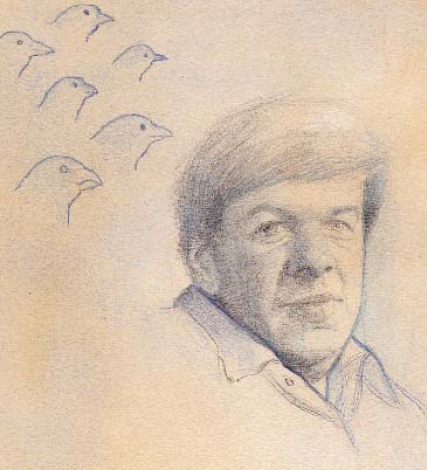
A hand-drawn illustration of a man with birds.

One of the most popular writers and lecturers on scientific topics, Stephen Jay Gould aims to make science more accessible to the public.

Published March 1, 2000

By Fred Moreno, Anne de León, and Jennifer Tang

When he was five years old, Stephen Jay Gould took the short trip from Queens to the American Museum of Natural History in Manhattan with his father. That visit sparked an interest in paleontology that blossomed throughout his boyhood and teenage years in New York City’s public schools.

Today, some 50-plus years later, Gould has become one of the most popular writers and lecturers on scientific topics. His 20 books and hundreds of essays, reviews, and articles have contributed immeasurably to building bridges between science and society. Since 1994, his essays, “On Common Ground,” have appeared regularly in The New York Academy of Sciences’ (the Academy’s) magazine, The Sciences, helping fulfill one of the Academy’s prime missions: advancing the understanding of science and technology. His essays in The Sciences reflect Gould’s view of scientific writing as a critical, rather than purely instructional or educational, genre.

“I believe my kind of writing is part of a humanistic tradition, sort of what Galileo did when he wrote his books as Italian dialogues and not as Latin treatises,” he says. “Even the conceptually most complex material can be written for general audiences without dumbing it down.”

Inspiring Critical Debate

But Gould is much more than just a popular author of accessible essays and books. A productive scholar (currently on the faculty at Harvard), his ideas on the theory of evolution and the interpretation of fossil evidence have inspired critical debates among biological and geological scientists. His insights into the importance of statistical reasoning and the meaning of variation are also significant and have more personal connotations: they were derived as a long-term survivor of abdominal mesothelioma, a rare form of cancer that was usually fatal at the time of his diagnosis in 1982.

“My statistical training taught me that the ‘median mortality of eight months’ for mesothelioma was not necessarily a prediction about me,” he says. “I decided that I was going to be in the half that lives longer.”

Gould has said that one of his goals is to make people “less scared” of science. His essays in The Sciences are playing a role in doing just that.

The Immeasurable Value of Advancing Science

A colorful diagram depicting the human brain and nervous system.

For members like Carolyn Foster, The New York Academy of Sciences offers a “neutral ground” where academics and industrial scientists can come together to advance a common goal.

Published March 1, 2000

By Fred Moreno, Anne de León, and Jennifer Tang

Nearly 30 years ago, Carolyn Foster attended a mini-symposium sponsored by The New York Academy of Sciences (the Academy) that had a profound effect on her life. “It made me go back to study biochemical pharmacology”—a career path that had not been part of her plans.

Now a senior principal scientist in the central nervous system and cardiovascular pharmacology division at the Schering-Plough Institute, Foster’s participation in Academy activities has continued unabated. Indeed, in part through Foster’s leadership as the president of the Biochemical Pharmacology Discussion Group, the organizing arm of the Academy’s Biochemistry Section, the discussion group has evolved into an international forum that is about to celebrate its 35th anniversary.

“The Academy provides a unique ‘neutral ground’ where the drug industry and academe can meet,” explains Foster, a collegial place to exchange notes in cutting-edge research in the continuing effort to develop therapies for such diseases as Alzheimer’s. “It’s all about education and opening up communication.”

A Value Beyond Calculation

Foster has vivid memories of particularly instructive meetings, including one at which Parkinson’s patients shared their experiences and observations and raised good questions. The value of this exchange to academics and industrial scientists, she recalls, was beyond calculation.

When Foster is not immersed in her scientific research or her activities at the Academy (which includes service on its Conference Committee), she is involved in science education efforts, such as the Kean College Women in Science Technology project.

Her tireless advancement of the work of the Academy was recognized recently. She was one of 15 scientists named an Academy Fellow, honored for “a lifetime of scientific achievement and service.”

Also read: A New Model for a Career in Industry