As part of the Academy’s continued efforts to advance human rights, a representative recently visited Cuba to advocate for imprisoned dissident scientists.
Published March 1, 2002
By Fred Moreno, Dan Van Atta, Jill Stolarik, and Jennifer Tang
A representative of The New York Academy of Sciences’ (the Academy’s) Committee on Human Rights of Scientists traveled to Cuba in late November to visit the physics faculty at the University of Havana. He also met with political dissidents and provided moral support to the wife of Dr. Oscar Elias Biscet, a physician who has been imprisoned for publishing a medical report deemed to be “antigovernment.”
In an attempt to access the present status of human rights issues among scientists in Cuba, Dr. Eugene M. Chudnovsky, Distinguished Professor of Physics at Herbert Lehman College, the City University of New York, met with two dissidents –– an economist and an electrical engineer –– who were previously imprisoned for their political views. They are not permitted to hold official jobs, and both have illnesses for which they need medical supplies.
Chudnovsky also met with Elsa Morejon, the wife of Biscet, who is serving a three-year prison term for his medical report entitled, “Rivanol –– A Method to Destroy Life.” The report documented a 10-month study at Municipal Hospital of Havana, where the drug had been given to thousands of women.
In the report, Biscet found that 60% of the fetuses survived the procedure, which is supposed to kill the fetus after the first trimester. He wrote that surviving babies were left to die by the attending physicians. Dr. Bizcet charged that Rivanol was being promoted as a way to keep Cuba’s birth rate low.
Barred from Professional Jobs
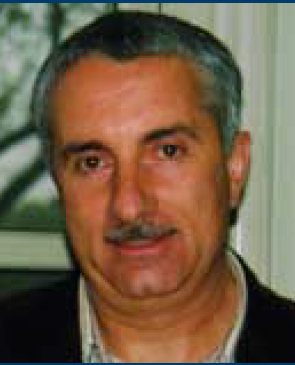
Dr. Eugene M. Chudnovsky
Although Morejon was Chief Nurse at the Havana Hospital of Endocrinology prior to 1998, neither dissidents nor their immediate families are allowed to have professional jobs in Cuba. Dr. Biscet is being held in a high-security prison in the province of Holguin, 800 km from Havana. It is a three-day journey from Havana for his wife, who is allowed to visit only once a month for a two-hour guarded conversation. Morejon told Chudnovsky her husband has lost some teeth and is in serious need of medical attention. Chudnovsky said he is attempting to assist Dr. Biscet through a number of diplomatic channels.
During his visit, Chudnovsky delivered a talk on Macroscopic Quantum Tunneling at the University of Havana and met with 20 of the school’s 70 physics professors. He also visited the Institute of Materials Science, which is associated with the Physics Department, and toured the Institute of Molecular Biology.
He reported widely varying conditions at the Cuban universities. Most modern and best equipped was the Institute of Molecular Biology. Cuban Premier Fidel Castro believes biotechnology is Cuba’s path to prosperity, according to the hosts, and the institute does both research and production for hospitals in Europe as well as Cuba. Some scientists there are nuclear physicists who switched fields when Russian support for Cuban nuclear research ended.
Good Research Despite Extreme Poverty
Elsa Morejon
The average professor’s salary is about $25 a month, he said, and almost $4 of it goes to buy ration cards that enable Cubans to obtain 5 kg of rice and 10 kg of beans. Since all apartments belong to the government and rent is 10 percent of salary, he said “most professors and university administration live with parents.”
Despite the extreme poverty, he noted that some Cuban professors appear to be doing good research. “Experimentalists are trying to switch to cheap, soft condensed matter physics of sand piles, turbulence, etc.,” Chudnovsky said. “Their primitive electromechanical devices, interfaced with 15-year-old computers, surprise by their ingenuity.”
Chudnovsky said he believes the American Physics Society and allied scientific organizations should support their Cuban colleagues by providing scientific journals, which are now occasionally sent via e-mail from friends in Europe. He said he also will encourage the APS leadership to visit physics departments in Cuba and explore possible roots of cooperation.
“We are doing everything we can to support our members in Cuba,” commented Svetlana Stone Wachtell, director of the Academy’s Human Rights of Scientists program, “and to encourage our members throughout the world to engage in a professional exchange with their colleagues in Cuba.”
Although he lost many friends on September 11, Academy Member Leslie Robertson is thankful to be among the fortunate New Yorkers who did not lose family members or coworkers, as did thousands of others. Still, the shock and grief he felt during and after the attacks might be somewhat akin to the incomparable horror of suddenly losing two dear children.
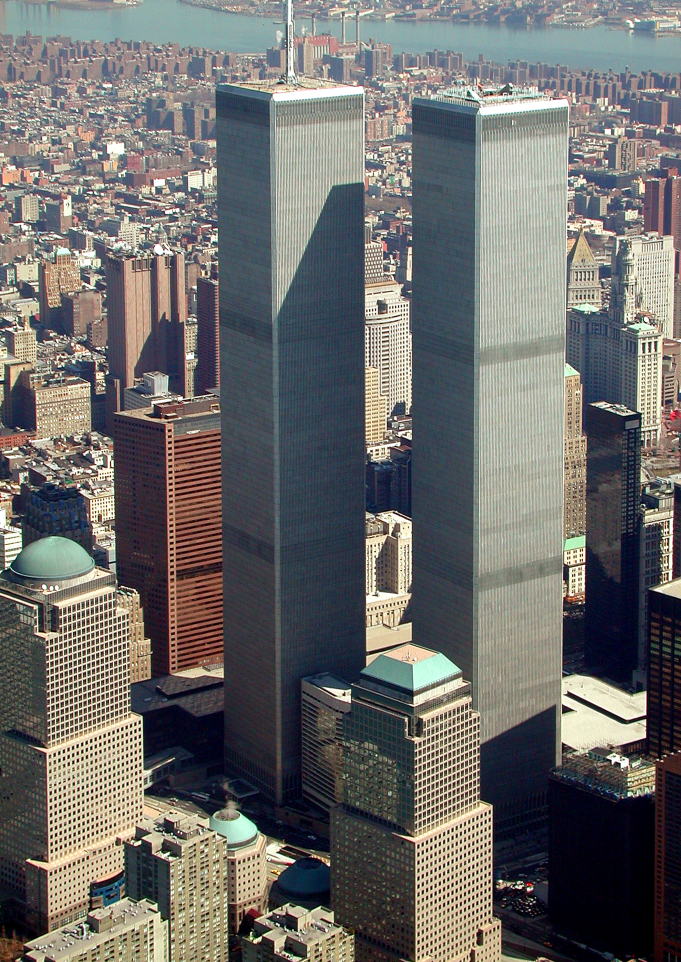
For Robertson, now Director of Design at Leslie E. Robertson Associates, Consulting Structural Engineers, the World Trade Center has been a central part of his professional life –– the defining project that launched a distinguished career –– since the early 1960s. Together with then partner John Skilling and architect Minoru Yamasaki, Robertson and his team conceived, and helped develop the structural designs for five of the seven buildings in the WTC complex, including the 110-story Twin Towers.
An active member of the Academy’s Human Rights of Scientists Committee, Robertson was in Hong Kong on September 11 discussing a new skyscraper when he first received word that a plane had hit the WTC’s north tower. Everyone believed that it had been a helicopter or other small aircraft. He then was able to reach his wife, Saw-Teen See, an Academy Member and engineer in her own right, who reported the seriousness of the event and that the second tower had been struck. He rushed to his room to prepare for a return to New York.
The Structural Strength of the Towers
After turning on the TV and registering the shock of witnessing the dreaded images of death and destruction taking place, Robertson said his memory of the following hours are somewhat blurred. “You wanted to reach out and stop it,” he recalled, “but there was nothing you could do.”
Although he’s still plagued with thoughts about “what we might have done differently,” Robertson acknowledged in an interview that –– as many Members and other colleagues have told him –– the structural strength of the towers allowed them to stand long enough for perhaps 25,000 occupants to escape after each of the Boeing 767 aircraft crashed into them. The north tower was struck between the 94th and 99th floors at 8:45 a.m. and did not collapse until 10:28 a.m.; the south tower, which was impacted at a lower level, between the 78th and 84th floors, was the first to collapse, at 9:59 a.m., 53 minutes after the second aircraft struck.
“When I started work on this project, the tallest building I’d worked on had only 22 floors,” Robertson said. “The WTC engineering was a first of a new kind of high-rise building.” Aware of the military aircraft that hit the Empire State Building in a dense fog in 1945, Robertson said, “I thought we should consider the structural integrity that would be needed to sustain the impact of a (Boeing) 707 –– the largest aircraft at that time.”
Achieving Structural Strength
Leslie Robertson
Robertson added, “We didn’t have suicidal terrorists in mind.” Rather, he was considering an accident, a 707 flying at low speed, most likely lost in a dense fog. To achieve the structural strength, Robertson and his team designed the Twin Towers as steel boxes around hollow steel cores. An unusually large number of rigid, load-bearing columns of hollow-tube steel –– each column being only 14 inches wide and set just 40 inches on center –– supported the Towers walls.
Because the 767s were traveling at high speeds, were somewhat larger than 707s and each carried about 80 tons of jet fuel, Robertson said, “the energy that was absorbed by the impact was not less than three-times, and probably as much as six-times greater than the impact we had considered.
“The idea that someone might plant a plastic explosive or the like somewhere in the structure was considered in the design. The structure was redundant –– two-thirds of the columns on one face of each of the two towers were removed (by the aircraft) and yet the buildings were able to stand. But it was the combination of the impact from the speeding aircraft and the burning jet fuel –– both the kinetic and petrochemical energy released –– that ultimately brought them down.”
Impact on Future Design
Robertson said he doubts that the attacks will have a major impact on the structural design of new tall structures. “If you design buildings as fortresses that can withstand anything, then the terrorists will just avoid the fortresses,” he said. “There are plenty of other, smaller buildings that could be targets, and the threat of chemical or biological weapons is an even greater concern.
“Structural engineering is applied science. If a ceiling sags or a lobby is too drafty, life goes on. But structural reliability has been high; building collapses are rare. When they do occur, they’re usually caused by natural events –– wind or water or the ground shaking. I don’t believe we should engineer against the kind of event that happened on September 11, much less the impact and fire that could be created by the much larger Boeing 747 or the new AirBus 380.”
Robertson concluded that the solution lies in confronting the root causes of hatred among mankind: “There’s no end to the number of ways that man can do harm to man.”
In the wake of the Sept. 11 attacks there’s been more emphasis on protecting public places and tracking terror threats. But what are the ethics of this?
Published January 1, 2002
By Fred Moreno, Dan Van Atta, Jill Stolarik, and Jennifer Tang
Picture yourself living each day under the watchful eye of a network of surveillance cameras that track your movements from place to place. Every time you enter a large building or public space, your facial features are compared with those in a database of known criminals and terrorists. Do you feel safer knowing that someone, somewhere is watching?
This may sound farfetched, or something out of George Orwell’s dystopian novel 1984, but closed circuit TVs (CCTVs) –– like those being widely used in the United Kingdom –– and facial recognition systems are just two of the many well developed technologies the government and private companies are considering to bolster security. The Pentagon issued a request for new security proposals in the wake of the September 11 terrorist attacks and, already, new anti-terrorism laws have expanded the government’s surveillance powers.
Complex technological security measures are “coming on faster than lawmakers and the public can process and evaluate them,” said Susan Hassler, editor-in-chief of the IEEE Spectrum and moderator of a recent media briefing on surveillance technology at The New York Academy of Sciences (the Academy). Sponsored by the Academy and the IEEE Spectrum, the briefing mirrored the debate now being waged in the Congress, the Pentagon, the media –– and on the streets.
A New Manhattan Project
To sift through the myriad security ideas, Michael Vatis, director of the Institute for Security Technology Studies at Dartmouth College, issued “a clarion call for a new Manhattan Project.” Vatis proposed that security experts from industry, academia and government be asked to assess and recommend available surveillance technologies.
“I urge that we develop a mechanism to bring together expertise from across different fields to develop a research and development agenda to counter the threats now facing us,” Vatis said. Such an effort is even more urgent in light of the Pentagon’s recently published security technology “wish list,” he added. Biometrics, a technology used for analysis and quantification of the physical features of an individual, is already “on the radar” of law enforcement and airport security companies.
Biometrics, a technology used for analysis and quantification of the physical features of an individual, is already “on the radar” of law enforcement and airport security companies. Facial recognition is one aspect of biometrics that could be deployed in counter-terrorism efforts. “The cornerstone of our defense against crime and terror is our ability to identify and deter those who pose a threat to public safety,” said Joseph Atick, chairman and CEO of the Visionics Corp., a leader in the biometrics field.
Atick said facial recognition systems could be used in airports. As passengers pass through security gates, the systems could capture an image of each face, analyze its features and produce a unique, 84-byte computer code to describe it.
Vatis said this technology is an adjunct to security measures already in place such as X-rays, bag checks and metal detectors. Unlike a person scanning a crowd, he said, this technology “delivers security in a non-discriminatory fashion — free of prejudices.”
Increasingly Pervasive and Invasive Surveillance
Barry Steinhardt, associate director of the American Civil Liberties Union, said he was troubled not only by the specter of increasingly pervasive and invasive surveillance technologies, but also by the danger that government and industry leaders could, under pressure to act, invest in technologies that don’t work and instead provide a false sense of security. “As we look at any technology that may be introduced into society, we have to ask: Does it improve security? How much does it threaten our liberties? And do the benefits outweigh the risks?”
While facial recognition systems may or may not ever be implemented widely, we can look across the Atlantic to study the effects of a surveillance technology that’s been adopted with enthusiasm. Over the past decade, Britons have welcomed the installation of CCTVs in public places, work spaces and homes. Estimates are that some 2 million CCTVs are now scattered throughout the country, said Stephen Maybank, of the department of computer science at the University of Reading in the U.K.
The British fervor for CCTV comes from the belief that the cameras deter criminal activity, a contention that some studies support. The London Underground alone is laced with 4,000 cameras, and the sheer numbers of CCTVs pose problems: how does one store all the data and how can one find a particular image amongst all the data that’s stored?
Better and Cheaper Cameras
Improvements are coming in CCTV technology that will further encourage their use, said Maybank. “Cameras are becoming better and cheaper; they will soon work on low power and will be easy to install –– some are reduced to the size of a thumb. Software for people-tracking and behavior recognition also is improving. And large, coordinated camera networks are coming that will enable the analysis and description of people as they move over large areas.”
Closer to home and on a much smaller scale, anecdotal reports about CCTVs point to drawbacks in their use as crime stoppers. Robert Freeman, executive director of the New York State Committee on Open Government, reported that some residents and shopkeepers on the perimeter of New York City’s Washington Square Park believe the installation of CCTVs in the park simply pushed crime to the fringes of the areas.
New ideas will continue to emerge on how best to protect ourselves from future threats. Government’s challenge will be to select the best of the alternatives, technologies that pose the least threat to our civil liberties, and to knit them together to form an invisible shield –– without creating a technological version of the Emperor’s new clothes.
Recent deaths from inhalation of the anthrax bacterium, coming in the wake of September’s terrorist attacks in the United States, have focused widespread public attention on the potential for biochemical terrorism. Potential agents of mass destruction being discussed range from the smallpox virus to the bubonic/pneumonic plague bacterium to a variety of toxic chemical agents.
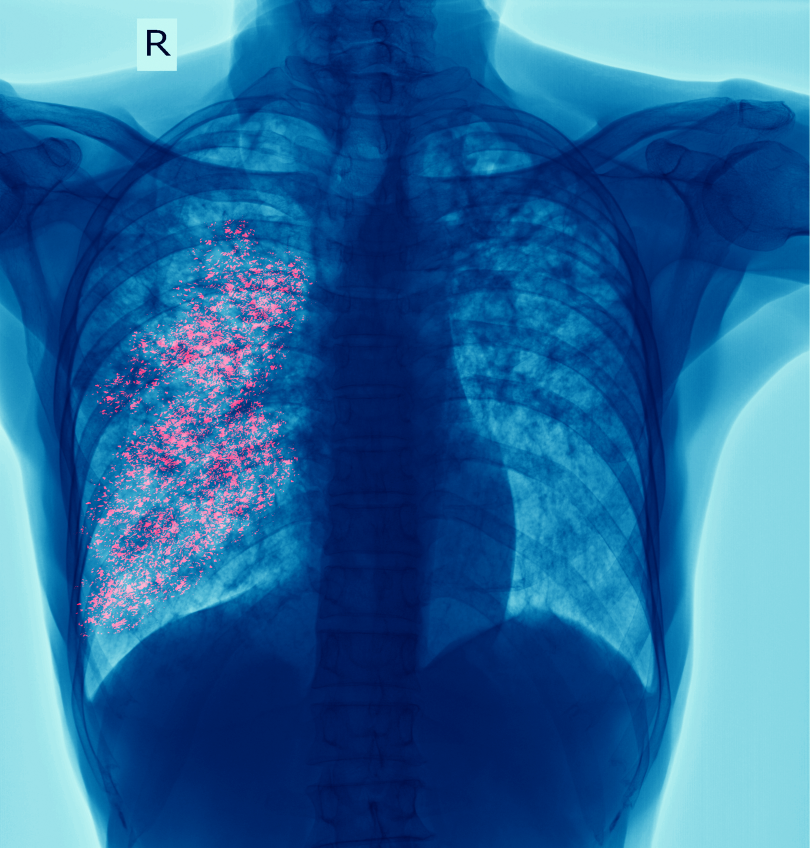
While concern about the lethal potential of biochemical terrorism is warranted, many public health experts believe insufficient attention is being paid to an equally deadly germ whose spread is already a global pandemic: Mycobacterium tuberculosis. Unlike anthrax, which is not contagious and can be readily treated with antibiotics, tuberculosis (TB) is highly infectious and there is no effective treatment for some multi-drug-resistant (MDRTB) strains.
The TB threat is not new: In the early 19th century TB was so prevalent in England that it accounted for nearly one quarter of all deaths in the country. But 20th-century advances in treatment and public health have engendered a complacency that can tempt us to think we have put such scourges behind us.
Consider this: fully one-third of the world’s population is currently infected with tuberculosis. This amounts to 2 billion persons harboring Mycobacterium tuberculosis. And some MDR-TB strains are no more curable than the bacillus was in 1820.
A Patient Killer
TB remains, after HIV, the leading cause of young-adult death from infectious disease. Nevertheless, we have several advantages over the Victorians, one of which is that the survivors among them passed on some natural immunity to us, their descendants. We also are better housed and fed, and effective treatments now exist against most strains. We can quantify the risk better, and are much better at preventing hospital-based infection. Genetic research has identified TB-susceptibility genes in humans, making it possible to identify the mutations in the bacterium that make it drug resistant.
The 21st century has its own disadvantages, however, including much greater mobility of a large portion of the world’s population. Pharmaceutical companies fund most of the new drug research. Marketplace pressures might influence them not to pursue TB drugs, as most of the need is found in poorer countries. In any case, no new drugs or vaccines to either treat patients or contain the spread of TB are on the horizon in the next five years. The HIV/AIDS epidemic means that a much greater percentage of those persons exposed to TB will develop active cases, which in turn will exacerbate treatment of the HIV infection, causing a higher rate of premature death.
Drug resistance has been a problem since drugs were first used 50 years ago. An estimated 35 percent of people don’t take their medications correctly, whether for TB or any other ailment. This is true across socioeconomic and educational demographic lines, making it hard to predict which patients will be noncompliant.
Combination Therapy
The patient who is being treated with several antibiotics and decides to only take one at a time to cut down on side effects is providing the bacillus with ideal conditions for becoming progressively resistant to a series of medications. Use of combination therapy (two or three antibiotics in one capsule) has been demonstrated in Europe to be an effective way to circumvent this behavior, but this approach is only slowly catching on in the United States.
In March, the Royal Society of Medicine hosted a conference, Tuberculosis Drug Resistance: From Molecules to Macro-Economics, which will be published in Volume 953 of the Annals of the New York Academy of Sciences along with papers from another conference, New Vistas in Therapeutics: From Drug Design to Gene Therapy.
“Multi-drug-resistant tuberculosis has a 50 percent mortality rate and costs at least $10,000 per patient to treat,” according to Peter Davies, one of the principal organizers of the meeting. “It is of more concern than other infectious diseases, except perhaps malaria, because TB itself is so common around the world. Also, TB can “incubate” in the human body for decades, so infection caught now may erupt into active disease any time from six weeks to 90 years.”
The World Health Organization (WHO) has identified the world’s TB “hot spots”— 80 percent of the incident cases are found in just 22 countries. Mario Raviglione, coordinator of TB Strategy and Operations in the Stop TB Department of WHO in Geneva, reported that MDR-TB has been a major problem in the countries of the former Soviet Union. Newly identified areas with a high prevalence of MDR-TB are found in China, Iran and Russia.
The Situation in India
Zarir Udwadia, a consultant chest physician at three of Bombay’s private hospitals, described the situation in India, where half of the world’s TB is found and less than 1 percent of the gross domestic product is spent on health. In India, social factors, poverty, poor prescribing practices and uncontrolled sales of anti-TB drugs have contributed to a crisis in MDR-TB incidence. DOTS (directly observed treatment, short course) programs were introduced in 1992 and show heartening improvements in detection and cure rates, but are not likely to have an impact on existing MDR cases.
“Tuberculosis is a major cause of morbidity and mortality in sub-Saharan Africa, with an incidence rate of 259 per 100,000 population in the region,” said Alwyn Mwinga of the University of Zambia School of Medicine. “An increase in the number of TB cases has occurred in the last 15 years, much of them attributable to co-infection with HIV.”
In spite of these increases, the rates of MDR-TB in Africa are much lower than those in Russia. Overcrowding in Russian prisons, where the number of inmates has increased to seven times the Western European norm, mean that the beds in dormitories are used in three shifts.
Baroness Vivien Stern, of the International Center for Prison Studies at the Law School of Kings College London, reports estimates of MDR-TB in Russia that range between 20 percent and 40 percent. WHO guidelines recommend a 75 percent cure rate for MDRTB to control the disease within a community. Current data indicate that cure rates in Russia are as low as 5 percent.
An Insidious Bacterium
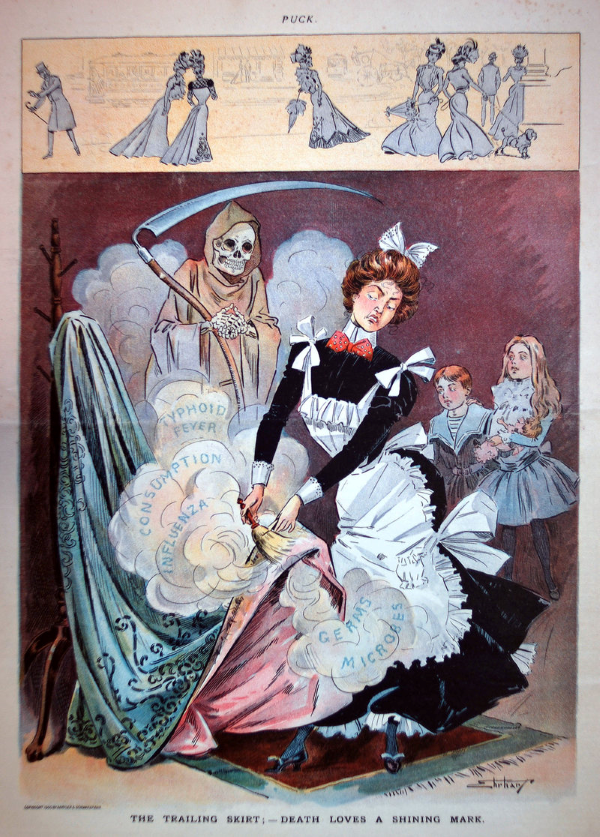
American satirical cartoon against trailing skirts as vectors of disease. First published in Puck, August 8, 1900. Image courtesy of Wikimedia Commons.
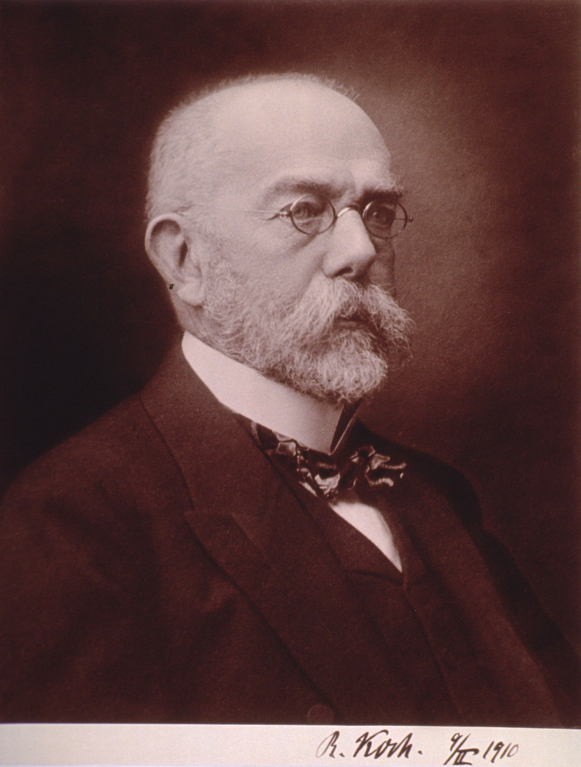
M. tuberculosis, discovered by Robert Koch in 1882, has a heavy lipid coat, which probably enables the bacterium to resist the onslaught of the body’s immune defenses, and a slow reproductive rate (18 to 20 hours, compared to less than one hour for other bacteria). The first effective treatment wasn’t discovered until 1943, when Selman Waksman identified streptomycin. Within 25 years, 11 more medications were available to combat TB, of which only a few were truly “first line,” including isoniazid and rifampin.
Unfortunately, the bacterium had also made great progress by then, and drug-resistant strains had developed. The tiny size (4 microns) of the bacillus meant that it could gain access to the deepest recesses of the lungs. Once lodged there, macrophages engulf the bacterium and begin to digest it, exposing some of its inner parts to the macrophage’s surface in the process, and then transport the bacillus to the lymph nodes, where T lymphocytes are stimulated to produce lymphokines, which in turn encourage the macrophages to become more aggressive.
As a result of these actions, the mycrobacteria will stop multiplying 95 percent of the time, but they remain in the body indefinitely, awaiting a weakening of the host’s immune system. HIV and AIDS have provided an opportunity for many infections to move from dormancy to an active state, as have cancer and the immunosuppressive drugs used in organ transplantation.
Cell Wall Biosynthesis
Most antibiotics work by affecting cell wall biosynthesis: We now understand these processes at the genetic level through structure–function analysis using recombinant DNA techniques. A drug that acts through inhibition of cell wall biosynthesis must be present long enough to be assured of an opportunity to act when the process it affects is under way. The slow reproductive rate of M. tuberculosis can, therefore, limit the effectiveness of these drugs.
Adrian Hill, professor of Human Genetics at the Wellcome Trust Centre for Human Genetics at the University of Oxford, reported on a two-stage, genome-wide linkage study in families from Gambia and South Africa to search for regions of the genome containing tuberculosis-susceptibility genes. Markers on chromosomes 15q and Xq showed evidence of linkage to tuberculosis, and an X chromosome susceptibility gene may contribute to the large number of males with tuberculosis in many populations.
Paul Farmer, of Harvard University Medical School, stressed the transnational quality of the spread of MDR-TB by describing the discovery of a patient from Massachusetts with pan-resistant TB. Because this patient had been working in Peru, Farmer and his team went to Lima to pursue the source of this strain of the bacillus. They detected the identical strain of TB and ultimately treated 74 patients who had been written off as “incurable.” The team achieved an 85 percent cure rate.
Education Is Essential
Farmer advocates implementation of local solutions that can respond appropriately to specific community circumstances.
Another contributor, Len Doyal, professor of Medical Ethics at the Royal London School of Medicine and Dentistry, explored the morality of one such solution: coercion and detention. He felt these policies could be part of an acceptable strategy, but that counterbalancing programs, including educational efforts to de-stigmatize TB and efforts to undermine the causes of world poverty, must be in place.
In light of evidence that MDR-TB is already a global pandemic, conference participants expressed concern that the global organizations and individual nations lack the will to provide the necessary resources to combat the tuberculosis epidemic in time to forestall a major crisis. Let this meeting be our warning.
On March 24, 1882, a thin, near-sighted German physician named Robert Koch delivered his latest research paper to an evening meeting of the Physiological Society of Berlin. His audience was attentive. Koch had already made a name for himself by identifying the cause of a leading pathogenic killer of cattle –– a disease called anthrax.
Koch, a country practitioner in Wollstein, Posen, who devoted much time to microscopic studies of bacteria, also had developed a way to dry and strain the anthrax bacterium for examination under a microscope, and a way to grow it in a culture. His techniques of bacteriological culture continue in use around the world, most recently as a tool in conclusively diagnosing anthrax in the human victims of 21st century terrorists.
But anthrax was not the subject of Koch’s paper that evening. Instead, he spoke of an even more dreaded disease that had long plagued humanity: a menace that had so consumed its victims that it was commonly called death by “consumption.” Koch presented to the attending physicians and scientists the first convincing evidence that tuberculosis (TB) is caused by an infectious bacterium.
Ironically today, while world attention has recently focused on the deadly potential of anthrax spores used as bio-weaponry, the global threat from multi-drug-resistant strains of tuberculosis (MDR-TB) is perhaps as great as the TB challenge posed that evening in 1882 –– 13 years before William Conrad Roentgen discovered X-rays.
The Present TB Threat
This present TB threat is conveyed in compelling detail in a new McGraw-Hill book: Timebomb –– The Global Epidemic of Multi-Drug-Resistant Tuberculosis, by Dr. Lee B. Reichman (M.D., M.P.H.) and Janice Hopkins Tanne, an award-winning science and medical writer, and member of The New York Academy of Sciences (the Academy). Evidence the book presents in support of its chilling title is based on a lifetime of experience and personal observation by Reichman, executive director of the New Jersey Medical School National Tuberculosis Center and former director of the New York City Health Department’s Bureau of Tuberculosis.
Reichman and Tanne build a clear and convincing case in support of the World Health Organization (WHO) and allied public health groups that are working to combat the global MDR-TB threat.
Estimates say one-third of the world’s population –– about 2 billion people –– are currently infected with TB. The disease often remains latent in the lungs of unknowing victims for years, usually manifesting if and when the victim’s immune system is stressed (which is one reason TB is a leading cause of death among HIV/AIDS sufferers).
An Airborne Threat
Each year, another 8.4 million people actually become ill with TB, and 2 to 3 million people die of TB. Because TB bacteria readily fly through the air, as when an afflicted person coughs, it’s estimated that each victim will infect 10 to 20 or more other people –– in whom the disease will likely remain latent, creating the potential “timebomb” effect.
Tuberculosis has become resistant to many of the drugs previously used to cure it, because of incorrect prescribing or failure to make sure the patient completes treatment. It will be many years before effective new drugs are readily available.
The WHO-approved direct observation therapy (DOTS) is a multi-drug regimen that can save the lives of MDR-TB patients if started early enough and the patient cooperates. But successful treatment is very costly, requiring at least several months of carefully monitored therapy.
Malnutrition and poor living conditions help create MDRTB “factories” in some of the world’s most impoverished populations –– such as in Africa, Peru and the former Soviet states. Timebomb describes in gruesome detail Reichman’s visits –– along with teams of experts, including Academy member Dr. Barry Kreiswirth, director of the Public Health Research Institute’s TB Center –– to the overcrowded gulags, or prisons, of the former Soviet Union.
Despite reforms, an MDR-TB epidemic is raging in the Post Cold War prisons of Russia today. Timebomb explores in great depth the economic, cultural and geo-political problems that continue to impede progress.
A Decades-long Process
A TB vaccine called BCG (bacille Calmette-Guérin, named for the French scientists who developed it) was widely used in the 20th century and is still one of six vaccines in the WHO’s expanded program of immunizations. Active TB has been found in persons who have received BCG, however, and the Timebomb authors say there’s no proof the vaccine is effective. While there is a great deal of scientific interest in developing an effective vaccine, they say the process will likely take decades.
Timebomb’s publication is timely not only because of the attention that recent bio-terrorist threats have focused on bacteriological agents, but also because March 24, 2002 –– designated World TB Day –– will honor Koch’s findings about M. tuberculosis with outreach activities supported by organizations in more than 200 countries. They include the International Union Against Tuberculosis and Lung Disease, the World Health Organization, the U.S. Centers for Disease Control and Prevention, and the American Lung Association.
“One-seventh of all human beings die of tuberculosis,” Koch, told the Berlin gathering on that evening, almost 120 years ago. “If one considers only the productive, middle age groups, tuberculosis carries away one-third and often more of these.” For his discovery of the tuberculosis bacterium and the tuberculin test, Koch was awarded the 1905 Nobel Prize in Physiology and Medicine.
Despite the genius of Robert Koch and the dedicated work of countless scientists and physicians who have come after him, the MDR-TB threat that Reichman and Tanne so thoroughly elucidate is just as serious today.
On September 24, in a cheerful ceremony as part of the Academy’s 183rd Annual Meeting, Dr. Robert Lahita received a special award in appreciation of his years of service as a member of The New York Academy of Sciences (the Academy’s) Board of Governors.
Less than two weeks earlier, on Tuesday, September 11, Lahita was at center stage of a far different venue — a New Jersey pier across from the smoking ruins of what had been the twin towers of the World Trade Center. What had started as a quiet morning making rounds at St. Vincent’s Hospital in New York’s Greenwich Village, where he is Chief of Rheumatology, became a living nightmare of burned and mangled bodies arriving by tugboat and ferry from the collapsed buildings across the Hudson River.
“As soon as I heard about the attack, I left the hospital and caught a train to Jersey City, where I’m the medical director of the mobile intensive care units of Hudson County and EMS at Jersey City Medical Center,” Lahita said. Most of his equipment, such as burn kits and trauma materials for treating patients, was in his car in New Jersey. “An EMS dispatcher sent me to the Colgate-Palmolive piers, where hundreds of victims were being unloaded by the Coast Guard and other groups. Had I parked that morning in Manhattan, I might have gone directly to the scene and been among the missing,” he observed.
The Walking Wounded
When Lahita arrived in Jersey City, a handful of paramedics and EMS technicians were trying to deal with the wounded. As the only doctor on the scene, Lahita took over and began treating injuries that ranged from open skull fractures and crushed pelvises to broken arms and legs. Many were firefighters and police officers, as well as “the walking wounded” – people temporarily blinded from the billowing smoke and ash.
“It was the most devastating scene I’ve ever seen in my life,” he said. “There was lots of blood and a great deal of emotion. It seemed like Armageddon.”
Because the radio transmitter atop the towers was destroyed, Lahita’s efforts to call for more help were thwarted. He immediately assigned specific tasks to everyone working with him. Chairs with wheels were converted into makeshift stretchers, splints were fashioned out of window blinds and, as other supplies like bandages began dwindling, office workers contributed their first-aid kits.
A Scene of Mass Confusion
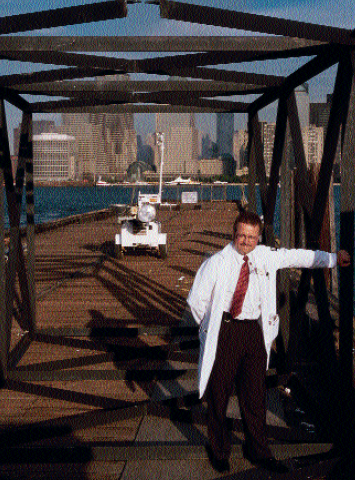
Dr. Bob Lahita.
After an hour Lahita was joined by another doctor and more medical personnel began arriving. As the 200 most critical patients were delivered to area hospitals, Port Authority officials asked Lahita to accompany them on a caravan headed to “ground zero” via the Holland Tunnel. There he found a scene of mass confusion, debris, smoke, fire and five inches of smoldering ash.
“I saw dust, papers and scattered personal belongings everywhere,” he said. “Everyone was covered with ash and it was difficult to breathe.” Lahita carried boxes of masks and began distributing them to rescue workers.
A resident of Ridgewood, New Jersey, Lahita later learned that 35 people from his area were among the dead. However, he knows that his efforts helped save an untold number of people. “I work best under pressure, but this was beyond what I’ve ever experienced,” he said. “I’ll never forget it.” Nor will the people whose lives he saved.
Lahita joins other Members and friends of the Academy in expressing their condolences to those who have lost loved ones in the tragedy. “The Academy personifies science,” he said. “This is a sad occasion for all of us, as the World Trade Center was also a magnificent feat of engineering science.”
Lahita is a Fellow of The New York Academy of Sciences and has been a Member since 1979. He chairs the Academy’s Conference Committee, which he joined in 1991. He also has co-organized two major Academy conferences, B Lymphocytes and Autoimmunity and Neuropsychiatric Manifestations of Systemic Lupus Erythematosus (SLE). Since 1994, he has been a Member of the Academy’s Committee on the Annals of the New York Academy of Sciences.
Sara Lee Schupf, the woman for whom Sara Lee Bakery is named, credits her father, Charles Lubin, for her personal interest in advancing science. “My father was dedicated to supporting science and he encouraged me to do the same,” Schupf explained. “He loved the Weizmann Institute in Israel and asked if I would continue his interests in Weizmann, when he was no longer able to do so.”
At the time her father died in 1988, Schupf was enrolled in the University Without Walls program at Skidmore College, majoring in Women’s Studies. Her final paper was on “Women in Science and Their Relationship to Their Fathers.” She quickly became aware of the obstacles women scientists face, which motivated her to strengthen her commitment to helping women succeed in science. “I soon realized that, as a woman with a name that could open doors, I had a responsibility to get those doors opened, and that I needed to focus my energies on women and girls in science and technology,” she said.
Advancing Women Participation in Science
Like her father, who engineered a long series of technological innovations that revolutionized bakeries and the frozen foods industry, Schupf also is a pioneer in initiating programs and projects that are helping to increase the participation of women in science. Her major accomplishments include establishing the Weizmann Women and Science Award, the first-ever national award that recognizes an outstanding woman scientist who can serve as a role model and encourage other women in science. At the same institution, she also initiated the first Women and Science Lecture Series.
Another first was her endowment of the first academic chair for a woman scientist at Skidmore College. To make role models and mentors more visible for pre-college women, she has endowed a teaching science internship at the Emma Willard School, a private secondary school. In May 2000, she chaired the Girls Claiming Science Symposium there.
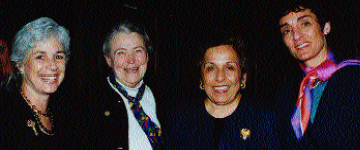
Supporting Women in Science — Sara Lee Schupf (left), Mildred Dresselhaus, Donna Shalala and Carla Shatz at the 2000 Weizmann Women and Science Award Ceremony.
Active in many science and women’s organizations, Schupf is Chair Emerita of the American Committee for the Weizmann Institute of Science, a trustee of The New York Academy of Sciences (the Academy), Skidmore College, the New York Hall of Science, and a member of the President’s Circle of the National Academy of Sciences. In addition, Schupf has contributed to major scientific organizations.
Supporting Science Communications
Recently, Schupf made a serious contribution to the Academy, specifically for the SciEduNet web site. Schupf believes the SciEduNet site “is of a great value to the community and I hope that it will serve as a model for others around the country. SciEduNet provides information about programs and resources available in science. In addition, SciEduNet is a perfect vehicle to initiate collaborations between partners as diverse as public service organizations, parents, teachers, students, universities and other academies and museums,” she said.
Her commitment to SciEduNet reflects her dedication to encouraging more people to have an interest in science, especially women and girls. SciEduNet is one way to bring science to the people if the people do not know how to come to science. “I have learned that one person cannot do it alone. In order to have women take ownership of science, we must all join forces, and understand and use the important associations. We will see progress only when those who have the means or ability collaborate and work effectively together, be it mothers, scientists, philanthropists, businesswomen or teachers,” she said.
Advocacy or science? A recent forum sponsored by The New York Academy of Sciences emphasizes challenges teachers face when teaching environmental science.
Educating young people about global warming, biodiversity, the importance of conservation and other matters has become a major issue in K–12 education. Students are taught sensitivity to the natural environment, the potential impact of human activities and the value of conservation. However, ecological science is difficult and complex, and many questions remain open on how we might best understand the diverse factors—geological, biological, economic, societal—involved in natural systems and man-nature interactions.
Some fear that science education is being shortchanged in favor of advocacy, with the promotion of specific policies or practices (e.g., recycling and composting) substituting for a deeper education in the sciences that promotes scientific literacy. In the wake of studies such as the Third International Math and Science Study (TIMSS) that show America’s high school seniors’ math and science skills are superior to their peers only in Cyprus and South Africa, some educators and scientists are concerned that environmental education is yet another field in which students are not learning enough science.
Advocacy or Science?
Is there a way to bring environmental issues into the science classroom while maintaining a strong focus on the underlying science? How does learning ecological science relate to traditional biology, chemistry, and physics?
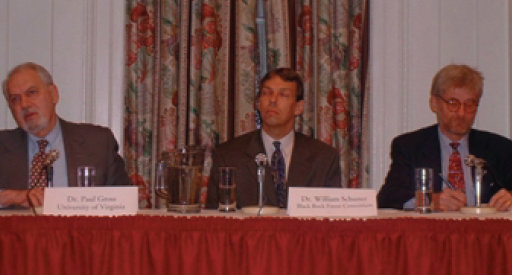
These questions and more prompted the NYC Science EduNetWork and The New York Academy of Sciences (the Academy’s) Science Education Section to sponsor a forum entitled “Environmentalism in the K-12 Science Classroom: Advocacy or Science?” Featured panelists were: Dr. Paul R. Gross, professor emeritus of biology at the University of Virginia, and coauthor of Higher Superstition: The Academic Left and Its Quarrels with Science; Dr. William F. Schuster, executive director of the Black Rock Forest Consortium, and Mr. Don S. Cook, director of the Tiorati Workshop for Environmental Learning at New York’s Bank Street College.
Environmental Education
No one disputes that K-12 education should offer courses on the environment. The Kyoto Protocol on Global Warming, the energy blackouts in California and other high-profile events attest to the importance of understanding environmental issues. Currently, there are more registered specialists in environmental education in American public schools (26,000) than there are in physical science. Most state K–12 science frameworks and science standards documents place some major emphasis upon environmental science.
Environmental education often covers a wide range of areas including: the workings of ecosystems and threats to ecosystem viability; pollution prevention; conservation; waste and recycling; human health; the economics of electric power grids; and the thermodynamics of planetary atmospheres. However, while some stress the importance of teaching environmental stewardship, others are more concerned that fundamental scientific concepts are being omitted or given less classroom time in environmental education.
Gross espoused the latter view. “The fraction of our population with even minimal comprehension of scientific inquiry and scientific claims is dangerously small and the same holds true, on the whole, for our schoolchildren,” he said. “Are those children, in environmental education, learning the basic science whose classroom and fieldwork time has been preempted by it? From what I have seen and heard, the answer is no.”
Preach Rather Than Teach?
From left: Paul Gross, William Schuster, Don Cook
Gross highlighted two factors affecting the quality of environmental education: the quality of the textbooks being used in schools and the level of teacher preparation in K–12 science education. In some textbooks, he observed, “The dominant tone is one of proud advocacy rather than science.” Although Gross agrees that the existence of serious environmental concerns warrant the inclusion of environmental science in the curriculum, he fears environmentalism in the science classroom may promote an activist mentality in students while failing to teach them the scientific complexity surrounding environmental issues.
He noted that only one out of five science teachers at the middle-school level have ever taken a college physical science course. For teachers who have not been adequately prepared to teach science education, it may be easier for them to “preach rather than teach.”
In addition, Gross believes that environmental education should focus on environmental science. He defined environmental science as an applied science, that is grounded in facts, concepts, and techniques from basic sciences and mathematics. “You cannot have a useful, serious notion of the scientific or even the economic issues of global climate change, historical and current, without a reasonable background in the physics of heat and energy, the elementary thermodynamics of gases, and the elements of geology,” he said.
Environmental Stewardship
While Schuster agrees that advocacy should not replace basic science teaching, he believes environmental literacy should be an integral component of scientific literacy. “From scientific studies, we know we are substantially changing the makeup of our planet’s atmosphere. The quality and availability of water is severely compromised in many areas and human activities are causing one of the biggest episodes of extinction in our planet’s history. These are serious matters and ones that deserve to come under the microscope of scientific research and teaching,” he said.
As executive director of the Black Rock Forest Consortium, an organization that operates a nature preserve 50 miles north of New York City, he has led and overseen outdoor forest experiences for thousands of pre-college students. In his experience, most students enjoy nature field studies and seem to thrive in a classroom “without walls.” He noted that “interest in organisms and their environment often leads not just to knowledge but also to care, respect and even love for these ecosystems. These feelings may naturally engender what is typically considered environmentalism.”
Schuster believes there is more value in holistic science and nature studies than Gross, however, and sees it as a valid way to introduce K–12 students to the scientific world. “Science education should put an emphasis on an active process of inquiry as opposed to an inert body of information to be memorized,” he added. However, he cautioned that classroom lessons and field experiences complement each other and are both necessary to give students “a well-rounded education that includes scientific and environmental understanding, as well as knowledge about human social systems so that they will have the tools they need to make informed, responsible decisions on the environment.”
Experiential Learning
While Cook agreed with Gross’ assessment that science education in the U.S. needs to be improved, his focus was on making science more accessible to students and the importance of experiential learning. He believes that students need to actively engage in subject matter in order to understand it. In order to give students a basis for learning more complex concepts, scientific experiences should begin with phenomena described in everyday language before introducing terminology used by scientists. “We need to rethink the roles of language and experience in the education of non-scientists,” he said.
The New York Academy of Sciences’ (the Academy’s) most valuable asset is the knowledge and experience of its members. Ninety-year-old Adnan Waly — an Academy member for 49 years, and an active member of its Lyceum Society — has watched and been a part of the unfolding of the “century of physics.”
During his long career, he had personal contact with almost all the eminent scientists working in or passing through Germany in the 1930s and 1940s. Waly shared his memories in an extensive series of interviews with Professor Martin Pope. Evelyn Samuel transcribed the entire series, which is available at the Niels Bohr Library of the American Institute of Physics.
Following are some selected highlights:
High-Voltage Mistakes
“We had a one-million-volt pulse generator, but if you activated this, all the instruments in the institute would break down. So the whole room was coated in aluminum in order to protect the other instruments, and I was standing beautifully on aluminum and adjusting the spark gaps. In order to make photographic exposures of some discharges, the control table was separated by a dark curtain so the one on the controls could not see the generator.
“Brasch [Arno] was at the controls, and when I had just adjusted the last spark he misunderstood something I said and switched the thing on. The current entered my arm. I had an insulating rod in my hand, and it broke into a million pieces. The current went through my body and out through my feet. I got an incredible cramp in my lungs, and my lungs collapsed totally.
“No air. I collapsed. The soles of my feet had big blisters where the current went out, and my arm was paralyzed for three days. Brasch came running over and dragged me to a nice comfortable chair. Then he did something else – he lost his head. He went into his bag – I’ll never forget this – and took out a piece of cake, which he knew I liked. Then he stuffed this in my mouth. I almost suffocated. I’ll never forget that. He almost killed me a second time.”
A Visit with the Gestapo
“When Hitler came to power, Max von Laue tried to recommend Jewish scientists to universities in the States, but he could not send letters as the mail was opened. I could travel because I had an Egyptian passport. My wife — at that time, my girlfriend — was Jewish. I went to the Egyptian embassy and said, ‘I’m an Egyptian.’ I didn’t know anything about Egypt — my father [who was from Egypt] had died when I was two years old. I pestered them until I got an Egyptian passport for myself and my wife.
“So I had an Egyptian passport and could travel. I traveled once to Egypt and twice to Holland to deliver the letters of von Laue. The Gestapo then asked me to come to their headquarters. It is very unpleasant to be summoned to Gestapo headquarters. A barred iron door closed behind me, and I was quizzed by two investigators for quite a while about why I traveled so much.
“At that time I had a very good imagination and an excellent memory. I concocted all sorts of stories, which they tried to pierce and defuse. After a few hours they bought my story. I had posted a friend in a car and told him to go to the Egyptian Consulate and tell them what happened if I didn’t return in five hours. But I was released.”
Art Meets Science at the Academy
“I was at The New York Academy of Sciences attending a lecture of the Nuclear Section. I found a seat in an empty row because not too many people were interested in nuclear physics at the time. The door opened, and in came a gentleman flanked by two gorgeous women. It was Salvadore Dali with his moustache and his cane. He sat in my row with the ladies, and he put his cane up, two hands on the cane and his chin resting on it, as was his habit. He looked at the pictures that were presented.
“One of the pictures was of a cloud chamber — a photograph of particles moving apart from a center. Some time afterwards I saw a television program where Dali was interviewed, and his latest painting was exactly what he had seen at the Academy, with tracks coming out from the center. ‘You don’t know what this is?’ Dali said to the interviewer. ‘These are pimmesons.’ The lecture had been on the π meson.”
Nikitin says it was his wife, Tatyana, who made sure the world didn’t forget about him.
Tatyana Tchernova tried to maintain some human contact with the unannounced visitors. She offered them something to eat. It was the middle of the night, October 5, 1995, in her tiny apartment in St. Petersburg. The men were from the FSB, the Russian secret police, and were trying to find evidence that would put her husband, Aleksandr Nikitin, in jail or even have him executed.
That same morning Aleksandr Nikitin had returned from Moscow having learned that he would be issued visas from the Canadian embassy. Those visas would have allowed him to take his family to Toronto and start a new life. There had started to be friction between what he did for a living, his conscience, and his country.
Nikitin’s line of work was nuclear energy. Specifically, he knew about nuclear reactors on military submarines. He had been chief mechanic on a nuclear submarine in the Russian navy, and then a senior safety inspector. When Nikitin began talking about the danger of nuclear accidents in the northern fleet of submarines publicly expressing concerns about the future of 100 decommissioned vessels afloat in the North Sea and the growing threat presented by nuclear waste in the area, some began to see him as a threat. When he collaborated with the Norwegian environmental organization Bellona to tell the story and to ask for help from the international community in containing the environmental hazard, the FSB came to visit.
Psychological Warfare
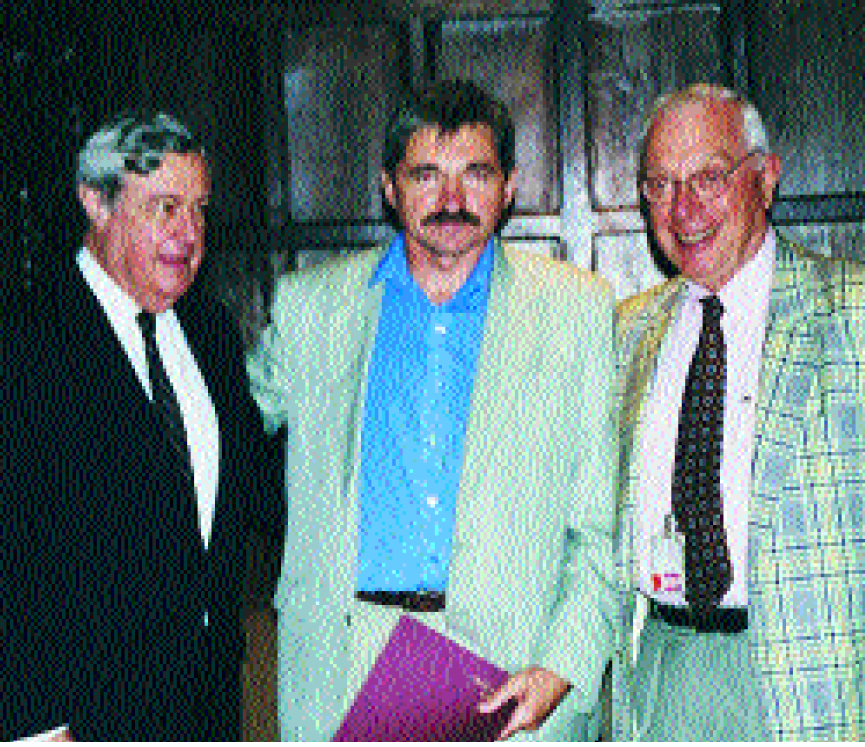
From left: Board of Governors Chair Bill Green, Russian engineer Aleksandr Nikitin, and Joseph L.Birman, chair of the Academy’s Committee on Human Rights of Scientists and Distinguished Professor of Physics at the City College of New York.
Nikitin was charged repeatedly with treason and with revealing state secrets. He spent 10 months in prison. “The first two months,” he says, “was an attempt to destroy me psychologically.” He and his family were harassed repeatedly. They were followed. Their tires were slashed. He was indicted eight times and tried twice, each trial leading to neither conviction nor acquittal. The prosecution was told to keep trying. “Prosecution turned into persecution on a human level,” says Irwin Cotler, a Montreal-based lawyer who has followed the case.
On December 29, 1999, Nikitin was acquitted on all charges by the St. Petersburg City Court. He barely had time to celebrate before the prosecution appealed the decision to the Russian Supreme Court. Nevertheless, observers hope that this last verdict will permanently deflate the prosecution’s case, and the verdict was celebrated as a major victory by The New York Academy of Sciences and by human rights and environmental organizations around the world.
The most dangerous point in Nikitin’s journey was probably those early days before the world had heard of his case – while he was still just one man against a machine rooted in Soviet-era police tactics. Nikitin says it was his wife, Tatyana, who made sure the world didn’t forget about him. “She was constantly doing something,” he says. “She made phone calls and found people everywhere. All the people who are standing by me now, she got them involved in my case.”
The Academy Fights for Nikitin’s Release
On April 17, 2000, Nikitin won the final victory in the four-year nightmarish espionage case against him. The Russian Supreme Court confirmed the December 1999 judgment of the St. Petersburg City Court to dismiss all charges against Nikitin. Although the prosecution has a year in which it can appeal the decision, in all likelihood this judgement brings Nikitin’s ordeal to a happy conclusion.
Working with The Bellona Foundation, the Sierra Club, and Amnesty International, the Academy mounted an intense lobbying effort in Washington, D.C. In addition, John Gillespie, Professor and Chair of the Department of Physics and Astronomy at Lehman College, City University of New York, and a member of the Academy’s Human Rights Committee, spent time in St. Petersburg as an observer during the trial.
This case was the result of Nikitin’s contributions to the Bellona report entitled “The Russian Northern Fleet: Sources of Radioactive Contamination.” The report described the dangers associated with Russia’s nuclear-powered vessels, the storage of spent nuclear fuel, and other radioactive waste generated by the vessels.
“There was no crime.”
For his efforts to expose this environmental threat to the Russian public, Nikitin was accused of espionage by the FSB, the successor to the Soviet-era KGB. He was imprisoned for several months and repeatedly placed on trial during the past four years. Nikitin consistently maintained that all information he contributed to the report was publicly available and that the world community needed to know about the dangerous storage practices of nuclear waste in the Russian navy. Therefore, he stated, such information could not be classified as secret under the Russian Constitution. This latest trial involved the eighth set of charges made against Nikitin since 1996.
“Of course there was no crime,” Nikitin explained. “The Bellona report just describes one of the main environmental challenges for Russia. Information about nuclear hazards, waste, and accidents onboard nuclear submarines is no threat to national security. It is the nuclear problems that constitute a threat to Russia.”
Speaking after the Supreme Court ruling, Nikitin said a lot of work needs to be done to turn this personal victory into one for the country.
“I’ll continue to work with my colleagues at Bellona and to work for safe handling of the radioactive waste stored in the Murmansk area. We also have to work to support other environmentalists in Russia who are facing FSB trouble-makers,” he said.
Nikitin is the director of Bellona St. Petersburg, one of the international affiliates of the Bellona Foundation. He also heads the Environmental Rights Center, an organization that protects the legal rights of citizens to due process and legal protection in environmental cases.







.jpg)
